
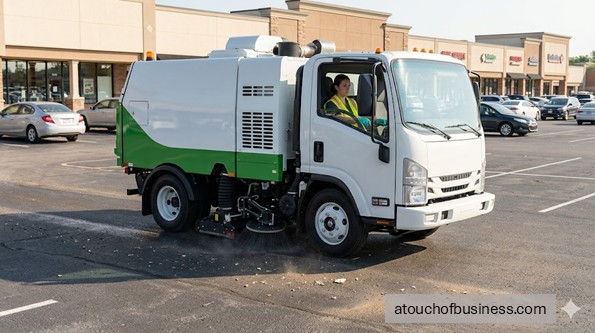
What a Parking Lot Cleaning Service Really Involves
A parking lot cleaning service removes litter, leaves, sediment, dust, and other debris from commercial lots, access lanes, curb lines, sidewalks, and sometimes parking garages.
In most cases, the work is done with a sweeper truck plus hand tools for corners, islands, and spots the machine cannot reach well.
This is a mobile business. Your real setup revolves around the truck, route planning, debris handling, disposal, records, and getting to each property on time with the right equipment loaded.
Can You See Yourself Doing This 10 Years From Now?
Before you think about permits, trucks, or pricing, ask a more basic question. Do you actually want to manage the daily operations of a parking lot cleaning service?
You may work nights, drive long hours, deal with weather, handle dirty material, watch vehicle costs closely, and solve route problems fast. If that sounds like a routine you can sustain and stay steady with, that matters.
Start because you are moving toward something that matters to you, not because you want to run from a job, a boss, or financial stress. That kind of pressure usually is not strong enough to carry you through breakdowns, slow periods, and long nights.
Status is not a good reason either. The image of owning a business fades fast when you are dealing with truck repairs, missed access, disposal rules, and invoice follow-up.
Better reasons are simple. You enjoy the practical nature of the service, you do not mind field operations, and you care about providing a clean, reliable result for property managers and site owners. That kind of interest tends to last longer.
It also helps to get another owner’s perspective. Speak with owners outside your market area only. Pick people in another city or region, bring real questions, and learn from their direct experience.
You should also ask whether there is enough local demand. If retail centers, office parks, industrial sites, HOAs, garages, and similar properties in your area do not support recurring sweeping, the market may not fit the business you want to build.
What the Business Looks Like on a Busy Day
A parking lot cleaning service usually follows a simple flow. A customer requests service, you review the property, quote the job, schedule the route, complete the sweep, unload the debris properly, document the work, and send the invoice.
The details are what make or break the business. Travel time, lot access, dump cycles, and equipment readiness affect how much work you can actually complete in one shift.
- Snapshot 1: You start the evening with a full route, but the second property has delivery trucks blocking half the lot. That one delay pushes the rest of the night back and cuts into your dump and fuel window.
- Snapshot 2: A lot looks easy on paper, but it has many islands, tight corners, and sidewalk edges. The sweeper handles the open pavement, but hand-detail work adds more time than you expected.
- Snapshot 3: You finish several sites on schedule, then find the hopper is fuller than planned. A longer disposal trip changes the rest of the route and shows why territory planning matters from the start.
Who Buys Parking Lot Cleaning Services
Your customers are usually not the public. In most cases, you are providing your services to the decision-makers responsible for keeping a property clean, safe-looking, and presentable.
- Property managers
- Retail centers
- Office parks
- Industrial properties
- Homeowners associations
- Municipal or quasi-public lots
- Construction managers for site cleanup work
These customers care about reliability, legal handling, clean appearance, and documentation. They also want simple communication and clear proof that the work was done.
Check Local Demand Before You Go Further
A parking lot cleaning service only works when there are enough properties that need recurring service within a manageable territory. That means you need demand, not just a general idea that “businesses need clean lots.”
Look at your area closely. Count the kinds of properties that fit your offer. Pay attention to how far apart they are, how much competition already serves them, and whether the route can work without wasting time on the road.
If you want a deeper look at local supply and demand, do that before you commit to a truck or yard. Weak demand, poor route density, or a crowded market can turn a workable idea into a hard launch.
Start From Scratch, Buy an Existing Business, or Look at Other Paths
Starting from scratch gives you the most control. You choose the service mix, the equipment, the territory, and the pace of launch.
But that is not always the best option. If there is an existing sweeper business for sale, buying a company with equipment, accounts, and an established route may reduce some startup risk. It may also cost more up front.
That is why it helps to compare your options honestly. In some cases, buying a business already in operation may be a better fit than building everything from zero.
For this business type, franchising is not usually the main path people think about first. The more realistic comparison is starting fresh versus buying an operator with working equipment and existing contracts.
Define the Service Before You Buy Equipment
Do not start with the truck. Start with the service.
A parking lot cleaning service can be narrower or broader depending on what you choose to offer. That choice changes your equipment, labor, pricing, and risk.
- Recurring lot sweeping
- Curb line cleanup
- Sidewalk blowing
- Litter pickup
- Porter service
- Garage sweeping
- Post-event cleanup
- Construction-related sweeping
Keep in mind that broader service adds complexity. Once you take on more debris types, more hand labor, or more unusual sites, equipment needs and liability can change fast.
Know the Main Business Model Decisions
The selected model is mobile and on-site. That means your business is shaped by movement more than by real estate.
Territory size matters. A compact service area can support more jobs per shift. A scattered territory can turn the same truck into a weaker business because lost travel time eats your capacity.
Scheduling also matters. Many lots are easier to service after hours or during quieter windows. That can help access, but it also changes your lifestyle, noise exposure, and staffing needs.
Vehicle setup matters too. If the truck is not ready, the route is not ready. This kind of business depends on equipment loading, maintenance attention, fuel planning, and parts availability.
Pros, Cons, and Early Tradeoffs
A parking lot cleaning service has some clear advantages, but the tradeoffs are real.
- Pros: mobile model, recurring service potential, no storefront build-out, practical demand in many markets, service is easy for buyers to understand
- Cons: equipment cost, weather disruption, night work, vehicle wear, disposal planning, route inefficiency risk, and local rules around truck storage
You also need pressure tolerance. A missed route, access problem, breakdown, or dumping issue can affect several jobs in one night. If you want a calm, predictable workday every day, this may not be the right fit.
Red Flags to Think Through Early
Some warning signs are easy to miss because the business looks simple from the outside. It is not enough to think, “I’ll buy a sweeper and find a few accounts.”
- Wrong machine choice: buying only on price and not on debris type, dust control, or site layout
- No disposal plan: starting service before you know where collected sweepings can be unloaded
- Poor territory planning: winning work that is too spread out to route well
- Weak storage plan: assuming you can keep a sweeper truck at home without checking local rules
- Thin maintenance planning: underestimating wear parts, repairs, and downtime
- Documentation gaps: weak service records, disposal logs, or site instructions
Most of these problems show up before launch, not after. That is good news. It means you can spot them early if you slow down and plan properly.
Write a Business Plan That Matches the Real Work
Your plan for a parking lot cleaning service should stay grounded in how the business actually runs. That means route density, service mix, disposal handling, truck choice, and working capital all deserve more attention than broad business language.
If you need help putting your business plan together, keep it practical. The best plan for this kind of company is one that shows how jobs move from quote to payment.
- Who your early customers are
- What services you will and will not offer
- What territory you will cover
- Which sweeper type you plan to use
- Where trucks and debris will be handled
- How many jobs one route can support
- What your startup costs look like
- How you will price the work
Skills You Need Before Launch
You do not need to know everything on day one. But you do need a useful mix of field judgment, business basics, and routine discipline.
- Route planning
- Commercial driving readiness
- Basic equipment inspection awareness
- Customer communication
- Recordkeeping
- Scheduling
- Invoicing and follow-up
If that list feels bigger than expected, that is normal. This business is not only about sweeping. It is also about logistics, timing, documentation, and consistency.
Those are part of the core owner skills you need from the start.
Choose the Right Sweeper for a Parking Lot Cleaning Service
This is one of your biggest startup decisions. Different sweeper types are built for different kinds of debris, dust control, and pickup quality.
The three common types are mechanical, regenerative air, and vacuum. Mechanical machines are often more affordable and practical for larger debris. Regenerative-air and vacuum units tend to do better with finer particles.
Your decision should be based on the type of sites you want, the debris you expect, the level of finish customers expect, and your budget. A cheap machine that does not fit the work can become an expensive mistake.
Equipment, Tools, and Vehicle Setup
The sweeper truck is only the start. A parking lot cleaning service also needs support tools, safety gear, paperwork, and a usable vehicle setup.
- Sweeper truck or parking-lot-capable sweeper
- Side brooms, main brooms, filters, skirts, seals, and common wear parts
- Blowers for curb lines, islands, and sidewalks
- Push brooms, shovels, grabbers, and cleanup tools
- Cones, warning triangles, first-aid kit, and fire extinguisher
- High-visibility clothing, gloves, eye protection, hearing protection, and work boots
- Fuel and maintenance supplies
- Phones or tablets for route and service records
If you add porter work or detailed hand cleanup, labor and tools increase. If you focus only on machine sweeping, your setup is simpler but your service offer is narrower.
Material Handling, Disposal, and Documentation
This is where the environmental and recycling side of the business becomes important. The material you collect is not just “dirt.” Sweepings can contain trash, sediment, yard waste, petroleum residue, metals, and other contaminants depending on the site.
That changes your disposal responsibilities. It also affects liability, storage decisions, and what records you should keep.
- Know where sweepings will be unloaded before launch
- Ask how contaminated loads are handled
- Keep dump tickets, disposal records, and service logs
- Do not store debris carelessly where stormwater can carry it away
A weak disposal process can create bigger problems than a missed route. The consequence is not only a bad job. It can also become a compliance issue.
Legal Setup and Local Verification
Your legal setup starts with the business itself. Choose a structure, register the entity if needed, and get any trade name filing done if you plan to use a different name publicly.
If you need help with choosing your legal structure, compare your options before opening accounts or signing agreements.
- Register the business with your state if required
- Get an Employer Identification Number if needed
- Set up state employer and tax accounts if hiring
- Check city or county business license rules
- Check assumed name or Doing Business As filing requirements
Sales tax on services varies by state. Local license rules also vary. Do not assume one city’s process applies everywhere.
Zoning, Storage, and Location Rules
You may not need a storefront, but you do need a legal place to base the business. That can mean a yard, a small commercial location, or another approved place to store the truck and support materials.
If you want to run the business from home, verify that first. The main issue is often not paperwork. It is whether local zoning allows commercial vehicle parking, dispatch activity, or related storage.
If you lease a space, ask whether a certificate of occupancy is required for that use. This is a local question, so the best next step is the city building or zoning office.
Vehicle Rules, Safety, and Insurance
A parking lot cleaning service depends on commercial vehicles, so safety and insurance need more attention than they do in many smaller service businesses.
- Confirm vehicle registration rules in your state
- Ask your insurance provider about commercial auto coverage
- Review general liability needs
- Check whether worker coverage is required if you hire
- Review whether your vehicle use triggers USDOT requirements
If your routes, vehicle weight, or operating pattern raise questions, verify them with the proper transportation authority before launch. It is easier to clear that up now than after you start booking work.
It also helps to understand business insurance basics before you compare policies.
Banking, Taxes, Bookkeeping, and Recordkeeping
Keep your financial setup clean from the beginning. Separate business transactions from personal ones right away.
At minimum, set up a business bank account, bookkeeping process, invoicing system, and a simple method for tracking fuel, parts, repairs, dumping fees, and labor. Those costs affect pricing and route decisions more than many first-time owners expect.
For help with getting your business banking in place, handle that before launch, not after your first invoice.
Your records should also cover service logs, maintenance notes, disposal records, incident reports, and customer agreements. In this business, paperwork supports both billing and compliance readiness.
Startup Costs for a Parking Lot Cleaning Service
Your biggest cost is usually the sweeper itself. After that, insurance, registration, storage, maintenance items, fuel, software, safety gear, and working capital can add up quickly.
Reliable universal startup ranges are hard to pin down because costs change a lot based on equipment type, whether you buy new or used, local insurance, and whether you hire staff.
- Sweeper purchase or lease
- Support vehicle if needed
- Insurance
- Registration and permits
- Storage yard or parking costs
- Initial parts and consumables
- Fuel setup
- Software and invoicing tools
- Brand materials and truck markings
- Working capital for repairs, labor, and dumping
This is a good place to spend time estimating your real starting costs and early income. You need realistic numbers, not hopeful ones.
Pricing Decisions and Capacity Planning
Pricing a parking lot cleaning service is not only about lot size. It also depends on debris volume, route density, access windows, hand-detail time, dump cycles, and how often the property needs service.
Common pricing methods include per visit, monthly recurring pricing, and quotes based on expected time and property complexity. Extra work like porter service or event cleanup is often priced separately.
If you want to think through setting your prices, build them around real route math. A full-looking schedule means little if travel time and disposal time erase your margin.
Funding Options and Supplier Setup
If cash is limited, you may look at equipment financing, a commercial vehicle loan, a lease, or a working capital line. The right option depends on your credit, available down payment, and how much risk you want to carry.
It also helps to set up supplier relationships before launch. This business depends on parts, wear items, maintenance, fuel, and a reliable unloading option.
- Sweeper dealer or equipment broker
- Parts supplier
- Truck service shop
- Tire provider
- Fuel vendor
- Disposal or transfer site
- Safety gear supplier
If funding is part of your plan, review your options for getting a business loan before you commit to equipment.
Name, Domain, and Basic Identity
You do not need fancy branding to start. But you do need a clear business name, a usable domain, a professional email address, and basic truck and document branding.
Make sure the name works locally, is available where you plan to register, and makes sense for the service you offer. A simple name is often better than a clever one in this business.
- Business name
- Domain name
- Business email
- Simple logo or text-based identity
- Truck markings
- Estimate and invoice branding
- Basic business cards if useful for local outreach
Systems, Forms, and Internal Documents
This business runs better when small systems are in place early. You do not need a complex office setup, but you do need consistent paperwork and digital records.
- Service agreement
- Quote form
- Property inspection form
- Site map or access notes
- Pre-trip and post-trip inspection forms
- Maintenance log
- Disposal log or dump ticket file
- Incident and damage report form
- Invoice template
- Proof-of-service process
Documentation gaps often hurt early operators. The consequence is bigger than paperwork. It can affect billing, customer trust, and compliance questions later.
Hiring and Training if You Will Not Stay Solo
You can launch as a one-person business, and many operators do. But if you plan to hire, do it with a real process.
You need people who can drive safely, work at odd hours, follow site instructions, handle tools correctly, and document the job. That is a different standard than simply finding someone willing to work.
- Train on equipment use
- Train on site safety and hazard awareness
- Train on personal protective equipment
- Train on route instructions and customer property rules
- Train on disposal procedures and paperwork
If you are thinking about when to add help, it is worth reviewing how and when to hire before the workload forces a rushed decision.
How to Reach Early Customers
Your first customers are usually local decision-makers, not random online buyers. That means your launch approach should be direct and practical.
Focus on the kinds of properties that fit your route and service level. Property managers, retail sites, office parks, industrial lots, and HOAs are common targets because they often need recurring service.
- Build a simple list of likely buyers in your area
- Group them by territory
- Prepare a short service summary
- Make it easy to request a quote
- Be clear about what is included and what is not
The goal at launch is not broad marketing. It is getting the right early accounts that fit your territory, equipment, and schedule.
Day-to-Day Responsibilities Before and Right After Launch
If you own a parking lot cleaning service, your early responsibilities will usually include quoting, route planning, truck checks, customer communication, disposal coordination, invoicing, and handling problems on the fly.
That mix is why this business needs more than a good truck. It needs someone who can stay organized while moving between field work and office work.
- Review route schedule
- Inspect the truck
- Load tools and supplies
- Confirm access details
- Complete the sweep
- Unload collected material properly
- Document the service
- Send invoices and follow up
Launch Readiness Checklist for a Parking Lot Cleaning Service
Before you start taking regular work, make sure the basics are truly ready. This is one of those businesses where a small gap can create a long night.
- Business structure chosen and registration completed if needed
- Employer Identification Number obtained if required
- State and local tax accounts set up if applicable
- Local license requirements checked
- Truck storage and dispatch location verified
- Certificate of occupancy checked if you lease a qualifying space
- Sweeper truck purchased or leased
- Insurance in place
- Disposal plan confirmed
- Safety gear issued and ready
- Route, inspection, and service forms ready
- Invoicing and payment system tested
- Suppliers lined up for parts, fuel, and service
- Trial route completed
If you get this far and still feel uncertain, that is not always a bad sign. It may simply mean you are taking the startup process seriously.
Final Reality Check Before You Commit
A parking lot cleaning service can be a solid business when the route is tight, the equipment fits the work, and your setup handles disposal, documentation, and vehicle needs properly.
It becomes much harder when you rush the launch, guess at local rules, or buy equipment before you understand the service mix and territory.
Ask yourself a final question. Do you want to run this business as it really works, not as it looks from the outside? If the answer is yes, you have a clearer place to start.
FAQs
Question: Do I need a business license to start a parking lot cleaning service?
Answer: Many cities or counties require one, but the rule depends on where you operate. Check your local business licensing office before you take your first job.
Question: Should I form an LLC or start as a sole proprietor?
Answer: That depends on your risk tolerance, tax situation, and how you want the business set up. Many new owners compare both options before they file anything with the state.
Question: Do I need an EIN before I open this business?
Answer: You may need one for banking, payroll, and tax setup. It is smart to get that sorted early so other startup steps move more smoothly.
Question: Can I run a parking lot cleaning business from my house?
Answer: Sometimes, but home rules can block commercial truck parking or dispatch activity. Ask your zoning office before you assume your address will work.
Question: What kind of sweeper should I buy first?
Answer: The right choice depends on the debris you expect, the finish you want, and your budget. Buying the wrong type can create service problems from the start.
Question: Is it better to buy used equipment when starting out?
Answer: Used equipment can lower your entry cost, but repair risk may be higher. A cheaper truck is not a bargain if it spends too much time out of service.
Question: Where do I take the material I collect from the lots?
Answer: You need a legal unload option before launch. Do not assume any disposal site will accept what your truck brings in.
Question: Will I need special insurance for this business?
Answer: Most owners need commercial auto coverage and liability protection at a minimum. If you hire workers, you may also need coverage tied to employees.
Question: How do I know if I need a USDOT number?
Answer: That depends on your vehicle weight and how you operate. Review the federal transportation rules before you put the truck on the road.
Question: Are parking lot cleaning services taxed?
Answer: Service tax rules are different from state to state. Ask your state revenue department before you set up invoicing.
Question: What are the biggest startup costs for this kind of business?
Answer: The truck is usually the largest expense. Insurance, storage, fuel, parts, and working cash can also take a big share of your budget.
Question: How should I set my prices at the beginning?
Answer: Start with time, travel, debris level, and how often the site needs service. A price that ignores driving and dumping time can hurt you fast.
Question: What mistakes do new owners make with route planning?
Answer: A common mistake is taking jobs that are too far apart. A route that looks full on paper can still lose money if the drive time is bad.
Question: Should I offer porter work and hand cleanup right away?
Answer: Only if you are ready for the added labor and time. Extra services can help sales, but they also change staffing and job timing.
Question: What paperwork should I have before I open?
Answer: You should have quote forms, service agreements, inspection sheets, and invoicing records ready. You also need a clean way to track maintenance and disposal activity.
Question: What does the workday look like during the first stage?
Answer: Early on, you may handle sales calls, truck checks, field work, unloading, billing, and follow-up yourself. That mix is normal when the business is still small.
Question: What basic systems should I put in place before opening?
Answer: You need a way to schedule jobs, track site notes, send invoices, and save service records. Small systems matter because missed details can cause missed money.
Question: How do I get my first commercial accounts?
Answer: Start with local property decision-makers, not broad advertising. Focus on lots that fit your area, your truck, and the hours you can actually cover.
Question: When should I hire my first worker?
Answer: Hire when the workload is steady enough to support payroll and training. Bringing someone in too early can strain cash when the route is still developing.
Question: What should I train a new worker on first?
Answer: Start with safe equipment use, property rules, and how to document the job. Clear training early can prevent damage, missed work, and confusion.
Question: How much cash should I keep aside for the first month?
Answer: Keep enough to cover fuel, repairs, disposal, and bills even if payments come in slowly. New commercial accounts do not always pay right away.
Question: Do I need a yard right away, or can I wait?
Answer: That depends on where the truck will stay and how local rules treat your setup. If your home address will not work, you need a legal base before launch.
Question: What simple policies should I set before taking customers?
Answer: Have clear rules for site access, missed service due to blocked lots, payment terms, and damage reporting. These basics help you avoid confusion during the first few months.
Question: What should I verify before signing my first contract?
Answer: Make sure you understand the site layout, service window, debris level, and unload plan. Small unknowns at one property can throw off your whole schedule.
Advice From Parking Lot Cleaning Operators
You can shorten your learning curve by listening to owners and operators who have already built this kind of service.
The interviews can help you think through startup costs, equipment choices, customer targeting, pricing, route planning, and the mistakes that are easier to avoid before you launch.
- Turning Trash into Cash: The Lucrative World of Parking Lot Litter Cleanup featuring Brian Winch with Cleanlots
- The 6-Figure Side Hustle Cleaning Up Parking Lots
- Brian Winch: How to Start a Parking Lot Clean Up Business
- Four Decades of Wisdom — The Michael Nawa Interview
- Father and Son Team Blanketing Kentucky With Service
- NAPSA: Every Single Member Is the Most Important Member
- How to Start a Parking Lot Cleaning Business: $35+ Per Hour
Related Articles
- Start a Pressure Washing Business
- How To Start Your Snow Removal Business
- How To Start a Garbage Pickup Service
- Start a Graffiti Removal Business
- How To Start a Commercial Cleaning Business
- How To Start a Gutter Cleaning Business
- How To Start a Window Cleaning Business
- How To Start Your Office Cleaning Business
- How To Start Your Janitorial Supplies Business the Right Way
- Starting a Lawn Care Business
- How To Start a Landscaping Business
Sources: