
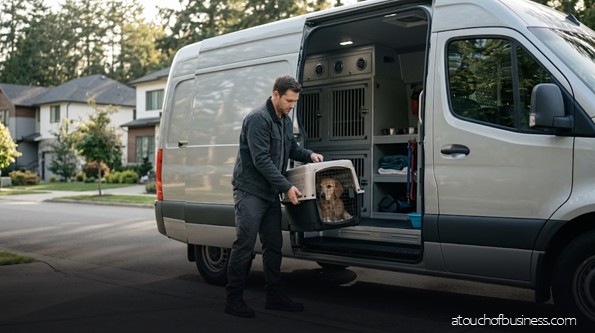
What to Expect From This Guide to Starting a Pet Transportation Business
This guide walks you through the key decisions and practical steps involved in starting a pet transportation business, from testing your fit to opening. The highlights below are only a sample of what it covers.
Inside the guide, you will find:
- Startup steps: Follow an ordered path from testing your fit and checking local demand through registration, vehicle choice, equipment, and a pre-opening test.
- Financial planning: Work through break-even logic, startup cost categories, pricing inputs, and funding options so you can test your numbers locally.
- Rules and registration: Learn how federal animal transport registration, vehicle thresholds, and state and local requirements may apply, depending on your runs and location.
- Vehicle and equipment: Compare vehicle features, carriers, insurance coverage types, and cleaning supplies for transporting animals.
- Risks and warnings: Spot red flags before you buy a vehicle, and again before your first paid run.
- Daily reality: See what a typical day involves, including the parts owners often enjoy and the parts they find hard.
- Common questions: Find concise answers on registration, insurance, carrier use, and transporting different animals together.
Begin with whether driving animals for hire suits your strengths and lifestyle, then move through the steps that build toward opening day.
As a pet transporter, you take custody of dogs and cats and drive them between homes, vets, groomers, and daycares.
Some runs are local pet taxi trips. Others are longer ground pet transport legs for relocating owners, rescues, and shelters.
You’ll follow the general startup steps and add federal rules that cover animals in your custody and the vehicles carrying them.
Is a Pet Transportation Business a Good Fit for You?
Running a pet transportation business suits you if you enjoy driving, can handle stressed animals, and can live with uneven income at the start.
Start by asking why you want to run this business.
Will that reason hold up through slow weeks, long drives, and the possibility of failure?
Weigh these practical points before you spend money:
- Startup costs and operating costs you must price out locally
- Access to capital, and money to cover personal living expenses while the business builds
- Support from your household for irregular schedules and long drives
- The time that driving, scheduling, and paperwork will take
- Skills in driving, animal handling, scheduling, record keeping, clear communication, and emergency response
- Willingness to serve the pet owners and organizations that book runs
You can start from scratch, buy an existing route-based pet transport business, or explore a franchise.
Talk with pet taxi and pet transport operators who will not compete with you, and prepare your questions first.
Advice from real business owners gives you firsthand insight, even though every owner’s path differs.
Who Your Customers Will Be
Your customers include pet owners, vet clinics, groomers, daycares, boarding facilities, rescues, and shelters.
Each group needs a different kind of run.
Your first customers may include:
- Pet owners who can’t drive or can’t attend an appointment. They need a ride for their pet when they’re unavailable.
- People who run vet clinics, grooming shops, daycares, and boarding facilities. They need pickup and drop-off runs for the pets they serve, booked by reservation.
- Relocating owners. They need longer ground runs between cities or states.
- Rescues and shelters. They need relay legs and transfers between shelters or rescue groups, often on weekends.
Your customer mix shifts with your model. Local pet taxi work centers on appointment runs, while longer runs center on relocating owners and rescue relays.
Do you want to spend your days serving these pet owners and organizations?
Red Flags Before You Start
These warning signs should make you pause, verify more, change your model, or reconsider before you spend money on a vehicle.
Market and money warning signs:
- Weak local demand. Few clinics, groomers, or daycares within reach, or competitors already offering transport as a side service. Verify further or change your model.
- Long miles between stops. Spread-out service areas raise fuel use and driving time. Pause and rework your area.
- Thin margins. Prices are limited by what owners will pay, while fuel, vehicle wear, and empty miles cut into them. Test your numbers before buying a vehicle.
- Seasonal swings. Hot-weather air travel restrictions can push more moves to ground and strain your vehicle’s cooling, and slow periods can follow. Build uneven weeks into your break-even logic.
- Short operating capital. The U.S. Small Business Administration (SBA) advises counting at least one year of monthly expenses. Delay opening until you can cover that span.
Rule, safety, and risk warning signs:
- A vehicle that can’t meet the standards. Federal standards set temperature limits and sanitation rules, and front-only climate control can’t regulate a rear compartment. Change the vehicle or the model.
- Insurance gaps. No quote covers animals in your custody or business use of your vehicle. Pause until coverage is available.
- Reluctance to accept inspections and keep records. Inspections by USDA’s Animal and Plant Health Inspection Service (APHIS) are unannounced. Reconsider if that doesn’t suit you.
- Injury risk. Related animal and driving jobs carry injury risk. Confirm your physical fit before buying equipment.
- Disease spread. Mixed animals with unknown health status raise infectious disease concerns seen in shelter relocation. Tighten sanitation or narrow your model.
- Parking and lease limits. Zoning, a lease, or an association may bar a work vehicle at home. Verify before you buy.
- Misclassified drivers. Treating employees as contractors can create tax liability. Ask an accountant before you hire.
Industry conditions to understand before you commit:
- Federal registration, vehicle rules, state entry rules, and local licensing all apply, and interstate runs add complexity.
- Live animals can’t be stacked, and temperature and exposure limits restrict your schedule.
- A solo driver depends on one vehicle, so a single breakdown can stop every run.
- Some pet service companies include transport in their offerings, and volunteer networks operate in rescue work. Compensated volunteers, including those reimbursed for expenses, may fall under registration rules.
A Day in the Life of Running a Pet Transportation Business
Your day centers on reservations, pickups, handoffs, and cleaning carriers between riders.
Many local pet taxi owners run solo and take reservations by phone, email, or messaging.
You load and secure carriers, drive the planned pickups, and hand animals off at vet offices, groomers, and daycares.
Rescue relay runs add bathroom walks, handoffs between drivers, and long legs, mostly on weekends.
At the end of the day, you clean your carriers and vehicle before the next rider.
Between runs, you take bookings, monitor animals en route, and offer food and water at stops.
Busy days mean juggling several animals and appointments, and mornings and afternoons tend to be the busiest stretches.
Weekend and holiday runs, and shifting schedules, are common in route-based driving.
What owners often enjoy:
- Spending the day with animals, which owners often describe as enjoyable or rewarding
- Meeting the people whose pets you carry
What owners often find hard:
- Lifting carriers and long drives that leave you physically tired
- Handling stressed or escape-prone animals at transfers, including bites and scratches
- Traffic, deadlines, weather, and last-minute changes to your plan
Does this daily rhythm fit the life you want?
Step 1: Test Your Fit and Question Other Operators
Test your fit by listing the physical and driving demands of the job, then asking experienced operators how it really runs.
Check yourself on these points:
- Are you comfortable with dogs and cats of all temperaments?
- Can you lift carriers and handle a long drive in traffic and bad weather?
- Will you drive alone, or add a driver?
Prepare questions for your conversations about daily workload, vehicle wear, and customer mix.
Operators in other markets can show you how those three factors play out in practice.
Step 2: Choose Your Pet Transport Model
Choose local pet taxi runs, longer ground and relay runs, or a blend, because your model shapes your vehicle, insurance, equipment, and rules.
Common models include:
- Local pet taxi runs to vets, groomers, daycares, and boarding facilities
- Longer ground runs for relocating owners
- Relay legs for rescues and shelters
Compare starting from scratch with buying a business before you spend money on a vehicle.
If you consider a franchise, check whether any franchisor lists pet transport as a core or optional service.
Request its disclosure document and review it with a franchise attorney.
Step 3: Validate Local Demand and Competition
Validate demand by asking the people who run vet clinics, grooming shops, and daycares in your area whether their clients need rides.
Compare what you hear against local supply and demand before you commit to a vehicle.
Check these competitors:
- Other pet transporters in your area
- Pet service companies that offer transport as a side service
- Volunteer relay networks in rescue work
Map your service area and note the miles between likely stops.
Plan how you’ll reach these customers at opening. Introduce yourself in person to people running businesses that already serve pet owners.
Step 4: Run Your Profit and Break-Even Logic
Run break-even logic before you buy anything: find how many paid runs cover your fixed costs, using your own local numbers.
Don’t rely on a generic figure, because every pet transport startup has different costs and prices.
Fixed costs stay the same each month, such as a vehicle payment or lease, insurance, and software.
Variable costs rise with each run, such as fuel, tolls, maintenance, cleaning supplies, and lodging on overnight runs.
Break-even is the point where your paid runs cover both kinds of costs.
Use estimated local prices for now, then refine your numbers after you set your pricing in Step 12.
Ask these questions with your own numbers:
- How many paid runs per week cover your fixed costs?
- How many miles will you drive with no animal aboard?
- Does your market support that many paid runs?
- Can you get through slow weeks and delayed payments?
Plan your operating capital too. The SBA separates one-time costs from monthly costs and advises counting at least one year of monthly expenses.
Review how to estimate profit and revenue before you finalize these numbers.
Step 5: Verify Which Rules Apply to Your Runs
Federal Animal Welfare Act rules apply when you take custody of dogs or cats for hire, whether your runs are local or interstate.
APHIS guidance names pet taxi runs to vets and pet stores.
The same guidance also names paid transport between shelters or rescue groups.
Pets that stay in the owner’s custody, such as a pet riding with its owner in a hired car, fall outside APHIS coverage.
Other rules may still apply, so confirm your situation with APHIS.
You need a U.S. Department of Transportation (USDOT) number if your vehicle, or vehicle plus trailer, is rated at 10,001 pounds or more and operates in interstate commerce.
Interstate commerce includes trips that cross state lines and in-state legs of a trip that starts or ends elsewhere.
Some states also require a USDOT number for in-state operation, so ask your state transportation or motor carrier agency.
For interstate runs, the receiving state sets animal health requirements such as vaccinations, tests, and a certificate of veterinary inspection (CVI).
An accredited veterinarian issues the CVI. Contact the animal health official in each destination state before you accept a run.
If your model can’t meet these rules, change the model before you spend money.
Step 6: Choose a Business Structure, Name, and EIN
Choose your structure before you sign for a vehicle, because animals in your custody and driving create personal liability risk.
The SBA notes that sole proprietors carry personal liability, and banks are often reluctant to lend to them.
The APHIS application accepts several entity types, including sole proprietors and LLCs, so structure remains your choice.
Compare business structures and LLC versus sole proprietorship, then take your choice to an attorney and a tax professional.
Register your business name or file a doing business as (DBA) name where required.
Get your Employer Identification Number (EIN) before the APHIS application. Its tax ID sheet asks for a Social Security number from an individual or an EIN from an entity.
Employees, bank accounts, and many license applications also call for an EIN. Learn how to get a business tax ID.
Step 7: Register With APHIS
Register with APHIS online through its Licensing and Registration Assistant, or file Form 7011A and Form 7030.
The application asks for:
- Your entity type
- A mailing address that is not a PO box
- Every physical location where vehicles or animals are kept
- Owners and officers aged 18 or over
- A signature acknowledging the federal animal welfare regulations in 9 CFR Parts 1–3
Confirm your parking location is allowed, using the checks in Step 8, before you list it on the application.
After you apply, APHIS issues a certificate and assigns a field inspector.
APHIS materials cite about 15 business days for a response, so confirm timing before you plan an opening.
Inspections are periodic and unannounced.
Registration renews on a set cycle, and the APHIS letter cites every 3 years, so confirm the cycle with APHIS.
Report changes in name, address, ownership, or operations by certified mail within 10 days.
Ask APHIS to confirm the latest fee status before you apply.
Step 8: Complete Business Licenses, Tax Accounts, and Zoning Checks
Licenses, tax accounts, and zoning rules vary by U.S. jurisdiction, so check each level before you accept paid runs.
At the state level, expect a business license or registration, tax accounts, and employer accounts if you hire staff.
At the city or county level, expect a general business license, a DBA filing, and zoning or home-occupation rules.
A certificate of occupancy is not typically needed for a vehicle-based model, unless you rent a garage, lot, or office.
Learn the basics of business licenses and permits before you visit these offices.
What to ask agencies and professionals:
- State revenue office: Are transport services taxable, and do I need a seller’s permit?
- City or county planning office: Does zoning allow a home-based pet transport business, and can I park my vehicle there?
- Landlord or homeowners association: Does my lease or association limit parking a work vehicle?
- State or local animal services office: Does any permit or registration cover businesses that handle animals for hire?
Step 9: Decide on Your Vehicle
Pick a vehicle that holds temperature in the federal range, has rear heating and cooling vents, and has washable surfaces.
Federal surface-transport standards set the vehicle temperature range at 45 to 85°F. Verify the figures against the latest regulation text.
Auxiliary ventilation is required at 85°F, and loading or unloading exposure outside the range is limited to 45 minutes.
Check these vehicle factors:
- Rear heating and cooling vents, since front-only systems can’t control rear temperature
- Washable surfaces, with no carpet in the animal area
- No built-in crates or shelves
- A weight rating checked against the USDOT threshold, including any trailer
- Ease of maintenance
Ask your state motor vehicle agency about registration class, commercial plates, and minimum liability insurance.
Confirm whether your vehicle’s weight class needs a different driver’s license.
Get an insurance quote on the specific vehicle before you buy it.
Buying first can leave you with a vehicle you can’t insure or outfit.
Before you sign for a vehicle, confirm how you’ll pay for it (see Step 13).
Step 10: Arrange Insurance for Your Pet Transport Runs
Get quotes from an agent who handles commercial transportation or pet businesses, and ask what each policy excludes.
Coverage types to price out:
- Commercial auto, or a business-use endorsement, since personal auto policies often limit or exclude business use
- Hired and non-owned auto coverage if staff drive their own vehicles
- Coverage for animals in your custody (animal bailee coverage), often a limited endorsement with separate limits
- General liability
Compare limits, exclusions, and covered animals across insurers, and review the basics of business insurance first.
Step 11: Buy Carriers, Equipment, and Cleaning Supplies
Buy hard-sided carriers, tie-downs, monitoring devices, and cleaning supplies before your first paid run.
Use the federal enclosure standards as your baseline.
Under federal standards, each enclosure:
- Lets each animal stand, sit erect, turn, and lie in a natural position
- Has ventilation openings
- Has a solid, leakproof floor
- Is marked “Live Animals” with arrows, if it is non-permanent
- Is cleaned and sanitized before each use
Don’t toss or drop enclosures, and don’t stack them in a way that risks injury. Verify these standards against the latest regulation text.
Shelter-industry guidance, which is not federal law, adds:
- Hard-sided plastic carriers, since wire crates are unstable and pop-up crates are discouraged
- Vents on at least three sides and locking doors
- Tie-downs or bungees with metal ends, tested with a shake test: firmly shake each secured carrier to confirm it doesn’t shift
- A carbon monoxide detector in the animal compartment
- A thermometer or monitor for the animal area
Don’t let pets ride loose. Use a secured enclosure or a harness.
Carry harnesses, leashes, slip leads, towels, gloves, and waste bags for handling transfers.
Federal standards require offering food at least every 24 hours to animals 16 weeks or older, and every 12 hours to younger ones.
Water must be offered at least every 12 hours, so carry a water supply and bowls for stops.
Observe animals at least every 4 hours on surface trips. Transport an obviously ill animal only to get veterinary treatment.
Clean before disinfecting, and follow the label’s dilution and contact time.
Keep spare carriers so you can rotate them between riders.
Write an emergency plan with contacts before your first run, and ask a veterinarian what to carry for animal first aid.
Step 12: Set Your Pet Transport Pricing
Set prices from your own costs and distance, since local runs commonly use a base fee plus a per-mile charge.
Price out these inputs:
- Distance and time
- Wait time
- Number of animals and stops
- Tolls and fuel
- Overnight lodging for long runs
- Special handling
Review how to approach pricing your services, and compare what local transporters charge.
Step 13: Verify Funding and Draft Your Business Plan
Ask each lender or investor which documents it requires before you apply, then pull your answers into the Business Plan section below.
The SBA lists these funding options:
- Self-funding
- Small business loans from banks and credit unions
- SBA-guaranteed loans
- Crowdfunding
- Investors
Lenders typically ask for:
- A business plan
- A startup cost sheet
- Projections
- A break-even analysis
- A funding request
- Personal credit history
Confirm each lender’s list before applying, and read how to get a business loan.
Step 14: Set Up Banking and Payments
Open a business bank account after your structure and EIN are in place, then set up a way to collect payments.
Review how to open a business bank account before you choose a bank.
Decide how customers will pay for runs and deposits, and set your deposit and cancellation policy.
Set up mileage and expense tracking before your first run.
The IRS lists these vehicle expense categories:
- Fuel
- Repairs and tires
- Insurance and registration
- Depreciation or lease
- Parking and tolls
Step 15: Prepare Forms, Contracts, and Records
Prepare a service agreement, intake form, and owner authorization, and have an attorney review your contract and any waiver.
Build these records:
- A transport manifest, with a copy kept apart from the vehicle
- An incident log
- Vaccination records for each animal
- Health certificate copies for interstate runs, issued by an accredited veterinarian
- A written certification from the person sending the animal (the consignor) of when food and water were last offered
Verify the exact wording of that certification in the federal regulation.
Federal rules set a minimum age of 8 weeks and weaned for commercial transport, with an exception for transport to a registered research facility.
Confirm with APHIS which records it requires of carriers and intermediate handlers, such as pet nannies and boarding kennels that handle shipping.
Step 16: Decide on Hiring and Training for Your Pet Transport Runs
Decide before you hire whether any driver will be an employee or a contractor, because misclassification can create employment-tax liability.
The IRS weighs behavioral control, financial control, and the relationship between you and the worker.
Review how and when to hire before you add a driver.
Train every driver on the cleaning routine, the emergency plan, handling stressed animals, and heat risks.
Nearly every state has a mandatory workers’ compensation system, with exemptions and thresholds that differ. No federal mandate exists.
If you have employees, check your state workers’ compensation agency about employer coverage requirements.
The Occupational Safety and Health Administration (OSHA) general duty clause applies to employers, so confirm your obligations with OSHA.
Step 17: Run a Pre-Opening Test and Complete the Checklist
Run a practice trip with loaded, secured carriers, check the animal area’s temperature, then unload and clean everything.
Finish by confirming every item on this pre-opening checklist.
- Entity filed, EIN issued, and business name registered
- APHIS registration certificate received
- USDOT number obtained, or confirmed not required
- Local licenses, zoning, and home-occupation approvals confirmed
- Insurance bound, with exclusions and limits reviewed
- Vehicle registered, insured, and outfitted, with rear climate control tested
- Carbon monoxide detector and thermometer installed and working
- Carriers inspected for ventilation, floors, doors, and “Live Animals” markings
- Tie-downs tested with a shake test
- Cleaning supplies stocked and cleaning routine written
- Emergency plan written and contacts saved
- Service agreement, intake form, and manifest ready
- Record system set for vaccination records and health certificates
- Payment processing tested and business account open
- Mileage tracking running
- Driver training complete, if anyone besides you drives
- Pricing sheet finalized
Business Plan
Draft your business plan as you complete the earlier steps, then finish it once costs, funding, pricing, and break-even inputs are in place.
Your plan pulls together your startup steps, legal checks, costs, pricing, funding, and pre-opening confirmations.
Startup costs to list and price out:
- Vehicle purchase, lease, or an existing vehicle that meets the standards
- Vehicle outfitting, such as rear climate control work, flooring, tie-down points, and detectors
- Carriers, restraints, and handling gear
- Cleaning and sanitation supplies
- Insurance premiums
- Registration and licensing items to verify locally, including APHIS fee status
- Business setup, including structure filing, name registration, and attorney or accountant review
- Technology for booking, payments, GPS, and mileage tracking
- Veterinary health certificate costs for interstate runs
- Operating capital for fuel, maintenance, tolls, and lodging on overnight runs
Costs rise or fall with your model, the number of animals per trip, and the size of your service area.
Your vehicle type, whether it’s new, used, or already owned, and whether you drive alone also change your totals.
Your most accurate estimate comes from listing every item and pricing it locally. No generic figure fits every pet transport startup.
Add your break-even logic: the paid runs needed to cover fixed costs, and the margin pressure from fuel and empty miles.
Show how you’ll get through slow weeks and delayed payments.
Finish with the funding option you chose and the documents each lender requires.
Opening-Day Red Flags
Delay your first paid run if your practice trip or final checks reveal any of these problems.
- No APHIS certificate in hand. Don’t accept paid runs that put dogs or cats in your custody until registration is in place.
- Insurance quoted but not bound. Confirm coverage is in force before the first animal boards.
- Temperature outside 45 to 85°F during your test. Fix your rear climate control before opening.
- Carriers that shift during the shake test. Re-secure the tie-downs or change how you mount them.
- Carriers missing ventilation, leakproof floors, or “Live Animals” markings. Replace or correct them.
- No working carbon monoxide detector or thermometer. Install and test both.
- No written emergency plan or cleaning routine. Write both before you accept a run.
- A failed test payment. Fix payment processing before your first booking.
- No manifest or vaccination record system. Set up your records before animals ride with you.
Frequently Asked Questions
Is APHIS registration the same as a USDA license for pet transporters?
No. APHIS materials say carriers and intermediate handlers register. Licensing applies to dealers, exhibitors, and research facilities.
Some web pages call the requirement a license or a class, but registration is the process APHIS describes for transporters.
Does a “crash-tested” label prove a pet carrier or harness was tested in crashes?
Not necessarily. The Center for Pet Safety, as reported by Pet Health Network, found no standardized test protocols behind crash-tested claims.
Consumer Reports describes independent testing, and the American Veterinary Medical Association (AVMA) notes limited evidence on individual product safety.
Compare independent testing information before you buy.
Does general liability insurance cover pets in my vehicle?
Usually not. General liability typically excludes customer property, including pets, in your care, custody, or control.
Do I need a credential or industry experience to start?
Not for the APHIS application, which lists no credential field.
The International Pet and Animal Transportation Association (IPATA) offers voluntary membership with its own requirements, including references, insurance, a code of ethics, and a provisional period.
Can I leave animals in the vehicle when I stop for fuel or a restroom?
Not without monitoring. Cracking windows has very little effect on heat, according to the AVMA.
The Association of Shelter Veterinarians says never leave animals unattended unless they are monitored.
Some states also restrict leaving pets in vehicles, so check your state’s animal agency.
When does driving alone stop working on long runs?
Shelter-industry guidance suggests two drivers for trips over 4 hours.
This benchmark comes from the Association of Shelter Veterinarians. It’s guidance, not federal law.
How many animals can ride in one carrier?
Federal standards allow up to four dogs or cats of comparable size in one enclosure on surface transport.
Puppies or kittens 4 months or younger don’t share with adults other than the mother.
Verify these limits against the latest regulation text.
Can cats and dogs share a vehicle on the same run?
That’s your decision. The Association of Shelter Veterinarians and the Association for Animal Welfare Advancement both favor transporting them separately.
If they share a vehicle, shelter guidance calls for a physically separate space for cats, with barriers.
Temperament and your vehicle layout decide whether that setup is workable.
Interviews with Pet Transportation Business Professionals
These interviews feature experienced pet transportation business owners and professionals discussing how they entered the industry, developed their services, and handled operational challenges. Their experiences cover local pet taxi services, long-distance animal transportation, international relocation, customer relationships, safety procedures, and business growth.
Anyone considering starting a pet transportation business can use these discussions to explore different service models and understand the responsibilities involved. The interviews also provide practical perspectives on identifying customer needs, building partnerships, preparing vehicles, coordinating travel arrangements, and earning clients’ trust.
Claire Harris on Founding the UK’s First Pet Taxi
Claire Harris, founder of Pets2Places, explains how she started a local pet taxi service with limited funding and developed it into a franchise business. She discusses identifying demand for veterinary transportation, attracting customers through local marketing, expanding services, choosing appropriate vehicles, and training franchise operators.
This interview is particularly useful for understanding how a small pet transportation business can begin by serving a specific local need. Harris also shares advice about researching competitors, estimating financial requirements, identifying ideal customers, and maintaining realistic expectations about business growth.
Meet the Founder
Dacia Rohlehr, founder of Paws en route, explains how difficulty finding suitable veterinary transportation for her dog motivated her to establish a specialized pet transportation company. She discusses driver recruitment, background checks, employee training, partnerships with veterinary clinics and other pet businesses, and the development of a pet transportation booking app.
Her experience helps prospective business owners understand the importance of identifying unmet transportation needs and establishing safety-focused operating procedures. The interview also illustrates how professional partnerships and technology can support business development.
Pet Partner Spotlight: Magic CarPet Rides!
Brian Anderson discusses how he and his wife, Dominique, entered the pet transportation industry through Pawstin Downtown Dog Walkers and Pet Taxi before operating Magic CarPet Rides. He describes working with pet relocation companies, transitioning from shorter regional journeys to cross-country transportation, and keeping families informed during extended trips.
This interview offers insight into building relationships with established relocation providers and adapting a transportation service to longer journeys. It also demonstrates why communication, individual attention, and understanding customers’ emotional concerns are important when transporting pets over several days.
A Day in the Life of a Pet Shipper
Richard Hardy, founder of Blue Collar Pet Transport, describes his daily responsibilities managing domestic and international pet transportation. He discusses reviewing flight and vehicle schedules, coordinating routes, checking transportation arrangements, supervising operations, and responding to customer questions throughout the day.
For prospective business owners, this interview provides a practical view of the organizational work required beyond driving animals between destinations. Hardy’s experiences highlight the importance of scheduling accuracy, reliable communication, route coordination, and maintaining oversight of pets throughout their journeys.
Interview with Angie O’Brien, Co-Founder of PetRelocation
Angie O’Brien explains how she and her husband developed PetRelocation after initially operating a small pet taxi business. She discusses expanding into international transportation, managing travel documentation, coordinating veterinary requirements, selecting travel routes, and helping customers navigate country-specific pet import regulations.
This interview is useful for entrepreneurs considering specialized relocation services rather than local transportation alone. It demonstrates how international pet transport requires detailed advance planning, knowledge of destination requirements, and consistent communication with customers during complicated moves.
Expert Q&A with Relopet International: Behind the Scenes of Pet Relocation
Cassandra, a pet travel coordinator at Relopet International with a background in veterinary assistance and logistics, explains the steps involved in arranging international pet transportation. She discusses health certificates, Canadian Food Inspection Agency appointments, airline bookings, customs coordination, suitable travel crates, and handling scheduling difficulties.
This interview helps prospective operators understand the detailed administrative and logistical responsibilities involved in pet relocation. It is especially relevant for learning why veterinary coordination, documentation deadlines, appropriate animal carriers, and contingency planning must be considered before accepting international transportation assignments.
Angela Passman: How to Build a Business That Prioritizes Animal Welfare
Angela Passman, founder of World Pet Travel, discusses how her experience helping animals developed into a professional pet relocation business. She explains the importance of animal welfare standards, appropriate handling procedures, understanding transportation regulations, industry training, and making travel decisions based on each animal’s needs.
This interview provides valuable guidance for entrepreneurs developing safety policies and professional operating standards. Passman’s experience emphasizes learning applicable animal welfare regulations, obtaining relevant training, recognizing travel risks, and establishing procedures that prioritize animal care as a business grows.
Related Articles
- How To Start a Children’s Transportation Business
- How To Start a Taxi Business
- How To Start an Airport Shuttle Service
Sources:
- USDA APHIS: Registration Gray Book Guide, Transporting Animals in Commerce, Registration Application Pack, Dog Activities Q&A Tech Note, Minimum Age Transport Rules, Moving Pets Between States
- eCFR: Part 2 Registration Rules
- GovInfo: 9 CFR Part 3 Standards
- FMCSA: Do I Need USDOT Number
- SBA: Apply for Licenses and Permits, Choose a Business Structure, Calculate Your Startup Costs, Fund Your Business
- IRS: Employer ID Numbers, Business Use of Car, Worker Classification Guide
- Every CRS Report: Workers’ Compensation Overview
- Insureon: Pet Transportation Insurance, Personal Auto Business Use
- Complete Markets: Pet Business Insurance Options
- GEICO: Commercial vs Personal Auto
- Association of Shelter Veterinarians: Animal Transport Guidelines, Shelter Sanitation Guidelines
- ASPCA Pro: Transport Loading Guidance
- AVMA: Safe Pet Vehicle Transport, Pets in Vehicles Heat
- Pet Health Network: Crash Test Claims Pet Gear
- Consumer Reports: Keep Pets Safe in Car
- IPATA: IPATA Active Membership
- NBC Miami: Extreme Heat Airline Pet Travel
- dvm360: Relocation Infectious Disease
- Pigeon605: Canine Chauffeur Pup Truk
- Second Wave Media: Taxi Service Canine Riders
- The Washington Times: Paxi Drives Pets Around Town
- Vetstreet: Weekend Rescue Dog Drivers
- Best Friends Animal Society: Volunteer Transport Tasks, Pet Transport Services Overview
- Bureau of Labor Statistics: Delivery Truck Drivers Outlook, Animal Care Workers Outlook