
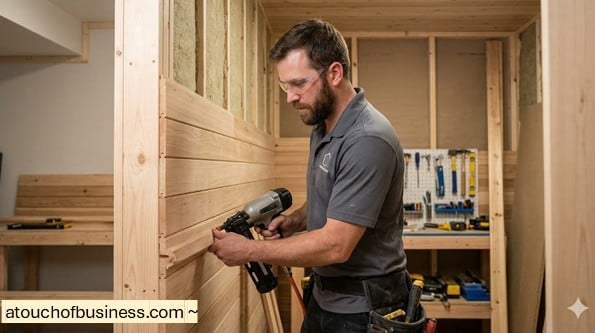
Overview of Starting a Sauna Installation Business
A sauna installation business involves setting up indoor or outdoor sauna systems for homeowners and, in some cases, commercial clients. The work can include site visits, measurements, room planning, heater selection, material ordering, on-site assembly, trim work, trade coordination, final testing, cleanup, and customer handoff.
This is not a simple “show up and put parts together” service. A sauna installer has to think about room volume, ventilation, heater clearances, access into the home, electrical requirements, moisture exposure, delivery timing, and whether permits or inspections apply before the job can be finished.
That is why this business can be attractive and risky at the same time. You can start with a focused service area and a narrow offer, but a bad estimate, a permit surprise, freight damage, or unclear job scope can turn a good-looking project into a problem fast.
- Common work includes prefab sauna assembly, custom indoor sauna rooms, outdoor sauna setup, infrared unit installation, heater and control replacement, and trim or accessory installation.
- Typical customers include homeowners, wellness-focused remodel clients, backyard amenity buyers, garage-gym buyers, builders, and remodelers.
- Public and commercial jobs can exist, but they often bring more review, more coordination, and more rules than residential work.
- Customers usually care most about trust, workmanship, price clarity, timing, cleanup, and confidence that the sauna will work safely when the job is done.
A sauna installation business also has a very real field workflow. Inquiry turns into site review, then estimate, approval, ordering, scheduling, installation, final walkthrough, and payment. If you do not build that workflow before launch, the work will start controlling you instead of the other way around.
A normal early-stage day might include a morning site measure, an afternoon quote, a call with a heater supplier, a schedule check with an electrician, and an evening review of contract details for the next job. That rhythm tells you a lot about the business. You are not just selling a product. You are managing projects.
Is A Sauna Installation Business The Right Fit For You?
This matters because a sauna installation business can look polished from the outside, while the day-to-day work is practical, physical, detailed, and sometimes stressful. If you do not like field work, measurements, customer conversations, scheduling pressure, and solving problems on site, the business will wear you down.
You need to ask two separate questions. First, does owning a business fit you at all? Second, does this specific business fit you? Plenty of people like saunas, wellness, or home improvement ideas, but that does not mean they will enjoy quotes, job delays, change orders, damaged freight, permit calls, or the pressure of being responsible for the final result.
Passion still matters. When you care about the work itself, not just the idea of ownership, it is easier to handle long days, customer questions, and the extra effort required before launch. If you need a reminder of why that matters, think about your passion for the work before you commit.
Ask yourself whether you are moving toward this business or just trying to get away from something else. Starting only to escape a hated job, solve immediate financial pressure, or chase the image of being a business owner is a weak foundation for a regulated, project-based service business.
You also need a practical reality check. Can you stay calm when a customer changes the scope? Can you explain what is included and what is not? Can you deal with homes that have tight access, bad power setups, or layout problems? Can you work cleanly and still move fast enough to make a profit?
Before you commit, talk to owners who are not in your market. Speak with sauna installers, specialty contractors, remodelers, or home improvement business owners in another city or region so you are getting honest answers without creating a local conflict. Use those talks to ask real questions about quoting, licensing, suppliers, callbacks, and what went wrong in their first year. That kind of firsthand owner insight is hard to replace.
- If you like finish work, jobsite problem-solving, and customer-facing project work, this business may fit you well.
- If you want fast cash, low liability, and simple jobs with few moving parts, this may not be a good match.
- If you plan to stay solo at first, be honest about lifting, transport, scheduling, and whether one-person installs are realistic for the units you want to sell.
Step 1 Decide What Kind Of Sauna Installation Work You Will Offer
This step matters because your offer determines your tools, suppliers, licensing exposure, job length, pricing, and risk. A business that installs prefab residential sauna kits is very different from one that takes on custom indoor rooms, outdoor cabin units, or public sauna projects.
Start narrow. Decide whether you will focus on traditional electric-heater saunas, infrared units, outdoor saunas, indoor prefab systems, custom build-outs, or a small mix that you can manage well. Do not lump everything together just to sound more flexible. Traditional and infrared systems can have different equipment, electrical needs, and installation steps.
You also need to decide whether you will install owner-supplied products, resell sauna products as part of the job, or handle design and installation together. That choice affects supplier relationships, warranty expectations, deposits, taxes, and how customers compare your quote to others.
For most first-time owners, the safest launch path is a residential-first sauna installation business with a limited service area and a clear scope. A narrow offer is easier to price, easier to schedule, and easier to explain.
- Good first-stage service options include prefab indoor sauna installation, outdoor sauna assembly, heater and control replacement, and light custom trim work tied to the sauna project.
- Higher-complexity work includes full custom sauna rooms, structural changes, major electrical upgrades, and public or commercial installations.
- Make a written list of what you do, what you do not do, and what work will always be handled by licensed trade partners.
Step 2 Check Demand In Your Area And Be Real About Competition
This matters because even a well-run sauna installation business can struggle if your area has weak demand, low awareness, or strong established competitors. You do not need perfect market data, but you do need a grounded picture of whether people in your area actually buy this kind of work.
Start with the customer types most likely to hire you. Homeowners upgrading a basement or backyard, wellness-focused buyers, luxury remodel clients, cabin owners, gym-minded households, and people adding premium home amenities are better early targets than “everyone who likes saunas.” The more specific your customer picture is, the easier it is to shape your offer and sales message.
Then look at local competitors with a practical eye. Check who installs saunas, who sells them, who handles adjacent work like bath remodeling, and who already has customer trust. What are they showing in their photos? Are they focused on luxury custom work, quick kit installs, or full remodeling packages? That tells you where the open space may be.
Take time to look at local supply and demand before you buy tools or inventory. A good first-stage plan is better than guessing. Put your findings into simple notes, then fold them into building a business plan that covers your service area, offer, suppliers, startup costs, and first-stage goals.
- Define a starting service radius so travel time does not destroy your margin.
- Identify the project types that seem to be in demand in your area.
- Notice how local competitors explain pricing, timelines, and what is included.
- Watch for gaps such as poor communication, weak project photos, or unclear scope descriptions.
A sauna installation business does not need national demand to work. It needs enough qualified customers in a reasonable radius, plus an offer that feels clear and trustworthy.
Step 3 Choose Your Structure And Register The Business Properly
This matters because your business structure affects liability, taxes, banking, contracts, and how you present yourself to suppliers and customers. It is easier to set this up correctly now than to unwind sloppy paperwork later.
Pick your legal structure before you start taking deposits. Some owners begin alone, while others launch with a partner or small crew. Whatever you choose, make sure the structure fits how you will own the business, sign contracts, and handle risk. If you need help sorting that out, spend time on deciding on a business structure before you file anything.
Once the structure is set, register the business name if needed, and handle any assumed-name filing if you plan to trade under a name different from the legal entity name. Then get your Employer Identification Number and keep those details organized from the start. Clean setup makes banking, tax registration, and contractor applications much easier.
If you want outside help, compare filing options carefully. Some owners prefer to file directly, while others use a service. Either way, keep your records together and make sure the name on your contracts matches the legal setup.
- Choose the legal owner or owners before applying for anything else.
- Make sure your contracts, invoices, and supplier applications use the correct business name.
- Get your tax identification and registration paperwork in place before you open accounts or start billing customers.
Do not rush through this part. In a regulated service business, weak paperwork becomes a real problem once permits, contracts, insurance, and payments start stacking up.
Step 4 Pin Down Licensing, Permits, And Local Approval Triggers
This step matters because a sauna installation business can cross into home improvement, general contracting, carpentry, and electrical work depending on the project. If you start selling jobs before you understand the local rules, you can create delays, failed inspections, or work that has to be redone.
Start with the state level. Find out whether your work requires contractor registration, home improvement licensing, trade licensing, or a specific threshold based on project value. Then move down to the local level and find out what the city or county expects for permits, inspections, and land use.
For most new owners, the key questions are simple. Do you need a contractor or home improvement license to offer the work? When does a building permit apply? When is an electrical permit required? If you run the office from home, do you need a home occupation approval? If you lease a shop or showroom, do you need a certificate of occupancy before using the space?
Some sauna jobs are straightforward. Others trigger more review because they involve altered wiring, specialty heaters, changed layouts, or public access. Keep your local questions brief and direct. You can use a page on business licenses and permits as a starting point, but the final answer still comes from the agencies where you operate.
- Ask the building department whether the project needs a building permit, an electrical permit, both, or neither.
- Ask the licensing authority whether sauna installation falls under contractor, home improvement, carpentry, or electrical rules in your area.
- Ask zoning whether your office, yard, shop, or home office is allowed at the address you want to use.
- Ask what must be approved before you advertise, sign contracts, or begin work.
If you plan to take public or commercial sauna jobs, slow down and verify more. Accessibility rules may apply, and some local health departments treat public sauna facilities differently from residential work. A private home sauna and a public sauna project should never be treated like the same job.
Step 5 Decide How You Will Handle Electrical Work And Project Coordination
This matters because electrical scope is one of the biggest risk points in a sauna installation business. The heater, controls, sensors, circuit size, clearances, and wiring requirements all have to line up with the room and the manufacturer instructions.
The safest first-stage choice for many new owners is to separate the work clearly. You handle site review, measurements, sauna assembly, trim, ventilation planning, staging, and closeout, while a properly licensed electrician handles the electrical connection and any panel work. That reduces licensing risk and keeps responsibilities clear.
If you want to self-perform electrical work, verify that your business and your people are allowed to do it where you operate. Do not assume that “light hookup work” is informal or exempt. In this business, small electrical assumptions can create expensive problems.
Your project workflow should reflect that reality. Measure the space, review access, confirm the room type, verify the power situation, decide who is pulling permits, order materials, stage the job, complete assembly, coordinate electrical hookup, handle inspection if required, run a test cycle, then do the final walkthrough.
- Create a written handoff sheet for electricians with heater model, control requirements, room layout, and target installation date.
- Keep permit responsibility clear in your contract so the customer knows who is doing what.
- Do not promise a finish date until you know whether the project depends on another trade or an inspection.
A sauna installation business feels smoother when the sequencing is clear. It feels chaotic when everyone assumes someone else is handling the next step.
Step 6 Build Supplier Relationships And Standardize What You Sell
This step matters because your supplier setup affects lead times, freight risk, pricing, warranties, and how predictable your installs will be. The more products you try to handle at once, the more chances you create for ordering errors and field confusion.
Pick a manageable group of sauna products and learn them well. Many sauna systems include panels or tongue-and-groove boards, benches, backrests, headrests, duckboard, doors, heater units, controls, stones, and trim pieces. When you know your product lines, you can quote faster and spot problems before the crate is even opened.
Talk to suppliers about dealer terms, shipping practices, part availability, lead times, replacement parts, and warranty expectations. Some jobs will move smoothly only if you can get answers fast on heater specs, control placement, vent needs, or damaged parts.
This is also where you decide how much inventory to carry. Most new owners do better by ordering per job or keeping only a small stock of common accessories, hardware, and service parts. Large inventory ties up cash, needs secure storage, and creates damage risk.
- Choose a few heater and room systems you can install confidently.
- Build a supplier list for heaters, controls, stones, lumber, doors, glass, trim, and accessories.
- Set rules for delivery inspection, freight damage photos, and missing-part reporting.
- Track what products create the least confusion and the fewest callbacks.
Good supplier choices make your sauna installation business more stable. Poor supplier choices show up later as delays, warranty headaches, and weak job margins.
Step 7 Set Up Your Vehicle, Tools, Storage, And Physical Base
This matters because field work falls apart when transport, staging, and tool access are weak. A sauna installation business needs more than a few hand tools. You need a safe way to move materials, protect components, and keep jobs organized from loading to final cleanup.
Start with the basics. You may need a pickup or cargo van, tie-downs, moving blankets, a hand truck, and sometimes trailer capacity depending on the units you plan to install. Inside the vehicle and shop, you need measurement tools, layout tools, finish carpentry tools, assembly tools, ladders, personal protective equipment, and storage for fragile or specialty components.
Then think about where the business operates from. A home office may work for quoting and admin, but you still need to know whether local rules allow that use. If you want a shop, small warehouse, or showroom, confirm zoning and whether a certificate of occupancy is required before you sign a lease and move in.
Keep your physical setup simple at first. You do not need a polished showroom to launch a sauna installation business, but you do need a reliable place to store tools, review deliveries, protect materials, and prep for the next job.
- Core tools usually include tape measures, laser measurement tools, levels, saws, drills, impact drivers, clamps, hand tools, moisture checks, and cleanup supplies.
- Safety items should include eye and hearing protection, gloves, first aid, ladders, and fire protection.
- Set aside space for paperwork, job photos, supplier documents, and serial number records.
- If you receive freight, create a simple inspection area so damage is caught before materials disappear into a messy storage space.
Do not overlook office basics either. Even a field contractor needs quoting tools, scheduling software, accounting records, and a practical admin setup. Keep your office setup basics lean, but do not treat them like an afterthought.
Step 8 Create Your Pricing, Contracts, And Job Documents
This matters because a sauna installation business can lose money on jobs that looked profitable during the first phone call. Clear pricing and clean paperwork protect both your margin and your customer relationships.
Start by deciding how you will quote. Standard prefab installs often work well with fixed pricing. Custom sauna rooms usually need more detailed estimates because access, room conditions, glass, trim, electrical coordination, and permit needs can change the labor and materials. Keep a firm line between your base scope and anything that falls outside it.
Your price should reflect more than labor hours. Travel, staging, delivery handling, storage, difficulty of access, permit time, trade coordination, cleanup, and callback risk all matter. This is why many owners benefit from reviewing practical advice on setting your prices before they finalize their estimate format.
Now build your document set. At a minimum, you want a site survey form, estimate template, scope of work, exclusions list, deposit terms, change order form, permit note, delivery inspection form, final walkthrough checklist, and warranty handoff sheet. If your state requires specific contract language for home improvement work, make sure that is included before you use the form.
- Spell out what the customer is buying.
- State what is excluded, such as panel upgrades, hidden-condition repairs, or structural work unless specifically included.
- Explain who handles permits and inspections.
- Use written change orders every time the scope changes.
Bad estimates and vague scope are two of the fastest ways to create frustration in this business. A strong contract saves time later because it answers questions before they turn into arguments.
Step 9 Plan Startup Costs, Funding, Banking, Taxes, And Records
This step matters because cash can disappear quickly in a project-based trade. Vehicles, tools, registrations, insurance, software, deposits to suppliers, and working capital all show up before you have a steady flow of completed jobs.
Build your startup costs by category instead of chasing a generic number. List business registration, licensing, insurance, vehicle costs, tools, storage, website setup, software, supplier deposits, safety gear, printed materials, and working capital. Then add a reserve for schedule delays, damaged freight, and slow customer approvals.
Next, think about funding. Many owners start with personal funds, then add a line of credit, vehicle financing, or a small business loan only if needed. Keep debt modest if possible. This kind of business can produce solid revenue, but only if the installs are priced well and the field workflow stays under control. If you may need outside funds, read up on getting a business loan before you apply.
Banking needs to be in place before you take deposits. Open a separate business account, choose how you will accept card payments, and set rules for deposit handling, supplier payments, refunds, and change orders. Getting your money flow sorted early makes bookkeeping much easier, especially when you are dealing with materials and project deposits at the same time.
Taxes need the same attention. In many states, contractor tax treatment depends on whether the work is treated as installation, real property improvement, or the sale of tangible items. Do not guess. Get a clear answer from your state revenue agency and set up your bookkeeping around how your state treats the work.
- Track deposits separately from completed revenue.
- Keep job-level records for materials, labor, permits, and subcontractors.
- Ask your accountant how to handle sales and use tax for installed projects in your state.
- Use a simple chart of accounts that lets you see profit by job type.
For practical setup, compare banks before you choose one, then move on to getting your business banking in place. If you want to take card payments right away, look at merchant account basics so convenient payment options are available to your customers.
Step 10 Put Insurance, Safety, And Hiring Plans In Place
This matters because liability in a sauna installation business is real. You are dealing with homes, heat-producing equipment, electrical coordination, tools, freight, and sometimes employees or subcontractors. One mistake can turn into a property damage claim, an injury issue, or a job you have to redo at your own cost.
Start with the insurance you need to launch responsibly. General liability is the obvious base, but do not stop there. Depending on your setup, you may need commercial auto coverage, tools and equipment coverage, workers’ compensation, and protection tied to subcontracted work. Some state contractor registrations also require proof of insurance.
Then build your safety habits. Keep personal protective equipment on every job, use clean jobsite practices, protect finished surfaces, handle lifts carefully, and never improvise around heater requirements or electrical work. Safety is not just about injuries. It also affects trust, speed, and how cleanly you finish jobs.
If you will hire, keep the first team small and specific. One good helper, one skilled carpenter, or one reliable coordinator can be enough at the start. Train them on measurements, jobsite behavior, paperwork, cleanup, product handling, and when they must stop and ask questions. If you are unsure when it is time to add help, think through hiring your first employee before you commit.
- Review your insurance with someone who understands contractor risk.
- Set clear rules for subcontractors, especially around electrical work and scheduling responsibility.
- Write a short field checklist for setup, safety, cleanup, and closeout.
- Keep training practical and repeatable instead of informal and vague.
A sauna installation business earns trust through clean work and calm execution. Insurance helps after a problem. Good habits help you avoid the problem in the first place.
Step 11 Build Your Sales Process, Customer Handling, And Digital Presence
This step matters because customers are not only buying a sauna. They are buying confidence in your process. If the first contact feels vague, slow, or confusing, many buyers will move on before you ever get to the site visit.
Create a simple sales path. The customer should know how to contact you, what kind of projects you take, where you work, what happens during a site review, and how long it usually takes to receive an estimate. That sounds basic, but strong early customer handling sets the tone for the whole job.
Your online presence can be simple at launch. Use a clean business name, secure the matching domain if available, and create a basic website with service descriptions, your service area, project photos, contact details, and a request form. Add the basics of your brand too, such as a clean logo, consistent colors, business cards, and vehicle graphics if they fit your market.
Then think about where your first jobs will come from. Referrals from remodelers, electricians, builders, bath specialists, and past clients can be powerful. So can a clear web presence for homeowners looking for a local installer. Keep your promises small and specific. “We install residential sauna systems in this area and handle the process clearly” is stronger than trying to sound like you do everything for everyone.
- Write short answers for common customer questions about permits, timing, scope, and electrical coordination.
- Use project photos that show the kind of work you actually want more of.
- Create a basic phone script or inquiry form so you qualify leads the same way every time.
- Keep your service area visible so you do not waste time on jobs that do not make sense.
This is also a good place to review your early warning signs. Weak inquiry handling, unclear quotes, long response times, and messy communication often show up before the bigger problems do. In many service businesses, avoiding common startup mistakes is less about clever strategy and more about doing the basics well.
Step 12 Test The Workflow And Use A Real Pre-Opening Checklist
This matters because a sauna installation business should not launch on hope alone. You want to know that your quotes, contracts, tools, suppliers, trade partners, and customer handoff process all work together before you fill the calendar.
Run through the business as if a real customer hired you tomorrow. Can you answer the first call clearly? Can you schedule a site visit? Can you measure and quote the job with confidence? Do you know which products you would recommend? Do you know whether permits apply? Can you order materials, receive freight, protect the components, complete the install, coordinate electrical work, test the system, and collect final payment without confusion?
If any part of that answer feels shaky, fix it now. Opening before approvals, systems, or roles are clear can create expensive rework. That warning is especially important in a regulated, field-based business where one missing approval or one poor handoff can stall the whole project.
Use a written readiness list, not a mental one. A checklist forces you to see gaps while you still have time to correct them.
- Your business registration, tax setup, and core licenses are complete.
- Your insurance is active and matched to the work you will perform.
- Your service area, offer, and exclusions are written down.
- Your supplier accounts, trade partners, and delivery process are in place.
- Your tools, vehicle, storage, and jobsite supplies are ready.
- Your quote forms, contracts, change orders, and closeout sheets are finished.
- Your payment process and bookkeeping system are working.
- Your website, contact process, and basic identity materials are live.
- Your first few jobs fit the kind of work you can complete cleanly and profitably.
- Your final walkthrough process covers testing, customer education, and documentation.
That last point matters more than it seems. The handoff is where the customer decides whether the experience felt professional. Make sure the sauna works, the space is clean, the paperwork is complete, and the client knows what comes next.
When you can do all of that without guessing, you are much closer to launching a sauna installation business the right way.
FAQs
Question: Do I need a contractor license before I can offer sauna installation?
Answer: Maybe. The answer depends on your state, the kind of work you take, and the dollar value of the project.
In some places, residential improvement work needs registration or licensing even if you are not doing major construction. Check your state licensing board and the city where you plan to work.
Question: Can I start this business if I do not want to do electrical work myself?
Answer: Yes. Many new owners keep the assembly and finish work in-house and use a licensed electrician for the wiring portion.
That setup can lower risk and make the launch simpler. Just spell out in writing who handles permits, scheduling, and sign-off.
Question: What is the safest service mix for a new sauna installation company?
Answer: A narrow offer is usually easier to control. Many first-time owners begin with residential prefab units and a small service area.
That lets you learn quoting, delivery, and field work before taking on custom rooms or public projects.
Question: How do I know if each job needs a permit?
Answer: Ask the local building office before the work starts. Permit rules can change by city, county, and project details.
A small sauna job may still trigger review if wiring, structural changes, or a new use of space is involved.
Question: What insurance should I have before the first job?
Answer: General liability is a common starting point. You may also need commercial auto, tools coverage, and workers’ compensation if you hire employees.
Some licensing programs also ask for proof of insurance. Review the exact requirement where you operate.
Question: Should I keep sauna products in stock before I open?
Answer: Usually not much. Most new businesses are better off ordering major items by project and keeping only small parts and common supplies on hand.
That keeps cash free and reduces loss from damage, wrong parts, or slow-moving inventory.
Question: What tools do I need to get started?
Answer: You need solid measurement, layout, assembly, and finish tools, plus a safe way to move and protect materials. A dependable vehicle matters just as much as the hand tools.
You do not need a big showroom at launch. You do need clean storage, jobsite supplies, and a way to document deliveries and field conditions.
Question: How should I set prices for my first sauna jobs?
Answer: Build your price from labor, travel, materials handling, site difficulty, permit time, and trade coordination. Do not guess from what a sauna unit costs online.
Use fixed pricing only when the scope is clear. For anything uncertain, protect yourself with written allowances or change-order terms.
Question: How much money should I reserve before opening?
Answer: Plan for more than filing fees and tools. You also need room for insurance, vehicle costs, software, deposits to suppliers, and slow customer payments.
A reserve helps you survive delays, damaged shipments, and jobs that take longer than expected.
Question: What records should I keep from day one?
Answer: Keep job files, signed agreements, change approvals, permit notes, supplier invoices, delivery photos, and payment records. Good records protect you if there is a dispute later.
You should also track heater models, serial numbers, and any documents tied to the final handoff.
Question: What does the first month usually look like when the business opens?
Answer: Expect a mix of phone calls, site visits, quoting, ordering, scheduling, and field work. The admin load is often bigger than new owners expect.
You may spend as much time chasing details and confirming next steps as you do installing products.
Question: When should I hire my first helper?
Answer: Hire when the work is steady enough that doing everything alone is slowing jobs down or hurting quality. One good helper can improve loading, setup, cleanup, and job pace.
Do not hire just because you are busy for one week. Hire when the workload shows a pattern and the role is clear.
Question: What basic software should I use at launch?
Answer: You need a way to handle estimates, scheduling, accounting, and customer communication. Start simple, but do not rely on memory and text messages alone.
A calendar, accounting tool, cloud file storage, and a clean estimate template can carry a small operation a long way.
Question: How do I get my first jobs without wasting money on ads?
Answer: Start with a clear website, sharp project photos, and a simple contact path. Then build local referrals through electricians, remodelers, builders, and past contacts.
Your first marketing win is often clarity, not reach. People respond when they understand what you do and where you work.
Question: What hurts cash flow most in the first phase?
Answer: Weak deposit terms, slow supplier timing, underpriced jobs, and poor scheduling are common problems. Small errors pile up fast in a project business.
Collect deposits on time, know your payment schedule, and avoid jobs with unclear scope until your process is stronger.
Question: What basic policies should I set before taking real jobs?
Answer: Set rules for deposits, cancellations, scope changes, permit responsibility, delivery damage, and final payment. Keep them short and easy to explain.
Simple policies reduce confusion and make it easier to stay consistent with every customer.
Question: What are the most common early mistakes in this business?
Answer: New owners often take on work that is too broad, price jobs too low, or start before the permit and trade issues are clear. Poor paperwork is another common problem.
It is better to launch with a smaller offer that you can price and complete well than to chase every possible job.
Expert Advice From Sauna Business Owners
You can learn a lot faster when you hear directly from founders, builders, and operators who have already worked through product choices, market fit, launch problems, and early-stage pressure.
The resources below are useful because they come from people inside the sauna business, not general startup writers, and they give you a mix of installation, product, and business-building perspective. :contentReference[oaicite:0]{index=0}
Interview With Dr. Raleigh Duncan Of Clearlight — Good for startup mindset, testing a business idea, and hearing how a sauna founder thought through early traction and long-term belief in the concept.
Justin Juntunen On Case Studies — Useful if you want a founder’s view on craftsmanship, purpose, and how a custom sauna company turned a traditional practice into a modern business.
Sun Home Saunas Founder Story — Helpful for seeing how two founders handled product focus, unprofitable early years, supply chain pressure, and the jump from side hustle to full-time company.
Matt Bergstrom On Building Hundreds Of Saunas — One of the better builder-focused resources for practical lessons from someone who has worked across simple plug-and-play units and more complex custom sauna kits.
Wes McMahon Of Sun Valley Saunas — Worth reading for early-founder lessons on staying resourceful, handling hard stretches, using support groups, and building in the sauna space while wearing multiple hats.
Robbie Bent Of Othership — More useful for the business side than the installation side, especially around launching a differentiated sauna concept, leading through growth, and handling difficult conversations early.
Related Articles
- Start a Hot Tub Retail Business
- Starting a Pool Service Business
- How To Start Your Bathroom Renovation Business
- Starting an HVAC Business
- Start a Carpentry Business
- How To Start Deck Building Service
- How To Start Your Home Renovation Business
- How To Start Your General Contracting
- Starting a Custom Home Construction Business
- Starting an Electrician Business
- Start a Plumbing Business
Sources:
- SBA: Register Your Business, Open Business Bank Account, Small Business Loans
- IRS: Employer Identification Number
- U.S. Access Board: Saunas Steam Rooms
- Fairfax County LDS: When Permit Is Required
- NYC Dept. of Buildings: Certificate Of Occupancy
- CT Dept. of Consumer Protection: Home Improvement Applications
- WA Dept. of Revenue: Construction Tax Matrix
- CSLB: Workers Compensation Requirements
- Finnleo: Custom Indoor Saunas, Traditional Finnish Saunas, Centurion Installation Guide
- Tylö: Sense UB Installation Guide