
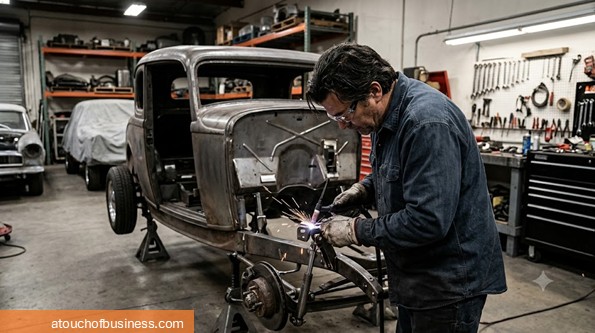
What to Expect From This Guide to Starting a Speed and Custom Shop
This guide provides an ordered path through the decisions and practical steps involved in starting a speed and custom shop. It moves from skills, specialty, and market demand into facilities, equipment, compliance, pricing, insurance, financial planning, and opening controls, while the bullets below identify selected strengths.
Inside the guide, you will find:
- Startup roadmap: Progress from fit and specialty decisions through demand research, business planning, registration, facilities, equipment, systems, and pre-opening checks.
- Industry interviews: Hear shop owners and insiders discuss estimating, cash flow, equipment, acquisitions, client relationships, and the realities of custom automotive businesses.
- Startup FAQs: Find practical answers about shop licenses, ASE and EPA credentials, insurance, dyno tuning, space, home operation, and supplier accounts.
- Business model: Compare installation, fabrication, dyno tuning, engine building, project builds, parts sales, and mixed repair models suited to local demand.
- Profit planning: Examine labor-driven margins, parts markup, billable hours, deposits, long-build cash flow, fixed costs, and break-even requirements.
- Facility and equipment: Assess zoning, electrical capacity, lifts, ventilation, drainage, welding systems, diagnostic tools, dyno needs, and phased purchasing.
- Opening controls: Review permits, OSHA systems, waste handling, shop software, banking, specialized insurance, equipment testing, and customer-vehicle protections.
The guide opens by defining the shop’s possible services and asking whether your technical depth, finances, and lifestyle fit the undertaking.
What Is a Speed and Custom Shop?
A speed and custom shop modifies, builds, and tunes vehicles beyond factory specifications.
Depending on your focus, that can mean bolt-on performance parts, custom metal fabrication, ECU tuning on a chassis dyno, full project car builds, engine assembly, or some combination of all of them.
The U.S. specialty equipment market reached approximately $52.65 billion in 2025, according to the Specialty Equipment Market Association (SEMA). Trucks, SUVs, and CUVs account for more than half of aftermarket parts spending. The market continues to grow at roughly 3–4% per year.
That’s a large and passionate industry. But passion alone doesn’t make the business work. Knowing how to build fast cars and knowing how to run a profitable shop are two very different skill sets—and you’ll need both.
This guide walks you through how to start a speed and custom shop, from deciding whether it’s the right fit to getting your bays open and your first customers rolling in.
Is This Business a Good Fit for You?
Before you sign a lease or buy a single lift, spend some honest time thinking about whether this business fits your life right now.
Ask yourself a few straightforward questions:
- Do you have deep, hands-on technical experience in performance vehicles—not just enthusiasm, but years of actually doing the work?
- Can you quote a job accurately, source parts efficiently, and manage multiple vehicles in progress at the same time?
- Do you have enough savings to cover your personal living expenses for 12–24 months while the shop builds its customer base?
- Does your household support this decision, including the long hours and income uncertainty that come with any new business?
- Are you prepared to spend as much time running the business as you do turning wrenches?
Running a shop means writing estimates, managing parts orders, handling customer calls, tracking jobs, staying on top of compliance, and keeping the bays moving.
Many skilled builders underestimate how much of the job isn’t the fun part.
If you want a broader look at what owning a business actually involves, that’s worth reading before you move forward.
One of the most valuable things you can do right now is talk to people already running speed and custom shops—in markets where you won’t compete against them.
Ask about what surprised them. Ask what they’d do differently. Ask how long it took to reach consistent cash flow. Ask about the gap between hobby passion and the daily grind of running the business. Those conversations will be more useful than anything you read online, including this article.
You should also think about how you’ll attract customers from day one. This is a referral- and reputation-driven business. You won’t have established word of mouth on opening day. Your plan for building an initial client base—car clubs, events, past customers, your personal network—matters before you open, not after.
Think through which entry path fits your situation:
- Starting from scratch gives you full control over your niche, layout, and shop culture, but it requires more capital and more time to build a reputation.
- Buying an existing shop may transfer a customer base, equipment, supplier relationships, and an established name—but verify the financials, lease terms, and real condition of the equipment carefully.
- Leasing an already-equipped commercial space can reduce build-out cost, though you may have less flexibility in layout and infrastructure.
The best path depends on your available capital, timeline, desired niche, and how much startup risk you can absorb. There’s no single right answer.
Red Flags Before You Start
A few situations are worth pausing on before you go further. None of these are automatic deal-breakers, but each one deserves an honest look.
- Your technical experience is still developing. Custom builds, performance tuning, and fabrication require professional-grade skill, not just hobbyist knowledge. In this community, poor-quality work travels fast. If you’re not yet producing results you’d be proud to put in front of paying customers, get more experience first.
- The local market is thin. If there’s little car club activity, no local drag strip or track, and few enthusiasts visible in your area, the addressable customer base for performance and custom work may not support a standalone shop. Check before you commit to a location.
- You’re walking into a saturated market. If strong, well-established shops already serve your area, entering as a generalist is high-risk. A clearly defined niche can still find room. A do-everything approach is unlikely to displace an operation that’s been there for 15 years.
- Your capital plan doesn’t include a runway. Lifts, welding equipment, diagnostic tools, insurance, build-out, and initial parts inventory add up quickly—before you take your first paying job. If you can’t fund six to 12 months of fixed costs beyond opening-day equipment, consider extending your timeline.
- Your model relies too heavily on parts retail. Online retailers have permanently compressed margins on performance parts. The profitable side of this business is labor: installation, fabrication, and tuning. A parts-heavy model without strong labor revenue is structurally fragile.
- You plan to do only long custom builds. Project cars and full builds can tie up bays for weeks or months. Without deposits and careful job costing, a shop focused exclusively on custom builds may run for months without adequate cash flow to cover fixed costs.
Step 1: Assess Your Fit and Skills Honestly
Technical depth matters enormously in this business. Building engines, fabricating chassis, and calibrating ECUs require years of hands-on experience with performance vehicles—not just familiarity, but reliable, professional-grade execution.
If you’ve been doing this work for a long time and customers already seek out your skills, you’re in a strong starting position.
If you’re still developing your technical foundation, the more sustainable path is to keep building that experience while you plan the business side in parallel.
Business management skills matter just as much. You’ll be quoting jobs, managing parts flow, scheduling bays, tracking multiple projects, keeping books, and communicating with customers—all while doing the actual work.
If either side feels underdeveloped, that’s not a stop sign. It’s a signal to address the gap before opening day.
Some essential business skills for shop owners are worth reviewing as part of your preparation.
Step 2: Talk to Non-Competing Shop Owners
Before you finalize any business decisions, talk to people already running the kind of shop you want to open—in markets where they won’t compete against you.
Prepare your questions in advance. Ask about job estimating, profitability, staffing, parts sourcing, seasonal patterns, and what they wish they’d known at the start. Ask what drove their best months and their hardest months.
SEMA’s industry networks—including the Hot Rod Industry Alliance (HRIA)—are good starting points for making those connections.
Every owner’s experience is different. Take what’s useful and consider how it applies to your market, your niche, and your capital situation.
You can also find practical perspective from real business owners who’ve been through the early-stage grind.
Step 3: Define Your Shop’s Specialty and Business Model
Speed and custom shops cover a wide range of work. You need to define your niche before you commit to a location, equipment, or staffing plan.
Your niche shapes everything: what equipment you need, how large your space should be, what suppliers you’ll use, what type of customer you’ll attract, and how you’ll price your work.
Common shop models include:
- Parts retail and installation: selling and installing aftermarket performance parts—intakes, exhausts, suspension, forced induction, wheels and tires
- Custom fabrication: one-off metalwork including tube chassis, roll cages, custom exhaust, and custom brackets
- Dyno tuning: ECU calibration and chassis dyno services—high-margin work, but requiring significant equipment investment
- Full project builds: complete vehicle transformations, restomod builds, or pro-touring projects
- Engine building: performance engine assembly and machining
- Mixed model: general automotive repair as a revenue floor, with performance and custom work as the specialty
Niche shops—LS swap specialists, forced induction shops, JDM tuners, truck and SUV lift and build shops—often face less direct competition than generalist shops.
Many new speed shops find that carrying general automotive repair work alongside performance specialization is the most financially stable way to launch. General repair keeps cash flow steady while the performance side builds its reputation.
Step 4: Validate Local Demand and Competition
A strong national market doesn’t guarantee strong demand in your specific location.
Research the local enthusiast community before you commit to a space. Look at car club activity, local drag strips and tracks, off-road groups, and car show attendance in your area. These are your potential customers.
Identify the existing performance shops, tuner shops, and custom fabricators within a reasonable drive of your target location. Where are they strong? Where are there gaps they don’t serve?
Understanding local supply and demand before you sign anything is one of the most important steps you can take.
Trucks, SUVs, and CUVs account for more than half of U.S. specialty equipment spending, according to SEMA. That’s useful context when you’re deciding what to specialize in.
If your market can’t support a pure performance shop, a mixed model with general repair may be the smarter launch strategy.
Step 5: Evaluate Starting from Scratch, Buying a Shop, or Leasing Equipped Space
There’s more than one way to get a speed and custom shop open, and each path has real tradeoffs.
Starting from scratch gives you full control over your niche, layout, branding, and shop culture. You build everything the way you want it. The tradeoff is higher upfront cost—you’ll need to acquire and install every piece of equipment—plus the time it takes to build a customer base from zero.
Buying an existing shop can give you a running start. An established shop may transfer a loyal customer base, active supplier accounts, existing equipment, and a working reputation. Verify the financials carefully, inspect the equipment condition, review the lease terms, and understand why the owner is selling.
Leasing an equipped commercial space falls between the two. You may save on build-out costs, but check whether the existing electrical service, ventilation, floor drains, and lift setup actually match your service model.
For more on thinking through these options, starting versus buying a business is worth reading as part of your decision process.
Step 6: Build Your Business Plan with a Realistic Profit Check
A solid business plan isn’t about impressive projections. It’s about knowing your numbers before you make major financial commitments.
The core question is whether the business can realistically cover its fixed costs and support you—and when that’s likely to happen.
Map out your revenue sources:
- Labor charges for installation, fabrication, and tuning work
- Parts markup on components you supply and install
- Dyno session fees, if you operate a dyno
- Parts retail sales
Labor is where sustainable profit lives in this business. Parts retail alone carries thin margins due to online competition from large aftermarket retailers. Most profitable performance shops are labor-driven.
Automotive shops typically target labor gross margins of 40–70%. Parts markup commonly runs 50–100% over cost, with some specialty lines carrying higher markup.
Estimate your realistic billable hours per week based on your bays, your team size, and your service mix. That number is the core driver of whether you can cover your fixed costs.
Your fixed monthly costs include rent or lease payments, utilities, insurance, equipment financing or depreciation, and any staff wages. Calculate your break-even revenue before you sign a lease or finance a dyno.
Custom builds and project cars are discretionary purchases. Performance spending can slow during economic downturns. Factor in slower periods when projecting your first year.
For help thinking through revenue and profitability estimates for a new business, that’s a useful framework to work through.
Pull all of this together into a working business plan. It doesn’t need to be elaborate—it needs to be honest and grounded in your actual local numbers.
A guide on how to write a business plan can help you structure it clearly.
Step 7: Choose a Business Structure and Register
Before you open a bank account or sign a lease, you need to legally form your business.
Most speed shop owners choose either a sole proprietorship or an LLC. A sole proprietorship is the simplest structure but offers no separation between your personal assets and business liabilities. An LLC creates that separation, which matters when you’re working on high-value customer vehicles.
For a detailed comparison, LLC versus sole proprietorship walks through the key differences.
Register your chosen structure through your state’s Secretary of State office or equivalent filing authority.
After forming your entity, apply for a federal Employer Identification Number (EIN) through the IRS at IRS.gov. The EIN is required for business banking, payroll, and most local license applications. It’s free and takes minutes online.
If your shop will operate under a trade name that differs from your legal entity name, you’ll also need to register a DBA (Doing Business As) with your state or county.
Confirm your intended business name is available in your state’s registry before you file anything.
Step 8: Find and Secure a Compliant Shop Location
Your location decision is one of the most consequential you’ll make—and it’s not just about rent.
Automotive repair, fabrication, welding, and performance shop operations must be in an industrially or commercially zoned area. Before you get attached to any space, confirm with the local planning or zoning department that the address is cleared for your specific services.
Zoning rules vary significantly. Noise from exhaust work and dyno operation, spray finishing, welding fumes, and vehicle storage all carry different requirements in different jurisdictions. Some uses require a conditional use permit and a public hearing.
Before signing any lease, verify the space can support your operation:
- Adequate electrical service—three-phase power is typically required for dyno equipment, lifts, and welding systems; if the building doesn’t have it, installation is a significant cost
- Sufficient ceiling height—a minimum of 12 feet clear is typical for 2-post vehicle lifts
- Floor load capacity appropriate for lifts and any dyno installation
- Ventilation capability for welding fumes, exhaust extraction, and any spray finishing operations
- Floor drains that route through an oil/water separator—not to a storm drain
- Wide bay doors and adequate lot space for customer vehicle drop-off and storage
A Certificate of Occupancy confirming the facility is safe for workers and customers is typically required before you can open. Verify the process with your local building department before you sign a lease.
Review your lease carefully. Check the length, renewal options, whether the landlord is responsible for structural upgrades, and whether your intended uses—including a dyno pit, paint booth, or fabrication equipment installation—are explicitly permitted.
Step 9: Obtain Required Licenses, Permits, and Federal Certifications
Licensing for a speed and custom shop involves federal, state, and local layers. You can work through all of it methodically.
General business license: Required in nearly every U.S. jurisdiction. Check with your city clerk or county business office.
Seller’s permit / sales tax permit: Required in most states when you sell parts, accessories, or merchandise. Register with your state’s Department of Revenue or equivalent. This permit also lets you purchase resale inventory from suppliers without paying sales tax on those items.
EPA Section 609 certification: This is a federal requirement under the Clean Air Act. Any technician who services motor vehicle air conditioning systems for compensation must be trained and certified through an EPA-approved program and must use EPA-certified refrigerant handling equipment. Verify the requirement and find approved certification programs at epa.gov/mvac.
EPA hazardous waste: Your shop will generate used oil, solvents, antifreeze, and other regulated materials. Shops generating above-threshold quantities of hazardous waste must obtain an EPA ID number under RCRA (Resource Conservation and Recovery Act). Even shops below the threshold must properly store and dispose of waste through licensed haulers. Verify your generator status at epa.gov/hwpermitting.
State auto repair license: Some states—California, Maryland, and others—require a specific auto repair dealer license or registration. Some require that certain technical work be supervised by a licensed or certified technician. Verify with your state’s consumer protection agency, DMV, or auto repair licensing board.
Air quality permits: If you operate a spray paint booth or produce significant air emissions from welding or surface finishing, a state or local air quality permit may be required. Verify with your state’s environmental agency.
Sign permits: Most jurisdictions require a permit for exterior business signage. Check with your local planning or building department.
For a broader overview of what’s typically involved, a business license and permits guide covers the general framework.
Step 10: Set Up OSHA-Compliant Safety Systems
Federal OSHA standards apply to your shop from day one. This isn’t an area to figure out later.
For a performance and custom shop, the key OSHA requirements cover welding fume ventilation, flammable liquid storage, compressed air safety, lockout/tagout procedures for equipment maintenance, and hazard communication for all shop chemicals.
Welding areas require local exhaust ventilation that keeps fume concentrations below allowable exposure limits, per OSHA 29 CFR 1910.252. Galvanized metal, stainless steel, and coated materials produce particularly hazardous fumes—ventilation is not optional.
If you have employees, you’re required to maintain a written Hazard Communication program with current Safety Data Sheets (SDS) for all chemicals, proper labeling, and documented employee training.
Vehicle lifts should be installed per Automotive Lift Institute (ALI) standards and inspected annually. Post required OSHA notices and keep required injury and illness records. If you have more than 10 employees, a written Emergency Action Plan is required.
These steps protect your team and protect the business. An OSHA violation or a workplace injury is far more disruptive than the time it takes to set things up correctly.
Step 11: Purchase or Finance Shop Equipment
Equipment is one of the largest startup costs, and the decisions you make here directly shape your shop’s capacity, turnaround time, and service mix.
Sequence your purchases to match your chosen business model. A basic installation shop needs vehicle lifts, air systems, hand tools, and diagnostic equipment first. A dyno and advanced fabrication equipment can be phased in once cash flow supports it.
Core equipment for most speed and custom shops includes:
- 2-post vehicle lifts (the number depends on your bay count and service model)
- Industrial air compressor, properly sized for lift operation and air tools
- Professional hand tool sets, including specialty performance tools
- Professional OBD-II diagnostic scanner and ECU tuning hardware and software
- MIG and/or TIG welder, plasma cutter, tube bender, and welding table (for fabrication work)
- Welding fume extraction system
- Engine hoist and stand (for engine work)
- Chassis dynamometer (for tuning services—a major capital item if included at startup)
- Used oil storage tank with secondary containment and an oil/water separator connected to floor drains
- Shop management software for job tracking, invoicing, and parts ordering
Get at least two or three competitive quotes on major equipment before committing. Lifts, welders, and dyno systems are often financed separately from general business loans.
SBA loans, equipment financing programs, and local economic development resources are all worth exploring. A guide on getting a business loan can help you understand your options.
Don’t open before your equipment is fully installed, tested under real operating conditions, and compliant. A lift failure on a customer vehicle, or a dyno that trips a circuit breaker mid-tune, is a costly problem you don’t want on opening week.
Step 12: Establish Supplier and Parts Accounts
You need active supplier accounts before you open—not after your first job comes in.
Open trade accounts with at least two or three performance parts distributors. Major distributors serving performance shops include Turn 14 Distribution, Keystone Automotive, LKQ, and regional warehouse distributors in your area.
You’ll also need accounts with specialty suppliers in your niche—forced induction brands, suspension manufacturers, exhaust tubing and raw material suppliers, or whatever aligns with your chosen specialization.
Verify minimum order requirements and return policies for each supplier before you rely on them for customer jobs.
SEMA membership (sema.org) provides access to supplier connections, industry data, market research, and the annual SEMA Show in Las Vegas. Their Hot Rod Industry Alliance (HRIA) and other industry communities connect you with peers and suppliers throughout the year.
Strong supplier relationships—including reliable communication on lead times, backorders, and substitutions—directly affect how smoothly your bays run and how often you have to explain delays to customers.
Step 13: Set Your Pricing Structure and Shop Management Systems
Pricing is where many new performance shops quietly lose money. Getting this right before you open matters more than you might expect.
Your labor rate needs to cover your loaded technician cost—wages, payroll taxes, benefits, and overhead—while producing a healthy margin. Research what comparable performance shops in your market charge, then verify your rate actually covers your costs. Performance shops typically charge a higher labor rate than general repair shops because the work is more specialized.
Parts markup commonly runs 50–100% over cost—a 2x to 3x markup on many lines. High-demand specialty parts may carry higher markups. Research your local competitive environment before finalizing your markup structure.
Dyno time, if you offer it, is typically priced per pull or per full tuning session. Research comparable shops in your region.
Custom fabrication and project builds require careful attention on pricing: underestimating labor hours on long custom jobs is one of the most common ways new shops lose money. Develop a careful estimating process and require deposits—typically 25–50% of the estimated project cost—before beginning any significant build.
Set up shop management software before you open. You need a system for tracking active jobs, logging parts, generating invoices, recording customer approvals, and monitoring labor time. Managing this manually in a multi-bay shop creates disorganization quickly.
For an overview of pricing your products and services, that’s a useful reference as you build your structure.
Step 14: Set Up Banking, Accounting, and Insurance
Open a dedicated business checking account as soon as your entity is formed. Keep all business revenue and expenses completely separate from your personal finances from the start.
A business bank account guide walks through what you need to set one up.
Hire a CPA with experience in automotive businesses. Sales tax on parts, payroll compliance, and business expense tracking have specific requirements that a knowledgeable accountant will handle correctly from day one.
Insurance for a speed and custom shop is more specific than general business coverage—and more important than many first-time shop owners realize.
Core coverage your shop needs:
- Garage liability: covers bodily injury and property damage incidents at your facility
- Garage keepers liability: covers customer vehicles in your care, custody, or control—critical for a shop holding high-value builds and modified vehicles; limits should reflect the actual value of vehicles you’ll be working on
- Workers’ compensation: required in nearly every state once you have employees; in some states it’s required even for sole proprietors
- Commercial property: covers your equipment, tools, and facility contents
- Commercial auto: required if you operate any business-owned vehicles or take customer vehicles on test drives
- Equipment breakdown: particularly valuable for expensive equipment like dynos and CNC machines
Standard general liability policies typically exclude automotive shop operations. Work with an insurer who specializes in automotive businesses to make sure your coverage matches your operation.
Garage keepers limits are especially important if you plan to hold customer vehicles worth $50,000 or more. High-value modified vehicles are common in this business. Review your limits carefully before your first build.
You can find an overview of business insurance basics as a starting point.
Business Plan
Your business plan connects everything you’ve worked through into a single, honest picture of whether the business makes sense to open—and what it will take to make it work.
Start with your revenue model. What services will you offer, and in what mix? Labor—installation, fabrication, tuning—is where sustainable profit lives. Parts markup adds to that. Dyno time, if you offer it, is typically one of the highest-margin services in the business.
Estimate your realistic billable hours per week based on your bays, your team, and your service mix. That number is the core engine of your shop’s profitability. If your bays sit idle or your labor isn’t priced to cover your overhead, the rest of the plan doesn’t hold.
Calculate your fixed monthly costs: lease, utilities, insurance, equipment financing, and staff wages. Compare that to your projected labor and parts revenue at realistic production levels. That gap—or the absence of one—tells you a great deal about whether and when the shop can sustain itself.
Factor in margin pressure from parts retail. Online competition has compressed margins on performance parts significantly. If your model relies on parts volume to drive profitability, that’s a vulnerability worth addressing in the plan.
Account for the custom build cash flow risk. Long-lead project cars tie up bays for weeks or months. Your deposit policy and your mix of short-turnaround installation work versus long builds will directly affect your monthly cash flow pattern.
Performance spending is discretionary. Factor in slower months and economic uncertainty when you set your financial expectations for the first year or two.
Pull in your startup cost items: lease deposit and build-out, equipment purchases or financing, initial parts inventory, licensing and permits, insurance setup, and operating reserves. Make sure you have enough capital to reach consistent revenue—not just enough to open the doors.
Use the plan to identify any gaps before they cost you money.
Opening-Day Red Flags
Before you let customers in, walk through your shop with fresh eyes and confirm everything is actually ready.
- Any lift not yet certified or inspected. Don’t take customer vehicles on a lift that hasn’t been professionally verified. This is a safety and liability issue from day one.
- Welding fume extraction not yet operational. If you plan to offer fabrication work, your ventilation system needs to be functioning before you weld anything in a commercial setting.
- No waste disposal contracts in place. Used oil, solvents, and antifreeze can’t go in the trash or down a standard drain. Your hazardous waste disposal contracts need to be active before you generate any regulated waste.
- Parts sourcing not tested. Run a few test orders through your supplier accounts before your first real customer job. Know your lead times, your backorder process, and how returns work.
- Shop management software not operational. If you’re taking in customer vehicles without a functional job tracking and invoicing system, disorganization will start immediately.
- No deposit process for custom work. If you plan to take project car builds, have your deposit policy and intake paperwork ready before the first customer inquiry.
- Insurance not yet bound. Confirm your garage liability, garage keepers, and any other required coverage is active before any customer vehicle enters your property.
- Required permits not yet posted. Confirm all required licenses, permits, and OSHA postings are displayed before you open for business.
Frequently Asked Questions
Do I need a mechanic’s license to open a speed and custom shop?
In most U.S. states, there is no specific mechanic’s license required to own and operate an automotive shop. Some states require a shop owner to hold an auto repair dealer license or registration, and some require that certain technical work be supervised by a licensed or certified technician. Requirements vary by state. Verify with your state’s consumer protection agency, DMV, or auto repair licensing board before opening.
Is ASE certification required to open a performance shop?
ASE certification is not legally required to open a shop in most states. It signals professional competency to customers, and shops with at least one ASE-certified technician can display the ASE credential. If you plan to hire technicians, ASE certification is a useful hiring benchmark. Earning it requires passing specialty exams and documenting at least two years of hands-on experience in the relevant area.
What is EPA Section 609, and does it apply to my shop?
Section 609 of the Clean Air Act requires that any technician who services motor vehicle air conditioning systems for payment must be certified through an EPA-approved training program and must use EPA-certified refrigerant handling equipment. If your shop performs A/C service, this federal certification is required. Approved programs are listed at epa.gov/mvac.
Do I need special insurance beyond standard general liability?
Yes. Standard general liability policies typically exclude automotive shop operations. You need garage liability, garage keepers liability, workers’ compensation (required in nearly every state with employees), and commercial property coverage. Performance work on high-value modified vehicles may require higher garage keepers limits than a standard repair shop carries.
What is the difference between a dyno tune and an ECU tune?
A chassis dynamometer is the equipment used to measure a vehicle’s output under load. An ECU tune modifies the engine control unit’s calibration—adjusting fuel maps, ignition timing, boost levels, and other parameters. A dyno tune is the process of performing an ECU calibration while the vehicle runs on the dyno, allowing real-time measurement and adjustment. Dyno tuning is considered the industry standard for precision performance calibration work.
How much space does a speed and custom shop need?
Most viable shops operate in 3,000–6,000 square feet or more. A dyno requires dedicated space with specific structural, electrical, and ventilation requirements. Fabrication work benefits from open floor space. Shops handling full project builds simultaneously need more space than those focused on quick installation work. Confirm ceiling height (typically 12 feet clear minimum for 2-post lifts), floor load capacity, and electrical service for any space you consider.
Can I start a speed and custom shop from home?
Home-based commercial automotive operation is severely limited by zoning in virtually all U.S. jurisdictions. Automotive service, welding, customer vehicle storage, and spray finishing are typically prohibited in residential zones. Verify local zoning requirements before assuming any home-based model is an option.
What supplier accounts do I need before opening?
At minimum, open active trade accounts with at least two or three performance parts distributors before your first customer job. Major distributors include Turn 14 Distribution, Keystone Automotive, LKQ, and regional warehouse distributors. You’ll also need accounts with specialty suppliers in your niche. SEMA membership (sema.org) can accelerate supplier relationship development and provides access to industry data and networking resources for new performance shop owners.
Advice from People Running Speed and Custom Shops
People already running speed and custom shops have learned things you simply can’t find in a business guide. They’ve dealt with the estimating mistakes, the cash flow gaps on long builds, the equipment decisions that paid off and the ones that didn’t.
Reading and listening to their firsthand accounts — in their own words — gives you context that no startup checklist can match. The resources below are interviews with real shop owners and industry insiders who’ve been through it.
Do It For a Living Podcast – Peter Agapoglou of Autosport Fabrication
Peter Agapoglou shares how he built expertise by working at high-end European and race shops before launching his own fabrication business, the moment he decided to go solo, and the lessons he carried from working with top-tier teams into his own daily operations. Practical listening for anyone considering a race and performance fabrication shop.
Do It For a Living Podcast – Why Performance Shops Struggle Financially
In this episode, co-host Kevin Dubois breaks down exactly why performance, restoration, and custom fabrication shops struggle financially compared to general repair shops — and what to do about it. Covers pricing, cost structure, and the specific traps that catch skilled builders who underestimate what it takes to run a profitable operation.
Gearheads n’ Gasoline Podcast – Ron Hinshaw, North Speed and Restoration
Ron Hinshaw spent 30 years in the automotive industry before buying the hot rod shop he once managed. He talks through what it actually takes to go from technician to owner, key considerations when purchasing an existing shop, why showing up at events like SEMA and Goodguys matters for long-term success, and how relationship-building drives the business.
The Muscle Car Place Podcast – Charlie Hyatt, Innovative Rod and Customs
Charlie Hyatt spent years working in rod and custom shops across Minnesota before launching his own business — with young kids at home and a pandemic hitting weeks after opening. He walks through the career path, the decision to go out on his own, and how the shop grew even when everything around it shut down. A candid, practical episode for anyone considering the jump to ownership.
HOT ROD Pod – Troy Ladd, Hollywood Hot Rods
HOT ROD Magazine’s John McGann sits down with Hollywood Hot Rods founder Troy Ladd at HOT ROD Power Tour West. Troy covers where the shop started, how he wrote the original business plan, his creative process, the realities of working with clients, and what it actually means to run a high-end custom hot rod shop as a business — not just a craft.
Dream Chasing: Lessons Learned in Starting a Hot Rod Shop – The Muscle Car Place
A written first-person account from a pro-touring shop owner six months into running his business full-time. He shares what surprised him about custom job estimating, why time-and-materials billing changed his business, the importance of bootstrapping equipment, and the reality of time management when you’re the owner and the only tech. Direct, honest, and specific to the experience of opening a small performance shop.
HOT ROD Behind the Build Ep. 1 – Ironworks Speed & Kustom (YouTube)
HOT ROD Editor John McGann visits Ironworks Speed & Kustom for a shop tour and conversation about the shop’s custom car builds and its GM A-body work. A good look at how an established speed and custom shop is set up, what the workflow looks like, and how a focused niche shapes everything from equipment to client relationships.
HOT ROD Behind the Build Ep. 7 – South City Rod & Custom (YouTube)
John McGann visits Bill Ganahl at South City Rod & Custom in Hayward, California — a long-running shop with a clear specialty and a reputation built over decades. Ganahl talks about the shop’s approach to builds, client communication, and what it takes to keep a custom operation running at a consistently high level.
Related Articles
- How To Start a Car Wrapping Business
- How To Start a Window Tinting Business
- How To Start a Car Audio Business
- How To Start an Airbrushing Business
- How To Start an Auto Body Repair Shop
- How To Start an Auto Detailing Business
Sources:
- SEMA: 2024 SEMA Market Report, 2026 SEMA Industry Update, SEMA Membership Benefits
- U.S. EPA: Section 609 MVAC Requirements, MVAC Regulatory Requirements, Hazardous Waste Permitting (RCRA)
- OSHA: 29 CFR 1910.252 Welding Requirements
- LegalClarity: Mechanic Shop License Requirements
- AutoGMS Blog: Auto Repair Shop Permits Guide
- Insureon: Auto Repair Shop Insurance
- The Coyle Group: Garage Liability and Keepers Insurance
- Briggs Agency: Workers Comp and OSHA for Auto Shops
- ASE: ASE Test Series and Certification
- Indeed: ASE Certification Overview
- RepairPal Blog: Starting an Auto Repair Business Guide
- AutoVitals Blog: Auto Repair Shop Profit Margins
- Shopmonkey Blog: High-Margin Auto Repair Services
- AutoLeap Blog: How to Start an Auto Repair Shop
- NEXT Insurance: How to Start a Mechanic Shop
- Automotive Aftermarket Industry Association: Aftermarket Industry Size and Trends