
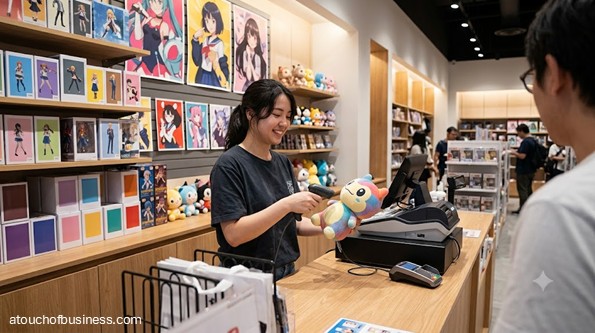
What to Expect From This Guide to Starting an Anime Store
This guide walks readers through the key decisions and practical steps involved in starting an anime store, from testing local demand and choosing a product focus to arranging compliant sourcing, finances, a retail space, and opening systems. The highlights below show only part of its scope.
Inside the guide, you will find:
- Startup roadmap: Follow an ordered path from owner fit and market research through registration, sourcing, store setup, pricing, staffing, and pre-opening checks.
- Industry interviews: Learn from comic, manga, and pop-culture shop owners discussing specialty retail operations, inventory discipline, positioning, and financial pressures.
- Startup FAQs: Review practical answers about authorized merchandise, counterfeit liability, supplier accounts, markups, location choices, trade-ins, and slower sales periods.
- Product strategy: Compare merchandise categories, new-only and buy-sell-trade models, authentication demands, and ways to limit costly opening inventory.
- Financial planning: Examine startup costs, working capital, fixed-cost break-even, product margins, seasonal sales, funding choices, and realistic revenue assumptions.
- Local requirements: Understand business registration, retail permits, zoning, occupancy, insurance, authorized distribution, and location-dependent employer obligations.
- Opening preparation: Check inventory tracking, security, permits, insurance, payment systems, supplier accounts, store flow, and soft-opening concerns before opening.
Continue into the guide to evaluate whether an anime storefront suits your market, budget, product knowledge, and tolerance for retail risk.
How to Start an Anime Store
An anime store is a retail business offering merchandise tied to Japanese animated series, manga, and related pop culture — figures, statues, trading card games, manga volumes, apparel, plush items, model kits, accessories, and more. Some stores carry a focused specialty. Others stock a wide mix. The format you choose shapes nearly every decision that follows, from your opening inventory budget to the size of space you need.
The U.S. fan base for anime content has grown significantly, with the core demographic skewing toward buyers aged 15–34. That growing audience supports a real market — but it also draws competition from Amazon, Hot Topic, Target, and large online specialty retailers. A storefront needs a clear reason for customers to walk in rather than click through.
Before you go further, take an honest look at what starting a retail business actually involves. A storefront carries fixed costs from day one — rent, utilities, insurance — whether or not customers come through the door. If you’re still building personal savings or your household depends on a stable income, factor that pressure into your timeline before you sign anything.
Is This Business a Good Fit for You?
Running an anime store well requires genuine knowledge of the genre. Customers ask for recommendations. They want to know which figures are worth collecting, which series have strong release schedules, and whether a product is authentic. That knowledge becomes a real advantage over generic retailers who can’t answer those questions.
Think honestly about the retail side too. You’ll open the store, receive and tag inventory, manage a point-of-sale system, handle customer transactions, and deal with slow afternoons and busy Saturdays in roughly equal measure. A passion for anime makes the product knowledge easier. It doesn’t replace retail discipline.
Ask yourself whether your household is in a position to absorb the income uncertainty of a startup year. A storefront typically takes months before sales stabilize. If your household budget depends on consistent income from this business from month one, that’s a risk worth weighing carefully before you commit to a lease.
Talking to owners who already run anime or specialty retail stores — in markets where you won’t compete with them — is one of the most useful things you can do before spending money. Their experience won’t match yours exactly, but the patterns they describe about cash flow pressure, supplier relationships, and slow periods will give you a far more realistic picture than research alone. Prepare specific questions before those conversations. Firsthand owner insight is hard to replicate.
Also consider whether you want to start from scratch or explore whether an existing anime or specialty retail store might be for sale in your area. Buying an existing business means inheriting its supplier relationships, customer base, and lease — along with any problems the previous owner left behind. Whether you build or buy depends on your budget, timeline, and appetite for risk. Both paths have real tradeoffs worth understanding.
Red Flags Before You Start
Not every market can support an anime storefront. Before you commit to a lease, check these warning signs carefully.
This business may not be the right move if:
- There’s no verifiable local demand — no nearby universities, no anime convention activity, no fan community presence in your trade area
- A well-established local competitor already covers the same product mix, and you have no clear way to differentiate
- Your available capital can fund opening inventory but not a 6-month operating reserve on top of it
- You can’t establish accounts with authorized U.S. distributors and are considering sourcing from unverified overseas suppliers instead
- The only available locations in your market are high-rent, and your sales projections don’t support the fixed cost
- You plan to add a buy/sell/trade model from day one without strong product authentication knowledge
Online competition is a structural reality for this business, not a temporary condition. Major online retailers undercut storefront pricing on mainstream products. A location strategy and product mix that account for this from the start put you in a stronger position than one built around competing on price alone.
Anime merchandise is also trend-driven. A series that ends or loses cultural momentum can result in sharp inventory devaluation. If you open with heavy inventory concentrated in one property, a trend shift leaves you holding product that won’t move at full price.
Step 1: Assess Your Fit, Motivation, and Readiness
Before any business planning, take real stock of your readiness — not just your excitement about the product category.
A storefront requires daily physical presence. You’re receiving inventory, managing the floor, handling transactions, and dealing with whatever the day brings. The enjoyable parts of owning an anime store don’t exempt you from the operational grind.
Think about your tolerance for financial uncertainty. Retail storefronts typically operate at a loss or near break-even in the early months. Your personal living expenses still need to be covered during that period. If you don’t have savings or a household income that can carry you through a soft launch period, plan for that before committing.
Talk with owners of anime shops, comic book stores, or Japanese pop culture retailers in other markets. Ask them about their worst months, their supplier headaches, and what they wish they’d known before opening. Those answers are usually more useful than anything on a planning spreadsheet.
Step 2: Define Your Store Concept and Product Focus
“Anime store” covers a wide range of retail approaches. Getting specific about what yours will carry — and what it won’t — makes every later decision easier.
Common product focus options include:
- Collectible figures and statues (scale figures, nendoroids, figmas, prize figures)
- Manga, light novels, and artbooks
- Trading card games (TCG) — Pokémon, Yu-Gi-Oh, One Piece TCG — including booster packs, singles, sleeves, and playmats
- Apparel (t-shirts, hoodies, socks, hats) and accessories (keychains, pins, lanyards, phone accessories)
- Plush items and blind boxes
- Model kits, including Gunpla
- Japanese import snacks
- A broad mix of several categories above
You also need to decide on your business model: new merchandise only, or a buy/sell/trade model that lets customers bring in used figures, manga, and card singles.
The trade-in model can drive more foot traffic and reduce sourcing costs. It also requires you to authenticate used items accurately and price them confidently. Getting that wrong has real consequences — financially and legally if counterfeit goods enter your inventory through customer trade-ins.
A tighter product focus makes your opening inventory more manageable and your supplier relationships easier to build. You can always expand once you understand what your specific customers actually buy.
Step 3: Research Local Demand and Competition
Local demand research isn’t a formality — it’s a go/no-go decision. A storefront with fixed monthly costs can’t survive on hope that customers will eventually find it.
Look at what already exists nearby. Are there anime, comic, gaming, or Japanese pop culture stores in your trade area? What do they carry? What are they missing? Walking their floors gives you more useful information than any industry report.
Look at the broader signals too. Does your area have universities, high schools, or a younger population base? Is there local anime convention activity? Are there fan community groups, TCG leagues, or cosplay events nearby?
If the honest answer is that demand is thin and the market is already served, that’s important information. A pop-up at a local convention or weekend market before committing to a lease is a low-cost way to test real purchasing behavior. Understanding local supply and demand before you open protects you from the most common retail mistake.
Step 4: Choose a Business Structure and Register
You’ll need to decide how to legally structure the business before you can open a business bank account, apply for licenses, or sign a lease.
Common structures for a retail storefront include:
- Sole proprietorship — simplest to set up; no liability separation between you and the business
- LLC — separates personal and business liability; the most common choice for retail storefronts
- S-Corp — may offer tax advantages at higher income levels; more complex to administer
Most new storefront owners choose an LLC. It provides liability protection without the administrative complexity of a corporation. Review the tradeoffs between an LLC and a sole proprietorship before deciding.
Once your structure is set, register the business with your state’s Secretary of State office. If you’re operating under a trade name that differs from your legal entity name, file a DBA (doing business as) registration as well.
Apply for an Employer Identification Number (EIN) through the IRS at irs.gov. This is free and takes only a few minutes online. You’ll need it for business banking, tax filings, supplier accounts, and hiring.
Step 5: Handle Licensing and Legal Compliance
Retail storefronts have several compliance layers. None of them are especially complicated, but skipping any one can delay your opening or create problems later.
Standard retail compliance items include:
- General business license — required by most cities and counties; apply through the city or county clerk’s office
- Sales tax permit / seller’s permit — required in 45 states plus D.C. for retail sales; apply through your state Department of Revenue
- Zoning confirmation — retail use must be permitted at your specific address; check with the local planning or zoning department before signing a lease
- Certificate of occupancy — required for your storefront after fire, building, and safety inspections pass; contact your local building department
- Sign permit — most municipalities require approval before you install exterior signage, especially illuminated signs
- Alarm permit — some jurisdictions require a permit to operate a commercial security alarm; check with the local police department or city clerk
If you hire employees, you’ll need to set up state employer accounts, register for payroll tax withholding, and verify your state’s workers’ compensation requirements. These vary by state.
All requirements vary by location. What applies in one city may not apply in another. Use the SBA’s business license and permits tool as a starting point, and confirm specifics directly with your city, county, and state offices before opening.
Step 6: Understand Licensed Merchandise Requirements
This step is specific to anime retail, and it’s not optional.
Anime merchandise is protected by U.S. trademark and copyright law. Selling counterfeit or bootleg goods — even without knowing they’re fake — exposes you, as the U.S. retailer, to trademark infringement liability. The overseas supplier who provided the goods is effectively unreachable under U.S. law. You are the one who can be sued.
Source only from established, authorized U.S.-based distributors.
Established authorized distributors include AAA Anime Inc. (which sells to retailers only), Otaku House USA’s wholesale division, and Japan Funtime. For manga and books, contact publishers directly — VIZ Media, Yen Press, TOKYOPOP, and Kodansha USA all have retailer account programs.
When you receive products, verify that items carry manufacturer holograms and official packaging that matches manufacturer descriptions. This matters even with authorized distributors — and it matters especially if you’re buying used goods from the public through a trade-in model.
Don’t sell fan-made products that use copyrighted character names, logos, or likenesses without a license from the IP holder. Even using a character name like “Naruto” in product descriptions without authorization can constitute trademark infringement.
Attending trade shows such as Anime Expo or San Diego Comic-Con is also a practical way to meet authorized licensors and distributors in person and build direct relationships before you open.
Step 7: Plan Startup Costs and Funding
A retail storefront carries a meaningful set of upfront costs before a single transaction occurs. Map them out before you commit to a lease or inventory orders.
Startup cost categories to plan and price out include:
- Lease deposit and first and last month’s rent
- Build-out and renovation (painting, flooring, electrical, HVAC adjustments)
- Display fixtures — shelving, locked display cases, slatwall or gridwall panels, lighting
- Exterior and interior signage
- Opening inventory (typically the largest single cost for a storefront)
- POS system hardware and software subscription
- Security system installation (cameras, alarm)
- Business licenses, permits, and certificate of occupancy fees
- Insurance premiums
- Working capital reserve for rent, utilities, replenishment, and personal living costs
The working capital reserve deserves serious attention. Rent and utilities are due every month whether or not sales are strong. A reserve covering at least 6 months of fixed costs gives you room to adjust without a crisis forcing your hand.
Don’t commit to a lease or major inventory orders until you have confirmed funding. Funding options include personal savings, SBA loans, conventional small business loans, partner contributions, and — in some cases — community crowdfunding from local anime fans.
Location choices significantly affect your cost structure. A prime mall location carries higher rent and stricter operating rules than a street-level or strip mall space. If your projected monthly sales don’t support the fixed costs of a high-traffic location, a more affordable space that still serves your target customer is the better choice.
Step 8: Find and Secure a Retail Location
Your location is one of the most consequential decisions you’ll make. A well-positioned storefront generates foot traffic naturally. A poorly positioned one requires you to earn every visit through sheer effort.
Look for locations near your target customer base — close to universities, entertainment corridors, younger residential density, or existing foot traffic generators like movie theaters, gaming cafes, or comic shops. Complementary businesses nearby can work in your favor.
Before signing, review the lease carefully for:
- Lease term length and renewal options
- Rent escalation clauses
- Triple net vs. gross lease structure (triple net means you pay base rent plus a share of taxes, insurance, and maintenance)
- Tenant improvement allowance if the space needs significant build-out
- Any co-tenancy rules or restrictions on merchandise categories
Confirm the space is properly zoned for retail before going further. Signing a lease on a space that turns out to be restricted is an expensive mistake.
Check the physical condition of the space. Adequate electrical capacity for display lighting matters in a store where visual presentation drives sales. Confirm HVAC, restroom facilities, and back-of-house storage space before committing.
Imagine a Saturday afternoon when a popular figure drops and three customers are at your display cases at once, two more are at checkout, and a distributor shipment just arrived at the back door. Your layout either supports that flow or fights you. Think through the space operationally, not just visually.
Step 9: Set Up the Store Space and Displays
How your store looks and flows directly affects how customers shop and what they spend. It’s about making merchandise visible, accessible, and easy to browse.
Plan your floor layout before fixtures go in. High-value figures and collectibles need locked glass display cases — for security and for the presentation quality that premium items deserve. Manga and light novels do well on organized shelving with clear series labels. Small accessories — keychains, pins, lanyards — work well on slatwall panels or pegboards near the checkout area, where impulse purchases happen naturally.
Good lighting makes a real difference. Track lighting or LED shelf lighting that highlights figures and packaging is worth the investment. A product that looks bright and clean on a well-lit shelf moves faster than the same product sitting in a dim corner.
Keep your stockroom separate from the sales floor and organized by product category. When a distributor shipment arrives during peak hours, you need to receive, log, and store it without disrupting the floor. That’s harder if the back of the store is disorganized from week one.
Install your security system — cameras and alarm — before inventory arrives. High-value collectibles attract theft, and a visible security setup is a deterrent as much as a recovery tool.
Step 10: Establish Supplier Accounts and Order Opening Inventory
Opening wholesale accounts with authorized distributors takes time. Start this process early — most require proof of your business license, EIN, and a confirmed retail location before approving an account.
Contact multiple distributors and request product catalogs, minimum order quantities, and payment terms before committing to any single source. Having two or three active supplier relationships from the start reduces your exposure if one has a stock shortage or shipping delay.
Build your opening inventory around your defined product focus. Resist the temptation to buy broadly on the first order. Overstocking with too many slow-moving items ties up capital you’ll need for replenishment and operating costs.
A practical opening inventory approach:
- Balance high-turnover, lower-margin items (manga volumes, accessories, small character goods) with higher-margin items (premium figures, limited-edition collectibles)
- Use pre-order models for upcoming figure releases to manage cash flow — customers place deposits before the goods arrive
- Keep some inventory budget in reserve for restocking fast-selling items in the first 60 days
Think about what that first busy weekend looks like. A collector comes in for a figure from a newly announced series. A parent is shopping for a gift and needs visible variety to find something. A TCG player wants sleeves and a playmat. Your opening floor needs to serve all three without looking scattered.
Step 11: Set Up Pricing, Payment Systems, and Banking
Open a dedicated business bank account before you spend anything on inventory or fixtures. Keeping business and personal finances completely separate from the start makes bookkeeping, tax filing, and funding conversations far easier later.
Your POS system is the operational center of your store. Choose one with inventory tracking capability — not just payment processing. A POS that tracks stock levels, records what sells, and flags items for reorder gives you the data to make good buying decisions.
Set retail prices using cost-plus markup, but nail down your actual landed cost first — that’s product cost plus inbound shipping plus any applicable fees. For mainstream products that Amazon and big-box retailers carry, your pricing room is limited. Premium figures, limited-edition collectibles, and specialty items give you better margin to work with.
Check whether your distributor accounts include MAP (minimum advertised price) policies. Some manufacturers set a floor price all retailers must honor. Knowing this before you set prices prevents problems later.
File a resale certificate with each of your wholesale suppliers. This exempts your wholesale purchases from sales tax, since you’ll collect it at the retail level instead.
Step 12: Get Insured Before You Open
A Business Owner’s Policy (BOP) — which combines general liability insurance and commercial property insurance — is the standard starting point for a retail storefront. Your landlord will very likely require proof of general liability coverage before you take possession of the space.
Make sure your commercial property coverage extends to inventory, display fixtures, and equipment. Verify whether the policy is written on a replacement cost basis or actual cash value — the difference matters significantly if a fire or theft occurs.
Inventory values in an anime store fluctuate throughout the year. Collectible figures, limited-edition releases, and TCG inventory can spike sharply around new release windows, convention season, and the holidays. Ask your insurer about a peak season endorsement that adjusts your coverage limits to match peak stock values.
If you hire employees, workers’ compensation insurance is required by most states. Confirm the specific threshold and requirements for your state before your first hire.
Consider crime coverage as well. High-unit-value collectibles are a theft target, and employee dishonesty coverage is worth reviewing given what a single stolen premium figure can be worth.
For more on what retail insurance typically covers, review the basics of business insurance before you shop for policies.
Step 13: Hire and Train Staff if You Need It
A small storefront can often launch with you handling operations alone, or with a single part-time employee for coverage during peak hours and days off.
When you do hire, product knowledge matters more here than in most retail environments. Customers will ask whether a figure is worth buying, which manga series to start with, or what the difference between two TCG sets is. Staff who can answer those questions confidently build trust and drive sales.
Train every employee on the POS system, the inventory receiving process, product authentication basics, and floor security procedures — especially around the display cases. A new hire who isn’t trained on security before their first solo shift is a risk you can prevent in advance.
Step 14: Complete Pre-Opening Checks and Soft Open
Before you announce your opening, work through a final checklist. A storefront that opens before it’s fully ready loses customers it may not get back.
Confirm before opening day:
- All permits, business license, and certificate of occupancy are in hand
- All supplier accounts are active and opening inventory is received, logged into the POS system, tagged, and displayed
- POS system is fully tested, including a complete test transaction through your payment processor
- Security cameras and alarm system are operational
- All insurance policies are active
- Opening-day cash float is in the register
- Every product on the floor has been sourced from an authorized distributor — no unauthenticated merchandise
A soft open — a limited opening before a formal announcement — lets you work out operational kinks without the pressure of a large crowd.
Picture a busy afternoon early in your second week. Someone’s at the counter asking about a pre-order, two people are browsing figures, and a distributor shipment just arrived at the back door. Having practiced that flow during your soft open means you’re less likely to lose the thread on any of it.
Business Plan
An anime store business plan is built around a few honest calculations. The most important: whether your projected monthly revenue can cover your fixed costs — and how long you can sustain operations before it does.
Your fixed monthly costs will include rent, utilities, insurance, POS software subscriptions, and any payroll from day one. These are due regardless of how many customers come through. Before you sign a lease, know exactly what that monthly number is and how many transactions at what average value it takes to cover it.
Gross margin varies significantly by product category. Apparel and accessories carry thinner margins than premium figures and limited-edition collectibles. Mainstream products compete directly with online pricing, which limits your markup room. Your business plan should reflect a realistic product mix — not an optimistic one — and calculate whether that mix produces enough margin to cover fixed costs at a realistic sales volume.
Slow periods are a structural reality in anime retail. Sales tend to peak around major convention season, new release windows, and the holidays. A business plan that projects even monthly revenue across all 12 months isn’t realistic. Build in a slow-month scenario and confirm your working capital reserve can carry it.
If you’re considering outside funding, a written business plan is necessary for most lenders. It should summarize your concept, your local market analysis, your product focus, your projected startup costs by category, your monthly fixed cost structure, and your path to break-even. Ground it in numbers you’ve actually verified — lease quotes, distributor price sheets, and insurance estimates — rather than generic industry averages.
Profit potential also depends on your location decision. A higher-rent location in a dense trade area may generate enough additional foot traffic to justify the cost. A lower-rent location shifts the math. What matters is whether the numbers work together.
Opening-Day Red Flags
Even after thorough preparation, specific readiness gaps on opening day can create problems that are harder to fix once customers have formed their first impression.
Watch for these issues before you open:
- Unauthenticated merchandise on the floor. If any product can’t be traced to an authorized distributor, remove it before opening. One counterfeit item on your shelf is a liability risk, and experienced collectors will notice.
- POS system not fully integrated with inventory. If your payment system isn’t tracking stock in real time, you’re flying blind from the first transaction. Fix this before opening, not after.
- Display cases without working locks or keys. High-value figures in an unsecured case are a theft risk from the first customer walk-in.
- Inventory received but not logged. Merchandise sitting in the back untagged and not in your system isn’t generating sales and can’t be accurately reordered when it runs out.
- No certificate of occupancy in hand. Opening without it puts your business license status at risk. Confirm all inspections are complete and the document is issued before you open the door.
- Insurance not yet active. Your inventory, fixtures, and customer liability exposure are all unprotected until the policy is live. Confirm the effective date before anything valuable enters the space.
- No opening cash float. A card-only register on day one is a poor first impression and a real problem if your payment terminal has an issue.
A good soft open will surface most of these. If something isn’t working on day one of your soft open, you have time to fix it before the real crowd arrives.
Frequently Asked Questions
Do I need a special license to sell officially licensed anime merchandise?
No anime-specific license is required at the business registration level. You need standard retail licenses — a general business license, a sales tax permit, and a certificate of occupancy. The licensing relationship with IP holders sits between the manufacturer and the distributor. Your job is to source through authorized distributors who have already cleared that relationship.
Can I be held liable for selling counterfeit merchandise I didn’t know was fake?
Yes. Under U.S. trademark law, you’re liable for infringement even without knowing the goods were fake. An indemnification promise from an overseas supplier is typically unenforceable in U.S. courts. Sourcing exclusively from verified, authorized U.S. distributors is the only reliable protection.
What is the typical markup on anime merchandise?
It varies significantly by product type. Apparel and accessories carry thinner margins. Premium scale figures and limited-edition collectibles can carry higher margins when sourced well through authorized channels. Mainstream products sold by Amazon and big-box retailers offer very little pricing room. Verify your actual landed cost — product price plus inbound shipping — before setting retail prices, and check whether your distributor accounts include minimum advertised price policies.
How do I open a wholesale account with an authorized anime distributor?
Most established U.S. anime distributors require a valid business license, an EIN, and confirmation of a physical retail location before approving an account. Contact distributors directly and ask about their retailer application process and minimum order requirements before you’ve committed to a lease.
Should I offer a buy/sell/trade model from day one?
Not necessarily. The trade-in model can drive more foot traffic and reduce sourcing costs, but it requires strong product authentication skills and the ability to price used inventory accurately. Many first-time owners launch with new merchandise only and add the trade-in model once they know the product well enough to do it without financial or legal risk.
What is the most realistic location type for a first anime store?
Street-level retail near your target demographic — close to universities, entertainment districts, or younger residential density — is a common starting point. Mall locations offer higher traffic but carry significantly higher rent and stricter operating rules. Strip mall locations near complementary businesses like comic shops or gaming cafes can offer a reasonable middle ground. Always confirm zoning and assess realistic foot traffic before committing to any location.
Do I need to do anything special if I also want to sell online alongside the store?
Yes. Adding an online store means navigating economic nexus sales tax rules, which require you to collect and remit sales tax in states where your sales exceed certain thresholds — not just your home state. You’ll also need an e-commerce platform, a fulfillment and packaging workflow, and potentially additional shipping insurance. Many owners start with the physical storefront and add e-commerce as a secondary channel after opening rather than building both simultaneously.
How do I handle slow sales periods?
Anime merchandise sales tend to peak around major convention season, new release windows, and the holidays. A working capital reserve that covers fixed costs during slow months is your primary protection. Diversifying your product mix — particularly by adding trading card games, which attract consistent player traffic — can help smooth out revenue across the year. Avoid tying too much capital into a single product category or a single trending series.
Lessons From Comic and Collectibles Store Owners
The closest practitioner voices to an anime store come from owners of comic book, manga, and pop culture shops — businesses that share the same product categories, customer base, distributor relationships, and daily operational reality.
What they describe about inventory discipline, location decisions, supplier management, and opening-day readiness applies directly to starting an anime storefront.
The resources below are drawn from real shop owners speaking about their own experience. Each one covers practical ground that’s useful before you commit to a lease or place your first inventory order.
How Does a Comic Book Store Owner Work? — Slate, Working Podcast
Jared Smith is a co-owner of Big Planet Comics, a multi-location comic and pop culture retail chain in the Washington, D.C. area. In this Slate Working podcast episode, he walks through the week-to-week operational reality of running a specialty retail storefront, including ordering, unpacking and shelving new inventory, building customer relationships, and the financial pressures that come with small retail ownership.
Smith’s account is particularly useful for understanding what the daily rhythm of a specialty retail shop actually looks like — the unglamorous receiving and filing work that happens before customers ever walk in, how regulars and new customers require very different kinds of attention, and why the financial side of small retail is more demanding than most people expect before they open. A transcript of the episode is also available at the link.
Comic Store In Your Future With Alternate Reality Owner Ralph Mathieu — Bleeding Cool
Ralph Mathieu is the owner of Alternate Reality Comics in Las Vegas, Nevada, a shop he has operated for more than 30 years. This written interview on Bleeding Cool was published in March 2025 and covers the full arc of his experience as a specialty retailer — from early decisions about product focus and location to long-term lessons about what makes a shop survive when others don’t.
Mathieu’s perspective is candid about the importance of finding a niche, the role of store design and sight lines in reducing theft, and the decisions he credits with keeping the shop going over three decades. His advice on finding a unique position in a competitive market — rather than trying to stock everything — is directly relevant to anyone planning an anime storefront in an area where some competition already exists.
Mike’s Comic Shop Roadshow — Spotify Podcast
Mike’s Comic Shop Roadshow is an ongoing podcast series hosted by Mike Atchison that features in-person interviews with comic and pop culture shop owners from across the U.S. and internationally. Each episode visits a working retail storefront and lets the owner speak directly about what running their shop is like — the staffing, the inventory management, the community they’ve built, and the practical decisions behind their setup.
The series is useful as an ongoing source of practitioner voices from specialty retail shops that carry product lines — figures, manga, trading cards, collectibles — that closely overlap with an anime store’s inventory. Several episodes feature shops that have operated for decades alongside newer owners who are still close to their startup experience, giving a range of perspectives on what it takes to open and sustain a storefront in this category.
Related Articles
- How to Start a Comic Book Store
- How To Start a Bookstore
- How To Start a Retail Game Store
- How To Start a Hobby Store
- How To Start a Board Game Café
- How To Start a Local Toy Store Business
Sources:
- IRS: Apply for an EIN Online
- Avvo Legal Answers: Selling licensed anime merchandise
- YouWei Trade: Anime merch legal risks guide
- AAA Anime Inc.: Anime wholesale distributor for retailers
- UpCounsel: Legal requirements for retail stores
- Avalara: Sales tax permits guide
- Insureon: Retail store insurance coverage
- Business Insurance USA: Retail BOP and peak season coverage
- Financial Model Excel: Opening an anime merchandise store
- Startup Financial Projection: Anime store margin and profitability
- Licensing International: Avoiding anime market oversaturation
- Shopify: Retail leasing guide for merchants