Starting a Meal Prep Business: Key Steps Before Launch

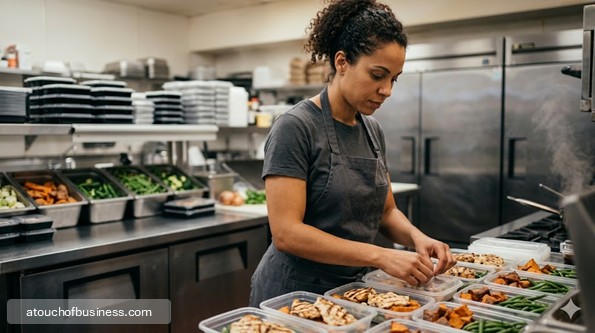
Chef packing healthy meals into glass containers in a busy commercial kitchen for a meal prep business.

Meal Prep Business Overview

A meal prep business prepares packaged meals in batches for people who want food that’s ready fast. You cook, portion, package, label, and deliver (or offer pickup) based on orders you’ve already collected.

This is usually a small-to-medium startup. Many owners start solo or with a partner by using a permitted commercial kitchen they rent. A larger version exists, too—your own facility, more volume, more staff, and more cash tied up before launch.

Before you get excited about recipes, get clear on the rules. Most meal prep models fall under retail food oversight, which is handled at the state and local level, often through your health department. The FDA’s Food Code is a model many jurisdictions use as a base, but your local version is what matters.

Common Meal Prep Business Models

Your model decides almost everything—your kitchen setup, packaging, labels, delivery plan, and the permits you’ll need. Don’t skip this step. If you do, you’ll build the wrong business.

Here are the common models you’ll see in the U.S. meal prep space.

  • Preorder pickup: Customers order ahead. You prep on set days. Pickup happens in short windows.
  • Local delivery: Customers order ahead. You deliver on specific days. Cold holding during transport becomes a key part of your launch plan.
  • Subscription weekly plans: Customers pick a plan (number of meals per week). You run a cutoff day, then produce to that count.
  • A la carte menu: Customers pick individual meals. This can work well if you still require preorders.
  • Corporate drops: Offices order in bulk. You deliver to one location at a set time.
  • Retail placement: You sell packaged meals through a store. This can change labeling expectations and the way your regulators view your setup.

Who You Serve and What You Offer

Meal prep customers usually want one thing—time back. They also want predictability. They don’t want to think about what’s for lunch.

Your offer can be simple or specialized. Keep it tight at launch. You can expand later, once you’ve proven demand and you can stay compliant.

Common products and services:

  • Fresh refrigerated prepared meals (single-serve)
  • Frozen prepared meals (single-serve)
  • Ready-to-cook meal kits (portion packs)
  • Bulk proteins and sides (portion packs)
  • Pickup scheduling and local delivery

Common customer groups:

  • Busy professionals and families
  • Fitness-focused customers tracking portions
  • Seniors and caregivers seeking convenience
  • Companies ordering group meals
  • Customers avoiding allergens (only if you can label and control cross-contact)

If you plan to serve people with food allergies, treat that as a serious commitment. The FDA’s food allergy information and labeling guidance are good starting points for understanding what the law expects from packaged foods. See Food Allergies and Allergen Labeling Q&A (Edition 5).

Pros and Cons to Know Up Front

You don’t need hype. You need clarity. So here’s the tradeoff.

What tends to work in your favor:

  • You can sell based on preorders, which can reduce unsold food at launch.
  • A small menu can be produced efficiently in batches.
  • Subscriptions can make weekly demand easier to forecast.

What tends to push back:

  • Food safety rules and inspections can slow your timeline if you aren’t prepared.
  • Packaging and labeling have to be consistent for every menu item.
  • Cold storage capacity becomes a limit fast if you scale too quickly.
  • Delivery adds risk if you can’t keep food at safe temperatures during transport.

Before You Start

Let’s get real. A meal prep business sounds simple until you’re responsible for food safety, labeling, timing, and customer expectations—all at once.

First, ask if this business fits you. Do you like structure? Can you repeat the same process every week without cutting corners?

Next, check your motivation. Are you moving toward something or running away from something?

If you’re “running away,” you may quit the first time the schedule gets heavy or the rules feel restrictive. If you’re “moving toward,” you’re more likely to stay steady when it gets hard. Passion helps with that, but it needs to be grounded. This is worth reading before you commit: why passion matters in business.

Now do a responsibility check. Are you ready for uncertainty, long days during setup, and the fact that you’re the one accountable if something goes wrong?

Also, talk to your household. If you live with family, do they support the time and financial pressure that can show up early?

Finally, talk to people already doing the work—but not the ones who directly compete with you. Find meal prep owners in a different area and ask smart questions. If you want more context on what ownership looks like from the inside, this helps: a business inside look.

Questions to ask non-competing meal prep owners:

  • What surprised you most about permits, inspections, or facility requirements?
  • What part of launching took longer than you expected?
  • If you could restart, what would you do first before buying equipment or branding?

If you need a broader readiness check before you invest, use this as your baseline: business start-up considerations.

How Does a Meal Prep Business Generate Revenue

This business makes money by selling packaged meals and related items on a schedule. The key is deciding how customers buy from you and how often.

Common revenue paths:

  • Weekly subscriptions (set number of meals per week)
  • Preorder meal bundles (for example, 5- or 10-meal bundles)
  • A la carte meals (still often preorder-based)
  • Corporate orders (bulk drops)
  • Add-ons (snacks, breakfasts, drinks—only if your permits and labeling support it)

Pricing is not a guess. You’ll need to calculate food cost, packaging, kitchen time, delivery cost, and waste risk. Use a structured approach like this: pricing your products and services.

Startup Steps for a Meal Prep Business

The steps below are written for first-time owners. They focus on pre-launch only. No fluff. No “figure it out later.”

Read them like a sequence. Each step sets up the next one.

Step 1: Choose Your Launch Lane

Start by choosing the simplest version of the business you can launch safely and legally. This is not the time to build five diet lines, offer delivery seven days a week, and chase retail stores.

Pick your lane: fresh refrigerated meals or frozen meals. Pickup-only or delivery. Subscription or a la carte. Your first version should be narrow enough that you can repeat it every week without stress.

Step 2: Confirm Who Regulates You Where You Live

Meal prep is regulated mostly at the state and local level. Your first job is to identify the correct regulator for your exact location and model.

Start with the FDA’s directory of state retail food rules to find your state entry point. Then move down to your city or county health department for the local process.

Step 3: Decide Where You’ll Produce the Food

Your facility choice can make or break your launch. Many areas require meal prep to happen in a permitted commercial kitchen. Some models are not allowed from a private home kitchen under local rules.

Common options include leasing time in a shared commercial kitchen, renting a commissary kitchen, or building out your own inspected facility. Don’t sign a lease or pay deposits until you confirm the rules with the local office that issues food permits.

Step 4: Lock the Business Model and Staffing Assumption

Here’s the straight answer. You can often start this business on your own if you use a shared kitchen and a preorder model. That’s the lean startup lane.

If you want a dedicated facility, daily production, multiple delivery routes, or retail placement, you’re moving into a staff-heavy lane. That can involve outside funding and earlier hiring.

Be honest. Are you building a solo business, a partner business, or an investor-backed business? Your legal structure and funding plan should match that reality.

Step 5: Prove Demand and Profit Before You Build

Don’t launch based on likes and compliments. Validate real demand with real behavior—people willing to place a preorder and show up.

Start by studying your local market. What do people already buy? What do they complain about? Price, delivery days, menu variety, portion size, dietary focus—those are your clues.

If you need a quick framework for demand, use this: how supply and demand works. Your goal is not “a lot of interest.” Your goal is “enough paying customers at a price that supports your costs.”

Step 6: Build a Simple Menu With Standard Portions

At launch, your menu is not a creative project. It’s a compliance and consistency project.

Write each recipe in a standardized way. Use weights, not guesses. Decide portion sizes and stick to them. You’ll need consistent ingredient lists for labels and consistent production counts for ordering.

Step 7: Make Packaging and Labeling Decisions Early

Packaging is not just a container. It affects shelf life, food safety handling, labeling needs, and customer expectations.

Decide how meals will be stored and reheated. Then decide what your label must include for each product based on your regulator’s expectations and federal labeling rules. If you plan to serve customers with allergies, start with FDA’s food allergy overview and the FDA’s allergen labeling guidance.

Step 8: Clarify Whether Nutrition Facts Will Apply

Many packaged foods require Nutrition Facts labeling unless an exemption applies. This is not something to “assume” your way through.

Start with the FDA’s Small Business Nutrition Labeling Exemption information to understand the notice process and whether your situation might qualify. If you’re unsure, this is a good place to use professional help so you don’t label incorrectly.

Step 9: Confirm Whether FDA Food Facility Registration Applies

Some food facilities must register with the FDA, but there are exemptions, including one for certain retail food establishments. Whether you’re exempt depends on the details of what you do and how you sell.

Use the FDA’s Retail Food Establishment Exemption Flowchart as a starting point, then confirm your situation with the appropriate regulator.

Step 10: List the Essential Items You Need for Your Exact Model

Now you translate your model into a real equipment list. Not a fantasy list. A working list.

Start with what you must have to cook, cool, store, package, label, and hold food safely. Then layer in delivery needs if you deliver. If you rent kitchen time, some equipment may be included, and some may not.

Step 11: Draft Your Startup Cost Estimate and Timeline

Meal prep costs can look small at first, then jump fast when you add cold storage, packaging, and kitchen access. Your timeline can also stretch if a permit or inspection takes longer than expected.

Put your costs into buckets and build a simple timeline with dependencies. If you want a clean way to estimate, start here: estimating startup costs.

Step 12: Write a Simple Business Plan

You need a plan even if you’re not chasing a loan. The plan forces you to make decisions you can’t avoid—pricing, capacity, target customer, and launch sequence.

Keep it simple, but complete. If you want a step-by-step structure, use: how to write a business plan.

Step 13: Choose the Legal Structure With a Growth Path in Mind

If you’re launching solo in a shared kitchen with low overhead, many owners start as a sole proprietor. If you plan to grow, hire, or take on partners, you may move to a limited liability company later. That’s the common “start simple, formalize as you grow” path.

Your choice affects taxes, liability, banking, and how you bring in partners. If you’re uncertain, this is a good place to speak with an attorney or accountant.

Step 14: Register the Business and Get Your Tax Identification Set Up

Registration happens at the state level, and the rules depend on your structure and location. The U.S. Small Business Administration has a clear overview of what this looks like in practice at Register your business.

If you need an Employer Identification Number, get it directly from the IRS using the official EIN application page. You don’t need to pay a third party for that.

Step 15: Handle State and Local Tax Accounts

Next, set up the tax accounts your state requires. Sales tax rules vary by state and sometimes by product type. Employer accounts apply if you hire.

Your state Department of Revenue (or similar agency) is the right place to confirm what you must register for. Don’t guess here. This is one of those “do it correctly” steps.

Step 16: Apply for Licenses, Permits, and Food Establishment Approval

This is the step many new owners underestimate. A food business often involves multiple approvals—general business licensing, zoning, and food establishment permitting.

The U.S. Small Business Administration’s licenses and permits overview helps you understand the multi-agency nature of licensing. Then you verify the specific requirements with your city, county, and state portals.

Step 17: Set Up Banking and Funding

Open a business bank account once your registration and tax setup support it. Keep business finances separate from day one so your records stay clean.

If you need funding beyond savings, treat it like a project. Know exactly what you’re borrowing for and how it supports launch. This can help you understand the process: how to get a business loan.

Step 18: Choose a Name and Lock Digital Basics

Your name needs to fit your offer and be available. Don’t build branding around a name you can’t use.

Work through the basics here: selecting a business name. Then secure a domain and matching social handles so your customers can actually find you.

Step 19: Create Simple Brand Assets and Customer-Facing Proof

You don’t need a fancy brand package to start. You do need to look real and consistent.

At minimum, you need a logo mark or wordmark, a consistent color and font style, clear menu presentation, and basic business contact details. If you want a structured approach without overbuilding, use: corporate identity considerations.

Also plan your website early, because many customers will judge you before they ever taste your food. Here’s a practical starting point: how to build a business website.

Step 20: Set Up Ordering, Payments, and Written Policies

Before you take your first order, decide how customers will order, how you’ll accept payment, and how you’ll handle cancellations, missed pickups, and delivery issues.

Write your rules in plain language and keep them visible during checkout. This reduces confusion and protects your time during launch.

Step 21: Line Up Suppliers and Document Your Inputs

Choose where ingredients and packaging will come from and confirm lead times. Keep invoices and vendor records organized. Inspectors and regulators may ask how you source food and how you store it.

If you’re unsure what you need to track, this is another spot where a professional advisor can help you set up a simple system without overwhelm. If you want guidance on building that support team, see: building a team of professional advisors.

Step 22: Run a Controlled Pilot Before You Announce a Big Launch

Don’t start with a grand claim. Start with a controlled pilot. A pilot helps you confirm portion sizes, packaging fit, label accuracy, and timing in the kitchen.

Keep it small. Limit the menu. Limit the customer count. Your goal is to prove you can repeat the process safely and consistently.

Step 23: Plan the Launch Marketing and Opening Moment

Even if you don’t have a storefront, you still need a launch plan. People should know what you sell, how ordering works, and when pickup or delivery happens.

If a formal opening fits your model, use this for structure: grand opening ideas. If you do have a customer-facing location, don’t ignore the basics of visibility and signage. Start here: business sign considerations.

Step 24: Complete the Pre-Opening Compliance and Readiness Check

Before your first full public week, confirm that your permits are active, your inspection requirements are met, and your facility setup matches what your regulator approved.

Then do a final run-through of your equipment, packaging, labeling, ordering flow, and delivery plan. Launch is not the time to discover you can’t keep food cold during transport or that labels don’t match ingredients.

Location and Setup Choices

Meal prep can work without a storefront. Many owners run preorder pickup from a permitted kitchen, or they offer delivery with scheduled routes.

If you want a dedicated pickup location, your local zoning office and building department will be part of your process. You’ll also want to think through location selection like a business owner, not a hopeful cook. This helps: choosing a business location.

If you plan to invite customers inside, plan for customer flow, parking, signage, and local rules. And if you want foot traffic, this can help you think clearly: how to get customers through the door.

Essential Items and Cost Drivers

You don’t need to buy everything on day one. But you do need a complete list so you can budget accurately and avoid delays.

Costs vary widely by city, kitchen arrangement, and volume. The goal here is to show you what you must plan for and where your biggest quotes will show up.

Kitchen access and facility basics:

  • Permitted commercial kitchen access (hourly rental, membership, or lease) with documented permission to operate
  • Cold storage space sized for your batch counts (refrigerator and freezer capacity)
  • Handwashing sink access and warewashing setup as required by the facility
  • Secure dry storage for ingredients and packaging

Core cooking and prep equipment (depends on menu):

  • Commercial range or cooktop (if not provided by the kitchen)
  • Commercial oven or convection oven (if not provided)
  • Prep tables and food-safe work surfaces
  • Knives, cutting boards, scales, measuring tools
  • Sheet pans, hotel pans, mixing bowls, storage containers

Food safety and temperature control:

  • Probe thermometers and a calibration method
  • Cooling tools (shallow pans, racks, ice bath containers as needed)
  • Insulated delivery bags or coolers (if delivering)
  • Ice packs or gel packs (if delivering chilled meals)

Packaging and labeling:

  • Meal containers and lids matched to reheating method
  • Tamper-evident seals if you choose to use them
  • Label printer and food-safe labels
  • Sealing equipment if your packaging requires it

Ordering, payment, and customer-facing basics:

  • Ordering platform (online ordering, invoices, or preorder forms)
  • Payment processor to accept payment
  • Basic website and business email
  • Menu design and brand basics
  • Business cards if you do local networking or pickups (see what to know about business cards)

Pricing estimate guidance (planning ranges only):

  • Kitchen access: Often your largest early quote. Expect anything from pay-as-you-go hourly rates to monthly memberships or a lease, depending on your city and facility.
  • Packaging per meal: A major recurring driver. Get quotes for containers, lids, seals, and labels based on your expected weekly meal count.
  • Cold storage: If you outgrow the kitchen’s included storage, you may need to rent more space or upgrade equipment, which can shift your startup budget quickly.
  • Delivery setup: Insulated bags, coolers, and cold packs can add up, especially if you deliver many orders at once.
  • Brand and website: You can start lean, but budget time and money for a clean, functional ordering experience.

If you want a structured way to price meals so the numbers make sense, revisit: pricing your products and services.

Skills You’ll Need (Or Ways to Fill the Gaps)

You don’t need to be perfect at everything. You do need to be honest about what you can do well and what you should learn or outsource.

Here are the skills that matter most before launch.

  • Basic food safety understanding: Temperature control, cross-contamination prevention, cleaning and sanitizing expectations.
  • Recipe standardization: Weights, consistent portions, and repeatable batch results.
  • Label control: Ingredient lists, allergen awareness, and consistent label updates when recipes change.
  • Ordering and scheduling: Cutoff days, pickup windows, and realistic delivery routes.
  • Simple budgeting: Tracking kitchen costs, packaging, ingredient costs, and launch spending.
  • Customer communication: Clear pickup rules, delivery timing, reheating instructions, and refund terms.

If accounting or legal setup feels heavy, that’s normal. You can use professional help. The goal is to do it correctly, not to prove you can do everything alone.

Day-to-Day Activities to Expect

You’re not building this business to live in chaos. You’re building it to run on a repeatable weekly rhythm.

Even before launch, it helps to understand what your core cycle will look like once you begin producing meals.

  • Order cutoff and final production count
  • Ingredient ordering and receiving checks
  • Batch prep and cooking
  • Cooling, cold holding, and staging
  • Portioning, packaging, and labeling
  • Order assembly and pickup or delivery handoff
  • Cleaning, sanitizing, and facility closeout tasks
  • Simple recordkeeping (supplier invoices, temperature checks if required)

A Day in the Life of a Meal Prep Owner

Launch week is usually more intense than later weeks, because you’re still refining timing and systems. But the basic pattern is easy to picture.

You start by checking orders and production counts. Then you receive ingredients, prep, and cook in batches. After cooking, your focus shifts to cooling, portioning, packaging, and labeling. Finally, you stage orders for pickup or delivery, then close with cleaning and paperwork.

The question to ask yourself is simple. Can you repeat that every week without rushing or cutting corners?

Legal and Compliance

This is not the section where you try to memorize every rule. It’s the section where you set a clean process for finding the right rules in your state and city.

Start with these basics, then verify locally.

Business formation and registration: Your state’s Secretary of State (or similar office) handles business entity filings. The U.S. Small Business Administration’s register your business guide explains the general flow, but your state portal is the authority.

EIN: If you need an Employer Identification Number, use the IRS official page: Get an employer identification number.

Licenses and permits: Many businesses need a mix of local and state permissions. The U.S. Small Business Administration’s licenses and permits overview is a helpful orientation, but your city, county, and state offices decide what applies to you.

Food establishment approvals: Your local health department (or state food regulator) will typically handle food establishment licensing, plan review, and inspections. Use the FDA’s state retail food rules directory to find your state entry point, then follow the local portal instructions.

Food labeling and allergens: If you sell packaged meals, learn the federal labeling expectations, especially allergens. Start with Food Allergies and the FDA’s Allergen Labeling Q&A (Edition 5).

Nutrition labeling: If Nutrition Facts apply to your meals, you’ll need to comply or confirm you qualify for an exemption. Start with the FDA’s Small Business Nutrition Labeling Exemption information.

Meat and poultry nuance (model-dependent): If you plan to sell certain meat or poultry products beyond direct-to-consumer retail-style activity, federal inspection exemptions can become relevant. The limits and rules are updated and published publicly. If this might apply to your model, review the official notice Retail Exemptions Adjusted Dollar Limitations and confirm with the appropriate regulator.

Insurance and Risk

Some insurance is optional, and some may be required depending on your state and situation (especially when you have employees). Either way, you should plan for risk early.

At minimum, think about general liability and product liability, plus commercial auto coverage if you deliver. If you want a structured overview, start with: business insurance basics.

If you plan to hire early, learn what hiring triggers from a compliance standpoint, then decide your timing. This can help you think clearly about early staffing: how and when to hire.

Red Flags to Watch for Before You Spend Money

These are the warning signs that can slow your launch or create legal risk. If you spot one, pause and verify before you move forward.

  • Assuming you can produce meals from a home kitchen without written confirmation from your local regulator
  • Buying packaging and printing labels before you’ve standardized recipes and ingredient lists
  • Planning delivery without a clear cold holding plan and the gear to support it
  • Signing a lease before confirming zoning and food permitting requirements
  • Launching with a large menu that forces you to buy too much inventory and creates waste risk
  • Building a brand and website before you confirm you can legally operate in the way you’re advertising

If you want a general “avoid the obvious traps” resource that applies to most startups, see: avoid these mistakes when starting a small business.

Varies by Jurisdiction

Here’s the truth. Two cities in the same state can treat food businesses differently. So you need a repeatable way to verify requirements without getting stuck.

Use this checklist to confirm what applies to your specific meal prep model.

Local verification checklist:

  • Food permitting: Which office issues the food establishment permit, and what is the application path?
  • Plan review: Is plan review required for your setup, even if you use a shared kitchen?
  • Zoning: Is your production location allowed for commercial food activity?
  • Inspections: Is there a required pre-opening inspection before you can sell?
  • Label expectations: Does the local regulator require specific date marking or label elements beyond federal rules?
  • Delivery rules: Are there local requirements tied to delivery holding temperatures or transport methods?

Smart questions to ask your local office:

  • If I’m producing preordered meals in a rented commercial kitchen, what permits apply to me versus the facility itself?
  • If I deliver chilled meals, what documentation or practices do you expect for cold holding during delivery?
  • If I change my model later (retail placement or a storefront pickup counter), what approvals would I need before I switch?

101 Practical Tips for a Meal Prep Business

You’ll find tips here that cover big decisions and the small habits that keep food businesses steady.

Use the tips that match where you are right now, and let the rest wait.

Bookmark this page so you can return when you hit a new challenge.

Start with one tip, put it into practice, then come back for the next.

What to Do Before Starting

1. Pick one launch model first—preorder pickup, delivery, or subscription—so your permits, packaging, and schedule don’t fight each other.

2. Write down your “minimum menu” for launch (like 6–10 meals), because a huge menu makes labeling, prep, and purchasing harder than it needs to be.

3. Decide whether you’re selling fresh refrigerated meals, frozen meals, or ready-to-cook meals, since each one changes storage space and food safety planning.

4. Confirm where you are legally allowed to cook and package meals—rules vary by state and local health department, and some models are not allowed from a private home kitchen.

5. Choose a kitchen path early: shared commercial kitchen, commissary kitchen, or your own facility, because your startup budget and timeline depend on it.

6. Test demand with a small preorder window before you buy equipment, so you’re validating real behavior, not compliments.

7. Define your target customer in one sentence (busy families, fitness-focused customers, seniors, corporate orders), then build your first menu around them.

8. Standardize your recipes using weights and exact ingredients so your labels match what you actually make every time.

9. Decide your pickup or delivery days and stick to a simple schedule at launch, because complexity creates delays and customer confusion.

10. Create a basic “safe handling” plan for cold foods during pickup and delivery, including how you’ll keep meals cold and for how long.

11. Set a realistic weekly production cap before launch so you don’t oversell and break your own quality and safety controls.

12. Build a checklist of what must be finished before you accept your first payment: permits confirmed, labels drafted, packaging chosen, ordering method tested, and a pilot run completed.

What Successful Meal Prep Business Owners Do

13. They treat the business like a repeatable weekly routine, not a creative experiment, so production stays predictable.

14. They keep a “master recipe file” and only change one thing at a time, so labels, allergens, and customer expectations stay consistent.

15. They document portions and packaging for every menu item, so staff or helpers can produce the same results without guessing.

16. They schedule ordering cutoffs, then produce to the count, which reduces waste and keeps food fresher.

17. They track their cold storage capacity like it’s money, because running out of refrigerator space can force unsafe shortcuts.

18. They use simple quality checks on every batch (temperature checks, label checks, seal checks) before meals go out the door.

19. They keep suppliers and backups lined up for key ingredients and packaging so one stockout doesn’t cancel a week of orders.

20. They write policies in plain language and display them before checkout, so customers know the rules before there’s a problem.

21. They start with a small service area for delivery, then expand only after they prove their timing and cold holding plan works.

22. They keep customer communication short and consistent—menu release day, cutoff reminders, pickup details, and reheating instructions.

What to Know About the Industry (Rules, Seasons, Supply, Risks)

23. Meal prep is usually regulated at the state and local level, often through health departments, so always verify your exact permit path where you operate.

24. If you package meals for sale, ingredient and allergen labeling matters, and you need a method to update labels whenever a recipe changes.

25. Nutrition labeling requirements can apply to packaged foods unless an exemption applies, so don’t assume you’re exempt without checking.

26. Your “cold chain” is part of your product—if food warms during delivery, you may create a safety risk and a reputation problem at the same time.

27. If you plan to vacuum seal or use reduced-oxygen packaging, ask your regulator first, because that can trigger extra requirements in many jurisdictions.

28. If you plan to sell meals through retail stores, expect more scrutiny on labeling and handling since your meals may sit longer before purchase.

29. Ingredient prices change fast, so build your menu around ingredients that won’t destroy your margins the first time prices spike.

30. Packaging shortages happen, so qualify at least two container options that fit your label and reheating instructions.

31. Food allergies are a high-stakes area—if you can’t control cross-contact and label consistently, don’t market “allergen-free” claims.

32. Delivery adds vehicle risk and extra planning, so decide early if delivery is part of launch or a later add-on.

33. Regulations and inspection expectations can differ by city and county, even within the same state, so treat local verification as a required step.

34. Time is a hidden cost—prep, portioning, labeling, and packing take longer than most new owners expect, so pilot your workflow before launch.

Running the Business (Operations, Staffing, SOPs)

35. Build your production week around two anchors: an ordering cutoff day and a production day, so your schedule stays repeatable.

36. Create a written “batch sheet” for each menu item with ingredients, yield, portion size, and packaging, so you can scale without guessing.

37. Use a label checklist before meals leave the kitchen: product name, ingredients, allergens, date marking rules your regulator expects, and reheating instructions.

38. Separate “raw prep” and “ready-to-eat packing” areas in your workflow to reduce cross-contamination risk.

39. Make cooling and cold holding steps explicit in your process, because that’s where rushed teams tend to cut corners.

40. Calibrate your food thermometer on a schedule and document it if your inspector expects proof, because bad tools create bad decisions.

41. Standardize your portioning method (scale, scoop size, or count) so customers get consistent meals and your costs stay stable.

42. Set a “pack-out order” for your kitchen day (cook, cool, portion, label, stage) so you’re not improvising under time pressure.

43. Keep packaging, labels, and seals in one organized station so you don’t lose time hunting for supplies mid-run.

44. If you hire help, start with one role first (packing and labeling is common) and train them on your checklists before you expand duties.

45. Use a simple cleaning and sanitizing schedule tied to your production day so you can show consistency during inspections.

46. Store ingredients off the floor and clearly labeled so you reduce spoilage, mix-ups, and pest risk.

47. Keep supplier invoices and product specs organized, because you may need to show where ingredients came from during an inspection or a recall event.

48. Build a pickup and delivery staging plan that keeps cold meals cold while orders are waiting to be handed off.

49. Maintain a “change log” when you swap ingredients or suppliers, so you know when labels, allergens, and pricing must be updated.

Marketing (Local, Digital, Offers, Community)

50. Pick one primary message for launch (like “high-protein lunches ready fast” or “family dinners for busy nights”) so your marketing is clear.

51. Keep your launch offer simple—one bundle option and one pickup or delivery day—so customers don’t get stuck making decisions.

52. Use local search basics: consistent business name, address, and phone number across listings, so people can find you without confusion.

53. Take photos that show portion size and packaging clearly, because customers want to know what they’re paying for.

54. Publish your weekly menu on a consistent day and time so customers learn your routine and come back.

55. Set a preorder deadline and repeat it everywhere, because “I missed the cutoff” is one of the most common early complaints.

56. Partner with non-competing local businesses (gyms, physical therapy clinics, salons) for referrals, but keep the offer consistent and easy to explain.

57. Use a short customer story format in marketing: problem, solution, how ordering works, and what day meals are ready.

58. Create a “first order” guide that explains pickup, delivery, storage, and reheating in plain language, because fewer questions means fewer problems.

59. If you use discounts, attach them to a clear goal (first order, referral, or subscription start) so you can measure whether it worked.

60. Collect emails and text opt-ins at checkout so you can announce menus without depending on social media algorithms.

61. Make your menu easy to scan on a phone, because most customers will decide in under a minute.

62. Run a small pilot “community drop” for feedback before a big launch push, so you can fix issues quietly.

Dealing with Customers (Trust, Education, Retention)

63. Set expectations on what your meals are and are not (fresh, refrigerated, ready-to-heat) so customers don’t assume restaurant plating or instant delivery.

64. Provide storage and reheating instructions that match your packaging so customers get good results and blame you less when they overheat meals.

65. Use clear allergen language and avoid absolute claims unless you can prove controls, because trust is hard to rebuild after one bad incident.

66. Offer a simple way for customers to state preferences (spice level, no pork, no nuts), but don’t promise custom work unless you can execute reliably.

67. If a customer asks for medical nutrition advice, direct them to a qualified professional and keep your business focused on food preparation, not health claims.

68. Create a “what changes weekly” message so customers understand the menu rotation and don’t expect the same meals every time.

69. Keep communication consistent: menu release, cutoff reminder, pickup or delivery confirmation, and a quick follow-up asking about the meals.

70. Track repeat buyers by product, not just by customer, so you know which meals earn loyalty and which meals cause refunds.

71. Give customers an easy way to report an issue with a photo, because it speeds up resolution and reduces arguments.

72. Build retention with reliability—same pickup window, same ordering flow, same label style—because customers stay when things feel easy.

Customer Service (Policies, Guarantees, Feedback)

73. Write a missed pickup policy before launch, including how long meals will be held and what happens after that window.

74. Write a late delivery policy that explains what you’ll do if timing slips, so customers know the plan before they are upset.

75. Decide how you will handle food quality complaints: refund, credit, or replacement, and apply it consistently.

76. Use a short feedback form after the first order that asks about taste, portion size, packaging, and reheating results.

77. Set a clear cutoff for changes and cancellations, because last-minute changes create waste and scheduling chaos.

78. Keep customer support in one channel (email or text) so messages don’t get lost and problems don’t drag on.

79. When something goes wrong, respond with three pieces: what happened, what you’re doing now, and what you’ll change next time.

80. Track the top three complaint types monthly and fix the root cause, because repeating the same “sorry” is expensive.

Sustainability (Waste, Sourcing, Long-Term)

81. Build your menu around overlapping ingredients so you reduce waste and simplify ordering.

82. Use a preorder model when possible, because it reduces leftover inventory and helps you produce to real demand.

83. Choose packaging that protects food first, then look for lower-waste options that still seal well and reheat safely.

84. Create a “use first” labeling method for ingredients in your storage so older items get used before they expire.

85. If you donate food, confirm local rules and keep donation records, because food donation has handling expectations that vary by area.

86. Schedule one quarterly review of your biggest waste points (food, packaging, delivery time) and set one improvement goal at a time.

Adapting to Change (Seasonality, Shocks, Competition, Tech)

87. Create a backup menu plan for ingredient shortages so you can swap meals without scrambling the day before production.

88. Reprice meals when ingredient costs shift materially, and explain the change briefly, because silent price jumps damage trust.

89. If a competitor undercuts your price, don’t race to the bottom—tighten your offer, improve reliability, and focus on your best-selling meals.

90. Build a “pause week” plan for emergencies so customers know what happens if you must skip a production cycle.

91. Keep your ordering system flexible so you can change cutoff times, pickup windows, and menu items without breaking checkout.

92. Add new meals slowly, testing one or two at a time, so you don’t overload labeling, training, and purchasing.

93. If you expand delivery, expand in rings—one new neighborhood at a time—so your timing stays predictable.

94. Review your tech stack once a year (ordering, payments, labels) and simplify where possible, because too many tools create errors.

What Not to Do

95. Don’t launch without confirming the correct permits and inspections for your exact location and model, because fixing it later is usually slower and more expensive.

96. Don’t sell “allergen-free” or “gluten-free” claims unless you can control ingredients, cross-contact, and labeling every week.

97. Don’t expand your menu to chase every request, because complexity breaks consistency and increases labeling risk.

98. Don’t rely on memory for recipes and portions, because small changes add up and customers notice when meals shrink or taste different.

99. Don’t deliver without a clear cold holding plan and the right gear, because temperature problems can turn into safety problems fast.

100. Don’t take large corporate orders until you’ve proven your production capacity in smaller runs, because one failure can damage your reputation early.

101. Don’t ignore written policies—pickup, refunds, and cancellations—because unclear rules create conflict and can drain your time.

FAQ For a Meal Prep Business

Question: What permits do I usually need to start a meal prep business?

Answer: Most meal prep businesses need approval from a local or state food regulator, often the health department. Many areas also require a general business license.

Requirements vary by city and county, so confirm your exact path before you pay for kitchen time or packaging.


Question: Can I run a meal prep business from my home kitchen?

Answer: Sometimes, but many home food rules only allow certain shelf-stable foods. Prepared meals that need refrigeration are often handled under stricter rules.

Ask your local health department whether your planned meals and sales model are allowed from a residence.


Question: Do I need to use a commercial kitchen?

Answer: Many meal prep models require a permitted commercial kitchen, especially for foods that need temperature control. A shared kitchen or commissary can be a common starting option.


Question: Do I need a food handler card or manager certification?

Answer: Some jurisdictions require food safety training or a certified manager for certain food businesses. The rule depends on your location and operation type.

Ask the regulator that issues your food permit what training they expect before opening.


Question: What should be on my meal labels?

Answer: Labels often need the product name, ingredient list, and major allergen information. Some regulators also expect date marking and storage or reheating instructions.

Confirm local label expectations, because requirements can change based on how and where you sell.


Question: Do I need Nutrition Facts labels on my meals?

Answer: Packaged foods often need nutrition labeling unless an exemption applies. Whether you qualify can depend on your business size and how you sell.

Check federal rules and confirm what your regulator expects for your specific setup.


Question: Do I need to register my kitchen with the Food and Drug Administration?

Answer: Some food facilities must register, but many retail-style operations can be exempt. The right answer depends on what you do and how you sell.

Use federal guidance to screen your situation, then confirm with the proper agency if you are unsure.


Question: Can I vacuum seal meals to make them last longer?

Answer: Vacuum sealing can be treated as reduced-oxygen packaging, which may trigger extra regulatory requirements. Do not adopt it until your regulator confirms what applies.


Question: How do I decide how long my meals can be sold or kept?

Answer: Shelf life depends on the recipe, cooling method, packaging, and cold storage control. Your regulator may have expectations for date marking and handling.

Set conservative time frames at launch and document how you chose them.


Question: What is the safest way to handle delivery for meal prep?

Answer: Plan delivery so cold meals stay cold using insulated carriers and cold packs. Keep delivery routes short until you can prove your process holds temperatures reliably.


Question: Should I launch with subscriptions or a la carte ordering?

Answer: Subscriptions can make demand easier to predict because customers commit ahead of time. A la carte offers more choice but can complicate planning and purchasing.


Question: What should my first menu look like?

Answer: Start with a small set of meals you can repeat consistently and label accurately. A tight menu reduces ingredient waste and lowers the chance of labeling errors.


Question: What policies should I set before taking my first orders?

Answer: Set rules for order cutoffs, cancellations, missed pickups, and delivery windows. Clear refund or credit terms reduce conflict when something goes wrong.


Question: Do I need insurance to start a meal prep business?

Answer: Insurance is not always legally required, but many kitchens, landlords, and partners require proof of coverage. If you hire employees, workers’ compensation requirements often apply depending on the state.


Question: Can I sell meals to offices, gyms, or retail stores?

Answer: Yes, but selling through third parties can change labeling expectations and how regulators classify your activity. Confirm requirements before you promise regular supply to another business.


Related Articles