
What to Expect From This Guide to Starting an Auto Upholstery Business
- Startup steps: Follow 17 ordered steps from assessing your trim skills through demand, funding, registrations, shop setup, and test jobs before opening.
- Daily reality: See what a typical day involves, including the parts owners often enjoy and the parts they find hard.
- Common questions: Find answers about licensing, learning the trade without experience, installing customer-supplied seat covers, and starting in a small space.
- Business fit: Weigh the craft, physical demands, and uneven income against your goals, plus red flags that may mean pausing or changing plans.
- Financial planning: Price out startup costs, test break-even logic, plan operating capital, and check lender document requirements before committing.
- Shop setup: Plan zoning, layout, power, equipment, and supplier checks, including flammability documentation for the materials you use.
- Safety and insurance: Review airbag-seat policies, flammable adhesive handling, waste questions, and insurance that covers customer vehicles in your shop.
The article begins with what auto upholstery owners do and whether the business fits you, before the startup steps begin.
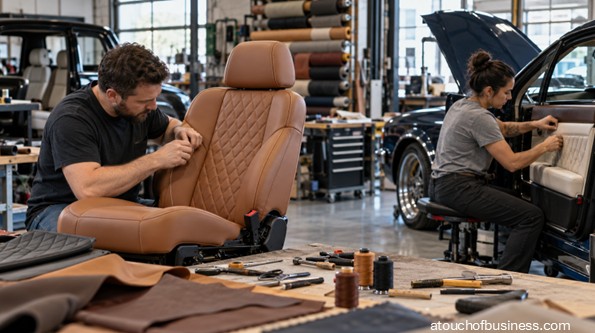
As an auto upholstery shop owner, you and your trimmers repair, replace, and custom-build vehicle interiors: seats, headliners, carpet, and convertible tops.
Customers range from everyday drivers with torn seats to classic car owners, custom builders, and truck or equipment operators.
Opening a trim shop follows the general startup process, plus tasks tied to vehicles, adhesives, and customer property.
A shop-based setup adds its own decisions about space, ventilation, and power for industrial machines.
Customers who hand over a vehicle also expect trust, clear pricing, and a realistic turnaround.
Is an Auto Upholstery Business a Good Fit for You?
An auto upholstery business fits you if you enjoy precise, hands-on craft and can handle uneven income while building a customer base.
Ask why you want to own a trim shop instead of working in one. Your answer shapes how you handle long days and slow stretches.
Any startup can fail, so consider how you would handle that risk.
Can your household cover living expenses while you build a portfolio and a customer base?
Will family or household members accept long hours, slow stretches, and the risk that the business fails?
Industrial machines, a lease, material stock, and insurance all demand capital before your first paid job.
Ask how much operating capital you can set aside, and whether savings or lenders could supply it.
Test demand before spending: who will bring you jobs, and why would they choose you over another trim shop?
Think about whether you would start from scratch or buy an existing trim shop, since that choice changes your costs and timeline.
Plan to learn from experienced owners you will not compete against, because their firsthand experience can save you costly mistakes.
Red Flags Before You Start
Several warning signs should make you pause, change your service mix, or reconsider starting an auto upholstery shop.
Pause or rethink your plan if any of these apply:
- No trim skills and no plan to build them. Mistakes mean rework and unhappy customers, so train, work in a shop, or partner with an experienced trimmer first.
- No clear customer group. If you cannot name who will bring you jobs, verify demand further and adjust your service mix or location.
- A plan built only on large custom builds. Custom jobs tie up time and cash, so add faster repair jobs to your mix.
- A plan to accept any seat job. Seats with airbags or sensors carry safety and legal risk, so decide your policy before taking those jobs.
- No suitable space. Zoning, landlord rules, or electrical limits can block the use, so verify before you sign a lease.
- No cushion for slow stretches. If you cannot cover costs while building a customer base, delay until funding and operating capital are in place.
- No affordable garagekeepers coverage. Without it, customer vehicles in your custody are unprotected, so pause until you can obtain it.
- Underpricing your labor. Trade press urges pricing beyond material plus labor, so build your rate from real costs.
Industry conditions to understand before you commit:
- Skilled trimmers are hard to find and keep, and few training institutions exist.
- Custom jobs increasingly use digital tools such as CAD, 3D scanning, and laser cutting alongside hand skills.
- Some custom and restoration builders add in-house trim divisions, which changes who hires outside shops.
- Material costs can shift with supply and trade conditions.
- Vehicle seats often contain airbags and occupant sensors, which raises safety and liability stakes.
Trade voices disagree on whether the trade is shrinking or steady, so verify demand in your own market.
These conditions do not rule out starting. They belong in your planning.
A Day in the Life of Running an Auto Upholstery Business
Your day mixes hands-on trim jobs with running the business: estimates, ordering, and customer updates.
Core jobs include repairing and replacing seats, headliners, carpet, and convertible tops.
Your customers often include vehicle owners, repair tradespeople, and equipment operators.
Owners report that hands-on jobs and management tasks compete for the same hours.
During busy periods, owners often spend more time managing the business than trimming.
Beyond the core jobs, your days include estimating, ordering materials, bookkeeping, customer communication, and training or supervising staff.
Days differ by job mix. Custom builds run long, while quick repairs turn over fast.
What owners often enjoy:
- Hands-on craft and the satisfaction of a finished interior
- Variety, since no two days look the same
- Independence and control over your schedule and jobs
What owners often find hard:
- Training and keeping skilled staff
- Delegating decisions so jobs move without you
- Shifting from technician to business owner
- Cash flow on long jobs and collecting payment
- The physical strain of kneeling, lifting, and repetitive hand motions
- Customers who do not understand the craft, or who need earlier poor repairs fixed
Does this mix of craft, management, and physical effort sound like a business you want to run?
Step 1: Assess Your Trim Skills and Owner Skills
Before you spend on a lease or machines, confirm you can sew and fit heavy materials, or plan to gain those skills.
The startup steps ahead move from skills and demand to funding, legal setup, equipment, and testing.
Trade sources say upholstery jobs demand near-perfect fit and finish.
Without strong skills, paid jobs can turn into rework that costs you time and material.
Sewing is only part of ownership. Owners report that pricing, scheduling, and leading staff are separate skills.
If your trim skills are thin, plan how to build them before opening.
Options for building trim skills include training, a job in a shop, or a partner.
Step 2: Talk With Non-Competing Owners
Speak only with owners you will not compete against, such as trim shop owners in other markets.
People who run body shops, restoration shops, or dealership service departments are also useful to talk with.
Prepare questions before each conversation so you use the time effectively.
Advice from real business owners is useful because they have experience, though each owner’s path is different.
Good questions to bring:
- Which jobs earn the most, and which cause the most trouble?
- How do you handle seats with airbags?
- How do you price surprises found after teardown?
- How do you find skilled help?
- What insurance do you carry?
- How long does a typical job take from drop-off to handoff?
Step 3: Choose Your Entry Path and Service Focus
Decide whether to start from scratch or buy an existing trim shop, then choose a service mix your setup can support.
Trade sources note that older trimmers are retiring. Check locally whether any trim shops are for sale in your market.
The best entry path depends on budget, timeline, available shops for sale, desired control, and risk tolerance.
Common service choices include:
- Seat repair and replacement
- Headliners and carpet
- Convertible tops
- Trim panels
- Custom and restoration interiors
- Fleet and equipment seats
- Outside trim jobs for body shops and dealerships
Every service you choose changes your equipment, material stock, staffing, and insurance needs.
Custom builds tie up time and cash. Owners report adding faster repair jobs to keep cash flowing.
Take marine or motorcycle jobs only if your materials, tools, and insurance support them.
Step 4: Validate Local Demand and Plan How Customers Will Find You
Check local supply and demand to confirm enough trim jobs exist to cover your costs.
Compare nearby trim shops as a customer would, noting their services, lead times, and the jobs they decline.
List your likely customers:
- Vehicle owners needing repairs
- Classic car and restoration owners
- Custom builders with trim backlogs
- Body shops and dealerships that need outside trim help
- Fleet and equipment operators
For each group, decide what problem you solve, such as faster turnaround or a specialty like headliners or convertible tops.
At opening, you reach your first customers through direct relationships with referral business owners and samples of finished jobs.
If local demand falls short of your costs, you are better off changing your service mix or location before spending.
Step 5: Price Out Costs, Test Break-Even Logic, and Plan Operating Capital
List and price every startup and monthly cost, then test whether your expected jobs can cover them.
Get local quotes for each item. Your most accurate estimate comes from listing everything you need and pricing it where you operate.
Cost items to list and price out:
- Lease, deposit, and build-out
- Electrical upgrades
- Industrial machines, whether new, used, or already owned
- Hand tools and shop equipment
- Material stock and adhesives
- Safety and fire equipment
- Insurance
- Registration, licensing, and tax setup
- Software and forms
- Signage and sample pieces
- Training and payroll
- Waste disposal and utilities
- Machine maintenance
- Operating capital
Costs vary with location, lease terms, new versus used equipment, service mix, and whether you work alone or with staff.
Break-even logic starts by comparing your fixed monthly costs with the billable hours or jobs you can realistically complete.
Time spent on estimates, ordering, and administration is not billable, so count it separately.
Rework and late materials reduce what you earn from your hours. Long jobs that block a bay do the same.
Calculate break-even with your local costs, planned prices, expected job volume, and material costs.
Another shop’s numbers will not match your lease, prices, or job mix.
Operating capital pays your fixed costs while you build a customer base.
Running out of operating capital is a main reason startups close, so plan this reserve separately from equipment.
Start drafting your business plan as you complete these calculations.
Step 6: Check Funding and Lender Requirements
Confirm how you will fund your equipment, lease, material stock, and operating capital before committing to any of them.
Funding options to explore:
- Personal savings
- Bank or credit union business loans
- SBA-backed loans through lenders
- Equipment financing
- Supplier terms
Ask each lender or investor what documents they require before you apply.
Document requirements differ by lender, so confirm them instead of assuming.
The Business Plan section below pulls your costs, funding, pricing, and break-even inputs into one place.
Step 7: Set Up Your Legal Structure, Registrations, and Taxes
Choose a business structure with an attorney and a tax professional before you sign a lease or other major agreement.
Customer vehicles in your custody, flammable materials, equipment, and employees all add exposure to a trim shop.
How you structure the business affects whether a claim could reach your personal assets.
The best entity choice depends on your risks, assets, and financing, so ask your attorney which structure fits.
Register your business and any business name.
Get a business tax ID when it applies, especially if you will hire.
Register for state tax accounts. Some states treat upholstery as taxable repair, and rules differ for labor and materials.
Ask your state revenue agency whether labor is taxable, whether itemizing labor changes the tax, and how resale certificates work.
Some states also register motor vehicle repair shops. Ask the regulator whether registration covers trim jobs.
Step 8: Open Business Banking and Payment Acceptance
Open a dedicated business bank account for your auto upholstery business after registration and tax setup, so business and personal funds stay separate.
Without card acceptance and invoicing in place, you cannot collect payment at handoff.
Plan how you will collect deposits for ordered materials, since material costs arrive before the job is finished.
Step 9: Choose a Location and Verify Zoning Before You Sign
Confirm the address allows auto interior jobs that use adhesives and foam before you sign a lease.
Some jurisdictions require light industrial or similar zoning. Ask your city or county planning department to verify the address.
Ask the landlord about limits on adhesive, solvent, and flammable storage.
Check electrical capacity. Industrial machines and compressors may need 220-volt service.
New 220-volt circuits may need a permit and a licensed electrician.
Plan space for:
- A vehicle bay
- A sewing zone
- A cutting zone
- An install zone
- A clean assembly and inspection area
- Storage for material rolls
- Secure storage for removed parts
Layout affects turnaround. If sewing, cutting, and install zones share one cramped area, jobs wait on each other.
Decide whether customers enter the workshop or hand off vehicles at a front area, since that affects layout and safety.
Confirm the certificate of occupancy and fire code requirements for your use. Ask the fire marshal about flammable storage limits and extinguisher requirements.
Apply for a local business license and permits.
Local requirements vary by city and county, so verify each item with the local office instead of assuming.
Step 10: Arrange Insurance and Risk Protection
Get quotes for garagekeepers coverage, garage liability, and commercial property business insurance before you accept customer vehicles.
Garagekeepers coverage protects customer vehicles in your care, custody, or control. Garage liability does not cover physical damage to those vehicles.
Without garagekeepers coverage, damage to a customer’s vehicle in your shop falls on you.
Insurance is generally a risk-planning decision, but some state repair-shop programs ask for proof of coverage.
Commercial property coverage addresses your machines, tools, and material stock.
Ask whether your personal auto policy covers business driving, such as picking up vehicles or materials.
Describe your services accurately to the insurer, and ask directly whether seat jobs involving airbags are covered.
Step 11: Buy Equipment and Set Up the Workshop
Buy the industrial walking-foot sewing machine first, because it is the core equipment for heavy vinyl and leather.
Compare new and used machines on warranty, maintenance needs, and capacity for heavy materials.
Equipment commonly listed for an auto upholstery shop:
- Sewing: industrial walking-foot machine, plus needles and thread matched to your materials
- Cutting and shaping: cutting table, fabric cutters and shears, foam cutter, and marking and measuring tools
- Fastening and install: hog ring pliers and rings, staple guns or staple systems, an air compressor if pneumatic, clips and hardware, hand tools, a steamer, and a heat gun
- Material stock, bought after the supplier checks in Step 12: vinyl, leather, headliner fabric, high-density foam, thread, and adhesives
- Forms and records: estimate, work order, authorization, and vehicle condition forms, plus invoicing tools and a camera for condition photos
Confirm your list with experienced trimmers, since needs shift with your service mix.
Set up in this order: electrical power, machine delivery, bench layout, adhesive storage, then test stitches.
Test machines and stitching on scrap before accepting paid jobs.
Budget time and cost for routine machine maintenance.
Your walking-foot machine fails mid-seam on a busy morning. Every job waiting on stitching stalls until you repair or replace it.
Step 12: Set Up Suppliers and Verify Material Compliance
Open wholesale accounts with suppliers for vinyl, leather, headliner fabric, foam, thread, adhesives, and hardware.
Compare minimum orders, lead times, and return policies before choosing suppliers.
Late materials stall jobs, so ask each supplier about lead times before you promise customers a handoff date.
A federal flammability standard, FMVSS 302, covers interior materials in a passenger compartment, including seat upholstery, headliners, and carpet.
NHTSA interpretation letters say repair business owners should not install seat covers or floor mats that fail the standard.
Confirm how this applies to your jobs with NHTSA or an attorney.
Ask your suppliers’ representatives whether materials are rated for automotive interior use and meet FMVSS 302. Keep their documentation on file.
Many jurisdictions require sales tax registration before you can give suppliers a resale certificate, so verify the sequence locally.
Collect a safety data sheet for every adhesive and chemical you buy.
Step 13: Set Safety, Airbag-Seat, and Waste Procedures
Decide before your first job whether you will accept seats with airbag seams or occupant sensors, and under what manufacturer procedures.
Federal law bars repair business owners from knowingly making inoperative a safety device installed for compliance.
NHTSA letters name seat-mounted side airbags among the protected devices.
Seats may also contain occupant sensors, so follow the vehicle manufacturer’s procedure for those seats.
A trade article says the average shop is not equipped to resew airbag seams.
A customer drops off a seat with a stitched airbag seam. If you resew it without the manufacturer’s procedure, you could disable a safety device.
Safety data sheets for some spray adhesives list them as extremely flammable aerosols.
Plan ventilation, ignition-source control, and flammable storage for adhesives and solvents.
OSHA has cited a furniture manufacturer for hazard communication gaps, missing respirator programs, and unguarded machines.
That manufacturer’s OSHA citations also covered hearing conservation and combustible dust.
Whether OSHA rules apply to you depends on your situation, and some states run their own plans.
Confirm with OSHA or your state workplace safety agency.
Spent solvents and some adhesives can count as hazardous waste, and EPA sets generator categories by monthly quantity.
Ask your state environmental agency whether you need an EPA identification number.
Write down your airbag-seat policy, ventilation plan, and waste procedures before opening.
Step 14: Set Pricing, Estimates, Authorizations, and Deposits
Build your pricing from real costs: an hourly shop rate plus materials, or flat prices by job type.
Trade press says price is more than material plus labor. Expertise, turnaround, insurance, and reputation all belong in your rate.
With underpriced labor, every completed job earns you less than it costs.
A written estimate and authorization before teardown keeps price, scope, and approval clear for you and the customer.
Plan a clear job flow: estimate, approval, material ordering, the job itself, inspection, payment, and handoff.
Collect a deposit that covers ordered materials, a common trade practice.
Set a policy for surprises found after teardown, such as rodent damage. Common approaches are a flat fee, an hourly rate, or a case-by-case quote.
Flat fees, hourly rates, and case-by-case quotes each have tradeoffs, so state your policy upfront.
A headliner comes down and reveals rodent damage nobody mentioned at drop-off. Without a stated policy for surprises, you absorb the extra cleanup time.
Confirm how your jurisdiction taxes labor and materials before you print invoices.
Step 15: Hire and Train Staff if Your Plan Needs Them
Decide whether you will work alone or hire help for your trim shop.
Roles can include trimmer, sewer, installer, and office or bookkeeping support.
Staffing changes your costs, your capacity, and the jobs you can accept.
Plan paid training time before a new hire is billable, since skilled trimmers are hard to find.
Register as an employer and arrange workers’ compensation as your state requires before the first day of employment.
Step 16: Set Up Your Business Identity
Finalize your business name, phone, email, and payment details so customers can identify and reach your auto upholstery business.
Check local sign rules before ordering a business sign, since exterior signs may need a permit.
Photograph sample pieces so you can show customers examples of your finished jobs.
Step 17: Complete Pre-Opening Checks and Run Test Jobs
Run through a pre-opening checklist and complete test jobs before you accept your first paid vehicle.
Do test jobs on your own or donor seats to confirm machines, stitching, and installation steps perform as planned.
Confirm each of these is in place:
- Entity, name, tax IDs, and state tax accounts registered
- Business license, zoning approval, and certificate of occupancy confirmed
- Fire approval and flammable storage in place
- Repair-shop registration confirmed or ruled out
- Insurance bound, including garagekeepers coverage
- Machines installed, powered, and test-stitched
- Material accounts open, with flammability documentation on file
- Safety data sheets collected and hazardous waste determination done
- Estimate, authorization, and condition forms ready
- Bank account, card acceptance, and deposit policy active
- Staff trained and registered, if you hired
Finish your business plan with your final costs, funding, pricing, and break-even inputs before opening day.
Sign off on the full checklist yourself before accepting the first vehicle.
Business Plan
Draft your business plan as you complete the earlier steps, then finish it once costs, funding, pricing, and break-even inputs are in place.
Your plan pulls your startup choices into one document that guides decisions and answers lender questions.
Bring these pieces together:
- Service mix and target customers
- Startup cost list and operating capital
- Funding sources and the documents each lender requires
- Legal structure, registrations, and compliance checks
- Location, layout, and insurance
- Equipment, materials, and supplier terms
- Pricing, deposit policy, and estimate flow
- Staffing plan
- Pre-opening checklist
Include your break-even logic: fixed monthly costs, billable hours, material costs, and how slow periods or delayed payments affect cash.
Use your own local numbers and update them as quotes arrive.
Lenders differ, so check each lender’s document list before treating your plan as final.
Opening-Day Red Flags
Several setup gaps should delay your first paid job: missing coverage, untested machines, undocumented materials, or unapproved space.
Delay opening if any of these are true:
- Vehicles arrive before coverage is bound. Damage or theft would fall on you.
- Machines are not installed and test-stitched. Weak stitching leads to rework and delayed handoffs.
- Suppliers have not documented flammability. You cannot confirm your materials meet the federal standard.
- Zoning, occupancy, or fire approval is unconfirmed. The space may not be approved for your use.
- Extinguishers, ventilation, or flammable storage are missing. Adhesives and solvents then pose avoidable fire and health risks.
- No written airbag-seat policy exists. A seat job could disable a safety device before anyone notices.
- Estimate, authorization, or condition forms are missing. Price and scope disputes follow.
- Payment acceptance and deposit policy are not set. You cannot collect for ordered materials or final handoff.
- Staff are untrained on safety rules. Injuries and mistakes become more likely.
- Initial material stock is short. Jobs wait on deliveries before they can start.
Each of these gaps can turn a first job into a delay, a damage claim, or rework, so close it before accepting vehicles.
Frequently Asked Questions
Do I need a special license or certification to do auto upholstery?
It depends on where you operate.
Licensing and registration rules for auto upholstery come mainly from state and local agencies.
Check with the agencies that cover business registration, taxes, and repair shops.
Can I start an auto upholstery business without trim experience?
It is possible, but plan how you will learn the craft before you take paid jobs.
Some trade schools and colleges offer upholstery tracks, and internships or a job in a trim shop are other routes.
Trade-press profiles describe owners who learned by watching, asking questions, and practicing on real jobs.
Some of those owners hired help soon after opening.
If a customer buys seat covers online, can I install them?
Not if they fail federal flammability rules or would disable an airbag. Federal rules treat repair businesses differently from vehicle owners.
Owners installing covers on their own vehicles fall outside the make-inoperative rule. Installing the same covers as a paid repair does not.
Check the cover and the seat before you agree, and ask an attorney about uncertain cases.
Do I need a large commercial space to start?
Not necessarily. One trade-press profile describes an owner who opened in a small rented garage.
Zoning, landlord rules, and electrical capacity still apply to any space, large or small.
Interviews with Auto Upholstery Professionals
These interviews share firsthand experiences from auto upholstery shop owners and professionals, including how they entered the trade, developed their skills, built their shops, found employees, managed customers, and expanded their services.
Readers considering an auto upholstery business can use these experiences to better understand the craft, business management demands, staffing challenges, customer relationships, and different ways a shop can develop over time.
Jason Bowen Built a Successful Auto Trim Shop
Jason Bowen, owner of Trim Tech Interiors and Glass, discusses moving from electrical work into auto upholstery, opening his own shop, learning the trade, building a team, expanding beyond large custom projects, and improving pricing, systems, and shop management.
This interview is useful because it connects upholstery skills with the business side of operating a shop. Bowen discusses cash flow, service mix, staffing, leadership, mentoring, workflow, and the importance of understanding business numbers.
Shop Tour: Five Questions with Gillin Auto Interiors
Gillin Auto Interiors co-owner Gilbert Monge explains how he opened the business without being an upholsterer, recruited skilled craftspeople, expanded the shop, and developed a process for working with custom-interior clients.
This interview offers a useful perspective for someone interested in operating an upholstery company without personally performing every technical task. It also discusses hiring, growth, shop size, customer expectations, budgets, and project planning.
Taco Trim Show — Auto Upholstery: Brittny Edwards
Brittny Edwards discusses taking over Taco Trim Shop, learning to operate the long-established family business, dividing responsibilities with her husband, updating equipment, handling bookkeeping and taxes, and developing the company’s website and marketing.
This interview is useful for its practical discussion of assuming ownership, learning as an owner, choosing which services to provide, managing a small team, seeking outside business assistance, and attracting customers.
Industry Master: Recovery Room Interiors with Tracy Weaver
Tracy Weaver, owner of Recovery Room Interiors, discusses how he entered the automotive industry, his experience in automotive upholstery, the development of his craft, and his perspective on custom automotive interiors and the industry.
This interview gives prospective shop owners insight into the career path of an experienced automotive upholsterer and how years of specialized work, continued learning, and craftsmanship can shape an upholstery business.
Meet Derek Friesen of Custom Creations
Derek Friesen explains how he taught himself auto upholstery while working at an auto glass shop, gradually took on upholstery jobs, and eventually started building custom car interiors on his own. He also discusses equipment, fabrication skills, customers, and changes in the trade.
This interview is useful for understanding one route into the profession and the range of skills modern custom upholstery can require. Friesen also discusses the need for continued learning and the industry’s demand for skilled trimmers.
Related Articles
- How To Start an Upholstery Business
- How To Start a Custom Car Shop
- How To Start an Auto Body Repair Shop
- How To Start an Auto Detailing Business
Sources:
- NHTSA: FMVSS 302 Seat Covers, Slip-On Seat Cover Letter, Side Airbag Seat Covers, Render Inoperative Rule, FMVSS 302 Scope Overview
- EPA: Small Business Hazardous Waste
- U.S. Department of Labor: OSHA Furniture Hazards
- City of Tualatin: Spray Adhesive SDS
- Alabama Department of Revenue: Upholsterer Sales Tax Rule
- City of Arvada: Upholsterer Tax Guide
- Florida Senate: Repair Shop Registration
- Ohio Board of Motor Vehicle Repair: Repair Registration Rules
- California Bureau of Automotive Repair: Repair Dealer Registration
- The Hog Ring: Trim Tech Shop Profile, Oldest Trim Shop Profile, Sewing Airbag Seams, Charging for Mouse Nests, Charging What You’re Worth, Botched Jobs Article, Auto Kustoms Trimmers, Dan Kirkpatrick Interview, Ish Jimenez Interview, Trim Shop Owner Profile, Custom Auto Shop Profile, Getting Paid on Time
- Goodguys: Trim Shop Challenge
- WyoTech: Trim and Upholstery Program
- EBSCO: Upholsterer Work Environment
- Insureon: Garagekeepers vs Liability
- Simply Business: Garagekeepers Coverage
- ZenBusiness: Auto Upholstery Startup Guide
- JIM: Upholstery Business Guide