
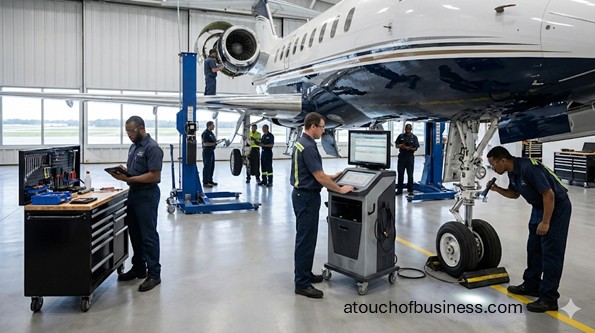
Aircraft Maintenance Business Planning Basics Before Opening
Aircraft Maintenance Business Overview
An Aircraft Maintenance Business provides inspection, maintenance, repair, and alteration services for aircraft and aircraft components. The startup path can range from a small shop built around an individual certificated mechanic to a larger Federal Aviation Administration (FAA)-certificated repair station under 14 CFR Part 145.
If you are looking at this idea, start with the basics first. Read Points to Consider Before Starting Your Business, then think through whether this field fits your background, goals, and financial setup.
The FAA repair station route is more structured. Part 145 requires an application, manuals, a list of management and supervisory personnel, a training program, and a description of housing, facilities, equipment, and materials before the FAA issues a certificate and ratings.
How An Aircraft Maintenance Business Generates Revenue
Your revenue usually comes from labor plus parts, but the exact mix depends on your scope. A small startup may focus on inspections, routine maintenance, troubleshooting, and limited repairs, while a certificated repair station may add broader work tied to its ratings and operations specifications.
- Common service revenue: annual and 100-hour inspection work (when authorized), preventive maintenance, troubleshooting, scheduled maintenance, component replacement, logbook documentation, and service calls.
- Additional revenue paths: mobile support, pre-buy inspections, avionics or specialty work (if you have the right capability and approvals), and parts sales tied to repair jobs.
- Important limit: what you can perform and approve for return to service depends on the certificates, ratings, and authorizations you and your business actually hold.
Products And Services You May Offer Before Launch
Think in terms of a service catalog before you spend on tools. Your startup list should match your legal authority, your facility, and the kind of aircraft you plan to support.
- Inspection services: routine inspections, discrepancy lists, and documentation support.
- Maintenance and repair: airframe and powerplant work within your ratings and experience, troubleshooting, part replacement, and corrective work.
- Documentation services: maintenance records and return-to-service documentation prepared under the applicable rules and signoff authority.
- Specialty services: limited avionics, sheet metal, interior, propeller, or accessory work only if your startup has the correct capability, tools, and approvals.
- Mobile support: on-site maintenance or recovery support where airport and local access rules allow it.
Who The Customers Are
Your early customers are usually local or regional aircraft owners and operators who need dependable work and clear communication. This is not a broad retail market—your customer base is specialized, and trust matters from day one.
- Private aircraft owners who need inspections, repairs, and scheduled maintenance.
- Flight schools and clubs that need reliable scheduling and fast turnaround on training aircraft.
- Charter and commercial operators that need approved maintenance support within the rules and their operating requirements.
- Corporate flight departments that may outsource specific work.
- Other maintenance shops that subcontract specialty work.
Is An Aircraft Maintenance Business The Right Fit For You
Before you think about hangar space, tools, or branding, do a real ownership check. This field can be a strong fit, but it is technical, regulated, and demanding.
Ask yourself the exact question: Are you moving toward something or running away from something? If you are starting only to escape a job or a financial bind, that may not carry you through the long setup phase.
You also need to decide whether owning a business is right for you and whether this specific business is the right fit. Passion matters here because when problems show up—and they will—you need the drive to solve them instead of looking for a way out. You can read more about that in How Passion Affects Your Business.
Be honest about the reality of ownership. Are you ready for uncertain income, long hours, difficult tasks, fewer vacations, and full responsibility if something goes wrong? Is your family or support system on board? Do you have the technical skills now, or can you learn them and secure enough funds to start and operate the business?
One of the best ways to test your assumptions is to learn from owners who are not in your market. Use Business Inside Look as a starting point, but only speak with owners you will not compete against directly—different city, region, or service area.
- Smart question 1: What did you spend money on too early, and what should have waited until after launch?
- Smart question 2: Which approvals, records, or setup items took longer than expected before you could accept payment?
- Smart question 3: What type of work was best for early cash flow, and what work looked good but was not worth taking at first?
Pros and cons matter here too. The upside is a specialized market, repeat work, and a service people truly need. The downside is a slower setup, strict documentation, significant tool and facility needs, and regulatory complexity before you even open.
- Pros: specialized demand, repeat service work, strong referral potential, clear technical value, and room to start with a narrow scope.
- Cons: licensing and certification limits, high startup complexity, facility and equipment requirements, compliance risk, and longer pre-launch timelines.
For fit and readiness, your pre-launch days will not be all wrench work. Expect time spent on planning scope, setting up records, meeting regulators, vendor quotes, lease review, insurance, and documentation systems.
- Skills you need at launch: technical maintenance skill, documentation discipline, inspection mindset, safety awareness, vendor communication, estimating, scheduling, and basic financial tracking.
- If you lack a skill: learn it or bring in help. Many owners use professionals for accounting, registrations, business planning, shop layout, and brand identity.
Pre-launch day-in-the-life snapshot: You start with a call to a hangar landlord, then review tool quotes, then meet a local FAA office contact about your certification path. After lunch, you compare insurance terms, draft work order forms, and end the day chasing a calibration vendor and updating your startup checklist.
Step 1 Choose Your Startup Model And Scope
Start by choosing the business model before anything else. This is where most planning errors begin.
Your main choices are a small owner-led shop built around individual mechanic privileges, a partnership with shared technical and administrative roles, or a larger investor-backed model that pursues a Part 145 repair station certificate from the start. The right choice depends on your certifications, your target work, your capital, and whether you plan to hire now or later.
Define your startup scope in plain language. What aircraft types will you support, what services will you offer, and what work will you decline until you have the facility, tools, or approvals to do it correctly?
Step 2 Prove Demand And Profit Before You Commit
Do not build the shop first and hope the work shows up. Prove local demand and confirm there is enough margin to pay yourself and cover your overhead.
Talk to aircraft owners, flight schools, clubs, and operators in your area. Find out what they struggle with now—scheduling delays, travel distance, specialty gaps, or poor communication—and test whether your startup can solve a specific problem.
Then build a simple profit model. Estimate billable work you can realistically secure, your labor pricing, parts handling approach, rent, utilities, insurance, software, calibration, compliance, and payroll if you hire. If the numbers do not work on paper, fix the scope before you sign anything.
Step 3 Confirm Certifications, Staffing, And Skill Gaps
This step is where you get specific about who can do the work and who can sign it off. A startup in this field cannot run on vague assumptions about authority.
FAA rules limit what certificated mechanics may perform, supervise, and approve for return to service, and those privileges tie back to ratings and experience. Inspection authorization is a separate FAA authorization with its own eligibility rules, so do not assume every mechanic can perform every inspection signoff you want to offer at launch.
If you will rely on certificated mechanics, verify credentials and scope early. The FAA also provides a public overview of the aviation mechanic path, including experience routes and testing requirements, which helps when you plan hiring or decide whether to earn the credentials yourself.
If you will pursue a repair station, Part 145 requires designated management and qualified personnel, and it requires an FAA-approved training program with initial and recurrent training. That pushes many first-time owners toward a phased launch instead of trying to do everything at once.
Step 4 Write The Plan And Build The Financial Setup
Write a business plan even if you are not applying for funding. It keeps you from drifting, and it forces you to line up your scope, customers, startup needs, and timing.
Keep it practical. Include your service scope, target customers, projected workload, startup timeline, facility plan, legal path, risk items, and your first 90-day launch goals. If you want a template, review this guide on how to write a business plan.
Your financial setup should include a startup budget, a monthly cash plan, and a reserve plan. Build your budget by category, get real vendor quotes, and use a structured approach like this guide on estimating startup costs so your numbers are based on actual purchase and setup requirements.
Step 5 Set Up Your Business Name, Entity, And Registrations
Choose a business name early, then check the domain and social handles so you do not create branding problems later. Keep it clear, professional, and easy for pilots and operators to remember.
You can use this guide on selecting a business name to work through the naming process. Once your name is chosen, register the business and lock down your online assets before you order signage or print materials.
Many small businesses start as sole proprietorships and later form a limited liability company for structure and liability separation. The Small Business Administration outlines the main business structure choices and notes that a sole proprietorship is the default for many people who start doing business without forming another entity.
After that, handle registrations in order: entity registration (if applicable), an Employer Identification Number (EIN) from the Internal Revenue Service, state tax registrations, and local business licensing checks. The Internal Revenue Service states you can get an EIN directly from the IRS online for free.
For a general checklist, see how to register a business. If you are unsure which filings apply, a business attorney or accountant can help you avoid delays.
Step 6 Choose The Right Location And Build The Physical Setup Plan
Location is not just about rent. In this field, location affects access to your customers, your facility requirements, and whether you can legally perform the work you plan to offer.
The Small Business Administration notes that your location affects registration, taxes, and permits, and you should consider restrictions from different government agencies before choosing a site. That matters a lot for aviation work because airport leases, hangar rules, municipal zoning, and local building requirements can all shape what you can do at the site.
If you plan a certificated repair station, Part 145 requires housing and facilities consistent with your ratings and limitations. Do not sign a lease until you know the site can support your actual service scope and equipment.
Step 7 Build Your Equipment Plan And Cost Worksheet
Do this step after your service scope is defined. Equipment needs can change fast if you add aircraft types, ratings, or specialty services.
Part 145 requires the equipment, tools, and materials necessary for the work and places control requirements on those tools and materials during the work. Even if you start smaller, this is still the right way to think: buy and organize tools around the exact jobs you will perform at launch.
Use a tiered cost build. Separate must-have launch equipment from phase-two items, and get quotes from tool vendors, calibration providers, software vendors, and facility suppliers before you commit to a final budget.
Essential Equipment List And Startup Cost Build
Use this as a launch checklist and quote sheet. Scale drives the total startup cost, so build your budget from this list category by category instead of guessing.
- Facility And Shop Setup
- Hangar or shop space setup plan
- Workbench stations and parts benches
- Parts shelving and secure storage cabinets
- Tool storage systems and shadow boards
- Compressed air system (if required for your scope)
- Lighting for inspection and task work
- Electrical distribution and extension management
- Waste storage area for used oil, filters, and regulated waste
- Office area for records, estimates, invoicing, and customer communication
- Core Hand Tools
- Aircraft maintenance hand tool sets
- Torque wrenches in required ranges
- Screwdrivers, pliers, cutters, and specialty hand tools
- Ratchets, sockets, and wrenches (standard sizes used in your scope)
- Safety wire pliers and safety wire supplies
- Inspection mirrors and flashlights
- Tool control tags and accountability system
- Inspection And Measurement Tools
- Precision measuring tools (calipers, micrometers, gauges)
- Borescope (if your service scope requires it)
- Compression test equipment
- Electrical test tools (multimeter and related testers)
- Visual inspection aids and magnification tools
- Calibration tracking system for tools that require calibration
- Ground Support And Handling Equipment
- Jacks and stands rated for the aircraft you support
- Wheel chocks and tow bars (as needed)
- Ladders and access stands
- Creepers and safe access equipment
- Battery support/charging equipment (if applicable)
- Consumables And Shop Materials
- Approved cleaning materials and shop supplies
- Lubricants and fluids used in your startup scope
- Rags, absorbents, and spill response supplies
- Labels and tags for parts and work control
- Fasteners and common replacement hardware (scope-specific)
- Records And Documentation Systems
- Work order templates
- Inspection checklist templates
- Maintenance record entry templates
- Parts traceability and receiving logs
- Customer estimate and approval forms
- Invoice and payment system
- Secure record storage (digital and/or physical)
- Safety And Compliance Equipment
- Personal protective equipment for your startup scope
- Chemical labeling and hazard communication materials
- Safety Data Sheet access system
- Fire extinguishers and emergency response supplies
- Spill kits and waste handling containers
- Eye wash or emergency wash equipment if required for your chemical use
- Technology And Business Systems
- Computer workstations and secure internet access
- Shop phone system
- Scheduling and job tracking software
- Accounting/bookkeeping software
- Document scanner and printer
- Backup and file retention setup
When you price this list, ask every vendor for written quotes and lead times. Build three columns in your worksheet: launch now, launch later, and optional.
Step 8 Set Pricing, Suppliers, And Work Documentation Before Launch
Set your pricing before you announce the business. If you wait, you will end up quoting on the fly and second-guessing every job.
Define your labor rates, diagnostic billing rules, minimum charges, after-hours service rates, parts handling policy, and payment terms. Also decide when you require written approval and deposits for larger jobs.
Supplier setup is just as important. Open accounts with parts distributors, tooling vendors, calibration providers, hazardous waste vendors, and any specialty support services you need.
Then lock in your documentation process. FAA rules require maintenance records, and your startup should have clear templates for work orders, approvals, customer signoff, and record retention before the first job starts.
Step 9 Build Your Insurance And Risk Plan
Insurance is not just a box to check. It is part of your launch readiness because customers, airports, and landlords may require proof before you can begin work.
Start with general liability and then add business-relevant coverage based on your actual setup, such as property, tools, premises, or other aviation-related exposures. This guide on business insurance can help you organize the discussion before you meet an agent.
For legal requirements, do not guess. Workers’ compensation rules, employer coverage triggers, and other mandatory coverages vary by state and sometimes by payroll size or business activity, so verify them with your state regulators before launch.
Step 10 Build Your Brand Assets And Online Presence
You do not need flashy branding, but you do need professional basics. Customers in this field look for trust, clarity, and signs that you are organized.
Before launch, prepare your logo, business cards, shop signage (if applicable), website, and a short capability summary that explains what work you do and what you do not do. If design is not your skill set, this is a good place to use a professional.
Your online presence should make it easy for customers to contact you, understand your service scope, and send service requests. Keep your wording simple and accurate.
Step 11 Prepare Contracts, Payment Systems, And Proof Assets
This step gets you ready to accept work without chaos. You need the paperwork and systems in place before your first customer calls.
Prepare customer authorization forms, estimate approval language, invoicing, payment processing, and a clear process for documenting requested work versus discovered issues. If you plan mobile service, include service-call terms and location access requirements in your paperwork.
Build proof assets too. That can include technician credential summaries, insurance certificates, a service capability list, sample documentation forms, and a clean onboarding process for new customers.
Step 12 Run Your Pre-Opening Checklist And Launch
Now bring everything together. This final step is about compliance checks, readiness checks, and a controlled launch—not rushing because the shop looks almost ready.
Confirm your registrations are complete, your facility setup matches your planned scope, your tools and records are ready, and your insurance documents are active. If you are working through FAA certification items, confirm status with the appropriate FAA office and keep your startup timeline tied to what is actually approved.
Then start marketing in a focused way. Reach out to your target customers directly, introduce your service scope, and schedule early work you can complete well. A careful launch builds trust faster than trying to take every job at once.
Aircraft Maintenance Business Specialized Notes
These points are specific to this field and can change your startup plan fast.
- Scope follows authority: your startup service list must match the privileges and limitations of the certificates and ratings involved, plus the actual experience of the people doing and approving the work.
- Part 145 is a structured build: a repair station startup is not just a lease and tools. It requires FAA application materials, manuals, personnel information, training documentation, and facility/equipment details.
- Repair station ratings matter: the FAA identifies general ratings such as airframe, powerplant, propeller, radio, instrument, and accessory. Plan your launch around the rating(s) you can support well.
- Hazardous materials training can apply: Part 145 repair stations that meet the definition of a hazmat employer must have a hazardous materials training program meeting 49 CFR Part 172 Subpart H.
- Environmental setup is part of launch: used oil handling, hazardous waste generator requirements, and stormwater rules may apply based on your facility and activities. Handle this before opening, not after.
- Chemical safety is not optional: if employees are exposed to hazardous chemicals, federal hazard communication rules require labeling, safety data sheets, and training.
Legal And Compliance Location-Aware Facts Only
Use this section as a verification checklist. Requirements differ by business model, location, and whether you are running a simple mechanic-led shop or pursuing a certificated repair station.
For each item, focus on three things: what applies to your setup, when to handle it, and where to verify it. Keep your notes in one file so you can track who you spoke with and what they confirmed.
- Federal
- Entity and tax ID basics: What to consider: federal tax identification and tax setup. When it applies: before banking, payroll, or many vendor accounts. How to verify locally: Internal Revenue Service -> search “Get an employer identification number” and apply directly on IRS.gov.
- FAA maintenance authority and approvals: What to consider: what work you can perform and who can approve return to service. When it applies: before you advertise services or schedule work. How to verify locally: FAA -> review 14 CFR Part 43, Part 65, and if applicable Part 145; contact your Flight Standards District Office (FSDO).
- Repair station certification (if pursuing Part 145): What to consider: application contents, manuals, personnel, training program, housing/facilities/equipment, and ratings. When it applies: before opening as a certificated repair station. How to verify locally: FAA eCFR and FAA Flight Standards -> search “14 CFR 145.51” and “responsible Flight Standards office.”
- Hazardous materials training (if applicable): What to consider: whether your repair station meets the hazmat employer definition and whether your work causes hazardous materials to be transported. When it applies: before employees perform covered functions. How to verify locally: FAA and PHMSA -> search “14 CFR 145.165” and “49 CFR Part 172 Subpart H training.”
- Workplace chemical hazard communication: What to consider: written hazard communication program, labels, Safety Data Sheets, and employee training for hazardous chemicals in the workplace. When it applies: when chemicals are present and employees may be exposed. How to verify locally: Occupational Safety and Health Administration eCFR -> search “29 CFR 1910.1200 hazard communication.”
- Hazardous waste and used oil handling: What to consider: generator rules, used oil management, and disposal/recycling procedures. When it applies: before you generate regulated waste or accumulate used oil. How to verify locally: Environmental Protection Agency -> search “hazardous waste generator regulatory summary” and “used oil EPA.”
- Stormwater permitting (facility dependent): What to consider: whether industrial stormwater permitting applies to your site and activities. When it applies: before occupying or modifying a site with regulated industrial discharges. How to verify locally: Environmental Protection Agency NPDES -> search “stormwater discharges from industrial activities”; also confirm with your state environmental agency. Varies by jurisdiction.
- State
- Entity formation and assumed name (DBA): What to consider: legal entity filing, name availability, and assumed name registration if you use a trade name. When it applies: before you launch branding, contracts, and banking. How to verify locally: Secretary of State (or equivalent) -> use the National Association of Secretaries of State “Find Business Services” directory to reach the official state portal. Varies by jurisdiction.
- Sales and use tax registration: What to consider: whether your state taxes parts, labor, shop supplies, or other charges. When it applies: before your first invoice. How to verify locally: State Department of Revenue/Taxation -> use the Federation of Tax Administrators site and follow “State tax agencies.” Varies by jurisdiction.
- Employer accounts: What to consider: state unemployment insurance employer account and any state payroll tax accounts. When it applies: before hiring employees. How to verify locally: State workforce/unemployment agency -> use the U.S. Department of Labor ETA contacts for state UI tax information and assistance. Varies by jurisdiction.
- Workers’ compensation insurance (when legally required): What to consider: employee thresholds, owner exemptions, and filing rules. When it applies: usually when hiring employees, but triggers vary. How to verify locally: State workers’ compensation board/commission or labor department -> search your state agency portal for “workers compensation employer requirements.” Varies by jurisdiction.
- City-County
- General business license: What to consider: city or county business licensing requirements. When it applies: before opening to the public or operating from a local address. How to verify locally: City or county business licensing portal -> search “[city name] business license.” Varies by jurisdiction.
- Zoning, home occupation, and Certificate of Occupancy: What to consider: whether your address is zoned for your business use and whether a Certificate of Occupancy is required. When it applies: before signing a lease, building out, or opening. How to verify locally: City/county planning, zoning, and building departments -> search “[city name] zoning business use” and “[city name] certificate of occupancy.” Varies by jurisdiction.
- Airport access, lease, and local operating requirements: What to consider: airport authority lease terms, hangar use limits, access badges, and site rules. When it applies: before choosing an airport location. How to verify locally: Airport authority/airport manager office -> search “[airport name] tenant handbook” or “[airport name] hangar lease requirements.” Varies by jurisdiction.
- Local environmental and wastewater controls: What to consider: local discharge, storage, or waste handling rules for shop activities. When it applies: before facility setup and before chemical use begins. How to verify locally: City/county environmental or public works department -> search “[city name] industrial wastewater permit” and confirm with your state environmental agency. Varies by jurisdiction.
- Mobile service and right-of-way rules (if mobile): What to consider: whether local permits are required to perform service work in public spaces or airport ramps you do not control. When it applies: before advertising mobile support. How to verify locally: Municipality and airport authority -> search “[city name] right-of-way permit business” and “[airport name] ramp access permit.
Varies By Jurisdiction
Rules change by state, county, city, and airport. Always confirm details with local and state authorities before you spend on buildout, tools, or signage.
- Quick checklist: confirm zoning, Certificate of Occupancy, local license, state tax setup, employer accounts, workers’ compensation requirements, airport lease terms, and environmental rules.
- Keep proof: save emails, portal screenshots, and contact names for every requirement you verify.
- Recheck after changes: if you change location, services, or staffing, review the requirements again.
- Smart local verification question 1: Based on my exact address and service scope, can this business legally operate here, and what approvals are required before opening?
- Smart local verification question 2: Do my charges for labor, parts, shop supplies, and call-out service have different tax treatment in this state or locality?
- Smart local verification question 3: Which environmental or waste handling approvals apply to my startup activities at this location, if any?
Red Flags To Look For Before You Launch
These are early warning signs that your startup is not ready yet. Catch them now and you save time, money, and stress later.
- You cannot clearly define what work you are authorized to perform and approve.
- You are signing a lease before confirming zoning, airport rules, or facility fit.
- You are buying tools before finalizing your launch scope.
- You do not have written documentation templates for work orders, approvals, and maintenance records.
- You have no plan for hazardous waste, used oil, or chemical safety setup.
- You are counting on customers you have not actually spoken with.
- You are underestimating pre-launch time for approvals, setup, and compliance.
- You are trying to launch a repair station model without the staffing or documentation capacity Part 145 requires.
27 Insider-Style Tips for Starting Your Aircraft Maintenance Business
These tips are built for first-time owners who want a clear startup path before they spend money or sign a lease.
They follow the same startup sequence used in the earlier research and draft, with a focus on legal setup, facility planning, equipment, and pre-opening readiness.
Use them as a working checklist while you confirm local and federal requirements for your exact business model.
Before You Commit
1. Start with a real ownership check, not a tool list. Ask yourself, “Are you moving toward something or running away from something?” because starting only to escape a job or financial stress usually does not carry you through a long setup phase.
2. Decide if business ownership fits you before you decide if aircraft work does. This field can mean uncertain income, long days, and full responsibility for errors, delays, and paperwork before you ever accept payment.
3. Talk to owners in other cities or regions, not direct competitors in your area. Ask what slowed their launch, what they bought too early, and what approvals took longer than expected.
Demand And Profit Validation
4. Confirm local demand by aircraft type, not just by “airport traffic.” A field with lots of activity may still be a poor fit if the aircraft on-site do not match the work you can legally perform and support.
5. Validate early work types before launch, such as inspections, troubleshooting, or line support, and estimate how often they come up. This helps you avoid building a shop around services customers are not asking for.
6. Build a basic profit check before you commit to rent. Estimate labor revenue, parts-related revenue, rent, utilities, insurance, waste handling, calibration, and admin costs to confirm the business can pay expenses and still pay you.
Business Model And Scale Decisions
7. Pick your launch model first: owner-led mechanic service, partnership, or a Federal Aviation Administration (FAA) Part 145 repair station path. Your model affects staffing, facility standards, paperwork, and startup cost from day one.
8. Define your exact startup scope in writing. List the aircraft types and services you will handle at launch, and list the work you will decline until you have the right people, tools, or approvals.
9. Match scope to legal authority before you advertise anything. Mechanic privileges and limitations under federal rules are specific, and a broader service claim can create risk before you even open.
Legal And Compliance Setup
10. Confirm your FAA path early with the right office and the right rules. If you plan an owner-led setup, verify mechanic privileges and signoff limits; if you plan a repair station, verify Part 145 requirements before you build the facility plan.
11. Set up your business structure and federal tax identification in the right order. Many small businesses begin as sole proprietorships and later form a limited liability company, but you still need to confirm what structure fits your liability and tax situation before launch.
12. Treat local licensing and zoning as a pre-lease task, not a cleanup task. Confirm business license rules, zoning use, and whether a Certificate of Occupancy is required before you sign for a location or start any build-out.
Budget, Funding, And Financial Setup
13. Build your startup budget by category instead of using a rough estimate. Separate facility setup, tools, calibrated equipment, records systems, insurance, registrations, and opening cash so you can see where the real pressure points are.
14. Use a phased budget with “launch now” and “phase two” items. That keeps you from buying specialty equipment before your service scope and customer demand are proven.
15. Set up your financial structure before launch, including business banking, bookkeeping, and a simple system to keep transactions separate from personal spending. If accounting is not your strength, bring in a bookkeeper or accountant early.
Location, Build-Out, And Equipment
16. Choose the location based on legal fit and customer access, not just rent. For aviation work, airport rules, hangar terms, zoning, and site restrictions can matter more than the monthly price.
17. If you are considering a Part 145 repair station, design the facility around the work you want approved. Federal rules require housing and facilities that support the ratings and services you plan to offer, so a cheap space can still be the wrong space.
18. Build your equipment list from your service scope and aircraft types, then verify calibration needs before you buy. Tools used for inspection and airworthiness decisions need tighter control, and that affects both cost and setup time.
Suppliers, Contracts, And Pre-Opening Setup
19. Open supplier relationships before launch and confirm lead times in writing. Parts vendors, tool vendors, calibration vendors, and waste-disposal providers can all affect whether you can start work on schedule.
20. Prepare your paperwork before the first customer call. Set up estimate approvals, work authorizations, record templates, and invoice terms so every job starts with clear documentation.
21. Create a maintenance records process before opening, not after your first job. Federal recordkeeping rules are specific, and your startup should already have a clean method for documenting work and approvals.
Branding And Pre-Launch Marketing
22. Build a simple, professional brand package before launch: name, logo, contact details, and a short statement of what work you do. In this field, clarity and credibility matter more than flashy design.
23. Secure your domain and basic online presence early, even if your website is simple at first. Customers should be able to confirm your location, services, and contact method without guessing.
24. Start pre-launch outreach with a narrow audience instead of broad advertising. Introduce your business to local aircraft owners, clubs, and operators who fit your launch scope, and be clear about what work you are ready to handle.
Final Pre-Opening Checks And Red Flags
25. Run a pre-opening checklist that covers approvals, facility readiness, tool control, records, and insurance proof. Do a dry run on your workflow from customer authorization to completed documentation so you catch gaps before real work starts.
26. Set up chemical and waste compliance before chemicals and fluids arrive. Hazard communication, Safety Data Sheets, labeled storage, used oil handling, and waste containers should be in place before the shop is active.
27. Stop the launch if you cannot clearly answer three things: what work you are authorized to do, what facility rules apply to your site, and how your records process works. Those gaps are startup red flags, and fixing them before opening is always easier than fixing them later.
If you work through these tips in order, you will have a stronger launch plan and fewer surprises before opening day.
Take your time with the approvals and documentation, and confirm local rules directly with the agencies that regulate your location and business setup.
FAQs
Question: Can I start an Aircraft Maintenance Business by myself, or do I need a team first?
Answer: You can start smaller as an owner-led shop if your service scope matches your certifications, tools, and facility. A larger Federal Aviation Administration (FAA) repair station setup usually needs more people, more documents, and more structure before opening.
Question: Do I need to be a certificated mechanic to start this business?
Answer: If you plan to perform and approve maintenance work yourself, your certifications and privileges matter from day one. If you are not certificated, you usually need certificated personnel and a business model built around their legal authority.
Question: What is the difference between a small maintenance shop and a Part 145 repair station?
Answer: A small shop can be built around individual mechanic privileges and a narrower service scope. A Part 145 repair station is a certificated business with formal application requirements, ratings, manuals, personnel roles, and training requirements.
Question: What should I decide first before I spend money on tools or a location?
Answer: Decide your startup model and service scope first. Write down what aircraft you will support, what work you will do, and what work you will not take at launch.
Question: How do I know if there is enough demand to start?
Answer: Talk to local aircraft owners, flight schools, clubs, and operators and ask what work they cannot get done easily now. Then compare that demand to the work you can legally perform and the margin you need to cover your costs.
Question: What legal setup steps should I handle before opening?
Answer: Start with your business structure, then get an Employer Identification Number (EIN), then complete state tax registration and local licensing checks. Do not assume one checklist fits every state or city, because local requirements vary.
Question: Do I need a business license, zoning approval, or a Certificate of Occupancy?
Answer: Many locations require some combination of local business licensing, zoning approval, and a Certificate of Occupancy, but the exact rules depend on your city, county, and site. Confirm all three before signing a lease or starting any build-out.
Question: How do I verify the Federal Aviation Administration requirements for my setup?
Answer: Review the federal rules that match your model, including maintenance authority and records requirements, and contact your local Flight Standards District Office (FSDO). This helps you confirm what applies before you advertise services or schedule work.
Question: What insurance should I set up before I open?
Answer: Start with general liability and then add coverage that fits your site, tools, and work type. Workers’ compensation rules are state-based, so confirm employer requirements with your state agency before hiring.
Question: How should I budget startup costs for an aircraft maintenance shop?
Answer: Build your budget by category, not by guesswork. Separate facility setup, tools, calibrated equipment, records systems, insurance, registrations, and opening cash so you can see what drives the total.
Question: What equipment do I need before opening?
Answer: Start with core hand tools, inspection and measurement tools, access equipment, records systems, safety gear, and basic office systems. Your final list should match your launch scope and the aircraft you plan to support.
Question: How do I set pricing before launch if I have no customers yet?
Answer: Set your labor rates, diagnostic billing rules, minimum charges, and after-hours rates before you announce the business. Also decide your parts handling policy and payment terms so you are not making it up during your first jobs.
Question: What records and paperwork should I prepare before the first job?
Answer: Prepare work orders, estimate approvals, customer authorization forms, and maintenance record templates before opening. Federal maintenance record rules are specific, so your process should be ready before the first aircraft arrives.
Question: What should my daily workflow look like during the first month after opening?
Answer: Keep it simple and documented: customer request, written approval, work performed, record entry, invoice, and payment. A clean workflow reduces errors and helps you stay organized while you are still building routines.
Question: Should I hire early, or wait until I have more work?
Answer: Hire only when your projected workload supports payroll and you know the exact role you need. In early launch, many owners start lean and use outside help for bookkeeping, legal setup, or design instead of adding payroll too soon.
Question: What systems or software should I have ready before opening day?
Answer: Have a basic setup for scheduling, job tracking, invoicing, bookkeeping, and secure record storage. You do not need complex systems at first, but you do need a reliable way to track work and documents.
Question: How do I market the business during the first phase without wasting money?
Answer: Start with direct outreach to local aircraft owners, flight schools, clubs, and operators that fit your launch scope. Use a simple website and clear capability summary so people know what work you do and what you do not do.
Question: What should I watch closely in the first month for cash flow?
Answer: Track incoming payments, parts purchases, rent, utilities, insurance, and vendor terms every week. Early cash problems often come from underpriced work, delayed payments, or buying equipment too soon.
Question: What environmental or chemical rules should I handle before I open?
Answer: Set up your chemical labeling, hazard communication materials, Safety Data Sheet (SDS) access, and waste handling process before chemicals and fluids arrive. Used oil and hazardous waste rules can apply at launch, and local wastewater or stormwater rules may also apply by location.
Question: What are the most common startup mistakes to avoid before opening?
Answer: The biggest problems are unclear service scope, leasing a site before verifying local rules, and buying tools before the plan is final. Another common issue is opening without a clean documentation process for approvals and maintenance records.
Related Articles
- Drone Repair Business Startup FAQs
- Start an Airport Shuttle Service from the Ground Up
- Start an Aerial Photography Business
- Aerial Advertising Businesse
- How to Start a Farm Equipment Repair Service Business
- Auto Repair Shop Startup
- How to Open an Auto Body Repair Shop
- Starting an ATV Repair Shop
Sources:
- FAA: Repair station operators, Flight standards offices
- eCFR: 145.51 application cert, 145.53 issue cert, 145.103 housing facilities, 145.109 equipment data, 145.151 personnel, 145.163 training, 145.165 hazmat training, 43.7 return to service, 43.9 maintenance records, 65.81 mechanic limits, 65.91 inspection auth, 29 CFR 1910.1200, 49 CFR 172 training
- IRS: Get employer ID number
- SBA: Register your business, Licenses and permits, Pick business location, Choose business structure
- FTA: State tax agencies hub
- USA.gov: State governments, Local governments
- DOL ETA: State UI tax contacts
- EPA: Used oil management, Hazardous waste summary, Industrial stormwater
- PHMSA: Hazmat training rules
- OSHA: 1910.1200 hazcom standard