
Before You Start: Quick Readiness Check
It’s tough when you feel stuck and you want a fresh start. A food co-op can be a real community project, but it is still a business. Before you spend months organizing people, check your readiness first.
Fit: Are you truly ready to own a business, and is a food co-op the right business for you? A co-op means shared ownership and shared control. If you prefer to move fast and decide alone, that can be a hard match.
Passion: Passion matters because it helps you keep solving problems when challenges show up. If you need a reset on what “passion” looks like in real life, read this passion guide.
Motivation: Ask yourself this exact question: “Are you moving toward something or running away from something?” If you’re only trying to escape a job, debt, or financial stress, you can end up building a business you do not even want.
Reality Check: Expect uncertain income at first, long hours, hard tasks, fewer vacations, and total responsibility. You will need family support, enough skills (or help), and funding to start and operate. If you want a broad checklist to keep you steady, start with Business Start-Up Considerations.
Owner Conversations: Talk to people who already run food co-ops. But do it the smart way. Only talk to owners you will not be competing against. Look in a different city or region so they can speak freely. If you want a simple way to guide those talks, use Business Inside Look as your question framework.
- “What surprised you most during the organizing and feasibility stage?”
- “What part of funding and site selection took the longest?”
- “If you could restart from day one, what would you do earlier?”
Food Co-Op Overview
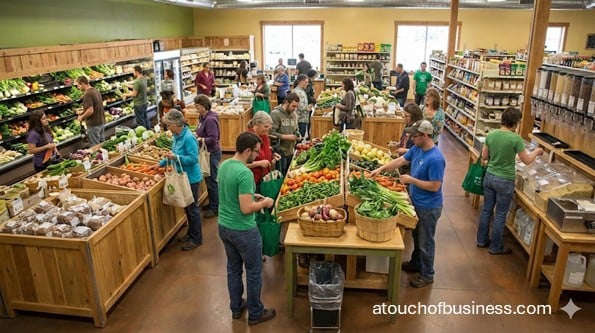
A food co-op is a grocery business owned by members of the community. Members usually have a vote in major decisions and elect a board to guide the co-op’s direction. Many food co-ops also allow non-members to shop, while members receive specific benefits.
For startup planning, the big idea is simple: you are not just opening a store. You are organizing owners, setting up governance, and building a grocery business at the same time.
Common Food Co-Op Business Models
You have options. Your model affects funding, legal setup, staffing, and how fast you can open. Pick a model that fits your community and your capacity.
- Consumer-Owned Co-Op: Member-owners are shoppers. This is a common “community grocery” model.
- Worker Co-Op: Member-owners are the workers. This can change governance and staffing plans.
- Hybrid Co-Op: Shared structure across consumer and worker ownership.
- Buying Club or Pre-Order Pickup: A smaller footprint model that can be used to test demand before committing to a full store.
- Open-to-All Storefront With Member Benefits: Anyone can shop, and owners vote and may receive specific benefits based on the co-op’s rules.
How Does a Food Co-Op Generate Revenue
A food co-op typically earns revenue from retail grocery sales. Separately, some co-ops raise startup capital through member share purchases or equity contributions, based on their membership structure and legal setup.
You may also add revenue streams that match your plan and permits, such as bulk foods, made-to-order items, or a small prepared foods area. Keep your early plan realistic. Every added department adds equipment, permits, and staffing pressure.
Products and Services You Can Offer
Your product mix drives your equipment list and your permit path. Start with a simple plan, then expand later when the business is stable.
- Grocery Staples: Packaged foods, pantry items, dairy, eggs, beverages, frozen foods.
- Fresh Departments: Produce, meat and seafood (if offered), bakery (if offered).
- Local and Regional Items: Local farms and small food businesses, depending on supplier onboarding rules.
- Bulk Foods: Grains, beans, spices, coffee, snacks, and other items sold by weight.
- Prepared Foods (Optional): Deli items, hot bar, sandwiches, or grab-and-go meals. This often increases health department requirements.
- Special Programs (Optional): If you want to accept Supplemental Nutrition Assistance Program benefits, you apply through USDA Food and Nutrition Service and set up Electronic Benefits Transfer capability.
Who Your Customers Are
Food co-ops usually serve a mix of member-owners and regular shoppers. Your customer picture should be based on your local area and what people already buy.
- Member-Owners: People who join, invest, and vote.
- Non-Member Shoppers: Common in many co-op groceries, depending on store policy.
- Households Looking for Specific Items: Organic options, local foods, specialty diets, bulk items, or hard-to-find products.
- Program Customers (If Authorized): Customers using benefits such as Supplemental Nutrition Assistance Program, if your store is approved and set up.
Pros and Cons to Think Through
A co-op can solve a real community need. It can also be harder to launch than a standard store. Be honest about both sides now, not after you sign a lease.
Pros:


- Community ownership can help build early loyalty and long-term support.
- Member governance creates accountability through voting and board oversight.
- Member share purchases can help with startup capitalization, depending on your structure.
- Co-op development resources exist, including USDA Rural Development Cooperative Programs and co-op technical assistance groups.
Cons:
- Governance adds complexity. Decisions can take longer when many owners have a voice.
- Startup work is significant: organizing, feasibility, capital planning, and site work often happen in parallel.
- Funding plans may require multiple layers: member equity plus financing or grants.
- Food retail has strict licensing and inspection needs that vary by location.
Pick the Scale: Buying Club or Storefront
This choice matters more than most people think. A full storefront food co-op is usually a large-scale project. It often needs substantial startup capital, a leadership team, and paid staff to open and run a grocery store safely.
A buying club or pickup model can be smaller and can help you test demand. But it still needs clear rules, records, and a clean legal plan. Expect to form a business entity before you accept member equity or open to the public.
- Buying Club Path: Smaller facility needs, fewer fixtures, simpler equipment. Still requires supplier planning, payment setup, and local compliance checks.
- Storefront Path: Higher facility requirements, refrigeration and freezers, retail permits, inspections, signage rules, and staffing needs.
Some founders do early market validation as an informal organizing group. In other industries, a person might start as a sole proprietorship and later form a limited liability company as the business grows. A true member-owned co-op usually needs formal formation earlier because membership shares and governance rules need a clear legal structure.
Skills You Need (And What You Can Outsource)
It’s tough when you feel like you have to know everything. You do not. You can learn a lot, and you can hire help for what you do not want to handle. What matters is doing it correctly.
- Co-Op Governance Basics: Member ownership, voting rules, board duties, and clear bylaws.
- Project Leadership: Running meetings, tracking decisions, and keeping people aligned.
- Financial Planning: Startup budgets, working capital planning, and realistic cash needs.
- Food Retail Planning: Layout, refrigeration planning, receiving, and storage flow.
- Compliance Coordination: Working with health, building, fire, and licensing offices.
- Supplier Setup: Vendor screening, ordering schedules, delivery terms, and product handling rules.
- Technology Setup: Point of Sale, payment processing, and record systems.
If finance is not your thing, hire an accountant. If legal is not your thing, hire an attorney who understands co-ops. If store layout feels overwhelming, hire a retail designer. That is normal.
Startup Essentials and Cost Drivers
You asked for facts, not hype. Here is the truth: startup costs swing widely for food co-ops. Size, location, and whether you build out a space change the budget fast.
Use this startup cost guide to build your first real estimate. Keep your first pass simple, then refine it after feasibility work.
- Facility: Lease deposits, build-out, utilities setup, and code upgrades.
- Refrigeration and Cold Storage: Walk-ins, display cases, reach-ins, freezers, and monitoring tools.
- Fixtures: Shelving, carts, baskets, signage holders, and checkstands.
- Point of Sale and Payments: Terminals, scanners, receipt printers, merchant services, and security controls.
- Initial Inventory: Dry goods, refrigerated items, frozen goods, and any local products you commit to carry.
- Professional Services: Legal help for formation and bylaws, accounting setup, and design or engineering support.
- Licenses, Permits, and Inspections: Costs vary by jurisdiction and by what you sell.
- Insurance: Often required by landlords and lenders, and strongly expected for storefront retail.
- Working Capital: Cash to cover payroll, deliveries, and bills before sales stabilize.
Scale drives cost. A buying club can be leaner. A storefront needs more capital, more equipment, and often paid staff from day one.
Essential Equipment Checklist
Use this checklist to outline what you need for your build-out plan. Your final list depends on your product mix and whether you offer prepared foods.
Facility and Store Fixtures
- Retail shelving and endcaps
- Display tables and product stands
- Shopping carts and hand baskets
- Price label tools and shelf tag holders
- Customer service counter
- Secure cash storage
Checkout and Payment
- Point of Sale terminals or registers
- Barcode scanners
- Receipt printers
- Payment card terminals
- Electronic Benefits Transfer capability (if accepting Supplemental Nutrition Assistance Program)
Cold and Frozen Storage
- Walk-in cooler (if used)
- Walk-in freezer (if used)
- Reach-in coolers
- Reach-in freezers
- Refrigerated display cases (as needed)
- Temperature monitoring tools required by local retail food rules
Dry Storage and Receiving
- Backroom storage racks and shelving
- Hand truck or dolly
- Pallet jack (if used)
- Receiving table or workbench
- Lockable storage (if needed for specific products)
Bulk Foods (If Offered)
- Bulk bins or gravity dispensers
- Scoops and dispensers
- Food-grade storage containers
- Retail scales for items sold by weight
Food Prep (Only If Offering Prepared Foods)
- Commercial sinks required by your local health authority
- Prep tables
- Hot and cold holding equipment (if used)
- Dishwashing equipment (if required by your service style)
Sanitation and Safety
- Handwashing stations required by local rules
- Mop sink and janitorial supplies
- Approved cleaning and sanitizing tools
- Spill control supplies and wet-floor signs
- First aid kit
- Fire extinguishers and emergency lighting required by building and fire codes
Office and Admin
- Computer and printer/scanner
- Secure file storage for membership and governance records
- Phone and internet equipment
Suppliers and Sourcing Decisions
You will need reliable suppliers before you open. For a storefront, supplier planning starts early because it affects your storage and refrigeration plan.
- Core Wholesale Supply: Identify distributors for staples and refrigerated goods.
- Local Supply: Identify local farms and food producers you can onboard.
- Delivery and Receiving: Confirm delivery days, minimum orders, and receiving needs.
- Cold Chain Planning: Confirm how refrigerated and frozen products will be delivered and stored.
If you are new to demand planning, review supply and demand basics before you build your first product plan.
Pricing Basics for Your Store Plan
Pricing is not guesswork. You need pricing that covers inventory costs, payroll, rent, utilities, and everything else, while still letting you pay yourself.
Use this pricing guide to build a simple pricing plan by department. Keep it practical. Your first goal is a plan you can test, not a perfect system.
Legal and Compliance: Start With the Right Offices
This is the part that scares many first-time owners. That’s normal. The safest approach is to follow official sites, confirm local rules, and keep records of what each office tells you.
If you need help, hiring a professional for formation and tax setup is common. You can also review how to register a business so you understand the basic path before you talk to your state.
Federal
- Employer Identification Number
What to consider: Used to identify the business for federal tax administration.
When it applies: Commonly needed soon after formation for banking, tax administration, and hiring.
How to verify locally: IRS -> search “Get an employer identification number”. - Supplemental Nutrition Assistance Program Retailer Authorization (Optional)
What to consider: Needed if you want to accept Supplemental Nutrition Assistance Program benefits in-store.
When it applies: Before you accept benefits and before you finalize Electronic Benefits Transfer setup.
How to verify locally: USDA Food and Nutrition Service -> search “Apply to accept SNAP benefits”.
State
- Entity Formation and Registration
What to consider: Co-op options vary by state. Some states have cooperative statutes and naming rules.
When it applies: Before you accept member equity, sign major contracts, or open to the public.
How to verify locally: State Secretary of State -> search “business formation cooperative” and “business name rules”. - Sales and Use Tax Registration
What to consider: Retail sales tax rules vary by state and by product type.
When it applies: Before you start selling taxable products.
How to verify locally: State Department of Revenue or Taxation -> search “sales tax permit” or “sales tax registration”. - Employer Accounts (If Hiring)
What to consider: State employer requirements vary (unemployment insurance and other employer registrations).When it applies: Before you run payroll or pay wages to employees.
How to verify locally: State labor or workforce agency -> search “employer registration unemployment insurance”.
- Retail Food Rules Entry Point
What to consider: Retail food rules are enforced by state or local authorities, and states vary in adoption of model codes.
When it applies: If you store, handle, or sell food, especially refrigerated, frozen, or prepared items.
How to verify locally: FDA -> use the “State Retail and Food Service Codes and Regulations by State” list to find your state authority.
City and County
- General Business License (Varies by Jurisdiction)
What to consider: Some cities and counties require a general business license for retail stores.
When it applies: Often required before you open to the public.
How to verify locally: City or county licensing portal -> search “business license application”. - Zoning Approval and Certificate of Occupancy
What to consider: Your location must allow retail grocery use. New build-outs may require a Certificate of Occupancy before opening.
When it applies: Before signing a lease without protections, and before opening day.
How to verify locally: City or county planning and building department -> search “zoning verification retail grocery” and “Certificate of Occupancy”. - Retail Food Establishment Permit and Inspection
What to consider: Retail food permits and inspections are common for grocery stores, and requirements change if you offer prepared foods.
When it applies: Before opening and before selling prepared foods.
How to verify locally: Local health department -> search “retail food establishment permit”. - Building, Fire, and Sign Permits (Varies by Jurisdiction)
What to consider: Tenant improvements and exterior signs often require permits and inspections.
When it applies: Before construction and before installing signs.
How to verify locally: City building department and fire marshal -> search “commercial tenant improvement permit” and “sign permit”.
Varies by Jurisdiction: Quick Verification Checklist
- Confirm whether your city or county requires a general business license for retail grocery.
- Ask zoning staff if “grocery retail” is allowed at your address and whether a Certificate of Occupancy is needed.
- Ask the health authority what permits and inspections apply to your exact plan, especially if you offer prepared foods.
Three questions to bring to local offices: “What permit do I need for a grocery store?” “Does adding prepared foods change the permit path?” “What inspections must be completed before opening?”
Business Plan: Your Playbook, Even Without a Loan
It’s tough when your head is full and you do not know where to start. A business plan helps you turn ideas into a clear sequence. It also shows you what needs research versus what you already know.
Use this business plan guide to build a simple plan that matches your co-op model. Your plan should include your market area, membership plan, funding plan, location plan, equipment plan, and a realistic startup timeline.
Funding and Banking Setup
Most storefront food co-ops need a layered funding plan. Member equity can help, but it may not cover build-out, refrigeration, and working capital.
Start with a clear funding outline, then open business accounts at a financial institution once your entity is formed. If you are exploring loans, review how business loans work so you know what lenders usually ask for.
Name, Domain, and Digital Footprint
Your name needs to work for real life. People must be able to say it, spell it, and find it. Your state may also have special rules on using “cooperative” in the business name.
Use this naming guide to check availability and avoid brand confusion. Then secure your domain and matching social handles early so no one else grabs them.
Brand Basics for a Co-Op Storefront
Brand is not just a logo. It is how people recognize you and trust you. You can keep it simple at first, but you still need consistency.
- Plan your basics with a corporate identity package checklist.
- Create simple customer handouts using business card basics.
- If you are a storefront, confirm local rules and plan your signs using business sign considerations.
Step 1: Define the Co-Op You Want to Build
Start with clarity. Are you building a buying club, a small market, or a full grocery store? Choose one and write it down.
Then define your core: who the co-op serves, what products you plan to carry, and what makes your store worth a trip. If you cannot explain it in a few sentences, your plan is not ready yet.
Step 2: Build the Organizing Group and Decision Structure
A co-op needs organizers, not just supporters. Form a steering group and assign clear roles like finance lead, legal lead, location lead, and membership lead.
Keep meeting records and decisions in one shared place. This is not busywork. It protects the project when people rotate in and out.
Step 3: Validate Demand and Confirm Profit Potential
This is where many first-time founders get anxious. That’s normal. You are trying to answer two questions: do people want this, and can it support payroll, expenses, and owner pay?
Use surveys, interest lists, and community meetings. Compare your plan to nearby stores. Then run basic numbers. If your projected sales cannot cover rent, refrigeration, staff, inventory, and utilities, you need to adjust the model before moving forward.
Step 4: Choose Your Business Model and Staffing Approach
Decide how ownership works. Will members be shoppers, workers, or both? Decide how voting works and how your board will be elected.
Also decide staffing. A storefront grocery store usually needs paid staff. You can use volunteers for specific tasks, but you still need reliable coverage for receiving, food handling, checkout, and compliance.
Step 5: Run a Feasibility Process Before You Commit to a Site
Feasibility is the bridge between hope and reality. It helps you confirm market support, financial viability, and organizational capacity.
If you skip feasibility and sign a lease first, you can lock yourself into costs you cannot support. Do the hard thinking early while you still have flexibility.
Step 6: Form the Entity and Set Your Governance Documents
Once your co-op is real enough to accept member equity and sign contracts, form the entity. Your state’s options and naming rules vary, so confirm them with your Secretary of State.
Create your articles and bylaws, define member voting rights, and set board roles. If that sounds complicated, this is a smart time to hire an attorney familiar with co-ops.
Step 7: Launch the Membership Plan and Member Equity Drive
Your owners are your base. Build a membership plan that people can understand and that your team can manage without chaos.
Track membership carefully. Keep clean records. If you plan to raise capital through member shares, be precise about what members receive, how voting works, and what happens if a member leaves.
Step 8: Build the Business Plan and Your Startup Budget
Now turn your research into a business plan and a startup budget. Keep it grounded. Show your sales assumptions, your staffing plan, and your build-out plan.
If you are unsure about structure, use the business plan and cost resources linked earlier, then ask a professional to review your draft before you use it with lenders or members.
Step 9: Finalize Funding and Set Up Banking
Match your funding plan to your scale. A storefront co-op often needs member equity plus financing. A smaller buying club might be funded more simply, depending on your model.
Open business accounts under the entity once formed. Keep business funds separate from personal funds. Set up payment processing early so you can accept payment for memberships and future sales.
Step 10: Choose a Location That Fits Grocery Reality
Location matters for grocery stores. Access, visibility, parking, and nearby traffic patterns can shape your sales. If you depend on foot traffic, your site can make or break the plan.
Use this location guide to compare sites in a practical way. Then confirm zoning and permit requirements with your local offices before you sign a lease.
Step 11: Confirm Your Permit Path and Inspection Timeline
Retail food rules vary by state and local area. Your permit and inspection steps depend on what you sell and whether you offer prepared foods.
Use official sites to find your starting point, then call the right offices with direct questions. Document what they tell you and keep it in your project file.
Step 12: Lock Your Store Layout and Equipment Plan
Your equipment list must match your product plan. If you plan refrigeration, you need the right electrical capacity, floor space, and service access.
Finalize your layout, then confirm your equipment list. Build in space for receiving, dry storage, cold storage, checkout, and backroom needs.
Step 13: Set Your Supplier Plan and Ordering Basics
Choose your main distributors and outline how ordering will work. Confirm delivery schedules and receiving needs.
If you are bringing in local suppliers, create a simple onboarding plan so you can track invoices, delivery terms, and product handling requirements.
Step 14: Set Up Point of Sale, Payments, and Benefit Programs
Set up Point of Sale and merchant services early so you can test transactions and train staff before opening. If you plan to accept Supplemental Nutrition Assistance Program benefits, apply through USDA Food and Nutrition Service and confirm Electronic Benefits Transfer requirements.
Do not wait until the last minute. Payment setup can take time, and you want it stable before you open your doors.
Step 15: Plan Hiring and Professional Support
For a storefront, staffing is not optional. Plan roles needed for opening day, then build a hiring timeline that matches your build-out schedule.
Use this hiring guide to plan early roles. Also consider building your advisor team using a professional advisor checklist. This is where you lean on experts so you do not carry everything alone.
Step 16: Build Your Pre-Launch Readiness File
Before you open, build a clean “proof file” that shows you are ready. This is helpful for lenders, landlords, and your own board.
Include signed contracts, insurance certificates required by your lease, vendor agreements, and your finalized permit and inspection schedule.
Step 17: Plan How Customers Will Find You
Do not assume people will “just hear about you.” Create a simple marketing plan with specific actions and dates.
If you are a brick-and-mortar store, use this storefront traffic guide to plan awareness and visits. Then plan your opening push with grand opening ideas that fit your budget and staffing.
Pre-Opening Checklist
This is your final pass before opening day. Keep it simple. Confirm the basics, then run a small soft opening if your plan allows it.
- Confirm all licenses and permits required for opening are approved.
- Confirm health department inspection steps are complete for your setup.
- Confirm building and fire approvals required for occupancy are complete.
- Confirm equipment installation and temperature controls work as required.
- Confirm Point of Sale and payments run correctly in live tests.
- Confirm supplier deliveries are scheduled and receiving space is ready.
- Confirm staffing coverage for checkout, receiving, and food handling.
- Confirm signage is installed according to local rules.
- Confirm your marketing kickoff date and opening week plan.
Day-To-Day Activities to Expect
You asked for day-to-day activities, so here is the honest snapshot. This is not “how to manage a store.” This is what you should plan for before you open so you are not surprised.
- Receiving deliveries, checking invoices, and stocking shelves.
- Monitoring refrigeration and freezer temperatures per local rules.
- Maintaining sanitation routines required for retail food spaces.
- Running checkout, handling customer service, and resolving issues fast.
- Ordering inventory and coordinating with suppliers on timing.
- Handling member communications and basic governance needs.
A Day in the Life of a Food Co-Op Owner
Your day often starts before the doors open. You check deliveries, confirm staff coverage, and handle urgent vendor or facility issues.
Later, you may be in meetings with the board, reviewing membership progress, and confirming compliance deadlines. You also spend time listening to customers and members because community trust is a core part of the co-op model.
Red Flags to Watch For Before You Commit
Small wins matter, but so do warning signs. If you see these, slow down and fix the foundation before you move forward.
- No clear voting rules or board accountability plan.
- Membership sign-ups are weak compared to your capital needs.
- Feasibility work is skipped and replaced with assumptions.
- A lease is signed before zoning, permits, and funding are realistic.
- Prepared foods are planned, but the permit path is not confirmed.
- Plans to accept Supplemental Nutrition Assistance Program benefits exist, but payment and authorization steps are not started.
Quick Self-Check
You do not need to be perfect. You do need to be clear. Answer these before you move to the next stage.
- Can I explain the co-op model and the store concept in three sentences?
- Do we have an organizing group with clear roles and meeting records?
- Have we validated demand and confirmed a realistic path to cover expenses and owner pay?
- Do we know our local permit path and the offices we must work with?
- Do we have a funding plan that matches our chosen scale?
101 Proven Tips For Your Food Co-Op
You’re about to see tips that cover different stages and parts of a food co-op.
Use what fits your situation and skip what doesn’t apply right now.
Bookmark this page so you can come back as your plans grow and change.
Pick one tip, put it into action, then return for the next step when you’re ready.
What to Do Before Starting
1. Write a plain-language purpose statement that explains who you serve and what problem you solve. If you can’t explain it in 30 seconds, your co-op concept is still too fuzzy.
2. Decide what type of co-op you’re building early (consumer-owned, worker-owned, or hybrid). Your choice changes governance, staffing, and how money flows.
3. Build a small organizing group with clear roles like finance lead, legal lead, membership lead, and facilities lead. Shared ownership needs shared accountability from day one.
4. Document every major decision in meeting notes and store them in one place. You’ll need this history when leadership changes or questions come up.
5. Define your trade area before you guess demand. A great co-op idea can fail if the location can’t support enough sales.
6. Validate demand with real signals, not compliments. Collect interest sign-ups, survey results, and commitments to join as members.
7. List your direct competitors and visit them in person. Take notes on pricing, product mix, parking, and checkout speed.
8. Confirm your revenue plan can cover expenses and owner pay. “Busy” is not the same as “profitable,” especially in grocery retail.
9. Choose your store size based on realistic startup funding, not big dreams. Bigger spaces often mean more refrigeration, more staff, and more cash tied up in inventory.
10. Decide whether you will offer prepared foods at launch or later. Prepared foods can add permits, equipment, and training requirements.
11. Create a simple timeline with milestones and decision points. Include a “stop and review” checkpoint before signing a lease.
12. Talk to co-op founders in a different region so you’re not competing. Ask what took longer than expected and what they wish they had done earlier.
What Successful Food Co-Op Owners Do
13. Treat governance as a core startup project, not an afterthought. Clear voting rules and board duties reduce confusion later.
14. Separate “community excitement” from “verified demand.” Track how many people will actually shop weekly, not just support the idea.
15. Keep member records clean from the start. Membership programs work best when enrollment and payments are simple and well tracked.
16. Use feasibility work to test hard assumptions before spending big money. It’s cheaper to adjust the model early than after build-out starts.
17. Build a funding plan that matches your scale. A full storefront often needs member equity plus outside financing, not just small donations.
18. Choose a location based on access and shopping convenience, not vibes. Grocery shoppers value parking, visibility, and an easy entry and exit.
19. Lock in your equipment plan only after your product plan is clear. Refrigeration needs change fast if you add deli, meat, or frozen variety.
20. Build supplier relationships early and confirm delivery terms in writing. “We can deliver” means nothing until you know days, minimum orders, and invoice timing.
21. Plan staffing like a safety issue, not just a budget line. A co-op still needs reliable coverage for receiving, food handling, and checkout.
22. Keep your opening plan realistic and staged. A soft opening can help you test systems without overwhelming staff and shoppers.
Running the Business (Operations, Staffing, SOPs)
23. Create written receiving steps so deliveries don’t turn into chaos. Include where items go, how temperatures are checked, and how invoices are verified.
24. Set up a simple temperature check routine for refrigeration and freezers. Cold storage problems become food safety problems quickly.
25. Build a clear stocking plan by department so products land in the right place fast. Good shelf organization reduces waste and improves shopping flow.
26. Train every cashier on returns, price checks, and membership questions. Consistent answers build trust with both members and non-members.
27. Use a point of sale system that can handle memberships and common grocery transactions. Test scanning speed and receipt clarity before opening day.
28. Set strict rules for cash handling and end-of-day deposits. Small gaps become big problems when they repeat.
29. Standardize label printing and shelf tags so pricing is consistent. Confusing prices create complaints and slow down checkout.
30. Set a basic reorder routine that matches delivery schedules. Ordering too early ties up cash, but ordering too late causes empty shelves.
31. Build a simple “out-of-stock” process so staff know what to do when a key item runs out. Customers notice gaps in staples first.
32. Define who can approve special orders and substitutions. Clear limits protect your inventory plan and your margins.
33. Write opening and closing routines with exact steps. Consistency protects food safety and reduces missed tasks.
34. Plan roles for opening month before you hire. Grocery staffing fails when everyone “helps with everything” and nothing is owned.
35. Train staff on respectful conflict handling with members. Co-ops often involve strong opinions, so calm responses matter.
36. Keep vendor contacts and service providers in one shared directory. When equipment fails, you need the right number fast.
What to Know About the Industry (Rules, Seasons, Supply, Risks)
37. Know that retail food rules vary by state and local area. Confirm what applies to your exact plan before you finalize layout and equipment.
38. Ask the local health authority what changes when you add prepared foods. The permit path can shift based on how food is handled.
39. Confirm zoning allows grocery retail at your address before signing a lease. A great storefront means nothing if the use is not allowed.
40. Plan extra time for inspections and approvals during build-out. Delays are common when construction and permits overlap.
41. Treat refrigeration capacity like a business-critical system. One failure can damage inventory, revenue, and trust.
42. Expect seasonal swings in produce availability and pricing. Your merchandising plan should adjust without confusing customers.
43. Understand that local products often have limited supply. Build backup options so popular items don’t disappear for weeks.
44. Clarify what “local” means in your store messaging. If you don’t define it, customers will define it for you.
45. Confirm how allergens and ingredient details will be handled for any prepared foods. Clear labeling reduces risk and builds confidence.
46. Know that shrink happens in grocery retail. Plan controls for damage, spoilage, and theft from the start.
47. Check whether you will accept Supplemental Nutrition Assistance Program benefits. If yes, plan early for authorization and Electronic Benefits Transfer readiness.
48. Treat power outages as a real scenario, not a rare event. Have a plan for protecting cold and frozen inventory when power drops.
Marketing (Local, Digital, Offers, Community)
49. Start marketing before you open by sharing milestones, not hype. People trust progress they can see, like membership growth and build-out updates.
50. Explain what makes your co-op different in simple words. Most shoppers care about convenience, quality, and price clarity.
51. Build an email list early and use it for realistic updates. Membership-based projects move faster when communication is steady.
52. Set a membership enrollment goal that matches your funding plan. If the goal is not tracked weekly, it drifts.
53. Choose one primary message for your opening month. Too many messages make your co-op sound unsure.
54. Use local partners to expand reach, like community centers and neighborhood groups. Shared audiences spread faster than paid ads alone.
55. Make store hours and location easy to find everywhere online. Confusion about basics causes lost visits.
56. Promote a short list of “known for” items. New shoppers choose stores based on a few memorable anchors.
57. Schedule a soft opening for controlled testing, then a public opening push. This keeps customer experience stronger from day one.
58. Track marketing results with simple measures like sign-ups, visits, and redemption rates. If you can’t measure it, you can’t improve it.
Dealing With Customers (Trust, Education, Retention)
59. Teach shoppers what “member-owner” means without pressure. Many customers will shop first and join later once they trust you.
60. Train staff to explain membership benefits consistently. Mixed explanations make people suspicious, even when the co-op is honest.
61. Keep pricing clear and visible, especially in bulk sections. Shoppers hesitate when they can’t estimate a total.
62. Create a simple process for special orders and communicate limits upfront. Customers appreciate “yes or no” more than vague promises.
63. Provide basic education on bulk buying and storage. A quick explanation can turn a confused shopper into a repeat customer.
64. Treat complaints as data, not attacks. Patterns point to fixable issues like signage, checkout speed, or product gaps.
65. Share product sourcing details in a simple format. People trust what they can verify and understand.
66. Build loyalty by being reliable on staples. Fun specialty products are great, but basics keep people coming back weekly.
Customer Service (Policies, Guarantees, Feedback)
67. Write a returns policy that is easy to follow. Complicated rules cause arguments at the register.
68. Train staff to handle pricing errors with calm consistency. A fair, fast fix protects trust.
69. Create a clear process for refunds and exchanges. Customers get frustrated when each cashier handles it differently.
70. Set a feedback routine that includes review, response, and follow-up. Feedback only helps if it leads to action.
71. Use a simple incident log for customer issues and safety concerns. Documentation protects the co-op and improves training.
72. Make accessibility a real part of the store experience. If someone struggles to shop, they will not return, even if they love your mission.
73. Use signage to answer common questions before customers ask. Clear labels reduce stress during busy hours.
74. Treat member meetings and communications as customer service too. Owners deserve clarity, not confusion.
Sustainability (Waste, Sourcing, Long-Term)
75. Set a clear plan for handling unsold but safe food based on local rules. Waste drops when donation and disposal steps are defined.
76. Use ordering discipline to reduce spoilage, especially in produce and dairy. Better orders often save more than any marketing boost.
77. Track top waste categories and fix one at a time. Small reductions in frequent waste add up fast.
78. Build sourcing standards that match your community values and your budget reality. A perfect sourcing goal that you can’t stock is not helpful.
79. Use local suppliers where it makes sense, but protect consistency. Shoppers will not forgive constant gaps in core items.
80. Maintain equipment to protect food quality and energy use. Poor maintenance costs more than planned repairs.
81. Design bulk sections to be clean and easy to use. Bulk can reduce packaging, but it must feel safe and organized.
82. Keep sustainability claims accurate and specific. Vague claims can backfire when customers ask for details.
Staying Informed (Trends, Sources, Cadence)
83. Review local competitor pricing and promotions monthly. Grocery markets change fast, and outdated assumptions cost sales.
84. Watch member shopping patterns to spot shifts early. Your members often show trend changes before the general public.
85. Stay current on local health and retail food requirements. Rule changes and enforcement focus can vary by jurisdiction.
86. Monitor supplier notices for shortages and delays. Early awareness helps you find alternatives before shelves go empty.
87. Keep up with co-op development resources and case studies. Learning from other co-ops can prevent costly confusion.
88. Schedule a quarterly review of your vendor list and contracts. Your best vendor today may not be your best vendor next year.
89. Track labor market changes in your area. Hiring plans fail when you assume staffing will be easy.
Adapting to Change (Seasonality, Shocks, Competition, Tech)
90. Build a backup plan for key staples when suppliers fail. Customers forgive substitutions more when you plan them well.
91. Adjust product selection seasonally without changing your identity. Customers like variety, but they still want familiar staples.
92. Use small tests before major changes, like adding a new department. A trial run reveals staffing and equipment needs early.
93. Prepare for competitive pressure like new stores or price wars. Your advantage often comes from trust, selection, and community connection.
94. Keep your point of sale system updated and secure. Payment technology issues can stop sales instantly.
95. Build crisis communication templates for things like closures, recalls, and outages. Clear updates reduce rumors and stress.
What Not to Do
96. Don’t sign a long-term lease before confirming zoning and permits. Fixing a bad location decision is expensive and slow.
97. Don’t expand departments too early. Every add-on increases equipment needs, training time, and compliance pressure.
98. Don’t rely on verbal vendor promises. Confirm pricing, delivery days, and minimum orders in writing.
99. Don’t ignore working capital. Running out of cash before sales stabilize can end an otherwise strong store.
100. Don’t treat governance as optional. When decision rules are unclear, conflict grows and progress stalls.
101. Don’t launch without a realistic opening plan and staff coverage. A rough first week can damage trust that takes months to rebuild.
Conclusion
A food co-op can be a strong business when the plan is clear, the rules are solid, and the numbers work.
Start with one tip that fixes a real weakness in your startup plan, then move to the next step with more confidence.
FAQs
Question: How do I start a food co-op grocery store from scratch?
Answer: Start by forming an organizing group, defining your co-op type, and validating demand in your trade area. Then complete feasibility work, form the legal entity, raise startup capital, and secure a compliant location.
Question: What type of co-op should I choose for a food store?
Answer: Most food co-ops are consumer-owned, worker-owned, or hybrid. Choose based on who will own, vote, and carry the long-term responsibility.
Question: Do I really need a board of directors to launch a food co-op?
Answer: Most co-op structures rely on member governance and a board to make major decisions. Clear roles and voting rules help prevent confusion and conflict during startup.
Question: What should be in the bylaws for a food co-op?
Answer: Bylaws usually cover membership eligibility, voting rights, board structure, and how major decisions are approved. Your state’s co-op rules can affect what must be included.
Question: How do I validate demand for a food co-op in my town?
Answer: Use surveys, interest sign-ups, and membership commitments to confirm real support. Compare your plan against existing grocery options and how people shop today.
Question: What is a feasibility study for a food co-op, and when do I do it?
Answer: A feasibility study checks if your market, finances, and team capacity can support a store. Do it before signing a lease or ordering major equipment.
Question: How much money do I need to start a food co-op storefront?
Answer: It depends on size, location, build-out needs, and how much refrigeration you require. Plan for facilities, fixtures, inventory, staffing, permits, insurance, and working capital.
Question: Can a food co-op be started small, like a buying club or pickup model?
Answer: Yes, some groups start smaller to test demand and build membership before opening a full store. Even small models need clean records, supplier planning, and local compliance checks.
Question: How do food co-ops raise startup capital?
Answer: Many co-ops raise capital through member shares or equity contributions plus outside funding. Your approach depends on your co-op type, legal structure, and store scale.
Question: Do I need an Employer Identification Number for a food co-op?
Answer: Many co-ops need an Employer Identification Number (EIN) for banking, tax administration, and hiring. You can apply directly through the Internal Revenue Service.
Question: What licenses and permits does a food co-op need to open?
Answer: Requirements vary by state, city, and county, but grocery retail often involves business licensing and retail food permitting. Check your state and local licensing portals before committing to a site.
Question: How do I find my state’s retail food rules for a grocery store?
Answer: Many states follow versions of the FDA Food Code, but adoption and enforcement vary. Use the Food and Drug Administration’s state-by-state list to find your official entry point.
Question: Do I need zoning approval and a Certificate of Occupancy for a food co-op location?
Answer: Most storefronts need zoning approval for grocery retail at the address. Many locations also require a Certificate of Occupancy before the business can open to the public.
Question: What equipment is essential to open a food co-op grocery operation?
Answer: Most stores need shelving, checkout equipment, cold and frozen storage, and backroom receiving tools. Your exact list depends on whether you sell frozen foods, fresh departments, bulk items, or prepared foods.
Question: How do I set up suppliers and distributors for a food co-op?
Answer: Start with reliable wholesalers for staples, then add local suppliers with clear delivery and invoicing terms. Confirm minimum orders, delivery days, and storage requirements before launch.
Question: Can my food co-op accept Supplemental Nutrition Assistance Program benefits?
Answer: Yes, but you must apply for Supplemental Nutrition Assistance Program (SNAP) retailer authorization through USDA Food and Nutrition Service. You also need compliant Electronic Benefits Transfer capability through your checkout setup.
Question: How should I set pricing for a food co-op
Answer: Pricing needs to cover product costs, labor, rent, utilities, and shrink while still supporting owner pay. Build pricing rules by department so you can adjust without guessing.
Question: What insurance should I look at before opening a food co-op?
Answer: Many landlords and lenders require general liability coverage before move-in or funding. Your needs also depend on food handling, employee count, and whether you offer prepared foods.
Question: What systems should be in place during the first week of operations?
Answer: You need receiving steps, temperature checks, checkout routines, and clear cash handling rules. Simple written procedures reduce mistakes and speed up training.
Question: How many staff do I need to run a food co-op?
Answer: It depends on store size and departments, but storefronts usually need steady coverage for receiving, stocking, checkout, and supervision. Plan for paid staff even if you also use volunteers for limited roles.
Question: What should I track weekly to avoid cash flow problems?
Answer: Track sales, gross margin, labor cost, inventory levels, and shrink. Small weekly gaps can turn into major shortages if you wait until month-end.
Question: How do I reduce waste and shrink in a food co-op?
Answer: Tight ordering, fast stocking, and consistent temperature checks prevent avoidable losses. Focus first on the departments with the most spoilage or damage.
Question: What marketing works best for a new food co-op storefront?
Answer: Use local awareness tactics like partnerships, community outreach, and clear opening updates. Keep your message simple so shoppers understand why they should visit.
Question: What are common mistakes new food co-op owners make?
Answer: Common problems include skipping feasibility work, signing a lease too early, and launching with too many departments. Weak governance rules can also slow decisions and create conflict.
Question: How do I keep member-owners and the board aligned once the store is open?
Answer: Use clear reporting, regular updates, and consistent decision rules. When owners understand goals and limits, meetings stay productive and focused.
Related Articles
- How to Start a Grocery Store: Key Tips and Insights
- How to Start a Successful Health Food Store
- How to Start a Convenience Store Step by Step
- How to Start a Delicatessen: Steps, Permits, Costs
- Starting a Meal Prep Business: Key Steps Before Launch
- How to Start a Food Delivery Service: A Complete Beginner’s Guide
- Start a Food Tour Business: Your Complete Step-by-Step Guide
- Starting a Nutrition Business: Setup and Compliance
Sources:
- Co+op: What Is Food Co-op
- Rural Grocery: Cooperative Grocery Ownership
- USDA Rural Development: Co-ops 101 Introduction, Cooperative Services
- Firebrand Cooperative: FCI Guide Starting Co-op
- Food Co-op Initiative: Startup Guide
- International Cooperative Alliance: Cooperative Identity Values
- Internal Revenue Service: Get Employer ID Number
- U.S. Food and Drug Administration: State Retail Food Codes, FDA Food Code
- U.S. Small Business Administration: Register Business, Apply Licenses Permits<