
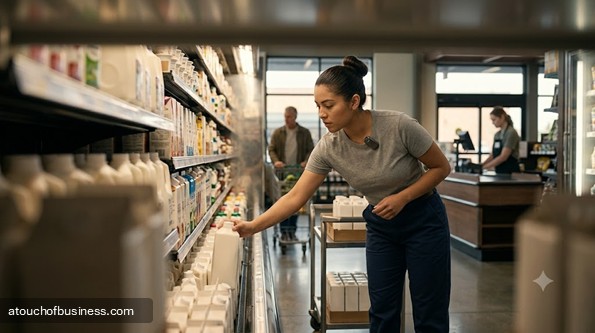
What to Expect From This Guide to Starting a Grocery Store
This guide walks readers through the key decisions and practical steps involved in starting a grocery store, from assessing personal fit and local demand to planning the store, completing setup, and preparing to open. The highlights below show only part of the article’s depth.
Inside the guide, you will find:
- Startup steps: Follow 18 ordered steps covering evaluation, planning, funding, location selection, store setup, staffing, stocking, and opening preparation.
- Industry interviews: Learn from grocery owners and executives discussing products, suppliers, staffing, technology, competition, customer service, and community relationships.
- Startup FAQs: Review practical answers about inspections, SNAP/EBT, cooperatives, shrink, scale certification, store purchases, and common struggles.
- Business fit: Consider the hours, physical demands, staffing pressure, perishable inventory, household support, experience gaps, and capital needs.
- Market and finances: Evaluate local demand, differentiation, sales volume, margins, break-even feasibility, pricing, funding, and working capital.
- Store setup: Plan the location, build-out, suppliers, refrigeration, POS systems, shelving, scales, inventory, and staffing needs.
- Requirements and risks: Understand location-dependent licensing, zoning, inspections, insurance, food safety obligations, and warning signs before opening.
The guide begins by examining whether grocery store ownership fits your experience, finances, household, and tolerance for demanding daily operations.
How to Start a Grocery Store
Independent grocery store owners buy food and household products from wholesale distributors, stock them on shelves, and sell them directly to local shoppers from a physical storefront.
The format can range from a small neighborhood market carrying staple goods to a full-service store with produce, a deli counter, a butcher, a bakery, and a prepared foods section.
Running a grocery store is demanding work. You’ll manage inventory across dozens of product categories, oversee staff on long operating days, monitor refrigeration systems, and handle constant vendor deliveries.
You’ll also stay current on food safety and licensing requirements — all at the same time.
Before you go further, review the general steps involved in starting a business so you understand the full scope of what’s ahead.
Is This Business Right for You?
Grocery is a physically demanding, high-hours business. Early mornings, late evenings, weekends, and holidays are standard. There is no quiet season.
Profit margins in grocery retail are structurally thin. You need to generate a high volume of weekly sales to produce meaningful income.
Your household needs to cover living expenses through a long ramp-up period. Grocery stores don’t reach consistent profitability immediately after opening.
Be honest about these fit points before you move forward:
- Do you have experience in retail operations, inventory management, food safety, or vendor negotiation?
- Can you lead a team of employees under daily operational pressure?
- Are you prepared to manage perishable goods that spoil quickly and generate losses if mismanaged?
- Does your household support this decision, and can it absorb income uncertainty during the startup period?
- Do you have access to substantial capital — not just to open the store, but to keep it running for months before you break even?
If any answer is uncertain, work on closing those gaps before committing capital to a location or equipment.
Red Flags Before You Start
Grocery is one of the most capital-intensive retail businesses you can enter. These warning signs deserve serious attention before you sign a lease or spend money on equipment.
No clear reason customers will choose your store:
Large national chains and hard discounters hold significant structural advantages in pricing. They buy in volumes that independent operators can’t match.
If you can’t clearly answer why shoppers will choose your store over the alternatives already serving your trade area, solve that problem before you open.
Not enough working capital:
The most common early failure point in grocery is running out of operating cash. Startup costs are high, but the operating capital needed to cover payroll, inventory replenishment, rent, and utilities during the ramp-up period is often underestimated.
Do not open until you have confirmed capital to sustain operations through the months before the store reaches breakeven.
Weak location fundamentals:
Grocery depends on repeat weekly visits from nearby households. A site without adequate customer parking, strong residential density in the trade area, or reliable delivery access creates problems that are hard to fix after you’ve signed a lease.
Thin margins with no differentiation strategy:
An independent store competing on price against large chains is at a structural disadvantage. Stores that succeed typically carve out a specific niche — a cultural food focus, a strong fresh department, an underserved neighborhood, or a local and organic assortment the nearby chain doesn’t carry well.
Licensing and permit timelines you haven’t accounted for:
Retail food establishment licenses, health inspections, certificates of occupancy, and federal SNAP/EBT authorization each take time to process. Build those timelines into your plan before you sign a lease.
No experience managing perishables:
Unsold perishables that spoil before they can be sold or marked down are a direct loss. This is one of the largest margin risks in grocery.
If you don’t have experience managing perishable inventory at retail scale, address that gap before you open.
Step 1: Check Owner Fit and Motivation
The decision to open a grocery store starts with an honest self-assessment, not a business plan.
You’re committing to a business that requires long physical hours, constant staff management, food safety compliance, and tight financial discipline — all at once, every day.
Talk to your household about what this commitment means for income stability, time, and stress. The people who depend on you financially need to understand the risk before you go further.
Step 2: Talk to Independent Grocery Store Owners
Before you spend anything, find independent grocery store owners in markets where you won’t compete and ask for their time.
Advice from experienced owners gives you the most honest picture of what this business actually involves. Prepare specific questions before each conversation.
Ask owners about:
- How long it took them to reach breakeven sales volume
- What supplier costs and payment terms looked like at launch
- Which licenses took the longest to process in their area
- How they found their wholesale distributor and whether they joined a cooperative or voluntary wholesale group
- What they would do differently if starting over
Every owner’s experience is different. But the patterns you hear across multiple conversations will sharpen your plan and flag issues you haven’t thought of yet.
Step 3: Choose Your Entry Path
You have three realistic ways to get into the grocery business. Each comes with a different risk profile, capital requirement, and timeline.
Starting from scratch gives you full control over location, store identity, product mix, and design. You build supplier relationships and your customer base from zero. Startup timelines are longer, and early sales are uncertain.
Buying an existing store can give you established supplier accounts, existing staff, equipment already in place, and financial records a lender can underwrite. Thorough due diligence on lease terms, equipment condition, permit status, financial history, and supplier contracts is essential before any purchase.
Joining a cooperative or voluntary wholesale group — such as the IGA network or Associated Wholesale Grocers — lets you operate as an independent owner while accessing group purchasing pricing, private label products, supply chain infrastructure, and operational support. This is not a traditional franchise arrangement; you retain local ownership and control.
The right path depends on your available capital, timeline, prior retail experience, and whether suitable existing stores are for sale in your target market. Review the build-vs.-buy decision carefully before committing to a direction.
Step 4: Define Your Store Concept and Format
Your store format and positioning determine your location requirements, equipment list, staffing model, and supplier relationships. Make these decisions before you look at any real estate.
Key decisions to make at this stage:
- Store type: full-service neighborhood grocery, ethnic or specialty market, natural and organic focus, value or discount format, or small-format urban store
- Product mix: which departments you’ll carry — dry goods, produce, dairy, meat, frozen foods, deli, bakery, prepared foods, beer and wine
- Pricing strategy: competitive on staple items, differentiated on specialty items, or a clear niche that supports stronger margins than a generic full-service store
- Service model: fully staffed checkout, self-checkout options, or both
Each department you add — a deli, a butcher counter, an in-store bakery, a prepared foods section — adds equipment costs, staffing needs, and licensing complexity. Be deliberate about scope.
A store with a clear identity attracts a specific customer. A store trying to be everything to everyone without the volume to support it will struggle to be profitable.
Step 5: Validate Local Demand
Map your competition before you commit to any location. Identify chain supermarkets, discount grocers, warehouse clubs, ethnic markets, and grocery delivery options already serving the trade area you’re considering.
Then identify the gap. Is there a specific community underserved by current options? A neighborhood lacking convenient access to fresh food? A cultural food category that nearby stores don’t stock well?
An independent grocery store needs a genuine answer to “why here, why now” before significant capital is deployed. Understanding local supply and demand is a go/no-go decision, not a formality.
Estimate whether the trade area population can support the weekly sales volume your store needs to cover fixed costs. If the math doesn’t work on realistic assumptions, the format or location needs to change.
Step 6: Assess Profit Potential and Break-Even Feasibility
Do this before you sign a lease or make any major purchase. Grocery is a volume business — you need high weekly sales to cover fixed costs and generate income.
Gross margins vary significantly by department. Fresh produce, deli, and prepared foods typically generate higher gross margins than packaged dry goods, beverages, and tobacco products. Your product mix directly affects your blended margin.
The key expenses to understand before you commit:
- Rent and occupancy costs as a percentage of projected weekly sales
- Labor costs — the largest controllable expense in grocery
- Cost of goods from your wholesale distributor
- Utility costs, which run high due to refrigeration
- Shrink — losses from spoilage, theft, and inventory errors
Calculate the weekly sales volume your specific store must reach to cover all fixed costs before you take any owner income.
Then verify whether your trade area population and foot traffic can realistically deliver that volume.
Industry data consistently shows that independent single-store grocers operate on very narrow net profit margins. Scale matters — higher-volume stores and multi-store operators achieve better financial performance than low-volume single-store operators.
If the break-even math only works under optimistic assumptions, reconsider the format, location, or both before committing capital.
Business Plan
A detailed business plan is required before approaching any lender and before committing to a lease, equipment purchase, or supplier agreement.
Lenders reviewing grocery store loan applications focus on operational detail. They want to see that you understand the cost structure, have a realistic sales projection, and have a compliance plan in place.
Your plan should include:
- Store concept and differentiation strategy
- Trade area analysis and competitor mapping
- Startup cost itemization across all categories
- Projected monthly operating expenses
- Break-even revenue calculation based on your specific costs
- Sales projections with documented assumptions
- Staffing plan by department and role
- Product mix and supplier plan
- Licensing and inspection timeline
- SNAP/EBT authorization timeline and its projected effect on revenue
- Working capital reserve plan — separate from the money needed to open
- Funding sources
The profit potential section is critical. Grocery margins are thin, and the plan needs to show what weekly sales volume you must hit to break even, what gross margins you expect by department, and how you’ll manage through the months before you reach that volume.
For guidance on building this plan, review how to write a business plan before you start drafting.
Use this plan to define your pricing strategy as well. Product pricing must account for your distributor cost of goods, competitor pricing in your trade area, gross margin targets by department, and any SNAP-eligible product considerations at checkout.
For a framework on setting prices, review how to price products and services.
Step 7: Secure Funding
Grocery store startup capital requirements are high. Refrigeration equipment, store build-out, initial inventory, and operating reserves all require substantial funding before you open the doors.
Common funding sources for grocery startups:
- Personal savings and owner equity
- SBA 7(a) loan — covers working capital, equipment, and leasehold improvements
- SBA 504 loan — for commercial real estate purchase or major equipment
- Conventional commercial bank loan
- Equipment financing or leasing — useful for refrigeration systems, POS hardware, and scales
- Community Development Financial Institution (CDFI) loan — particularly available for stores opening in underserved communities or food deserts
- Cooperative or voluntary wholesale group financing programs — some distributors offer financing support to new retail partners
- Investor partners
SBA lenders require owner equity contribution. A detailed business plan, relevant experience, and collateral assets all strengthen your application. Learn how to approach a business loan before you start talking to lenders.
Do not commit to a lease, build-out, or equipment purchase until funding is confirmed.
Plan operating capital separately from your setup costs. Operating capital covers payroll, inventory replenishment, rent, and utilities during the weeks and months before consistent sales volume develops.
Running out of operating cash is one of the leading causes of early grocery store closures.
Step 8: Select and Secure a Location
Location is the most critical non-capital decision you’ll make. A bad location is very hard to recover from in grocery retail.
Evaluate potential sites based on:
- Residential population density in the immediate trade area
- Proximity to the households you intend to serve
- Parking availability — industry standard for retail food stores is approximately four to five spaces per 1,000 square feet
- Visibility from the road and accessibility from traffic patterns
- Loading dock or delivery access for frequent large-vehicle supplier deliveries
- Electrical capacity to support commercial refrigeration loads
- Distance from existing competitors
Confirm the zoning allows retail food store use before you go further with any site. Contact the local planning or zoning department directly.
Commercial zoning can restrict the type, size, and hours of a grocery operation.
If the space was previously a food retail location, review the existing certificate of occupancy to confirm it covers food retail use. If the previous operator was legally permitted, getting your own permits will likely be faster.
If the space was used for something else, a change-of-use permit will be required.
In shopping centers, understand the full occupancy cost — base rent plus Common Area Maintenance (CAM) charges. Compare the total against your projected weekly sales to confirm the rent-to-sales ratio is sustainable.
Negotiate key lease terms before signing: lease term and renewal options, responsibility for refrigeration equipment and infrastructure, the permitted-use clause confirming grocery retail is allowed, and loading dock arrangements.
Have a commercial real estate attorney review the lease before you sign.
ADA compliance is required for any store open to the public. Verify that accessible parking, entrances, aisles, and restrooms meet federal standards. Address any gaps in your build-out plan before construction begins.
Store signage will also need a permit in most jurisdictions. Review what’s involved in business signage before finalizing your storefront plans.
Step 9: Set Up Your Legal Structure and Business Registration
Get your legal structure in place before you sign any contracts, open any accounts, or make any purchases in the business’s name.
Entity choice matters in grocery. You’ll carry significant inventory, face liability exposure from customer injuries, and likely work with outside lenders or investors. Most grocery store owners use an LLC or corporation rather than a sole proprietorship for these reasons.
Register your entity with the state, then obtain an Employer Identification Number (EIN) from the IRS. The EIN is required for tax filing, payroll, banking, licensing applications, and supplier account setup. Learn how to get your business tax ID.
If you’re operating under a store name different from your registered entity name, file a DBA (doing business as) registration. Requirements vary by jurisdiction — check with your state or county clerk’s office. See how DBA registration works.
Open a dedicated business bank account before any transactions occur. Review how to open a business bank account and keep business finances separate from personal funds from the start.
Step 10: Research and Complete Licensing and Permits
Grocery store licensing is multi-layered. Federal, state, and local requirements apply simultaneously. Start the process early — some permits require pre-opening inspections, and processing times can stretch several weeks or longer.
Federal requirements:
- EIN from the IRS — required for all other registrations and accounts
- SNAP/EBT retailer authorization from USDA Food and Nutrition Service (FNS) — required before your store can accept SNAP benefits; the application is free and submitted online through the FNS portal; allow approximately 45 days after a complete application is submitted
State requirements (varies by jurisdiction):
- Retail food establishment license or retail food store permit — issued by the state Department of Agriculture or Department of Public Health
- Sales tax permit or seller’s permit — from the state Department of Revenue
- Employer accounts for state income tax withholding and unemployment insurance
- Alcohol retail license — if selling beer, wine, or spirits; contact the state Alcoholic Beverage Control (ABC) board
- Tobacco retailer license — required in some states and local jurisdictions
- Workers’ compensation insurance — most states require this for any business with employees
- Food protection manager certification — many states require at least one certified food protection manager, such as a ServSafe-certified individual, per establishment
City and county requirements (varies by jurisdiction):
- General business license from city hall or the county clerk’s office
- Certificate of occupancy confirming the space is approved for retail food use
- Local health department permit or pre-opening inspection — required in many jurisdictions before you can open
- Signage permit for exterior store signs
- Weights and measures certification for all scales used to price goods by weight — see Step 14 for detail
For a full overview of business licensing, review what licenses and permits typically involve.
Submit applications in parallel wherever possible. A delay in one permit can push back your entire opening date.
Step 11: Plan and Execute Your Build-Out
If your space requires renovation to meet food retail requirements, hire contractors experienced with commercial food retail build-outs.
Before construction begins, confirm with the local building department and your health or agriculture licensing agency that your plans meet code. Many jurisdictions require plan review and approval before any interior work starts. Starting without approval can result in stop-work orders and costly corrections.
Refrigeration system installation is the most critical element of your build-out. Commercial grocery refrigeration requires licensed contractors, proper electrical and HVAC support, and equipment capable of maintaining food safety temperatures across all departments.
Your layout affects how customers shop. Grocery stores are typically organized with perishable departments — produce, dairy, meat, deli, and bakery — along the store perimeter, and packaged dry goods in the center aisles using gondola shelving.
This layout encourages shoppers to walk the full store and increases exposure to high-margin fresh departments.
Ensure aisle widths accommodate shopping carts and meet ADA accessibility requirements. Install your security and surveillance system before stocking any inventory.
Step 12: Establish Wholesale Distributor and Supplier Relationships
You can’t open without product, and product requires supplier accounts. Establish these relationships before you finalize your opening date.
Major distributors serving independent grocers include Associated Wholesale Grocers (AWG), SpartanNash, C&S Wholesale Grocers, and KeHE Distributors for natural, organic, and specialty items. Regional distributors serve many markets as well.
If you’re affiliated with a cooperative or voluntary wholesale group, that affiliation typically comes with a primary distribution relationship.
A full-service store typically establishes separate accounts with distributors for produce, dairy, meat and protein, frozen foods, and any specialty or ethnic product lines the store carries.
Understand the payment terms before you commit to any supplier account. New store accounts often face stricter terms — net-7 or net-14 payment windows, or pre-payment requirements — until you establish a credit history.
Factor those cash flow implications into your working capital plan.
Establish backup suppliers for key categories. Single-source dependency on any critical product line is a supply risk a new store can’t afford.
Step 13: Purchase and Install Equipment
Grocery stores require significant equipment investment before you can stock or sell anything. Prioritize refrigeration and your point of sale (POS) system above everything else — those are the operational core of the store.
Refrigeration equipment you’ll need:
- Walk-in cooler(s) for produce, dairy, meat, and receiving storage
- Walk-in freezer(s) for frozen food storage
- Open multi-deck refrigerated cases for produce, dairy, and deli
- Glass-door reach-in coolers for beverages and grab-and-go items
- Glass-door reach-in freezers for frozen food display
- Refrigerated deli display case if you’re operating a deli counter
- Meat display case with refrigeration
Shelving and display:
- Gondola shelving for center-store aisles — the backbone of your dry goods presentation
- Wall shelving for the store perimeter
- End cap display units at the end of each aisle
- Produce display bins and crates
- Checkout lane shelving for impulse items near the register
POS system and checkout:
- Grocery-specific POS software with inventory management, barcode scanning, EBT/SNAP processing, scale integration, and sales reporting
- POS hardware terminals, barcode scanners, receipt printers, and cash drawers at each checkout lane
- EBT terminal or EBT-integrated POS hardware for SNAP transactions
- Customer-facing display screens showing item and price during scanning
Material handling and back room:
- Pallet jacks (manual or electric) for moving wholesale deliveries
- Hand trucks, stocking carts, and U-boats for shelf replenishment
- Dry storage shelving in the back room for overflow inventory
Customer equipment:
- Shopping carts — sized to your expected foot traffic volume
- Hand-carried shopping baskets
If you’re operating a deli, bakery, or prepared foods department, add commercial meat slicers, sandwich prep units, display cases, and any cooking equipment required. Each of these also triggers additional health code review and staffing considerations.
Order equipment with enough lead time. Commercial refrigeration and custom shelving can take several weeks or longer to deliver and install.
Step 14: Get Your Scales Certified
Any scale used to price goods by weight — produce, deli, meat, seafood, bulk items — must meet two separate requirements before a single weight-based sale can legally occur.
First, the scale model must carry an NTEP Certificate of Conformance issued through the National Conference on Weights and Measures. This confirms the model meets national accuracy standards. Only purchase scales with this certification.
Second, each individual unit must be inspected and sealed by your local weights and measures office before it is used in any commercial transaction. An NTEP-certified scale without a current local inspection seal is not in legal compliance.
Contact your local weights and measures office — typically under the state Department of Agriculture or Department of Commerce — to schedule inspection and sealing after equipment is installed.
Scales that contact unpackaged food in the deli, produce, or seafood departments must also carry NSF food-contact certification for the food-contact platform.
Step 15: Apply for SNAP/EBT Authorization
Submit your SNAP retailer authorization application to USDA Food and Nutrition Service (FNS) as early as possible in the startup process. Don’t wait until the store is nearly ready to open.
The application is free and submitted online through the FNS retailer portal. Authorization typically takes approximately 45 days after FNS receives a complete application. An incomplete application restarts that clock.
To qualify under Criterion A — the standard most grocery stores use — you must maintain at least three varieties of items continuously stocked in each of four staple food categories: meat, poultry, or fish; bread or cereals; vegetables or fruits; and dairy products.
After FNS grants authorization, you receive a permit and a seven-digit FNS number. You then work with a USDA-approved third-party processor to set up your EBT terminal and transaction services. You don’t need EBT equipment at application time, but you must have it in place before you accept any SNAP transactions.
If you plan to accept WIC benefits, apply separately through your state’s WIC program. WIC authorization is a state-level process managed independently from SNAP, and the number of authorized vendors in each area is limited.
For stores in neighborhoods with a significant number of SNAP-eligible households, this authorization is not optional — it’s a material part of your projected revenue.
Step 16: Set Up Insurance
Secure insurance before the store opens. Some coverage is legally required; other coverage is essential for practical risk management even when it isn’t mandated.
Workers’ compensation insurance is required in most states for any business with employees. Verify the specific requirement in your state before opening.
General liability insurance is often required by landlords as a lease condition. It covers customer bodily injury claims — slip-and-fall accidents are the most frequent claim type in grocery stores — as well as property damage and related exposures.
Strongly recommended non-required coverage:
- Spoilage insurance — covers perishable inventory loss from refrigeration failure or power outage; this is a high-probability risk for any grocery store
- Commercial property insurance — covers equipment, fixtures, and inventory
- Business interruption insurance — replaces lost income during extended closures from a covered event
- Employee dishonesty or crime coverage — internal theft is a real and material risk in grocery
- Liquor liability insurance — required if you sell alcohol in states with dram shop liability laws
- Commercial auto insurance — required if business-owned vehicles are used for supply runs or deliveries
A business owner’s policy (BOP) bundles general liability and commercial property coverage at a lower combined rate, which is a common starting point for independent grocery owners. Learn more about business insurance coverage options.
Step 17: Hire and Train Your Team
A grocery store requires staff before it can open. Determine your staffing needs based on planned hours, the number of departments you’re operating, and your expected customer volume.
Common roles in an independent grocery store:
- Store manager or shift supervisor
- Department leads for produce, deli, meat, and bakery (if applicable)
- Cashiers
- Stock clerks and shelf replenishment staff
- Receiving staff for incoming deliveries
Many states require at least one certified food protection manager — such as a ServSafe-certified individual — to be on staff or responsible for each food establishment. Check with your state or local health department to confirm the specific requirement and which certifications are accepted.
Food handler certification is required in some jurisdictions for employees who handle unpackaged food in deli, bakery, or prepared food departments. Requirements vary — verify locally before hiring staff for those roles.
Complete all new hire paperwork — I-9, W-4, and any state-required employer forms — before employees begin work. Register as an employer with your state’s labor or employment department if you haven’t already.
Train staff on POS operation, EBT transaction procedures, food safety and temperature monitoring, shelf stocking, and opening and closing procedures before the first day of customer operation.
Review when and how to hire if you’re building your first team.
Grocery retail has high employee turnover. Build a hiring and onboarding process that can be repeated efficiently, not just done once for the opening team.
Step 18: Set Pricing, Stock the Store, and Prepare to Open
Set product pricing across all departments before you stock a single shelf. Pricing decisions must account for your cost of goods from the distributor, competitor pricing in your trade area, gross margin targets by department, and any SNAP-eligible product restrictions at checkout.
Fresh departments — produce, deli, and bakery — typically carry higher gross margins than center-store packaged goods. Get your departmental pricing right before you open.
Before stocking perishables, verify refrigeration temperatures in every unit with a calibrated thermometer. Stocking fresh product into a unit that isn’t holding temperature correctly is a food safety violation and a direct financial loss.
Receive and inspect all initial inventory orders carefully. Confirm quantities, check for damaged product, and log temperatures on perishable deliveries.
Run a complete pre-opening walk-through to confirm all compliance items are in place: licenses posted, EBT terminal operational, all scales certified, POS system tested with live transactions, refrigeration temperatures confirmed, and all required signage displayed.
Consider a soft opening with a limited group of customers before your full public opening. It gives you a chance to find problems with checkout flow, staffing coverage, and stock replenishment before you’re operating at full volume.
A Day in the Life of an Independent Grocery Store Owner
A typical day starts before the store opens. You receive supplier deliveries, verify refrigeration temperatures, review inventory levels, and brief staff on priorities before the first shopper walks in.
During store hours, you’re approving purchase orders, handling vendor calls, resolving customer issues, monitoring checkout lanes, and watching for equipment or compliance problems that need immediate attention.
End-of-day tasks include reconciling the POS and cash, securing the safe, reviewing shrink and sales data, and confirming that closing procedures were completed correctly.
Weekends and holidays are your highest-traffic days. Plan to be present or have a trusted manager in place for every peak period.
Opening-Day Red Flags
These are the problems most likely to cause serious trouble in your first days and weeks of operation. Check every item before your public opening.
Refrigeration temperatures out of range:
A refrigeration unit holding temperatures above food safety thresholds before you’ve even opened is a food safety violation and a perishable inventory risk. Do not stock food until temperatures are confirmed and stable.
Scales not yet inspected and sealed:
No weight-based sales until every scale has been inspected and sealed by your local weights and measures office. Any by-weight sale before that inspection seal is in place is a compliance violation.
SNAP/EBT authorization not yet received:
If you’re opening in a neighborhood where SNAP participants are a significant portion of your potential customers, opening without active EBT authorization means turning away those shoppers. Don’t open until authorization is confirmed and your EBT terminal is tested.
Licenses not yet posted:
Your retail food establishment license and other required permits must be posted visibly in the store before you open to the public. Confirm with each issuing agency what posting is required and where.
Staff not trained on EBT transaction procedures:
A cashier who doesn’t know how to process an EBT transaction correctly will cause problems at checkout on day one. Train every cashier on EBT procedures before the first customer interaction.
No temperature monitoring system in place:
Food safety compliance requires that refrigeration temperatures are logged throughout the day. Set up your temperature monitoring system — manual log sheets or an automated system — before you receive your first perishable delivery.
Inventory received before refrigeration is confirmed:
Stocking perishables before refrigeration units reach and hold the correct temperature is one of the costliest opening mistakes. Verify temperatures first, then stock.
Working capital lower than planned:
If your operating capital reserve is already tighter than projected as you approach opening day, address it immediately. Running out of cash in the first weeks — before sales volume develops — is how stores close before they have a chance to succeed.
Frequently Asked Questions
Do I need a health department inspection before I can open?
Yes, in most jurisdictions. A retail food establishment license or permit is required before opening, and the issuing agency — typically the state Department of Agriculture or the local health department — will inspect the store before or shortly after issuing the permit.
Some jurisdictions require a passing inspection as a condition of licensure. Contact your local health department early to understand the timeline for your area.
How long does SNAP/EBT authorization take, and when should I apply?
USDA FNS typically processes SNAP retailer authorization in approximately 45 days after receiving a complete application. Apply well before your planned opening date.
The application is free and submitted online through the FNS portal. After authorization, you’ll set up EBT processing through an approved third-party processor. EBT equipment is not required at application time.
Is it better to join a grocery cooperative or operate fully independently?
Both are viable. Joining a cooperative or voluntary wholesale group — such as Associated Wholesale Grocers or the IGA network — gives you access to group purchasing pricing, private label products, supply chain infrastructure, and operational support. This partially offsets the cost-of-goods disadvantage that small operators face compared to large chains. Operating fully independently gives you maximum control over suppliers and store identity, but typically means higher initial cost of goods until you build volume.
What is shrink, and how does it affect profitability?
Shrink is any inventory loss that doesn’t result in a sale. It includes spoilage of perishable goods, theft by customers or employees, scanning errors, and damaged product. On grocery’s thin net margins, even a modest shrink rate can eliminate profitability.
Managing it requires disciplined ordering, proper refrigeration, markdown procedures for approaching-expiration items, and basic theft prevention through layout and security systems.
Are my scales required to be certified before I open?
Yes. Every scale used to price goods by weight needs two things before any commercial use: an NTEP Certificate of Conformance confirming the model meets national accuracy standards, and a local weights and measures inspection seal on that specific unit.
Purchase NTEP-certified models, then contact your local weights and measures office to schedule inspection and sealing before any by-weight sales take place.
Can I open a grocery store without selling alcohol or tobacco?
Yes. Alcohol and tobacco are optional product categories. Many independent grocery stores operate without either, especially those focused on ethnic grocery, natural foods, or communities where those products are less in demand.
Excluding them simplifies your licensing significantly. If you want to add alcohol later, confirm that zoning and your lease terms permit alcohol sales before you sign.
What should I look for when evaluating an existing store to buy?
Key due diligence items include: whether the retail food establishment license and all other permits are current and transferable; distributor and supplier contract assignment terms; refrigeration equipment condition and maintenance records; financial records including weekly sales reports and lease terms; SNAP authorization status; and remaining lease term and landlord consent to the transfer. Have a commercial real estate attorney and an accountant familiar with food retail review all documents before you close.
What are the most common reasons independent grocery stores struggle early?
The most common early-stage problems are: working capital shortfall during the ramp-up period; failure to differentiate from nearby competitors; cost-of-goods disadvantage relative to large chains; perishable shrink losses from over-ordering or poor refrigeration management; underestimated labor costs; and regulatory delays that push back the opening date and increase pre-opening carrying costs.
Lessons From Experienced Grocery Store Owners
These interviews share practical insights from independent grocery store owners and industry executives. They discuss store positioning, product selection, customer service, staffing, technology, suppliers, competition, and community involvement.
Readers can use the advice to evaluate potential locations, understand customer needs, plan a distinctive product mix, and prepare for the operational demands of running a grocery store.
B&T’s Food Fresh Market Exemplifies Independent Spirit
B&T’s Food Fresh Market co-owner John Triplett discusses customer draws, store technology, employee retention, local purchasing, competition, and his path from part-time stocker to grocery store owner.
This interview helps prospective owners understand how local products, fresh departments, customer service, inventory tools, and community relationships can differentiate an independent store.
Why Save A Lot’s CEO Is Bullish on Independent Grocery Retailers
Save A Lot CEO Leon Bergmann discusses grocery innovation, store testing, local ownership, product assortment, private labels, supplier competition, and the advantages independent retailers have in individual communities.
The interview explains why owners should study their immediate trade area and adjust products, layouts, technology, and customer engagement to match local shopping habits.
How a Tiny Italian Grocery Store Has Stayed in Business for Over 100 Years
Third-generation owner Peter Todaro explains how the store adapted its prepared foods, added an in-store wine bar, showcased products through tastings, and responded to a large competitor opening across the street.
This interview shows how a smaller grocery store can preserve its identity while testing new services, creating additional revenue opportunities, and responding to changing customer preferences.
One Grocery Store Feeds Treasure Island. Here’s What It’s Like.
Island Cove Market owner Abdo Nasser discusses identifying unmet demand, expanding from a small convenience store, testing products, managing limited supplier access, and serving an isolated community.
The owner’s experience highlights the importance of verifying local demand, securing suitable space, understanding delivery limitations, and adapting inventory based on what customers actually purchase.
Why Piggly Wiggly Is Still So Beloved Today
Franchise owner Kamal Constantine discusses local vendor partnerships, customized store departments, regional products, community events, hands-on customer service, and competition from large grocery chains.
His advice demonstrates how an independent grocery store can compete through local knowledge, personalized service, specialized departments, and offerings that large standardized stores may not provide.
Related Articles
- Start a Convenience Store
- Start a Delicatessen
- Start a Butcher Shop
- How to Start a Bakery
- Vending Machine Startup Guide
- Starting a Bagel Shop
- Start an Ice Cream Shop
- How to Start a Meal Prep Business
Sources:
- USDA FNS: SNAP Retailer Authorization
- USDA FSIS: Retail Compliance Guidance
- FDA: Start Food Business
- Wolters Kluwer: Grocery Store License Requirements
- Toast POS: Supermarket Permits and Licenses, Grocery Store Equipment List
- FindLaw: Open Grocery Store
- NRS Plus: SNAP Authorization Guide, Small Grocery Business Plan
- Go EBT: SNAP Authorization Application
- Rural Grocery: SNAP Retailers Guide, Food Suppliers Associations
- IT Retail: Grocery Certification Standards, Grocery Shrinkage Guide
- Star Micronics: Grocery Scale Integration Guide
- NIST: Grocery Store Scale Accuracy
- Scale Blog: Grocery Store Scale Guide
- Chef’s Deal: Grocery Store Equipment List
- Insureon: Grocery Store Insurance
- Allied Insurance: Grocery Supermarket Insurance
- National Grocers Association: National Grocers Association, Grocers Wholesaler Members
- SpartanNash: Independent Grocer Partner
- POS Nation: Open Small Grocery Store, Food Handling License
- Markt POS: Open Grocery Store
- Food Institute: Grocers Amid Headwinds
- Fenix Food Safety: Food Handler Certificate Guide
- IGA: Become IGA Member
- LA Business Navigator: Retail Business Starter Kit