
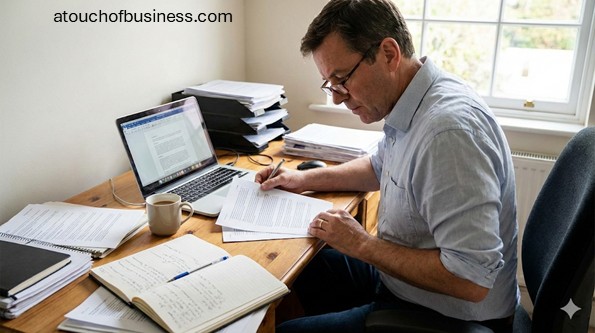
Grant Writing Business Overview
A grant writing business helps organizations prepare grant applications before they submit. Your job is to help a client present a clear, accurate case that matches a fund provider’s rules.
This is usually a small, office-based service business. Many owners start solo from a home office, part time or full time, then add help later if demand supports it.
Before you go any further, decide two things: do you actually want to own and run a business, and is this the right business for you? Start with Business Start-Up Considerations.
Passion matters more than people admit. When challenges hit, passion helps you persist and solve problems. Without it, many people look for an exit instead of solutions. If you’re unsure where you stand, read Passion: An Important Key You Need To Succeed In Business.
Now ask yourself the motivation test—exactly like this: “Are you moving toward something or running away from something?” If you’re starting mainly to escape a job or a financial bind, that may not hold up when deadlines get tight and clients go quiet.
You also need to be honest about responsibility. This can mean uncertain income, long hours, difficult tasks, fewer vacations, and full responsibility. Is your family or support system on board? Do you have (or can learn) the skills and can you secure funds to start and operate?
One of the fastest ways to learn is to speak with owners who already do this work—only talk to owners you will not be competing against. Look outside your city or region. If you want help framing those conversations, start with Business Inside Look.
Smart questions to ask non-competing owners:
- What surprised you most about early client expectations and timelines?
- Which client type was easiest to serve at the start, and why?
- What did you wish you had set up before taking your first paid project?
Who Your Customers Are
Your customers are organizations applying for grants—not individuals looking for personal financial assistance. Grants.gov describes itself as a centralized place for grant seekers to find and apply for federal discretionary funding opportunities. See About Grants.gov.
Common customer types include nonprofit organizations, local and state government agencies, and education organizations, depending on the fund provider and each opportunity’s eligibility rules. If you want a basic orientation to how federal grants work, start with Grants 101.
Products And Services You Can Offer Before Launch
This business sells services, not products. Keep your early services focused on work you can deliver with quality and consistency.
Common pre-award services include:
- Opportunity sourcing and fit checks based on eligibility and alignment
- Proposal drafting, rewriting, and editing
- Compliance review against the fund provider’s instructions
- Attachment planning, including letters of support and required forms
- Budget narrative support in coordination with the client’s finance staff
- Submission support when authorized, including working in Grants.gov Workspace
Pros And Cons To Think Through
This is a writing-intensive business with deadline pressure. You will spend a lot of time inside instructions, templates, and forms.
Common upsides and downsides:
- Pros: Low physical equipment needs, remote-friendly, can start solo from a home office.
- Cons: Deadlines set by fund providers, detailed rules, and client readiness issues that can slow projects.
Common Business Models
In a Grant Writing Business, revenue usually comes from project fees, hourly consulting, or a monthly retainer with clear limits. Payment is typically tied to work performed—not to whether a grant is awarded.
Common models include:
- Fixed-fee project work tied to a specific opportunity and defined deliverables
- Hourly consulting for writing, editing, and compliance review
- Monthly retainer for pre-award support with scope limits
- Subcontract work for a consulting firm or as overflow support for an organization
Most first-time owners start solo or with a partner. Investors are uncommon in the early stage because the business is mainly skill and time, not physical assets.
Step 1: Pick A Lane And A Client Type
Start by choosing a lane you can explain in a sentence. “I help after-school nonprofits apply for youth development grants” is clearer than “I write grants for anyone.”
Then choose the client type you will focus on first. Your goal is to learn one world deeply before you try to serve everyone.
Step 2: Learn Where Opportunities Live
If you plan to support federal opportunities, learn how Grants.gov is structured and how opportunities are listed. Grants.gov also links to training materials and applicant resources.
To understand program purpose at a high level, learn how to use Assistance Listings on SAM.gov. It’s a directory of federal assistance programs and is useful for quick program context.
Step 3: Validate Demand And Your Ability To Profit
Demand is not “people like the idea.” Demand is organizations in your lane actively applying and willing to accept payment for help.
Pull real opportunities in your niche and estimate effort. Then do the math: can your pricing cover your expenses and pay you for the time the work actually takes?
If you need a refresher on how supply and demand affects pricing and viability, review Supply And Demand.
Step 4: Decide Solo, Partner, Or Help Later
Most people can start solo, especially if they already write well and can follow detailed instructions. You can run it part time while you build skill and examples, or go full time if you have savings and validated demand.
So ask yourself: do you want to do most tasks yourself at the start, then hire later, or bring help in early? If you want a timing framework, see How And When To Hire.
Step 5: Build Your Skill Base And Proof Assets
You need proof before you need a big website. Create writing samples that are clearly labeled as samples and that follow real funding instructions.
If you plan to support federal submissions, learn how applications are assembled in Workspace so you can speak confidently about roles, forms, and submission flow.
If you want background on federal award rules beyond proposal writing, start with the U.S. Department of Education overview of Uniform Guidance requirements. Use it as context, not as legal advice.
Step 6: Set Clear Ethical Boundaries
Your reputation is your product. Decide what you will not do before a client pressures you. That includes refusing false statements, refusing plagiarism, and refusing “guarantees.”
Also decide how you will be paid. If you want a baseline reference used in the profession, read the Grant Professionals Association Code of Ethics, which addresses percentage-based compensation tied to grant amounts.
Step 7: Define Your Service Offerings And Client Responsibilities
Write down exactly what you deliver for each project type. Think in outputs: a narrative draft, a compliance review, an attachment checklist, and submission support if authorized.
Then define what the client must provide and by when. Many projects fail early because the client cannot provide documents, data, or approvals on time.
Step 8: Set Pricing Rules And Payment Terms
Set pricing you can explain. Avoid pricing that depends on winning, because you don’t control the fund provider’s decision.
If you want help thinking through service pricing structures, review Pricing Your Products And Services.
Step 9: Understand Federal Client Registration Timing
If your target clients apply for federal grants, registration timing can make or break a deadline. Grants.gov explains that organizations must register with SAM.gov and Grants.gov, and that SAM.gov registration must be renewed annually.
Grants.gov also states there is no fee to register with SAM.gov or Grants.gov, and it notes that registration can take time. Start with Applicant Registration, then review SAM.gov Entity Registration. For Unique Entity Identifier details, see Unique Entity ID details.
Step 10: List Essentials And Build Your Startup Cost Range
Even though this is a low-equipment business, you still need a full list of essentials. Get price estimates for each item so you can see what “basic” looks like versus “professional.”
Scale drives cost totals. A solo home office setup is different from a staffed office with multiple workstations.
For a structured way to estimate, use Estimating Startup Costs.
Step 11: Write A Business Plan And Set Up Your Financial Foundation
Write a business plan even if you are not seeking a loan. It forces decisions on target clients, services, pricing rules, startup costs, and your first milestones.
If you want a guide, use How To Write A Business Plan. If you may need financing, review How To Get A Business Loan so you understand what lenders usually ask for.
Step 12: Choose A Business Name And Secure Online Basics
Pick a name you can say out loud without explaining it. Then check your state’s rules and confirm the name is available where you will register.
Secure a matching domain name and consistent social handles early. If you want a step-by-step name process, review Selecting A Business Name. For an official overview of name considerations, see the Small Business Administration name guide.
Step 13: Form The Business And Register For Taxes
Many U.S. small businesses start as sole proprietorships and later form a Limited Liability Company (LLC) as they grow. That shift can help with liability separation and structure as revenue increases.
Start with the Small Business Administration structure overview, then confirm your state’s requirements through your Secretary of State website.
If you need an Employer Identification Number (EIN) for banking, taxes, or hiring, use the Internal Revenue Service’s official guidance: Get an employer identification number. For an overview of federal and state tax identifiers, see federal and state tax ID numbers.
For a practical overview of the overall registration flow, see How To Register A Business.
Step 14: Confirm Local Licensing, Permits, And Location Rules
This business often runs from a home office, but your city or county may have home occupation rules. If you plan to meet clients in person, make sure the space is convenient and professional.
Start with the Small Business Administration licenses and permits overview, then verify locally through your city or county business licensing portal and planning or zoning office.
If you’re considering a commercial office, this location guide can help you think through basics like convenience and fit: How To Select A Business Location. If you will install exterior signage, review local sign rules and Business Sign Considerations.
Step 15: Set Insurance And Basic Risk Coverage
General liability insurance is common for service businesses. Many providers also consider professional liability insurance for errors and negligence, plus cyber coverage if they store sensitive client documents.
Some coverage is legally required when you have employees, and workers’ compensation rules vary by state. Start with the Small Business Administration insurance guide, then confirm employee-related requirements with your state regulator. If you need state contacts, see State Workers’ Compensation Officials.
For a business-focused overview, see Business Insurance.
Step 16: Set Up Banking, Tools, Paperwork, And Your Launch Plan
Open a business bank account so your transactions stay separate. For an official overview of common accounts and why they’re used, see Open a business bank account.
Next, choose your tools for writing, PDFs, cloud storage, and secure document sharing. Then get your core paperwork ready: a service agreement, a statement of work template, invoicing, and a way to accept payment.
Finally, plan your launch. Keep it simple: announce your opening, tell your network who you help, and schedule a few discovery calls. If you want launch ideas you can adapt, see Ideas for Your Grand Opening.
Step 17: Build Brand Basics And Your First Marketing Plan
You don’t need fancy branding to start, but you do need to look legitimate. That means a clean logo, a consistent look, and materials that match how clients will experience you.
At minimum, plan for a simple website, a professional email address, business cards, and basic letterhead or templates. If you want guidance on the pieces, review Corporate Identity Considerations, What to Know About Business Cards, and this overview of developing a business website.
Then decide how you’ll get your first customers. Common paths include referrals, partnerships with accountants or nonprofit consultants, speaking at local nonprofit groups, and networking in grant-focused communities. Keep your message simple: who you help, what you do, and what you need from a client to start a project.
Essential Items Checklist
This is the equipment and software most owners need before they take their first client. Use it as a checklist, then collect price estimates so you can build a realistic startup cost range.
If you work from home, you may already own some of this. If not, price it out before you commit to a start date.
- Computing And Hardware: computer, second monitor, reliable internet equipment, printer/scanner, webcam, headset
- Software And Online Tools: word processing and spreadsheets, PDF editor, secure cloud storage, e-signature tool, scheduling tool, password manager
- Office Basics: desk, ergonomic chair, lockable file storage if you keep paper, shredder for sensitive drafts
- Communication: dedicated business phone number or voice service, video meeting platform account
- Backup And Security: external backup drive or equivalent backup, surge protector or battery backup device
- Reference Access: bookmarked resources for Grants.gov and SAM.gov guidance
Skills Needed To Run This Business
This is not just writing. It’s writing inside rules, under deadlines, with other people’s data and reputations on the line.
If you’re missing skills, you have two choices: learn them or bring in qualified help. New owners do not have to do everything alone.
- Clear writing and editing
- Reading and following detailed funding notices
- Document organization and version control
- Basic budgeting literacy for budget narratives
- Client interviews and asking precise questions
- Basic familiarity with federal systems your clients may use (Grants.gov, System for Award Management)
Day-To-Day Activities You Should Expect
Even before you launch, you should know what the work looks like when the calendar is full. If this sounds miserable, that’s useful information now.
Common activities include:
- Reviewing opportunities and eligibility rules
- Collecting client documents and clarifying missing details
- Drafting and revising narratives and attachments
- Running compliance checks against the fund provider’s instructions
- Coordinating signatures, letters, and final files
- Supporting submission steps when authorized
A Day In The Life Of An Owner
Morning: you review deadlines and the client’s missing items list. You re-check the funding notice because the rules always matter more than memory.
Midday: you meet with a client, ask specific questions, and confirm what they can support with data. Then you draft and revise.
Afternoon: you assemble files, run a compliance review, and prepare submission steps. You end by documenting next actions so you don’t restart from scratch tomorrow.
Red Flags To Look For
This space attracts scams and unrealistic expectations. Start with official warnings like Grant Scam and Fraud Alerts and the Federal Trade Commission’s guidance on Government Grant Scams.
Common red flags include:
- Anyone claiming they can get “free money” for individuals through Grants.gov
- Requests to pay money to “receive a grant”
- Clients asking you to guarantee funding or to add false statements
- Pressure to copy content from other proposals or reuse restricted material without permission
- Organizations that cannot clearly explain their mission, leadership, or basic financials
Varies by Jurisdiction
Business registration, taxes, and local licensing are not the same everywhere in the United States. Do not guess. Verify locally before you sign a lease or start advertising.
Use this checklist to confirm what applies to you:
- State Secretary of State: entity registration steps, name rules, assumed name requirements.
- State Department of Revenue or Tax Agency: tax registration and whether services are taxed.
- City or County Licensing Office: whether a general business license is required.
- Planning or Zoning Department: home occupation rules and whether a Certificate of Occupancy applies to your space.
- State Workers’ Compensation Agency: requirements if you hire employees.
If you work mainly with nonprofits, keep an eye on state charity rules. If your services cross into regulated fundraising activities in your state, start with the Internal Revenue Service overview of charitable solicitation state requirements, then confirm with your state’s charity regulator.
Two smart questions to ask any local office: “What triggers a requirement for my type of office-based service?” and “Do you have an online checklist or portal path for new businesses?”
Pre-Opening Checklist
Before you launch publicly, do a final pass on basics. This keeps you from scrambling in your first week when you should be focusing on client work.
Use this as a last check:
- Entity formation and name filings completed (as applicable)
- Employer Identification Number obtained (as applicable)
- State tax accounts set up (as applicable)
- Local license and zoning checks completed (as applicable)
- Insurance quotes reviewed and policies started
- Contracts, invoicing, and payment method ready
- Website live and contact methods tested
- Samples and work process documents ready
- Launch message prepared and first outreach scheduled
If you’ve worked through the steps above, you’re in a position to start a Grant Writing Business without guessing your way through compliance and setup.
101 Tips to Start and Grow a Grant Writing Business
You’ll find tips here that touch many parts of getting started and building momentum.
Take what fits your situation and skip what doesn’t.
Bookmark this page so you can come back when you’re ready for the next step.
The smart move is to pick one tip, apply it, then return when you want another.
What to Do Before Starting
1. Decide whether business ownership fits you before you decide this niche fits you. Be honest about uncertain income, long hours, and full responsibility.
2. Pick a primary client type first (nonprofit, local government, school, or research-focused small business). A narrow start makes your first projects more repeatable.
3. Choose one funding lane to learn deeply (federal opportunities, state/local programs, or private foundations). Mixing lanes too early slows your learning.
4. Pull 20 recent opportunities in your lane and read the eligibility section for each. If your target clients rarely qualify, you need a different lane.
5. Write down what you will not offer (for example, no funding guarantees and no false statements). Boundaries are easier to hold when they’re written.
6. Create a simple value statement: who you help, what you produce, and what you need from the client to start. If you can’t say it clearly, you’ll struggle to sell it.
7. Decide if you’ll start part time or full time. Make the call based on savings, your schedule, and how quickly you can test demand.
8. Talk to working grant writers in other cities or regions—only people you will not compete with. Ask what they wish they had set up before their first paid project.
9. Build three sample work pieces that are clearly labeled as samples. Use real funding instructions so your samples look like the real job.
10. Set a basic workflow for discovery calls: eligibility check, timeline check, and document readiness check. If any of those fail, the project will drag.
11. List the top five documents you’ll usually need from clients (mission, program details, budget numbers, key staff bios, prior results). Make it a standard request list.
12. Decide how you’ll handle confidentiality before you accept your first file. Plan where client documents will be stored and who can access them.
13. Estimate how many hours a typical proposal takes you at your current skill level. Price based on time and effort, not on hope.
14. Identify your first three lead sources (referrals, local nonprofit networks, professional partners, or online content). Don’t try to use every channel at once.
15. Do a practice run: choose one open opportunity and build a full draft package without submitting it. You’ll find gaps in your tools and process fast.
Legal, Registration, And Risk Setup
16. Choose a business structure that matches your risk and growth plans. Many owners start as sole proprietors and later form a Limited Liability Company as they grow.
17. Register your business name and entity through your state filing office, often the Secretary of State. Name rules and processes vary by state.
18. If you use a name different from your legal name, check whether your state, county, or city requires a trade name filing. Terminology varies by jurisdiction.
19. Get an Employer Identification Number if you need it for banking, taxes, or hiring. Use the Internal Revenue Service application guidance.
20. Confirm whether your city or county requires a general business license for an office-based service. Don’t assume “home office” means “no license.”
21. Check zoning or home occupation rules if you work from home. If you rent office space, ask about any Certificate of Occupancy requirements.
22. Set up your state tax accounts if required, and confirm whether your state taxes services like writing or consulting. Rules vary widely.
23. Use a written services agreement for every project, even if the client is a friend. Scope and responsibilities protect both sides.
24. Add a clear statement that you do not guarantee funding outcomes. You control the work product, not the fund provider’s decision.
25. Plan for data protection: passwords, access control, and a backup process. Client documents can include sensitive financial and personal information.
26. Price and scope are business risks, so define change rules up front (extra drafts, late content, added attachments). Put the triggers in writing.
27. If you plan to hire employees soon, verify state requirements for unemployment insurance and workers’ compensation. Employee rules are state-specific.
Tools And Workflow Setup
28. Use a reliable computer and a second monitor. You’ll work faster when instructions and drafts are visible at the same time.
29. Choose one word processing tool and one spreadsheet tool and learn their advanced features. Formatting and tables matter in grant packages.
30. Use a PDF tool that can combine files and create searchable PDFs. Many submissions require clean, consistent PDF attachments.
31. Set up secure cloud storage with organized folders by client and project. Keep drafts and final files separated.
32. Adopt a consistent file naming rule (date, client, document name, version). It prevents mistakes when deadlines are close.
33. Use an electronic signature tool for agreements and approvals. It reduces delays when clients are busy.
34. Create a standard compliance checklist you run before every submission. Use the fund provider’s instructions as the checklist source.
35. Build reusable templates for common sections (need statement outline, goals, work plan table, evaluation outline). Templates speed you up without copying past work.
36. Use a password manager and enable multi-factor authentication where available. This is basic risk control for client data.
37. Set up a simple client tracking system (spreadsheet or basic customer relationship tool). Track status, deadlines, and missing items.
38. Use a scheduling tool with a short pre-call questionnaire. The goal is to screen fit and readiness, not to collect every detail.
39. Set a backup routine you actually follow (automatic cloud backup plus a secondary backup option). Test restores, not just backups.
Marketing (Local, Digital, Offers, Community)
40. Describe your niche in plain language that a non-expert understands. If prospects need you to explain your business three times, you’ll lose them.
41. Build a simple website with your services, who you serve, and what a client must provide to start. Keep it clear and factual.
42. Create a short “how it works” page that shows your steps from eligibility check to final draft. People trust process when they can see it.
43. Publish one educational article that explains how to tell the difference between legitimate grants and scams. It attracts the right audience and repels the wrong one.
44. Join local nonprofit and community groups where your clients already gather. Listen first, then offer help when it’s relevant.
45. Build relationships with accountants, nonprofit consultants, and program evaluators. They can refer clients who are already serious.
46. Offer a paid “grant readiness” review that checks eligibility, timeline, and document readiness. It’s a lower-risk first engagement for new clients.
47. Ask every satisfied client for a referral before the project ends. Make the request specific: who they know and what problem that person has.
48. Create a simple case summary format you can share without confidential details. Focus on the process and deliverables, not the award outcome.
49. Track which outreach actions lead to discovery calls. Double down on what produces calls, and cut what only produces likes.
50. Set a consistent weekly outreach schedule. Consistency beats bursts of activity followed by silence.
51. Keep a short list of common objections and your factual answers (timeline, what you need from them, what you deliver). It makes calls smoother.
52. Use a professional email address tied to your domain. It signals legitimacy in a field with many scams.
53. Create a basic portfolio that shows sample sections, templates, and checklists. Prospects want proof you can organize complex requirements.
Dealing With Customers (Trust, Education, Retention)
54. Start every inquiry with an eligibility and deadline screen. If the client can’t qualify or can’t meet the deadline, say no early.
55. Ask for the funding notice or opportunity link and read it yourself. Don’t rely on a client’s summary of requirements.
56. Set expectations on client workload. Many grants require fast approvals, documents, and signatures, and you need them on time.
57. Use a kickoff document that lists deadlines, deliverables, and what you still need from the client. It reduces confusion and rework.
58. Keep communication in writing after calls. A short recap prevents “I thought you meant…” problems.
59. Teach clients the difference between writing quality and organizational readiness. Great writing cannot replace missing data or unclear programs.
60. Explain that fund providers may reject applications that do not follow formatting and attachment rules. Compliance is not optional.
61. Set revision limits that match your pricing. Unlimited revisions often become unpaid rewriting.
62. Confirm who has final approval authority on the client side. Too many approvers can stall a submission.
63. Be direct about scam red flags when a prospect mentions “guaranteed grants” or upfront payments. It protects them and your reputation.
64. Use confidentiality language in your agreement and avoid sharing client names publicly without written permission. Trust is fragile in this work.
65. Create a clear process for handling client-supplied data errors. If numbers change, your narrative and attachments may need rework.
Running The Business (Operations, Staffing, SOPs)
66. Write down your process from first call to final package. A written process keeps projects consistent when you’re tired or busy.
67. Use a standard discovery call agenda: eligibility, timeline, client readiness, and scope. If any item is unclear, pause before quoting fees.
68. Create a project plan with internal deadlines that are earlier than the fund provider deadline. You need buffer time for client delays.
69. Use a quality check step that is separate from drafting. A fresh review catches missing attachments and instruction violations.
70. Keep a running “missing items” list and update it after every client touchpoint. Send it to the client so accountability is clear.
71. Set work hours and response time rules before you get busy. If you respond at midnight once, clients may expect it again.
72. Block time for deep writing work without meetings. Grant narratives suffer when they’re written in five-minute gaps.
73. Start with a small number of active projects until your pace is predictable. Overbooking early is a fast way to damage quality.
74. Use subcontract editors or proofreaders only after you have confidentiality terms in place. Client data control matters.
75. Document your style rules (tone, formatting, table conventions). Consistent presentation makes your work look professional.
76. Track your actual time by project type. Time data helps you price accurately and decide what services are worth offering.
77. If you bring help in later, assign tasks that are easy to standardize first (formatting, attachment tracking, scheduling). Keep core writing under your control until training is solid.
78. Set up invoicing and a clear accept payment method before you start work. Billing chaos is avoidable with simple tools.
79. Create a final readiness checklist for launch: agreements, templates, insurance quotes, tool access, and a repeatable marketing routine.
What to Know About the Industry (Rules, Seasons, Supply, Risks)
80. Know that Grants.gov is for federal discretionary funding opportunities. If a prospect says it’s for personal financial help, treat it as a warning sign.
81. Learn how Grants.gov Workspace works so you understand roles and submission flow. Even if you don’t submit for clients, you should understand the process.
82. Understand that organizations applying for federal grants typically need registration steps that can take time. Set client timelines with that reality in mind.
83. Know that SAM.gov registration must be kept current for federal applicants. Ask clients early whether their registration is active and verified.
84. Use SAM.gov Assistance Listings to understand the purpose of federal programs. It helps you avoid writing proposals that don’t match the program’s intent.
85. Watch for scam patterns: promises of guaranteed grants, requests for upfront payments to “release funds,” and pressure to share bank details.
86. Teach clients that legitimate registration for SAM.gov is free. If they’re being charged by a third party, they should slow down and verify.
87. Read fund provider instructions every time, even for the same program. Funding notices can change from cycle to cycle.
88. Treat attachments as part of the application, not add-ons. Missing or incorrect attachments can end a submission before reviewers read the narrative.
89. Know that some opportunities require specific forms and formatting. Build a habit of checking requirements before you write.
90. Keep track of common deadline seasons in your niche. Planning around cycles helps you avoid last-minute rush projects.
91. Stay current on official updates from Grants.gov and SAM.gov. Small changes in systems or processes can affect submission timing.
What Not to Do
92. Don’t promise results you can’t control. You can promise a compliant, well-supported application, not an award.
93. Don’t accept work when the client can’t provide basic information. Missing program details will turn into endless rewriting.
94. Don’t copy content from other proposals without permission. It risks legal issues and can get a client rejected for plagiarism.
95. Don’t ignore the fund provider’s formatting and attachment rules. Great writing cannot fix noncompliance.
96. Don’t price based on the grant amount. Price based on the work, deliverables, and time required.
97. Don’t start drafting before scope and responsibilities are in writing. Verbal agreements create preventable disputes.
98. Don’t store client files in personal email threads or unsecured devices. Use protected storage and access controls.
99. Don’t take “grant lists” from questionable sellers as your main opportunity source. Use official portals and verified fund provider pages.
100. Don’t let a client’s urgency become your emergency. If the timeline is impossible, say no or reset expectations.
101. Don’t build your business around scam-driven leads. If you attract the wrong audience, your marketing needs to change.
- Starting out is mostly about preparation and proof: clear boundaries, a repeatable process, and a way to show you can deliver compliant work.
- If you keep testing demand, tightening your workflow, and screening clients carefully, you’ll make better decisions and avoid preventable headaches.
FAQs
Question: Can I start a grant writing business by myself, or do I need a team?
Answer: You can start solo because the work is mainly writing, compliance checking, and client coordination.
Bring in help later if demand grows and you have a repeatable process.
Question: Do I need a certification to start?
Answer: There is no universal federal license or certification required just to offer grant writing services.
Some clients may prefer credentials, so decide if a credential fits your target market.
Question: What types of clients should I focus on first?
Answer: Start with one client type you can learn fast, like nonprofits, schools, or local government agencies.
Then pick one funding lane so your process stays consistent from project to project.
Question: Can I help individuals find “free money” on Grants.gov?
Answer: Grants.gov states most opportunities there are for organizations, not individuals.
If someone is seeking personal financial help, that is a warning sign for your lead screening.
Question: What equipment do I need before I take my first client?
Answer: At minimum you need a reliable computer, a second monitor, secure file storage, and a way to create and combine PDF files.
You also need a stable internet connection and a secure way to handle passwords and backups.
Question: Do I need an Employer Identification Number?
Answer: It depends on how you set up the business and whether you will hire or need it for banking and tax filing.
The Internal Revenue Service provides the official application and guidance.
Question: What business structure should I choose?
Answer: Many owners start as sole proprietors and later form a Limited Liability Company as they grow.
Use the Small Business Administration structure guide, then confirm your state’s rules before you file.
Question: Do I need to register my business with my state?
Answer: If you form an entity like a Limited Liability Company or corporation, you generally register through your state’s filing office.
Rules vary by state, so use your Secretary of State site or your state’s business portal to verify.
Question: Do I need a business license if I work from home?
Answer: It depends on your city and county, and home occupation rules may also apply.
Check your local licensing office and planning or zoning department before you begin operating.
Question: Do I need to collect sales tax on grant writing services?
Answer: Tax rules for services vary by state, so you must verify with your state revenue department.
Do not assume “services are not taxed” without checking the official guidance for your state.
Question: What insurance should I consider as a new owner?
Answer: General liability insurance is common for service businesses, and some clients may require certain coverage in contracts.
If you hire employees, check state rules for legally required coverages.
Question: Should I open a separate business bank account?
Answer: Yes, a separate account helps you keep business transactions distinct from personal spending.
The Small Business Administration outlines common reasons and what you may need to open one.
Question: What legal documents should I have before starting work?
Answer: Use a written services agreement and a clear statement of work for every project.
Spell out scope, deadlines, client responsibilities, revision limits, and what happens when needed items arrive late.
Question: How should I set prices when I’m new?
Answer: Price based on the work and time required, not on the grant amount.
Start with a simple structure like hourly work, fixed-fee packages, or phased project pricing with clear deliverables.
Question: Do I need to understand Grants.gov Workspace to serve clients?
Answer: If you support federal applications, it helps to understand Workspace because it is the standard way to apply through Grants.gov.
Even if the client submits, you should know how forms, attachments, and roles affect timing.
Question: What should I know about SAM.gov and the Unique Entity ID?
Answer: SAM.gov provides entity registration steps for organizations that want to apply for federal awards and includes Unique Entity ID options.
Registration timing can affect deadlines, so ask prospects early if their registration is active and current.
Question: How do I screen clients so projects do not derail?
Answer: Screen for eligibility, deadline realism, and document readiness before you quote a fee.
If the client cannot provide core details and approvals on time, the project will likely stall.
Question: What is a simple workflow I can run for each proposal?
Answer: Use a repeatable sequence: requirements review, outline, first draft, compliance check, final assembly, and final verification.
Create a checklist directly from the funding notice so you do not miss required sections or attachments.
Question: How do I protect myself from grant scams and scam leads?
Answer: Use official scam warnings to set your screening rules and to educate prospects who seem unsure.
Grants.gov and the Federal Trade Commission both publish grant scam guidance you can use to spot common patterns.
Question: When should I hire help or use subcontractors?
Answer: Consider help when you have steady demand and a documented process that someone else can follow.
Start by outsourcing tasks that are easy to standardize, like formatting, proofreading, or attachment tracking.
Question: What should I track each month to know if the business is healthy?
Answer: Track leads, discovery calls, proposals in progress, on-time delivery rate, and cash collected versus work promised.
Also track your actual hours per project so pricing improves over time.
Question: What are the most common mistakes new grant writing owners make?
Answer: Taking projects with impossible deadlines, starting without a written scope, and relying on client summaries instead of reading instructions.
Another common issue is accepting work from scam-driven leads, which wastes time and creates risk.
Related Articles
- Start a Business Plan Writing Service
- Resume Writing Business
- Start an Editing Business
- Desktop Publishing Business Startup Guide
- Educational Consulting Firm Startup Guide
- Start a Excel Consulting Business
- An Overview of Starting a Practical Ai Consulting Business
Sources:
- Federal Trade Commission: Government Grant Scams
- Grant Professionals Association: Grant Professionals Code Ethics
- Grants.gov: Applicant Registration, Workspace Overview, Grant eligibility, Grant Scam Fraud Alerts, Grants 101, About Grants gov
- GSA: Unique Entity ID is Here
- Internal Revenue Service: Get employer identification, Charitable solicitation state
- SAM.gov: Assistance Listings, Entity Registration
- U.S. Department of Education: Uniform Administrative
- U.S. Department of Labor: State Workers Compensation
- U.S. Small Business Administration: Apply for licenses permits, Choose business structure, Choose your business name, Get business insurance, Get federal state tax ID, Open business bank account