
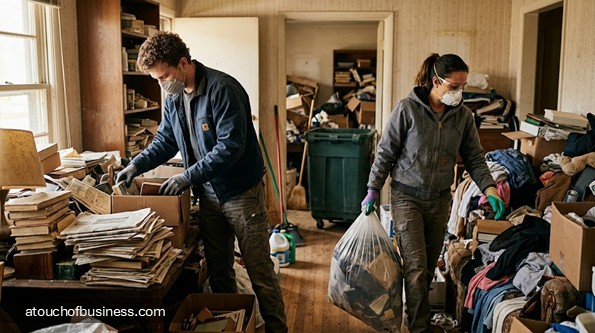
What to Expect From This Guide to Starting a Hoarding Cleanup Business
This guide walks you through the key decisions and practical steps involved in starting a hoarding cleanup business built around mobile, on-site service. The highlights below point to some of what’s covered, not everything the guide addresses.
Inside the guide, you will find:
- Startup steps: A numbered path from evaluating fit through legal setup, equipment, pricing, and final opening checks.
- Business fit: Weighs the physical, emotional, and lifestyle demands of this work, including building a referral network, before you commit.
- Legal requirements: Covers waste hauler permits, biohazard licensing, zoning checks, and other location-dependent rules to verify.
- Equipment and vehicles: Explains PPE, cleaning tools, and vehicle setup suited to mobile, on-site jobs.
- Financial planning: Explains hourly pricing, break-even thinking, and planning for uneven income between jobs.
- Risks and warnings: Points out conditions worth pausing over, from thin referral networks to unclear licensing status.
- Common questions: Answers practical questions about licensing, scope, equipment, and referral-building that often come up.
Keep reading to see whether this hands-on work fits you, and what it takes to get a hoarding cleanup business running.
As a hoarding cleanup business owner, you help people reclaim a home buried under years of belongings.
You sort, haul, clean, and disinfect — often standing beside someone facing one of the hardest days of their life.
This is a mobile, on-site service. You bring your crew, vehicle, and equipment to the property, not the other way around.
If you’re new to starting a business altogether, review the general startup steps before you begin.
Before you dive in, take an honest look at whether this work fits you.
Hoarding cleanup is physically hard, emotionally heavy, and unpredictable from one job to the next.
Ask yourself these questions first:
- Can you stay calm and steady inside unsanitary, cluttered spaces?
- Can you handle slow income while your referral network grows?
- Does your household support the schedule and stress this work brings?
Startup costs, insurance, and licensing all take real capital before your first paying job.
Think through how you’ll cover your own living expenses during that ramp-up period.
Talk to owners in related fields before you commit.
Reach out to people who run junk removal, biohazard cleanup, or restoration businesses — just not ones who compete with you directly.
Prepare a short list of questions about referrals, pricing, and crew safety before you call.
Also decide how you want to enter the field.
You can start from scratch, buy an existing cleanup company, or explore a franchise.
Franchises in this space offer training and referral contracts, but they also come with fees and less independence.
Local demand matters too. This industry runs on referrals, not walk-in traffic.
Look for local Adult Protective Services offices, hospital discharge planners, property managers, and elder-law attorneys.
These people are usually your best source of first clients.
Red Flags Before You Start
Some conditions should make you pause, change your plan, or wait before you open.
Watch for these before you commit:
- Few local referral sources, which means a slow, unpredictable start
- Heavy competition from junk removal and restoration companies already nearby
- Clients who expect insurance to pay, when it usually doesn’t
Homeowners insurance often treats hoarding as a long-term problem, not sudden damage.
That means most clients pay you directly — and many have limited funds to work with.
This industry also has structural challenges you can’t fully avoid.
Referral relationships take time to build, so expect a slower ramp-up than a walk-in service would have.
Job length is hard to predict, too. You won’t know the true scope until you’re inside the home.
Licensing rules for waste hauling and biohazard work also vary by state and city.
Confirm your local rules before you advertise a single job.
Step 1: Define Your Service Scope
Decide exactly what your hoarding cleanup business will offer before you do anything else.
Will you stick to sorting, hauling, and general cleaning? Or will you also handle biohazard situations, like blood or bodily fluids?
This single decision shapes your training, your equipment, your insurance, and your licensing needs.
A narrower scope is simpler and cheaper to launch. A wider scope can mean more revenue, but more compliance too.
Step 2: Register Your Business and Get Your Tax ID
Choose a legal structure for your hoarding cleanup business and register the name with your state.
Then apply for an EIN — a federal tax ID number — directly through the IRS.
You’ll need this number to open a business bank account and, later, to hire employees.
Step 3: Get Your Business License and Waste Hauler Permit
Apply for a general business license through your city or county.
Most states also require a separate solid waste hauler permit for anyone who transports and disposes of other people’s belongings for pay.
Check with your state’s environmental agency before you take your first paid job.
Some states also license biohazard or trauma-scene cleanup separately.
If your scope from Step 1 includes that work, verify this with your state health department too.
Step 4: Check Your Zoning and Vehicle Rules
If you’ll store your vehicle, dumpster, or equipment at home, check your local zoning rules first.
Some areas restrict home-based storage of commercial vehicles or containers.
Your vehicle’s weight matters too. Heavier trucks may need a USDOT number and special markings.
Rules for this vary by state, so confirm with your state’s motor vehicle division.
Step 5: Build Your Safety and Compliance Plan
Before your crew steps into a hazardous home, put your safety plan in writing.
If your scope includes biohazard exposure, federal rules require a written Bloodborne Pathogens Exposure Control Plan.
You’ll also need a hazard communication plan for any disinfectants or chemicals you use.
If your crew wears respirators, add a respiratory protection plan with fit testing.
Step 6: Get Trained and Certified
Training builds your skill and your credibility with referral partners.
Consider a course built on the IICRC S540 standard for trauma and crime scene cleanup if biohazard work is part of your plan.
It’s also worth studying hoarding-specific coursework, like programs from the Institute for Challenging Disorganization.
This training teaches you how to work with clients calmly, respectfully, and safely.
Step 7: Set up Banking, Funding and Insurance
Open a dedicated business bank account before you take your first job.
Keeping business and personal money separate protects you and simplifies your taxes.
If you need startup funding, compare a few options before choosing one.
- A small business loan
- Equipment financing
- A business line of credit
Also line up insurance before your first job.
At minimum, plan for general liability and commercial auto coverage.
If you’ll hire employees, workers’ compensation is required in most states.
Given the waste you’ll handle, also ask about pollution or environmental liability coverage.
Step 8: Get Your Vehicle and Equipment Ready
Your vehicle is your mobile headquarters on every hoarding cleanup job. Choose one sized to your typical workload.
A cargo van works for smaller jobs. A box truck handles bigger pack-outs with fewer trips.
Build a simple loading routine so your crew wastes no time at each stop.
Keep backup gear on hand, too — a flat tire or broken vacuum shouldn’t stall a job.
Stock your PPE before day one:
- Disposable coveralls and gloves
- Respirators, fitted to each crew member
- Goggles or face shields
Add cleaning tools too: a HEPA vacuum, EPA-registered disinfectants, and odor-control equipment for tough jobs.
Step 9: Line up Your Disposal and Supply Partners
You’ll need somewhere to take what you haul away.
Set up an account with a local landfill or transfer station before your first job.
If your scope includes hazardous materials, line up a licensed disposal vendor too.
It also helps to build a relationship with a local donation or thrift partner.
Many families want usable items to go to someone who needs them, not the dump.
Step 10: Set Your Pricing and Quoting Process
Most hoarding jobs get priced hourly, not by a flat rate.
That’s because you can’t know the real scope of a job until you’re inside the home.
Always walk the property before you quote. Never price a hoarding job over the phone.
Factor your travel time and territory into your rate, too.
A job across town costs you more time than one down the street — your pricing should reflect that.
Be clear with clients about what your price does and doesn’t include.
Straightforward pricing builds the trust this business depends on.
Step 11: Build Your Business Identity and Booking System
Pick a business name and decide how visible you want to be.
Some hoarding cleanup companies use branded trucks. Others use plain, unmarked vehicles for client privacy.
There’s no wrong answer — choose what fits your market and your clients’ comfort.
Set up a simple website and phone line so referral partners can reach you fast.
Build a scheduling system that makes booking, rescheduling, and confirming appointments easy for everyone.
Reliable scheduling is one of the biggest trust-builders in this business.
Step 12: Hire and Train Your Crew
If you won’t work entirely alone, plan your hiring early.
Look for people who can handle physical labor and stay calm under stress.
Train every hire on safety basics, PPE use, and how to talk with clients with compassion.
A calm, respectful crew protects your reputation as much as your equipment does.
Step 13: Build Your Documentation System
Documentation protects you, your crew, and your client.
Take before-and-after photos on every job.
Use a consent form that spells out the scope of work before you start.
Build a simple process for handling cash, jewelry, or important papers found on-site.
If you handle regulated waste, keep a waste manifest for every load.
Step 14: Build Referral Relationships Before You Open
This hoarding cleanup business runs on relationships, not walk-in traffic.
Reach out to Adult Protective Services offices, social workers, and property managers before you open.
Hospital discharge planners and estate attorneys are strong referral partners too.
Introduce yourself, explain your process, and leave clear contact information.
These relationships often take months to build — start early.
Step 15: Do Your Final Pre-Opening Walkthrough
Before you accept a big job, confirm everything is ready.
- Licenses, permits, and insurance are active
- PPE is stocked and respirators are fitted
- Disposal accounts are set up and confirmed
Consider a smaller test job first, like a storage unit, before tackling a full home.
This lets your crew practice your process before the stakes are higher.
Business Plan
Pull everything you’ve planned into one practical business plan.
List your services, your pricing approach, your equipment needs, and your referral targets.
Add your legal setup and your insurance details, too.
Because most jobs bill hourly, your income will vary from week to week.
Some weeks you’ll have back-to-back jobs. Other weeks may bring none at all.
Plan enough operating capital to cover slow stretches without panic.
Think through your break-even point honestly.
How many billable hours do you need each month to cover your vehicle, insurance, and equipment costs?
Remember that many clients pay out of pocket, since insurance rarely covers this type of cleanup.
That reality affects how fast you get paid — and how much you should keep in reserve.
Opening-Day Red Flags
Before your first hoarding cleanup job, double-check these final details.
- Insurance that isn’t active yet
- PPE that hasn’t been fit-tested for your crew
- No confirmed disposal account for your first load
Also confirm you have a plan for anything unexpected.
If you find cash, valuables, or hazardous chemicals on-site, know exactly how you’ll handle them.
A little preparation here avoids a costly mistake on day one.
Frequently Asked Questions
How is hoarding cleanup different from junk removal?
Junk removal mainly involves hauling items away. Hoarding cleanup also means sorting carefully for valuables and sentimental items.
It often involves working closely with a distressed client, not just clearing a space fast.
What happens if I offer biohazard cleanup before I’m fully licensed?
You risk operating outside the law, and you risk your crew’s safety too.
Confirm every required license and safety plan before you advertise that service — not after your first call comes in.
What if I only have a small van instead of a box truck?
You can still operate. Expect more trips per job, and plan your dumpster rental accordingly.
As demand grows, you can upgrade to a larger vehicle.
How do I know when my referral network is strong enough?
Watch for steady inquiries coming from more than one source.
If most of your leads still come from a single contact, keep building relationships before you scale up.
Should I offer biohazard cleanup from day one?
Many owners start with general sorting and hauling first.
Once you’ve built steady referral relationships, you can add biohazard training and insurance to expand your scope.
Should I buy new or used equipment when I start?
Either can work. New equipment costs more upfront but needs less immediate repair.
Used equipment costs less but may need inspection before your first job.
Price out both options locally, then decide what fits your budget and risk tolerance.
Interviews with Hoarding Cleanup Business Professionals
These interviews share firsthand lessons about starting and operating cleanup services, assessing difficult jobs, working with clients, managing hazards, building teams, and choosing where to focus the business.
Readers can use the experiences to compare independent and franchise paths, think through training and safety procedures, improve client assessment and communication, and better understand the operational demands of hoarding cleanup work.
Jennifer Hanzlick of Clutter Trucker: Two Sides of Starting a Business
Jennifer Hanzlick discusses starting Clutter Trucker after experiencing a hoarding cleanup within her own family. She covers purchasing equipment, learning the basics of running a business, hiring employees, developing systems, dealing with staffing and website problems, and eventually concentrating the company on hoarding cleanup.
The interview is useful for seeing how a cleanup company can develop from a small operation into a more structured business. Her experiences also highlight the importance of specialization, operating systems, hiring decisions, and careful evaluation of outside service providers.
Melissa Hladek on Hoarding Hazards and Aging in Place
Melissa Hladek, owner of America’s Most Organized, discusses her career in hoarding remediation and how she approaches homes affected by hoarding disorder.
Topics include assessing the structure, contents, and person involved, recognizing fall and air-quality hazards, listening to clients, and approaching cleanup with empathy and collaboration.
The interview is useful for understanding the assessment and communication skills involved before cleanup begins. It shows why operating a hoarding cleanup service requires attention to the client, the physical environment, and potential safety concerns rather than simply removing possessions.
Matt Paxton: An “Informed Trash Man”
Matt Paxton discusses hoarding cleanup from the perspective of someone who built a business around the work.
He explains assessing hazards, using appropriate equipment, dealing with pests and biological risks, involving clients in the process, building trust, and training workers for both communication and cleanup.
The interview is especially useful for understanding the preparation required before accepting hoarding jobs. Paxton emphasizes that contractors should not improvise their way through this work and that communication, safety, training, and respect for the client are central parts of the service.
Can Biohazard Cleanup Be Your Next Business?
Cindy Thompson discusses leaving a long career in law enforcement and opening a Bio-One franchise with her business partner.
The conversation covers hoarding remediation and crime-scene cleanup, what hoarding jobs can involve, how customers find the company, advertising challenges, franchise support, staffing, and the company’s first year in business.
The interview is useful for readers considering the franchise route into hoarding and biohazard cleanup. It provides a business owner’s perspective on customer acquisition, building the operation, using franchise support, staffing the company, and moving beyond doing everything personally.
Beyond the Crime Scene: Biohazard & Hoarding Cleanup
Kirk of Steri-Clean Detroit discusses moving from a career with Ford Motor Company into franchise ownership and professional cleanup work.
The interview covers biohazard cleaning, hoarding psychology, empathy when working with clients, hidden hazards such as animal waste, and challenges associated with larger commercial jobs.
The interview is useful for understanding both the technical and human sides of entering this field. It also provides the perspective of someone who changed careers to operate a cleanup franchise and encountered residential and commercial cleanup situations.
Related Articles
- How To Start a Junk Removal Business
- How To Start a Home Cleaning Service
- How To Start a Garbage Pickup Service
- How To Start an Environmental Cleanup Business
- How To Start a Construction Cleanup Business
Sources:
- OSHA: Bloodborne Pathogens Standard
- OSHA: BBP Worker Protections
- IICRC: Trauma Crime Scene Technician
- EPA: Hazardous Waste Generator Rules
- EPA: Complying With Hazmat Rules
- EPA: Small Business Hazmat Guide
- 360 Hazardous Cleanup: EPA Household Waste Exclusion
- Washington DOL: Intrastate USDOT Rules
- FMCSA.com: USDOT Number Guide
- ICD: Hoarding Specialist Certificate
- NAAHQ: Hoarding for Property Managers
- QuoteIQ: Hoarding Referral Business Structure
- RestorationMasterFinder: Insurance and Hoarding Claims
- Aftermath Services: Hoarding Fire and Safety Risks
- PuroClean: Dangers of Hoarding
- PK Safety: Hoarding Cleanup PPE Basics
- Advanced DRI: Biohazard PPE and Protocols
- Cleaning Services Authority: Scope-Variable Pricing Models
- CleanerHQ: Hourly Pricing for Hoarding Jobs
- Insureon: Cleaning Business Insurance Types
- Jim.com: Clean-Out Business Permits