
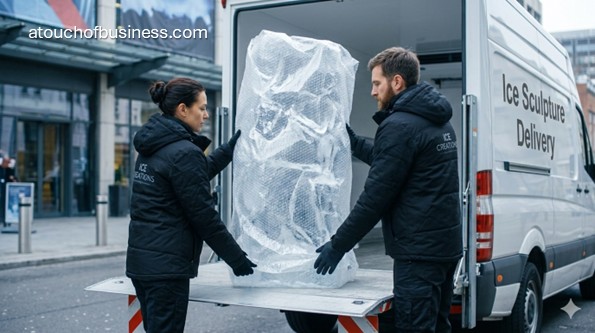
Overview of an Ice Sculpture Business
An ice sculpture business creates custom pieces for events. You may carve logos, wedding designs, centerpieces, drink luges, branded displays, bottle holders, or larger show pieces. Most work is quote-based. Most jobs are tied to a date and a delivery window.
With an office or studio-based setup, your public-facing side stays simple. Clients may visit by appointment, but much of the work happens behind the scenes. Your real startup focus is the studio, the freezer space, the carving tools, the lifting method, the booking system, and the delivery plan.
This business sits in the events world. That changes the pressure. Timing matters. Safety matters. Venue flow matters. A beautiful sculpture that arrives late or floods a table is still a failed job.
Typical customers include wedding clients, hotels, restaurants, venues, bars, corporate event planners, country clubs, and private party hosts. Some jobs are decorative. Some are functional, such as drink luges or chilled food displays. That difference matters because food-contact ice can trigger extra local health review.
The upside is clear. You can launch without a retail storefront. You can work by appointment. You can build around custom orders instead of daily foot traffic. The downside is just as clear. Ice melts. Events do not wait. Full-size carving blocks can weigh about 300 pounds, so your studio and delivery setup must be real from day one.
Is This Ice Sculpture Business The Right Fit For You?
Start with two questions. Does owning a business fit you? Does an ice sculpture business fit you?
Owning any business means pressure. You handle quotes, deadlines, equipment, payment collection, paperwork, and problems. In an ice sculpture business, you also deal with cold storage, wet floors, sharp tools, tight event timing, and customer expectations that are tied to weddings, parties, and corporate events.
You may love the idea of carving ice. That helps, but it is not enough. You also need to like the day-to-day work around it. Can you handle setup windows? Can you manage late changes? Can you work when other people are celebrating?
Ask yourself this once and answer it honestly: “Are you moving toward something or running away from something?” Starting an ice sculpture business only to escape a job, fix financial pressure, or prove something to other people is a weak reason to open.
This business fits people who like hands-on work, visual detail, event timing, and custom projects. It fits even better if you can stay calm when a venue changes the table location, the client wants a last-minute tweak, or the delivery window gets squeezed.
You also need a reality check. Your first thought may be about the art. The launch reality is different. You need freezer space, safe lifting, block supply, cleanup control, deposits, approvals, and a way to deliver on time.
If you skip owner conversations, you stay in guesswork. Talk only to owners you will not compete against. Choose people in another city, region, or market area. Ask practical questions like these:
- Which early jobs paid best: weddings, logos, luges, or live carving?
- Did you start by buying blocks or making your own clear ice?
- What caused the most trouble in year one: freezer space, transport, setup, or quoting?
- Which add-ons created the most stress at events: lighting, luges, teardown, or outdoor installs?
If you want a broader self-check before you commit, read How Passion Affects Your Business, Inside Advice From Real Business Owners, and Points To Consider Before Starting Your Business.
Step 1: Choosing Your Setup
Your first real decision is not the logo. It is the setup. For a studio-based ice sculpture business, your base model is simple: clients book you, you design the piece, you carve in your studio, you hold it frozen, then you deliver and set it up close to event time.
That setup keeps overhead lower than a public storefront. It also fits how this business usually works. Most customers do not need to walk in. They need fast quoting, clear design approval, reliable delivery, and a smooth event setup.
Keep your launch offer narrow. Start with a few clear services such as single-block sculptures, centerpieces, logo pieces, and limited drink luge work. If you skip this, your pricing gets muddy and your equipment list grows too fast.
Other models exist. Some operators focus on live carving. Some work festivals. Some do larger hospitality jobs. Those can come later. For startup, a studio model is easier to control.
Step 2: Testing Demand Before You Spend
An ice sculpture business looks exciting. That does not prove demand. You need to know who will pay for it in your area and when they will book.
Look at the customer groups first. Weddings, hotels, venues, country clubs, restaurants, bars, and corporate planners are common targets. Each group books differently. Each group also values something different. A wedding client may focus on appearance. A venue may care more about timing, drainage, and easy setup. A corporate client may care about logo accuracy and reliability.
Seasonality matters in this business. Holiday parties and winter events may feel like the obvious target, but indoor weddings, banquets, and brand events can bring work outside the cold season too. If you skip this step, you may lease more studio space than demand can support.
Before you build your full launch plan, read Supply And Demand and Estimating Profitability And Revenue. Those pages can help you think through volume, pricing, and whether your area can support the kind of ice sculpture work you want to sell.
Step 3: Learning The Real Workflow Of Ice Sculpture Jobs
An ice sculpture business is really a chain of linked steps. The job starts with an inquiry. Then comes design discussion, quote approval, deposit collection, carving, frozen holding, delivery, setup, cleanup, and final payment.
If you break the chain anywhere, the job suffers. A weak approval process can lead to carving the wrong logo. Poor freezer planning can damage finished work. A bad setup plan can leave meltwater where the venue does not want it.
Your booking system should feel practical from the start. The customer should be able to ask for a date, share the design idea, approve the concept, pay a deposit, confirm delivery timing, and know what happens after setup. This is an events business. Ease matters.
For an office or studio-based service, your workspace layout affects quality. Separate the design area, the admin area, the carving zone, the freezer zone, and the loading path. If you skip layout thinking, you create wasted motion, blocked access, and avoidable risk.
Step 4: Naming The Business And Building Your Digital Footprint
Your ice sculpture business needs a name that is easy to remember and easy to use online. Check business registration availability, then look at the matching domain and social handles. SBA points out that a business name, a domain name, a trademark, and a doing business as filing do different jobs. Do not assume one covers the others.
Keep the public-facing side simple at launch. You need a clean website, a branded email address, strong photos, and a way for people to request quotes. Since many clients will never visit your studio, your digital presence becomes part of your professional presentation.
Brand identity still matters even in a behind-the-scenes service. Business cards, basic signage if your location needs it, and a simple visual style can make your ice sculpture business look more established. If you need help thinking through this part, see Corporate Identity Package and Business Cards.
Step 5: Choosing A Business Structure
Before you take deposits, choose the legal structure. That choice affects registration, taxes, paperwork, and how you separate business activity from your personal life.
Many first-time owners compare a sole proprietorship with a limited liability company. Others may choose a partnership or corporation depending on who is involved. The right choice depends on your setup, your risk tolerance, your tax questions, and whether you will have partners or employees.
If you skip this, you can end up changing records after launch. That creates extra work. Read How To Choose A Business Structure, LLC Vs Sole Proprietorship, and How To Register A Business before you file anything.
Step 6: Registering The Business And Getting Tax Setup Done
Once you pick the structure, register it where required and get your Employer Identification Number from the Internal Revenue Service if your setup needs one. This number is commonly used for taxes, hiring, banking, and applications.
You may also need a doing business as filing if you will market the ice sculpture business under a name that differs from your legal name or entity name. State tax registration may also apply. If you plan to hire, state employer accounts for withholding and unemployment can also come into play.
Sales tax treatment can vary. Decorative pieces, delivered event items, and bundled services are not treated the same way everywhere. If you skip tax setup, you risk collecting the wrong amount or missing a required registration.
Useful background reads include Get A Business Tax ID, How To Register A DBA, and Business License And Permits.
Step 7: Handling Local Licenses, Zoning, And Studio Approval
Your city or county may require a general business license. Your state may have its own registration or licensing rules too. This part is local, so keep it practical.
For a studio-based ice sculpture business, zoning is one of the first real checkpoints. You need to know whether the address allows your type of use. Think beyond the desk area. You may have freezer storage, wet cleanup, block delivery, loading activity, and power tools.
You may also need to ask whether the unit needs a certificate of occupancy or a change of use approval before you open. That depends on the site and the local building office.
If your ice sculpture business will make drink luges or any sculpture that touches food or beverages, ask the local health department how that activity is treated. Ice is considered food under federal food guidance. That does not mean every decorative sculpture needs health approval. It does mean you should verify when food or drink contact is part of the service.
This is a good point to slow down and verify the basics.
- Federal: Get an Employer Identification Number if your setup requires it. Review workplace safety rules if you will have employees.
- State: Confirm entity filing, assumed name rules, tax registration, and any employer accounts.
- City Or County: Check business license rules, zoning, sign rules, and whether the unit needs occupancy approval before opening.
When you call local offices, ask direct questions. Is this address approved for a studio-based ice carving and cold storage business? Does the unit need occupancy approval? If we sell drink luges or food-contact displays, what extra review applies?
Step 8: Picking The Right Studio Space
A pretty office will not save a weak workspace. Your ice sculpture business needs a studio that supports the real job.
Look at access first. You need room for receiving blocks, moving them safely, carving them, storing finished pieces, and loading them for delivery. One common carving block format is around 40 inches by 20 inches by 10 inches and about 300 pounds. That changes everything about doors, ramps, aisles, tables, and lifting tools.
Utilities matter too. You need enough electrical capacity for freezers and tools. You also need water access and a cleanup plan because wet floors are part of the work.
If clients will visit by appointment, keep the front area clean and professional. That does not mean fancy. It means organized, safe, and ready to support quoting and approvals. If you skip this, your office or studio can feel unfinished even when your carving is strong.
Step 9: Setting Up The Studio Workflow
An ice sculpture business works best when the studio follows the job path. That usually means receiving blocks, carving, finishing, frozen holding, staging, and loading. Put the workspace in that order if you can.
Keep the admin side separate from the wet side. Design proofs, invoices, contracts, and client meetings should not fight with hoses, melting ice, and power tools. This is one of the main advantages of a studio setup. You can control the environment.
Think about capacity early. How many sculptures can you store at once? How many delivery jobs can you stage for one day? How many blocks can you handle without clogging the room? If you skip this, you can book work that your space cannot support.
Your studio layout also affects staffing. Even if you start alone, leave room for a helper, a delivery hand, or a second carver during peak dates.
Step 10: Buying The Core Ice Sculpture Equipment
The equipment list for an ice sculpture business is more specific than many first-time owners expect. Start with what you need to launch, not with every tool you may want later.
Core carving tools often include a chainsaw made for ice work, die grinders, an angle grinder, chisels, saws, picks, tongs, and a heat gun for finishing. You also need spare chains, burrs, discs, and other wear items.
Frozen storage comes next. Commercial chest freezers or similar frozen holding are common. Add temperature monitoring and a storage layout that lets you move pieces without damaging them.
Handling gear is not optional when full blocks are involved. A dolly, lift aid, hoist, straps, and a loading method matter. If you skip safe handling, the risk shows up fast in damage, injury, and lost time.
Your event setup kit should also be ready before launch. That can include drip trays, drain hoses, buckets, towels, and optional lighting. Decorative ice may be the product, but cleanup control is part of the service.
Step 11: Deciding Whether To Buy Blocks Or Make Your Own Ice
This choice changes startup cost, space needs, and workflow. Many new ice sculpture businesses start by buying clear carving blocks from a supplier. That keeps early capital lower and simplifies production.
Making your own clear blocks can make sense later, but it adds equipment, harvesting work, lifting needs, and more freezer planning. Public supplier information shows that smaller block systems can cost several thousand dollars, while larger equipment may be quote-based and tied to market conditions.
If you skip this decision and try to do both at once, you may spend too much too early. For launch, it is often smarter to match this choice to expected volume and local supply access.
Step 12: Building Your Pricing And Getting Paid
Ice sculpture pricing is usually quote-based. It often depends on block count, size, detail, delivery distance, setup, lighting, and whether the piece is decorative or functional.
A simple way to start is to build a base price for standard pieces, then add line items for delivery, setup, lighting, drink luges, or larger multi-block work. Logo pieces and custom branded work often need their own quoting process because approval and precision matter more.
Do not price from guesswork. Build your quote around the real job: design time, block use, carving time, freezer use, delivery, setup materials, and risk.
You also need a payment system before launch. Set up business banking, invoicing, deposits, and card payment options. If you skip this, you create friction at the worst time. Review Pricing Your Products And Services, How To Open A Business Bank Account, and Merchant Account if you need background.
Step 13: Planning Startup Costs And Funding
Your startup budget for an ice sculpture business usually includes registration, studio deposit, freezer equipment, carving tools, handling gear, display materials, website setup, working capital, and delivery planning. If you decide to make your own ice, equipment costs rise.
Some public equipment prices are easy to find. Smaller block ice machines have been listed in the range of several thousand dollars. A carving block hoist has also been publicly listed at a few thousand dollars. Commercial chest freezers can range from a few hundred dollars to over one thousand depending on size. Power carving tools also vary by brand and setup.
That does not create a universal startup total. Local rent, build-out, transport, supplier access, and your service range can move the number a lot. If you skip working capital, you may open with tools but without enough cash to cover deposits, fuel, supplies, or slow-paying clients.
Funding can come from savings, equipment financing, a line of credit, or small business loan options. If you need to look deeper at financing, see How To Get A Business Loan.
Step 14: Setting Up Suppliers And Vendor Relationships
Your ice sculpture business depends on suppliers more than many service businesses do. You may need a clear block supplier, tool supplier, freezer source, replacement-parts source, and packaging or setup supplier.
Start with reliability, not just price. A block supplier who cannot support your event dates can cost you far more than a small price difference. The same goes for tool parts. If a chain, burr, or grinder fails near a booking date, you need a backup plan.
Vendor setup should happen before you market hard. If you skip this, a paid order can show you problems you should have solved earlier.
Step 15: Covering Insurance And Risk Planning
An ice sculpture business brings obvious risk points. Wet floors, sharp tools, heavy lifting, property damage, late delivery, and event injury claims all deserve attention. If employees are involved, workplace safety rules matter even more.
Insurance is part of launch planning even when a policy is not specifically named by law for your setup. Speak with a licensed insurance professional about your studio, your delivery work, and your event setup exposure. Explain whether you do drink luges, food-contact displays, live carving, or owner-only work.
Risk planning also means process. Use written approvals. Use clear delivery windows. Confirm sturdy tables and drip control with the venue. Decide who handles teardown. If you skip this, small assumptions can turn into expensive problems.
For a wider overview, read Business Insurance.
Step 16: Hiring Help And Defining Roles
You can launch an ice sculpture business as a one-person operation, but not every job works well that way. Peak dates, larger pieces, and event setup windows may call for help.
Early roles may include a delivery helper, setup support, admin support, or a second carver. Training should focus on safe lifting, wet-floor awareness, tool safety, freezer handling, and how to set trays, hoses, and buckets correctly at venues.
If you skip role clarity, people tend to stand around when timing matters. Even a small team needs a simple plan for who loads, who carves, who confirms the setup area, and who handles client contact at the event.
If you are weighing a solo launch versus a small team, Pros And Cons Of Running A One-Person Business can help frame the tradeoff.
Step 17: Handling Day-To-Day Work Before Opening
Do not picture only the finished sculpture. Picture the normal day. You answer inquiries, review event dates, create quotes, approve artwork, check freezer space, receive blocks, carve, clean up, prepare the delivery kit, and collect payment.
That is the real ice sculpture business. The creative work matters, but the daily structure keeps it alive.
A short pre-launch day may look like this: answer a venue email in the morning, finalize a logo proof, harvest or receive blocks, carve for several hours, return the piece to frozen storage, load trays and hoses, then confirm the evening delivery window. That routine tells you a lot about fit.
Step 18: Creating A Simple Launch Marketing Plan
Your first marketing job is not to be everywhere. It is to look real, easy to book, and worth contacting.
For an ice sculpture business, strong photos matter more than broad claims. Build a clean gallery of real work. Show logo pieces, wedding pieces, centerpieces, and setup shots if you have them. Add a quote request path that is easy to use.
Then focus on direct early channels. Reach out to venues, wedding planners, hotels, caterers, restaurants, and event coordinators. Make your pitch practical. Show what you offer, where you deliver, how booking works, and what the setup requires.
Because this is an events business, reliability is part of your marketing. Fast replies, clear approvals, and polished setup photos can do more than a large ad spend. If you skip booking clarity, interest does not turn into paid work.
If you need a wider planning frame, read How To Write A Business Plan and Startup Steps.
Step 19: Watching For Red Flags Before Launch
Some problems are warning signs. Pay attention to them.
An ice sculpture business is not ready if you do not have a zoned studio, a safe way to move blocks, enough freezer space, a delivery plan, and a real quoting system. It is also not ready if you plan to offer drink luges without checking local food-contact rules.
Other early warning signs include weak demand, underused office costs, poor layout, no supplier backup, and no process for approvals or deposits. If you skip these red flags, you may open because you are excited, not because you are ready.
Step 20: Getting Ready To Open
Pre-opening work in an ice sculpture business should feel practical. You are not trying to impress yourself. You are trying to prove that the business can handle a real job without surprises.
Run a full test from carving to delivery. Carve a standard piece. Store it. Load it. Deliver it. Set the tray and hose. Watch the melt. Clean it up. That single test can reveal problems in your timing, vehicle fit, staging, and setup process.
This is also the stage where compliance and readiness come together.
- Paperwork Ready: Business registration, tax setup, local license checks, and any location approvals are complete.
- Studio Ready: Freezers work, temperatures are tracked, aisles stay clear, and the loading path makes sense.
- Tool Kit Ready: Chainsaw, grinders, hand tools, spare parts, lifting tools, safety gear, and cleanup materials are in place.
- Event Kit Ready: Drip trays, hoses, buckets, towels, lighting, and table setup supplies are packed.
- Customer System Ready: Quote form, approval form, deposit method, invoice process, and delivery terms are live.
- Supplier Side Ready: Block source, freezer support, tool parts, and backup vendors are confirmed.
- Test Run Done: You have completed at least one full practice job from production to cleanup.
Pre-Opening Checklist For An Ice Sculpture Business
Use this final check before you take your first paid booking. Keep it simple. Keep it honest.
If you cannot check most of these off, the ice sculpture business is not fully ready yet.
- Business name chosen and digital presence set up.
- Legal structure chosen and registration completed where needed.
- Employer Identification Number obtained if your setup requires it.
- Doing business as filing checked if you use a trade name.
- State tax and employer registration reviewed.
- City or county business license path confirmed.
- Zoning verified for the studio address.
- Certificate of occupancy or change-of-use question settled for the unit.
- Health department answer documented if you will offer food-contact or drink-contact ice.
- Studio lease and utility needs confirmed.
- Freezer setup installed and tested.
- Block supply source locked in, or in-house ice equipment tested.
- Core carving tools bought and tested.
- Handling and lifting method in place for full blocks.
- Safety gear and cleanup controls ready.
- Quote form, approval process, deposit policy, and invoice system ready.
- Business banking and payment collection active.
- Portfolio photos prepared for sales use.
- Delivery vehicle plan tested.
- Drip trays, hoses, buckets, and optional lighting packed and tested.
- At least one full practice run completed.
FAQs
Question: What is the simplest way to start an ice sculpture business?
Answer: Start with a studio-based service that takes custom orders by quote. Keep your first offer narrow, such as centerpieces, logo pieces, and single-block sculptures.
Question: Do I need a business structure before I take deposits?
Answer: It is smart to choose your structure before you start taking deposits. That choice affects registration, taxes, banking, and how you separate business activity from personal activity.
Question: Do I need an Employer Identification Number for an ice sculpture business?
Answer: Many owners do, especially if they hire staff, open a business bank account, or apply for licenses. The Internal Revenue Service issues an Employer Identification Number for free.
Question: What permits or licenses should I check before opening?
Answer: Check for state registration, local business license rules, zoning approval, and any building or occupancy requirements for your studio. Rules vary by state, city, and county.
Question: When does an ice sculpture business need health department approval?
Answer: Ask before opening if your ice will touch drinks or food, such as with drink luges or food displays. Decorative sculptures may be treated differently, so get the answer from your local health department.
Question: Can I run an ice sculpture business from a commercial studio without walk-in traffic?
Answer: Yes, that is a common startup model. Clients can book by phone, email, or appointment while production happens behind the scenes.
Question: Should I buy carving blocks or make my own clear ice at the start?
Answer: Many new owners buy blocks first because it lowers early equipment cost and complexity. Making your own ice adds more machines, more handling, and more freezer planning.
Question: What equipment do I need to open an ice sculpture business?
Answer: You need carving tools, frozen storage, safe handling gear, and a delivery setup. Common items include a chainsaw, die grinders, chisels, tongs, freezers, drip trays, hoses, buckets, and lifting aids.
Question: How much space does the studio need?
Answer: You need enough room to receive blocks, carve, store finished work, and load deliveries safely. The layout matters as much as the square footage.
Question: What drives startup cost the most in an ice sculpture business?
Answer: The biggest drivers are studio rent, freezer capacity, tool quality, handling equipment, and whether you buy blocks or make your own. Delivery setup can also raise startup cost fast.
Question: How should I price my first ice sculpture jobs?
Answer: Build quotes around block use, carving time, delivery, setup, and add-ons like lighting or luges. Do not copy a random flat price if your job size and travel distance are different.
Question: What insurance should I ask about before launch?
Answer: Start by asking a licensed insurance professional about liability, property, and vehicle-related risk. If you have employees, you also need to review workers’ compensation and other state-required coverage.
Question: What does the daily workflow look like in the first phase?
Answer: Most days include answering inquiries, sending quotes, approving designs, carving, storing finished pieces, and preparing for delivery. Event days also include setup, melt control, cleanup, and final payment follow-up.
Question: Who should I hire first if I cannot do everything alone?
Answer: A delivery or setup helper is often the first useful role. Some owners also add part-time admin help for quotes, scheduling, and deposits.
Question: What should I watch in the first month for cash flow?
Answer: Track deposits, supply purchases, freezer costs, rent, and delivery expenses closely. Event work can bunch up around certain dates, so you need working cash between jobs.
Question: What early systems or tech should be ready before opening?
Answer: Have a quote process, invoice system, payment method, calendar, and design approval process ready. You also need a simple way to store customer artwork, event details, and delivery notes.
Question: What basic policies should I have before I take the first order?
Answer: Put deposits, approvals, delivery timing, setup terms, and cancellation rules in writing. Also decide who handles teardown and how venue damage concerns will be addressed.
Question: How should I market an ice sculpture business right after opening?
Answer: Start with strong photos, a simple website, and a clear quote request path. Then reach out to venues, wedding planners, hotels, caterers, and event coordinators in your area.
Question: What are common startup mistakes in an ice sculpture business?
Answer: Common problems include opening before demand is proven, renting more space than needed, skipping zoning checks, and underestimating delivery and setup work. Another big one is offering food-contact pieces before confirming local health rules.
51 Practical Tips for Starting Your Ice Sculpture Business
Starting an ice sculpture business takes more than carving skill.
You need the right setup, the right tools, clear legal checks, and a studio that can handle frozen storage, wet cleanup, and safe delivery prep.
These tips follow the startup path from fit and validation through pre-opening checks, so you can get ready to open with fewer surprises.
Before You Commit
1. Make sure you like the real work, not just the finished sculpture. This business includes quoting, freezer checks, lifting, cleanup, delivery timing, and venue coordination.
2. Be honest about pressure tolerance. Event work can mean tight deadlines, last-minute changes, and jobs that must be ready for one exact date and time.
3. Decide whether you want a studio-based service or a more public event model. A studio-based setup is often easier to launch because most work happens behind the scenes.
4. Talk only to owners you will not compete against. Pick people in another city or market and ask what caused the most trouble in year one.
5. Check your physical readiness before you buy anything. Full carving blocks can be very heavy, so safe handling is part of the business from day one.
6. Match your startup plan to your actual skill level. If your carving skill is still growing, start with simpler pieces instead of promising large custom installations.
Demand And Profit Validation
7. Identify which local customers are most likely to buy first. Wedding planners, hotels, venues, country clubs, restaurants, and corporate event planners are common early targets.
8. Validate demand by season, not just by idea. Holiday work may look strong, but your year-round demand may depend on weddings, banquets, and indoor corporate events.
9. Separate decorative work from functional work when you study demand. A centerpiece buyer is not always the same as a drink luge or branded logo client.
10. Look at how often your likely customers host events that fit ice sculpture work. If that volume is low, your studio costs may outrun your booking pace.
11. Estimate profit by job type before you launch. A simple single-block sculpture, a logo piece, and a multi-block display can have very different labor, setup, and delivery demands.
12. Do not assume demand just because the business looks impressive online. Local demand must support your freezer costs, supply costs, and time-sensitive delivery work.
Business Model And Scale Decisions
13. Start with a narrow service list. Single-block sculptures, centerpieces, and logo pieces are easier to quote and easier to produce than large custom installations.
14. Decide early whether clients will visit your studio by appointment or whether the business will stay mostly behind the scenes. That choice affects layout, presentation, and lease needs.
15. Keep live carving as a later add-on unless you already have the tools, confidence, and event handling ability. It adds timing pressure and public safety concerns.
16. Choose whether you will buy clear carving blocks or make your own ice. Buying blocks often lowers early complexity, while making your own adds equipment and harvesting work.
17. Limit your delivery range at the start. Longer trips add risk, melt exposure, fuel cost, and more chances for timing problems.
18. Define what you will not offer before launch. Clear limits help you avoid taking jobs your space, tools, or skill level cannot support yet.
Legal And Compliance Setup
19. Choose your business structure before you take deposits. That affects registration, taxes, banking, and how you separate business activity from personal activity.
20. Check whether you need a doing business as filing if your brand name differs from your legal name or entity name. This is a basic detail that is easy to miss early.
21. Get an Employer Identification Number if your setup requires one. Many owners need it for banking, taxes, hiring, or license applications.
22. Verify sales tax treatment with your state tax agency before opening. Tax treatment can vary depending on whether you are selling a delivered product, a service, or a bundled event item.
23. Check local business license rules before you sign a lease. A simple studio does not mean you can assume local approval.
24. Confirm zoning for ice carving, freezer storage, delivery activity, and wet cleanup at your planned address. If you skip this, you could lease a space you cannot use as planned.
25. Ask the building department whether the unit needs a certificate of occupancy or a change of use approval. This can matter even when the space looks ready.
26. Contact the local health department if any sculpture will touch drinks or food. Decorative ice and food-contact ice may be treated differently, so get the answer before you advertise those services.
Budget, Funding, And Financial Setup
27. Build your startup budget around the real cost drivers. Studio rent, freezer capacity, tool quality, handling gear, and delivery setup matter more than a fancy office area.
28. Keep working cash in the plan, not just equipment. You still need funds for blocks, fuel, utilities, replacement parts, and other startup spending before jobs pay out.
29. Compare the cost of buying blocks versus making your own before you commit. In-house ice production can raise startup cost fast because you may need specialized equipment and more space.
30. Set up business banking before you start collecting deposits. Clean records make it easier to track startup spending and separate personal transactions from business ones.
31. Choose a payment method that supports deposits and final invoices. Event clients expect an easy way to pay without delays.
32. Build pricing from the job itself, not from guesswork. Consider block count, carving time, delivery distance, setup materials, and special add-ons like lighting or luges.
Location, Build-Out, And Equipment
33. Pick a studio with a practical loading path. Doors, ramps, aisles, and staging space matter because carving blocks can be large and heavy.
34. Check electrical capacity before you sign the lease. Freezers and power tools can place demands on a space that a basic office unit may not handle well.
35. Make water access and cleanup part of the location decision. Ice carving creates wet floors, and poor cleanup control can create safety problems fast.
36. Set up the studio in work order. Receiving, carving, finishing, frozen storage, and loading should flow in a way that reduces extra movement.
37. Buy only the core carving tools first. A chainsaw, grinders, hand tools, spare consumables, and finishing tools will cover more startup work than a long list of specialty items.
38. Plan frozen storage before your first booking, not after. You need room to hold finished pieces safely without damaging them during staging or movement.
39. Add safe handling gear early. Dollies, lifting aids, straps, and other movement tools are part of startup readiness, not optional extras.
40. Build an event setup kit before launch. Drip trays, drain hoses, buckets, towels, and optional lighting should be ready long before the first paid job.
Suppliers, Contracts, And Pre-Opening Setup
41. Open supplier accounts before you market hard. A reliable source for blocks, tool parts, and freezer-related items is part of launch readiness.
42. Keep backup suppliers in mind from the start. A missed block delivery or failed tool part can ruin a time-sensitive event job.
43. Use written approvals for custom designs. This helps prevent carving the wrong name, logo, or shape after the client thought they approved something else.
44. Put deposit terms, cancellation terms, delivery windows, and setup responsibilities in writing before opening. Simple policies protect both your schedule and your cash flow.
45. Clarify who handles teardown and meltwater at the venue. If you leave this vague, the event site may expect a different level of service than you planned.
46. Run a full practice job before launch. Carve a piece, store it, load it, deliver it, set it up, and clean it up so you can spot weak points in your system.
Branding And Pre-Launch Marketing
47. Build your early brand around clarity and trust. Strong photos, a clean website, and a simple quote request path matter more than a flashy slogan.
48. Create a small launch portfolio before you open. Real examples of centerpieces, logo work, or single-block sculptures make it easier for buyers to picture what you do.
49. Reach out to planners, venues, hotels, caterers, and restaurants with a focused offer. A narrow, clear service pitch is easier to understand than a long list of possible ideas.
Final Pre-Opening Checks And Red Flags
50. Do not open until your paperwork, studio, freezer setup, payment system, and event kit are all ready at the same time. Opening with half-finished systems usually creates avoidable stress right away.
51. Treat weak demand, poor layout, no lifting plan, and unverified food-contact rules as stop signs. Fix them before launch, because these are the kinds of problems that can damage the business before it really starts.
What Real Ice Sculpture Pros Can Teach You
Reading interviews with people already in the business can save you time and help you think more clearly before you spend money.
You can pick up practical lessons about getting started, handling tools and ice safely, building your setup, finding your angle in the market, and understanding what the work really looks like day to day.
- Fort Worth Inc. — Paul Miller of Stellar Ice Sculptures
- Today’s Machining World — Roland Hernandez of Carving Ice
- Carveco — Jim Duggan of ICE Sculpture, INC.
- Art As Worship — Interview With Jim Duggan
- Shoutout SoCal — Rex Covington of LA Ice Art
- Tusk — Julian Lee “Iceman Julian”
- YM Liverpool — Mat Foster of Glacial Art
Related Articles
- Starting an Ice Hotel
- Starting a Kinetic Sculpture Design Business
- Start a Party Rental Business
- Start a Profitable Wedding Venue Business
- How To Start Your Catering Business
- How To Start Your Holiday Light Installation Business
- Starting a Wedding Invitation Business
- Start a Bridal Boutique
- How To Start a Bridal Makeup Business
- Start a Children’s Party Planning Business
- How To Start a Party Bus Business
- How To Start a Flower Shop
Sources:
- Cascade Crystal Ice: Cascade FAQ
- Clinebell Equipment Company: S-9 Block Ice, S-21 Block Ice, S-35 Block Ice, CB300X2D Details, Carving Block Hoist, CB300 Lifter Bar, Help Center
- Ice Sculpture Inc: Corporate Gallery
- Internal Revenue Service: Employer ID Number
- JB Prince: Ice Carving Tools
- Occupational Safety And Health Administration: Walking Working Surfaces, Machine Guarding Rules
- U.S. Food And Drug Administration: Packaged Ice Safety, FDA Food Code, Food Code 2022
- U.S. Small Business Administration: Choose Business Name, Federal State Tax IDs, Register Business, Licenses Permits, Business Location, Business Bank Account, Startup Costs, Fund Business, Microloans, Business Structure, Business Insurance