
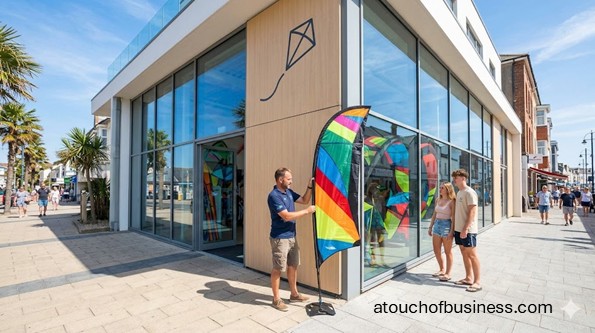
Starting A Kite Shop With The Right Storefront Setup
A kite store is a specialty retail business that sells kites, flying lines, reels, tails, windsocks, bags, and replacement parts through a physical storefront. Some stores stay focused on beginner and family products. Others also carry sport kites, framed and foil models, and a smaller range of higher-pull power kites.
Most people think a kite store is mainly a gift shop with colorful stock on the wall, but a good one is really built around product fit. You have to match the right kite to the customer’s skill level, local wind conditions, and how they plan to use it. That affects your inventory, your display plan, and the kind of help customers expect at the counter.
Most people think foot traffic is the whole game, but a kite store also depends on smart buying, clear labeling, and enough accessories and parts to support the products you sell. If customers buy a kite and later need line, a spar, a tail, or help choosing something better for the wind, your store needs to be ready for that.
The biggest advantages are clear product identity, gift appeal, and the chance to serve both beginners and hobby buyers. The biggest risks are weak location fit, weather-sensitive demand, carrying the wrong mix, buying too much too early, and opening with poor inventory discipline.
Is A Kite Store The Right Fit For You?
A kite store can be a good fit if you like retail, enjoy helping customers in person, and do not mind learning product details. This is not just a buying-and-selling business. You need to guide people, explain differences between products, and help beginners avoid bad choices.
You also need to like the day-to-day work. That means receiving inventory, tagging products, arranging displays, answering repeated beginner questions, handling returns, tracking stock, and staying organized in a space that needs to look inviting. If that sounds draining, the business may not fit you even if you like the idea of kites.
Passion matters here. A storefront business has slow days, messy days, and days when customers need more guidance than you expected. Real passion for the work helps you stay steady when the novelty wears off and the routine takes over.
Ask, Are you moving toward something or running away from something? Do not start a kite store only to escape a hated job, solve immediate financial pressure, or chase the status of being a business owner. Those reasons usually create bad decisions at the exact time you need clear thinking.
You also need a realistic view of ownership. A kite store ties you to lease decisions, opening hours, stock control, customer service, and cash flow. The work is simple to picture from the outside, but the pressure comes from many small decisions piling up at once.
Before you commit, talk only with owners you will not compete against. Speak with people in another city, region, or market area. Use those conversations to ask real questions about product mix, slow sellers, supplier issues, staffing, and how they chose their location. That kind of firsthand owner insight is hard to replace, even when their path is not exactly the same as yours.
Step 1: Decide What Kind Of Kite Store You Are Opening
Your first big decision is not the lease. It is your offer. A kite store can lean toward family and beginner products, sport and stunt kites, decorative wind art, or a mixed shop with accessories and repair parts. That choice changes your suppliers, your shelf plan, your staffing needs, and your startup costs.
For a first storefront, a focused mix is usually safer than trying to be everything. Many new owners are better off starting with single-line kites, beginner-friendly sport models, lines, reels, tails, windsocks, bags, and replacement parts. That gives customers a reason to come in at different price points without forcing you into a wide, expensive opening inventory.
If you plan to carry power or traction kites, treat that as a separate decision. Those products create more pull and need clearer safety guidance. They should not be mixed casually into the same sales approach you use for family kites.
Write down your opening categories before you do anything else:
- Beginner and family kites
- Sport or stunt kites
- Optional power kites
- Flying lines, reels, and winders
- Tails, windsocks, and wind art
- Bags, small accessories, and replacement parts
Step 2: Validate Demand In Your Area
A kite store only works when your local market makes sense for it. You need people who will buy, places where they can fly, and enough curiosity or hobby interest to support repeat visits. That means looking at local parks, beaches, open fields, seasonal traffic, tourist patterns, and how many families or hobby buyers already shop nearby.
Do not guess. Spend time checking local supply and demand before you invest in rent and stock. Visit nearby retail areas. Watch foot traffic. Look at what local gift shops, toy stores, hobby stores, and sporting goods stores already carry. If someone else is already serving the beginner market well, you may need a sharper specialty angle.
You also need to think about local wind conditions. A store that stocks mostly light-wind display products may struggle in an area where customers want stronger, more active flying. A store that leans too technical may lose gift and family buyers. Your market does not just determine whether demand exists. It shapes which products deserve shelf space.
While you are validating demand, decide who you want to attract first. In most kite stores, the most realistic opening customer groups are:
- Families buying a first kite
- Gift shoppers who want something visual and fun
- Beginners who want a ready-to-fly product
- Hobby flyers who need better lines, parts, or an upgrade
Step 3: Choose Your Structure And Business Name
Once the concept is clear, choose how the business will exist legally. This decision affects taxes, paperwork, liability, banking, and how formal your setup needs to be. Spend time choosing your legal structure before you sign leases or submit vendor paperwork.
Your public name matters too. A kite store name needs to look good on a sign, work on receipts, and make sense online. If your trading name is different from your legal name, you may need a Doing Business As filing depending on state and local rules.
Keep the name practical. It should fit a storefront, not just a logo. Say it out loud. Imagine it on a window, a business card, and a sales receipt. If it feels awkward in everyday use, keep working.
Step 4: Register The Business And Handle Tax Setup
After choosing the structure, register the business with the right state office and get an Employer Identification Number from the Internal Revenue Service if your setup requires one. Even when a sole owner could technically do less, a proper tax and banking setup makes a retail launch much easier.
A kite store also needs state sales tax planning where retail merchandise is taxable. You need to know what registration is required before you open, how sales tax will be collected at the point of sale, and what records you need to keep from day one.
Do not stop at state filing. A retail business often needs city or county steps too. That is where many first-time owners get surprised. Start your review of local licenses and permits early so you are not waiting on approvals after the rent clock starts.
Step 5: Check Zoning, Occupancy, And Sign Rules Before Signing A Lease
This step matters more than many people expect. A good-looking storefront is not enough. You need to know whether retail sales are allowed at that address, whether the current legal use fits your plan, and whether the space needs updates before you can open.
Ask direct questions before you sign anything. Is the location already approved for general retail? Does the current certificate of occupancy match the use you want? If you plan to change the layout, add walls, or do visible sign work, ask what approvals come first.
For a kite store, the space also needs to function well. You need visible frontage, enough wall and hanging space for displays, a back area for stock and simple assembly work, and a checkout spot that does not block movement. A low-rent space with poor visibility can cost you more than a better location with stronger traffic and easier customer access.
Step 6: Pick A Storefront That Fits The Business
A kite store is a visual retail business. People should understand what kind of shop it is before they walk in. That makes location, frontage, signage, and layout especially important.
Look for a storefront that supports these basics:
- Good visibility from the street or walkway
- Enough wall and ceiling space for display
- Room for receiving and storing boxed inventory
- A clear front counter and checkout area
- Comfortable movement for families and casual browsers
- Reasonable parking or walk-up access
Pay attention to the stockroom too. A kite store may look light and airy in the customer area, but you still need organized storage for lines, tails, spars, accessories, replacement parts, bags, and backup inventory. Poor storage turns reordering, counting, and returns into daily frustration.
Step 7: Build Your Product Mix And Supplier List
This is where the business becomes real. You need suppliers that fit your concept, and you need an opening order that serves beginners without trapping you in too much slow-moving stock. Vendor choices affect freight, minimum orders, returns, replacement part access, packaging, and how easily you can reorder winning items.
Start with a short list of categories you know you can support well. A kite store should not open with a wall full of products the owner cannot explain. Customers need help understanding skill level, wind range, line setup, and whether a kite is truly beginner friendly.
Replacement parts deserve more attention than new owners usually give them. If you sell framed kites, sport kites, or anything that may need line, spars, or small repair help later, parts support matters. It helps repeat business and makes the store more credible.
When comparing suppliers, look at:
- Dealer approval requirements
- Whether they ask for resale paperwork
- Opening order expectations
- Freight terms
- Product depth for your customer mix
- Availability of accessories and replacement parts
- How clear their product information is for staff training
Step 8: Plan Inventory With More Discipline Than Excitement
One of the easiest ways to damage a new retail business is to overbuy during the opening rush. A kite store makes this risk worse because the products are visual and fun. It is easy to fall in love with items that look great on display but do not move well in your area.
Your opening inventory should be broad enough to look like a real store, but controlled enough that you can reorder based on demand. That means carrying a sensible spread of price points and keeping categories balanced. If you put too much money into a few large or technical products, you may not have enough left for beginner stock, line, tails, or parts that sell more steadily.
Be careful with specialty items. A few products can help define the shop. Too many can turn the floor into a museum instead of a store.
Step 9: Design The Floor Around How People Shop
A kite store works best when the sales floor helps customers make quick sense of the categories. Group products by real buying logic, not by whichever boxes arrived first.
A practical layout often includes beginner and family kites near the front, sport or stunt kites grouped clearly, accessories and small add-ons near the counter, and a back-stock area that supports fast replenishment. If you carry power kites, keep them distinct from children’s and beginner products so the sales message stays clear.
Good labels matter here. Use plain wording that helps people choose. Skill level, wind range, and whether the product is ready to fly are much more useful than vague shelf tags. This is one of those small details that changes whether your kite store feels helpful or confusing.
Store format also changes theft risk, storage needs, and how returns are handled. Build the layout so staff can see the floor, restock quickly, and keep small accessories from disappearing into visual clutter.
Step 10: Set Up Payments, Banking, And Recordkeeping Before Inventory Arrives
Your systems need to be ready before the first shipment lands. That includes point-of-sale setup, tax settings, item records, barcodes if you use them, receipt flow, refund handling, and a simple way to track what sells and what does not.
A retail launch also needs proper banking in place. Take care of opening a business bank account early so supplier payments, deposits, card processing, and daily cash handling do not get mixed with personal transactions.
Keep the recordkeeping simple at first, but do not ignore it. You need a clean process for purchase records, supplier invoices, inventory receiving, tax records, refunds, and daily sales totals. A kite store may feel like a product business first, but the back-office discipline is what keeps the opening months from becoming chaos.
Step 11: Work Out Startup Costs, Pricing, And Funding
There is no reliable national startup number that fits every kite store. Costs change too much based on rent, whether the space already supports retail use, fixture needs, inventory depth, signage, staffing, and how broad your product mix will be.
Still, you can plan the cost categories clearly. Most storefront launches will need money for lease deposits, light build-out, displays, opening inventory, point-of-sale hardware, software, signage, insurance, state and local filing costs, and a cash buffer for reorders and slow early weeks.
Pricing needs just as much thought as buying. A kite store should price by product class, quality level, included gear, and customer type. Beginner kites, sport kites, accessories, and replacement parts should not all follow the same logic. Small add-ons may support margins differently than larger boxed products.
Funding options usually come down to owner savings, outside capital, or a loan. Be careful about borrowing too much just to make the store feel fully built out on day one. A cleaner opening with tighter inventory is often safer than a big opening with debt and slow sellers.
Step 12: Set Up Insurance, Policies, And Internal Documents
A kite store needs more than products and a cash register. You also need policies, forms, and basic internal documents that help the business run smoothly from the start.
At a minimum, create a clear return policy, a simple receiving checklist, stock-count routines, vendor contact records, and opening and closing checklists. If you will handle warranty questions or replacement-part issues, write down how those should be handled so the answer is consistent every time.
Insurance belongs in this step too. Your exact coverage needs depend on your setup, the lease, and whether you have employees, but the store should not open before you understand the basic insurance coverage the business needs.
Step 13: Hire Only When The Store Actually Needs It
Many kite stores can begin as owner-operated businesses. That keeps payroll pressure down and lets you learn what customers ask for before you build a team. If you can handle the hours, that is often a practical way to start.
If you do hire, train for product guidance, not just checkout. Staff should know how to explain skill levels, talk about wind conditions in simple terms, guide customers toward the right starter product, and avoid casual recommendations for higher-pull kites. In a kite store, bad advice creates bad experiences fast.
New hires also need the normal employment setup handled correctly. That includes the tax and verification paperwork required for payroll and legal hiring. Do not treat that as an afterthought just because the store is small.
Step 14: Create The Brand Basics And Customer-Facing Identity
Your kite store does not need a complicated brand package at launch, but it does need a clean public identity. That includes the store name, sign, receipts, simple printed materials if you use them, and a digital presence that shows people what you sell, where you are, and when you are open.
Keep the message clear. Are you the family-friendly beginner shop? The sport-kite specialist? The general kite and wind-art store? Your sign, your window, and your first customer impressions should all answer that quickly.
Do not forget the local sign rules. Exterior signage often needs approval before installation. Handle that early so your storefront does not sit half-finished while you wait.
Step 15: Get Ready For The Daily Work
Before opening day, picture a normal day in your kite store. You unlock the door, check the counter, make sure the displays still look clean, receive a shipment, update stock, answer questions from a family buying their first kite, help another customer replace flying line, and handle a return or exchange. Later you restock, review what sold, and decide whether anything needs reordering.
That is the real business. Not just the sign. Not just the opening inventory. The daily routine is where your setup either supports you or fights you.
For this kind of retail business, a small back-room bench or work area helps more than people expect. You may need space to inspect products, sort parts, organize lines and tails, or prepare stock before it reaches the floor.
Step 16: Plan A Simple Launch, Then Test Everything
Do not make opening day your first full-speed test. Run through the business before customers see it. Test the point of sale, tax settings, card payments, receipt flow, shelf labels, return process, and daily opening routine.
Walk the floor as if you are a first-time customer. Can you tell what is for beginners? Can you spot accessories easily? Can a parent understand which section to start in? Can a hobby flyer find lines or parts without asking three questions?
Your launch plan can stay simple. You need an opening date, opening hours, staffed coverage if applicable, basic store presentation, and a clear message about what the shop offers. For a first launch, clarity beats noise.
Step 17: Watch For Red Flags Before You Commit
Some warning signs should slow you down right away. A poor location, weak visibility, vague supplier planning, too much specialty stock, unclear customer focus, or uncertainty about local approvals can all turn a fun idea into an expensive problem.
Another red flag is building the store around what you like instead of what customers are likely to buy. That is easy to do in a specialty retail business. Stay grounded. If your area supports beginners and gift shoppers first, your opening inventory has to reflect that even if you personally love advanced products.
Pay attention if you keep avoiding the hard questions. If you cannot explain who your first customers are, what your best opening categories are, how your layout will work, or how much cash you need to get through the first stage, you are not ready yet.
Step 18: Use An Opening Checklist Before You Unlock The Door
A kite store should not open until the legal, physical, and operational pieces are lined up. This is the point where you slow down, verify everything, and remove last-minute surprises.
- The business is registered and tax setup is in place
- The address is approved for your type of retail use
- The certificate of occupancy issue has been settled if one applies
- Any required sign approval has been handled
- Supplier accounts are active and opening inventory has been received
- The point of sale, receipts, and card payments work properly
- Shelves and displays are labeled in a way customers can understand
- Accessories and replacement parts are organized and easy to find
- Return and exchange rules are ready at the counter
- Insurance is active
- Hiring paperwork is ready if you have staff
- The store looks finished, not half-ready
If your kite store is not ready in one of those areas, fix it before opening. A rushed launch does not feel brave. It usually feels expensive a few weeks later.
FAQs
Question: Do I need a special license to open a kite store?
Answer: There is no universal federal license for a standard kite shop. What you need usually comes from your state, city, or county, such as business registration, sales tax setup, and local retail approvals.
Question: What legal structure makes sense for a new kite store?
Answer: Many owners compare a sole proprietorship and an LLC first. The best choice depends on liability, taxes, paperwork, and whether you want a more formal setup from the start.
Question: Do I need an EIN before I open the store?
Answer: Many new owners get one early because banks, payroll providers, and some filings ask for it. The IRS issues EINs directly at no cost.
Question: Do I need sales tax registration before I sell my first kite?
Answer: In states that tax retail goods, you usually need to register before taking taxable sales. This also matters when suppliers ask for resale paperwork.
Question: What should I confirm about a store location before I sign the lease?
Answer: Make sure the address can legally be used for retail and ask whether the space already has the right occupancy status. Also ask about sign rules, parking, delivery access, and any work the landlord expects you to handle.
Question: Can I open a kite store without carrying every type of kite?
Answer: Yes. A smaller opening mix is often safer than trying to cover every niche at once.
Many first-time owners do better with beginner items, a few sport models, core accessories, and parts that support easy reorders.
Question: Should I stock power kites right away?
Answer: Not always. They can add risk, training needs, and a different sales conversation, so many new stores wait until the core business is steady.
Question: Is it worth carrying repair parts when I first open?
Answer: Usually yes, especially if you sell framed kites or hobby products. Parts and simple repair help can bring customers back sooner than a full new-kite purchase.
Question: What equipment matters most before opening day?
Answer: Your top priorities are a working checkout system, shelves or display walls, stockroom storage, price labels, and a clean receiving area. A small work bench also helps with inspection, sorting, and part handling.
Question: How much opening inventory should I buy for a kite shop?
Answer: Buy enough to look complete, but not so much that slow sellers trap your cash. The first order should prove what your local buyers want, not try to solve every product need on day one.
Question: How should I set prices when I do not know what will sell yet?
Answer: Start with clear category rules instead of random markups. Price beginner kites, sport models, accessories, and parts with separate logic so you can adjust each group without changing the whole store.
Question: What insurance should I look into before opening?
Answer: Most new owners review general liability, property coverage, and any lease-required protection first. If you hire staff, workers’ compensation rules may apply under state law.
Question: What should my daily routine look like in the first month?
Answer: Expect to spend time on receiving, restocking, cleaning displays, checking sales, answering beginner questions, and watching which items move. Early on, the store teaches you what to reorder and what to stop buying.
Question: When should I hire my first employee for a kite store?
Answer: Hire when store hours, customer traffic, or inventory work clearly exceed what you can handle well on your own. Waiting too long hurts service, but hiring too early can strain cash before sales settle down.
Question: What tech and systems should be live before I unlock the door?
Answer: You need item records, sales tax settings, card processing, daily close routines, and a basic way to track stock. Returns, exchanges, and special orders should also have simple written rules before the first sale.
Question: How should I market a new kite store in the first few weeks?
Answer: Start with clear local visibility, accurate business listings, and a store message people understand fast. Early marketing works better when it shows what kind of kites you carry and who the shop is for.
Question: How do I protect cash in the first month after opening?
Answer: Watch reorders, avoid panic buying, and separate fast sellers from items that only look good on the wall. A small cash reserve matters because rent, payroll, and supplier bills do not wait for traffic to improve.
Expert Advice From People In The Kite Business
You can save time and avoid expensive beginner errors by learning from people who have already built kite shops, kite brands, and related retail businesses.
The resources below give you a better feel for how experienced operators think about products, customers, staffing, branding, and the real work behind getting a kite business off the ground.
- Bob Negen of WhizBang! Retail Training — Voyage Michigan — Bob started Mackinaw Kite Co. and later built a retail training business, so this is one of the strongest owner-perspective pieces for someone opening a kite shop.
- Ben Saltzman of Kitty Hawk Kites — ASD Market Week — Useful for learning how a major kite retailer thinks about customer experience, retail buying, staff development, and marketing.
- John Harris of Kitty Hawk Kites — Outer Banks This Week — A founder story that helps you see how a kite business can grow from a simple start into a larger retail and experience-driven company.
- Dan Whitney of Gone With The Wind Kites — KiteLife — Helpful for learning how one seller moved from hobby buying into wholesale sourcing, early selling, and building a real kite business.
- Jon Modica of Cabrinha — IKSURFMAG — Good for product-side insight, brand thinking, and how leadership decisions affect inventory, development, and positioning.
- Steve McCormack of Kitepower — SBS Small Business Secrets — A practical owner story about building a kite retail business from passion into a larger specialty operation.
Related Articles
- Starting a Sporting Goods Store
- Starting a Profitable Local Toy Store Business
- Start a Beach Gear Rental Business on the Coast
- How To Start a Hobby Store
- Start an Outdoor Gear Retail Business
- Starting an Educational Toy Store
- Starting a Drone Racing Business
- How To Start Your Successful Novelty Shop
- Start a Hot Air Balloon Ride Business
- Start a New Aerial Advertising Business from Scratch
Sources:
- SBA: Choose Business Structure, Pick Business Location, Federal State Tax ID Numbers, Register Business, Open Business Bank Account, POS Business Need, Get Business Insurance, Fund Your Business
- IRS: Get Employer Identification Number, Hiring Employees, Employer Identification Number
- American Kitefliers Association: Kinds Of Kites, What Is A Kite
- Prism Kites: Choosing A Kite, Replacement Parts, Power Kites
- Into The Wind: Where To Fly, Line Accessories Kites
- Premier Kites: Wholesale Catalog New Customer
- NYC Buildings: Certificate Occupancy Buildings
- Chicago Buildings: Sign Permits