
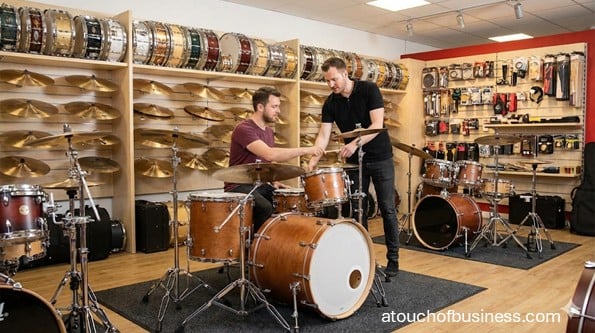
What to Plan Before Opening: Inventory, Systems, Rules
You have probably walked into a music store “just to look” and ended up staring at the cymbal wall for ten minutes. Then you hear a kick drum in the next room and think, “I could do this for a living.”
A musical drum shop is a retail business focused on drums, percussion, and related supplies. In industry terms, this activity fits under Musical Instrument and Supplies Retailers (North American Industry Classification System code 459140). It is a retail category that can also include instrument rental and repair as part of the offering.
Is This a One-Person Startup or a Bigger Build?
This business can start small if you keep the scope tight. A modest storefront or a hybrid shop (small showroom plus online sales) can be owner-run at the start, especially if you limit hours and keep services simple.
It becomes a bigger build when you add a large showroom, wide inventory depth, frequent rentals, and on-site repair work. Those choices usually push you toward more space, more cash tied up in inventory, and more help in the store.
Common Business Models for a Drum Shop
Most drum shops blend a few revenue streams. Your model affects your space, your permits, your equipment, and how much inventory you need before you open the doors.
Pick one “core” model first, then add a second model only if you can support it before launch.
- New Gear Retail: New drum kits, cymbals, hardware, and accessories sourced through distributors and brand programs.
- Used Gear Retail: Buying and reselling used drums and accessories (requires consistent condition checks and clear product descriptions).
- Consignment Sales: Selling customer-owned gear for a fee or percentage (requires written terms before you accept items for sale).
- Rental Add-On: Short-term rentals for schools, events, or studio needs (requires written rental terms and tracking tools).
- Repair Add-On: Basic drum and hardware service work (requires a dedicated bench and a clear drop-off process).
- Hybrid Storefront + Online: A physical shop for demos and pickup, plus a web store for broader reach.
How Does a Musical Drum Shop Generate Revenue
A drum shop is mainly a retail business, so sales are the base. Many shops also add services that fit naturally with what drummers need right away.
Before you choose add-ons, confirm your space and local rules can support them.
- Retail sales: Kits, snares, cymbals, hardware, heads, sticks, and accessories.
- Special orders: Customer-requested items ordered through distributors.
- Used gear sales: Items you purchase and resell after inspection and cleaning.
- Consignment fees: Fees for selling customer-owned gear.
- Rentals: Time-based rental fees (often tied to schools and events).
- Repair labor: Fees for service work, if you offer repairs at launch.
Startup Steps to Open Your Drum Shop
These steps stay focused on pre-launch. You are building a shop that can legally open, stock inventory, and handle sales correctly on day one.
If you feel overwhelmed, slow down and take it one section at a time. You can also lean on professional help for key tasks like accounting setup, legal filings, and layout design.
Step 1: Choose Your Shop Format
Start by picking the format you can actually support: storefront, online-only, or a hybrid approach. Your format affects zoning, lease terms, insurance requirements from a landlord, and how much inventory you need on hand.
If you are considering a physical space, read the location planning basics and use them to compare neighborhoods, lease types, and customer access in business location considerations.
Step 2: Define Your Offer Before You Shop for Space
Write down what you will sell on day one and what you will not sell yet. Keep it simple: new gear only, or new plus used, or new plus rentals, or new plus repairs.
This matters because a “quiet retail store” is not the same as a drum demo space. Your offer shapes noise expectations, storage needs, and the type of building that makes sense.
Step 3: Check Local Demand With Real Signals
Look for demand you can point to, not just a feeling. Think in terms of where drummers come from: schools, rehearsal spaces, studios, venues, churches, and local bands.
Use the demand framework in supply and demand to see if the local customer base can support a specialty shop, especially if you plan a storefront.
Step 4: Study Competitors Like a Customer Would
Identify every place a drummer can get gear in your area. That includes drum-only shops, full-line music stores, big-box retailers, and online sellers that ship fast.
Pay attention to what they stock, what they do not stock, and what they push as “standard” gear. That tells you where a new shop can stand out without trying to compete on everything.
Step 5: Set Your Initial Product Mix and Inventory Targets
Choose categories that fit how drummers shop. Many customers come in for quick items like sticks and heads, then return later for bigger purchases after trust is built.
Your inventory plan should include: display units for demos, sellable boxed inventory, and a small “emergency” selection for fast replacement items.
Step 6: Estimate Startup Needs and Decide How You Will Fund Them
Inventory, fixtures, point of sale equipment, signage, security, and buildout can add up quickly. Make a written list of what you need before you open, then separate “must have” from “nice to have.”
Use estimating startup costs to build a clean startup list you can share with a lender or advisor. If you plan to borrow, review how to get a business loan so you know what documents are commonly expected.
Step 7: Pick a Location That Can Handle Drum Demos
Drums are loud. That is not a small detail, and it should influence your lease choice and layout planning from the start.
Before you sign anything, confirm zoning allows your use and confirm whether the space will require a Certificate of Occupancy (CO) before you can open to the public.
Step 8: Choose a Business Name and Basic Brand Assets
Choose a name you can use legally and consistently. You will use it on licenses, bank accounts, tax registrations, and vendor paperwork.
Use selecting a business name to work through the practical checks. When you are ready for a consistent look across signs, cards, and your site, review corporate identity package considerations.
Step 9: Decide on Your Legal Structure and Register the Business
Your structure affects taxes, liability, and how you set up banking and vendor accounts. A small, owner-run launch may start as a sole proprietorship in some states, while a larger storefront with employees often forms a limited liability company or corporation.
Follow your state’s process and use how to register a business as a guide for where to file and what to check locally.
Step 10: Get Your Federal Tax Identification Number if Needed
If you form a legal entity or plan to hire employees, you will typically need an Employer Identification Number. The Internal Revenue Service provides the official application path.
Get this handled before you open accounts with vendors, payroll providers, or some banks.
Step 11: Register for State Sales and Use Tax if Required
A drum shop is a retail business, so sales tax setup is a pre-launch requirement in many states. Rules and registration names vary, so you must confirm with your state department of revenue.
Set this up before you ring your first sale so your point of sale system can calculate and record tax correctly.
Step 12: Confirm City and County Requirements for Retail
Many local governments require a general business license, local tax registration, or both. You also need to confirm signage rules and any permits required to install exterior signs.
Build a short checklist for your city and county so you are not discovering requirements a week before opening.
Step 13: Choose Your Point of Sale System and Sales Tax Setup
Pick a point of sale system that can handle inventory, returns, exchanges, and sales tax reporting. This is not just a checkout tool. It is your main record for what you sold and when.
Set up your categories early so you can receive inventory, label it, and track it before launch.
Step 14: Plan Your Store Layout and Demo Area
A drum shop needs a layout that balances display, sound, and safety. Plan where kits will sit, where cymbals will be displayed, and where customers can test gear without blocking aisles.
If layout design is not your strength, it is normal to get help from a retail designer or a contractor who understands code requirements for public spaces.
Step 15: Set Up Security and High-Value Storage
Small, high-value items are easy to pocket and hard to recover. Plan for locked displays, back-room storage, cameras, and an alarm system before you bring in open stock.
Security planning is part of practical launch readiness. It should be addressed during buildout, not after opening week.
Step 16: Establish Vendor Accounts and Ordering Processes
Decide how you will source inventory: distributors, brand programs, or a mix. Vendor setup often requires your business registration details and tax information.
Confirm how warranties, returns to vendors, and special orders work before you promise anything to customers.
Step 17: Build Your Website and Basic Customer Touchpoints
Even a local drum shop needs an online home base. Your website can list hours, location, policies, and key product categories, and it can support online ordering if you choose.
Start with an overview of developing a business website. For printed materials, use what to know about business cards and confirm your exterior sign plan with business sign considerations.
Step 18: Write a Simple Business Plan You Can Use
You do not need a fancy document, but you do need a clear plan. It should cover your model, your target customer types, your startup list, and your opening inventory approach.
If you want a structured guide, use how to write a business plan. If you need help with pricing logic, review pricing your products and services before you set price tags.
Step 19: Decide Whether You Need Staff Right Away
A small launch can be owner-run, but there are times you will want help, like busy weekends and delivery days. If you plan to hire, your responsibilities begin before the first shift, including required employment paperwork.
Use how and when to hire to decide timing and roles. If you want guidance from specialists, consider building a team of professional advisors for legal, accounting, and setup work.
Step 20: Prepare Your Opening Plan and First Customer Flow
Your launch should answer a simple question: how will people find you and walk in during the first month? A storefront depends on local visibility and a clear reason for drummers to stop by.
Use how to get customers through the door and plan a first-week event using ideas for your grand opening. If you want a quick reality check on common early problems, read avoid these mistakes when starting a small business.
Products and Services to Plan Before You Open
Plan your opening selection around what drummers replace often and what they research before buying. Your first inventory should be easy to explain, easy to demo, and easy to restock.
If you add repairs or rentals, define the exact scope before launch so you do not promise services you cannot support.
- Core products: Drum kits, snare drums, cymbals, pedals, stands, thrones, and practice pads.
- Repeat-purchase items: Heads, sticks, brushes, mallets, dampening items, felts, and small hardware parts.
- Accessories: Cases and bags, ear protection, rugs, and basic maintenance items.
- Optional services at launch: Special orders, rentals, basic setup and repair work, and consignment sales.
Who Your First Customers Usually Are
Before you open, define the customer types you are building for. A shop designed for school band parents looks different from a shop designed for touring drummers.
Your opening inventory, your hours, and your location should match the customer you want most.
- Beginners and students: First kits, starter cymbals, practice pads, and learning accessories.
- Working drummers: Reliable replacements, hardware parts, durable cases, and fast turn items.
- Schools and programs: Percussion needs for bands and ensembles, plus rental or bulk purchase orders.
- Studios and venues: Stage-ready gear, quick fixes, and consistent restocking for consumables.
Pros and Cons to Weigh Before You Commit
This is a specialty retail business. That can be a strength, but it also means you must stay focused and avoid trying to become “everything music” on day one.
Use this list to pressure-test your launch plan before you sign a lease or place your first large inventory order.
- Pros: Clear niche, loyal customer communities, and add-on options like rentals and repair work that fit the retail category.
- Cons: Loud demos can create space and neighbor constraints, inventory can be bulky, and small high-value items require strong security planning.
Essential Equipment Checklist (No Prices)
Separate equipment from inventory. Equipment is what you need to run the shop and set up the space before opening day.
Start with the basics, then add upgrades after you open and see what your customers actually use.
- Retail Fixtures and Displays:
- Slatwall or gridwall panels with hooks
- Shelving for sticks, heads, and accessories
- Cymbal racks or wall mounts
- Drum kit display risers
- Locking display case for small high-value items
- Sales counter setup
- Price labels and sign holders
- Point of Sale and Office Tools:
- Point of sale terminal (computer or tablet)
- Receipt printer
- Barcode scanner
- Payment card reader
- Cash drawer
- Label printer for inventory tags
- Internet router and basic network hardware
- Printer and scanner for invoices and records
- Receiving, Storage, and Shipping:
- Receiving table or work surface
- Hand truck or dolly
- Step ladder
- Back-room shelving
- Bins for small parts and accessories
- Shipping scale
- Boxes and packing materials
- Measuring tape and basic tools for packaging
- Demo Space and Sound Control:
- Dedicated demo area (room or controlled space)
- Drum rugs or floor protection mats
- Hearing protection for staff and demos
- Basic audio playback gear for electronic kit demos (if applicable)
- Security and Safety:
- Camera system
- Alarm system
- Locking storage for high-value inventory
- Fire extinguisher as required by local code
- First aid kit
- Repair Bench Tools (Only If You Offer Repairs at Launch):
- Workbench with strong lighting
- Hand tools (screwdrivers, hex keys, wrenches, pliers)
- Drum key assortment
- Cleaning supplies and rags
- Organized parts storage for small components
Skills You Need (And How to Fill Gaps)
You do not need to be a touring drummer to open a drum shop. But you do need solid retail skills, clean recordkeeping, and enough product knowledge to guide customers without guessing.
If you are missing a skill, you have two options: learn it before launch or bring in a qualified person to cover it.
- Retail sales basics: Helping customers choose products, handling returns, and completing sales.
- Product knowledge: Matching heads, sticks, cymbals, and hardware to the customer’s setup.
- Inventory control: Receiving shipments, labeling items, and keeping counts consistent.
- Used gear evaluation (if applicable): Inspecting condition and describing items accurately.
- Basic repair skills (if applicable): Disassembly, part replacement, and setup work within a defined scope.
What Your Days Will Look Like
This section is here for one reason: to help you decide if you want this life before you open. A drum shop is retail first, with sound and demo needs layered on top.
Think about whether you want to spend most of your time on customers, inventory handling, and organization.
- Answer questions and demonstrate gear in a controlled demo space
- Receive shipments, stock shelves, and set displays
- Process sales, returns, exchanges, and special orders
- Maintain clean records for inventory and taxes
- Secure high-value items at opening and closing
- Handle rentals or basic repair work if you offer them
A Day in the Life During the Final Week Before Opening
The last week is about details. You are not “running a store” yet. You are proving that the store can open without chaos.
This is where a checklist mindset matters more than big ideas.
- Finalize licenses, local approvals, and any occupancy requirements
- Receive and label inventory, then confirm counts match invoices
- Set up displays, demo units, and locked storage
- Test your point of sale system with sales tax settings
- Post your hours and policies on your website and at the counter
- Confirm your first-week plan for local visibility and foot traffic
Red Flags to Watch for Before You Commit
Most startup problems are preventable when you slow down and verify details. These red flags are common in retail launches and can be expensive if ignored.
If you see one, treat it like a stop sign until it is resolved.
- A lease that restricts music demos or creates noise conflicts with neighbors
- Unclear zoning approval for retail use at your chosen address
- No plan for securing small high-value items
- Used gear descriptions that are vague or incomplete
- Sales tax registration not completed before planned opening day
- No written terms for consignment or rentals when you plan to offer them
Federal Legal and Compliance Checks
Federal requirements are real, but they are not the whole picture. For a drum shop, most rules you will deal with are state and local.
Use the official sources below as your starting point and document what you confirmed.
- Employer Identification Number: Consider whether you need an Employer Identification Number for your entity, hiring plans, and tax needs. Verify using the Internal Revenue Service page for “Get an employer identification number.”
- Accessibility for public-facing retail: If you open a storefront to the public, Americans with Disabilities Act Title III rules apply to places of public accommodation. Verify using ADA.gov “Businesses That Are Open to the Public.”
- Employment eligibility verification: If you hire employees, federal law requires completing Form I-9 for each person hired. Verify using U.S. Citizenship and Immigration Services (USCIS) “I-9 Central” and follow the linked official Form I-9 resources.
- Used and rebuilt merchandise disclosures: If you sell used or rebuilt items, confirm your descriptions and marketing are not misleading. Verify using the Federal Trade Commission guidance on used and rebuilt merchandise penalty offenses.
State Legal and Compliance Checks
State requirements vary, so you must use your state’s official business and tax websites. Do not assume another state’s process matches yours.
If you are unsure, this is a good time to use a qualified attorney or accountant for setup work.
- Entity formation: If you form a limited liability company or corporation, file with your Secretary of State (or equivalent). Verify locally: state Secretary of State website -> search “business entity search” and “form an LLC” (wording varies by state).
- Sales and use tax: Retail sales commonly require a state sales and use tax registration. Verify locally: state department of revenue website -> search “sales tax permit” or “seller’s permit” (label varies).
- Employer accounts: If you hire, register for state withholding and unemployment accounts as required. Verify locally: state department of revenue website -> search “withholding registration” and state workforce agency website -> search “unemployment employer registration.”
- Workers’ compensation: Workers’ compensation rules are state-run and triggers vary. Verify locally: use the U.S. Department of Labor “State Workers’ Compensation Officials” page -> select your state -> follow the official state program link.
City and County Legal and Compliance Checks
Local approvals often decide whether you can open on time. Business licensing, zoning approvals, and occupancy requirements are commonly handled at the city or county level.
Verify early, especially if you plan a drum demo space.
- General business license: Many local governments require a business license or tax registration. Verify locally: city or county website -> search “business license” and “business tax registration.”
- Zoning approval: Confirm retail use is allowed at your address and confirm any limits that might affect demos. Verify locally: planning or zoning department website -> search “zoning map” and “permitted uses” for your address.
- Certificate of Occupancy: Many commercial spaces require a Certificate of Occupancy (CO) before opening, especially after changes or buildout. Verify locally: building department website -> search “Certificate of Occupancy” and “change of use.”
- Sign permits: Exterior signs are often regulated and may require permits. Verify locally: planning or building department website -> search “sign permit” and “sign code.”
Final Self-Check
Before you commit to a lease or a large inventory order, run this quick self-check. If you cannot answer a question, that is your next task.
- Have you picked a shop format you can support right now (storefront, online, or hybrid)?
- Have you verified zoning and Certificate of Occupancy requirements for your exact address?
- Is your sales and use tax registration completed before your planned opening date?
- Do you have a clear security plan for small high-value items?
- Have you limited your opening offer to what you can deliver consistently?
101 Step-By-Step Tips for Your Musical Drum Shop
These tips cover the setup work that matters most, from planning your product mix to getting your paperwork straight.
Use the tips that match your current stage and ignore anything that does not apply to your shop format.
If you want to move faster, save this page and come back as you hit each milestone.
The best results come from choosing one tip, acting on it, and then moving to the next.
What to Do Before Starting
1. Decide what “drum shop” means for you: acoustic only, electronic kits, full percussion, or a mix. Your choice drives space needs, demo needs, and opening inventory.
2. Choose your shop format early: storefront, online-first, or a hybrid with local pickup. This decision changes your startup checklist and your local approvals.
3. Write a short “opening day scope” statement that lists what you will sell in the first 90 days. Keep it tight so you do not overbuy inventory before you learn your local demand.
4. Identify your top three customer groups before you choose a location. A shop built for school programs looks different than one built for working drummers.
5. Visit competing music retailers in person and take notes like a customer. Track what they stock, what they do not stock, and how they handle demos.
6. Talk to local drum teachers, rehearsal spaces, studios, and band leaders. Ask what items they struggle to get quickly and what brands they trust.
7. Decide whether you will sell used gear at launch or wait. Used sales can work, but they require a consistent condition-check routine from day one.
8. If you plan trade-ins, create a written evaluation checklist first. You need a repeatable way to estimate condition, completeness, and resale value.
9. Choose whether rentals are part of your launch or a later add-on. Rentals add paperwork, tracking, and storage needs before you ever open.
10. Choose whether repairs are part of your launch or a later add-on. Repairs require a dedicated bench, tools, and a clear drop-off process.
11. Separate “equipment you need to run the shop” from “inventory you sell.” This keeps you from spending your startup budget in the wrong order.
12. Build a simple opening timeline with deadlines for permits, inventory arrival, and point of sale setup. A calendar beats a vague goal every time.
13. Decide how you will control volume during demos before you sign a lease. Drums are loud, and sound conflicts can derail a location choice.
14. Draft a basic returns and exchanges policy before you buy your first large inventory order. Policies are easier to enforce when they exist before the first disagreement.
15. Create a short list of professional help you may need, such as a local attorney, accountant, contractor, or web designer. Using experts for setup work can prevent expensive rework.
What to Know About the Industry
16. Plan for bulky inventory and awkward boxes. Drum kits and hardware take more storage space than many new owners expect.
17. Expect higher theft risk for small, high-value items like pedals and compact electronics. Design your displays and sightlines to reduce easy grabs.
18. Watch for seasonal demand cycles in your area, especially around back-to-school and holiday gifting. Your opening inventory should fit the season you plan to launch in.
19. Consumables like drumheads and sticks tend to create repeat visits when you stock the common sizes and types. Keep your opening selection focused on the most requested options.
20. Electronic kits need a demo plan that includes power, cables, and quiet listening options. If you cannot demo them well, start with fewer models.
21. Brand and distributor relationships may come with requirements for ordering, merchandising, or service handling. Ask about expectations before you commit to a brand-heavy launch.
22. Warranty handling can require proof of purchase and manufacturer steps. Set expectations early so customers know what you can do in-store.
23. Used drums can hide issues that only show up on close inspection. Check shells, bearing edges, hardware function, and missing parts before you price anything.
24. Used cymbals need careful inspection for cracks and keyholing. A single flaw can make a cymbal hard to sell or return-prone.
25. Payment cards bring security responsibilities, even for small merchants. Treat payment data as sensitive and keep your systems simple.
Legal and Compliance Setup
26. Pick a business structure that matches your risk and your plans. If you are unsure, ask a qualified attorney or accountant to explain the tradeoffs in plain language.
27. Check your business name availability with your state business filing office before you print signs or cards. A name conflict is easier to fix early than later.
28. If you will use a different public-facing name than your legal name, research whether your state or local area requires an assumed name filing. Rules vary by state and sometimes by county.
29. Register the business through your state’s official process if you are forming a legal entity. Keep your filing confirmation where you can access it quickly.
30. If you need an Employer Identification Number, apply through the official Internal Revenue Service process. Avoid paid “middleman” sites that charge for something you can do directly.
31. Open a dedicated business bank account once your registrations are in place. Keep personal and business finances separate from day one.
32. Register for sales and use tax with your state tax agency if your state requires it for retail sales. Do this before you accept payment from your first customer.
33. If you plan to hire, set up state withholding and unemployment accounts before your first payroll. The correct setup depends on your state rules.
34. If you hire employees, complete and retain Form I-9 for each new hire as required by federal law. Set up a secure storage method for the forms before hiring begins.
35. Treat accessibility as part of your buildout plan, not a last-minute fix. Retail businesses open to the public generally have obligations under Americans with Disabilities Act Title III.
36. Research whether your city or county requires a general business license for retail. Many places do, and the application can take time.
37. Confirm zoning approvals for your exact address before signing a lease. Retail is often allowed, but a drum demo area may trigger extra scrutiny.
38. Confirm whether a Certificate of Occupancy is required for your space before opening to the public. Many jurisdictions require it, especially after changes or renovations.
39. If you plan exterior signs, check local sign rules and permit requirements before ordering anything. Local sign rules can limit size, lighting, and placement.
40. If you expect employee exposure to loud sound levels, review occupational noise requirements and plan hearing protection and training as needed. Do not assume short bursts of sound are always “safe.”
Location, Layout, and Sound Planning
41. Choose a location with easy loading and unloading. Drum boxes are large, and frequent deliveries can become a daily headache in a tight space.
42. Look closely at neighboring tenants before you commit. A quiet office next door can become a constant source of complaints when you demo kits.
43. Plan a controlled demo space that keeps sound contained. Rugs, spacing, and simple dampening choices can reduce friction with neighbors and customers.
44. Create demo rules before opening day, including time limits and staff supervision. Rules protect your gear and help keep the store calm.
45. Design clear sightlines from the counter to high-value displays. If staff cannot see it, it is harder to protect.
46. Use durable flooring and protect it in demo areas. Drum hardware can scratch floors quickly during repeated setup and breakdown.
47. Build a secure back area for receiving shipments and storing overstock. You do not want unopened boxes on the sales floor where they can disappear.
48. Plan for stable temperature and humidity in storage areas. Wood shells, drumheads, and adhesives can react poorly to extreme swings.
49. Make sure your aisles and entryways support moving large boxes and also support accessibility needs. A tight layout can block customers and create safety hazards.
50. Plan enough electrical outlets for point of sale hardware and electronic kit demos. Extension cords should not become permanent infrastructure.
51. Put your receiving area close to the back door if possible. Reducing carry distance lowers damage risk and speeds receiving.
52. Coordinate with your landlord and local code requirements for fire safety basics. Know where extinguishers, alarms, and exits must be before you install fixtures.
Inventory and Equipment Setup
53. Start with a focused inventory plan that includes “fast replacement” items drummers buy often. A tight selection that is always in stock beats a wide selection you cannot restock.
54. Keep your opening drumhead selection practical and clearly organized by size. If customers cannot find their size quickly, they will leave and order online.
55. Stock a small range of stick types that covers common use cases. Expand only after you see what your local customers actually purchase.
56. Carry essential replacement hardware parts that solve common problems. Small parts can save a customer’s rehearsal and build loyalty fast.
57. Choose a point of sale system that can track inventory, returns, and sales tax correctly. This is your foundation for clean records.
58. Set up clear product categories and SKU rules before your first shipment arrives. Consistency early prevents confusion when your inventory grows.
59. Use consistent pricing labels and shelf tags across the store. A clear price reduces disputes and speeds checkout.
60. Set up a locked display strategy for compact, high-value products. Make it easy for staff to access and hard for customers to pocket.
61. Clearly mark demo units and keep them separate from sealed inventory. This reduces accidental “new item” disputes at checkout.
62. Create a standard condition grading method for used gear. Customers trust you more when your descriptions are consistent and specific.
63. For used cymbals, inspect carefully for cracks and damage around the mounting hole. Document what you find before you put it on the wall.
64. For used drums, check shell condition, bearing edges, and hardware function. A quick tune-up can reveal problems you would otherwise miss.
65. Set up shipping and packing supplies even if you are mostly local. A safe shipment can prevent returns and costly damage claims.
66. If you will offer repairs, set up a dedicated workbench with lighting, basic tools, and organized parts bins. A clean bench supports consistent quality and faster turnaround.
Running the Business (Operations, Staffing, and SOPs)
67. Write an opening checklist that includes alarms, lights, point of sale startup, and display checks. Checklists reduce preventable errors when you are tired.
68. Write a closing checklist that includes locking high-value items, securing the register, and verifying doors. Closing steps protect you more than any camera system alone.
69. Create a standard approach for demos so staff do not unintentionally drive volume too high. A consistent demo experience also feels more professional to customers.
70. Set a special-order process with clear expectations about deposits and timeframes. Customers get frustrated when “special order” has no structure.
71. Post a return and exchange policy in a place customers can see before purchase. A visible policy prevents arguments and protects staff.
72. Create a warranty support process that explains what you handle in-store and what must go through the manufacturer. Clarity keeps you from becoming the middle of every dispute.
73. If you rent gear, use written agreements and photo records of condition at checkout and return. Photos turn “I didn’t do that” into a simple conversation.
74. Schedule deliveries and receiving work so it does not block customer flow. A cluttered sales floor makes your shop feel chaotic.
75. Use cycle counts for small, high-value items instead of waiting for a full inventory count. Frequent small checks catch problems early.
76. Use a drop-off form for repair work that lists requested work, parts, and approval limits. A written agreement prevents scope disputes.
77. Limit customer data access to only the staff who need it. Fewer hands on sensitive data lowers your risk.
78. Use basic small-business cybersecurity habits, like timely updates, strong passwords, and secure backups. Simple steps can prevent a shutdown during your first year.
Marketing (Local, Digital, Offers, and Community)
79. Set up your local business listing before opening and verify your hours, phone, and address. Many first-time customers will find you there before they ever see your storefront.
80. Build a simple website with your hours, location, policies, and a clear contact method. A basic site is still a credibility signal for a retail shop.
81. Use clear photos of your store layout and core product categories. Customers want to know what kind of shop you are before they drive over.
82. Build relationships with local drum teachers and offer a referral process that is simple and ethical. Teachers influence beginner purchases more than most ads.
83. Connect with school music programs and ask what they need most often. Even a small shop can become a go-to source for quick replacements.
84. Plan a low-chaos grand opening with structured demo times. A schedule helps you control volume and keep the store safe.
85. Start an email list with permission and a simple value promise. A monthly note about new arrivals and restocks can keep customers coming back.
86. Use short videos to show how items sound and how they work. Keep demos realistic so customers are not surprised in person.
87. Offer appointment demos for high-end kits if your space is tight. Appointments can reduce noise conflicts and improve the customer experience.
88. If you sell used gear, explain your condition grading method publicly. Transparency can turn skepticism into trust.
89. Encourage reviews by asking right after a successful purchase or repair pickup. Make it easy, but do not pressure customers.
90. Track what brings people in by asking a single question at checkout. That small habit helps you stop spending time on channels that do not work.
Customer Service and Retention
91. Ask a few simple questions before recommending anything: skill level, style, and budget range. This keeps you from guessing and reduces returns.
92. Confirm compatibility before the customer leaves with parts. A quick size and fit check beats a frustrated return later.
93. Give customers a short printed care and tuning guide with purchases when possible. Small guidance reduces damage and buyer’s remorse.
94. Make policy decisions consistent across staff. Customers get upset when “yes” depends on who is behind the counter.
95. For used gear, disclose known defects clearly and in writing. Honesty protects your reputation and reduces disputes.
96. Handle noise complaints calmly and point to your demo rules. A respectful approach often prevents escalation with neighbors.
97. Communicate special-order updates proactively. Silence makes customers assume the worst.
What Not to Do
98. Do not sign a lease until zoning and any required occupancy approvals are verified for your exact address. A great price does not matter if you cannot legally open.
99. Do not place large inventory orders until you confirm what your local customers actually ask for. Start focused and expand with real demand signals.
100. Do not store card numbers or sensitive payment data unless you fully understand your security obligations. Use your payment provider’s approved tools and keep your setup simple.
101. Do not launch repairs or rentals unless your paperwork, tools, and space are ready. If you rush these add-ons, they can create disputes and overwhelm your opening week.
FAQs
Question: What permits do I need to open a musical drum shop?
Answer: It depends on your state, county, and city, but retail businesses often need a local business license plus zoning approval for the address.
Start with your city or county licensing portal and planning or zoning office, then confirm any building approvals like a Certificate of Occupancy if the space is new or altered.
Question: Do I need an Employer Identification Number to start a drum shop?
Answer: Many owners need one if they form a limited liability company or corporation, hire employees, or meet other Internal Revenue Service triggers.
If you are unsure, use the Internal Revenue Service guidance to confirm whether your structure requires one before you open bank and vendor accounts.
Question: Do I have to collect sales tax when I sell drums and accessories?
Answer: Sales tax rules vary by state, but retail sales commonly require state sales and use tax registration and collection.
Verify with your state tax agency before you accept payment so your point of sale system is configured correctly from day one.
Question: How do I verify zoning for a drum shop with a demo area?
Answer: Ask your city or county planning or zoning office to confirm retail use is allowed at your exact address.
Also ask whether your planned activities, like instrument repair work or frequent demos, change the permitted use or require extra approvals.
Question: Do I need to follow Americans with Disabilities Act rules for my storefront?
Answer: If you operate a store open to the public, Americans with Disabilities Act Title III generally applies to places of public accommodation.
Plan accessibility as part of your layout and buildout so you are not doing expensive fixes right before opening.
Question: What insurance is legally required for a drum shop?
Answer: Legal insurance requirements vary, but workers’ compensation is commonly required by states when you have employees.
Your state workers’ compensation agency is the best place to confirm triggers and deadlines before your first hire.
Question: What equipment do I need before opening day besides inventory?
Answer: You typically need a point of sale setup, secure displays for high-value items, basic receiving tools, and a safe demo area.
If you plan repairs, add a dedicated workbench, lighting, and an organized tool and parts setup before you advertise the service.
Question: How do I find suppliers and set up inventory sourcing for a drum shop?
Answer: Most owners use a mix of distributors and direct brand programs, then add used gear channels if they choose to sell pre-owned items.
Before you commit, confirm ordering minimums, return rules, and warranty handling so you can explain realistic timelines to customers.
Question: How should I set up pricing and taxes in my point of sale system?
Answer: Start by building clean product categories and entering tax settings based on your state and local requirements.
Test a few sample sales, returns, and exchanges before opening so you do not discover tax problems after the first week.
Question: What are the biggest startup cost categories for a musical drum shop?
Answer: The big buckets are opening inventory, lease and buildout, fixtures, point of sale equipment, security, and signage.
Write your list first, then decide what is required to open versus what can wait until after you see real demand.
Question: If I hire someone, what hiring steps must I complete right away?
Answer: You must complete and retain Form I-9 for each employee you hire, and you may need state employer accounts for withholding and unemployment.
Set up your hiring paperwork system before the first shift so documents do not get lost or completed late.
Question: How do I run demos without creating problems for neighbors or staff?
Answer: Set written demo rules, control where demos happen, and supervise higher-volume testing.
If staff may be exposed to high noise levels, review workplace noise requirements and plan hearing protection and training as needed.
Question: What should my trade-in or used-gear process look like?
Answer: Use a written condition checklist, document what is included, and keep consistent grading so pricing does not feel random.
Be clear and accurate about condition, since deceptive claims about used or rebuilt merchandise can create legal risk.
Question: What workflows should I standardize first when I start running the shop?
Answer: Standardize receiving, labeling, stocking, and return handling before you add extra services.
Use simple open and close checklists so cash handling, security steps, and high-value storage are done the same way every day.
Question: What numbers should I track weekly to avoid cash flow surprises?
Answer: Track cash on hand, upcoming bills, sales by category, and how much inventory is sitting unsold.
When you see slow sellers early, you can adjust ordering before cash gets locked up for months.
Question: How do I reduce theft and inventory loss in a drum shop?
Answer: Lock up compact, high-value items, maintain clear sightlines, and use cameras and alarms where they matter most.
Do frequent small inventory checks on high-risk items instead of waiting for a full store count.
Question: What are realistic marketing moves for a new drum shop owner?
Answer: Start with local search listings, a simple website, and relationships with teachers, schools, and rehearsal spaces.
Focus on being easy to find and clear about what you stock, then expand marketing once you know what brings people in.
Question: What security and technology standards should I pay attention to as I run the shop?
Answer: If you accept card payments, you should follow payment security expectations like PCI guidance for merchants.
Use a simple cybersecurity plan for passwords, updates, backups, and access control, and review a small-business framework so you do not overlook basics.
Sources:
- U.S. Census Bureau: NAICS United States 2022, NAICS 45914 Industry Detail
- U.S. Small Business Administration: Apply licenses permits, Federal state tax IDs
- Internal Revenue Service: Employer identification number
- ADA.gov: Businesses open public
- O*NET OnLine: Retail salespersons summary, Instrument repairers tuners
- U.S. Department of Labor: I-9 Central, Workers compensation officials
- Federal Trade Commission: Used rebuilt merchandise
- Occupational Safety and Health Administration: Occupational noise exposure
- U.S. Citizenship and Immigration Services: Form I-9
- PCI Security Standards Council: Merchant resources
- National Institute of Standards and Technology: Small business quick start
- National Retail Federation: Retail security survey 2023