
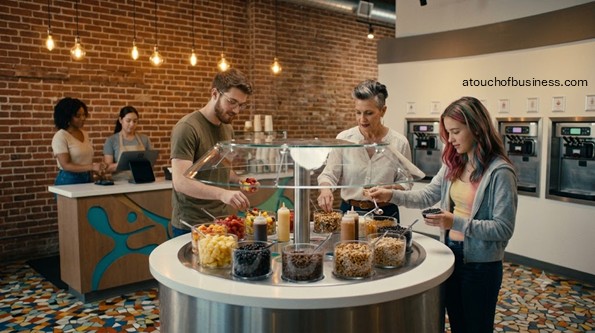
What to Expect From This Guide to Starting a Frozen Yogurt Shop
This guide walks readers through the key decisions and practical steps involved in starting a frozen yogurt shop, from evaluating the opportunity to preparing for opening day. The highlights below show only part of the planning detail included.
Inside the guide, you will find:
- Startup steps: Follow an ordered path from owner fit and demand checks through planning, setup, staffing, inspections, and opening preparation.
- Industry interviews: Learn from founders, franchisees, and executives discussing financing, staffing, customer service, product quality, and changing demand.
- Startup FAQs: Review practical answers about permits, service models, machine needs, food safety, taxes, acquisitions, and common mistakes.
- Business fit: Consider daily responsibilities, household support, income uncertainty, seasonal demand, competition, and alternatives such as buying or franchising.
- Financial planning: Work through break-even volume, fixed costs, labor, rent, pricing, waste, funding, reserves, and slow-season pressure.
- Local requirements: Check zoning, health reviews, licenses, taxes, certifications, insurance, and weights-and-measures rules that vary by jurisdiction.
- Equipment and opening: Plan machines, toppings storage, suppliers, POS systems, training, inspections, test runs, and opening-day warning signs.
The article begins by asking whether the daily demands and financial uncertainty of a frozen yogurt shop fit your circumstances.
Running a frozen yogurt shop means loading soft-serve machines each morning, managing a toppings bar through the day, and keeping every surface clean enough to pass an unannounced health inspection.
It’s a food service business built around walk-in impulse traffic — customers don’t usually plan a froyo run days in advance.
They see your shop, they walk in.
That makes location, cleanliness, and a smooth service flow the foundation of the model.
Before you dive into the startup steps, take an honest look at whether this business fits where you are right now.
Is a Frozen Yogurt Shop Right for You?
This is a daily presence business, especially in the early months.
You’ll be there to open the shop, monitor machines, manage staff, restock the toppings bar, and handle whatever goes sideways.
Think about whether you can handle that kind of schedule while your income is still uncertain.
Can your household cover living expenses if the shop takes several months to reach break-even?
Do you have support from the people closest to you, or will the financial pressure strain those relationships?
You should also be comfortable with food service work — machine cleaning, temperature logging, food safety compliance, and managing staff who may call out right before a busy weekend evening.
If any of that sounds like more than you’re ready for, it’s worth pausing before you commit.
Before you talk to a landlord or buy a single machine, find frozen yogurt shop owners outside your target market — people you won’t compete with — and ask them real questions.
Ask what the permitting process actually took, how slow their first winter was, what they wish they’d done differently with equipment, and whether the location they chose was the right call.
Those conversations are more valuable than any article, because those owners have lived it.
You can also explore the idea of buying an existing froyo shop rather than building from scratch.
An existing shop may come with equipment, a lease, permits already in place, and some customer familiarity.
The tradeoff is that you inherit whatever problems the previous owner left behind.
Verified financial records, equipment condition reports, and a clear explanation for why they’re selling all matter before you agree to anything.
Franchising is a third path. Some frozen yogurt franchise brands are still active.
A franchise gives you a proven model, supplier network, and established brand — in exchange for fees, royalties, and rules you’ll have to follow.
Have an attorney review the Franchise Disclosure Document before you sign anything.
Red Flags Before You Start
The frozen yogurt category has experienced real contraction, with major chains closing locations and many markets going through a period of oversaturation.
That doesn’t mean a well-placed independent shop can’t succeed — but it does mean you need to look at your specific market with clear eyes.
Watch for these warning signs before you commit:
- Too many competing dessert concepts nearby. If the same foot traffic already has two or more frozen dessert options — ice cream, boba, gelato, dessert cafes — there may not be enough walk-in volume for another entrant.
- Low-traffic or low-visibility location. Frozen yogurt is an impulse purchase. A space that customers can’t easily see or reach is a structural problem no amount of promotion will fully fix.
- Startup capital that doesn’t include operating reserves. Equipment, build-out, inventory, permits, and lease deposits are just the start. You also need cash to cover rent, labor, and utilities during slow months — and slow months will happen.
- Permitting uncertainty before the lease is signed. Health department plan review and inspection timelines vary widely. A permitting delay after you’ve signed a lease means fixed costs running before you’ve made a single sale.
- Cold climate without a slow-season plan. Frozen yogurt demand drops in cold months. If your market has long winters, your plan needs to account for that revenue gap before you open.
- Machine breakdown with no coverage plan. If your soft-serve machines go down during peak summer hours, your revenue goes with them. Going into this business without an equipment maintenance plan or breakdown coverage is a real risk.
The category also competes structurally against alternative frozen desserts — ice creams, smoothie bowls, fruit-based sorbets, and protein-forward options — that have grown alongside shifting consumer preferences.
That’s not a reason to walk away, but it is a reason to understand the competitive landscape in your market before you commit to anything.
Step 1: Check Your Fit and Talk to Real Owners
Before you spend money on this business, spend time with it first.
Visit frozen yogurt shops in other markets — places you won’t compete with — at different times of day.
Go in the afternoon, on a weekend evening, and on a slow Tuesday.
Watch the traffic, the toppings bar flow, the checkout line, and how staff manage the machines.
Then talk to the owners directly and ask the questions that don’t make it into polished business guides.
What did permitting actually cost them in time? How bad was the first slow season? Would they pick the same location again?
Each owner’s experience is different, but firsthand insight from people who’ve already launched is something you can’t replicate with research alone.
Be honest with yourself about the day-to-day reality: daily machine cleaning, toppings bar restocking, temperature logging, staff scheduling, and consistent physical presence.
A passion for the business helps — not just for frozen yogurt, but for running the kind of business this actually is.
Step 2: Validate Local Demand Before Committing
Local market research protects you from committing to a location the market can’t support.
Visit competing frozen dessert businesses in your target area — not just other froyo shops, but ice cream shops, boba tea spots, gelato counters, and dessert cafes that attract the same impulse customer.
Observe actual customer flow, not just the concept.
Look at nearby schools, shopping centers, entertainment venues, and neighborhood demographics.
Families with children, students, and teens near high-activity areas make up the most common customer base for a froyo shop.
If those customers already have two or three dessert options nearby, demand may not support another one.
Understanding local supply and demand before you choose a location is one of the most useful things you can do at this stage.
Step 3: Decide How You’ll Operate Before Planning Anything Else
Your operating model shapes everything downstream — your equipment list, layout, staffing needs, compliance steps, and pricing structure.
Make this decision before you start pricing equipment or planning a build-out.
The two primary service formats are:
- Self-serve by weight: Customers dispense their own yogurt, choose their own toppings, then pay at a scale-based point-of-sale. This reduces counter labor but adds a compliance requirement: the scale must be a legal-for-trade commercial unit, inspected through your state or county weights-and-measures program.
- Staff-served by size: Staff portions the yogurt and charges by cup size or item. This simplifies checkout and eliminates scale compliance steps, but requires more counter labor during busy periods.
You’ll also need to decide how many flavors to offer at launch and what your toppings bar will include.
Starting tight — fewer flavors, focused toppings — is almost always smarter than trying to launch with everything.
Adding blended items or drinks later may require additional equipment and another round of health department review.
Keep your opening offer list limited to what you can permit, stock, and execute consistently.
Step 4: Run the Break-Even Math Before You Sign Anything
Profit potential is a go/no-go check — it belongs before the lease, not after.
The revenue model is straightforward: you earn from each serving, either by weight or by size.
But fixed costs — rent, labor, utilities, insurance, loan payments, machine maintenance — run whether you serve 20 customers or 200 that day.
Labor is typically the highest recurring cost for a froyo shop.
Evaluate whether you can run with minimal staff during off-peak hours, or whether the floor requires two people at all times.
That staffing floor directly affects your break-even volume.
Rent is the second major driver.
High-traffic locations command higher rents.
Before committing, calculate whether the expected daily customer volume at that address can realistically cover the rent — and what happens to that math during your slow season.
Toppings waste is another cost that’s easy to underestimate at launch.
Fresh fruit and refrigerated toppings have short shelf lives.
Over-ordering at the start erodes margin quietly until you start tracking it.
Build your break-even estimate from the bottom up: list your projected fixed monthly costs, set a realistic average transaction value, and calculate the daily transaction count you’d need to cover those costs.
Do that math before you sign a lease or order a single machine.
For a deeper look at how to think through early profitability, this guide on estimating startup revenue walks through the framework.
Step 5: Find and Verify Your Location
Location is the primary driver of walk-in traffic, which is the primary driver of revenue for a froyo shop.
Storefront shops typically operate in spaces between 800 and 1,500 square feet, though your concept, machine count, and toppings bar layout will determine the minimum you actually need.
Before you sign any lease, verify all of the following:
- The address is zoned for food service retail use — confirm this with the local planning or zoning department in writing, not by assumption.
- The space has adequate electrical capacity for your machines. Floor-standing commercial soft-serve units often require 208–230V dedicated circuits. Confirm with an electrician before committing to the space.
- The space has adequate plumbing for a required handwashing sink and a warewashing sink.
- The local building department’s requirements for a build-out permit or plan review before construction can begin.
Talk with the local health department before you sign as well.
Ask what the plan review process requires and how long it typically takes — a permitting delay after your lease starts means fixed costs running before a single serving is sold.
Negotiate lease terms, including any Tenant Improvement allowance the landlord may offer for build-out costs, only after you’ve confirmed zoning, electrical, plumbing, and plan review requirements.
Step 6: Set Up Your Legal Structure and Business Registration
Getting your legal foundation right early makes everything that follows — banking, taxes, hiring, permits — cleaner and easier.
Choose a legal entity structure. Many small food retail businesses use an LLC for liability protection, but the right choice depends on your situation.
Consult an attorney or accountant familiar with your state before deciding.
You can compare approaches at this guide on business structure.
Register your business with your state’s Secretary of State office.
If you plan to operate under a trade name different from your legal entity name, a DBA registration may also be required — check your state’s rules.
Apply for your Employer Identification Number (EIN) through the IRS. It’s free and required for business banking, hiring, and tax filings.
Register for a state sales tax permit with your state’s Department of Revenue before you make your first sale.
Verify whether frozen yogurt sold in cups or cones is taxable in your state — food tax treatment varies significantly by jurisdiction, and getting this wrong from day one creates compliance problems.
If you’re hiring employees, register for employer accounts with your state’s labor and tax agencies before the first paycheck goes out.
Step 7: Complete Health Department Plan Review Before Build-Out
Most jurisdictions require a health department plan review before any construction or equipment installation begins — not after.
Skipping this step and building first is one of the most common and costly mistakes new food service owners make.
The plan review submission typically includes a floor plan, your equipment list with make and model numbers, plumbing details for required sinks, and ventilation information.
Health department approval of the plan affects your entire build-out scope.
There’s also a compliance detail specific to froyo shops.
Soft-serve dispensing machines are classified as frozen dessert freezing and dispensing equipment.
Some jurisdictions require a separate frozen dessert dispensing or manufacturer permit for any retail establishment operating this type of machine, in addition to a standard food service permit.
This may be administered by the health department, the agriculture department, or a state dairy division depending on where you operate.
Contact both your local health department and your state’s agriculture or dairy office to confirm what’s required before you finalize your permitting plan.
Step 8: Obtain All Required Licenses and Permits
Food service permitting involves multiple approvals from different agencies, and each one has its own timeline.
Don’t assume one permit covers everything — map out every requirement before you set an opening target date.
The permits and approvals typically required to open a froyo shop include:
- General business license or business tax certificate — required by most cities and counties before you operate; check your city or county website for the application.
- Food service establishment permit — issued by your local health department after a plan review and a facility inspection; required before you open.
- Frozen dessert dispensing or manufacturer permit — required in some jurisdictions for any retail shop operating a soft-serve dispensing machine; verify with your state health and agriculture departments.
- Certificate of occupancy — issued by the local building department after the built-out space passes inspection; you cannot legally occupy the space without it.
- Sign permit — required in most jurisdictions for exterior signage; dimensions, placement, and illumination are all regulated.
- Food manager certification — many jurisdictions require at least one Certified Food Protection Manager (CFPM) on staff; verify accepted certifications and whether a certified manager must be present during all operating hours with your local health department.
- Food handler certifications for staff — some jurisdictions require individual food handler cards for every employee who handles food; confirm requirements with your local health department before hiring.
- Weights-and-measures compliance — if you use a self-serve by-weight model, your checkout scale must be a legal-for-trade commercial unit, inspected and approved by your state or county weights-and-measures program before the first sale.
For a broader overview of the license and permit process, that resource covers the general framework across business types.
Step 9: Set Up Equipment, the Toppings Bar, and Your Facility
Your equipment setup flows directly from your health department-approved layout — which is why plan review comes before purchasing and installation, not after.
The number of soft-serve machines you need depends on how many flavors you plan to offer.
Most commercial units handle one or two flavors, with twin-twist capability for a swirl.
A shop offering six or more flavors typically requires several machines.
Starting with a focused flavor count reduces equipment cost, electrical demand, and daily cleaning complexity.
The core equipment list for a froyo storefront includes:
- Soft-serve / frozen yogurt machines — gravity-fed or pressurized, countertop or floor-standing depending on volume and flavor count
- Machine cleaning and maintenance supplies: brushes, lubricant, sanitizing solution, and replacement wear parts per the manufacturer’s specifications
- Refrigerated toppings bar unit with covered bins or sneeze-guard protection for fresh fruit, mochi, and chilled toppings
- Dry toppings bins or portion-control dispensers for granola, nuts, candy, cookies, and sprinkles
- Sauce dispensers or squeeze bottles for hot and cold syrups
- Handwashing sink — separate from warewashing and food prep sinks, as typically required by health code
- Three-compartment warewashing sink for washing, rinsing, and sanitizing
- Reach-in refrigerator and freezer for toppings and yogurt mix backup storage
- Legal-for-trade digital scale integrated with the POS system (required if using by-weight pricing)
- Commercial POS system with card reader supporting credit, debit, and NFC digital wallet payments
- Sanitizing solution and test strips; slip-resistant floor mats at machine and sink stations
- Cups, spoons, napkins, and cones; to-go containers if offering take-home options
- Tables and chairs for in-store seating
All equipment used in a commercial food service environment should carry NSF certification — the standard that confirms the equipment is designed for sanitary commercial use.
Confirm this with your health department, as inspectors check it.
Step 10: Lock In Your Yogurt Mix and Toppings Suppliers
Reliable suppliers are the backbone of consistent food quality, and in a froyo shop, consistency is what keeps customers coming back.
Source your frozen yogurt mix before your machines are operational, not after.
Most suppliers offer multiple flavor options from a single base mix — classic, tart, no-sugar-added, non-dairy — so you can expand your flavor menu without switching suppliers.
Request samples and compare flavor profiles, ingredient costs, and minimum order quantities before you commit to one source.
Set up accounts with at least two suppliers — a primary and a backup.
A single-supplier dependency creates real risk if your main source has a delivery delay, a product shortage, or a quality issue right before a busy weekend.
Source your toppings separately: dry items (nuts, candy, granola, sprinkles), refrigerated items (fresh fruit, whipped cream, mochi), and sauces and syrups.
Plan your cold storage capacity — reach-in freezers and refrigerators — before you place your opening order.
Perishable toppings must stay at correct temperatures from delivery to service.
Order opening inventory conservatively — especially fresh fruit and other refrigerated toppings — until you have a clear picture of your daily sales volume and waste rate.
Step 11: Set Up Funding, Banking, and Payment Processing
Getting your financial infrastructure in place early keeps startup costs visible and your business finances separate from your personal ones from day one.
Open a dedicated business bank account as soon as your entity is registered and your EIN is in hand.
Never run business transactions through a personal account.
Frozen yogurt shops are capital-intensive to launch.
Equipment, build-out, lease deposits, opening inventory, permits, and insurance all come before the first sale.
Evaluate funding sources early: personal savings, SBA-backed small business loans, equipment financing, or commercial bank loans.
For guidance on the business loan process, that resource covers what lenders typically need from a food service startup.
Plan your working capital carefully.
Fixed costs — rent, labor, utilities, loan payments — continue through slow months regardless of sales.
Maintain enough operating capital to sustain the shop through at least several months of below-break-even volume before you commit to a lease.
Set up your payment processing before opening day.
Most froyo transactions are small and paid by card or digital wallet, so transaction fees compound quickly at high volume.
If you’re running a by-weight model, your scale must be integrated with the POS and tested before the first customer steps up to the counter.
You can learn more about merchant accounts and payment processing to compare your options.
Step 12: Get the Right Business Insurance
Insurance protects the capital you’ve invested in equipment, build-out, and inventory — and it’s often a lease requirement before you can get the keys.
Most landlords require proof of general liability coverage as a lease condition.
The insurance coverage a froyo shop typically needs includes:
- Workers’ compensation insurance — required in most states as soon as you hire any employee; verify your state’s specific threshold and requirements with your state’s labor or workers’ compensation agency.
- General liability insurance — covers customer injuries on your premises, including slip-and-fall claims, which are a real exposure in a food service environment with wet floors near machines and sinks.
- Product liability insurance — covers claims related to foodborne illness or allergic reactions from the food you serve.
- Commercial property insurance — covers your equipment, build-out, and inventory against fire, theft, and damage.
- Equipment breakdown coverage — your soft-serve machines are your revenue-generating core; a breakdown during peak season stops sales; breakdown coverage limits your financial exposure when repairs or replacement are needed.
- Food spoilage coverage — protects against loss of perishable yogurt mix and toppings inventory from power outages or refrigeration equipment failure.
Obtain a Certificate of Insurance before opening day.
Your landlord, and potentially some permit agencies, will ask for it before you operate.
Learn more about business insurance options to understand the full range of coverage types available.
Step 13: Hire and Train Your Opening Team
Staffing affects service speed, food safety compliance, and daily operating cost — all at once.
Evaluate from the start whether you can cover some shifts yourself to reduce early payroll costs, or whether you need a full crew on the floor every hour you’re open.
Labor is typically the highest recurring cost in a froyo shop, and your staffing floor is a direct input to your break-even calculation.
All staff who handle food must complete required food handler training before they serve a single customer — not within 30 days, but before day one of service.
Check with your local health department for the specific certification requirements and accepted training providers in your jurisdiction.
Training must go beyond general food safety.
Every staff member needs to know the soft-serve machine cleaning procedure thoroughly.
Improper or skipped machine cleaning is one of the leading causes of machine breakdowns and health code violations in froyo shops.
Before opening, establish written opening and closing checklists, toppings bar restocking procedures, temperature logging requirements, and basic cash and POS control routines.
Document everything so new staff can follow the system without constant supervision from day one.
For guidance on the hiring process, that resource covers timing, job descriptions, and onboarding basics.
Business Plan
A practical business plan for a frozen yogurt shop is built around three questions: Can this location support the volume you need? Can you cover fixed costs through slow months? And do you have enough capital to reach break-even without running out?
Start with your break-even estimate.
List your projected fixed monthly costs — rent, labor, utilities, insurance, loan payments, and machine maintenance.
Set a realistic average transaction value based on your pricing model and your local market.
Then calculate the daily transaction count required to cover those costs at that price point.
That number is your operating target before you’ve earned a dollar of profit.
Factor in seasonality.
Cold months bring lower demand, but fixed costs stay the same.
Your plan needs to account for the revenue gap between your busy season and your slow one — either by setting aside reserves during peak months or by confirming that your operating capital can bridge the gap.
Document your cost structure before committing to anything major.
Your equipment list, supplier quotes, lease terms, build-out estimates, permit fees, insurance premiums, and opening inventory all need to be priced from real sources — not estimates from the internet.
Use those numbers to build the financial picture lenders and investors will need if you’re seeking outside funding.
For guidance on building out the plan document itself, this business plan guide covers the structure lenders typically expect.
Think through your pricing setup before you open.
If you’re pricing by weight, your per-ounce rate must cover yogurt mix cost, a share of toppings waste, and a contribution to fixed costs — while staying competitive with other dessert options in your market.
If you’re pricing by size, establish portion standards that keep your cost-per-serving consistent across every employee and every shift.
Inconsistent portions quietly erode margin when you’re not watching.
Step 14: Complete Pre-Opening Inspections and Confirm Everything
No amount of preparation matters if you open before the required approvals are in place.
Work through each item below before you set an opening date.
The pre-opening confirmation list for a froyo shop includes:
- Health department plan review approved for your specific location
- All build-out and tenant improvements completed per the approved plan
- Certificate of occupancy obtained from the building department
- Food service establishment permit obtained
- Frozen dessert dispensing or manufacturer permit obtained (if required in your jurisdiction)
- General business license obtained
- Sign permit obtained and signage installed within code requirements
- State sales tax permit obtained
- All soft-serve machines installed, tested, and producing product at correct texture and temperature
- Machine cleaning procedures verified and cleaning logs started
- All refrigeration units operating at correct temperatures with documentation
- Three-compartment warewashing sink installed and sanitizer at correct concentration
- Handwashing sink installed with soap and paper towels accessible
- Toppings bar fully stocked — dry bins, refrigerated section, and sauces
- All toppings covered or protected per health code requirements
- Legal-for-trade scale installed and cleared by a weights-and-measures inspection (if using by-weight pricing)
- Tare weight correctly programmed on the scale so customers pay only for food, not the cup
- POS system fully operational and payment processing confirmed
- All staff food handler and food manager certifications completed
- Required postings in place — health permit display, allergen notice, hours, and prices as required by your jurisdiction
- Insurance policies in force and Certificate of Insurance available
- Soft opening or test run completed with the full service flow verified
The soft opening matters.
Run a full test with invited guests before opening to the public.
Watch the customer flow from entry to checkout, observe how the toppings bar holds up under traffic, and confirm the POS and scale work together without errors.
Problems caught in a test run cost far less than problems that surface on a busy opening weekend.
Opening-Day Red Flags
Even after a thorough pre-opening process, a few issues tend to surface on or around opening day.
Know what to watch for before the first customer walks in.
Be alert to these opening-day warning signs:
- Machines that aren’t holding temperature or texture consistently. If the output is too soft, too firm, or inconsistent between dispensing cycles, the machine needs calibration or service before you open. Don’t assume it will work itself out under volume.
- Scale not applying tare weight correctly. If the scale is charging customers for the weight of the cup rather than the food, you’re in violation of weights-and-measures requirements. Test this before the first paying customer and confirm the display zeros out after the cup is placed.
- Toppings bar temperature failures. Fresh fruit and refrigerated toppings must stay at safe temperatures. If the refrigerated bar isn’t holding temperature during the test run, don’t open until it’s corrected and verified.
- Staff who haven’t completed required certifications. Letting uncertified employees handle food on day one creates a health code violation risk from your first hour of operation.
- Permits or approvals not yet in hand. Operating without a food service permit, a certificate of occupancy, or a required frozen dessert permit is not a gray area. Don’t open without every required document in hand.
- Checkout line bottleneck at the scale or POS. If the test run shows customers backing up at checkout, identify the cause — scale integration lag, staff unfamiliarity with the POS, or station layout — and fix it before real volume hits.
Frequently Asked Questions
Do I need a special permit just for the frozen yogurt machine, beyond a regular food service permit?
Possibly. Some jurisdictions require a separate frozen dessert dispensing or manufacturer permit for any retail establishment operating a soft-serve dispensing machine.
This requirement varies by jurisdiction and may be administered by the health department, the agriculture department, or a state dairy division depending on where you operate.
Contact both your local health department and your state’s agriculture or dairy office before you finalize your permitting plan.
Should I use self-serve by weight or staff-served portions?
Self-serve by weight gives customers direct control and can reduce counter labor, but it requires a legal-for-trade commercial scale inspected by your state or county weights-and-measures program.
Tare weight must also be correctly applied so customers pay for food only, not the cup.
Staff-served by size simplifies checkout and eliminates scale compliance, but requires more labor at the counter.
Neither model is universally better — the right choice depends on your staffing plan, local customer expectations, and comfort with the compliance steps involved.
How many soft-serve machines do I need to open?
It depends on how many flavors you plan to offer at launch.
Most commercial machines handle one or two flavors, with twin-twist capability for a swirl.
A shop offering six or more flavors typically requires several machines.
Starting with a focused flavor count reduces equipment cost, electrical load, and daily cleaning time.
You can add machines as volume warrants.
How long does the health department permitting process take?
It varies significantly by jurisdiction.
Plan review alone can take several weeks to a few months in some areas, and the inspection follows after build-out is complete.
Contact your local health department before signing a lease to understand the realistic timeline so a permitting delay doesn’t consume lease payments before you open.
Is frozen yogurt taxable?
It depends on your state and sometimes your local jurisdiction.
Many states tax prepared food differently from grocery items, and frozen yogurt sold in cups or cones often falls in the prepared food category.
Verify whether your sales are taxable and at what rate by contacting your state’s Department of Revenue before you finalize your pricing.
Do I need food safety certification before opening?
Most jurisdictions require at least one Certified Food Protection Manager (CFPM) on staff — a person who has passed an approved food safety exam such as ServSafe.
Some jurisdictions also require individual food handler cards for every employee who handles food.
Requirements, accepted training providers, and whether the certified manager must be physically present during all hours vary by jurisdiction.
Verify with your local health department before you start hiring.
Can I buy an existing frozen yogurt shop instead of starting from scratch?
Yes, and it’s worth evaluating seriously.
An existing shop may come with operational equipment, an active lease, existing permits, and some customer familiarity.
Key due-diligence items include verified financial records, equipment condition reports, a review of lease terms and transferability, and a clear understanding of why the current owner is selling.
A bad location doesn’t get better when ownership changes.
What are the most common mistakes new froyo shop owners make?
Signing a lease before confirming zoning and health department plan review requirements is near the top of the list.
So is purchasing equipment before verifying electrical capacity and health-department-approved placement.
Other common issues include launching with too broad a menu before operations are refined, underestimating toppings waste, not maintaining adequate operating capital reserves for slow months, and skipping daily machine cleaning — which causes breakdowns and health code violations faster than most new owners expect.
Interviews with Frozen Yogurt Shop Professionals
These interviews share practical insights from frozen yogurt founders, franchisees, and executives. They discuss financing, store involvement, staffing, customer service, product quality, innovation, community relationships, and changing consumer demand.
Readers can use this advice to evaluate the responsibilities of ownership, research the market, prepare realistic financial plans, develop staffing systems, and decide how their shop will stand apart from competing dessert businesses.
16 Handles CEO Neil Hershman discusses researching and financing his first shop, improving operations, updating training materials, supporting franchisees, testing unusual flavors, and staying personally involved in each location.
This interview helps prospective owners understand the financial risk, detailed preparation, operational documentation, construction oversight, and active ownership involved in running a frozen yogurt shop or franchise.
Robotics to Frozen Yogurt: Vaishali Patel on Hiring for Character, Community, + Cross-Training Teams
Menchie’s franchisee Vaishali Patel explains how she acquired an existing shop, rebuilt employee trust, hired for character, improved training, cross-trained team members, created consistent schedules, and formed community partnerships.
Her experience is useful for anyone preparing to manage employees, repair a weak store culture, improve customer service, or build local relationships that support recruiting, referrals, and repeat visits.
He Started One of the Original Froyo Brands 14 Years Ago. He’s Still Serving Up Fresh Concepts.
Yogurtland founder Phillip Chang discusses building a strong brand identity, emphasizing product quality, studying customer demand, recognizing market changes, and maintaining perspective during difficult sales cycles.
This interview can help a prospective frozen yogurt shop owner think beyond short-term trends and develop a clear concept, product standard, customer value proposition, and response to seasonal or changing demand.
Related Articles
- How To Start an Ice Cream Shop
- How To Start a Gelato Shop
- How To Start an Ice Cream Truck Business
- How To Start a Juice Bar
- How To Start an Acai Bowl Café
- How To Start a Bubble Tea Shop
Sources:
- IRS: EIN Online Application
- FDA: Food Allergen Requirements, Allergen Labeling Guidance
- NIST: Commercial Scale Accuracy
- VDACS: Frozen Dessert Shop Permits
- CDFA: Soft-Serve License Requirements
- Mass.gov: Frozen Dessert Licensing Policy
- Ohio Dept. of Agriculture: Starting a Food Business
- NYC Business: Frozen Desserts Retail Permit
- Clover Blog: Essential Equipment for Opening Day
- SPM Drink Systems: Commercial Frozen Yogurt Equipment
- Taylor Company: Soft Serve & Frozen Yogurt Machines
- Nanci’s Frozen Yogurt: Profit and Labor Cost Analysis, Equipment and Supplies
- QSR Magazine: Frozen Yogurt Market Saturation
- Restaurant Business Online: Frozen Yogurt Industry Decline
- TheStreet: Orange Leaf Closures and Industry Headwinds
- 7shifts: Food Handler Certification Guide
- Central Carolina Scale: By-Weight Pricing and Tare Compliance
- FLIP (Food Liability Insurance Program): Ice Cream Shop Insurance
- Small Biz Trends: Frozen Yogurt Franchise Overview
- Spaceman USA: Location and Planning Tips