
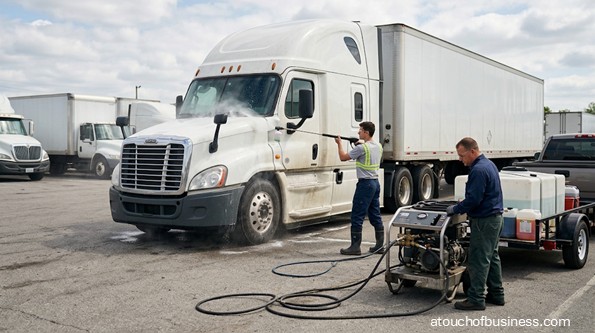
What to Expect From This Guide to Starting a Fleet Washing Business
This guide walks you through the key decisions and practical steps involved in starting a fleet washing business, from fit and wash water planning to opening. The bullets highlight selected areas of value, not everything included.
Inside the guide, you will find:
- Startup steps: Move through 17 ordered steps, from talking with non-competing owners to a trial wash before opening.
- Common questions: Get practical answers about plain-water washing, soap, chemical burns, sites without sewer access, hydrant water, and recycling units.
- Daily reality: See a typical day at customer yards, including the physical, chemical, and wash water challenges owners find hard.
- Wash water rules: Understand disposal options, utility permission, and licensing, which vary by location and shape the sites you can serve.
- Financial planning: Work through startup costs, operating capital, break-even logic, pricing, and funding questions before committing to a rig.
- Equipment and safety: Plan the rig, recovery gear, protective equipment, chemical hazards, and crew training.
- Risks and warnings: Weigh red flags before you start and before your first customer job, from missing wash water plans to funding gaps.
Begin with what fleet washing involves, then see whether washing trucks and buses at customer yards fits your life.
As a fleet washing business owner, you wash trucks, vans, buses, and trailers at your customers’ yards instead of at a wash facility.
Your rig carries water, pressure washers, brushes, and wash water recovery equipment.
Customers often want washes weekly, bi-weekly, or monthly.
This guide covers decisions specific to fleet washing. For the broader process of starting any business, read the general startup steps.
Is a Fleet Washing Business a Good Fit for You?
A fleet washing business fits best when you can run a wash rig, direct a crew, and sell to fleet managers.
Start with an honest look at why you want to own this business.
Ask yourself:
- Can you cover personal living expenses while you sign your first fleet customers?
- Does your household support the time this business demands?
- Can you handle uneven income and the possibility the business does not succeed?
- Are you comfortable with the risk of a large vehicle and equipment purchase?
- Are you willing to learn wash chemicals, wastewater rules, and vehicle regulations?
Startup costs, operating costs, and access to capital all matter.
You will need a vehicle, wash equipment, and wash water recovery gear before your first customer job.
Think about demand too. Why would a fleet manager hire you instead of using in-house staff or a drive-through truck wash?
You can also compare starting from scratch with joining a franchise.
Experienced owners who will not compete with you can help you test every answer above.
Red Flags Before You Start
Red flags before you start are conditions that should make you pause, change your model, or reconsider a fleet washing business.
Pause or reconsider if you see any of these signs:
- You have no workable wash water plan for the sites you want to serve. Change your model or your target customers.
- Local rules bar mobile wash water, or the wastewater utility refuses it. Verify this before you buy equipment.
- Few fleets have yards in your service area. Long drives between stops cut into every job, so reconsider the market or the area.
- Fleet managers already use in-house washers or fixed truck washes. Pause until you find a reason they would switch.
- Your chemical plan lacks training or protective gear. Hydrofluoric acid products can cause severe burns, so do not start without both.
- Your planned rig is heavy enough to add DOT and driver-license requirements. Consider a lighter rig or verify the rules first.
- You face a funding gap for the rig. A truck and recovery equipment are large purchases, so verify funding before you commit.
- Your break-even depends on a few large accounts. Losing one account could threaten the business, so reconsider if you cannot spread the risk.
- Freezing weather or drought limits washing or water supply. Plan operating capital for slow periods.
- You carry liability for vehicle damage or an illegal discharge. Operators who cause an illegal discharge can face enforcement, so confirm insurance and training before opening.
Structural conditions to understand before you commit:
- Wastewater rules differ by city, county, and utility, so a plan that works in one area may fail in another.
- Wash water handling adds equipment and steps to every job.
- Fleet washing is capital-intensive because it needs a vehicle and recovery equipment.
- National franchise and corporate operators serve this market.
None of these conditions rules out the business. Each one is context for realistic planning.
A Day in the Life of Running a Fleet Washing Business
A typical day centers on outdoor, hands-on washing at customer yards, with wash water handling at every stop.
Service often runs on a set cycle, such as weekly, bi-weekly, or monthly, at the customer’s location.
Your day includes scrubbing and spraying vehicles with brushes, hoses, and cleaners.
You also inspect vehicles for cleanliness and damage, run pumps, connect hoses, and move supplies.
At each stop, you set up wash water containment and recovery, then dispose of the water.
You handle wash chemicals while wearing protective gear.
You also carry permits or written disposal agreements in the vehicle.
Freezing weather, drought, or water shortages can limit the water you draw and interrupt service.
What owners often find hard:
- Physical stamina for repetitive tasks in wet, outdoor conditions
- The risk of chemical injury
- Handling wash water at every stop
Does an outdoor, physical routine with wash water handling at every stop fit the life you want?
Step 1: Talk to Non-Competing Owners
Talk to people who run fleet washing or mobile pressure washing companies in other markets, because you will not compete with them.
Fleet managers, shop managers, and franchise owners outside your territory can add useful perspectives.
Each owner’s path is different, but firsthand advice from real business owners shows you what to expect.
Prepare questions on these topics:
- Wastewater handling at customer sites
- Which fleets hire outside washers
- Scheduling
- Equipment problems
- Insurance requests from customers
Write your interview questions before you call your first owner.
Step 2: Choose Your Entry Path
You can start from scratch or explore a franchise, and the best path depends on your budget, timeline, and need for support.
Franchised mobile fleet washing brands exist.
Franchisor press materials describe training and help sourcing the truck and equipment, and you should treat those descriptions as franchisor claims.
Have a franchise attorney review the Franchise Disclosure Document before you sign anything.
Compare these factors before you choose:
- Budget
- Timeline
- Support needs
- Territory
- Control
- Risk tolerance
Step 3: Validate Local Demand and Customer Types
A good demand check shows enough fleets with yards in your service area to keep your rig busy.
Use a local supply and demand check to compare fleet customers against the washers already serving them.
Likely customers are businesses that run vehicles. Trade press names straight trucks, tractors, and trailers.
Franchisor materials add delivery trucks, buses, limousines, and refuse trucks.
Gather these facts for your service area:
- How many fleets have yards there
- Who decides: a fleet manager, maintenance manager, or dispatcher
- Who already washes the vehicles: in-house staff, a drive-through truck wash, or other mobile washers
- Whether national franchise brands already serve the area
Define why a fleet manager would hire you. Washing at the yard means trucks do not travel to a fixed wash facility.
Plan how you will reach your first customers at opening. A practical starting point is direct contact with fleet managers and maintenance managers.
List every fleet with a yard in your service area, and note who decides.
Step 4: Define Your Service Model
Your service model covers which vehicles you wash, how you wash them, where you travel, and who does the job.
Decide these points:
- Vehicle types, such as box trucks, tractor-trailers, vans, or buses
- Wash method: hand-brush washing, pressure washing, interior cleaning, or cargo-area washouts
- Service area and visit schedule
- Solo operation or a crew
Choose a full-size truck-mounted rig or smaller units. Franchisor materials describe smaller units used as helpers on small jobs.
Set a service area you can cover without losing job time to long drives between stops.
Heavier rigs raise DOT and driver-license questions, which Step 7 covers.
Franchisor materials describe a home-based start as possible, but local storage rules still apply (see Step 8).
Step 5: Build Your Wash Water and Water Supply Plan
Wash water from vehicle washing generally cannot go into a storm drain, so you need a disposal plan before you buy equipment or set prices.
Some state environmental agencies classify power washing wastewater as industrial wastewater.
Some municipal codes list mobile truck washing among illicit discharges.
Typical disposal options include:
- Discharge to a sanitary sewer with the wastewater utility’s permission, plus pretreatment, such as filtering or removing oil and grease, where required
- Collecting the water and hauling it to an approved disposal point
- Using a water-recycling system
- Using an evaporation system
The method you choose decides which customer sites you can serve.
Confirm the disposal plan for each type of site before you agree to wash there.
Plan where you will fill your tank, and check local fill rules before you buy one.
Call your local wastewater utility and stormwater program before you buy equipment.
Step 6: Set Up Your Legal Structure, Registration, and Tax ID
Plan your legal structure before you sign a franchise agreement or customer contract, or buy a rig.
Fleet washing involves vehicles, chemicals, and jobs on customer property, which raises personal-asset risk.
Take the final decision on your business structure to an attorney and a tax professional.
Complete these setup tasks:
- Register your business name or DBA if you operate under a name other than your own.
- Get an EIN, your federal business tax ID, and any state tax accounts.
- Confirm whether sales tax applies to cleaning services, since rules vary by location.
Check sales tax rules with your state revenue department.
Step 7: Check Licenses, Permits, and Vehicle Rules
Fleet washing can involve a city or county business license and wastewater approvals. Your rig’s weight and travel routes help decide which vehicle rules apply.
Check your business license and permit requirements with your city and county.
A city may require you to demonstrate your containment practices during licensing.
Ask the licensing office when a containment demonstration happens, since you may need your Step 15 recovery equipment first.
Ask your wastewater utility what approvals it requires for mobile wash water.
A state may require permits for holding tanks or treatment systems used with wash water. Check your state environmental agency.
Vehicle rules to verify:
- Federal rules may require a USDOT number for commercial vehicles rated at 10,001 pounds or more in interstate commerce.
- A commercial driver license applies to a single vehicle rated at 26,001 pounds or more.
- Trade association guidance also mentions chemical placarding and hours-of-service rules for some mobile contractors.
Verify these vehicle rules with the Federal Motor Carrier Safety Administration and your state motor vehicle and transportation agencies.
Ask the Federal Motor Carrier Safety Administration whether a wash rig that carries its own equipment counts as a commercial motor vehicle.
Some regions offer recognized mobile-cleaner training. Ask your local stormwater program.
Step 8: Confirm Where You Will Store the Rig and Supplies
Check zoning, home-occupation rules, and commercial vehicle parking limits before you commit to a storage spot.
Confirm these points:
- Lease and homeowners association restrictions
- Where you will store chemicals
- Where you will fill and empty tanks
Rules vary by location, so ask your planning and zoning office where a commercial rig can park.
Step 9: List Startup Costs and Plan Operating Capital
Your most accurate startup estimate comes from listing every item you need and pricing each one with local quotes.
Startup costs may include:
- Truck or trailer, and any modifications
- Wash equipment and water tank
- Wash water recovery or recycling equipment
- Chemicals and protective gear
- Insurance
- Licenses, permits, and wastewater fees
- Software and phone
- Franchise fees and royalties, if you choose a franchise
- Initial operating capital
Cost drivers that move your list up or down:
- Truck size, and whether you buy new, buy used, or already own one
- Wash method and number of vehicles per visit
- Recovery method
- Crew size
- Travel distance and fuel
- Local permit and wastewater fees
Operating capital keeps you open while customers sign on and invoices clear.
Plan your operating capital to cover fuel, labor, chemicals, insurance, vehicle payments, and slow or delayed-payment periods.
Running out of operating money is a main reason startups close.
Request quotes for your rig and recovery equipment before you finalize your cost list.
Step 10: Test Profit Potential and Break-Even Logic
Your income depends on repeat stops, so confirm that enough vehicle washes will cover your costs and support you.
A guide to estimating profitability and revenue can help you structure the calculation.
Separate your costs into two groups:
- Fixed costs: vehicle payments, equipment payments, and insurance
- Variable costs: labor, fuel, chemicals, wastewater disposal, and travel between stops
Calculate how many vehicle washes you must complete to cover fixed costs.
Use your own local costs, gross margin, and expected prices. Rerun your break-even calculation after you set final prices in Step 11.
Do not borrow someone else’s numbers.
Then check these pressure points:
- Margin pressure on each wash
- Weather-driven slow periods
- Dependence on a few large accounts
- Whether your service area is dense enough to limit drive time
Step 11: Set Your Pricing
Set prices from your costs, vehicle size, wash frequency, and service level, then compare them with local competitors.
Review how to approach pricing your services before you finalize rates.
Pricing inputs to list:
- Vehicle type and size
- Number of vehicles
- Wash frequency
- Service level
- Travel time
- Wastewater disposal cost
- Labor
- Chemicals
Operators describe three common methods: a price per vehicle, size tiers, and schedule-based contract pricing.
Decide whether to set a minimum charge per visit.
Draft a price sheet and test it against your break-even calculation.
Step 12: Plan Funding
Explore funding options before you commit to a truck or recovery equipment.
Compare a business loan with other sources.
- Personal savings
- Bank or SBA-backed loans
- Equipment financing or leasing
- Franchise financing programs, if you choose a franchise
Ask each lender or investor what documents they require before you apply.
The Business Plan section below pulls your costs, funding, pricing, and break-even inputs together.
Step 13: Set Up Banking and Payments
Open a separate business bank account after your legal setup is complete.
Settle these payment details:
- How you will invoice
- Which payment methods you will accept
- Each fleet customer’s payment terms
- How you will collect and track sales tax, if it applies
Step 14: Arrange Insurance and Risk Planning
Verify which coverage your state and federal rules require, then ask an insurance professional about added protection.
Check vehicle liability and workers’ compensation rules in your state, and federal rules, if they apply to your rig.
Ask how business insurance can cover common risks that no rule requires you to insure.
- General liability
- Commercial auto
- Pollution or wash water incident coverage, if an insurer offers it
- Equipment coverage
Fleet customers may ask for a certificate of insurance. Confirm this with each customer.
Ask your agent which wash water incidents each policy covers or excludes.
Step 15: Buy or Build Your Wash Rig and Supplies
Your rig needs a vehicle, water supply, washing equipment, recovery gear, chemicals, protective equipment, and the documents you carry.
Decide whether to buy new, buy used, or use equipment you already own.
Vehicle and water supply:
- Truck or trailer
- Water tank
- Pumps, hoses, and hose reels
Washing equipment:
- Pressure washers, including hot water or steam units if your service needs them
- Spray wands and nozzles
- Hand brushes and extension poles
- Soap application equipment
Wash water recovery:
- Containment mats or berms
- Storm drain covers
- Wet vacuum recovery
- Vacuum or media filtration units
- Evaporation system, if you use one
- Holding tank, plus a pump and hose for sewer discharge
Chemicals and safety:
- Truck wash soaps, degreasers, and aluminum brighteners
- Labeled storage containers and Safety Data Sheets for every product
- Chemical-resistant gloves, boots, and a face shield
- Eyewash station and spill response materials
- Calcium gluconate gel, if you use hydrofluoric acid products
Choose chemicals with their hazards in mind. Occupational safety researchers recommend products without hydrofluoric acid.
Documents, identification, and business tools:
- Permits, written disposal agreements, and proof of insurance in the vehicle
- Business name on the vehicle, plus a USDOT number display and placards if required
- Scheduling and route list, invoicing software, phone, and navigation
- Vehicle damage photo checklist
Test the full setup, including recovery equipment, before you take a customer job.
Step 16: Hire and Train Your Crew
If you use a crew, train every worker on these topics:
- Chemical hazards
- Protective gear
- Wash water containment
- The disposal plan for each site
Complete this chemical and containment training yourself, even if you work alone.
Learn how and when to hire before you add anyone to your crew.
Federal hazard communication rules cover Safety Data Sheets, labeled containers, and worker training.
If you use hydrofluoric acid products, occupational safety guidance calls for:
- Restricted access to concentrated products
- Labeled containers
- An eyewash station
- Trained workers
- Specific gloves, boots, and a face shield
Train workers to inspect vehicles for cleanliness and damage while they wash.
Check whether anyone driving the rig needs a commercial driver license.
If you hire, set up employer accounts and workers’ compensation with your state labor and workers’ compensation agencies.
Step 17: Complete Pre-Opening Checks and a Trial Wash
Complete the checks below, then finish with a trial wash at a friendly site to test your containment, recovery equipment, and full setup.
Confirm your paperwork and approvals:
- Entity formed and EIN issued
- Business license in hand
- Wastewater plan approved for each type of site
- Sewer discharge permit, haul-off agreement, or recycling system in place
- USDOT number and driver licensing confirmed, if required
- Insurance active and certificates of insurance ready
- Bank account, invoicing, and payment method ready
- Customer paperwork and schedules ready
Confirm your rig and crew:
- Rig inspected and registered
- Equipment tested, including recovery equipment
- Chemicals labeled and stored, with Safety Data Sheets in the vehicle
- Protective gear and eyewash stocked
- Workers trained
- Permits and agreements loaded in the vehicle
Schedule your first accounts after the trial wash goes smoothly.
Business Plan
Draft your business plan as you complete the earlier steps. Finish it once your costs, funding, pricing, and break-even inputs are in place.
Use a guide on how to write a business plan to organize the pieces.
Pull these fleet washing pieces together:
- Your service model and target fleets
- Your wash water plan and approvals
- Your legal structure, licenses, permits, and vehicle rules
- Your startup cost list and operating capital
- Your pricing
- Your funding sources and each lender’s document requirements
- Your insurance plan
- Your pre-opening timeline
Add your break-even calculation from Step 10, using your own local costs and prices.
Note the risks that can shrink your margin:
- Weather-driven slow periods
- Dependence on a few large accounts
- Long drive times
Opening-Day Red Flags
Opening-day red flags are setup problems that should delay your first customer job until you fix them.
Delay opening if any of these apply:
- Your wash water plan is not approved for your first customer site, so washing there could create an illegal discharge.
- Your trial wash showed that containment or recovery equipment fails to collect all the water. Repair or replace it first.
- Your insurance is not active, or a certificate of insurance a customer requires is missing.
- A required license or permit is not yet in hand.
- You and your workers have not completed chemical and protective-gear training.
- Driver licensing or vehicle registration for your rig is unconfirmed.
- Your invoicing and payment method are not set up.
- Your permits and disposal agreements are not loaded in the vehicle.
Frequently Asked Questions
Does washing with plain water avoid wastewater rules?
Not always, because rules vary by location.
Some cities allow plain water to reach the storm sewer only at limited sites, such as vehicle sales lots.
Other cities bar all wash water from storm sewers.
Ask your local wastewater utility and stormwater program what applies before you wash any vehicle.
Can I use biodegradable soap and let the water run into a storm drain?
Generally not.
Municipal guidance says wash water can harm waterways even when cleaning products are labeled nontoxic or biodegradable.
A product label does not change storm drain rules, so confirm the rules with your local stormwater program.
Will I feel a chemical burn immediately?
Not always with hydrofluoric acid products.
Exposure can cause little or no pain at first, and damage can build for hours afterward.
Read each product’s Safety Data Sheet, and train every worker on its first aid steps before the first job.
What if a customer’s yard has no sewer access?
You must collect the wash water and dispose of it properly.
Some cities require disposal at an approved facility.
Some allow disposal at a commercial car wash only under a written agreement carried in your vehicle.
Ask your wastewater utility which disposal points it accepts.
Can I fill my tank from a fire hydrant?
Often, but only with a utility permit.
Utilities that allow hydrant use issue a permit with a meter and backflow protection.
Some utilities allow only non-potable use, and one utility will not issue a permit when the property already has water service.
Permits expire, so ask your water utility about the permit’s terms and length.
Does a water-recycling unit mean I can skip wastewater approvals?
Not automatically.
One franchise owner describes filtering reclaimed water and then returning it through the sewer system.
A sanitary district requires a permit application and a review of your pretreatment system.
One city exempts recycling-unit users from sand-trap discharge but still requires filtering at least one cycle.
Confirm the requirements with your wastewater utility before you buy a unit.
Interviews with Fleet Washing Professionals
These interviews share firsthand experiences from fleet washing and pressure washing operators. They cover topics such as getting started, finding customers, building recurring work, hiring employees, developing systems, and expanding operations.
Someone considering a fleet washing business can use these conversations to better understand how established operators approached sales, staffing, contracts, recurring revenue, and the challenges involved in growing a service business.
The Scott Brothers and Scott’s Mobile Wash
Derek and Colton Scott discuss growing Scott’s Mobile Wash from a small weekend operation into a fleet washing company with multiple employees. They talk about how Derek entered fleet washing, acquiring an existing operation, building recurring work, restructuring the company, hiring, and developing stronger systems and company values.
This interview is useful for someone starting a fleet washing business because it shows how a small operation can evolve as customers, employees, and responsibilities increase. It also provides perspective on why business systems and structure become increasingly important as the company grows.
Nate Farrier of Northern Lightning Wash
Nate Farrier discusses starting Northern Lightning Wash at age 24 and developing the fleet and truck washing company in Michigan. The conversation covers competing in the local market, staffing challenges, expanding through additional locations, sales approaches, and ideas for creating recurring revenue.
This interview is useful for someone considering fleet washing because it provides an operator’s perspective on building a customer base, dealing with labor constraints, keeping processes repeatable, and looking for ways to turn individual sales into ongoing business.
Jeremiah Mendoza of Bomb City Pressure Pros
Jeremiah Mendoza discusses operating Bomb City Pressure Pros and the work involved in running a pressure washing business. The conversation includes detailing, fleet washing, business development, and obtaining larger commercial contracts.
This interview is useful for someone starting a fleet washing operation because it provides perspective on moving beyond smaller cleaning jobs and pursuing commercial fleet work. It also highlights the importance of customer acquisition and larger contracts within a pressure washing business.
Chase Wallin and Jace Holtz on Building Recurring Service Businesses
Chase Wallin and Jace Holtz discuss building service businesses from modest beginnings, including a fleet washing operation. Their conversation covers recurring commercial revenue, partnerships, equipment investment, business growth, and approaches to financing expansion.
This interview is useful for someone considering fleet washing because it provides a younger operator’s perspective on building recurring commercial accounts and expanding a service operation. It also offers insight into partnership decisions and using equipment to support business growth.
Related Articles
- How To Start a Mobile Car Wash
- How To Start a Car Wash Business
- How To Start an Auto Detailing Business
- How To Start a Pressure Washing Business
- How To Start an Automotive Fleet Maintenance Business
Sources:
- Ohio EPA: Mobile Power Washing Rules
- Power Washers of North America: PWNA Compliance Guide
- Cleaner Times: Power Washer Environmental Rules
- Central Contra Costa Sanitary District: Mobile Washer Fact Sheet
- City of Pleasanton Clean Water Program: Mobile Business Wastewater Tips
- City of Austin: Mobile Washer Wastewater Rules
- City of Grand Prairie: Mobile Wash Vendor Rules
- City of Escondido: Mobile Vehicle Washing Practices
- Town of Monroe: Pressure Washing Practices
- Alkota: Water Recovery Systems
- CDC MMWR: Hydrofluoric Acid Injury Report
- Washington L&I: HF Acid Hazard Alert
- Business Insurance: HF Acid Car Wash Warning
- ICW Group: HF Acid Safety Brochure
- Arizona Department of Transportation: USDOT Number Information
- PennDOT: CDL Classes and Weights
- Seattle Public Utilities: Hydrant Permit Rules
- City of Sacramento: Hydrant Water Permit Terms
- City of Harrisonburg: Hydrant Use Policy
- North Marin Water District: Hydrant Meter Permit
- O*NET OnLine: Vehicle Cleaner Job Summary
- EBSCO Research Starters: Vehicle Cleaner Work Environment
- Commercial Carrier Journal: Fleet Clean Franchise Profile
- Franchising.com: Mobile Fleet Franchise Release, Fleet Cleaning Franchise Release, Fleet Washing Franchise Process
- Peersense: Fleet Clean Franchise Overview