
From Recipe Specs to Permits: A Startup Planning Path
Is This Herbal Tea Business Right for You?
Before you worry about labels, suppliers, or packaging, start with you. Is owning a business right for you, and is an herbal tea business the right fit for your skills, time, and risk comfort?
Motivation matters more than most people think. Ask yourself this exact question: “Are you moving toward something or running away from something?” If you’re starting mainly to escape a job or a financial bind, that may not sustain motivation when things get stressful.
Now check passion. Passion isn’t hype. It’s what keeps you working the problem when something breaks, a permit takes longer than expected, or a supplier changes a product. Without it, people tend to look for a way out instead of solutions.
Be honest about the tradeoffs. Are you ready for uncertain income, long hours, difficult tasks, fewer vacations, and full responsibility? Is your family or support system on board? Do you have (or can learn) the skill set and secure enough funds to start and operate?
If you haven’t done a general reality check yet, start here: Points to Consider Before Starting Your Business. Then read How Passion Affects Your Business. For a grounded view of what ownership can feel like, use Business Inside Look.
One more startup move that helps: talk to owners in the same line of work, but only when they are not direct competitors. Only talk to owners you will not be competing against—different city, region, or service area.
Smart questions to ask those owners:
- “What surprised you most during the setup phase—permits, space needs, labeling, or suppliers?”
- “If you had to start over, what would you do earlier to avoid delays before your first sales day?”
- “Which sales channel was easiest to launch first, and why?”
Herbal Tea Business Overview
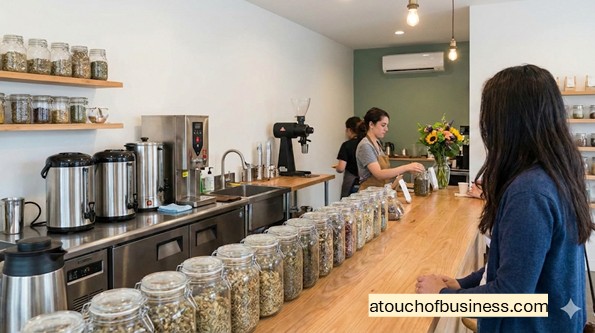
This type of business usually starts as a packaged product business—dried botanicals are sourced, blended into recipes, and packaged for sale. Some owners add brewed-to-order tea through a tea bar, pop-up, or event service, but that choice changes your permit needs and workspace requirements.
In many cases, you can start small and solo if you focus on dry blending and packaged goods in an approved space. If you add a public-facing drink service, you’re more likely to need a dedicated location, added equipment, and staffing help sooner.
How This Business Generates Revenue
Revenue usually comes from packaged products sold direct to customers, sold wholesale to retailers, or sold at markets and events. If you add brewed tea, revenue can also come from individual drink sales, but that option often adds local food service rules.
What you choose at launch should match your time, your budget, and how quickly you can meet local requirements.
Products and Services You Can Offer at Launch
Your launch products should stay tight and simple. Too many options early can slow down labeling, sourcing, and setup.
- Loose dried herbal blends (single blend or small set)
- Single-herb products meant for infusion
- Tea bags or sachets (if you have the right filling and sealing setup)
- Sampler packs and gift sets
- Brewed tea service (only if you pursue the local approvals for serving the public)
Who Your Customers Are
You’ll usually serve a mix of direct customers and business customers, depending on where you sell. Your customer types will shape your packaging choices, label design, and pricing.
- Online shoppers purchasing for home use
- Specialty retailers (gift shops, natural food stores)
- Food service accounts (cafés, restaurants, hotels)
- Event and gifting customers (custom bundles)
Step 1: Choose a Launch Model and Your Time Commitment
Start by deciding how you’ll sell first. Will you launch online, sell at markets, sell wholesale, or open a storefront tea bar? Each option changes your space needs, permit path, and how quickly you can start.
Decide if this will be full time or part time. A part-time launch can work for packaged goods, especially if you keep your product line small. If you plan to serve brewed tea to the public, expect more coordination and time demands.
Also decide who’s involved. Solo is common at the start. Partnerships can help if one person brings sourcing skills while another handles sales or compliance. Investors are more common when you’re building a larger space or scaling production quickly.
Step 2: Prove Demand and Profit Potential
Don’t skip the basic math. Demand alone isn’t enough—you also need enough margin to cover expenses and pay yourself. That means looking at ingredient costs, packaging, labels, labor time, shipping materials, and platform fees if you sell online.
Look at comparable products in the channel you want to use. What do similar packages sell for? How many units would you need to sell each month to cover your bills and still have room for growth?
If you want a simple framework for checking demand, use this supply and demand guide to keep your research focused.
Step 3: Decide What You Will Sell and How It Will Be Positioned
Herbal tea is often sold as a conventional food product. If you position products as dietary supplements or make certain types of claims, different rules can apply, especially around what you can say on labels and in ads.
Before you name blends or write descriptions, get clear on the line you won’t cross. Health-related advertising must be truthful, not misleading, and supported by appropriate evidence. A practical starting point is the Federal Trade Commission’s guidance: Health Products Compliance Guidance.
If you plan to use structure/function claims for dietary supplement positioning, review the Food and Drug Administration’s overview: Structure/Function Claims. If your product is treated as a dietary supplement and uses covered claims, the Food and Drug Administration also describes notification expectations here: Structure/Function Claim Notifications.
Step 4: Build Your Supplier List and Traceability Plan
Your suppliers are part of your product quality. You’re buying botanicals that can vary by harvest, region, and processing, so you need consistency and documentation.
Choose suppliers that can provide lot-level details and basic product documentation. Set a simple system so you can track which supplier lots went into which finished batches. This is the kind of detail you’ll be glad you set up early if you ever need to respond to a quality concern.
Think about the flip side, too. If a supplier can’t answer basic questions about lot tracking or product handling, that’s not just inconvenient—it can create launch delays.
Step 5: Decide Where Production and Storage Will Happen
This step is more important than it looks. Your space affects cleanliness, storage conditions, pest control, and whether local agencies will allow your setup.
If you’ll blend and package dry tea, you may be able to use a shared commercial kitchen, a permitted small production space, or another approved facility option in your area. If you’ll serve brewed tea to the public, you’re likely dealing with local retail food rules and inspections.
Use the Food and Drug Administration’s state links as a starting point for finding your state’s retail and food service rules: State Retail and Food Service Codes and Regulations by State.
Step 6: Plan Label Compliance Before You Order Packaging
Labels are a pre-launch bottleneck. If you order packaging first and then discover your label needs changes, you can lose time and cash.
The Food and Drug Administration publishes a detailed reference called the Food Labeling Guide. It’s a practical place to start when you’re building your first label: Food Labeling Guide.
Also review allergen requirements as part of your ingredient decisions. Sesame became a required labeled allergen as of January 1, 2023, which matters if you use sesame as an ingredient or in shared handling environments. Start here: Sesame Allergen Update.
Step 7: Decide Whether You Need Nutrition Facts and What Exemptions Might Apply
Nutrition labeling is commonly required for packaged foods, but exemptions can apply in some cases. This is one of those areas where the details matter, so confirm your situation before finalizing label print runs.
The Food and Drug Administration’s small business guide is a solid reference for understanding the exemption pathways and when notices are required: Small Business Nutrition Labeling Exemption Guide.
Step 8: Estimate Startup Costs Based on Scale
Startup cost depends on what you’re building. Packaged goods can often launch with a simpler setup, especially if you start with small batches. A tea bar, a dedicated production space, or higher-volume packaging equipment can raise your cost quickly.
Write down the essentials you must have before your first sales day: ingredients, packaging, labeling, basic equipment, and your workspace requirements. Then price those items so you’re working with real numbers, not guesses.
If you want a structured way to build your estimate, use this startup cost guide to keep your list grounded and complete.
Step 9: Write a Business Plan Even If You’re Not Seeking Funding
A plan isn’t about impressing anyone. It’s a tool to keep you focused when you’re juggling suppliers, compliance steps, packaging decisions, and launch timelines.
Your plan should cover your launch channel, product line, startup budget, pricing, and how you’ll reach customers. If you want a guide that keeps it simple, start with how to write a business plan.
Step 10: Choose a Legal Structure and Register the Business
Many small businesses start as sole proprietorships because it’s simple. As the business grows, some owners form a limited liability company for added structure and separation. Your choice depends on risk, plans, and how you’ll operate.
Registration happens through your state, usually through the Secretary of State or similar office. If you want a plain-language walkthrough, see how to register a business, then verify the actual filing steps on your state’s official site.
Step 11: Get an Employer Identification Number and Tax Accounts
An Employer Identification Number is often used for tax administration and banking. The Internal Revenue Service provides the direct application here: Get an Employer Identification Number.
Next, confirm your state tax registrations, including sales and use tax if it applies to your product and channel. If you’ll hire employees, you’ll also need the right employer accounts at the state level before payroll begins.
Step 12: Identify Licenses, Permits, and Food-Related Registrations
Permits are location-based, so this is where you slow down and confirm facts with the right agencies. A good federal overview of where permits can come from is the Small Business Administration’s page: Apply for Licenses and Permits.
If you operate a facility that manufactures, processes, packs, or holds food for consumption in the United States, you may need Food and Drug Administration food facility registration. The Food and Drug Administration’s starting point is here: Food Facility Registration Overview.
If you’re planning a tea bar or sampling to the public, expect local health department approvals and inspection requirements. Use the Food and Drug Administration’s state list from earlier to find the right local path for your location.
Step 13: Set Up Banking and Your Financial Setup
Before you sell anything, set up your business accounts at a financial institution. Keep transactions separate so your records stay clean and you can see what the business is actually doing.
Don’t try to become an expert in everything at once. If accounting systems aren’t your strength, you can learn the basics and still work with a qualified professional to set things up correctly.
Step 14: Lock In Your Business Name and Online Presence
Names create practical issues, not just branding issues. You’ll want a name you can register, a domain you can claim, and social handles you can use.
Work through a methodical name selection process, then confirm availability in your state records and online. A helpful walkthrough is selecting a business name.
Step 15: Build Your Brand Assets and Basic Marketing Pieces
Brand assets are your launch tools. At a minimum, you’ll want a logo, basic design elements for labels, and simple sales materials that match your channel.
If you’re building a site, start with an overview of developing a business website. If you’ll attend events or meet wholesale accounts in person, you may also want business cards and a basic corporate identity package.
Step 16: Choose Your Pricing and Sales Policies Before You Go Live
Pricing is not guesswork. It should be based on your costs, the channel you’re selling in, and the margin you need to cover expenses and pay yourself.
Set your pricing for each product size and format, then decide your basic sales policies, like returns and shipping terms. If you want a framework, use pricing your products and services as a starting point.
Step 17: Plan Insurance and Risk Requirements
Insurance needs depend on what you do and where you sell. A common starting point is general liability, then you add other coverage based on risk, such as product-related coverage if it fits your situation.
If you sell at markets, events, or through a venue, they may require proof of coverage before you can set up. For a plain-language overview, see business insurance.
Step 18: Acquire Equipment and Set Up a Clean Workspace
Your setup should support accurate weighing, clean handling, controlled storage, and consistent packaging. The more consistent your workspace is, the easier it is to produce repeatable batches.
If you’re launching with packaged products only, your space needs are often simpler than a beverage service setup. If you’re opening a public-facing tea bar, your equipment list grows and your location approvals become more involved.
Step 19: Finalize Suppliers, Place Orders, and Build Backup Options
Once you’ve validated your blends and your label plan, place initial orders for ingredients and packaging. Keep the first run sized to what you can sell and store properly.
Also think about the flip side. What happens if a key botanical becomes unavailable or changes quality? Having a backup supplier path can prevent last-minute product changes before launch.
Step 20: Complete Your Pre-Launch Checklist and Schedule Your First Sales Day
This is your go-live checkpoint. Confirm required registrations and approvals are active, your labels match your final formulas, and your packaging and batch tracking system is ready.
Then decide how you’ll get your first customers. Online may rely on search and social channels, while markets rely on visibility and event selection. If you’re opening a physical location, you can also use grand opening ideas to plan a simple launch event.
Essential Equipment Checklist
This checklist focuses on core equipment you typically need before launch for dry blending and packaged products. If you plan brewed tea service, confirm added equipment and sink requirements with your local health department.
Ingredient Receiving and Storage
These items support clean receiving, safe storage, and basic quality control for dry botanicals.
- Receiving table or cart
- Food-grade ingredient bins with tight lids
- Shelving racks with cleanable surfaces
- Hygrometer and thermometer for storage area
- Container labels for ingredient name, supplier lot, and received date
Weighing and Measuring
Accurate weighing supports consistent batches and packaging accuracy.
- Precision scale for small-quantity ingredients
- Higher-capacity scale for bulk ingredients and finished packages
- Calibration weights for routine checks
- Measuring tools dedicated to your handling process
Blending and Preparation
Dry blending can be simple at the start, as long as your tools are cleanable and sized for your batch plan.
- Food-grade mixing tubs or bowls
- Stainless steel or other cleanable work tables
- Sifters or mesh screens (if used for size control)
- Mixing tools (paddles, spatulas)
Packaging and Sealing
Packaging needs depend on whether you sell loose tea, sachets, or both. Choose food-contact packaging intended for your product type.
- Pouches, tins, or jars intended for food contact
- Heat sealer for pouches (if used)
- Induction sealer for compatible containers (if used)
- Tamper-evident seals (if used)
- Funnels and dosing tools
Sachet or Tea Bag Filling (If Used)
If you sell tea bags or sachets, your setup needs to support consistent filling and secure sealing.
- Manual or semi-automatic filling tools suited to your format
- Heat sealer compatible with your materials
- Food-safe funnels and portioning tools
Labeling and Batch Coding
Batch tracking is easier when you build it into your label workflow from day one.
- Label printer (for small runs) or printed label inventory
- Lot or batch coding method (printer or label system)
- Label application tools (as needed for speed and accuracy)
Sanitation and Safety Basics
Your exact requirements depend on your facility approval path, but you still need the basics to keep food-contact surfaces clean and your storage protected.
- Cleaning supplies appropriate for food-contact surfaces
- Sanitizing supplies appropriate for food-contact surfaces
- Trash and recycling bins with lids
- Pest prevention basics for storage (sealed containers, tight lids)
Shipping and Order Fulfillment (If Selling Online)
If you ship products, plan your packing flow before you start accepting orders.
- Shipping scale
- Packing table
- Shipping label printer
- Mailers or cartons and void fill
Skills You’ll Need (and How to Close Gaps)
You don’t need every skill on day one, but you do need a plan. You can learn what you’re missing, or you can work with professionals so critical setup steps are done correctly.
- Supplier evaluation and documentation tracking
- Accurate weighing, batching, and recordkeeping
- Basic label planning and review
- Quality control for dry botanicals, including storage conditions
- Pricing and basic financial tracking
- Clear writing for product descriptions without risky claims
Pros and Cons to Consider
This is a business with multiple launch paths, but compliance and product consistency matter. Think about both sides before you commit.
- Pros: Multiple ways to launch (online, wholesale, markets); shelf-stable packaged products can support shipping; product line expansion can be gradual.
- Cons: Labeling and claim risk can create delays; supplier quality and documentation matter; humidity and storage control are important for dried botanicals.
What Daily Work Can Look Like Once You’re Open
Even though this guide is focused on startup, it helps to picture the daily flow. Does it fit your personality and time?
- Receiving and logging ingredients with supplier lot details
- Inspecting and storing botanicals in controlled conditions
- Weighing and blending batches with batch records
- Packaging, sealing, labeling, and lot coding finished products
- Picking, packing, and shipping orders (if selling online)
- Maintaining cleaning routines that match your facility expectations
A Day in the Life of an Owner
You might start the morning checking inventory levels and today’s orders. If ingredients arrived, you’ll log lots, check packaging condition, and move items into proper storage.
Then you’ll run production: weigh, blend, package, code, and do final checks. Later, you might prep shipments, respond to retailer questions, and review what needs to be purchased for the next production run.
If you’re running a tea bar or sampling at events, you’ll also have setup and public-service tasks. That often means longer days and tighter coordination with local requirements.
Red Flags to Watch Before You Commit
Most startup problems show early if you know what to look for. These red flags can signal future delays or avoidable risk.
- A supplier cannot provide lot tracking details or consistent documentation
- Product descriptions drift into disease-related claims or vague health promises
- Your labels are missing key basics covered in the Food and Drug Administration’s labeling guidance
- You can’t explain how you’ll track ingredient lots to finished batches
- Your storage area can’t stay dry and protected from pests
- You plan to sell “organic” without confirming certification and labeling rules
Varies by Jurisdiction
Rules differ by state, county, and city. The safest move is to confirm requirements with the agencies that regulate your location and your sales model.
Use this checklist to verify locally before you commit to a lease, order bulk packaging, or announce a launch date.
- Business registration: your state Secretary of State or business filing office
- Sales and use tax: your state Department of Revenue or taxation agency
- Local business license: your city or county business licensing office
- Zoning and home occupation: your city or county planning and zoning department
- Building approval and Certificate of Occupancy: your city or county building department (commercial spaces)
- Food permits and inspections: your local health department, and your state’s retail food rules link list
Questions to ask the right office:
- “If I only sell sealed packaged tea, what permit path applies here?”
- “If I also serve brewed tea or samples, what approvals change?”
- “Can production or storage happen at home in this zoning area, and what conditions apply?”
101 Real-World Tips for Your Herbal Tea Business
The tips you’re about to read can help at different points in your business journey.
Treat them like small upgrades you can apply when the timing is right.
Save this page so you can come back whenever you need a fresh idea.
Start with one tip, put it into practice, then return for the next when you’re ready.
What to Do Before Starting
1. Pick your launch channel first (online, wholesale, markets, or a tea bar) because permits, equipment, and timelines change by channel.
2. Decide whether you will only sell sealed packaged tea or also serve brewed tea and samples; serving the public usually triggers additional local health requirements.
3. Limit your first product line to a few blends so you can source consistently and finalize labels faster.
4. Write a product specification sheet for each blend: exact ingredients by weight, target net weight, packaging type, and intended selling channel.
5. Choose botanical suppliers that can provide lot numbers and basic documentation so you can trace ingredients to finished batches.
6. Ask suppliers about allergen handling and shared equipment so you can plan cross-contact controls and label statements when needed.
7. Set storage standards for dried botanicals (cool, dry, sealed) and buy a hygrometer so you notice humidity problems early.
8. Create a simple lot and batch coding system before you produce your first sellable batch.
9. Mock up your label early and confirm it includes product identity, ingredient list, net quantity, and your business contact information.
10. Review every label and marketing statement for health-claim risk; avoid implying disease treatment or prevention.
11. If you want to use the word “organic,” confirm whether certification is required for your situation before printing packaging.
12. Choose packaging that protects against moisture and light and that is intended for food contact.
13. Build a pricing worksheet that starts with your actual unit cost (ingredients, packaging, labels, and time) before you pick a retail price.
14. Plan cash for both startup purchases and the first months of operating expenses so you are not forced to rush decisions.
15. Write a business plan even if you are self-funding; use it to lock in your channel, budget, and launch timeline.
16. Pick a legal structure that matches your risk and plans; many small businesses start as sole proprietorships and form a limited liability company later as they grow.
17. Check that your business name is available in your state records and that a matching domain and social handles are available.
18. Interview owners in the same line of work only when they are not competitors, and focus your questions on permits, labeling, and supplier lessons.
What Successful Herbal Tea Business Owners Do
19. Standardize recipes by weight, not by scoops, so every batch tastes and measures the same.
20. Keep a master ingredient register that lists each herb, your approved suppliers, and your minimum documentation requirements.
21. Track losses from spills, broken seals, and old inventory so your true costs stay accurate.
22. Use short checklists for receiving, blending, packaging, and label checks so quality does not depend on memory.
23. Take reference photos of properly filled packages and label placement to train helpers and keep consistency.
24. Do a small pilot run with your real packaging to confirm seals, net weights, and label fit before scaling up.
25. Set reorder points for each key item (pouches, labels, top herbs) so you do not pause sales while waiting on supplies.
26. Keep a single folder or binder for permits, registrations, supplier documents, and label proofs so you can respond quickly to questions.
27. Run periodic scale checks with calibration weights to reduce weight drift and packaging errors.
28. Lot-code every sellable unit, even in small batches, so you can isolate issues if a customer reports a problem.
29. Hold a small retained sample from each batch and store it sealed so you can compare later if quality questions come up.
30. Review labels on a set schedule and whenever you change a supplier or formula, even slightly.
31. Build a relationship with a packaging and label vendor who can confirm lead times and minimums before you promise launch dates.
32. Keep business transactions separate from personal spending so taxes, pricing, and profit are easier to see.
33. Use simple bookkeeping categories that match how you make decisions (ingredients, packaging, permits, shipping, marketing).
34. Plan production days and fulfillment days separately so you can work faster and keep the workspace cleaner.
35. Identify at least one backup supplier for your top-selling herbs so a shortage does not stop your entire line.
36. Collect customer feedback in one place and decide in advance what you will change versus what you will keep consistent.
What to Know About the Industry
37. Know how your product is positioned: conventional food and dietary supplement rules are not the same, especially for claims.
38. If you manufacture, process, pack, or hold food in a facility you operate, confirm whether Food and Drug Administration food facility registration applies to you.
39. Permits and inspections vary by state, county, and city; confirm requirements before you sign a lease or buy equipment that assumes a certain setup.
40. Sampling and brewed-to-order service can trigger retail food rules even if your main revenue is packaged goods.
41. Food labels have required elements, and missing basics can create compliance risk and product holds.
42. Nutrition Facts labeling is often required unless an exemption applies; confirm your status before you print large label runs.
43. Sesame is a major food allergen in the United States; if you use it or have cross-contact risk, confirm how your label should address it.
44. “Organic” is a regulated term; if you use it on labels, confirm certification and labeling requirements for your products and supply chain.
45. Botanicals can carry contaminants; when possible, request testing information for heavy metals, pesticides, and microbes from suppliers.
46. Moisture control is a product safety issue; store herbs sealed and avoid production areas with persistent humidity swings.
47. Herb aroma and flavor fade over time; set a realistic best-by approach backed by supplier data or testing when you use date coding.
48. If you import ingredients, plan for longer lead times and document requirements, including traceability and labeling consistency.
49. Choose shipping materials that prevent crushing and keep products dry so customers receive packages that match your label claims.
50. If you sell at markets or events, some organizers require proof of insurance; ask early so you can meet requirements without last-minute scrambling.
51. If you plan a tea bar, confirm whether your local rules require a dedicated handwashing sink and other facility features before build-out.
52. If you change a blend formula, treat it like a new product for labeling and recordkeeping so old and new versions do not get mixed.
Running the Business (Operations, Staffing, Standard Operating Procedures)
53. Write standard operating procedures for your most repeated tasks so anyone helping you can follow the same steps every time.
54. Assign a single person to approve label changes so you do not accidentally sell products with outdated ingredients or net weights.
55. Keep your production workspace organized by zones: receiving, storage, blending, packaging, and finished goods.
56. Use clear shelf labels to separate incoming ingredients from approved ingredients and finished product.
57. Schedule short cleaning steps between batches so herb dust does not build up and contaminate other blends.
58. If you hire help, train them first on weighing accuracy, sanitation, and label checks before speed.
59. Create a written policy for handling damaged packages and returns so every customer gets the same outcome.
60. Set clear internal rules for when you will remake a batch versus rework it; consistency protects your brand and your time.
61. Keep a simple batch record form on a clipboard so you record data while you work, not afterward.
62. Use a two-person check for the first 50 units of a new label run: one person verifies ingredient list and net quantity, the other verifies placement.
63. Store finished goods off the floor and away from strong odors so product quality stays stable.
64. Track the time it takes to blend and package a batch; use that data to decide whether equipment upgrades are worth it.
65. If you offer custom blends, use a written request form that captures allergens, preferred flavors, and approval steps before you start blending.
66. Set a maximum number of open batches in your workspace to reduce the chance of confusing ingredients or labels.
67. Create a simple training file for temporary staff that includes photos, checklists, and safety rules.
68. Use a packing slip or order checklist for every shipment so you reduce missing items and wrong labels.
69. Review your permits and registrations on a calendar so renewals do not lapse during busy seasons.
70. If you outgrow your space, evaluate shared commercial kitchens or co-packers to increase capacity without building your own facility.
Marketing (Local, Digital, Offers, Community)
71. Write product descriptions that focus on flavor, aroma, and ingredients rather than health promises.
72. Use clear photos that show package size and what is included so customers know what they will receive.
73. Offer sampler packs to reduce the risk for first-time customers and learn which blends convert to repeat purchases.
74. If you sell locally, partner with complementary businesses like bakeries or gift shops for small cross-promotions.
75. At markets, display a simple “how to brew” card next to each blend so shoppers understand use without long conversations.
76. Collect email permission at checkout and follow up with a short brewing guide and storage tips to reduce early dissatisfaction.
77. Plan seasonal launches based on when your customers actually shop, not just when you feel inspired to create new blends.
78. If you sell wholesale, provide a simple sell sheet with product names, net weights, case packs, and the reorder process.
79. Create a consistent naming system for blends so customers can find favorites again and retailers can reorder accurately.
80. Test small paid ads only after your product page and shipping process are stable so you do not pay to expose weak spots.
81. Encourage reviews with a simple post-purchase message and respond professionally to critical feedback.
82. If you open a physical location, check foot traffic patterns at different times of day before committing to a lease.
Dealing with Customers (Trust, Education, Retention)
83. Set expectations on caffeine content, brewing time, and flavor strength so customers are not surprised by a mild or strong infusion.
84. Use a short “what’s inside” explanation on packaging and product pages so customers can scan ingredients quickly.
85. If a customer asks for medical advice, redirect them to a licensed health professional and keep your response focused on ingredients and use.
86. Keep a consistent approach to substitutions; if an herb is unavailable, notify customers when a blend changes rather than quietly swapping ingredients.
87. Make it easy to contact you with order issues by using a dedicated business email and clear response times.
88. When selling in person, provide a simple comparison between similar blends so customers choose confidently.
89. Track repeat customers by order history and offer a reminder when favorite items are back in stock.
90. If you offer gift notes or bundles, confirm spelling and contents before sealing the package.
Customer Service (Policies, Guarantees, Feedback)
91. Publish a clear return and replacement policy that covers damaged shipments, opened products, and timing.
92. Document every complaint with date, lot code, and issue description so you can see patterns instead of guessing.
93. When you make a mistake, explain what you will do next and when; clear timelines reduce frustration.
94. Use short post-purchase check-ins to catch problems early, especially for first-time customers.
Sustainability (Waste, Sourcing, Long-Term)
95. Choose recyclable or refillable packaging when it fits your product and customer expectations, and confirm the package still protects against moisture.
96. Reduce waste by ordering packaging in sizes that match your sales pace so labels and pouches do not expire or change before you use them.
97. Ask suppliers about responsible sourcing practices and keep notes so you can answer customer questions accurately.
What Not to Do
98. Do not use disease-related language in labels or ads; it can trigger regulatory and platform problems.
99. Do not print thousands of labels before you finalize your formula, net weight, and required label elements.
100. Do not rely on verbal supplier promises; get key details in writing, including lead times and lot identification.
101. Do not start serving brewed tea to the public until your local health department confirms what approvals and inspections apply.
FAQs
Question: Do I need a license to sell packaged herbal tea where I live?
Answer: Maybe, because many permits and licenses are set by your state, county, and city.
Start with your state’s business filing office, state tax agency, and your city or county business licensing portal to confirm what applies to packaged foods.
Question: Do I need Food and Drug Administration food facility registration to sell herbal tea?
Answer: You may need it if you operate a facility that manufactures, processes, packs, or holds food for consumption in the United States.
If you only resell finished, packaged products from other registered manufacturers, your obligations may differ, so confirm based on your role and facility.
Question: How do I know if my tea is treated as a food or a dietary supplement?
Answer: It depends on how the product is presented, including your labeling, claims, and intended use.
If you plan supplement-style claims, review Food and Drug Administration guidance on dietary supplements and structure/function claims before finalizing labels and ads.
Question: What label elements are usually required for packaged herbal tea?
Answer: Packaged foods commonly need a product name, ingredient list, net quantity statement, and the name and address of the responsible business.
Use the Food and Drug Administration’s Food Labeling Guide and the Code of Federal Regulations rules as your checklist before printing labels.
Question: Do I need a Nutrition Facts label on herbal tea packages?
Answer: Nutrition labeling is often required unless an exemption applies.
Check the Food and Drug Administration’s small business exemption guidance early so you do not print labels that need rework.
Question: How should I handle allergen labeling for tea blends?
Answer: If your product contains a major food allergen ingredient, you generally need to declare it as required by labeling rules.
Also think about cross-contact risk from shared handling or shared equipment, and confirm what statements are appropriate for your setup.
Question: Can I label my teas as organic?
Answer: “Organic” is a regulated claim, and certification requirements can apply depending on your products and supply chain.
Confirm certification and labeling rules through the United States Department of Agriculture National Organic Program before you print packaging.
Question: What changes if I serve brewed tea or hand out samples?
Answer: Serving the public often triggers retail food or food service rules that do not apply to sealed packaged goods.
Check your state and local health department requirements before planning a tea bar, pop-up service, or sampling table.
Question: What equipment do I need before I can produce sellable batches?
Answer: At minimum, you need accurate scales, cleanable blending tools, food-safe containers, packaging seals, and a labeling and lot-coding method.
You also need storage that keeps botanicals dry and protected, plus a cleaning setup that matches your facility’s expectations.
Question: How do I vet suppliers and set up traceability from day one?
Answer: Choose suppliers who can provide lot numbers and basic documentation, then link incoming lots to your finished batch codes.
Use a batch record that captures date, formula, input lots, net weights, and who produced the batch.
Question: What legal structure should I start with?
Answer: Many small businesses start as sole proprietorships for simplicity, then form a limited liability company as risk and complexity grow.
Confirm your options through your state’s business filing office and consider professional help if you are unsure.
Question: Do I need an Employer Identification Number?
Answer: Many owners get an Employer Identification Number to support banking, tax filings, and hiring.
You can apply directly through the Internal Revenue Service website, and it is free through the official portal.
Question: How do I set up sales tax for packaged tea?
Answer: Sales and use tax rules vary by state and sometimes by product type and selling channel.
Start with your state Department of Revenue or tax agency site to determine whether you need a permit and what products are taxable.
Question: What is different if I sell wholesale to retailers?
Answer: You may need wholesale account setup steps like resale documentation and clear terms for case packs, reorder timing, and payment timing.
Confirm tax handling with your state tax agency and keep records that match your invoices and deposits.
Question: What insurance should I look at before I sell or attend events?
Answer: Many owners start by pricing general liability coverage, then add coverage that matches their risk and sales channels.
Event organizers and some retailers may require proof of coverage before you can sell on-site or stock products.
Question: How do I build a repeatable production workflow?
Answer: Use written steps for receiving, weighing, blending, packaging, and label checks so quality does not depend on memory.
Separate zones for storage, blending, packaging, and finished goods to reduce mix-ups and keep the workspace easier to clean.
Question: What records should I keep for each batch once I am running?
Answer: Keep a batch record that shows the formula, ingredient lots used, batch date, net weights, lot code, and who produced it.
Retain label proofs and any supplier documents you relied on, so you can answer questions fast if an issue comes up.
Question: When should I hire help, and what should I train first?
Answer: Hire when production or fulfillment starts causing late orders, quality drift, or burnout.
Train first on weighing accuracy, sanitation habits, and label verification before speed.
Question: What marketing claims are risky for herbal tea, and how do I avoid trouble?
Answer: Claims that suggest disease treatment or prevention are high-risk and can create regulatory and platform problems.
Use the Federal Trade Commission’s guidance for substantiating health-related claims, and keep your language focused on ingredients and flavor.
Question: What numbers should I watch each week to stay in control?
Answer: Track cash on hand, ingredient inventory levels, unit cost, gross margin, and the number of sellable units produced per batch.
Also watch returns, damage rates, and the percent of repeat customers so you can spot quality and retention issues early.
Question: What are common early mistakes owners make after launch?
Answer: The big ones are printing labels before formulas are final, skipping lot coding, and making risky health claims in ads.
Another common problem is ignoring humidity and storage controls, which can reduce quality and increase waste.
Related Articles
- Starting a Bubble Tea Shop
- Launch Your Aromatherapy Business
- How to Start a Coffee Roasting Business
- Start an Acai Bowl Cafe
- How to Launch a Nutrition Business
- Start a Subscription Box Business
- Dried Fruits Business FAQs
- Acupuncture Clinic Startup Guide for New Owners
- Starting an Olive Oil Business
- Starting a Chocolate Business
- How to Start a Bakery
- How to Launch a Water Refilling Business
Sources:
- eCFR (Electronic Code of Federal Regulations): 21 CFR Part 101, 21 CFR Part 117
- FDA (Food and Drug Administration): Food facilities registration, Online food facility registration, Food labeling guide, Small business nutrition guide, State retail food codes, Structure/function claims, Claims notification rules, Sesame allergen update
- FTC (Federal Trade Commission): Health products compliance, Health products guidance (PDF)
- IRS (Internal Revenue Service): Get employer identification number
- SBA (U.S. Small Business Administration): Apply for licenses permits
- USDA AMS (Agricultural Marketing Service): Organic certification accreditation