
Plan Your Appliance Store Launch: Costs, Permits, Systems
Home Appliance Store Overview
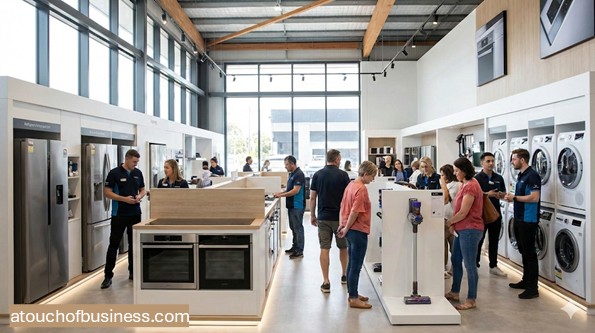
A Home Appliance Store is a retail business that sells major household appliances and related products in the United States. It may operate as a walk-in showroom, a stocked warehouse-style store, an online-first store with a small showroom, or a mix of all three.
If you need an industry code for forms, banking, or applications, appliance retailers are classified under the North American Industry Classification System (NAICS) as “Electronics and Appliance Retailers” (NAICS 449210).
Most stores focus on large appliances, including refrigerators, ranges, ovens, cooktops, dishwashers, washers, dryers, freezers, and room air conditioners. Many also sell small appliances, parts, replacement filters, ventilation products, cords, hoses, stacking kits, and other accessories.
Common add-ons include delivery coordination, haul-away coordination, installation coordination, extended service plans (often offered through a third party), and accessories needed to complete installation.
Customer types tend to cluster into a few groups: homeowners replacing a failed unit, households upgrading for remodeling, landlords and property managers ordering in volume, builders and remodelers sourcing for projects, and customers shopping for energy-use features and capacity.
Your pre-launch planning should assume that customers will compare prices, delivery timelines, and warranty support before they commit.
This business can be started small, but only if you pick a lean model. A special-order showroom with limited floor models can be owner-led at first. A fully stocked store with multiple brands, on-hand inventory, and in-house delivery usually requires substantial funding and staff from day one.
Is This the Right Fit for You?
Before you chase leases, brands, or inventory, start with you. Read through business start-up considerations and do not rush past the hard parts.
Fit matters. Is owning a business right for you, and is this business right for you? Be honest about your tolerance for risk, problem-solving, and customer conflict.
Passion is not a poster on the wall. It is what helps you push through problems when challenges show up. If you are unsure, review why passion matters in business and see if the message hits home.
Now check your motive. Ask yourself: “Are you moving toward something or running away from something?” If your main goal is to escape a job or financial stress, slow down. That is not a plan. That is panic.
Do a reality check early. Income can be uncertain. Hours can be long. Some tasks will be tedious. Vacations may shrink at first. Responsibility lands on you, even when it is not your fault.
You will need support from your household, a clear plan for funding to start and operate, and enough skill coverage to handle sales, compliance, paperwork, and customer issues.
Do not build this in a bubble. Speak with owners in the same business, but only when they are not competitors in your area. Only talk to owners you will not be competing against.
Here are a few questions that can save you months:
- What did you underestimate before you opened, and what would you do first if you started again?
- Which supplier terms, delivery rules, or return rules caused the biggest delays at launch?
- What customer issues show up the most in the first 90 days, and how did you prepare for them?
Pros can be real: steady replacement demand, repeat business from property managers, and opportunities to sell accessories and coordinated services. Cons can be real too: high-ticket complaints, damage claims, returns, and tight timing when a customer’s appliance fails.
So ask yourself if you can stay calm, stay fair, and still protect your business when things get tense.
You should also understand what you will be doing day to day, even before opening. You will be planning product selection, verifying availability, arranging delivery timelines, handling paperwork, and solving “something went wrong” calls.
If you want more clarity on what owners actually deal with, use this business inside look as a reality filter.
Skills that matter most at startup include basic financial planning, vendor communication, clear writing, sales conversation control, and calm problem-solving. You do not need every skill on day one, but you must be willing to learn fast or bring in help.
A typical day in the life, once open, often starts with checking deliveries, fixing scheduling gaps, answering product questions, and resolving customer issues. Expect frequent calls about delivery windows, installation requirements, and warranty steps.
If that sounds draining, do not ignore that feeling. It only gets louder after you sign contracts.
Step 1: Decide What You Are Building and How Big It Needs to Be
Start by choosing your model. This one choice affects funding, staffing, space, equipment, and legal exposure.
You have a few common options: a small showroom with special orders, a stocked store with a warehouse area, a scratch-and-dent or returns outlet, or an online-first store with scheduled pickup and delivery partners.
Be direct with yourself about scale. If you plan to stock multiple brands and many models on-site, this is rarely a solo startup. You will likely need a larger space, more equipment, more cash tied up in inventory, and more people from the start.
If you want a leaner launch, build around special orders and a tight curated display. That can reduce inventory pressure, but it increases the need for strong supplier reliability and clear customer expectations.
Step 2: Validate Demand and Confirm Profit Potential
Do not assume demand just because everyone owns appliances. You need local proof that customers will buy from you, at prices that leave room to pay yourself and cover expenses.
Start with the basics: housing turnover, remodeling activity, rental density, and replacement patterns. Then compare who already serves that market and what they do well.
Use simple market thinking. Review supply and demand and apply it to your area. Ask where gaps exist: speed, delivery reliability, niche brands, premium service, or value-focused options.
Then do the numbers. Build a rough profit model with realistic unit sales, realistic margins, and realistic fixed costs. If you cannot make the math work on paper, it will not work in real life.
Step 3: Define How You Will Make Revenue
Your main revenue line is appliance sales. Your supporting revenue lines can include accessories, parts, delivery coordination, haul-away coordination, installation coordination, and extended service coverage offered through approved providers.
Decide what you will offer at launch and what you will add later. Every added offering adds steps, risk, and more customer expectations to manage.
Be careful with used or refurbished units. The pricing can look attractive, but the safety and compliance burden can rise fast. If you plan to sell anything other than new products, you need a clear process to screen items and check safety issues before they go to a customer.
Step 4: Choose Your Location Based on Customer Behavior and Logistics
Location matters in appliance retail, but not in the same way as a coffee shop. Many customers will travel for the right deal, the right brand, or fast delivery. Still, you need visibility, access, and space that fits the product.
Plan for parking, truck access, safe loading, and enough room to move large cartons without damaging product or property.
Before you sign anything, learn what location choices do to your launch plan. Use this guide on choosing a business location to think through foot traffic, access, and local rules.
If your plan includes a warehouse area, confirm that the building layout and zoning match what you intend to do.
Step 5: Choose Your Product Mix and Brand Position
Pick your lane. Are you value-focused, premium-focused, kitchen package-focused, builder-focused, or landlord-focused?
Do not try to be everything to everyone at launch. A scattered product mix makes supplier setup harder and makes your marketing unclear.
Make a short list of categories you will carry. Then decide what “good, better, best” means in your store. Customers will ask for it, even if they do not use those words.
Also decide if you will offer packages and bundles at launch, like kitchen suites. Bundles can increase average sale size, but they also raise delivery and timing complexity.
Step 6: Build Your Supplier Plan and Account Requirements
You cannot launch without reliable sources of product. Start building relationships early, because supplier approvals, dealer agreements, and credit terms can take time.
Your goal is not just access. Your goal is access with clear terms: availability, delivery timelines, warranty handling steps, and return conditions.
Ask suppliers what they require to open an account. Requirements can include minimum orders, credit checks, proof of location, display rules for floor models, and brand guidelines.
Get everything important in writing. If a deal only exists in a phone call, treat it as if it does not exist.
Step 7: Estimate Startup Essentials and Build a Funding Plan
Make a detailed list of what you need to launch. Then confirm each item with real quotes, not guesses.
Use this startup cost estimating guide to structure your list so you do not miss categories.
At minimum, plan around these startup cost groups, and price them using quotes or written supplier terms:
- Space: deposits, buildout, electrical needs, lighting, signage allowances, and accessibility requirements
- Fixtures: display platforms, shelving, secure storage, counters, and office furniture
- Equipment: material handling tools, basic tools, point-of-sale system, and security systems
- Inventory plan: floor models, special-order samples, accessories, and packaging supplies
- Professional services: legal review, accounting setup, and insurance setup
- Launch costs: website build, signs, printed materials, and initial marketing setup
Now choose your funding approach. Small, lean launches can sometimes start with personal savings and careful spending. Larger launches often require outside funding because inventory and space demands are high.
If you need financing, review how to approach a business loan and be ready to show real numbers and a clear plan.
Step 8: Write a Business Plan Even if You Never Show It to Anyone
Do not skip the business plan. It forces you to make decisions before money is on the line.
Use this business plan guide to outline your concept, market, pricing approach, supplier plan, launch plan, and funding needs.
Keep it practical. Cover what you will sell, who you will sell to, where you will operate, and how you will fund the first stretch of months.
If you want a formal template, the U.S. Small Business Administration provides planning guidance you can follow.
Step 9: Pick a Legal Structure That Matches Risk and Growth
Your legal structure affects liability, taxes, paperwork, and your ability to raise funding. It also affects how customers and suppliers view you.
A sole proprietorship can be a starting point for some small, low-complexity launches. But once risk rises, many owners consider forming a limited liability company and upgrading their structure as the business grows.
Do not guess here. Read official guidance on choosing a structure, and then talk with a qualified professional if you are unsure. The structure decision can be hard to reverse cleanly later.
If you plan to bring in partners or investors, plan for that before you file anything.
Step 10: Register the Business, Then Get the Right Tax IDs
Registration steps depend on your structure and where you operate. Most owners start by checking state rules for registering an entity and registering any assumed name used for business.
Once your structure is in place, you may need an Employer Identification Number for tax and banking needs. The Internal Revenue Service provides the official process to apply.
If you will sell taxable items, you will typically need to register for sales and use tax collection with your state revenue agency. Do not rely on guesswork. Verify your state’s requirements before you open your doors.
If you plan to hire, you must also understand employer tax responsibilities and worker classification rules.
Step 11: Handle Licenses, Permits, and Building Approvals
This is where many launches stall. It is not complicated, but it is easy to miss steps if you rush.
Most retail businesses must address some combination of: general business licensing, sales tax registration, zoning approval for retail use, sign approvals, and building approvals such as a Certificate of Occupancy.
Here is the part you must respect: requirements vary by location and by activity. The U.S. Small Business Administration explains that licenses and permits depend on your business activities and location, and you must research your state, county, and city rules.
Use this quick “Varies by jurisdiction” checklist to verify locally:
- Entity registration: Secretary of State site → search “business entity search” and “form an LLC”
- Sales and employer tax accounts: State Department of Revenue site → search “sales tax permit” and “withholding account”
- General business license: City or county licensing portal → search “business license application”
- Zoning approval: City or county planning and zoning → search “zoning map” and “retail use permitted”
- Certificate of Occupancy: Building department → search “certificate of occupancy requirements”
- Signs: Planning, zoning, or building department → search “sign permit” and “sign code”
- Fire and life safety: Fire marshal or inspection office → search “retail fire inspection”
Ask a few fast questions before you apply for anything:
- Are you opening a storefront, a home-based office, or a warehouse-style space?
- Will you have employees in the first 90 days?
- Will you install appliances yourself, or will you only coordinate installation through licensed providers?
Step 12: Set Up Banking, Payments, and Clean Recordkeeping
Open accounts at a financial institution under the business name once you have your registration documents. Banks often request formation documents and tax identification details.
Your goal is simple: keep personal and business transactions separate from day one.
Set up how you will accept payment before you open. Customers will expect multiple options, especially on large purchases.
Also set up how you will document deposits, delivery fees, returns, and refunds in a consistent way. Sloppy records at launch create tax and cash problems later.
Step 13: Plan Insurance and Risk Before You Commit to Contracts
Insurance is not a nice-to-have. It is a risk control tool, and it can be required in certain situations.
Start with general liability coverage and then add coverage that matches your actual activities, such as property coverage for inventory and equipment.
If you will have employees, your state may require workers’ compensation coverage. If you will operate vehicles for business use, your state requires minimum auto liability coverage for registered vehicles.
Use this insurance guide to understand common coverage types, then confirm legal requirements with your state’s regulator.
Step 14: Lock In Your Name and Digital Footprint
Your name should be clear, easy to say, and easy to find online. It should also be available under your state’s naming rules and not collide with existing businesses in your state.
Use this business naming guide to work through naming decisions without rushing.
Secure your domain name and social handles early. Even if you are not ready to build a full site, you can reserve your name and avoid confusion later.
When you are ready, review an overview of building a business website so you know what to request from a designer or platform.
Step 15: Build Basic Brand Assets for Launch
Brand assets are not about looking fancy. They are about being clear, consistent, and credible.
At minimum, plan for a logo, store sign, simple business cards, and a basic website presence.
If you want a consistent set of materials, review corporate identity package considerations.
For practical launch items, see guidance on business cards and business sign considerations.
Step 16: Plan Pricing Before You Open
Pricing is not just “cost plus markup.” In appliances, pricing is tied to brand rules, competition, delivery expectations, and warranty expectations.
Use this pricing guide to plan how you will price products, services, and add-ons in a way you can explain with confidence.
Decide how you will handle discounts, package pricing, delivery charges, and haul-away charges. Put those rules in writing before your first customer asks for exceptions.
So ask yourself: can you explain your pricing in one calm conversation without sounding unsure?
Step 17: Set Up Your Space and Your Essential Equipment
Your physical setup should protect the product, protect customers, and support smooth movement from delivery to storage to showroom.
Even if you start lean, you will need basic tools to receive, stage, and move large appliances safely.
Below is an itemized equipment checklist to plan your launch. Match it to your chosen model (showroom-only, stocked store, or outlet) and your space constraints.
Showroom and Merchandising
- Display platforms and risers
- Appliance display brackets and anti-tip demonstration supports (as applicable)
- Category signage, price card holders, and spec display stands
- Measuring tapes and product dimension guides for staff use
- Lighting suitable for product display
- Customer seating area basics (chairs, small table)
Inventory Storage and Handling
- Pallet racking or heavy-duty shelving rated for appliance storage
- Pallet jack
- Hand trucks and appliance dollies
- Lift table or dock plate (as applicable to your space)
- Stretch wrap and strapping supplies
- Corner protectors and protective moving blankets
- Barcode labels and label printer (if you track inventory by scan)
Delivery and Installation Coordination Tools
- Scheduling system or calendar tool for delivery windows
- Standard delivery checklist forms (digital or printed)
- Damage documentation kit (camera or phone process, inspection checklist)
- Basic installation accessory inventory (hoses, cords, fittings, venting parts, stacking kits)
Point-of-Sale and Office Setup
- Point-of-sale system and compatible hardware (terminal, receipt printer, cash drawer if used)
- Computer workstations for quoting and ordering
- Internet service and secure Wi-Fi network
- Document scanner or scanning process for invoices and supplier documents
- Phone system (landline or business mobile plan)
- Basic office furniture (desk, chair, locking file storage)
Customer Service and Sales Tools
- Quote templates and order forms
- Product comparison sheets for key categories (capacity, dimensions, energy information, features)
- Return and exchange policy signage (aligned to local rules and supplier terms)
- Warranty and service plan documentation process
Safety, Security, and Loss Prevention
- Security cameras and recording system
- Door and window alarms
- Locking storage for small high-theft items
- Fire extinguishers (type and placement per local code)
- First aid kit
- High-visibility floor tape for safe pathways in storage areas
Step 18: Plan Compliance for Labels, Safety, and Disposal
This step is not optional. Appliances are regulated in specific ways, and you need to know what must be displayed and what must not be sold.
If you sell covered appliances, EnergyGuide labeling rules apply. If you sell online in a way that meets the rule’s definition of a catalog, disclosure rules can apply to your online listings as well.
Make product safety checks part of your launch process. You need a way to check recalls and a way to block recalled products from sale.
Use the U.S. Consumer Product Safety Commission recall tools and guidance to understand how recalls are posted and why selling recalled products can be unlawful.
Also plan your approach to haul-away and disposal coordination. Refrigeration and air-conditioning equipment can be subject to safe disposal rules tied to refrigerants. If you coordinate disposal, know what your disposal partners must do and what records may be required.
Do not treat disposal as an afterthought. It can create legal exposure if handled carelessly.
Step 19: Build a Simple Marketing Plan and Pre-Opening Push
Marketing is not “post-launch.” You need visibility before you open, especially if you depend on showroom traffic.
Start with how customers will find you: local search, signage, referrals, builder relationships, landlord relationships, and repeat customers.
If you are opening a storefront, use how to get customers through the door to plan the basics: visibility, signage, and local awareness.
If a grand opening fits your model, pull ideas from grand opening planning and adapt them to your local rules and budget.
Step 20: Run Your Pre-Opening Checklist and Do Not Skip the Final Proof
This is where you catch preventable problems. Do it slowly and do it in writing.
Confirm that your registrations are complete, your tax accounts are ready, and your local approvals are cleared for your exact location and activity.
Then test your sales flow end to end. Create a test order, confirm ordering steps with suppliers, confirm delivery scheduling, and confirm how you will document a damaged unit and a return request.
Finally, check your launch staffing plan. If you need to add help, use guidance on when to add help and plan roles before you hire anyone.
Red Flags to Watch for Before You Commit
Red flags show up early if you pay attention. Ignore them, and you pay later.
Watch for these warning signs during planning and setup:
- Lease terms that restrict loading, deliveries, storage use, or signage in a way that breaks your model
- Supplier promises that are not written, especially on pricing protection, delivery windows, and returns
- No clear process for damaged shipments, customer damage claims, or warranty handoffs
- Trying to stock too much inventory at launch without proven demand
- Selling used or returned items without a defined recall-check process
- Haul-away coordination with no verified disposal partner process for refrigerant-containing equipment
- Opening without confirmed zoning and building approval for your exact retail use
Final Reality Check
If you want to open a Home Appliance Store, the core challenge is not selling. It is planning. You are building a system that handles big products, big expectations, and big consequences when something goes wrong.
So ask yourself again: do you want the responsibility that comes with that?
If you commit, commit the right way. Validate demand, plan your scale, verify your local requirements, and do not shortcut compliance steps.
Before you open your Home Appliance Store, make sure every key decision is written down, verified, and realistic.
101 Real-World Tips for Your Home Appliance Store
These tips cover many parts of building and running your store.
Use the ones that match your goals and ignore what does not fit right now.
You may want to bookmark this page so you can come back when you need a quick reset.
To keep it simple, pick one tip, apply it, and return for another when you are ready.
What to Do Before Starting
1. Pick a launch model that matches your cash and your space. A special-order showroom can start lean, while a fully stocked store ties up cash fast.
2. Decide what you will sell on day one: new, open-box, scratch-and-dent, used, or a mix. Each category changes your risk, your paperwork, and how you explain condition to customers.
3. Write down your “must-carry” categories and your “nice-to-have” categories. If you try to carry everything at launch, you will run out of money or run out of room.
4. Choose whether you will deliver and install, or coordinate those services through partners. Your choice changes staffing needs, insurance needs, and how complaints will land on you.
5. Validate demand with real conversations, not guesses. Talk to local remodelers, property managers, and apartment maintenance leads about what breaks most and what they struggle to source quickly.
6. Build a simple profit model before you sign a lease. Include freight, damage allowance, returns, credit card fees, delivery costs, and labor for receiving.
7. Get supplier terms in writing before you promise anything to customers. Focus on lead times, damage claims steps, return rules, and warranty handling responsibilities.
8. Set a rule for when you will refuse a product line. If a supplier cannot consistently meet timelines or paperwork requirements, they can break your reputation early.
9. Make location decisions based on loading access and storage realities, not just showroom looks. If you cannot receive safely, you will lose time and damage units.
10. Confirm zoning and local approvals before you commit to a space. Ask your city or county what approvals apply to retail appliance sales at your specific address.
11. Plan your receiving flow before the first truck arrives. Decide where units are unloaded, inspected, tagged, staged, and stored so nothing gets “lost” in the shuffle.
12. Create a recall-check routine before you sell a single unit. If you sell used or open-box items, make the check even stricter and document it.
13. Decide how you will handle haul-away and disposal before you advertise it. If refrigerant-containing equipment is involved, your disposal partners must follow federal requirements.
14. Set up your recordkeeping system early and keep it consistent. Clean records protect you during tax time, returns, disputes, and warranty claims.
What Successful Home Appliance Store Owners Do
15. They keep a written playbook for the basics: sales steps, receiving steps, delivery steps, and returns steps. When a situation gets stressful, they follow the playbook instead of improvising.
16. They track model and serial numbers at receiving and link them to the customer order. This prevents warranty confusion and makes problem resolution faster.
17. They keep a “ready-to-sell” standard for every unit. If a unit is dented, missing parts, or missing documents, it does not go on the floor.
18. They set clear expectations in writing before taking a deposit. Customers can accept delays, but they hate surprises.
19. They treat accessories as part of the core sale, not an afterthought. A missing cord, hose, or vent kit turns a happy sale into an angry call.
20. They keep a clean, simple process for quotes and order confirmations. A quote without model number, color, size, and delivery notes is a future dispute.
21. They document all freight damage immediately with photos and notes. A fast, consistent claim process saves real money.
22. They build real relationships with supplier reps and carrier contacts. When a delivery is late or damaged, relationships speed up answers.
23. They schedule with buffers and confirm the day before. Missed deliveries cost trust, time, and sometimes chargebacks.
24. They train staff to ask the right questions up front: space size, doorway width, stairs, electrical needs, and venting needs. The best problem is the one you prevent.
25. They keep customer communication calm and factual, even when the customer is not. Emotional replies are expensive.
26. They review returns and complaints as data, not as drama. Every repeat issue is a process problem you can fix.
What to Know About the Industry (Rules, Seasons, Supply, Risks)
27. Energy information labels matter for many major appliances, and federal rules apply to how those labels are used in showrooms. If you sell covered appliances, set a “do not remove or cover” rule for any required label.
28. Recall risk is real, especially with used and open-box inventory. Put a recall check into your receiving process and your “ready-to-sell” process.
29. Haul-away sounds simple until refrigerants and hazardous components enter the picture. If you advertise haul-away, verify your disposal chain and document who handles what.
30. Freight damage is not rare in this category. Build a damage allowance into your planning and train staff to inspect before signing delivery paperwork.
31. Lead times can change suddenly due to manufacturing shifts, weather disruptions, or carrier issues. Never promise an arrival date you cannot control; promise the next update instead.
32. Installation requirements vary by product and by local rules. Decide what you do in-house, what you refer out, and what you refuse without proper licensing.
33. Warranties are a major trust point for customers. Train staff to explain the difference between manufacturer warranty, extended service plans, and labor coverage without guessing.
34. Returns are more complex than many customers expect. Large appliances can have restocking fees, installation-related return limits, and packaging requirements, so your policy must be clear before purchase.
35. Pricing pressure is constant because customers can compare online in minutes. You need a pricing plan that covers your real costs, not just competitor tags.
36. If you offer financing, you must keep customer data secure and follow your provider’s rules. Treat credit applications like sensitive documents, because they are.
37. Seasonality is real in some categories. Room cooling, dehumidifiers, and certain replacements spike with heat waves, while storm events can drive urgent demand.
38. Some brands have strict dealer agreements that control advertising, displays, or service expectations. Read every agreement and build your plan around what you can actually do.
39. Open-box sales can be a strong niche, but they require tight condition grading. If you cannot explain “what is different about this unit,” you should not sell it as open-box.
40. Price accuracy problems create fast distrust and can trigger state enforcement actions. Make it a habit to match shelf tags, advertised prices, and register prices.
Running the Business (Operations, Inventory Control, Standard Operating Procedures)
41. Use a receiving checklist every time, even when you are busy. Check model, color, serial number, visible damage, and included parts before the unit hits storage.
42. Create a “quarantine” area for damaged, missing-part, or questionable units. If it is mixed into sellable inventory, it will eventually be sold by mistake.
43. Tag every unit with a unique internal label that ties to the customer order or inventory record. Do not rely on memory or “we will remember which one it is.”
44. Store accessories and installation kits in a dedicated, labeled area near checkout. If accessories are hard to find, staff will stop offering them.
45. Build bundles that solve real problems: cord plus anti-tip bracket where appropriate, washer hoses, dryer venting, water line kits, and filter replacements. Bundles reduce last-minute store runs and returns.
46. Set a rule for floor model rotation and cleaning. Dirty or dusty displays signal “low standards,” even if your service is excellent.
47. Keep a measurement guide at the point of sale. Staff should confirm width, depth, height, door swing, and clearance before completing the order.
48. Require written delivery notes on every order. Stairs, narrow doors, elevator rules, and parking limits must be captured before the truck is scheduled.
49. For delivery, use a standard confirmation message the day before. Confirm address, time window, contact number, and special access needs.
50. Photograph units at pickup or staging when possible, especially open-box items. Photos reduce “it arrived like this” arguments later.
51. Keep a simple return inspection process that checks missing parts, damage, and packaging condition. If your return decisions are inconsistent, complaints will spike.
52. When you accept an open-box return, re-grade it immediately. Do not let returned units sit unreviewed, because they become a mystery unit.
53. Keep delivery documentation signed and easy to retrieve. Signed proof protects you when a dispute shows up weeks later.
54. If you stock parts or filters, track them tightly. Small items walk away faster than big ones, and shrinkage adds up.
55. Use cycle counts for high-value inventory rather than waiting for a full physical count. The faster you catch an error, the cheaper it is to fix.
56. Standardize your internal naming for every model and variant. If staff uses different names for the same unit, ordering and returns will get messy.
Running the Business (Staffing, Training, Safety)
57. Hire for calm and accuracy, not just charisma. A single careless order writer can create dozens of costly corrections.
58. Train every new person on the “four core questions” before they sell: measurements, access path, electrical or gas needs, and venting needs. These four prevent most avoidable failures.
59. If you use powered industrial trucks, follow the federal training and evaluation requirements. Do not let “experienced” staff skip formal training.
60. Teach staff how to explain lead times without blaming anyone. Customers do not care who caused the delay; they care what happens next.
61. Cross-train at least two people on ordering and supplier communication. If only one person can do it, you have a single point of failure.
62. Train staff to handle angry customers with a script: listen, restate the issue, confirm the next step, and document it. Scripts reduce emotional mistakes.
63. Make safety non-negotiable during moving and staging. If a person tries to “muscle” a unit alone, stop the task and reset the standard.
64. If you coordinate installation, vet your installers like they represent your brand, because they do. Check licensing where required and keep proof on file.
65. Give staff authority limits for small fixes and clear escalation rules for big issues. Slow decisions turn small problems into public complaints.
66. Keep training practical and repeat it. A five-minute refresher on deliveries, returns, and documentation every month prevents expensive drift.
Marketing (Local, Digital, Offers, Community)
67. Make your store easy to find online with consistent name, address, and phone details across listings. Inconsistency causes missed calls and lost trust.
68. Lead with clarity, not hype: what you stock, what you special-order, what your delivery area is, and what your typical timeline looks like. Clear beats clever.
69. Use photos that show your showroom, your team, and your staging area. Real photos reduce uncertainty and increase qualified walk-ins.
70. Build relationships with remodelers and property managers by solving one recurring problem for them. Fast replacement and accurate scheduling can become your advantage.
71. Create a simple “measure before you shop” handout for customers. Education reduces returns and builds trust.
72. Promote installation kits and accessories as problem prevention, not as add-ons. Customers appreciate being spared a second trip.
73. Run promotions that match real inventory conditions. If supply is tight, focus on service, coordination, and reliable delivery windows instead of deep discounts.
74. Use seasonal planning without guessing. Review last year’s sales by category and plan inventory or vendor availability around those patterns.
75. Ask every customer how they found you and record it. If you do not track this, you will overspend on the wrong marketing channel.
76. Encourage reviews, but do it at the right moment: after a successful delivery or install, not right after purchase. The experience is not complete until the unit works in the home.
77. Build a referral habit with contractors and apartment managers. A single partner can outperform many small ads if you keep service consistent.
78. Use simple educational content to earn trust: “how to measure,” “how to choose capacity,” and “what delivery requires.” People share useful help.
79. If you sell open-box items, market transparency as the benefit. Spell out how you grade condition and what the customer will and will not get.
80. If you serve a defined delivery area, state it clearly. A customer outside your area can still buy, but you must set expectations early.
Dealing with Customers (Trust, Education, Retention)
81. Start every sale with the customer’s real problem, not with features. Replacement urgency, space constraints, and timeline matter more than bells and whistles.
82. Confirm the installation environment before recommending a unit. Gas versus electric, venting path, water hookup, and circuit capacity can change what fits.
83. Use a written checklist the customer can see. When customers see the questions you ask, they trust your process more.
84. Explain what causes delays in plain language: availability, shipping, damage replacement, and installation scheduling. When customers understand the chain, they are less likely to blame you unfairly.
85. If a customer’s space is tight, recommend measuring twice and ordering once. A unit that does not fit becomes a return and a conflict.
86. Be careful with “same day” promises. Offer the fastest realistic option you can deliver, and then over-communicate until it is done.
87. Teach customers how to protect their purchase: keep paperwork, note model and serial number, and register if the manufacturer recommends it. A customer who feels guided becomes a repeat customer.
88. Offer a simple post-sale follow-up check after delivery. One quick confirmation call can prevent a bad review and uncover small issues early.
Customer Service (Policies, Guarantees, Feedback)
89. Put your return policy in writing and make it easy to understand. If the policy requires packaging or limits returns after installation, state it before purchase.
90. Use a consistent approach for delivery damage claims. Define what the customer should do immediately and what you will do next, then follow it every time.
91. Keep a clear process for “wrong item ordered” situations. Confirm who made the error, confirm options, and resolve it fast before the customer loses trust.
92. Do not confuse warranty help with warranty control. Explain what you can do, what the manufacturer does, and what the service provider does so the customer knows where to go.
93. When you offer open-box pricing, document condition and missing items on the invoice. The invoice should match what the customer agreed to, word for word.
94. Create an escalation path for tough cases that protects both the customer and your store. Decide who approves replacements, discounts, and refunds, and under what conditions.
95. Treat recurring complaints as a process audit, not a personality conflict. If the same issue appears three times, fix the process instead of blaming people.
96. Keep customer feedback tied to action. If you collect feedback but do nothing, customers will stop trusting you.
Sustainability (Waste, Sourcing, Long-Term)
97. If you offer haul-away, verify that your disposal partners follow federal refrigerant and hazardous component requirements. Ask how they document compliant handling.
98. Reduce packaging waste by staging reusable protective materials for deliveries and receiving. Fewer damaged units also means less waste.
99. Help customers choose the right size appliance for their needs. Oversizing wastes energy and can create dissatisfaction with performance.
100. If you sell used or open-box items, treat safety screening as mandatory. Keep a record of recall checks and any repairs or replaced parts tied to the unit.
101. Separate metal, cardboard, and electronics for recycling where local programs exist. Set up labeled bins and make it part of the daily closing routine.
FAQs
Question: Is a Home Appliance Store usually a solo business or a team business?
Answer: It depends on your model. A special-order showroom can start owner-led, while a stocked store with delivery often needs staff and more funding from day one.
Question: What NAICS code should I use for an appliance retail business?
Answer: Many appliance retailers use NAICS code 449210 (Electronics and Appliance Retailers). Use the code your bank, insurer, or licensing office asks for.
Question: Do I need an Employer Identification Number before I open?
Answer: Many owners get one early because banks and vendors often ask for it. The Internal Revenue Service issues Employer Identification Numbers at no cost.
Question: Do I need to register for sales tax to sell appliances?
Answer: In many states, retail sales require sales and use tax registration before you sell. Verify with your state Department of Revenue or tax agency because rules vary by state.
Question: What licenses or permits do I need for a retail appliance store?
Answer: Requirements vary by city and county, but common steps include a general business license and confirming zoning allows retail at your address. Use the Small Business Administration guidance, then verify with your local licensing and zoning offices.
Question: Do I need a Certificate of Occupancy before opening a storefront?
Answer: Many cities require building approval for the specific use of the space, especially after buildout or a change in use. Ask your local building department what approval is required for retail occupancy at your address.
Question: What insurance should I plan for before launch?
Answer: Start with general liability and property coverage for your inventory and fixtures. If you hire employees, workers’ compensation is often required, and if you use vehicles for business, auto liability coverage that meets state minimums is required.
Question: What equipment do I need before I can open?
Answer: You need point-of-sale tools, secure storage, and safe moving equipment like appliance dollies and pallet jacks. You also need a receiving area plan, basic security, and a way to track model and serial numbers.
Question: How do I estimate startup costs without guessing?
Answer: Build an itemized list tied to quotes and written terms. Inventory, freight, deposits, buildout, fixtures, security, and delivery setup are usually the biggest drivers.
Question: How do I choose suppliers and brands as a new store?
Answer: Start with suppliers who can provide clear written terms for lead times, damage claims, returns, and warranty steps. Do not promise customers anything your supplier will not back in writing.
Question: Do I need to worry about EnergyGuide labels?
Answer: Yes, if you sell covered appliances, federal EnergyGuide labeling rules apply. Build a store rule that says required labels are not removed or covered.
Question: How do I make sure I do not sell recalled products?
Answer: Set a recall-check step before any unit is offered for sale, especially for open-box or used items. Quarantine anything questionable until it is verified and documented.
Question: If I offer haul-away, what compliance issues should I plan for?
Answer: If you handle appliances that contain refrigerants, federal safe disposal rules apply and refrigerant recovery is a key issue. Use a disposal partner that can explain their process and provide documentation when needed.
Question: Should I do delivery and installation myself or use partners?
Answer: Doing it yourself gives you control but raises staffing, training, and insurance needs. Using partners can reduce complexity, but you must vet them because their work will affect your reputation.
Question: How should I set up pricing as a new owner?
Answer: Price from your real costs, not from a guess based on competitors. Include freight, damage risk, returns, card fees, and delivery costs so you do not undercharge by accident.
Question: What should my receiving workflow look like?
Answer: Inspect before signing delivery paperwork, record model and serial numbers, and photograph damage right away. Tag each unit and use a separate area for damaged or incomplete units.
Question: What systems should I have in place on opening day?
Answer: You need inventory tracking, customer order documentation, and a standard process for delivery scheduling and proof of delivery. You also need a clean recordkeeping system that supports your tax reporting.
Question: What staffing plan makes sense in the first 90 days?
Answer: Cover sales, receiving, and scheduling with clear role ownership, even if one person wears multiple hats. If you use forklifts or similar equipment, follow the training and evaluation requirements before anyone operates them.
Question: What metrics should I track weekly to stay in control?
Answer: Track gross margin, aged inventory, returns rate, freight damage rate, and delivery or installation issue rate. Add cash on hand and upcoming payables so you see trouble before it hits.
Question: How do I protect cash flow when inventory is expensive?
Answer: Align purchasing with real demand and avoid overstocking slow movers. Use a simple cash forecast so you know when vendor bills, rent, payroll, and taxes hit.
Question: What marketing should a new appliance store focus on first?
Answer: Start with local visibility and trust signals, like accurate business listings and review requests after a successful delivery. Build relationships with remodelers and property managers because repeat buyers can stabilize sales.
Question: What are common mistakes new appliance store owners make?
Answer: Overbuying inventory, promising delivery dates they cannot control, and running without written policies are common problems. Weak receiving documentation and no recall-check routine also create avoidable losses.
Related Articles
- Start an Appliance Repair Service
- Electronics Store Startup Overview
- Electronics Repair Business Startup Guide
- Start a Home Theater Installation Business
- Start a HVAC Business
- Electrician Business Startup Overview
- How to Open an Ergonomic Furniture Store
- Start a Computer Shop
- Start a Home Inspection Business
- Start a Carpet Shop
- Start a Plumbing Business
- Starting a Bathroom Renovation Business
Sources:
- Consumer Product Safety Commission: Recalls Product Safety, Buying Selling Online, Resellers Guide Safer
- Federal Trade Commission: EnergyGuide Labels, Energy Water Labeling
- GovInfo: Appliance Labeling Guide
- Internal Revenue Service: Get employer ID number, Businesses with employees, Recordkeeping
- Occupational Safety and Health Administration: Powered industrial trucks
- U.S. Census Bureau: NAICS retail trade details
- U.S. Environmental Protection Agency: Appliance disposal, Safe disposal requirements, Prohibition venting refrigerants
- U.S. Small Business Administration: Choose business structure, Register your business, Apply licenses permits, Write business plan, Open business bank account, Get business insurance, Choose business name