
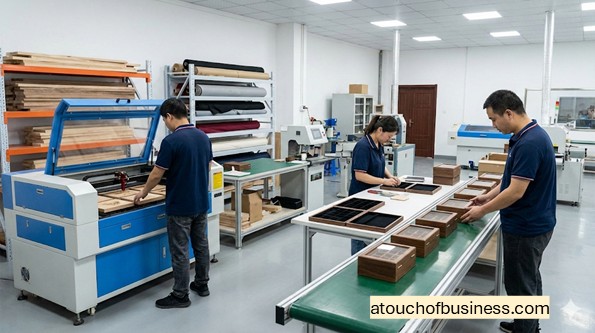
Overview of A Jewelry Box Manufacturing Business
A Jewelry Box Manufacturing Business builds products that store, protect, and present jewelry. You might produce handcrafted wood boxes, rigid gift boxes for retail packaging, or a hybrid version where you source standard box shells and add inserts, branding, or personalization in-house.
This can be a one-person startup if you begin with a narrow product line and a simple process. It can also grow into a larger shop with staff, more equipment, and wholesale contracts if you move into custom branded packaging or higher volume production.
How does this business generate revenue? Most income comes from selling finished jewelry boxes, custom orders, branded packaging, and add-on services like engraving, insert customization, or small-batch sample runs for jewelry brands and boutiques.
Your customers can include direct consumers, online jewelry sellers, local jewelers, gift shops, event vendors, and companies that need presentation boxes for branded gifts. The right starting point depends on what you want to build and how much setup you can handle before launch.
Is This The Right Fit For You?
Before you price tools or look at a workspace, stop and ask a basic question: is owning a business right for you, and is this business the right one? If you want a practical way to think that through, start with these points to consider before starting a business.
Passion matters more than people think. Not because passion pays bills by itself, but because passion helps you keep solving problems when a tool fails, a supplier is late, or your first product version needs changes. If you want a deeper look at that, read how passion affects your business.
Ask yourself a harder question: are you moving toward something or running away from something? Starting a business only to escape a job or financial stress can push you into fast decisions that do not match your skills, budget, or lifestyle.
Now the reality check. Startup income is uncertain, your hours can be long, and some tasks will not be fun. You may have fewer vacations, more responsibility, and no one to hand problems to. You also need enough funding to start and to keep going while sales build.
Think about the flip side too. If you like detail work, product quality, building things with your hands, and setting your own standards, this can be a strong fit. If you dislike repeated testing, paperwork, pricing math, or supplier follow-up, you need a plan for support.
Talk to real owners before you commit, but only talk to owners you will not be competing against. Reach out to people in a different city, region, or market area and ask practical startup questions, not legal questions. You can also learn a lot from inside advice from real business owners.
- What part of the startup process took more time than you expected?
- What product line did you start with, and what would you cut out if you started again?
- What equipment did you buy too early?
- What supplier issue caused the biggest delay in your first launch?
- What would you test before accepting your first custom order?
If you are missing skills right now, that does not end the idea. You can learn what you need, or you can bring in help for accounting, setup and registration, business plans, design work, or brand identity. Build support on purpose, and use a team of professional advisors when needed.
Step 1: Choose Your Launch Model And Starter Product Line
Your first decision is not equipment. It is your launch model.
Most new owners start in one of three ways. They build handcrafted wood boxes, they produce or assemble rigid paperboard gift boxes, or they run a hybrid setup and customize sourced boxes with inserts, lining, or branding.
Keep your first line narrow. That lowers your startup cost, simplifies tools, and makes quality control easier while you learn.
- Ring boxes
- Earring boxes
- Bracelet boxes
- Necklace boxes
- Watch boxes
- Small multi-slot organizer boxes
Why narrow the line early? Every new size and style changes material needs, hardware, inserts, packaging, and production time. Too many options too soon can tie up your cash and slow your launch.
Step 2: Define Your Customers And Validate Demand
Before you invest in tools, confirm who you want to serve. A Jewelry Box Manufacturing Business can sell to several customer groups, but each group expects different pricing, lead times, and product specs.
Common customer types include direct consumers, jewelry brands, independent jewelers, gift shops, e-commerce sellers, and event vendors. A consumer may want a personalized gift box, while a jewelry brand may need repeat wholesale orders with logo printing and exact packaging specs.
Check demand in the markets you want to enter. Use local store visits, online research, and direct outreach to see what styles are already being sold and where there may be room for your product.
Do not skip this step. If you need help thinking through local demand and competition pressure, review the basics of supply and demand and apply that thinking to your product line.
Pros and cons belong here because they affect your decision before launch. The upside is you can start small, focus on a short line, and expand later. The downside is quality issues are easy to spot, custom work adds risk, and materials and supplier minimums can tie up your working cash early.
Step 3: Decide On Your Business Model, Time Commitment, And Staffing
This business can start part-time or full-time, but be honest about the work. Pre-launch tasks include product testing, supplier setup, legal setup, paperwork, pricing, and workspace prep before you even sell anything.
For most first-time owners, a solo start is realistic if you keep the line tight and use a simple process. You can add part-time help later for assembly, packing, or admin once demand is stable.
Partnerships can work if roles are clearly split. One person can handle production and quality, while the other handles sales, supplier coordination, and paperwork.
Investors are usually not needed for a small launch. They may become relevant only if you are planning a larger production shop, custom printing capacity, or a higher-volume packaging line from day one.
Write down your choice now: solo, partners, or a larger launch. This affects your funding path, workspace size, insurance, and legal structure.
Step 4: Build Product Specs, Samples, And Quality Standards
Once you know your starter line, build prototypes. This is where a Jewelry Box Manufacturing Business becomes real, because you stop working with ideas and start working with exact dimensions, materials, and assembly steps.
Create a simple spec sheet for each product. Keep it practical and clear enough that you can repeat the build the same way next week.
- Outside dimensions
- Material type (wood, composite panel, or rigid board)
- Lining or insert material
- Hardware type (hinge, clasp, magnet)
- Finish type and cure time
- Packaging method for shipping
Set quality checkpoints now. Check lid fit, alignment, fabric adhesion, finish quality, and hardware placement before launch. These are small details, but they shape your reputation from the first order.
If you plan custom printing or engraving, build an approval process early. You need a clear way to confirm artwork, spelling, and placement before production starts.
Step 5: Match The Skill Requirements To Your Strengths
You do not need every skill on day one, but you do need a realistic plan. This work blends product skills, setup skills, and business skills.
Startup skill needs usually include accurate measuring, fabrication or assembly, basic finishing, quality checks, supplier communication, quoting, and simple bookkeeping. If you are offering printed or engraved products, add artwork file prep and proof review.
Look at your gaps without judging yourself. Can you learn the skill before launch, or should you bring in help for that part?
This is also a good time to get support with planning. If you need structure, use a startup planning guide and build a simple document with your products, customer segment, costs, and launch timeline. A practical template can help you get moving, and this business plan resource can make that easier.
Step 6: List The Startup Essentials And Equipment By Process
Buy equipment based on your launch model, not based on what looks impressive. Start with what you need to build your first line safely and consistently.
Here is a practical way to organize your equipment list before you spend anything.
- Design and prototyping: computer, design software, printer, calipers, rulers, squares, and templates
- Wood box fabrication: workbench, table saw, miter saw, router, drill press, sanders, clamps, and assembly jigs
- Rigid box assembly: cutting tools, scoring or die support, glue tools, wrap alignment jigs, and pressing tools
- Insert and lining work: foam cutting tools, fabric cutters, adhesive tools, rollers, and insert templates
- Hardware and personalization: precision drill tools, small drivers, hinge alignment tools, and optional engraving or laser equipment
- Finishing area: brushes or spray tools, drying racks, labeled chemical storage, spill supplies, and personal protective equipment
- Dust collection and air safety: dust collector, shop vacuum, air filtration, and local exhaust ventilation where needed
- Safety setup: fire extinguishers, first-aid kit, machine guards, safety signs, and a Safety Data Sheet system
- Quality control and packing: inspection lighting, measuring tools, shipping scale, label printer, packing station, and shipping supplies
- Office and launch admin: computer, bookkeeping tools, order tracking system, and photo setup
If you plan to cut or sand wood, wood dust control is part of startup, not an extra. The Occupational Safety and Health Administration has guidance on wood dust hazards and control methods, and it is worth reviewing before you set up your space.
Step 7: Build Your Startup Cost Plan Before You Buy Tools
Do not start with a rough guess. Build a real startup cost plan with categories and drivers so you can see what your launch actually needs.
There is no single national startup range that fits every jewelry box company. Costs change a lot based on your process, your workspace, your equipment choices, and how many products you launch with.
If you want a clear way to structure your numbers, this guide on estimating startup costs can help you build a clean planning sheet.
Use categories like these:
- Legal setup and registrations
- Workspace and utility setup
- Equipment and tooling
- Safety and compliance setup
- Initial materials and hardware
- Packaging and shipping supplies
- Brand and website setup
- Insurance
- Software and admin tools
- Working capital reserve
Look at cost drivers, not just line items. A home setup and a leased shop are very different. Spray finishing, custom printing, and large minimum order quantities can change your budget fast.
Step 8: Set Up Pricing Before You Accept Orders
Pricing is not something to “figure out later.” If you do that, you can end up working long hours for very little return.
Start with a cost-plus method. Add your material cost, labor time, packaging, overhead, and payment fees, then add your target margin.
From there, build versions for different order types. Wholesale orders often need quantity pricing, while custom orders need quote-based pricing with setup time and proof approvals included.
Use a simple pricing sheet for each product. A strong starting point is to review pricing your products and services and adapt the method to your products.
Before you finalize prices, verify these items:
- Supplier lead times and minimum order quantities
- Shipping cost assumptions by product size
- Packaging cost per unit
- Returns and damage policy
- Custom proof approval process
- Sales tax treatment in your state and any states where you must register
If you cannot explain how you reached a price, do not publish it yet.
Step 9: Plan Funding, Financial Setup, And Banking
Now connect your cost plan to funding. Many first-time owners can start with savings and a small launch, but some need outside funding for equipment, workspace setup, or inventory.
Common startup funding paths include owner funds, bank financing, equipment financing, and Small Business Administration loan programs such as 7(a) loans or microloans. The right fit depends on how much you need and how simple you can keep your launch.
If you are new to borrowing, talk to a lender and an accountant early. You can also review your options before you apply, and a practical guide on how to get a business loan can help you prepare.
Open your business bank account before launch. Keep transactions separate from your personal finances, and connect your payment processor to the business account before you go live.
Test the full payment process. Can you accept payment, issue a refund, and record the sale correctly? That sounds basic, but testing it early prevents problems during your first week.
Step 10: Handle Legal And Compliance Setup By Jurisdiction
This step is where many new owners get stuck, so keep it simple. Think in layers: federal, state, then city or county. Do not assume a rule from one area applies everywhere.
You can learn the structure and then verify your local details with the right agency. If you want more background on startup registration steps, review how to register a business, then confirm the exact rules with your state and local offices.
Federal
- Choose your legal structure and review the Internal Revenue Service startup checklist.
- Apply for an Employer Identification Number if your structure or banking setup requires it.
- If you will have employees, set up federal employment tax handling before payroll starts.
- If employees will use adhesives, solvents, or finishes, review Occupational Safety and Health Administration hazard communication rules, Safety Data Sheets, labels, and training requirements.
- If you use spray finishing, review the Occupational Safety and Health Administration spray finishing standard before you set up the work area.
- If you use respirators, review the Occupational Safety and Health Administration respiratory protection requirements.
- If you use composite wood panels, review Environmental Protection Agency formaldehyde rules for regulated products.
- If your process creates regulated chemical waste, review Environmental Protection Agency hazardous waste generator guidance.
- If you want to claim “Made in USA,” review Federal Trade Commission guidance before using that wording on packaging or your site.
- If a product is marketed for children, check Consumer Product Safety Commission testing and certification rules before launch.
State (Varies by jurisdiction)
- Register your entity with the Secretary of State or similar state office if you are forming a limited liability company or corporation.
- File an assumed name if your public business name is different from your legal name.
- Register for sales and use tax before selling taxable products.
- If you hire employees, register state employer accounts for withholding and unemployment insurance.
- Check state workers’ compensation and any state disability insurance rules if you will hire staff.
- If you use spray finishing or solvents, ask your state environmental agency whether any air or waste rules apply.
City Or County (Varies by jurisdiction)
- Confirm whether you need a local business license or tax certificate.
- Check zoning or home-occupation rules before you set up a workspace.
- Ask the building department whether you need a Certificate of Occupancy for your location.
- Check fire department or fire marshal requirements if you store flammable products or use spray finishing.
- Ask about sign permits if you will install exterior signs.
- Not typically applicable: right-of-way permits, because this business is usually run from a shop or studio, not public streets.
Use these owner questions to figure out what applies to your setup:
- Will you work from home, a leased shop, or a storefront space?
- Will you hire anyone in your first 90 days?
- Will you use spray finishes or mostly dry assembly?
- Will you market any product for children?
- Will you use a business vehicle for deliveries?
When you contact agencies, ask direct questions. Try these:
- Is small-scale jewelry box production allowed at this address?
- What registrations do I need before I sell taxable products?
- Do I need building, fire, or occupancy approval before I start?
- What employer registrations and insurance are required if I hire my first worker?
Step 11: Separate Required Insurance From Recommended Coverage
Insurance is easier to handle when you split it into two groups: what the law requires and what protects your startup.
Legally required coverage usually depends on your state and whether you have employees. That can include workers’ compensation, unemployment coverage, and state disability coverage in places that require it.
Recommended coverage often includes general liability, property coverage for tools and inventory, product liability, commercial auto if you use a business vehicle, and cyber coverage if you accept online payments. If you need a plain-language overview before you talk to an agent, review business insurance basics.
Get quotes after you know your location and process. A home-based setup, a leased workshop, and a spray-finishing setup can produce very different insurance needs.
Step 12: Set Up Suppliers And Vendor Rules Before Launch
A Jewelry Box Manufacturing Business depends on reliable suppliers. If your hinge supplier is late or your insert material changes, your launch can stall.
Build your supplier list by category so you can compare options and create backup plans.
- Wood or panel suppliers
- Hardware suppliers for hinges, clasps, and magnets
- Lining and insert materials
- Adhesives and finishes
- Custom packaging or printing suppliers
- Shipping supply vendors
When you open accounts, track the details that affect your launch date. Minimum order quantity, lead time, case packs, artwork approval steps, and reorder rules all matter.
For example, custom jewelry packaging suppliers often publish minimums and lead times for custom printed boxes. Use those posted rules as planning inputs, then confirm current timing before you quote any customer.
Do not rely on one source for a critical part. A backup supplier for hardware or packaging can protect your launch if a shipment is delayed.
Step 13: Choose Your Name, Domain, And Brand Assets
This step is more than a logo. Your name, domain, and brand files affect invoices, packaging, your website, and how people find you.
Start by checking business name availability in your state. Then check trademark records before you invest in signs, packaging, or printing. If you want help thinking through naming options, use this guide on selecting a business name.
Next, secure your domain name and reserve your social handles. Keep them as close as possible to your business name so people can find you without confusion.
Your core brand assets should be ready before launch:
- Logo files
- Brand colors and fonts
- Packaging artwork templates
- Product photo style rules
- Basic email signature and invoice look
If design is not your strength, this is a smart place to use a professional. A clean identity package saves time later when you are building your site and product labels.
Step 14: Build The Workspace And Physical Setup For A Clean Start
Your physical setup should support your process. Even a small home workshop needs a clear flow for cutting, assembly, lining, inspection, and packing.
Think in zones. Keep material storage, production, finishing, and packing separate as much as your space allows. That makes quality checks easier and reduces clutter when orders start coming in.
If you are setting up a commercial site, confirm local zoning and occupancy approvals before signing a lease. If you are planning a home setup, confirm home-occupation limits first so you do not build around a location that is not allowed.
Set up basic office needs too. You need a place for order records, supplier documents, payment records, and product photos. A startup without paperwork structure often feels “busy” but not ready.
Step 15: Prepare Your Website, Forms, Proofs, And Payment Workflow
Before launch, your digital setup should make it easy for customers to understand what you sell and how to order. For most startups, that means a simple website, clear product photos, and a fast way to request a quote or place an order.
If you need help building that foundation, use this guide on how to build a website and keep it simple at first.
Your pre-launch paperwork matters just as much as your site. Prepare the forms and proof assets you need before the first order arrives.
- Quote template
- Custom order specification form
- Artwork approval form for printed or engraved work
- Deposit and payment terms
- Lead-time policy
- Returns and damage policy
- Wholesale terms if you will sell business-to-business
- Invoice template
- Internal work order form
Test your shipping setup too. Weigh sample packages, print labels, and check how well each box is protected in transit. Packaging is part of your product quality, especially for gift and presentation items.
Step 16: Know The Pre-Launch Workload And The Early-Launch Routine
What will your days look like before launch? Mostly planning, testing, and setup.
You will spend time on supplier quotes, sample builds, workspace setup, paperwork, pricing sheets, and photo prep. You will also spend time on local approvals and insurance follow-up, which many first-time owners underestimate.
During early launch, your routine usually shifts into a mix of quoting, building, quality checks, packing, and customer communication. That is why your forms and process notes matter so much before launch.
Here is a realistic pre-launch snapshot:
- Morning: compare supplier quotes, update a product spec, and test a small prototype change
- Midday: set up a workstation, check dust control, and run a short sample batch
- Afternoon: photograph samples, update pricing sheets, and send a custom quote
- End of day: review startup spending, confirm a permit follow-up, and plan the next test run
Can you picture yourself doing that for several weeks while income is still building? If yes, you are thinking like an owner.
Step 17: Watch For Red Flags Before You Launch
Red flags are easier to fix before launch than after. Pay attention to signs that your startup is moving too fast.
- No written product specs for each box style
- No clear pricing formula
- Quoted lead times before supplier lead times are confirmed
- Too many sizes, finishes, or colors in the first line
- No dust control or ventilation plan for your process
- No chemical labeling or Safety Data Sheet setup where chemicals are used
- No artwork approval process for custom work
- Using “Made in USA” wording without checking Federal Trade Commission guidance
- Marketing child-focused products without checking Consumer Product Safety Commission rules
If you see two or three of these at once, slow down and fix them. Launching later is better than launching confused.
Step 18: Build A Simple Launch Marketing Plan
You do not need a complicated campaign to start. You do need a clear plan for how people will find you.
For a jewelry box company, your first channels are usually a website, direct outreach to jewelers or boutiques, online marketplaces, and social content that shows your product quality and custom options. If you are selling business-to-business, focus on samples, specs, and response time.
Write your launch plan in plain terms:
- Who you are targeting first
- What products you will show first
- Where you will send people to order or request a quote
- How you will handle follow-up
- How many orders you can handle during week one
If you have a physical showroom or customer pickup location, local signs and a local opening event may help. If you are production-only, a public grand opening is not typically applicable, and a controlled soft launch or pilot order batch is often the better choice.
Step 19: Run Your Final Pre-Opening Readiness Check
This final step pulls everything together. Use a checklist and confirm each item before you announce your launch date.
Keep it simple and practical. If something is not ready, do not assume you can fix it later while orders are coming in.
- Registrations and approvals: entity setup complete, tax registrations complete, local license confirmed, zoning confirmed, and occupancy or fire approvals completed if your location requires them
- Insurance: required coverage active, recommended policies in place for your risk level
- Equipment and workspace: tools tested, workstations set, safety supplies ready, dust and air controls working
- Suppliers: accounts open, lead times recorded, first purchase orders placed, backup source identified for key items
- Products: specs finalized, sample units approved, packaging tested, labels ready
- Pricing and payments: pricing sheet complete, payment processor tested, refund process tested, bank account connected
- Forms and proofs: quotes, custom specs, artwork approvals, invoices, and policies ready
- Website and digital setup: site live, contact form tested, product photos uploaded, social handles reserved
- Launch plan: first customer list ready, outreach message ready, order capacity limits set for the first week
When this list is complete, you are not guessing anymore. You are launching with structure.
Final Thought Before You Start
A Jewelry Box Manufacturing Business can be a smart small startup when you keep the first version focused. Start with a narrow line, verify demand, set up your legal and safety basics, and build your pricing from real numbers.
If a step feels unclear, do not force it. Talk to the right agency, supplier, accountant, insurance professional, or business advisor and get the answer before you move on. That is not slowing down. That is building a business you can actually open with confidence.
27 Startup Tips for Your Jewelry Box Manufacturing Business
These tips are built for first-time entrepreneurs who want a clear startup path before opening a jewelry box company in the United States.
They follow the same startup sequence used in the research and draft guide earlier in this chat, so you can move from fit and planning to legal setup, equipment, and final launch readiness without skipping key steps.
Use them as a working checklist while you build your plan, confirm local rules, and prepare your first product line.
Before You Commit
1. Start with a fit check before you price equipment. A Jewelry Box Manufacturing Business can be a good solo startup, but it still requires detail work, paperwork, product testing, and long setup hours before you see steady sales.
2. Ask yourself whether you are moving toward a real goal or just trying to escape a job or financial stress. That answer matters because this business needs patience, and rushing the startup phase usually causes expensive corrections later.
3. Talk to owners in other cities or regions only, so you are not speaking with direct competitors. Ask what they wish they had tested before launch, which tools they bought too early, and what supplier issue caused the biggest delay.
Demand And Profit Validation
4. Pick one customer group first and build around that group’s needs. Direct gift customers, jewelers, boutiques, and e-commerce brands all expect different packaging styles, order sizes, and lead times.
5. Validate demand by checking local stores, online listings, and wholesale packaging options before you lock in your product line. This helps you spot crowded product types and find openings such as custom inserts, personalized boxes, or branded packaging.
6. Test profit potential with a sample product cost sheet, not a guess. Include materials, labor time, packaging, payment fees, and shipping so you can see whether your target price leaves enough margin before you invest in tools.
Business Model And Scale Decisions
7. Choose your launch model early: handcrafted wood boxes, rigid gift boxes, or a hybrid setup where you customize sourced boxes. Your choice affects tools, space needs, safety setup, and how much cash you need before launch.
8. Keep your first product line narrow, even if you have lots of ideas. Starting with a few styles such as ring, earring, and necklace boxes keeps your inventory, hardware, and insert materials under control.
9. Decide now whether you are starting solo, with a partner, or with planned staff in the first 90 days. That one decision changes your legal setup, insurance requirements, workspace plan, and funding needs.
Legal And Compliance Setup
10. Handle legal setup in layers: federal, state, then city or county. Do not treat one local rule as universal because licensing, zoning, and tax registration requirements vary by jurisdiction.
11. Confirm your federal basics before launch, including business structure and whether you need an Employer Identification Number for banking, taxes, or hiring. If you expect employees, set up federal employment tax handling before the first payroll.
12. Check state registrations before you sell your first box. Most launches need state sales tax registration for selling products, and employer accounts if you plan to hire.
13. Verify local location rules before you sign a lease or build out a home workspace. Ask zoning or planning whether your address allows light manufacturing or home-based production, and ask the building department whether a Certificate of Occupancy is required for your space.
Budget, Funding, And Financial Setup
14. Build a startup budget by category instead of chasing a single “average startup cost” number. This business can launch at very different budget levels depending on your process, workspace, safety setup, and product variety.
15. Use cost drivers to stress-test your budget before you spend anything. The biggest swings usually come from your production method, dust and ventilation controls, custom printing or engraving equipment, and supplier minimum order quantities.
16. Open your business bank account and payment processor before launch and test both with a small transaction. You want to confirm you can accept payment, issue a refund, and record the sale correctly before real customer orders arrive.
Location, Build-Out, And Equipment
17. Design your workspace around the order of work, not around where tools fit. Even a small startup works better when you separate cutting, assembly, lining, inspection, and packing areas as much as possible.
18. Buy equipment by process category so you do not overbuy. Start with only what supports your first line: design tools, fabrication tools, insert and lining tools, safety gear, and a packing station.
19. If you cut or sand wood, install dust control before production starts. Wood dust is a startup safety issue, not a later upgrade, and it affects both your health risk and workspace readiness.
20. If you use spray finishes, adhesives, or solvents, set up ventilation and chemical controls before launch. Confirm labeling, Safety Data Sheet access, and storage rules, especially if employees will handle the chemicals.
Suppliers, Contracts, And Pre-Opening Setup
21. Build a supplier list by material type and track key terms for each one. You need lead times, minimum order quantities, case-pack details, and reorder timing before you can quote customers with confidence.
22. Create a backup supplier for at least one critical item such as hardware, inserts, or packaging. A single delayed shipment can stop your launch if you depend on only one source.
23. Prepare your pre-launch documents before taking orders: quote form, custom specification form, art approval form, deposit terms, lead-time policy, and returns or damage policy. These forms prevent confusion and protect you when custom work starts.
Branding And Pre-Launch Marketing
24. Check business name availability, then screen trademarks before you pay for signs, packaging, or printed materials. It is easier to change a name on paper than after your brand assets are already built.
25. Secure your domain and social handles, then launch a simple website with clear product photos and a quote or order path. For a jewelry box startup, customers need to see dimensions, finishes, and style options before they ask for pricing.
Final Pre-Opening Checks And Red Flags
26. Run a pilot batch before public launch and test the full order flow from quote to payment to packing to shipment. This is where you catch build-time issues, packaging fit problems, and gaps in your paperwork.
27. Pause your launch if you see major red flags such as missing product specs, unclear pricing, unconfirmed supplier lead times, or no safety plan for dust and finishing materials. Fixing those issues before opening is faster and cheaper than trying to correct them under customer pressure.
FAQs
Question: Can one person start a Jewelry Box Manufacturing Business, or does it need a team?
Answer: Many owners start solo if they keep the first product line small and use a simple process. You can add help later for sanding, lining, packing, or order prep once demand is real.
Question: What is the best business model to start with for jewelry boxes?
Answer: Start with one model: handmade custom boxes, small-batch standard boxes, or branded boxes for other businesses. Your model changes your equipment list, material needs, and startup budget.
Question: How do I know if there is enough demand before I spend on tools?
Answer: Check local gift shops, jewelry stores, craft fairs, and online listings to see what styles and materials are already common. Then build a sample cost sheet so you can test whether your target price leaves room for labor, materials, and packaging.
Question: What skills do I need before I open?
Answer: You need basic measuring, cutting, assembly, finishing, and quality-check skills, plus simple quoting and recordkeeping. If you do not have a skill yet, learn it first or use a professional before launch.
Question: What legal steps should I handle first to start the business?
Answer: Start with your business structure and registration, then get tax ID numbers, then confirm licenses and permits for your location and activity. Do not sign a lease or build a work area until local zoning and building rules are confirmed.
Question: Do I need an Employer Identification Number before I open?
Answer: In many cases, yes, because it is commonly needed for federal taxes, hiring, business banking, and licenses. The Small Business Administration also notes the Employer Identification Number is the federal tax ID for your business.
Question: Can I run a Jewelry Box Manufacturing Business from home?
Answer: Varies by jurisdiction. Ask your city or county zoning or planning office if home-based light manufacturing is allowed at your address before you set up tools.
Also ask the building department whether a Certificate of Occupancy or another building approval is required for your space and use type.
Question: What permits and licenses do I usually need before opening?
Answer: Most startups need a mix of registrations and local approvals, and the exact list depends on your city, county, and state. Check licenses and permits at the federal, state, and local level because the Small Business Administration notes the requirements vary by activity and location.
Question: What insurance is legally required, and what is just recommended?
Answer: Workers’ compensation is commonly required once you hire employees, but the rule and timing vary by state. Check your state workers’ compensation agency directly before you hire anyone.
General liability, product liability, and property coverage are commonly recommended for a startup workshop, but they are not always legally required.
Question: What equipment do I need before I can open?
Answer: Build your list by process: measuring and design, cutting and shaping, assembly and clamping, lining and inserts, finishing, and packing. Add safety gear and dust control at the start, not later, if you cut or sand wood.
Question: Why is wood dust a startup issue and not just an operations issue?
Answer: OSHA states wood dust can become a health problem when sanding and cutting particles become airborne, and it also notes wood dust hazards are covered by workplace standards. That means your layout, dust collection, and basic safety setup should be part of your opening plan.
Question: What chemical safety setup do I need if I use stains, glues, or finishes?
Answer: If you use hazardous chemicals, OSHA hazard communication rules require labeling, safety data sheets, and employee training when employees are present. Set up your chemical list, labels, and storage plan before opening so your paperwork matches your workspace.
Question: Do material rules matter if I use plywood, medium-density fiberboard, or particleboard?
Answer: Yes, they can matter because the Environmental Protection Agency regulates formaldehyde standards for certain composite wood products under Toxic Substances Control Act Title VI. Ask suppliers for compliance documentation when you source regulated composite wood materials.
Question: Can I label my boxes “Made in USA” if I assemble them here?
Answer: Not automatically. The Federal Trade Commission says unqualified “Made in USA” claims must meet the “all or virtually all” standard, so review your materials and processing before you use that label.
Question: Do I need product testing or certificates before I sell jewelry boxes?
Answer: Sometimes, and it depends on the product type and which safety rules apply. The Consumer Product Safety Commission says many consumer products require testing and certification, and children’s products may need third-party testing by a Consumer Product Safety Commission-accepted lab.
Question: How do I pick suppliers before launch?
Answer: Compare suppliers by material quality, minimum order quantities, lead times, and reorder reliability, not just unit price. Keep a backup source for at least one critical item like hinges, inserts, or outer packaging.
Question: How should I set startup pricing before I open?
Answer: Set prices from a cost sheet that includes materials, labor time, packaging, payment fees, and expected waste. Do not price from guesswork, because custom box work can look profitable until labor and packaging are added.
Question: What do I need to open a business bank account and accept payment?
Answer: Banks often ask for formation documents, your Employer Identification Number, and owner identification, and some may ask for more. Open your bank and payment accounts before launch and run a test transaction so you know your financial setup works.
Question: How do I check if my business name is safe to use before I print anything?
Answer: Do a basic trademark search before you order signs, packaging, or labels. The United States Patent and Trademark Office provides a trademark search tool, and you should also check your state business registry and domain availability.
Question: What should my daily workflow look like in the first month after opening?
Answer: Keep it simple: quote requests, material checks, build time, finishing time, quality check, and packing. A clear daily flow helps you spot where delays happen before orders pile up.
Question: What early systems should I set up before I take the first order?
Answer: Set up a quote form, job tracker, invoice process, material list, and a file for product dimensions and finish notes. If you use chemicals, keep your safety data sheets organized from day one.
Question: What basic policies should I have before I start taking custom orders?
Answer: Have written terms for deposits, design approval, lead times, changes, and damaged deliveries before you accept payment. This avoids confusion when a customer wants changes after production starts.
Question: Should I hire help before opening or wait until after launch?
Answer: Start solo if you can handle the first batch and paperwork, then add help when orders are consistent. If you hire early, finish your payroll setup, workers’ compensation check, and basic training plan before the first shift.
Question: What should I do for marketing before I open?
Answer: Build a simple site or portfolio page, secure your social names, and post clear photos with sizes and finish options. Focus on showing what you can actually produce at launch, not every product idea you have.
Question: How should I handle first-month cash flow in a jewelry box startup?
Answer: Protect cash by buying a small set of materials first and using deposits for custom work when appropriate. Watch supplier lead times closely so you do not promise delivery dates before materials are in hand.
Question: What is the best way to test my process before I officially open?
Answer: Run a pilot batch and follow the full process from quote to build to packing to shipment. This shows you whether your pricing, timing, packaging, and paperwork are ready for real orders.
Related Articles
- Starting a Jewelry Business
- Starting a Business Making Birdhouses
- How to Start a Picture Framing Business the Right Way
- How to Start a Dollhouse Business
- Dog House Building Business
- Fashion Accessories Store Startup Guide
- How to Start and Run a Craft Store
- How to Start an Art Supply Store
- Start a Subscription Box Business
- How to Start a Profitable Mug Printing Business
- Start a Button Making Business
- How to Start a Greeting Card Business
Sources:
- CPSC.GOV: Testing certification
- DOL.GOV: Workers compensation officials
- EPA.GOV: Formaldehyde emission standards, Hazardous waste generators
- FTC.GOV: Made USA standard
- ICANN.ORG: Whois search
- IRS.GOV: Starting business checklist, Employer ID numbers, Employment taxes, State websites
- NASHVILLEWRAPS.COM: Printed jewelry boxes
- OSHA.GOV: Woodworking eTool, Spray finishing rule, Hazard communication, Respiratory protection, Wood dust overview, Wood dust solutions
- SBA.GOV: Licenses permits, Business insurance, Federal state tax IDs, Business bank account, Register business, Plan business, 7(a) loans, Microloans, Local assistance
- USPS.COM: Send package
- USPTO.GOV: Trademark search system, Trademark search