
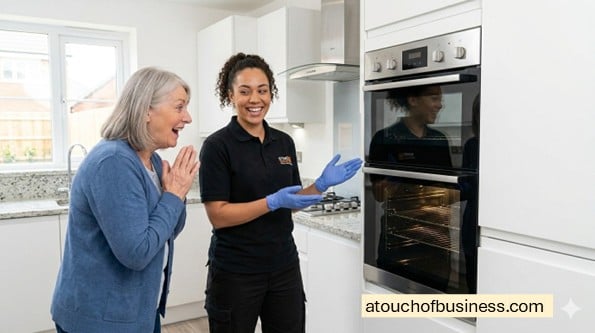
Overview of an Oven Cleaning Business
An oven cleaning business is a mobile home-service business that goes to the customer’s property and cleans ovens, racks, door glass, grates, drip pans, cooktops, and sometimes light hood components.
The work sounds simple at first, but the startup decisions matter because oven type, surface finish, grease buildup, travel time, and chemical choice all affect the job.
Most customers want the same things. They want someone they can trust in their home, a clear price, a clean result, and no damage left behind.
This kind of business can be a practical way to start because you usually do not need a storefront. On the other hand, your vehicle, your schedule, your estimate process, and your cleanup standards carry a lot of the business on day one.
Typical customers include homeowners, tenants dealing with move-out cleaning, landlords between occupants, property managers, and short-term rental operators. If you later add restaurant hood or commercial exhaust work, the business changes fast because that work can trigger a very different compliance standard.
The basic workflow is easy to picture. A customer asks for a quote, you confirm the oven type and condition, you approve the scope, you schedule the visit, you protect the work area, you complete the cleaning, you walk the customer through the result, and then you collect payment.
Is This Business The Right Fit For You?
Before you think about tools and licenses, ask whether owning a business fits you at all. An oven cleaning business can be straightforward to launch, but you still have to deal with pressure, scheduling, customer expectations, paperwork, and the risk that a bad estimate or a rushed job eats your profit.
Then ask whether this specific business fits you. The work is detail-based, physical, and repetitive. You need to be comfortable working inside other people’s homes, handling greasy buildup, protecting floors and counters, and staying calm when a job takes longer than expected.
Your passion for the work matters more than people think. If you do not enjoy practical hands-on service work, cleanup, and close attention to condition issues, the business can feel tiring long before it feels rewarding.
Motivation matters too. “Are you moving toward something or running away from something?” If you are starting only to escape a job, financial pressure, or status anxiety, that weak reason can show up fast when you are still loading towels into the vehicle before sunrise.
This is also a good time to get firsthand owner insight. Talk only to owners you will not compete against. Pick people in another city, region, or market area so you can ask direct questions without crossing into someone else’s customer base.
Ask practical fit questions, not vague ones.
- Which oven types create the most trouble or the most callbacks?
- What do you ask before you give a quote?
- How often does travel time ruin the day’s schedule?
- What jobs looked good at first but turned out to be poor uses of time?
- What would you set up differently before your first month?
The reality check is simple. If you like visible results, mobile work, and clear before-and-after value, an oven cleaning business may suit you well. If you dislike route planning, physical cleanup, customer homes, and narrow job margins, that problem usually shows up early.
Step 1: Decide What Kind Of Oven Cleaning Work You Will Offer
In an oven cleaning business, your first real decision is scope. You need to decide whether you will clean only residential ovens or whether you will also take on cooktops, racks, hood filters, microwaves, and light appliance add-ons.
Keep the launch scope narrow at first. A clear service list makes pricing easier, reduces customer confusion, and lowers the chance that you say yes to work your equipment or training does not support.
This is also where you decide what you will not do. Some ovens have self-clean, steam-clean, AquaLift, or other special cleaning systems. Some manufacturers warn against using certain commercial cleaners on those interiors, so your exclusions need to be clear before you book jobs.
If you are tempted to add restaurant hood or full commercial exhaust cleaning right away, slow down. That line of work can pull you into a different level of code and fire-safety responsibility, which is a very different startup path from a standard mobile oven cleaning service.
Step 2: Pick A Service Area You Can Cover Reliably
A wide territory may sound like more opportunity, but long drives, traffic, missed arrival windows, and weak route planning can turn a full calendar into a weak week.
Start with a tight service area you can cover consistently. Your territory affects travel time, fuel, daily capacity, pricing, and how many jobs you can group into one day without rushing the final walkthrough.
Weather and traffic matter more in a mobile service business. A route that looks fine on paper can fall apart after one late first stop. That is why it helps to build a travel buffer into your schedule instead of stacking appointments too closely.
Step 3: Validate Demand Before You Spend Too Much
Before you spend heavily on equipment, test whether people in your area actually want this type of oven cleaning service at the prices you need. Look at the local market, the kind of homes you want to serve, and whether customers are already paying for appliance cleaning as a stand-alone service or as an add-on to larger home-cleaning work.
For an oven cleaning business, demand is not just about population. It also depends on how many customers value convenience, how much buildup they tolerate before calling, and whether your service area includes homeowners, rental turnovers, or short-term rental operators.
As you sort that out, it helps to think through local supply and demand. The goal is not to prove the idea with guesswork. The goal is to see whether your area can support your kind of service at your kind of pace.
Step 4: Choose Your Legal Structure And Business Name
Your oven cleaning business needs a legal structure before you move into banking and state registration. That choice affects taxes, liability, paperwork, and how you hold the business name.
For a first-time owner, this is a good point to slow down and think through choosing your legal structure. You may start simple, but you still want a setup you understand and can maintain.
Your name matters too. It should be easy to say, easy to remember, and clear about what you do without sounding too broad. Once you narrow it down, make sure the legal name, domain, and public-facing branding line up as closely as possible.
Step 5: Handle Tax IDs And Basic Registrations
After you choose the structure, get the registrations in the right order. If your setup needs an Employer Identification Number, get it before opening the bank account and before handling payroll or other business tax filings.
An oven cleaning business also needs the state-level registrations that apply where you operate. That can include state tax registration, and if you plan to hire, employer accounts for withholding and unemployment may also come into play.
Do not assume every cleaning service is taxed the same way in every state. Tax treatment for services can vary, so confirm how your state treats this kind of work before you start charging customers.
Step 6: Check Local Licenses, Zoning, And Home-Based Limits
Even a mobile oven cleaning business still operates from somewhere. If that base is your home, you need to know whether local zoning or home-occupation rules limit vehicle parking, chemical storage, visible business activity, or employee activity at the address.
If you plan to lease a small storage unit, office, or work bay, make sure the use is allowed there. In some places, a certificate of occupancy or other building approval may matter before you move in or start using the space for business purposes.
This is where local licensing also comes in. Some cities or counties require a business license even for a mobile in-home service. Others focus more on the address where the business is based.
You can get a good overview of local licenses and permits, but the final answer has to come from your own city, county, and state agencies.
Step 7: Set Your Scope Documents And Customer Rules
An oven cleaning business gets into trouble when the job sounds simple but the details are fuzzy. You need a clear scope document that says what is included, what is excluded, and what can change the quote after you see the appliance in person.
Your quote process should ask practical questions before the appointment. Is it a single oven or double oven? Is it a wall unit or part of a range? Does it have a self-clean or special cleaning system? Are the racks removable? Is there heavy baked-on carbon, broken glass, damaged enamel, or a loose gasket?
That kind of detail protects both sides. It keeps the customer from expecting more than you priced, and it keeps you from walking into a time-consuming job with the wrong tools or the wrong cleaner.
For an oven cleaning business, simple paperwork goes a long way. A quote template, pre-service questionnaire, service checklist, and a short note about pre-existing damage can prevent a lot of avoidable conflict.
Step 8: Build Your Vehicle And Equipment Setup
Your vehicle is part of the business. In a mobile oven cleaning business, poor loading habits create slow starts, dirty tools mixed with clean ones, missing supplies, and wasted time between appointments.
Start with the basics: an enclosed vehicle or protected cargo area, stackable bins, chemical-resistant storage, bags or bins for dirty towels, floor protection, drop cloths, non-scratch pads, scrub brushes, plastic scrapers, spray bottles if your labeling system supports them, tubs or bag systems for racks, and a spill kit.
You also need jobsite protection items. Shoe covers, absorbent pads, counter protection, and floor runners matter because customers judge the work by the result and by how carefully you treated the home.
For oven cleaning, the small items matter as much as the large ones. Detail brushes, soft cloths for gaskets, and separate tools for glass and stainless surfaces can help you avoid damage claims and uneven results.
Step 9: Set Up Chemical Safety And Waste Handling
An oven cleaning business may look low-risk from the outside, but chemical handling changes that quickly. If you use hazardous cleaning chemicals and have employees, federal workplace rules can require a written hazard communication program, container labeling, safety data sheets, and employee training.
You also need to match protective equipment to the work. Gloves, eye protection, and other gear should reflect the actual splash and contact risk, not just what happens to be in the van.
The same goes for waste. Used absorbents, spent chemicals, and greasy debris do not all get handled the same way in every situation. If your waste stream falls under hazardous waste rules, the amount generated and the kind of waste matter.
In an oven cleaning business, safe chemistry also means knowing when not to use a product. Special oven-cleaning systems and manufacturer instructions can change what is safe for that appliance.
Step 10: Plan Startup Costs, Pricing, And Payments
Your startup costs for an oven cleaning business depend less on rent and more on your vehicle, your supply setup, your route size, your chemical choices, your protection materials, and whether you hire early. If you already own a suitable vehicle, your startup picture may look very different from someone building from zero.
What matters most is not chasing a perfect number. It is understanding the cost drivers before you set prices. That includes travel time, dwell time, towels and pads, chemical use, payment processing, replacement supplies, and the number of jobs you can realistically finish in a day.
For oven cleaning, price clarity matters. You may quote by oven type, by condition, by add-on items, or by a flat service package with clear limits. However you do it, make sure the customer can understand the price before you arrive and understand what would cause it to change.
If you need help setting your prices, keep it tied to real labor time and real travel cost, not just to what sounds competitive.
You should also decide how you will get paid before launch. Card acceptance, payment links, and invoicing tools can all work, but the system needs to be tested before the first customer is standing in the kitchen waiting to pay.
Step 11: Choose Banking, Funding, And Vendors
Keep your money separate from the start. An oven cleaning business may be small at launch, but separate banking still makes it easier to track expenses, see whether the work is paying off, and stay organized during tax time.
That means opening a business bank account and deciding how you will handle card payments, deposits, refunds, and business purchases. If you are taking cards on-site, test the process in real conditions before opening day.
Funding is often simple at first. Many owners use personal savings, small equipment financing, or a credit product tied to the business. If your launch needs are larger, then loan options may make more sense, but the cost plan should come first.
Your vendor setup matters too. In an oven cleaning business, good suppliers are not only about price. You want reliable access to cleaners, pads, brushes, towels, replacement safety gear, and safety data sheets when you need them.
Step 12: Build Your Name, Domain, And Digital Footprint
An oven cleaning business is local, so your digital presence should make it easy for someone nearby to understand what you do, where you work, and how to contact you. A simple website, matching business name, consistent phone number, and clear service area are enough to start.
Do not make the early setup more complicated than it needs to be. A basic domain, a short list of services, a quote request option, and a few plain service rules are more useful than a polished site that still leaves customers guessing.
Trust matters a lot in this business. When someone is inviting you into their home, clear contact details and a professional online presence reduce friction before the first appointment.
Step 13: Create Brand Basics That Match The Work
The brand for an oven cleaning business does not need to be fancy. It needs to be clear, clean, and consistent across your quote form, invoice, website, workwear, and vehicle if you decide to brand it.
At launch, useful brand assets are simple. Think about a readable logo, clean invoice and quote templates, business cards if you use them, and a look that fits in a customer’s home without feeling loud or sloppy.
This is less about image and more about confidence. If your paperwork, contact details, and appearance all line up, the customer feels like the job is being handled by someone who takes the business seriously.
Step 14: Plan Insurance And Risk Controls
An oven cleaning business works inside customer homes, carries chemicals, and depends on a vehicle. That combination creates risk even before you hire anyone. Damage claims, spills, broken glass, chemical contact, and travel-related losses can cost far more than the original job.
Your risk plan starts with the work itself. Clear scope documents, careful pre-service questions, floor and counter protection, correct chemical use, and a final walkthrough reduce problems before they turn into claims.
Insurance needs depend on your location, your vehicle use, your staffing, and how the business is set up. It is worth talking with a licensed insurance professional who understands mobile in-home service work so your coverage matches what you actually do.
Step 15: Decide Whether To Stay Solo Or Hire Early
Many owners launch an oven cleaning business alone, and that often makes sense. It keeps scheduling simpler, lowers payroll pressure, and lets you learn the real job before you build training around it.
If you do hire, the setup changes. You may need payroll systems, employment tax handling, employment eligibility paperwork, state employer accounts, new-hire reporting, required postings, training records, and workers’ compensation review based on your state rules.
For this type of business, early hiring should solve a real problem, not create one. If demand is still uncertain or your quote process is still shaky, adding payroll can lock you into costs before the business is ready.
Step 16: Test The Whole Oven Cleaning Workflow Before Opening
A practice job is one of the most useful things you can do before launch. Run the appointment the way you plan to run the real business: confirm the job, load the vehicle, arrive, protect the work area, clean the oven, handle any add-ons, do the final walkthrough, and collect payment.
This is where weak spots show up. You find out whether the quote form misses important questions, whether the loading system is slow, whether your towels and pads are enough, and whether the timing you planned is even close to reality.
For an oven cleaning business, that test run can save you from avoidable early problems. It is much better to find out during practice that a certain oven type needs a different approach than to find out in a customer’s kitchen with the clock running.
Step 17: Create A Simple Marketing Plan For Launch
Your early marketing for an oven cleaning business should focus on clarity, not cleverness. People need to know what you clean, which areas you serve, how to ask for a quote, and what kind of result they can expect.
Keep the launch plan practical. Make it easy for people to find your contact details, understand your service area, and see whether you handle their oven type and add-on needs. Clear wording usually works better than broad claims.
This is also where avoiding common startup mistakes matters. If your ads or listings promise too much, or if your quote process is weak, the marketing may bring leads that waste time instead of turning into good jobs.
Step 18: Understand The Daily Reality Of An Oven Cleaning Business
An oven cleaning business is not only about cleaning. Your daily work also includes answering inquiries, reviewing photos or descriptions, confirming the scope, loading the vehicle, driving, protecting the customer’s space, managing time on-site, handling payment, restocking supplies, and staying on top of paperwork.
That mix is why fit matters so much. You are not just a technician. You are also the estimator, scheduler, driver, cleaner, and person dealing with the customer face to face.
One busy day might start with two standard oven jobs and one add-on hood-filter cleaning. If the first appointment runs late, the whole day can slide, and the final customer may end up seeing your schedule problems instead of your workmanship.
Another day may look easy until one oven has heavier buildup, non-removable parts, or a cleaning system that changes your normal process. The result is more dwell time, more towels, and less room for a same-day extra booking.
A different day can be thrown off by traffic, weather, or a forgotten supply bin. In a mobile oven cleaning business, a small loading mistake in the morning can become a rushed final walkthrough by evening.
Step 19: Watch For Red Flags Before You Launch
In an oven cleaning business, the warning signs usually show up before the first paying customer. One major red flag is not knowing what work you will refuse. If you cannot clearly say which oven types, damage conditions, or commercial jobs fall outside your service, you are not ready yet.
Another red flag is weak pricing. If your quote does not account for travel, condition, add-ons, and time on-site, a full schedule can still leave you underpaid.
Watch for setup problems too. Storing chemicals without checking local rules, mixing dirty and clean equipment in the vehicle, or relying on memory instead of written forms can create bigger problems than most new owners expect.
The other big warning sign is starting the business because it sounds easy rather than because it fits you. That gap tends to show up quickly in a hands-on service business.
Step 20: Use A Pre-Opening Checklist Before You Take Jobs
Before your oven cleaning business opens, make sure the launch pieces are actually ready. That does not mean perfect. It means the business can complete a real job safely, legally, and in a way the customer understands.
- Your legal structure and business name are set.
- Your tax ID and state registrations are handled if they apply.
- Your city and county license checks are done.
- Your home-based or leased location is allowed for the way you plan to operate.
- Your vehicle is loaded with clean and dirty items stored separately.
- Your cleaners, pads, brushes, towels, tubs, spill kit, and protective items are ready.
- Your service list, exclusions, quote form, and customer checklist are written.
- Your payment method works in real conditions.
- Your vendor list is in place for restocking.
- Your practice job is finished and the weak points are fixed.
If employees are part of the launch, add the employment items too. That includes payroll setup, required paperwork, training, postings, and state-specific employer requirements.
Once those pieces are in place, the business is not guaranteed to be easy. It is simply in a much better position to open without avoidable confusion.
FAQs
Question: What services should I offer when starting an oven cleaning business?
Answer: Start with a narrow service list such as oven interiors, racks, door glass, grates, and light cooktop cleaning. A smaller scope is easier to price, schedule, and document.
Question: Do I need a business license to start an oven cleaning business?
Answer: Maybe. Local business license rules vary by city, county, and state, so you need to check where the business is based and where you will work.
Question: Do I need an Employer Identification Number for an oven cleaning business?
Answer: Many owners get one before opening a bank account or hiring staff. The Internal Revenue Service issues an Employer Identification Number for free.
Question: Should I start as a sole proprietor or form a limited liability company?
Answer: That depends on your tax, liability, and paperwork goals. Your legal structure affects taxes, filings, and how much of your personal assets may be at risk.
Question: Can I run an oven cleaning business from home?
Answer: Often yes, but local zoning and home-occupation rules can still apply. Those rules may affect vehicle parking, chemical storage, signs, and employee activity at the home.
Question: What equipment do I need before I open?
Answer: You need a reliable vehicle, chemical-safe storage bins, cleaners, non-scratch pads, brushes, cloths, floor protection, gloves, eye protection, and a spill kit. You also need forms, a phone, and a payment method.
Question: How should I set prices for oven cleaning jobs?
Answer: Base your pricing on oven type, condition, travel time, and add-ons such as racks or cooktops. A flat price can work well if your scope and exclusions are very clear.
Question: What startup costs should I plan for?
Answer: Plan for registration fees, vehicle costs, fuel, chemicals, towels, tools, protective gear, software, payment processing, insurance, and working cash. Costs can change a lot depending on whether you already own a suitable vehicle.
Question: What kind of insurance should I look at before opening?
Answer: Insurance needs depend on your vehicle use, work inside customer homes, and whether you hire staff. A licensed insurance agent can help match coverage to the way your business actually operates.
Question: Do I need special safety steps if I use oven-cleaning chemicals?
Answer: Yes, especially if you have employees. Hazard communication, labels, safety data sheets, and protective equipment can become required when workers handle hazardous chemicals.
Question: What paperwork should I have ready before my first paid job?
Answer: Have a quote form, pre-service questions, a scope list, exclusions, a checklist, and a payment receipt ready. Clear paperwork helps prevent damage claims and pricing disputes.
Question: What does the daily workflow look like in the first month?
Answer: You will spend time answering inquiries, confirming oven type, loading the vehicle, driving, protecting the work area, cleaning, doing a final walkthrough, and taking payment. The day usually includes restocking and admin work too.
Question: Should I hire help right away?
Answer: Many owners start alone so they can learn the real timing and job flow first. Hiring early can add payroll, tax, training, and paperwork duties before the business is stable.
Question: What systems or tech do I need before I open?
Answer: Use simple tools for scheduling, estimates, invoices, payments, and customer records. The best early system is one you can use fast from the road without making mistakes.
Question: How do I manage cash flow in the first month?
Answer: Keep startup costs tight, separate business banking from personal spending, and get paid quickly after each job. Slow collection and underpriced work can create problems even when the calendar looks full.
Question: What early marketing should I focus on for an oven cleaning business?
Answer: Focus on a clear service area, simple service descriptions, easy contact options, and price clarity. New owners usually do better with a clean local presence than with broad marketing promises.
Question: What mistakes hurt new oven cleaning businesses the most?
Answer: Weak estimates, unclear scope, poor route planning, and taking jobs outside your process can hurt fast. Trouble also starts when you ignore local rules for licensing, taxes, storage, or hiring.
51 Real-World Tips for Starting Your Oven Cleaning Business
Starting an oven cleaning business looks simple from the outside, but the setup decisions matter more than many first-time owners expect.
The tips below follow the real startup path, from fit and demand to legal checks, equipment, pricing, and final launch prep.
Use them to tighten your plan before you spend money, book jobs, or promise more than your setup can support.
Before You Commit
1. Decide whether you actually want hands-on cleaning work before you start the business. An oven cleaning business means grease, chemical handling, kneeling, scrubbing, travel, and working inside other people’s homes.
2. Be honest about why you want to start. If you are only trying to escape a job or fast financial pressure, that weak reason can make early startup problems feel worse.
3. Test your comfort level with home-service work before launch. Customers care about trust, cleanliness, timeliness, and how careful you are with their kitchen, not just the final result.
4. Talk to owners in another city or region before you commit. Ask what slows jobs down, which oven types cause trouble, and what they would fix before their first month.
5. Decide whether you want a solo business or a business that may need staff soon. That choice changes your payroll setup, training needs, insurance questions, and startup costs.
6. Think about your tolerance for schedule pressure before you buy equipment. A mobile oven cleaning business can lose time fast when travel, delays, or difficult jobs stack up.
Demand And Profit Validation
7. Check whether local demand is strong enough for a stand-alone oven cleaning business or whether you may need a narrow add-on model. Some markets support specialized appliance cleaning better than others.
8. Study who is most likely to hire you before launch. Homeowners, landlords, property managers, and short-term rental operators may each need different pricing, timing, and service wording.
9. Look at how local competitors describe their scope before you set your own. That helps you see whether customers expect oven-only service or also expect racks, grates, cooktops, and light hood work.
10. Validate demand with real quote inquiries, not just guesswork. If people ask about price but disappear when the scope becomes clear, that tells you something important before launch.
11. Estimate your daily earning potential based on travel time and job length, not just the number of appointments you hope to book. A full calendar can still underperform if each job takes longer than planned.
12. Watch for services that sound profitable but pull you too far from your core startup plan. Restaurant hood or commercial exhaust work can add a different compliance burden than basic residential oven cleaning.
Business Model And Scale Decisions
13. Start with a narrow service list that you can explain in one short sentence. Clear scope makes estimates easier and cuts down on confusion when a customer expects extra work.
14. Choose whether you will clean only residential ovens at launch. That keeps your tools, chemicals, paperwork, and legal checks much simpler than trying to serve every type of kitchen right away.
15. Decide what add-ons you will offer before you advertise. Racks, grates, door glass, cooktops, and hood filters can be useful add-ons, but they need their own pricing and time estimates.
16. Build service exclusions early instead of adding them after a bad job. Special oven-cleaning systems, damaged interiors, broken glass, and heavy restoration work should be addressed before the first booking.
17. Pick a service area you can cover without rushing. In a mobile business, a tight territory usually protects schedule quality better than trying to chase every lead.
18. Set a daily capacity target before launch. That number should reflect loading time, driving, setup, dwell time, cleanup, and payment, not just the cleaning portion of the job.
Legal And Compliance Setup
19. Choose your legal structure before you handle registrations. Your structure affects taxes, paperwork, and how the business is treated for banking and state filing purposes.
20. Get an Employer Identification Number if your setup needs one. It is commonly needed for banking, payroll, and some tax filings, and the Internal Revenue Service issues it directly.
21. Check whether your city or county requires a local business license before you open. Even a mobile home-service business may need local approval where it is based.
22. Confirm whether your state taxes this kind of service before you set prices. Cleaning services are not taxed the same way everywhere, so do not assume your state treats them like another state.
23. If you use a trade name, verify whether a doing business as filing is required. That depends on how your business name compares with your legal name or registered entity name.
24. Verify zoning and home-occupation rules if you plan to run the business from home. Vehicle parking, supply storage, signs, and employee activity can all trigger local limits.
25. If you lease storage or office space, ask whether a certificate of occupancy is needed before move-in. This matters more when the use of the space changes or local building rules are strict.
26. Do not ignore chemical safety because the business seems small. If employees handle hazardous cleaners, labeling, safety data sheets, and hazard communication rules can apply.
27. Match protective gear to the actual job hazards before launch. Gloves and eye protection are basic starting points, and stronger protection may be needed depending on the chemical and work method.
28. Have a simple waste plan before you start taking jobs. Used chemicals, greasy debris, and contaminated absorbents should not be treated casually if local or federal waste rules apply.
Budget, Funding, And Financial Setup
29. Separate startup costs into one-time purchases and recurring expenses. That makes it easier to see what you need to open and what you must keep paying each month.
30. Do not underestimate vehicle-related costs. Fuel, maintenance, storage, and wear can affect an oven cleaning business more than a new owner expects.
31. Build your pricing around labor time, travel time, and soil level. A flat price works better when the scope is clear and the condition questions are strong.
32. Create a minimum service charge before launch. That protects you from short, low-value jobs that still require travel, setup, and cleanup.
33. Set add-on pricing before customers ask for extras. It is much easier to explain a clear rack, hood-filter, or cooktop charge than to improvise pricing in the kitchen.
34. Open a business bank account before you start taking payments. Separate banking helps you track costs, see real performance, and avoid mixing business spending with personal spending.
35. Decide how you will accept card payments before the first job. Your system should work on-site, be easy to explain, and be tested before a customer is ready to pay.
36. Keep some working cash aside for the first month. Early jobs may not cover replacement supplies, fuel, registration fees, and unexpected setup costs as quickly as you hope.
Location, Vehicle, And Equipment
37. Treat your vehicle as part of the business setup, not just transportation. A weak loading system creates delays, forgotten supplies, dirty gear mix-ups, and rushed appointments.
38. Use separate storage for clean and dirty items from the start. That simple habit protects quality and makes your setup look more professional when you open the vehicle at a job.
39. Buy jobsite protection supplies before you think you need them. Floor covers, counter protection, shoe covers, and drip control matter because damage claims can start with one careless visit.
40. Choose tools that match oven surfaces and not just heavy grease. Non-scratch pads, plastic scrapers, detail brushes, and soft cloths reduce the risk of turning a cleaning job into a repair problem.
41. Build a rack and removable-parts process before launch. Racks, grates, and drip pans can take more time and more containment than new owners expect.
42. Keep chemical choices tied to the appliance type. Some ovens have special cleaning systems or manufacturer warnings that can change what products are safe to use.
43. Stock a spill kit and replacement protective gear in the vehicle at all times. Small safety gaps are easier to fix before launch than during a rushed service call.
Suppliers, Documents, And Pre-Opening Setup
44. Choose suppliers that can give you dependable restocking and safety data sheets. Price matters, but consistent supply matters more when you are trying to keep jobs on schedule.
45. Build your core documents before you advertise. You need a quote form, service checklist, pre-service question list, exclusions, and a receipt or invoice template.
46. Ask the right questions before confirming an appointment. Oven type, self-clean features, condition, removable parts, access, and add-on requests all affect job time and pricing.
47. Write down what is not included in the standard job. If your normal service does not cover extreme carbon buildup, damaged interiors, or full hood work, say so early.
48. Run a full test job using your real vehicle setup and paperwork. A practice job shows whether your timing, loading system, chemical choices, and customer process actually hold up.
Branding And Pre-Launch Marketing
49. Keep your early branding simple and clear. A business name, clean contact details, a basic website, and consistent service wording are more useful than fancy design at startup.
50. Make your early marketing match your true scope. If you only handle residential oven cleaning, say that clearly instead of attracting jobs your startup setup cannot support.
Final Pre-Opening Checks And Red Flags
51. Do not launch until you can answer four things clearly: what you clean, what you do not clean, where you work, and how you charge. If any of those answers still feel vague, the business is not ready to open yet.
Learn From People Already In The Oven Cleaning Business
There is a big difference between general startup advice and advice from people who already work in this space.
These interviews, case studies, and owner-led resources can help you spot early problems with pricing, territory, training, scope, and day-to-day setup before you spend too much or take on the wrong kind of work.
- Mike Harris Of Oven Rescue: Five Things I Wish I Knew Before Opening a Franchise
- Interview with Oven Wizards franchisor John Graham
- Ovenu’s Phil Davidson is scrubbing up nicely
- Being your own Boss: Oven Cleaning Business Tips from Experts
- Exclusive Interview: John Graham and Mark Abbott, MD’s of Oven Wizards
- Roger Butcher Case Study
- Confessions of a Cleaning Business Owner
Related Articles
- How To Start a Home Cleaning Service
- How To Start a Commercial Cleaning Business
- How To Start Your Office Cleaning Business
- How To Start a Home Appliance Store Without Guesswork
- HHow To Start an Appliance Repair Service
- How To Start Your Carpet Cleaning Business
- How To Start a Window Cleaning Business
- How To Start a Duct Cleaning Business
- How To Start a Gutter Cleaning Business
- Start a Pressure Washing Business
- Start a Green Cleaning Business
- Start a Construction Cleanup Business
Sources:
- SBA: Apply licenses permits, Calculate startup costs, Choose business structure, Choose business name, Get business insurance, Get federal state tax ID, Open business bank account, Pick business location
- IRS: Get employer identification, Understanding employment taxes
- OSHA: 1910 1200, 1910 132
- EPA: Hazardous Waste Generators
- USCIS: I-9 Employment Eligibility
- ACF: New Hire Reporting
- DOL: Workers’ Compensation, Workplace Posters
- Zep: On & Off Liquid Oven, Zep Heavy-Duty Foaming Oven
- Whirlpool: How Perform AquaLift Clean Cycle
- NFPA: NFPA 96 Standard Development