
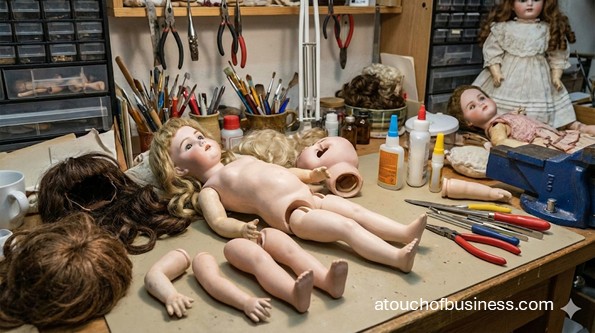
Doll Repair Service Overview
A doll repair service restores dolls that are damaged, worn, or unstable. You work on customer-owned dolls that may be sentimental, collectible, or used for display.
Most work is careful cleaning, stabilization, and replacement of worn parts. Your goal is to return the doll in the condition your customer agrees to, without creating new damage.
Before you start, read these three pages for an approach on startup planning: business start-up considerations, why passion matters in business, and a realistic inside look at business ownership.
Is This the Right Fit for You?
This business can be a good fit if you enjoy detailed work and you can stay patient under pressure. A customer may hand you a doll that cannot be replaced.
It can be a poor fit if you dislike slow, careful tasks, or you get frustrated when results depend on materials you did not choose. In doll repair, the material often decides what is possible.
Ask yourself this, and answer it honestly: “Are you moving toward something or running away from something?”
Passion matters here because repairs will test your focus. If you are only doing this because it sounds easy, you may stop when the first difficult job shows up. If you feel pulled toward the craft, you can build skill and confidence over time.
Now do a quick self-check.
- Can you work with small parts and repeat the same motion for long stretches?
- Can you handle responsibility for other people’s property without rushing?
- Can you accept that some dolls cannot be restored the way a customer hopes?
- Do you have support at home for a business that may require evenings or weekends?
Talk to Non-Competing Owners
Talk to doll repair owners, but only outside your competitive area. That means a different city or region where you are not competing for the same local customers.
This is one of the fastest ways to learn what to expect, what customers ask for, and what problems show up before launch.
- What repairs do you refuse, and why?
- What do customers misunderstand about doll restoration?
- What part of the pre-work saves you the most time once repairs begin?
Is This a Small-Scale or Large-Scale Business?
For most new owners, a doll repair service is a small-scale startup. You can start solo from a home workspace or a small studio, then expand later.
The large-scale version usually means employees, a storefront, and higher volume. That also raises your compliance load, insurance needs, and setup costs.
A practical path is to start small, prove demand, and then move from sole proprietor to a limited liability company if growth and risk make that a better fit. You can learn more about legal setup in how to register a business.
How Does a Doll Repair Service Generate Revenue?
You can earn revenue through repair services, restoration services, and add-on services that support the repair process. Your pricing depends on doll type, condition, and how specialized the work is.
Some businesses publish price ranges for common repairs. For example, published price lists show restringing and cleaning often priced as smaller jobs, while complex restoration work can rise quickly. Use these public numbers as reference points, then validate with your local market.
As you build your pricing plan, start with a simple approach: a quote for straightforward jobs, and a time-based approach for complex work. If you want a clear framework, read pricing your products and services.
- Common repair services (example categories): restringing, reattaching limbs, cleaning and polishing, clothing repair, wig work.
- Specialty restoration services (example categories): crack stabilization, fills, surface touch-up, eye replacement, advanced hair work.
- Optional add-ons (example categories): written condition reports, photo documentation, packing support for mail-in customers.
Products and Services You Can Offer
Your service menu should match your skills and your workspace. Keep your first menu narrow so you can deliver consistent results.
You can always add services later after you practice and document your process.
- Condition assessment and written plan
- Surface cleaning suited to the doll’s materials
- Restringing and joint tightening
- Limb reattachment and basic stabilization
- Eye replacement when parts are available
- Wig reset, wig replacement, or hair repair
- Clothing cleaning and simple garment repair
- Parts sourcing support with customer approval
- Packaging guidance for mail-in repairs
Typical Customers for a Doll Repair Service
Your customers usually care about one of three things: sentiment, value, or display condition. Many care about all three.
Knowing who you serve helps you decide how conservative you should be with restoration work.
- Parents and families repairing a well-loved doll
- Collectors of vintage or antique dolls
- Estate handlers preparing items for sale or family transfer
- Museums and local historical groups seeking conservation-aligned care
- Resellers who need stabilization before listing (only if you choose to work with them)
Pros and Cons of Owning a Doll Repair Service
This can be a focused, skill-based business with flexible scheduling. It also carries real responsibility because customers hand you items that may be irreplaceable.
Think through both sides before you invest in tools or sign a lease.
- Pros: small workspace possible, specialized niche, appointment scheduling, strong referral potential.
- Cons: delicate customer property, variable repair limits, time-intensive work, exposure to sharp tools and chemical products depending on your methods.
Skills You Need to Operate a Doll Repair Service
You do not need every skill on day one, but you do need the right mindset. This is careful work that rewards patience and planning.
If you lack a skill, you can learn it, or you can bring in professional help for the parts you do not want to do.
- Hand sewing and basic garment repair
- Material awareness (vinyl, plastic, cloth, composition, porcelain, bisque)
- Fine motor control and comfort with small parts
- Photography for documentation and quotes
- Basic recordkeeping and job tracking
- Customer communication and expectation setting
- Safe handling of adhesives, paints, and cleaners if you use them
Location and Setup Choices
Your location choice shapes your costs and your compliance. Most doll repair startups begin as home-based, appointment-only, or mail-in.
If you want help thinking through location tradeoffs, review business location considerations.
- Home-based: lower overhead, but you must confirm home-occupation rules and customer visit limits.
- Studio space: more separation and storage, but you may need building approvals and a Certificate of Occupancy (CO) depending on use.
- Storefront: best for walk-in visibility, but higher rent and more compliance.
- Mail-in only: you can serve a wider area, but you must control shipping rules and packaging standards.
Step 1: Define Your Repair Scope
Start by choosing what you will repair, and what you will refuse. This protects you and it protects your customer.
Decide your accepted materials and doll types. Be specific. “Antique porcelain dolls only” is clearer than “antique dolls.”
Write a short boundary list. For example, you may refuse dolls with severe contamination, severe structural loss, or missing parts that cannot be sourced.
Step 2: Choose Your Business Model
Pick one primary model so your launch stays simple. You can add a second model after you prove demand.
Common models are appointment-only drop-off, mail-in repairs, or a hybrid. If you plan a storefront, your setup and licensing checks become more important.
Decide early if you will stay solo at launch. Most owners do. If you plan to add help later, keep that in mind for workspace layout and training needs.
Step 3: Prove Demand and Profit Potential
Demand validation comes before tool upgrades and leases. You want proof that customers will pay for the work you plan to offer.
Check your local area for doll hospitals, antique restoration shops that accept dolls, and specialty repair providers. Note their service lists, how they quote, and how customers reach them.
Also validate profit potential. Some repairs look simple but take longer than expected. Your early goal is to learn what work pays well for your time.
To sharpen your thinking, review supply and demand.
Step 4: Build Your Skill Proof Before You Accept Paid Work
Practice on non-client dolls first. This is where you learn how materials react and where you develop a steady hand.
Document every practice repair with before-and-after photos. Save notes about tools, materials used, and what you would do differently next time.
If you want to serve museums or serious collectors, learn the value of conservative methods and clear documentation. Conservation standards emphasize competence, honesty, and avoiding unnecessary harm.
Step 5: Design Your Check-In and Approval Process
Your process protects you and your customer. It also reduces conflict because the customer knows what will happen before you begin.
Write a standard flow: photos at check-in, written scope, estimate range, and customer approval before any irreversible work. Include what happens if hidden damage appears mid-repair.
Create a labeling system so every doll, accessory, and loose part stays linked to the right customer from day one.
Step 6: List Essential Tools and Supplies
Make your first tools list based on your service menu. Avoid buying tools for services you will not offer in the first launch stage.
Start with a core set for inspection, sewing, and basic stabilization. Add specialty tools only when your practice work shows you truly need them.
You will find a detailed equipment list later in this guide. Use it as a build plan, not a shopping spree.
Step 7: Estimate Startup Costs the Smart Way
Your startup budget depends on your location, your tool list, and whether you are going solo. A home-based launch can be far cheaper than a storefront launch.
Build a simple cost sheet that includes tools, storage, packaging supplies, basic software, and legal setup fees. If you want a structure for that, use estimating startup costs.
If you plan a studio or storefront, include deposits, utilities, fixtures, and compliance steps that may come with the space.
Step 8: Write a Business Plan You Can Use
You can write a business plan even if you are not applying for funding. The plan is a tool to clarify what you are building and what it will cost.
Keep it practical: your services, your pricing method, your target customers, your launch plan, and your compliance checks.
If you want a clear template, see how to write a business plan.
Step 9: Choose Funding and Set Up Banking
Many small-scale doll repair services begin with personal savings and a lean tool plan. If you need outside funding, keep it tied to a specific purpose, like a workspace build-out or equipment that expands your service menu.
Separate your business finances from day one. Open a business bank account after you complete the steps required by your bank for your business structure.
If you are considering a loan, review how to get a business loan.
Step 10: Pick a Name and Lock Down Online Assets
Choose a name that fits your niche and does not confuse customers. Many doll repair businesses benefit from clear wording like “doll repair” or “doll hospital” in the name, if it is available.
Check name rules in your state and confirm availability before you print anything. Then secure your domain and social handles so your branding stays consistent.
If you want a step-by-step naming approach, read selecting a business name.
Step 11: Legal and Compliance Setup
Start with the basics: choose your structure, register your business as required, and get the tax identifiers you need. Requirements vary by state and city.
Use official sources for anything legal. The Internal Revenue Service explains how to get an Employer Identification Number and warns against paid third parties that pretend to be official.
For licensing and permit direction, the United States Small Business Administration provides a high-level guide, but you still must confirm rules with your state and local offices.
Step 12: Confirm Location Rules and Space Approvals
If you work from home, confirm home-occupation rules, signage rules, and whether customers can visit by appointment. If you rent a studio or open a storefront, confirm zoning and building approvals.
Some spaces require a Certificate of Occupancy (CO) based on how the building is used. The building department or permitting office is the place to verify this.
Do not assume a landlord’s “yes” means you are compliant. Verify with the city or county.
Step 13: Set Up Your Insurance and Risk Plan
This business involves customer property. You want coverage options that match your model, especially if you store dolls overnight or accept shipments.
Start by learning the basics in business insurance. Then speak with a licensed insurance agent who can match coverage to your risks.
If you hire employees later, you may face legal requirements such as workers’ compensation coverage, depending on your state.
Step 14: Build Your Proof Assets and Pre-Launch Systems
Before launch, build proof that you can do the work. Your best proof is clear photos and documented results from practice repairs.
Set up your invoicing, your approval form, and how you will accept payment. If you plan mail-in repairs, also prepare packing instructions and shipping policies.
For website planning, use an overview of developing a business website.
Step 15: Create a Simple Launch Plan
Your launch plan should match your model. If you are appointment-only, focus on local visibility, partnerships, and online search results. If you are mail-in, focus on trust and clear instructions.
Create basic brand assets that look consistent: logo, colors, fonts, and a clean layout. If you want guidance, review corporate identity considerations.
If you open a storefront, you can also plan a simple opening event. Ideas are in ideas for your grand opening, and you can learn walk-in marketing concepts in how to get customers through the door.
Step 16: Run a Pre-Opening Check Before Your First Customer
Do a final check of compliance, tools, and workflow. This is where you catch gaps while the pressure is still low.
Confirm your storage system, labeling system, and your check-in photos process. Make sure your customer agreement is ready before you accept a single doll.
If you plan to add help soon, read how and when to hire so you know what changes when you bring on staff.
Essential Equipment and Supplies
This list focuses on what you need to launch. It does not assume a storefront, and it avoids tools for services you are not offering yet.
Your final list should match your service menu. Start with core items. Add specialty tools after practice work proves the need.
Workstation and Environment
Your workspace must support careful work, safe storage, and consistent lighting. A stable setup helps you avoid accidental damage.
- Sturdy work table or bench
- Adjustable task lighting
- Magnification tool (headband or desk magnifier)
- Cutting mat
- Small parts trays with lids
- Labeling supplies for parts and accessories
- Dedicated bins or boxes for each job
Inspection and Documentation
Documentation is part of risk control. Photos and notes help you explain condition, scope, and results.
- Camera or smartphone with close-up capability
- Tripod or stable camera stand
- Ruler and measuring tape
- Calipers for small part measurement
- Notebook or digital job records system
Hand Tools for General Repair
These are core tools for controlled handling. Choose quality tools that let you work slowly and accurately.
- Precision screwdrivers
- Fine tweezers (multiple tips)
- Needle-nose pliers
- Hemostats or locking forceps
- Small clamps
- Craft knife with replacement blades
- Micro-scissors
- Files and sanding sticks (varied grits)
Sewing and Soft-Body Repair
Many doll repairs include fabric work, even when the doll itself is hard material. Practice on non-client items first.
- Hand sewing needles (assorted)
- Thread in multiple weights and colors
- Seam ripper
- Pins or fabric clips
- Thimble
- Small fabric scissors
- Fabric scraps for stabilization and testing
Restringing and Joint Tightening
Restringing is a common request for many doll types. Your tools should support controlled tension and secure knots.
- Elastic cord in assorted diameters
- Strong cord or thread for specific doll styles
- Bodkin or threading tool
- Awl for guiding cord (use carefully)
- Extra fasteners and basic replacement hardware as needed
Cleaning Supplies
Cleaning methods depend on materials. Test first and keep records so you can repeat what works without damage.
- Soft brushes (multiple stiffness levels)
- Cotton swabs
- Lint-free cloths
- Gentle cleaning solutions selected for your accepted materials
- Distilled water (for controlled cleaning where appropriate)
Adhesives and Fill Materials
If you use adhesives and fills, match the product to the material. Not every adhesive is safe for every surface.
- Adhesives suited to plastics and vinyl (based on your repair scope)
- Adhesives suited to ceramics and porcelain (based on your repair scope)
- Fill materials compatible with the substrate
- Mixing palettes and small spatulas
- Disposable mixing sticks
Cosmetic Restoration Tools (Optional)
Only include cosmetic restoration if you have practiced and you can deliver consistent results. If you are not ready, keep this off your launch menu.
- Fine detail brushes
- Paints or pigments appropriate for the substrate
- Sealants compatible with the substrate
- Cleaning jars and brush cleaners suited to your materials
Hair and Eye Repair Tools (Optional)
Hair work and eye replacement can be high-value services, but they require precision. Only offer them when you can control quality.
- Rerooting tool or needle (for dolls where rerooting is appropriate)
- Hair fibers compatible with the doll type
- Wig caps and wig attachment supplies
- Eye-setting tools based on the doll style
Packaging and Shipping Supplies (If You Offer Mail-In Repairs)
If you offer mail-in repairs, you need packing standards. You also need to understand shipping restrictions if you ship any regulated materials.
- Strong outer boxes in multiple sizes
- Cushioning material and void fill
- Poly bags for accessories
- Labels and “fragile” markings where appropriate
- Return shipping labels process (how you will generate them)
Safety and Compliance Supplies
If you use chemical products, keep Safety Data Sheets available and label your products. If you ever hire employees, hazard communication rules can apply.
If you generate hazardous waste through your materials, hazardous waste generator rules can apply based on quantity and state rules.
- Nitrile gloves
- Eye protection
- Respiratory protection selected for your hazards, if needed
- Ventilation plan for your workspace
- Safety Data Sheets file system for any hazardous chemical products used
Insurance and Risk
Insurance is part of responsible planning. Your exact needs depend on whether customers visit your space, whether you store dolls overnight, and whether you receive shipments.
Some coverage is chosen by the owner. Other coverage can be required by a landlord, a lender, or your state if you have employees.
- General liability (common for customer-facing businesses)
- Property coverage for your tools and workspace contents
- Inland marine or similar coverage options for customer property in your care, if offered by your insurer
- Commercial auto if you use a vehicle for business tasks
- Workers’ compensation if required when you hire employees (varies by state)
Day-to-Day Activities to Operate a Doll Repair Service
You should understand the daily work before you launch. This helps you plan your schedule, your storage, and your documentation.
Even if you stay solo, a clear routine keeps quality consistent.
- Review customer photos and decide if the job is a fit
- Check in dolls with photos and written notes
- Create a written scope and get customer approval
- Perform repairs and document key stages
- Source parts when needed, with customer approval
- Package and prepare returns for mail-in customers
- Update records and close out each job file
A Day in the Life of the Owner
You start the day by reviewing active jobs and checking messages from new customers. Many quotes begin with photos, so your first task is deciding what you can accept and what you should refuse.
Next comes check-in work. You photograph condition, label loose parts, and confirm the customer’s goal. Some customers want the doll to look “new.” Others want minimal change because the doll is a collectible.
Repairs happen in focused blocks. You set up a clean workspace, control lighting, and work slowly. When a repair involves chemicals or adhesives, you manage ventilation and keep your products labeled and organized.
At the end of the day, you photograph progress, update the job record, and prepare any outgoing shipments. You store each doll separately so nothing gets mixed.
Red Flags to Look for in a Doll Repair Service
Red flags matter in two ways. They protect you from jobs that carry high risk, and they protect you if you ever consider buying an existing repair business.
Use these red flags to guide your policies before you launch.
- Customers who refuse documentation or do not want written approval before work begins
- Dolls arriving with unknown contamination, strong odors, or signs of infestation
- Requests for major cosmetic changes on high-value collectibles without clear consent
- Jobs that require specialty parts with no reliable sourcing path
- Unclear ownership of the doll or unclear authority to approve work
- If buying a business: poor records, no documented job process, and no clear separation of customer property
Varies by Jurisdiction
Legal and permit requirements depend on your state, city, and county. Keep this simple: identify what applies, then verify with official offices.
The United States Small Business Administration offers a starting point for licenses and permits, but your final answer comes from your state and local portals.
- Business registration and entity filings (state office, often the Secretary of State)
- Sales tax rules if you sell parts or refurbished dolls (state revenue agency)
- General business license or tax certificate (city or county business licensing portal)
- Zoning and home-occupation rules if home-based (planning or zoning office)
- Certificate of Occupancy (CO) if you use a commercial space (building department)
- Employer accounts if hiring (state workforce agency and state revenue agency)
Ask these verification questions before you commit to a location or business model.
- Can customers visit your home by appointment under local home-occupation rules?
- If you rent a studio, does the space require a Certificate of Occupancy (CO) for your use?
- If you sell refurbished dolls, what consumer product safety rules apply to resale in your category?
Pre-Launch and Pre-Opening Checklist
Use this checklist right before you open your calendar to customers. The goal is a clean start with fewer surprises.
Keep it practical. Confirm the basics, then launch.
- Service menu finalized and matched to your real skills
- Practice portfolio completed and organized
- Customer agreement ready, including scope change approvals
- Photo documentation routine ready
- Job labeling and separate storage bins ready
- Business registration and tax identifiers completed as required
- Local licensing and zoning verified for your location
- Insurance quotes reviewed and coverage selected
- Payment method set up so you can accept payment securely
- Website and basic contact channels live
- Business cards ready if you plan local networking, using what to know about business cards
- If you have a physical location, review business sign considerations
- Professional support options identified, using building a team of professional advisors
If you want to reduce common startup errors, use avoid these mistakes when starting a small business as a final review before launch.
101 Tips to Launch and Run Your Doll Repair Service
These tips are here to help you think clearly and take practical steps in your doll repair service.
Choose the ideas that fit your situation and ignore the rest for now.
Save this page so you can come back when a new problem shows up.
Try one tip, give it time to work, and then apply the next.
What to Do Before Starting
1. Decide what kinds of dolls you will work on before you accept your first job, such as vinyl, cloth, porcelain, or composition.
2. Write a short “will not accept” list early, like severe contamination, active insect activity, or missing parts with no realistic replacement path.
3. Pick a launch model that fits your life: appointment-only drop-off, mail-in repairs, or a hybrid.
4. Create a simple service menu with only the work you can do confidently right now, then add services later as your results stay consistent.
5. Practice on non-customer dolls first and keep notes on what materials you used and how the surface reacted.
6. Build a small photo portfolio from practice work so customers can see your style and the level of change you aim for.
7. Decide how you will handle “conservation-style” requests where the customer wants minimal change to protect value.
8. Set up a clean, dedicated storage area so every doll, accessory, and loose part stays separated by job from day one.
9. Draft a written check-in routine that includes photos, a condition summary, and the customer’s goal in plain words.
10. Plan your tool purchases in phases so you only buy specialty tools when your early jobs prove you need them.
11. Identify the skills you are missing and choose whether you will learn them, outsource parts of the work, or avoid those services at launch.
12. If you feel unsure, talk to a few doll repair owners in a different region to learn how they set boundaries and manage expectations.
Prove Demand and Profit
13. Search your local area for doll hospitals, doll restoration studios, and antique restoration shops that accept dolls, then note how they position services and how customers reach them.
14. Track the top five repair requests you see in your area so your first service menu matches what people ask for.
15. Test demand with a simple quote workflow: require clear photos, a short problem description, and the customer’s goal before you offer any price range.
16. Start time-tracking from day one, even for practice work, so you learn what tasks take longer than expected.
17. Create a minimum bench fee for any job you accept so tiny repairs still cover setup time, photos, and paperwork.
18. Use two pricing lanes: fixed prices for standard repairs you can repeat reliably, and time-based pricing for complex restoration.
19. Quote in ranges when condition is uncertain, and make the final price depend on what you find after safe disassembly.
20. Separate labor from materials on your internal worksheet so you can see if materials are quietly eroding your margins.
21. If you sell parts or refurbished dolls, confirm whether sales tax applies in your state before you set prices.
22. Set a policy for deposits on higher-risk or higher-effort jobs so you are not funding a customer’s change of mind.
23. Build your turnaround promises around capacity, not optimism, and leave room for sourcing delays.
24. Price “unknowns” honestly, like heavy cleaning, hidden damage, and unstable materials, or you will undercharge on the jobs that drain you.
Tools, Workspace, and Safety Setup
25. Use bright, adjustable task lighting so you can see surface texture changes before they become permanent mistakes.
26. Add magnification early, because precision work gets safer when you can clearly see hairlines, seams, and paint edges.
27. Standardize your work surface so photos and measurements are consistent from job to job.
28. Keep small parts trays with lids for each job so eyes, fasteners, and accessories never get mixed between customers.
29. Label every job container with a unique job code and the customer name, then use that same code on photos and notes.
30. Store adhesives, cleaners, paints, and solvents in a dedicated area with clear labels so you do not grab the wrong product under pressure.
31. Keep Safety Data Sheets available for any hazardous chemical products you use, especially if you bring on employees.
32. Ventilate your workspace if you use products with fumes, even if the job feels small.
33. Use nitrile gloves and eye protection when a task could splash, flake, or create fine debris.
34. Choose hand tools that feel stable and controlled in your grip, because sharp tools are safer when they do not slip.
35. Keep a dedicated photography spot with consistent lighting so your before-and-after proof looks reliable, not random.
36. Create a “clean zone” for finished dolls so they do not pick up dust, hair fibers, or stray threads before return.
37. If you offer mail-in repairs, standardize your packing materials so returns ship safely and consistently.
38. If you ship any restricted materials, verify mail rules first so you do not accidentally send prohibited items through the Postal Service.
What Successful Doll Repair Service Owners Do
39. Photograph the doll from multiple angles at check-in, including close-ups of existing cracks, stains, and loose joints.
40. Write a short condition summary that a customer can understand, then confirm the customer’s goal in one sentence.
41. Get written approval before any irreversible step, such as repainting, removing original finishes, or replacing original parts.
42. Use small test areas for cleaning and treatments so you can confirm a method is safe before you commit.
43. Separate “stabilization” work from “cosmetic” work in your notes so you can explain what is structural versus visual.
44. Keep a materials log for each job so you can repeat what worked and avoid what caused problems.
45. Keep customer communication predictable by setting update points, such as after evaluation, after disassembly, and before final assembly.
46. Use conservative choices for collectible dolls unless the customer clearly asks for visible changes and understands the trade-offs.
47. Keep replacement parts separate from original parts and document what was changed so the customer has a clear record.
48. Use a checklist for reassembly so eyes, wigs, limbs, and clothing return in the correct orientation.
49. Confirm “return condition” expectations in writing, such as “cleaned and stabilized” versus “restored to display-ready appearance.”
50. Build a habit of pausing before each major step and asking, “Can I undo this if needed?”
51. Treat every job like it could become a dispute later, and let your photos, notes, and approvals protect you.
52. Keep your work area organized by job, not by tool convenience, so customer parts never wander.
53. Schedule your most delicate work when you are freshest, not late at night when your hands and focus are tired.
54. Maintain clear boundaries with customers who want “perfect,” and offer realistic options instead of promises you cannot guarantee.
Legal and Compliance
55. Choose a business structure that fits your risk and growth plan, then register it using your state’s official business portal.
56. If you start as a sole proprietor, plan a clean path to a limited liability company later if risk or scale increases.
57. Get an Employer Identification Number directly from the Internal Revenue Service if you need one for banking, payroll, or other business requirements.
58. Open a dedicated business bank account so business funds stay separate from personal spending.
59. If you operate under a name different from your legal name, check your state and local rules for assumed name or similar filings.
60. Verify whether your city or county requires a general business license before you accept your first customer.
61. If you run the business from home, confirm home-occupation rules with your planning or zoning office, including limits on customer visits and signage.
62. If you rent a studio or open a storefront, confirm whether the space requires a Certificate of Occupancy based on your intended use.
63. If you sell refurbished dolls or parts, confirm sales and use tax registration rules with your state revenue agency.
64. If you hire employees, verify federal and state employer account setup and follow workplace safety rules that apply to your hazards.
65. If your materials create regulated hazardous waste, confirm generator rules with your state environmental agency and the federal Environmental Protection Agency guidance.
66. For any licensing or permit question, start with official government sites and avoid paid third-party sites that look official but charge for free services.
Marketing
67. Define your niche in plain words, like “vintage doll restringing” or “cloth doll repairs,” so customers know you fit their problem.
68. Use clear before-and-after photos with consistent lighting so your results look trustworthy.
69. Ask permission before you share any customer doll photos, especially for sentimental items.
70. Create a simple service page that explains what you accept, what you refuse, and how customers can request a quote.
71. Make your quote process photo-based so you can screen out jobs that are too risky before the doll arrives.
72. Partner with antique shops and vintage markets for referrals, but clarify your scope so they do not send you unsuitable jobs.
73. Connect with local collector groups and hobby clubs, then offer a short “what to expect” guide that reduces fear and confusion.
74. If you offer mail-in work, publish packing instructions and require customers to follow them to reduce shipping damage.
75. Use local search listings and consistent business information so customers can find you without guessing.
76. Build credibility with documentation, not hype, by explaining your process and showing clean photo proof.
77. Offer a short “stabilize versus restore” explanation so customers self-select the right service level.
78. Track which marketing channels generate serious inquiries, then focus on the two that consistently bring the right customers.
Dealing With Customers
79. Start every job with the customer’s goal in writing, because “fix it” can mean ten different things.
80. Explain the limits of the material, not your effort, when a customer asks for results that are not realistic.
81. Use a simple approval step for any scope change so customers cannot claim they never agreed to the added work.
82. Set expectations about parts availability early, because many vintage parts are scarce or incompatible across doll lines.
83. If a doll has high collectible value, encourage conservative options and document the reasoning so the customer feels informed.
84. Keep a calm script for upset customers that focuses on facts: condition at arrival, approved scope, and documented progress.
85. Require a safe drop-off process that prevents surprise handoffs, like leaving a doll outside your door.
86. Protect privacy by keeping customer names and contact details off any public photos or visible labels.
87. If you must refuse a job, give a brief reason and suggest a safer alternative, such as a specialist in a different material.
88. Ask for feedback after return and use it to refine your instructions, policies, and communication points.
Running the Business (Operations, Staffing, SOPs)
89. Write a standard operating procedure for check-in, including photos, labeling, and a short condition summary.
90. Write a second standard operating procedure for check-out that includes final photos, packaging steps, and a checklist for accessories.
91. Batch similar work together, like sewing repairs or restringing, so setup time stays low and focus stays high.
92. Keep your calendar realistic by limiting how many active jobs you accept at once based on storage and attention, not hope.
93. Use a simple job status system, such as “waiting for approval,” “in repair,” and “ready to return,” so nothing stalls silently.
94. If you bring on help, start them on documentation and organization before they touch customer property.
95. Train employees on any chemical hazards and provide Safety Data Sheets and protective equipment when hazards exist.
96. Review one completed job per week for quality and process, then adjust your checklists to prevent repeat errors.
97. Set aside regular time for tool maintenance so blades, needles, and tension tools stay predictable and safe.
What Not to Do
98. Do not begin work without documented approval, especially on steps that cannot be reversed.
99. Do not mix parts from different jobs, even briefly, because one swapped accessory can destroy trust.
100. Do not use unknown cleaning products on a doll you have not tested, because permanent damage often happens fast.
101. Do not ship any restricted or prohibited materials without verifying mail rules first, because penalties and delays can be serious.
FAQs
Question: Do I need a business license to start a doll repair service?
Answer: Many cities and counties require a general business license, but the rules vary by location. Check your city or county business licensing portal before you accept your first job.
Question: What business structure should I choose for a doll repair service?
Answer: Many owners start as a sole proprietor for simplicity, then switch to a limited liability company as risk and revenue grow. Use official federal and state guidance to compare structures and filing steps.
Question: When do I need an Employer Identification Number?
Answer: You may need one for hiring, certain tax filings, and often for banking. You can apply directly with the Internal Revenue Service at no cost.
Question: Do I need to register for sales tax if I only repair customer-owned dolls?
Answer: Service tax rules vary by state, so you must confirm with your state revenue agency. If you sell parts, accessories, or refurbished dolls, sales and use tax rules are more likely to apply.
Question: What location rules apply if I run repairs from home?
Answer: Home-occupation rules can limit customer visits, signage, and storage. Verify requirements with your local planning or zoning office.
Question: Do I need a Certificate of Occupancy for a studio or storefront?
Answer: Many jurisdictions require a Certificate of Occupancy when you open or change how a space is used, but the trigger points vary. Confirm with the local building department before you sign a lease.
Question: What insurance should I line up before I accept customer property?
Answer: At minimum, you should understand general liability and options that cover customer property while it is in your care. Requirements can also come from your landlord or lender, and employee coverage rules vary by state.
Question: What equipment is truly essential at launch?
Answer: Start with a stable work surface, strong task lighting, magnification, documentation tools, safe storage bins, and core hand tools. Add specialty tools only when your early jobs and practice work prove you need them.
Question: How do I estimate startup costs without guessing?
Answer: List cost buckets such as tools, safety gear, storage, basic software, insurance, registration fees, and marketing basics. Then price each bucket based on your chosen model and location, because a home setup and a storefront have very different cost profiles.
Question: Where do I source replacement parts without overpromising?
Answer: Build a small supplier list by doll type and document what is reliably available versus rare. Make parts sourcing a customer-approved step, not an automatic promise.
Question: If I use solvents, paints, or adhesives, what safety rules should I plan for?
Answer: If you have employees, hazard communication rules require Safety Data Sheets and chemical hazard training. Even when solo, you should label products, control ventilation, and store chemicals safely.
Question: What if my shop generates hazardous waste from chemical products?
Answer: Hazardous waste generator requirements depend on what waste you create and how much you generate. Use federal Environmental Protection Agency guidance, then confirm stricter rules with your state environmental agency.
Question: Do I need special rules if I mail restricted materials for my business?
Answer: Yes, the Postal Service has rules for hazardous, restricted, and perishable items, and some items are prohibited. Verify mailability using USPS Shipping Restrictions and Publication 52 before you ship.
Question: What is a simple workflow to avoid mixing parts between jobs?
Answer: Use one sealed bin per job, one job code, and matching labels on parts, photos, and notes. Keep a “clean finished” area that is separate from the active work zone.
Question: What documentation should I keep for each job to reduce disputes?
Answer: Keep check-in photos, a plain-language condition summary, the approved scope of work, and final photos. For higher-value items, add a short treatment record that lists key materials and major steps.
Question: How do I set turnaround times without falling behind?
Answer: Base your promised timelines on your storage capacity and your available hours, not on best-case speed. Add extra time for parts sourcing and for repairs you cannot fully assess until safe disassembly.
Question: When should I hire help, and what should they do first?
Answer: Hire when demand is steady and your process is written down well enough to train someone. Start new help on documentation, labeling, and packing standards before they touch customer property.
Question: If I hire employees, what forms and basic compliance steps should I expect?
Answer: Employers must complete and retain Form I-9 for each employee, and other federal and state steps may apply. Plan for safety training if employees will handle hazardous chemicals or sharp tools.
Question: What marketing works best for a trust-based repair business?
Answer: Clear before-and-after proof, a tight service scope, and referral partners like antique shops and collector groups often work well. Keep your message focused on your niche and your process, not on big claims.
Question: What numbers should I track weekly to stay profitable?
Answer: Track hours per job, materials used, rework time, jobs in progress, and cash collected versus cash owed. These numbers show whether pricing and scheduling match reality.
Question: How do I manage cash flow when jobs take weeks?
Answer: Use written approvals and consider deposits for complex work so you are not funding long projects. Set aside money for taxes early, since many owners must pay estimated taxes during the year.
Question: What are common compliance mistakes for small repair businesses?
Answer: The big ones are skipping local licensing checks, ignoring zoning limits for home work, and failing to plan for employee compliance when hiring begins. Another common risk is shipping restricted materials without verifying Postal Service rules.
Related Articles
- How to Start a Profitable Doll Making Business
- How to Start a Successful Doll Clothing Business
- How to Start a Dollhouse Business: Step-by-Step Guide
- How to Start an Educational Toy Store: Complete Step-by-Step Guide
- How to Start a Profitable Local Toy Store Business
- Starting an Art Restoration Service: 101 Essential Tips
Sources:
- American Girl: Doll care & repair, Doll care center
- American Institute for Conservation: Code of ethics
- Bbeauty Dolls: Hospital restringing
- Environmental Protection Agency: Hazardous waste categories
- Internal Revenue Service: Employer ID number, Self-employed tax center
- National Park Service: Conservation treatment
- Not Just Dolls: Doll repair price list
- Occupational Safety and Health Administration: Hazard communication, Safety data sheets
- Postal Explorer (USPS): Publication 52, Hazardous materials table
- U.S. Citizenship and Immigration Services: Form I-9
- U.S. Consumer Product Safety Commission: Resale guidance, Resellers guide PDF
- United States Postal Service: Shipping restrictions
- U.S. Small Business Administration: Licenses and permits, Business insurance