
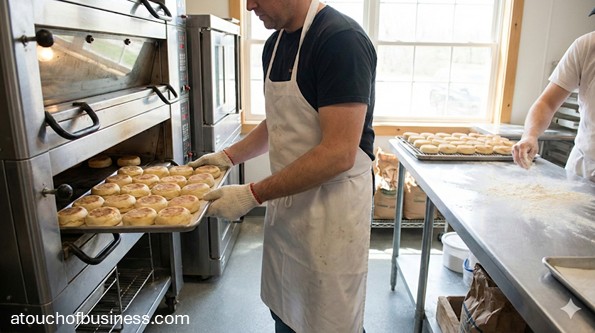
Key Steps, Permits, Equipment, and Startup Checklist
An English muffin business makes and sells English muffins, which are yeast-raised breads usually cooked on a griddle or hot plate (and sometimes finished in an oven). That cooking step is what gives the product its signature surface and texture.
This can be a small owner-run business or a larger wholesale operation. You can start small with a tight product line and grow into bigger batches and more sales channels over time.
Products And Services You Can Offer
Most English muffin businesses start with a short menu. The goal is to master a few products before expanding.
You can sell fresh muffins, packaged muffins, or both. You can also add a few complementary items if your facility and permits allow it.
- Core English muffins: plain, whole wheat, sourdough-style, cinnamon raisin, multigrain
- Pack formats: singles, 2-pack, 4-pack, 6-pack, family packs
- Wholesale packs: case packs for cafes and restaurants
- Optional add-ons (if permitted): breakfast sandwich builds, spreads, or seasonal specials
Who Your Customers Might Be
English muffins fit into everyday routines, which can lead to repeat customers. The strongest demand often comes from people who want a better version than what they find in a typical grocery aisle.
You can sell directly to the public or supply other businesses that serve breakfast.
- Direct retail customers: local shoppers, families, and breakfast-focused customers
- Wholesale customers: coffee shops, diners, breakfast restaurants, caterers
- Special orders: offices, events, bulk pre-orders for pickup
How Does A English Muffin Generate Revenue
Revenue comes from selling English muffins by the unit or by the pack. Some businesses also earn revenue by selling to wholesale accounts on a weekly delivery schedule.
If you add permitted menu items, your average sale can increase, but your approvals and setup may become more complex.
- Retail sales: muffins sold fresh or packaged at your counter, market booth, or pickup window
- Wholesale orders: case packs sold to cafes and restaurants
- Pre-orders: scheduled batches sold online for pickup
- Optional food service (if permitted): breakfast sandwiches and related items
Pros And Cons Of Starting This Business
This business can be a strong fit if you like hands-on production and you want a product that customers can buy again and again.
It also has real pressure points. Timing matters, and the cooking surface can limit output until you scale equipment and space.
- Pros: repeat-purchase product, multiple sales channels, simple core ingredients, strong wholesale potential
- Cons: strict production timing, griddle capacity limits volume, packaging and labeling requirements can add complexity
Is This The Right Fit For You?
Before you plan the business, decide if owning a business is right for you. Then decide if this specific business is right for you.
A good place to ground yourself is Points to Consider Before Starting Your Business. It helps you think through the reality, not just the idea.
Next, be honest about passion. Passion matters because problems will show up. If you don’t care enough to push through them, you will start looking for an exit instead of looking for solutions.
If you want a deeper mindset check, read How Passion Affects Your Business.
Now ask yourself this question: “Are you moving toward something or running away from something?”
If your main goal is escaping a job you hate or fixing a short-term money problem, motivation can fade fast. A business needs steady effort long after the first excitement wears off.
Also think about risk and responsibility. Income can be uncertain. Hours can be long. Some tasks will be difficult. Vacations can be fewer, especially early on.
You are responsible for the results. You also need alignment at home, because your schedule will affect family and support systems.
Ask yourself if you have the skills, or if you can learn them. If you don’t want to learn certain skills, you can bring in help. What matters is that the work gets done correctly.
Also ask yourself if you can secure enough funds to start and operate until sales are steady.
Finally, talk to experienced owners before you commit. This step can save you months of guesswork.
Only talk to owners you will not be competing against. Look outside your city or in a different region so they can speak freely.
You can also use Business Inside Look as a guide for what to ask and what to watch for when you research this business.
Smart questions to ask:
- What surprised you most about making and selling your product at a commercial level?
- What approvals or inspections slowed your opening, and what would you do earlier next time?
- Which sales channel was easiest to start with, and which took the longest to build?
Startup Steps: Step 1: Choose Your English Muffin Concept
Start by choosing the type of English muffin business you want to build. This decision shapes everything else, including your permits, space needs, and sales plan.
You can focus on direct retail sales, wholesale supply, online pre-orders, or a mix. Keep it simple at the beginning so you can execute well.
Startup Steps: Step 2: Decide If You’re Starting Small Or Building For Wholesale
An English muffin business can be owner-operated if you start with a narrow menu and manageable daily output. Many first-time owners start this way because it lowers startup costs and reduces complexity.
If your goal is grocery distribution or high-volume wholesale, plan for a larger space, larger equipment, and more staff. That kind of scale often pushes you toward a more structured business setup and stronger funding.
Startup Steps: Step 3: Confirm Demand And Profit Potential
Before you buy equipment or sign a lease, confirm demand for what you plan to sell. You need real proof that customers want your product at a price that works.
Use a simple demand check. Look at local bakeries, grocery options, and breakfast restaurants. Then decide where your product fits. This ties directly to supply and demand and how much room there is for a new seller in your area.
Profit matters just as much as demand. You need enough margin to pay yourself and cover rent, ingredients, packaging, utilities, and compliance costs.
Startup Steps: Step 4: Build A Simple Product Line For Launch
Pick a small menu you can repeat consistently. A common starting point is one core product and one or two variations.
The goal is not variety. The goal is repeatability. When you can produce the same quality every time, it becomes much easier to grow.
Startup Steps: Step 5: Develop Recipes And Production Standards
Your product needs to be consistent. That means measured recipes, stable fermentation timing, and a repeatable cooking process.
English muffins are typically cooked on a griddle, which affects texture, browning, and production speed. Your standards should include size, thickness, and cook time so you can produce batches that match customer expectations.
Startup Steps: Step 6: Test Small Batches And Document Results
Before you sell anything, run multiple test batches. Track what changes improve texture and consistency, and what creates problems.
Document dough handling, proofing time, griddle temperature, and cooling time. These notes become your baseline for repeat production.
Startup Steps: Step 7: Choose Your Sales Channels
Decide how you will sell your product at launch. Retail sales are direct and simple if you have the right approvals. Wholesale sales can grow faster, but customers will expect consistency and dependable delivery.
Many first-time owners start with pre-orders and pickup windows. Others start at farmers markets to test demand in person before committing to a storefront.
Startup Steps: Step 8: Choose A Business Name And Secure Your Online Handles
Your name should be easy to say, easy to remember, and easy to spell. It also needs to be available for legal use in your state.
Once you narrow your options, check domain and social handle availability. You can use Selecting a business name as a step-by-step guide to make a smart choice.
Startup Steps: Step 9: Choose Your Ownership Structure And Time Commitment
Decide if you will run the business solo, bring in a partner, or seek investors. Your answer affects how you register the business and how you share decision-making.
Also decide if you are working full-time or part-time. Food businesses often pull you into early hours, so the schedule needs to fit your life before you commit.
Many small businesses start as sole proprietorships because it is the default structure and does not require forming a separate legal entity with the state. Many owners later form a limited liability company for liability separation and a more formal structure, which can also help with banking and partnerships.
Startup Steps: Step 10: Write A Business Plan That Keeps You On Track
Even if you don’t plan to borrow money, write a business plan. It gives you a clear path to follow, and it forces you to think through the numbers.
You don’t need a complex document. You need something useful. If you want a framework you can follow, use how to write a business plan.
Startup Steps: Step 11: Build Your Startup Items List And Budget
Make a detailed list of everything you need to open. Include equipment, tools, packaging, storage, signs, and basic office needs.
Once your list is complete, research pricing for each item and estimate totals. This is where your scale matters. A small owner-run setup costs far less than a facility built to supply multiple wholesale accounts.
If you want help structuring this step, use estimating startup costs to guide your cost build.
Startup Steps: Step 12: Choose A Location That Matches Your Plan
Your location needs to match your business model. If you sell direct to the public, convenience matters. If you produce mainly for wholesale, you may prioritize production space and delivery access.
Location is also about approvals. Food businesses need compliance with local health, building, and zoning rules. Use picking your business location as a checklist before you sign anything.
Startup Steps: Step 13: Register The Business And Set Up Tax Accounts
Start with your state business registration steps. Your Secretary of State is usually the place to verify name availability and entity filing requirements.
You may also need an Employer Identification Number for taxes and banking. The official place to apply is the Internal Revenue Service.
If you want a clear overview of the process, see how to register a business.
Startup Steps: Step 14: Confirm Licenses, Permits, And Health Requirements
Food businesses are regulated at the local level, and requirements vary. You may need a health department permit, plan review, inspections, and approval of your facility setup before selling.
Do not guess what applies. Verify it directly with your city or county health department and local building officials. This step protects you from opening delays.
Startup Steps: Step 15: Set Up Banking And Funding
Open accounts at a financial institution before you launch. Separate business and personal spending so your records stay clean and easier to manage.
If you need funding for equipment or buildout, get it in place early. You can explore common options in how to get a business loan.
Startup Steps: Step 16: Plan Insurance Before You Sell
Insurance is part of launch readiness. Many locations and event venues require proof of coverage before you can sell there.
Start with general liability coverage. Then look at business property and equipment coverage if you are investing in mixers, griddles, refrigeration, and inventory. A helpful guide is business insurance.
Startup Steps: Step 17: Build Your Brand Basics
You do not need a huge brand package to start. You do need professional basics so you look real and credible.
That usually includes a logo, simple packaging design, business cards, and a basic website or ordering page. You can explore each piece through corporate identity considerations, what to know about business cards, and an overview of developing a business website.
Startup Steps: Step 18: Set Your Pricing And Your Payment Setup
Pricing needs to cover ingredients, packaging, time, overhead, and profit. It also needs to match what your customers will actually pay in your area.
If you are selling wholesale, pricing should include case pack expectations and delivery time. Use pricing your products and services to build pricing that makes sense.
Before launch, make sure you can accept payment in the ways your customers expect, whether that’s in person, online, or invoiced accounts.
Startup Steps: Step 19: Set Up Suppliers And Packaging
Choose suppliers for flour, yeast, salt, and any specialty ingredients you plan to use. Stable supply matters because recipe consistency depends on consistent ingredients.
Also choose your packaging style early. Packaging affects freshness, labeling needs, and how your product looks in a customer’s hands.
Startup Steps: Step 20: Run A Full Dry Run Before Your First Sale
Before you open, run your production like it is a real order day. Mix, proof, cook, cool, package, and stage the product like it will be sold.
This dry run exposes timing issues, bottlenecks, and equipment gaps. Fix those problems before customers are waiting.
Essential Startup Items To Budget For
Below is a detailed list of common startup items for an English muffin business. Your final list depends on whether you are home-based, operating a small commercial kitchen, or building a wholesale facility.
Once you build your list, research estimated pricing for each item so you can understand the true startup cost.
- Production equipment: commercial mixer, griddle, proofing setup, cooling racks
- Tools and smallwares: scales, timers, scrapers, turners, thermometers
- Forms and shaping tools: English muffin rings, portioning tools
- Storage: ingredient bins, shelving, dry storage containers
- Cold storage: refrigerator (if needed), freezer (optional)
- Packaging and labeling: bags, label printer, date marking system, case boxes
- Sanitation: approved sanitizer and test strips, cleaning tools, handwashing supplies
- Delivery readiness: totes, racks, basic delivery supplies (if wholesale)
- Admin setup: computer or tablet, accounting software, receipt tracking system
- Brand basics: website setup, business cards, simple sign
Essential Equipment Checklist
Equipment needs depend on scale, but every English muffin business needs a stable dough process and a reliable cooking surface.
If you are building for wholesale, your equipment choices should support repeatability, food safety, and packaging consistency.
Dough Production And Prep
- Commercial mixer (planetary or spiral)
- Digital ingredient scale
- Dough tubs or food-grade fermentation containers with lids
- Worktable with food-safe surface
- Bench scrapers and dough cutters
Portioning And Shaping
- Portion scale
- English muffin rings
- Sheet pans and parchment (if used)
Proofing And Holding
- Proofing cabinet (optional but common)
- Speed racks for trays
- Rack covers (optional)
Cooking Equipment
- Commercial griddle (electric or gas)
- Surface thermometer or infrared thermometer
- Spatulas or turners
- Timers
Cooling And Packaging
- Cooling racks or screens
- Food-safe bags or packaging materials
- Label system (printer or pre-printed labels)
- Date marking setup
Sanitation And Food Safety
- Handwashing station supplies
- Approved sanitizer and test strips
- Cleaning tools for food-contact surfaces
- Storage bins and shelving for organization
Skills You Need To Start Strong
You do not need to be a lifelong baker to start. You do need control, consistency, and a willingness to learn.
If you don’t have certain skills, you can build them over time or bring in help. The business still needs someone to own the outcome.
- Dough mixing fundamentals and consistency control
- Proofing and fermentation timing
- Griddle cooking control and temperature awareness
- Basic food safety and allergen awareness
- Packaging discipline and date labeling habits
- Basic bookkeeping and recordkeeping
- Customer service and order management
Staffing And Hiring: Start Solo Or Build A Team?
Many English muffin businesses begin owner-operated. That makes sense when you are producing small batches, selling direct, and keeping the menu tight.
If you are aiming for wholesale volume or multiple selling locations, you may need help earlier. A simple guide to think through timing is how and when to hire.
You can also build a support circle of professionals, such as an accountant or attorney, so you don’t feel stuck doing everything alone. See building a team of professional advisors.
Day-To-Day Activities You Should Expect
This section is here for one reason. You should know what the work feels like before you commit.
These are common activities once you begin producing and selling consistently.
- Receiving and storing ingredients and packaging
- Mixing dough and managing fermentation timing
- Portioning, shaping, and proofing batches
- Cooking on the griddle and monitoring consistency
- Cooling, packaging, and labeling finished product
- Staging pickup orders or wholesale deliveries
- Cleaning and sanitizing food-contact tools and surfaces
- Recording notes so quality stays consistent
A Day In The Life Of An Owner
Most owners work early hours because the product is breakfast-focused and production takes time. Your best results come from a steady routine.
A typical day includes prep, production, packaging, and cleanup. If you sell wholesale, delivery or order staging becomes part of the day as well.
Red Flags To Watch For Before You Commit
Red flags are warning signs that can lead to delays, wasted money, or quality problems. It’s better to spot them early than to learn them the hard way.
- Location approval problems: zoning does not allow the use, or the space cannot meet health and building requirements
- Cooking bottleneck: griddle capacity is too small for your sales plan
- Inconsistent results: the process cannot repeat quality from batch to batch
- Packaging issues: moisture and freshness problems show up quickly after bagging
- Labeling gaps: packaged products lack proper ingredient and allergen disclosures
Legal And Compliance Basics
Food rules vary by state and by city or county. Your job is to confirm what applies to your exact setup before you sell anything.
Start with the basics: entity setup, tax registration, and local permits. The Small Business Administration outlines the general process in Apply for licenses and permits.
If you plan to apply for an Employer Identification Number, use the Internal Revenue Service page Get an employer identification number.
If you sell packaged English muffins, you will likely need to follow packaged food labeling rules. Nutrition labeling requirements are covered under 21 CFR 101.9. The Food and Drug Administration also provides a detailed guide in Food Labeling Guide.
Major allergens are a major part of labeling and customer safety. The Food and Drug Administration provides guidance in Food Allergen Labeling Guidance for Industry.
Food facility registration can apply in some cases, especially if you manufacture for distribution and you are not exempt. The Food and Drug Administration explains this in Registration of Food Facilities and Other Submissions.
Many retail food establishments are exempt from registration when their primary function is selling directly to consumers. You can review the retail food establishment definition at 21 CFR 1.227 and use the Food and Drug Administration’s Retail Food Establishment Exemption Flowchart to evaluate your situation.
Varies By Jurisdiction
Use this checklist to confirm requirements in your area. Do not rely on assumptions, because food rules change across states and cities.
- Secretary of State: confirm business registration steps and name availability
- State department of revenue: confirm sales tax registration and rules for baked goods
- County or city health department: confirm food establishment permit steps, plan review, and inspection schedule
- City or county zoning office: confirm that your location can legally operate as a food business
- Building department: confirm if a Certificate of Occupancy is required for your intended use
- Fire marshal: confirm ventilation and fire safety rules for your cooking equipment
Smart questions to ask your local offices:
- Do I need plan review before I install equipment or begin buildout?
- What inspections must happen before I can sell to the public?
- Are there labeling or packaging rules you enforce locally for this type of product?
Cottage Food Rules And Home-Based Startups
Some owners want to start from home. That can be possible in certain states, but cottage food laws vary widely and often restrict what foods you can sell, where you can sell them, and how you must label them.
A reputable overview is available from the National Agricultural Law Center in Cottage Food Laws: Recent Trends and Major State Changes. Always confirm your exact rules with your state agency.
Marketing And Your Opening Push
You don’t need loud marketing. You need clear marketing. People should understand what you sell, how to order, and when they can get it.
If you have a physical location, focus on local visibility and simple offers that get people to try your product. A helpful guide is how to get customers through the door.
If you plan a launch event, keep it simple and organized. You can find ideas in Ideas for Your Grand Opening.
Also plan your physical visibility. If you install signage, review business sign considerations so you do it correctly.
Pre-Opening Checklist
Before you sell your first muffin, confirm that your basics are handled. This checklist helps you launch with fewer surprises.
- Business name confirmed and registrations completed
- Tax accounts and banking accounts set up
- Local permits and inspections completed or scheduled
- Equipment installed, tested, and cleaned
- Suppliers confirmed and ingredients stocked
- Packaging and labels ready (if selling packaged product)
- Pricing finalized and payment systems working
- Website or ordering page published
- Marketing announcement scheduled for opening week
- Dry run completed with real timing from start to finish
101 Tips for Managing Your English Muffin Business
In this section, you’ll get a mix of quick fixes and longer-term upgrades you can apply to your business.
Use what fits your current stage, and ignore what doesn’t apply yet.
Keep this page saved so you can come back when you need a fresh idea or a better system.
Work on one tip at a time so you can make real progress without feeling buried.
What to Do Before Starting
1. Pick your main sales channel first: direct retail, wholesale, or pre-orders for pickup. Your permits, equipment size, and staffing needs change based on this choice.
2. Confirm local health department requirements before you sign a lease or buy major equipment. Small layout details can determine whether you pass inspection.
3. Decide if you will sell fresh-only or packaged products at launch. Packaged goods often require more labeling and consistency checks.
4. Lock in two or three core products and skip the rest for now. A tight menu makes it easier to control quality and train helpers.
5. Test your recipe in repeat batches until it performs the same way every time. If the results swing, sales will feel stressful from day one.
6. Identify your production bottleneck early, which is usually the griddle surface. If you can’t cook fast enough, sales growth will stall.
7. Build an itemized startup list before shopping for equipment. Once the list is done, you can price each item and avoid impulse buying.
8. Talk with suppliers about minimum order sizes and delivery schedules. Your storage space should match how ingredients will arrive.
9. Choose packaging that protects freshness without trapping too much moisture. Test packaging with your product fully cooled, not warm.
10. Write a simple business plan even if you’re self-funding. It keeps you focused when you’re tired or dealing with surprises.
11. Decide whether you’ll operate solo, bring in a partner, or build for investors. Ownership structure changes how decisions get made.
12. Set your first-week production goal in realistic units per day. Small, clean execution beats big promises you can’t fill.
What Successful English Muffin Owners Do
13. They measure ingredients by weight, not by “close enough.” Small variations show up fast in dough texture and final shape.
14. They keep written batch notes for every run. When something goes wrong, the notes help you fix it quickly instead of guessing.
15. They standardize portion size so every muffin looks and feels consistent. Consistency builds trust faster than novelty flavors.
16. They treat griddle temperature like a controlled setting, not a rough estimate. A small heat shift can change browning and cook time.
17. They schedule production around cooling and packaging time, not just cooking time. Cooling space can become a hidden bottleneck.
18. They set order cutoffs for pre-orders and wholesale. That protects quality because you’re not rushing a process that needs timing.
19. They keep packaging, labels, and date tools ready before the first tray finishes. Scrambling at the end of a batch leads to mistakes.
20. They train helpers with checklists instead of verbal instructions. A written method makes quality easier to repeat.
21. They build relationships with a small set of reliable wholesale accounts. A few strong accounts are easier to serve than many random ones.
22. They review product feedback weekly and make changes in controlled steps. Quick overreactions can break a process that was close to working.
Running the Business (Operations, Staffing, SOPs)
23. Create a written step-by-step workflow from mixing to packaging. A clear sequence keeps the day moving when stress hits.
24. Set a daily production schedule with fixed times for each stage. Dough work rewards consistency more than speed.
25. Use a start-of-day checklist that covers ingredients, packaging, and sanitation. A five-minute check can prevent a full-day scramble.
26. Assign one person to watch dough condition and timing during peak work. When everyone does it, nobody does it well.
27. Keep a “do not skip” list for food safety steps. You want the same clean standards on your busiest day.
28. Post your cleaning schedule where people can see it, not where it gets ignored. Cleaning that is invisible tends to disappear.
29. Separate raw ingredient storage from finished product storage. Clear separation reduces mix-ups and helps inspections go smoother.
30. Store ingredients in sealed containers with clear labels and dates. This helps freshness control and prevents waste from mystery bins.
31. Track the shelf life you can honestly stand behind. If quality drops after a day, don’t pretend it doesn’t.
32. Cool muffins fully before packaging. Packaging warm product can cause condensation and shorten usable life.
33. Create a simple label format that stays consistent across products. Consistent labels reduce errors when you’re busy.
34. Build an allergen control routine, including clear ingredient lists and cleaning steps. Even small product lines can create cross-contact risk.
35. Keep a daily waste log and write down why items were discarded. Waste is often a scheduling problem, not a product problem.
36. Add a “prep for tomorrow” routine at the end of each day. The next morning should start calm, not chaotic.
37. Use check-in points during production instead of waiting for the end result. A quick correction early can save an entire batch.
38. Set a standard for what “sellable” looks like, and enforce it. Protecting quality is more important than recovering a few units.
39. For wholesale orders, use a pack-out checklist with counts and product types. One missing case can cost you a relationship.
40. If you deliver, build a route plan with realistic timing and buffer space. Late deliveries turn into customer complaints fast.
41. Keep a backup plan for equipment breakdowns. Even a temporary griddle option can save your most important orders.
42. Build your staffing plan around your busiest production hours. Add help where the work stacks up, not where it feels comfortable.
43. Train people on “why” as well as “how.” When someone understands the purpose, they catch problems sooner.
44. Use short, repeatable task cards for new helpers. It speeds training and reduces the need for constant supervision.
45. Review your food safety training at least quarterly. Basics fade over time if you don’t refresh them.
46. Create a simple weekly review: sales, waste, quality notes, and top problems. One steady review routine can prevent long-term drift.
What to Know About the Industry (Rules, Seasons, Supply, Risks)
47. Health department rules vary by city and county, so confirm requirements locally before you build. The same business model can face different inspections in different places.
48. If you sell packaged muffins, labeling rules can apply based on how and where you sell. When in doubt, verify with official guidance before printing thousands of labels.
49. Nutrition labeling requirements may apply to packaged foods unless an exemption fits your situation. Don’t assume you’re exempt without checking.
50. Weight and measure accuracy matters if you label net quantity on packages. Small errors can create legal trouble and customer distrust.
51. Flour dust can be a workplace hazard, especially in enclosed areas. Set cleaning routines that prevent dust buildup and protect breathing comfort.
52. Ingredient pricing can shift, so build pricing that can absorb change. If your margin is too thin, one supplier increase can wipe you out.
53. Seasonality is real for breakfast items. Plan for higher demand around holidays, school schedules, and local events.
54. Wholesale customers tend to care most about consistency and reliability. The best flavor in the world won’t save you if deliveries are unpredictable.
55. Farmers markets can be strong for testing demand, but weather can impact turnout. Have a plan for rain days and slow days.
56. If you expand into sandwich builds, food safety rules become stricter. More ingredients usually means more temperature control and handling steps.
Marketing (Local, Digital, Offers, Community)
57. Start with one clear message: what you sell, where to get it, and when it’s available. Confusion kills sales faster than competition.
58. Take simple product photos in natural light and keep backgrounds clean. Good photos reduce customer hesitation without needing heavy marketing.
59. Offer a first-time bundle that makes trying your product easy. A small sampler pack lowers the barrier for new customers.
60. If you sell pre-orders, set ordering windows and pickup times that you can consistently hit. Clear rules make your business feel reliable.
61. Build partnerships with local coffee shops and breakfast spots. One strong partner can introduce you to hundreds of new customers.
62. Use short product descriptions that match what people care about, like texture and freshness. Avoid long descriptions that don’t help the buyer decide.
63. Share simple serving suggestions so customers get the best result at home. When customers love the experience, they come back.
64. Collect customer emails at checkout for updates and preorder drops. An email list is one of the few marketing tools you truly control.
65. Run limited seasonal flavors only after your core products are stable. Seasonal items should be a bonus, not a distraction.
66. Promote your wholesale availability with clear order minimums and delivery days. Businesses need structure, not vague offers.
67. Ask happy customers for short reviews while the experience is fresh. One sentence is enough to build trust online.
68. If you have a storefront, invest in clear signage and easy parking access. Convenience can matter more than perfect branding.
Dealing with Customers (Trust, Education, Retention)
69. Teach customers how to store your muffins for best results. When customers get a great experience at home, repeat sales follow.
70. If your product is best toasted, say so clearly. Many complaints come from people using the product the wrong way.
71. Set clear expectations for freshness windows and best-by dates. Honesty builds loyalty, especially with food.
72. Respond quickly when someone has a quality issue. Speed matters because food problems feel urgent to customers.
73. Ask one follow-up question before you replace a product, like how it was stored and when it was opened. This helps you spot real patterns.
74. Offer easy pre-order reminders for popular pickup days. Customers often want your product but forget until it’s too late.
75. Create a simple “regular customer” perk that doesn’t crush your margin. A small reward can keep people coming back.
76. When a customer gives feedback, thank them and take notes, even if you disagree. The goal is learning, not winning an argument.
Customer Service (Policies, Guarantees, Feedback)
77. Write a basic replacement policy and stick to it. Consistency protects you from emotional decisions when you’re stressed.
78. Train staff on a calm response script for complaints. Most customers want to feel heard more than they want to fight.
79. Keep a simple log of complaints by type, like texture, size, or packaging. Patterns help you improve faster than memory does.
80. Set rules for special orders, including lead times and payment timing. Special orders can become chaos if they aren’t structured.
81. Confirm wholesale orders in writing with product, quantity, and delivery time. Miscommunication is expensive in food.
82. If a customer is unhappy, offer a replacement that matches your policy rather than making a big promise. Big promises create future expectations you may not want.
83. Ask for feedback in a way that makes it easy, like one question: “Was anything not what you expected?” Simple questions get honest answers.
Sustainability (Waste, Sourcing, Long-Term)
84. Use your waste log to adjust batch size before you change your recipe. Many waste problems are timing problems, not product problems.
85. Create a plan for day-old product that protects your brand. That might mean discounted packs, donations where allowed, or limited use in approved menu items.
86. Buy ingredients in sizes that match your storage and freshness needs. Bigger isn’t always better if it creates spoilage or clutter.
87. Reduce packaging variation so you can order fewer types in higher volume. Fewer packaging types simplifies labeling and reduces mistakes.
88. Review energy use around griddle time and cooling airflow. Small adjustments can reduce costs without changing the product.
Staying Informed (Trends, Sources, Cadence)
89. Check your local health department updates at least a few times per year. Rules and inspection focus can change over time.
90. Review official labeling guidance before you update packaged products. One small label change can trigger other required updates.
91. Keep a yearly calendar for license renewals and inspections. Missed renewals can shut down sales faster than you expect.
92. Refresh food safety training when you add new staff or new products. New ingredients often bring new handling rules.
Adapting to Change (Seasonality, Shocks, Competition, Tech)
93. Build a supplier backup list for your top ingredients and packaging. When a key item disappears, you’ll move faster and stay calm.
94. If ingredient prices jump, adjust pack sizes or pricing with clear communication. Silent shrink changes can damage trust.
95. Watch what competitors add to their menus, but don’t chase every idea. Your job is consistency and a clear offer, not endless variety.
96. Use simple tech that reduces mistakes, like digital checklists and order confirmations. The right tools free your attention for quality control.
What Not to Do
97. Don’t expand your menu until your core muffins are stable and repeatable. Variety can hide problems instead of fixing them.
98. Don’t accept wholesale accounts you can’t serve consistently. One missed delivery can damage your reputation across the local food community.
99. Don’t package warm product and hope it “works out.” Moisture buildup is one of the fastest ways to lose quality.
100. Don’t keep changing your process every day when quality slips. Make one change at a time so you know what actually helped.
101. Don’t underprice just to get attention. A price that doesn’t support your costs will trap you in stress and limit growth.
FAQs
Question: Can I start an English muffin business from home, or do I need a commercial kitchen?
Answer:It depends on your state and local rules, plus what you sell and how you sell it.
Requirements vary widely. Some states allow certain baked goods (including some yeast-raised breads) to be made at home under cottage food rules, while other areas require a permitted commercial kitchen.
Question: What permits do I need to open an English muffin bakery?
Answer:Most owners need approval from the local health department before selling to the public.
Requirements vary by city and county, so start by asking your local office what permits and inspections apply to your exact setup.
Question: Do I need a food establishment permit and an inspection before I sell?
Answer:In most locations, yes, you’ll need an inspection before you can legally sell food.
Ask your local health department what the inspection steps are and what must be installed before they can approve you.
Question: Do I need a Certificate of Occupancy for my English muffin shop?
Answer:Many storefront and commercial kitchen spaces require building approval for the intended business use.
Verify this with your city or county building department before you sign a lease or start renovations.
Question: Do I need to register my English muffin production with the Food and Drug Administration?
Answer:Some food facilities must register, but many retail food establishments are exempt.
Use official Food and Drug Administration guidance and confirm whether your sales are mainly direct to consumers or mainly wholesale.
Question: If I sell packaged English muffins, do I need a Nutrition Facts label?
Answer:Packaged foods sold in the United States generally require nutrition labeling unless an exemption applies.
Check the federal rule and review Food and Drug Administration guidance before printing labels in bulk.
Question: What label details matter most for packaged English muffins?
Answer:Ingredient statements, allergen declarations, and accurate net quantity are common requirements for packaged foods.
Wheat is a major allergen, so your ingredient and allergen information must be accurate and consistent.
Question: Should I start as a sole proprietorship or form a limited liability company?
Answer:Many small food businesses start as sole proprietorships because it is the default and has fewer setup steps.
Many owners later form a limited liability company for liability separation and a more formal structure for banking and partners.
Question: Do I need an Employer Identification Number to start an English muffin business?
Answer:You may need an Employer Identification Number (EIN) for hiring, taxes, and some business banking needs.
Use the Internal Revenue Service website to verify when an EIN applies to your business structure.
Question: What insurance should I carry before I start selling?
Answer:General liability insurance is a common starting point for food businesses.
Some venues, markets, and wholesale clients may require proof of coverage before they let you sell.
Question: What equipment is essential to start making English muffins at a small scale?
Answer:You typically need a commercial mixer, a griddle, proofing space, cooling racks, and a clean packaging setup.
Your output limit is often the griddle surface, so plan equipment around the number of muffins you need to produce each day.
Question: What’s the biggest production bottleneck in an English muffin business?
Answer:Griddle capacity is often the first major limit, especially when orders increase.
Before you take large orders, confirm you can cook, cool, and package fast enough to protect quality.
Question: How do I choose suppliers for flour, yeast, and packaging?
Answer:Start with reliable suppliers that can deliver consistently and meet your volume needs.
Confirm minimum order sizes, lead times, and what happens when items are out of stock.
Question: How do I set my pricing so the business can actually pay me?
Answer:Base pricing on ingredient cost, packaging, labor time, overhead, and a profit margin that supports the business.
Test pricing against local competition, but don’t price so low that you can’t cover your real costs.
Question: How do I estimate startup costs for an English muffin bakery?
Answer:List every essential item first, then research pricing for each one.
Costs depend heavily on your scale, your space type, your equipment, and whether you sell packaged products.
Question: What food safety basics matter most when I’m just starting?
Answer:Clean tools, prevent cross-contact with allergens, and use safe handling habits every day.
Use government food safety resources to build simple routines you can repeat even on busy days.
Question: What should my daily workflow look like to keep quality consistent?
Answer:Plan the day around mixing, fermentation timing, cooking, cooling, and packaging in a repeatable sequence.
A written checklist helps you stay consistent when you’re rushed or training help.
Question: What numbers should I track weekly to stay in control?
Answer:Track units produced, units sold, waste, ingredient cost changes, and your average margin per pack or case.
Simple tracking helps you spot problems early instead of finding out when cash is tight.
Question: When should I hire my first helper, and what should they do?
Answer:Hire when your production time blocks sales or when you can’t keep up with packing and cleaning.
Many owners start by hiring help for packaging, cleaning, and prep so the owner can focus on quality control.
Question: What marketing works best for a local English muffin business?
Answer:Start with clear product photos, a simple ordering process, and consistent availability times.
Local partnerships with coffee shops and breakfast spots can also create steady demand without complex advertising.
Question: What are the most common mistakes new English muffin owners make?
Answer:Expanding the menu too fast, taking large orders before capacity is proven, and packaging before the product is fully cooled are common problems.
Most issues improve when you tighten your process and make one controlled change at a time.
Related Articles
- Start a Bakery: Step-by-Step Guide for First-Timers
- Start a Bagel Shop: Step-by-Step Beginner Guide
- Start a Cookie Business: A Clear, Step-by-Step Guide
- Start a Cake Decorating Business: Step-by-Step Guide
- How to Start a Donut Shop: A Practical Step-by-Step Guide
- How to Start a Cupcake Business
- Bakery Promotion Ideas
- How To Market a Cake Business
Sources:
- FDA: Food facilities registration, Retail exemption flowchart, Food facility registration Q&A, Food labeling guide, Allergen labeling guidance, Food Code, Food Code 2022, Small entity compliance guide
- IRS: Get employer ID number
- eCFR: Nutrition labeling rule, Retail food definition
- SBA: Apply licenses permits
- NIST: Packaged goods net contents
- National Agricultural Law Center: Cottage food law trends
- Serious Eats: No-knead muffins recipe
- FoodSafety.gov: 4 steps to food safety
- OSHA: Combustible dust, Bakery equipment rules