
Licenses, Setup, Supplies, and Pre-Launch Checklist
You’ve probably seen it happen. Someone posts a clean set of lashes online, the comments flood in, and suddenly the idea hits you—“I could do that.”
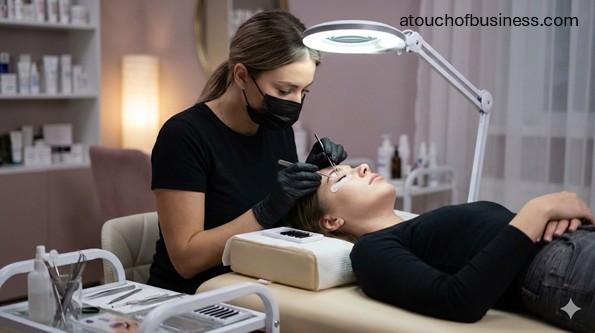
An eyelash extension business is a personal service business where you apply individual lash extensions to a client’s natural eyelashes using a specialized adhesive. It’s detailed work done close to the eyes, so training and clean habits aren’t optional—they’re part of what makes the business possible.
Most eyelash extension businesses start small. Many owners begin solo, work by appointment, and grow into a suite or small studio once they know the demand is real.
What You Offer and Who You Serve
This business is built around appointment-based services. Most clients are looking for a cosmetic upgrade that saves them time getting ready and gives a consistent look.
Common services include new sets, fills, and removal. Some businesses also sell aftercare items, like lash-safe cleansers.
The Federal Food and Drug Administration treats false eyelashes, eyelash extensions, and their adhesives as cosmetic products, and highlights that the eyelid area is delicate and can react to adhesives. That’s a big reminder to treat product selection seriously from day one.
Pros and Cons You Should Know Up Front
There’s a reason this business appeals to first-time owners. You can often start lean, keep your schedule controlled, and build skill-based income without a huge staff.
But it’s also a business where small details matter. You’re working close to the eyes, using adhesives and removers, and operating under state and local rules that can change depending on where you live.
- Pros: Can start solo, appointment-based income, flexible hours, scalable into a larger studio.
- Cons: Licensing can be strict, sanitation matters every day, product safety issues can create risk if you cut corners.
Is This the Right Fit for You?
Before you worry about business names and equipment, start with the honest stuff. Is owning a business right for you? And is an eyelash extension business right for you?
Passion matters more than people admit. When problems show up—and they will—passion is what keeps you looking for answers instead of looking for an exit. If you want to dig deeper on that mindset piece, read How passion affects your business.
Now ask yourself this question, and don’t rush it:
“Are you moving toward something or running away from something?”
If your only goal is escaping a job, a boss, or a short-term financial bind, that motivation can fade fast once the work gets real.
Also, this business comes with responsibility. Income can be uneven at first. You may work long hours. You might handle uncomfortable tasks. You could take fewer vacations. And in the beginning, you’re responsible for everything.
Do you have the skills to do the work—or are you willing to learn them? Can you secure funds to start and operate, even if growth is slow in the first few months?
One more move that saves people from expensive surprises is talking to real owners.
Only talk to owners you will not be competing against. That usually means someone in a different city or region.
To prepare for those conversations, use Business Inside Look so you ask better questions and listen for what actually matters.
- “What did you have to do before you were legally allowed to take your first client?”
- “What did you buy first that you still use today—and what would you skip if you started again?”
- “What surprised you most about setup, licensing, or finding clients in the beginning?”
If you want a bigger readiness checklist before you jump in, start here: Points to consider before starting your business.
Step 1: Confirm Your Licensing Path First
This is not a “figure it out later” business. In many states, eyelash extension services fall under cosmetology or esthetics rules, and the requirements can be different depending on where you live.
Your first job is to find your state’s licensing authority (often a state board for cosmetology) and confirm what credential you need to legally perform eyelash extension services.
Some states have a lash-focused credential. For example, Texas requires a dedicated eyelash extension specialist course with 320 hours of instruction through a licensed school before you can apply for that license.
Step 2: Verify What Services You’re Allowed to Perform
Once you know the credential you need, confirm your scope of practice. This is where people get tripped up. A service menu that looks normal online might not be legal in your state under your specific license type.
Some rules are very specific. For example, Texas has a scope of practice guide for eyelash extension specialists that focuses on eyelash extensions only.
If you’re unsure, call your state licensing office and ask what you can do with your credential before you advertise services.
Step 3: Decide What Kind of Business You’re Building
This business can be started by one person. In fact, that’s how most eyelash extension businesses begin. You can operate solo, build a client base, and stay small if you like.
But you still need to choose your structure. Will you work full time or part time? Do you want a partner? Are you planning to grow into a multi-chair studio later?
Investors usually aren’t necessary for this type of business, unless you’re jumping straight into a large facility buildout. Most owners start lean and scale once demand is proven.
Step 4: Validate Demand and Profit Before You Spend Big
Lashes can be popular in one area and slow in another. Don’t assume demand just because you’ve seen it online.
Look at your local market and confirm people are actively paying for these services. Then confirm the numbers work—meaning you can cover expenses and still pay yourself.
If you want a simple way to think through market demand, use this supply and demand guide as a starting point.
Step 5: Choose a Location That Matches Your Rules and Your Clients
Your location choice can affect everything—what licenses you need, what inspections apply, how much you spend, and how easy it is for clients to show up.
Most new owners choose one of these setups: renting a salon suite, renting inside an existing salon, opening a small studio, or operating from home if local rules allow it.
If you’re deciding between options, this guide on choosing a business location can help you think through convenience, access, and setup requirements.
Step 6: Build Your Service Menu and Pricing Early
Your service menu affects everything—your supply list, appointment length, pricing, and how you describe your business.
Decide what you’ll offer at launch. Keep it tight. You can always add services later, once you know what your clients want and what your state rules allow.
Pricing needs to cover your supplies, your time, your overhead, and still leave room for profit. Use this pricing guide to help you set pricing that makes sense for your area.
Step 7: List Every Startup Item You Need Before You Buy Anything
It’s easy to buy random supplies because they look professional online. But startup spending gets messy fast when you don’t have a clear list.
Create a detailed list of everything you need to open your doors and legally perform services. Then research pricing for each item.
If you want help building your cost estimate, use this startup cost guide before you spend.
Step 8: Plan Your Sanitation and Disinfection Setup
This business involves close contact and tools used near the eyes. You need a sanitation routine that matches your state requirements and protects your clients.
For products used to disinfect surfaces and tools, confirm you’re using products correctly and verify disinfectants through official sources when needed. The Environmental Protection Agency maintains resources related to registered disinfectants.
Don’t guess on this part. If your state board has salon infection control rules, follow them closely.
Step 9: Choose Suppliers You Can Trust
Your adhesive, lash trays, tweezers, under-eye pads, and cleansers all come from somewhere. You’re not just buying supplies—you’re choosing what goes near a client’s eyes.
Work with professional suppliers that provide clear product information and keep documentation, like Safety Data Sheets, for chemical products.
If you plan to hire staff, you also need workplace chemical safety basics in place, including access to Safety Data Sheets and proper labeling rules.
Step 10: Write a Business Plan Even If You’re Not Borrowing Money
A business plan isn’t just for banks. It’s for you. It keeps you focused on what you’re building, how you’ll launch, and what needs to happen before your first appointment.
Your plan can be simple. What matters is that you put the numbers, steps, and decisions in writing.
If you need a guide, use how to write a business plan as your structure.
Step 11: Choose a Business Name and Lock In Your Online Handles
Your name needs to be usable and available. That means checking business name availability in your state, and checking whether the domain name and social handles are available too.
Don’t fall in love with a name before you confirm you can actually use it.
This guide on selecting a business name walks you through the process step by step.
Step 12: Register Your Business the Right Way
Many small businesses start as sole proprietorships because it’s the default in most states—no separate formation filing is required for that structure. But you still may need local licenses and possibly a registered business name, depending on where you operate.
Many owners later form a limited liability company for liability protection and a cleaner setup for banking and partnerships.
If you want guidance on the steps and what to check, use how to register a business as a starting point, then confirm requirements with your state and local offices.
Step 13: Get Your Tax Accounts Set Up
If you need an Employer Identification Number, get it directly from the Internal Revenue Service. Some businesses need it right away, especially if you’re forming an entity or hiring.
You may also need state tax registrations depending on what you sell and whether your state taxes retail products or services.
When in doubt, ask early. It’s easier to register correctly before you start booking appointments than to fix it later.
Step 14: Confirm Local Licenses, Zoning, and Space Approval
Your city or county may require a general business license. Your zoning rules may restrict home-based services or regulate signage and parking.
If you open a studio or rent a commercial space, you may also need a Certificate of Occupancy (CO) before you open, depending on your local building department.
This is where a quick call to your local licensing office can prevent delays.
Step 15: Choose Insurance That Fits the Risk
Even a small lash studio can face claims. General liability insurance is a common starting point. You may also need coverage for business property and equipment depending on your setup.
Some venues and landlords require proof of insurance before they’ll sign a lease. That’s not rare, so plan for it early.
If you want a breakdown of coverage types, read this business insurance guide.
Step 16: Set Up Your Financial Accounts and Payment Tools
Separate your business finances from your personal finances. That makes taxes easier and keeps your tracking clean.
Choose a financial institution and open the accounts you need to operate. Then set up tools to accept payment and track sales.
If you need outside funding, review how to get a business loan and compare options before you sign anything.
Step 17: Build Your Brand Basics Before You Launch
You don’t need an expensive brand package to open. But you do need the basics—something that looks consistent, clear, and trustworthy.
That usually means a logo, business colors, simple business cards, and a clean way to display your service menu.
For help building those pieces, use corporate identity considerations, what to know about business cards, and business sign considerations if you’ll have signage.
Step 18: Set Up Your Website and Booking Presence
People want to know what you do, what it costs, where you are, and how to book. If they can’t find that fast, they move on.
You don’t need a massive website. You need clear service info, booking instructions, and a way to contact you.
Start with an overview of developing a business website and keep it simple.
Step 19: Prepare Client Paperwork and Pre-Launch Proof
Before you book your first official client, have your paperwork ready. That includes consent forms, basic policies, and any intake questions you need to screen clients safely.
You also need proof that you can do the work. That usually means clean photos of your best sets and a small portfolio that shows your style.
Keep your claims realistic. You’re offering a cosmetic service, not a medical outcome.
Step 20: Decide When to Hire and What You’ll Do Yourself
Most lash businesses start with the owner doing nearly everything. That’s normal. You can learn as you grow and bring help in later if you want.
If you do plan to hire quickly, learn the difference between employees and independent contractors in your area and set up payroll and employer accounts correctly.
When you’re ready, use how and when to hire so you understand the timing and responsibilities.
Step 21: Create a Simple Opening Push
At launch, your goal is simple—get booked with real clients and build momentum without rushing your work.
If you’re in a brick-and-mortar setting, learn how to get people into your space. This guide on how to get customers through the door can help.
If you plan a grand opening, keep it realistic and doable. Here are ideas for your grand opening that fit small businesses.
Startup Items and Cost Build
This is your core shopping list. Build it before you buy anything, then price out each item so you know what your startup really looks like.
Once your list is complete, research pricing for each item and create a total estimate. Your size and setup choices will drive your costs.
- Treatment Station: lash bed or esthetics table, technician chair or stool, pillows and bolsters, linens or disposable covers, blanket
- Lighting and Visibility: adjustable lash lamp, task light backup, magnification tools if needed
- Core Lash Tools: isolation tweezers, application tweezers, lash mirror, lash tile or palette, adhesive palette surface, scissors for tape and pads
- Lash Supplies: extension trays (varied lengths and styles), lash adhesive, lash primer or cleanser, gel pads, lash tape, micro brushes, lint-free applicators, disposable spoolies
- Sanitation and Disinfection: covered trash can, disposable liners, containers for clean and used tools, disinfectants appropriate for your tools and surfaces
- Front Desk Basics: booking system, payment processing, client forms, basic recordkeeping method
- Studio Setup (If Applicable): storage drawers, closed containers for supplies, signage, waiting chair, cleaning supplies
Varies by Jurisdiction
This business is regulated differently depending on your state and your city. Don’t assume your setup is allowed just because someone else is doing it online.
Use this checklist to confirm rules in your area before you commit to a lease or advertise services.
- State licensing: Search your state board of cosmetology for “eyelash extensions license requirements.”
- Business registration: Check your Secretary of State business portal for name rules, entity filing, and assumed name requirements.
- Local licensing: Search your city or county website for “business license” and “home occupation permit” if working from home.
- Building approval: Ask your local building department whether a Certificate of Occupancy is required for your location type.
- Permits and rules: The U.S. Small Business Administration has a general guide on licenses and permits that can help you find the right offices to contact.
Smart Questions to Ask Offices and Agencies
When you contact a state board or local licensing office, keep your questions simple and direct. You’re trying to confirm what applies to your exact setup.
- “What credential is required to legally perform eyelash extension services in this state?”
- “Can I legally offer this service from a home-based studio in my city, and what approvals are required?”
- “Do I need a general business license, and what inspections apply before opening?”
If you want extra help pulling things together correctly, you can build a small support team. This guide on building a team of professional advisors shows what that can look like.
Red Flags Before You Commit
Some problems are fixable. Others are warning signs that the business is being built on shaky ground.
If you see these issues, slow down and confirm requirements before you spend more.
- No clear proof that you meet your state’s credential requirements
- Planning to offer services your license does not cover
- Using adhesives or products without clear documentation or proper labeling
- Skipping sanitation setup or using the wrong disinfectants for tools and surfaces
- Assuming home-based services are allowed without zoning approval
Pre-Opening Checklist
This is your final readiness check before you book a full schedule.
Go through it slowly. It’s easier to fix problems now than after you’ve taken your first client.
- License and credential verified with your state authority
- Business registration completed (sole proprietor or limited liability company)
- Local business license confirmed and issued if required
- Zoning approval confirmed for your location type
- Certificate of Occupancy confirmed if required for your space
- Insurance in place (general liability at minimum)
- Supplies purchased and organized with sanitation setup ready
- Pricing set and service menu published
- Booking system active and payment tools ready to accept payment
- Website and business profiles live
- Consent forms and client policies prepared
- Photos or portfolio examples ready for marketing
101 Tips to Launch and Run Your Eyelash Extension Business
In this section, you’ll find tips that cover planning, compliance, marketing, and the day-to-day work behind a lash business.
Some tips will fit where you are right now, and others will make more sense once you’re booked out and ready to grow.
Save this page so you can come back to it when you hit a new stage.
The fastest progress usually comes from picking one tip, putting it into action, and building from there.
What to Do Before Starting
1. Confirm your state’s licensing rules for eyelash extension services before you invest in training or equipment.
2. Call your state cosmetology or esthetics licensing office and ask what credential you need to legally perform lash extensions in your area.
3. Decide whether you’ll start solo or with a partner, because that choice affects your budget, paperwork, and decision-making speed.
4. Choose your starting setup: home-based studio (if allowed), salon suite, booth rental, or storefront. Your location choice changes your costs and your approvals.
5. Validate local demand by searching how many lash providers already exist nearby and whether they stay busy based on available booking times.
6. Run quick pricing math: estimate your average service price, how many appointments you can physically complete in a day, and whether that supports your bills.
7. Build a short “launch-only” service menu so you don’t overcomplicate scheduling on day one.
8. Pick one lash style focus for launch (natural, volume, hybrid) so your photos, training, and supplies stay consistent.
9. Make a detailed shopping list first, then price each item. This prevents impulse buying and keeps your startup budget real.
10. Choose a booking system early, because your appointment lengths and buffer time should be set before you start advertising.
11. Create a clean workspace plan that includes closed storage for supplies and a separate area for disinfecting tools.
12. Keep a written sanitation routine you can repeat every appointment, because consistency protects clients and helps you work faster.
13. Plan your first 30 days like a soft opening, with fewer appointments while you build speed and confidence.
14. Set up a separate business bank account from day one, even if you start small, so your numbers stay clear.
15. Write a simple business plan to keep you focused on your launch steps, pricing, and monthly targets.
What Successful Eyelash Extension Business Owners Do
16. They treat time like inventory and protect their schedule with firm start times and clear booking rules.
17. They track what each client received (curl, length, style) so repeat visits feel easy and consistent.
18. They take clean, consistent photos in the same lighting and angle to build trust quickly.
19. They keep their service area uncluttered so they can work faster and reduce mistakes.
20. They set a minimum standard for every appointment, even when they’re tired, because consistency builds referrals.
21. They keep backups of essentials like tweezers, tape, and under-eye pads so one missing item doesn’t derail the day.
22. They use written policies and repeat them calmly, so clients know what to expect before they arrive.
23. They review their supply usage monthly so they reorder before they run out, not after.
24. They build relationships with a few reliable suppliers instead of switching brands every week.
25. They raise prices based on demand and schedule load, not on emotion or comparison to someone else online.
What to Know About the Industry (Rules, Seasons, Supply, Risks)
26. Licensing and facility rules vary by state, so never assume your setup is allowed just because it works somewhere else.
27. Some states regulate where lash services can be performed, so confirm whether home-based work is permitted in your city or county.
28. Adhesives and removers are chemical products, so you should know what’s in your products and keep documentation available.
29. If you hire staff, workplace rules may require Safety Data Sheets for chemical products and training on safe handling.
30. Eye-area services carry higher risk, so your client screening questions should include sensitivities and past reactions.
31. Seasonal patterns can affect bookings, so plan for slower periods and avoid building expenses that require a fully booked calendar.
32. Lash retention and client satisfaction depend heavily on environment, technique, and aftercare expectations, so educate clients without overpromising results.
33. Disinfectant products should be used exactly as labeled, including contact time, because “quick wipes” can create a false sense of safety.
34. Tool and surface disinfection requirements can vary, so follow your state board guidance and keep your routine simple and repeatable.
35. Your appointment capacity is limited by physical precision work, so growth often means better systems, not just longer hours.
36. Retail add-ons can help revenue, but they also create new sales tax and product storage considerations depending on your state.
37. Client safety is part of your brand, so your choices on training and sanitation should be visible and easy to explain.
Marketing (Local, Digital, Offers, Community)
38. Claim and complete your business listing profiles early so local search results show your location, hours, and booking link.
39. Use the same business name, phone number, and address everywhere online so clients can find you without confusion.
40. Build a small portfolio before you spend on ads, because photos and consistency convert faster than slogans.
41. Post one “clear proof” photo set each week that shows both eyes, close-up detail, and overall face balance.
42. Add simple captions that answer one real client question, like “How long does a full set take?”
43. Offer a limited-time launch schedule rather than deep discounts, so you can control demand while you refine your process.
44. Partner with non-competing beauty businesses nearby, like hair stylists or nail techs, for referral swaps that fit your ideal client.
45. Keep a printed referral card at your station and hand it out only after a client is happy with the result.
46. Use appointment reminder messages that include clear prep instructions, because better prep reduces cancellations and late arrivals.
47. Make your booking page easy: services listed clearly, pricing visible, and “book now” in one obvious place.
48. Highlight your location convenience with plain details like parking, suite number, and how early to arrive.
49. Track where every new client came from so you stop spending time on marketing that doesn’t convert.
Dealing with Customers (Trust, Education, Retention)
50. Start every first appointment with a short consultation so you align on style, comfort, and realistic expectations.
51. Ask clients what they disliked about past lash experiences so you can avoid repeating the same issues.
52. Explain aftercare in simple terms and repeat the top two rules at the end, because clients forget details.
53. Set a clear fill schedule recommendation so clients know how to maintain their set without guessing.
54. If a client wants a look that doesn’t fit their natural lashes, offer the closest safe option instead of forcing the request.
55. Use one consistent vocabulary for styles so clients understand what “natural” or “dramatic” means in your hands.
56. Keep your tone calm and confident when a client is nervous, because your energy affects their trust.
57. Don’t argue about retention. Ask questions, look for patterns, and guide them toward better habits and realistic upkeep.
58. Set boundaries around late arrivals so you protect the next client and avoid rushing precision work.
59. Create a simple rebooking habit at checkout so clients lock in their next appointment while they’re already happy.
Customer Service (Policies, Guarantees, Feedback)
60. Write a cancellation and reschedule policy that protects your time and covers no-shows without sounding harsh.
61. Collect deposits when needed to reduce last-minute cancellations, especially for long appointments.
62. Define what qualifies as a redo, what qualifies as normal shedding, and how quickly clients must contact you if there’s an issue.
63. Put your policies where clients actually see them, like your booking page and confirmation message.
64. Use a short client information form for first-time appointments so you capture sensitivities and prior reactions before you start.
65. Keep your service notes private and professional, because those notes may become important if a client disputes a result.
66. Ask for feedback in a low-pressure way, like “Was anything uncomfortable today?” so clients speak up early.
67. Handle complaints with a checklist: listen, document, offer next steps, and avoid emotional replies.
68. If a situation feels unsafe or inappropriate, end the appointment calmly and follow your refund policy without debate.
69. Use short follow-up messages after first visits to build retention and catch small issues before they turn into bad reviews.
Running the Business (Operations, Staffing, SOPs)
70. Treat your daily schedule like a plan, with setup time, buffer time, and cleanup time built into every block.
71. Keep your tools in the same position every time you work, because muscle memory saves minutes on every appointment.
72. Use a consistent room reset process after each client so your station is ready without scrambling.
73. Store clean tools separately from used tools, and keep that separation obvious to prevent accidents.
74. Use closed storage for lash trays and adhesives so dust and humidity don’t ruin product quality.
75. Replace tweezers when they lose precision, because struggling with poor tools slows you down and frustrates clients.
76. Build a short written procedure for every repeated task, like “opening routine” and “end-of-day cleanup.”
77. Track your appointment times for two weeks so you know your true pace and can stop underbooking or overbooking.
78. Set a weekly admin block for ordering supplies, reviewing client messages, and confirming your schedule.
79. Keep your business receipts organized monthly so taxes don’t become a panic project later.
80. If you rent a suite, confirm what insurance coverage the landlord requires before you sign anything.
81. Price your services based on time, cost of supplies, and demand—not just what the salon down the road charges.
82. If you bring on another lash artist, set written standards for sanitation, service timing, and style consistency.
83. Hire slowly and train carefully, because one bad client experience can hurt your reputation faster than you can rebuild it.
Sustainability (Waste, Sourcing, Long-Term)
84. Reduce waste by choosing multi-use tools where safe and allowed, while keeping single-use items only where necessary.
85. Keep a “just enough” inventory approach so products don’t expire before you use them.
86. Choose suppliers that provide clear documentation for products, so you can answer client questions with facts.
87. Use labeled containers and organized storage so you don’t throw away supplies you simply couldn’t find.
88. Plan your cleaning and disinfecting routine around product label directions so you use the right amount, not excessive waste.
Staying Informed (Trends, Sources, Cadence)
89. Check your state licensing board updates a few times per year, because rules and interpretations can change.
90. Review product updates from your suppliers so you don’t miss formula changes or new handling instructions.
91. Follow credible eye health guidance when you set safety practices, because this service sits close to sensitive tissue.
92. Keep your workplace chemical documentation current if you have staff, because inspections and employee safety depend on it.
93. Revisit your policies every six months and tighten them based on real problems you’ve experienced.
Adapting to Change (Seasonality, Shocks, Competition, Tech)
94. Build a cash buffer during busy periods so slow weeks don’t force bad decisions.
95. If a competitor opens nearby, don’t race to the bottom on pricing. Improve consistency, photos, and client experience instead.
96. When demand rises, expand your hours only after you’ve improved scheduling and speed, so you don’t burn out.
97. If cancellations spike, adjust your deposit policy and reminder timing rather than blaming the market.
98. Test new services in a controlled way with a small group of returning clients before adding them to your main menu.
What Not to Do
99. Don’t skip licensing and location rules. Being “busy” won’t protect you if your setup violates state or local requirements.
100. Don’t use products near the eyes without knowing what they are and how to handle them safely, especially adhesives and removers.
101. Don’t rush appointments to fit more into a day. Speed comes from skill and systems, not pressure.
If you’re new to business, don’t try to master all 101 tips at once. Pick the few that remove the biggest risk first—legal compliance, clean systems, consistent work—and build from there.
FAQs
Question: Do I need a cosmetology or esthetics license to do eyelash extensions in my state?
Answer: In many states, yes, but the exact credential and training requirements vary by state.
Check your state cosmetology or esthetics licensing agency to confirm what you must hold before you take paid clients.
Question: What’s the fastest way to find the exact lash rules for my state?
Answer: Start with your state licensing agency site and search for “eyelash extensions” and “scope of practice.”
If you cannot find it fast, call the licensing office and ask what license and facility rules apply to lash extensions.
Question: Can I legally run a lash business from home?
Answer: It depends on your city zoning rules and your state’s facility requirements for personal services.
Verify home-occupation rules with your city or county, then confirm with your state licensing agency.
Question: Do I need a salon or establishment license in addition to my personal license?
Answer: Some states require the location itself to be licensed, even if you already hold a personal credential.
Confirm whether your setup needs a salon, establishment, or shop license before you sign a lease.
Question: What licenses and permits do I need besides my lash credential?
Answer: Many owners need a local business license, and some locations require building approvals like a Certificate of Occupancy (CO).
Check your city and county licensing portals, because requirements depend on your address and setup type.
Question: Should I start as a sole proprietor or form a limited liability company?
Answer: Many small service businesses start as sole proprietorships, then form a limited liability company (LLC) later for structure and liability separation.
Ask a qualified accountant or attorney what fits your risk level, lease requirements, and tax plan.
Question: Do I need an Employer Identification Number?
Answer: You may need an Employer Identification Number (EIN) if you form an LLC, hire employees, or your bank requires it.
You can apply directly through the Internal Revenue Service for free.
Question: Do I need to collect sales tax for lash services or retail products?
Answer: It depends on your state’s sales and use tax rules for services and retail items.
Check your state Department of Revenue site and search for “sales tax services” and “cosmetology.”
Question: What insurance should a lash extension business carry?
Answer: Many owners start with general liability insurance, then add coverage for business property and equipment when needed.
Your landlord or salon suite may require proof of insurance before you can operate.
Question: What equipment is essential to open, and what can wait?
Answer: To open, you need a safe workstation, proper lighting, precision tools, lash supplies, and a clear sanitation and disinfection setup.
Extras like upgraded decor can wait until your bookings are steady and your cash flow is predictable.
Question: How much money should I plan to start with?
Answer: Startup cost depends on your location choice, licensing fees, training, insurance, and how much equipment you buy up front.
Build an itemized list first, price each item, and add a cash buffer for slow weeks early on.
Question: How do I choose safe lash adhesives and products?
Answer: Eyelash extensions and adhesives are considered cosmetic products, and the eye area can react to ingredients.
Buy from reputable suppliers, keep product labels and instructions, and take allergy risk seriously during client screening.
Question: Do I need Safety Data Sheets for adhesives and disinfectants?
Answer: If you have employees, OSHA hazard communication rules can require Safety Data Sheets (SDS) and training for hazardous chemicals in the workplace.
Keep SDS documents organized for adhesives, removers, and disinfectants if your setup falls under these requirements.
Question: How do I set up pricing when I’m new?
Answer: Start with your service time, supply cost per appointment, and overhead, then set a price that leaves room for profit.
Keep your menu simple at launch so you can measure what sells and what takes too long.
Question: What client forms should I have before my first appointment?
Answer: At minimum, use a consent form and a client information form that includes sensitivity and allergy questions.
Keep written policies for late arrivals, cancellations, and what you will do if a client reports irritation after service.
Question: What should my standard appointment workflow look like?
Answer: Use the same steps every time: sanitize the station, confirm the style, perform the service, document what you used, and disinfect after.
This keeps your timing predictable and helps you deliver consistent results.
Question: How do I reduce cancellations and no-shows?
Answer: Use clear reminders, firm reschedule rules, and deposits for long appointments when needed.
Most issues improve when clients understand your start time is real and your policy is consistent.
Question: When should I hire another lash artist or assistant?
Answer: Hire when demand is steady and your schedule is consistently full, not just during one busy week.
Write down your service standards first, so a new person can match your quality and sanitation routine.
Question: What numbers should I track weekly to stay profitable?
Answer: Track bookings completed, average revenue per appointment, refill rate, product usage, and cancellations.
These numbers show whether you need better pricing, stronger policies, or tighter scheduling.
Question: What are the most common mistakes new lash business owners make?
Answer: The biggest ones are skipping licensing checks, working from an unapproved location, and buying supplies before knowing their true costs.
Another common issue is rushing appointments, which increases safety risk and hurts quality.
Related Articles
- How to Start a Facial Spa Business: Your Ultimate Guide
- How to Start an Eyebrow Threading Business: Your Complete Guide
- How to Start a Nail Salon the Right Way
- Start Your Makeup Artist Business the Right Way
- Starting a Beauty Salon: A Practical Startup Guide
- Barbershop Startup Guide: Licenses & Inspections
- Bridal Makeup Business: Step-by-Step Startup Guide
- Start a Tanning Business: Essential Steps & Checks
Sources:
- FDA: Eye Cosmetic Safety
- IRS: Employer Identification Number, Apply EIN Online
- NYC Business: Appearance Enhancement License
- OSHA: Hazard Communication Standard, Safety Data Sheets Guide, 29 CFR 1910.1200 (eCFR)
- PubMed: Formaldehyde Release Study
- SBA: Apply Licenses Permits
- Texas Department of Licensing and Regulation: Apply Eyelash License, Scope Practice Guide
- US EPA: Registered Disinfectants
- USPTO: Trademark Basics, Apply Online
- American Academy of Ophthalmology: Eyelash Extension Safety