
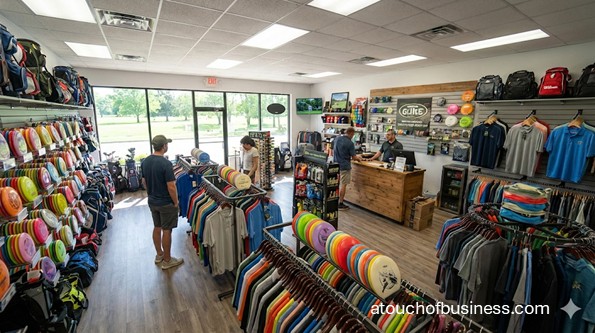
Golf Disc Shop Overview and Readiness Check
Starting a business is personal. It’s also demanding. Before you spend a dollar, ask two fit questions: is owning a business right for you, and is a golf disc shop the right business for you?
It’s tough when you feel stuck in a job or financial stress. But don’t let that be your only reason to start. Ask yourself this exact question: “Are you moving toward something or running away from something?” If you’re only trying to escape, the hard days can hit you twice.
Passion matters here. Not because it makes things easy. Because it helps you keep going when you hit slow weeks, vendor delays, paperwork, and long days. If you want a reminder of why passion supports persistence, read passion as an important key.
Now for the reality check. Income can be uneven. Hours can be long. You’ll do tasks you don’t love. Vacations can be fewer at first. The responsibility lands on you. That means family support, the right skills, and enough funding to start and to operate matter. If you want a broad checklist for the early decisions, use business start-up considerations as a guide.
Also, talk to owners. Do it early. But only talk to owners you will not be competing against. That usually means a different city or region. A helpful place to start is a business inside look, then reach out to real owners.
Here are a few questions to ask those non-competing owners:
- What surprised you most about opening a disc golf retail shop?
- What products moved fastest in your first 90 days, and what sat on the shelf?
- What would you do differently before signing a lease or placing your first large inventory order?
A golf disc shop is usually a small-scale startup at first. Many owners begin online-only or with a modest storefront. A larger-scale version is possible later, like a bigger retail footprint, more staff, and a deeper inventory mix.
Your customers are typically new players, regular course players, league and tournament players, and gift shoppers. Your products usually include discs, accessories, and sometimes baskets and bags. Some shops also offer special orders and online ordering with shipping or local pickup, when local rules allow it.
How does this business feel day to day? You’ll spend time receiving boxes, pricing and labeling items, organizing shelves, helping customers choose discs, and setting up online listings if you sell online. If you enjoy the sport and you like helping people, that can be a good match.
Pros and cons are real. Here’s the honest view to weigh before you commit.
- Pros: A clear niche with a community feel, compact products that store and ship well, and repeat demand from regular players.
- Cons: Inventory can get complex fast, location rules can block a storefront you love, and cash can get tied up in slow-moving stock.
How Does a Golf Disc Shop Generate Revenue
Most revenue comes from product sales. That usually means discs and accessories. Some shops also sell baskets and bags. If you add ecommerce, you can also sell outside your immediate area.
At startup, keep it simple. Build a core product mix you can explain and restock. Then expand based on real demand, not guesses.
Step 1: Choose Your Shop Model and Your Starting Scale
Start by choosing how you will sell. Your model changes your budget, your space needs, and what compliance boxes you must check.
Most first-time owners start one of these ways:
- Online-only: Home storage or a small storage unit, shipping orders, and no customer walk-ins.
- Storefront retail: A physical shop with walk-in sales and optional ecommerce.
- Hybrid: A storefront plus online ordering and shipping.
- Event-focused retail: Pop-up selling at events when allowed by the venue and local rules.
Decide your ownership setup too. Solo, partners, or investors? For a small startup, solo ownership is common. Partners can help with funding and skills, but they add complexity.
Also decide staffing now versus later. Many small shops open with one owner and add help later. If you plan to hire early, you’ll handle employer setup before opening.
Step 2: Validate Demand and Confirm Profit Potential
Demand is not the same as interest. You need enough steady sales to cover expenses and still pay yourself.
Start with simple local proof. Look at nearby courses, local leagues, and disc golf groups in your area. A practical tool for course research is the UDisc course directory.
Next, confirm competition. Identify other disc golf retailers, sporting goods stores that carry discs, and course pro shops. Note what they sell, what they do not sell, and what price points show up most often.
Then check profit potential. List your expected monthly costs. Add your personal income goal. Compare that to realistic sales volume at local prices. If the numbers don’t work, adjust the model before you register anything.
If you want a simple way to think about demand, use supply and demand as your reference.
Step 3: Decide What You Will Sell at Launch
Your first inventory choices shape everything. They affect startup costs, shelf space, and how easy it is to help customers.
At launch, most shops focus on a clear core mix:
- Discs across common types used by players, including putters, mid-range discs, and drivers.
- Accessories like minis, towels, grip aids, and retrievers (based on your supplier options).
- Bags and other add-ons if you have the space and budget.
If you plan to advertise items as “approved,” use the Professional Disc Golf Association (PDGA) lists. The PDGA publishes PDGA Approved Disc Golf Discs and PDGA Approved Disc Golf Targets.
Decide if you will sell used gear or allow trade-ins. That can attract local players, but it also adds sorting, grading, and tracking work. It can also change what local rules apply, so treat it as a compliance question too.
Step 4: Choose a Location Strategy That Matches the Business
Location matters most if you rely on walk-in traffic. If your plan is online-first, you may not need a storefront at all.
If you’re considering a storefront, choose locations that customers can reach easily. Nearby parks, recreation corridors, or busy retail areas can help. Use business location planning to think through site choice without rushing.
Before you sign a lease, confirm the space can legally be used for retail. Ask the city or county zoning office if retail is allowed at that address. If you’re in a shared space, confirm the lease allows your exact use.
If you’re home-based, confirm home occupation rules. Some areas restrict signage, customer visits, and pickup traffic. Don’t guess. Verify with your local planning department.
Step 5: Confirm Building Rules Before You Build Out a Storefront
If you open a storefront, building rules are not optional. You may need a Certificate of Occupancy (CO) for the use, or you may need an updated CO if the space changes use.
These requirements vary by jurisdiction, so you verify with your local building department. Examples of how cities explain CO rules include Certificate of Occupancy – Buildings and Certificate of Occupancy – Pittsburgh, PA.
Also plan for accessibility. Businesses open to the public generally must follow Americans with Disabilities Act (ADA) Title III guidance. A starting point is Businesses That Are Open to the Public.
Step 6: List Startup Essentials and Build Your Budget
It’s tough when you want to open fast, but this is where many new owners get overwhelmed. A clean list and a realistic budget help you stay steady.
Start by listing what you must have to open and accept payment. Then build a budget based on your shop model. This is also where scale changes the story. A small online shop can start with fewer fixtures. A storefront adds equipment and build-out items.
If you want a structured way to estimate costs, use estimating startup costs as your guide.
Here is an itemized list of essential equipment, organized by category. This list excludes costs on purpose, so you can price it based on your local options.
- Retail Fixtures and Merchandising: checkout counter, shelving units, wall display system (such as slatwall and hooks), locking display case (if needed), product signage holders, shopping baskets or carts, disc display racks or bins designed for circular products
- Point-of-Sale and Office Tech: point-of-sale terminal, point-of-sale software account, card reader, receipt printer, cash drawer (if accepting cash), barcode scanner, label printer for SKUs, router and secure Wi-Fi, back-office computer, printer/scanner
- Inventory Receiving and Storage: stockroom shelving, bins/totes for sorting, step stool or small ladder, hand truck/dolly, basic counting tools for inventory checks
- Shipping and Ecommerce (If Applicable): shipping scale, shipping label printer, packing tape dispenser, mailers and boxes, void fill, label sleeves
- Security and Safety: first aid kit, fire extinguisher (as required by local code), camera system (optional), anti-theft tags or labels (optional)
Pricing guidance for your budget is simple and practical. Get real quotes from vendors. Compare local retail fixture suppliers, office supply stores, and point-of-sale providers. Add shipping and tax where it applies. If you don’t want to price everything yourself, an accountant or bookkeeper can help you structure the categories and assumptions.
Step 7: Choose a Legal Structure and Register the Business
Many small retail startups begin as a sole proprietorship. It’s simple. Then, if the business grows, some owners form a limited liability company later for liability and structure reasons.
Your exact best choice depends on your risk, your plans, and your location. If you want step-by-step help, use how to register a business as your reference and confirm your state’s rules.
To register, you typically use your state Secretary of State or equivalent business filing office. If you use an assumed name or different business name, you may also need a “doing business as” filing, depending on your state and county rules.
When you fill out forms, you may be asked for an industry classification. The Census Bureau publishes North American Industry Classification System (NAICS) information, including entries related to sporting goods retail. A starting point is North American Industry Classification System (NAICS) U.S. Census Bureau.
Step 8: Get Your Federal and State Tax Accounts in Place
This step is about being able to operate legally from day one. You don’t want to open and then find out you can’t collect sales tax or set up payroll correctly.
At the federal level, you may need an Employer Identification Number (EIN). The IRS explains how to get an employer identification number, and it also provides an overview of the employer identification number.
For retail sales, many states require you to register before collecting sales tax. Your state process will have its own portal. One example page is Register as a sales tax vendor, which shows how a state tax agency frames registration.
The Small Business Administration (SBA) also provides a starting point for tax identification steps through Get federal and state tax ID numbers.
Step 9: Confirm Licenses, Permits, and Local Rules
Retail rules are local-heavy. That means you follow a universal process and verify the details where you live.
A good federal starting point is the SBA page on Apply for licenses and permits. Then you confirm directly with your state and your city or county portals.
Here is a short “Varies by jurisdiction” checklist you can use to verify locally:
- Entity filings: State Secretary of State site → search “business entity registration” and “business name search.”
- Sales tax registration: State Department of Revenue or Taxation → search “sales tax permit” or “sales tax registration.”
- General business license: City or county licensing portal → search “business license” and your city name.
- Zoning and home occupation: City or county planning department → search “zoning verification” and “home occupation.”
- Certificate of Occupancy (CO): City building department → search “Certificate of Occupancy” and your city name.
- Sign permits: City planning or building department → search “sign permit” and your city name.
Two or three questions to ask your city or county office can save you time:
- Is retail allowed at this address, and is disc golf retail treated like general sporting goods retail?
- Do I need a Certificate of Occupancy (CO) before opening, or does the existing CO cover this use?
- Do exterior signs require a permit before installation?
Step 10: Set Up Banking and Build a Funding Plan
You need business accounts at a financial institution so you can track the business cleanly. Keep business funds separate from personal funds. It makes tax time easier and keeps records clear.
Next, build a funding plan. Some owners use personal savings for a small startup. Others use a mix of savings and financing. If you’re exploring financing, review how to get a business loan so you understand what lenders usually want before you apply.
If you plan to seek outside funding, your business plan and your sales forecast matter even more. But even if you don’t seek funding, you still want those numbers for your own decisions.
Step 11: Write a Business Plan You Can Actually Use
A business plan is not only for investors. It’s for you. It helps you make clear decisions and spot gaps before you commit to a lease or a large inventory order.
Keep it simple. Cover your model, your local demand proof, your startup budget, your pricing approach, and your pre-launch plan. If you want structure, use how to write a business plan.
Step 12: Choose Your Business Name and Secure Your Online Footprint
Your name needs to be usable and available. That means it should clear basic trademark and name availability checks where required, and it should not clash with local competitors in a way that confuses customers.
Before you print anything, check availability with your state business registry and confirm your domain and social handles. A practical guide is selecting a business name.
Even a simple website helps customers find you. If you are building one, start with an overview of developing a business website.
Step 13: Set Pricing for Products and Any Services
Pricing is a startup decision, not a later detail. You need prices that cover costs and leave room for profit. You also need a simple way to explain prices to customers.
Start by documenting typical local price points, then set your pricing policy for core items. Factor in sales tax handling based on your state rules. For guidance, use pricing your products and services.
Also set basic policies before opening, like how you handle returns and exchanges. Keep policies clear and posted where customers can see them.
Step 14: Select Suppliers and Plan Your First Orders
Suppliers shape your inventory and your reliability. You want vendors who can restock core items and ship consistently.
As you compare suppliers, confirm minimum order requirements, lead times, return rules, and what happens when items arrive damaged. Decide if you will carry many brands or focus on a smaller set at launch.
If you plan to advertise “PDGA approved” discs or targets, verify using the PDGA equipment certification pages, including PDGA Disc Golf Technical Standards.
Step 15: Build Your Brand Identity and Store Assets
Brand identity is more than a logo. It’s your name, your look, and how customers recognize you across your sign, website, and packaging.
If you want a structured way to plan this, use corporate identity considerations. For simple print needs, review what to know about business cards.
If you are opening a storefront, signage may be part of your launch. Sign rules vary, so plan it early and confirm local requirements. A starting point is business sign considerations.
Step 16: Set Up Your Space, Inventory System, and Checkout
This is where your shop becomes real. You want the space to be easy to shop and easy to restock. You also want checkout to work smoothly on day one.
Set up a simple inventory structure before you receive your first big shipment. Create SKUs, label items, and test your point-of-sale system. Run test sales, returns, and sales tax calculations before opening.
If you are opening a storefront, keep accessibility and the Americans with Disabilities Act (ADA) in mind as you arrange aisles, counters, and entry access. Start with Businesses That Are Open to the Public if you need a baseline.
Step 17: Prepare for Hiring and Required Employer Steps (If Needed)
If you plan to hire early, build time for employer setup. This is paperwork-heavy, and it needs to be correct.
Employers must complete and retain Form I-9 to verify identity and work authorization. Start with I-9, Employment Eligibility Verification and review Completing Form I-9.
For federal employment taxes, review IRS guidance such as Hiring employees and Understanding employment taxes.
Workers’ compensation rules are state-based. Use State Workers’ Compensation Officials to find your state office, then confirm your exact requirements there.
If you are unsure about any of this, you can learn it step by step or get help. Accountants, payroll services, and attorneys can reduce errors. If you want guidance on building a support team, see building a team of professional advisors.
If you want general timing guidance before you hire, use how and when to hire.
Step 18: Create a Pre-Launch Marketing Plan and Opening Plan
You don’t need a huge campaign. You need a clear way for customers to find you and trust that you are open.
Start with simple channels that match disc golf culture: local disc golf groups, league pages, course communities, and a clean website with hours and ordering info. If you have a storefront, you can also plan for walk-in traffic. A helpful guide is how to get customers through the door.
If a grand opening fits your area, plan it as a one-time launch event. For ideas, use ideas for your grand opening.
Here’s a realistic “day in the life” preview so you know what you are planning for. Your morning may include receiving deliveries and restocking. Your midday may be helping customers choose discs and running checkout. Your afternoon may be supplier ordering, posting online listings, and packing shipments. Your evening may be reconciling sales and preparing for the next day.
Step 19: Run a Pre-Opening Checklist and Watch for Red Flags
This is your final gate. You are not trying to be perfect. You are trying to be ready and legal.
Use this checklist before you open:
- Business registration is active and your business name filings match how you will sell.
- Sales tax registration is active, and your point-of-sale system calculates tax correctly.
- Any required city or county business license is issued.
- Zoning approval is confirmed for the address and your specific use.
- If required, your Certificate of Occupancy (CO) is issued for the space and the use.
- Sign approvals are confirmed if you install exterior signage.
- You can accept payment with your chosen checkout setup.
- Insurance coverage is active for your chosen model. Use business insurance to understand common coverages and what to ask an agent.
Red flags to treat as stop signs, not speed bumps:
- The city or county cannot confirm that retail is allowed at your location.
- You cannot confirm CO requirements, or the building department flags unresolved occupancy issues.
- Your supplier terms prevent restocking core inventory in reasonable time.
- Your budget depends on optimistic sales with no demand proof.
- Your plan requires hiring immediately, but you have not prepared for employer compliance steps.
It’s also smart to review common early errors. A useful reference is avoid these mistakes when starting a small business.
Quick Recap and Fit Check
A golf disc shop can often start small. Online-only or a modest storefront is a common path. You validate demand, choose a model, confirm legal use of your location, register the business, set up tax accounts, build a tight product mix, and launch with a simple marketing plan.
This business tends to suit you if you like retail, you enjoy learning product details, and you don’t mind doing a mix of customer help and admin work. It may not suit you if you need steady income immediately, you dislike inventory planning, or you want short hours from day one.
Here’s your simple self-check to end on. Write down your answers today: Do I have proof of local demand? Do I have enough funding to start and to operate for a while? And do I know the next three steps I will take this week?
101 Tips to Plan, Start, and Run Your Golf Disc Shop
What follows is a set of tips that cover different parts of starting and running a business.
Use what fits your situation and ignore what doesn’t.
Bookmark this page so you can come back when you need a quick nudge or a reminder.
Focus on one tip at a time, then put it to work when you feel ready.
What to Do Before Starting
1. Decide if you want a storefront, online-only shop, or a mix of both, because this choice drives your costs, permits, and daily workload.
2. Count how many disc golf courses are within a realistic drive time and note which ones host leagues or events, because that usually signals repeat demand.
3. Visit competing retailers in person and online, then write down what they stock well and what they ignore, so you can find an opening in the local market.
4. Pick a simple starting focus (new discs only, new plus accessories, or new plus used) and delay extra services until your core sales are steady.
5. Build a basic “profit reality” worksheet: expected monthly expenses, your personal income target, and a conservative sales estimate to see if the shop can support you.
6. Choose your starting scale on purpose; many owners begin solo with a lean setup and expand after they see real demand.
7. If you plan a storefront, confirm the address allows retail use before you sign anything, because zoning rules can block you even if the space looks perfect.
8. Ask the local building department whether a Certificate of Occupancy is required for your use and whether the current space already has the right approval.
9. If you’ll install exterior signs, ask the city or county what permits apply and what the rules are for size, lighting, and placement.
10. Register the business the right way for your situation; a sole proprietorship can be a simple starting point, and some owners form a limited liability company later as risk and revenue grow.
11. Apply for an Employer Identification Number if you need one for banking, taxes, or hiring, so you don’t scramble later.
12. Register for state sales tax before you sell taxable goods, because collecting tax without being registered can create expensive problems.
13. Open a dedicated business bank account early, so your bookkeeping stays clean from day one.
14. Pick a point of sale system that can handle sales tax by location, returns, discounts, and inventory counts, because “manual tracking” gets messy fast.
15. Define a clear starter inventory list with minimum quantities, not just brands you like, so your first order is planned and controlled.
16. Decide how you will store and label inventory (mold, plastic, weight, and color), because discs are similar enough to confuse staff and customers if you lack a system.
17. Create a simple written policy set before opening: returns, exchanges, special orders, and damaged item handling, so you are consistent from the start.
18. Price-check locally and online, then set a basic pricing rule you can repeat, because inconsistent pricing damages trust quickly.
What to Know About the Industry (Rules, Seasons, Supply, Risks)
19. Learn the core disc types and how beginners usually choose them, because clear explanations build confidence and speed up sales.
20. Keep “approved equipment” claims accurate by checking the sport’s official approval lists, and don’t guess when customers ask.
21. Expect seasonal swings in many regions; plan cash reserves for slower weather months and plan inventory for peak play seasons.
22. Watch for local event spikes, because tournaments and league seasons can create short bursts of high demand for common items.
23. Plan for supplier lead times and stockouts, because popular molds and plastics can disappear without warning.
24. If you sell used discs, define how you grade condition and how you clean them, because two people can view “light wear” very differently.
25. Treat trade-ins as a policy decision, not a casual favor, because you need consistency to avoid arguments at the counter.
26. Protect yourself from counterfeit or unauthorized products by buying through reputable distributors and keeping purchase records.
27. Know your local sales tax rules for online orders shipped within your state versus out of state, because collection requirements can change based on where you have tax obligations.
28. If you offer lessons or clinics, check whether your location requires additional permissions for instruction, gatherings, or use of public facilities.
29. Shipping discs requires care; plan sturdy packaging so discs don’t warp and customers don’t receive damaged goods.
30. Theft can be a real retail risk for small items; design your store layout and security plan before you open, not after losses start.
What Successful Golf Disc Shop Owners Do
31. They choose a clear niche early (beginner-friendly setup, premium plastics, used bargains, or tournament-focused inventory) so customers know why to shop there.
32. They keep a small “always-in-stock” list of core sellers and reorder it on schedule, rather than guessing what to buy next.
33. They label discs clearly and consistently, including key specs customers ask about, so the shopping experience feels easy.
34. They make it simple for new players by offering a basic starter recommendation and explaining it in plain words.
35. They track what actually sells by month and adjust orders based on receipts, not on personal preference.
36. They build relationships with local clubs, league organizers, and parks staff, because those groups shape where players go and what they talk about.
37. They sponsor small local events only after setting a budget and a goal, so community support stays sustainable.
38. They keep vendor notes (terms, minimum orders, lead times, and return rules) in one place so reordering is fast and accurate.
39. They define quality control for every shipment: count items, check for obvious defects, and document issues right away.
40. They set “special order” expectations up front, including timelines and deposit rules, so customers don’t assume next-day delivery.
41. They protect cash by pacing inventory growth, because overbuying is one of the fastest ways to run out of money.
42. They train staff to ask a few simple questions before recommending discs, so advice feels personal without taking too long.
43. They keep the shop clean, organized, and easy to browse, because clutter makes customers leave faster.
44. They respond to feedback with facts and calm, then adjust only when the pattern is real and repeatable.
45. They stay consistent with hours, policies, and communication, because reliability builds long-term trust.
Running the Business (Operations, Staffing, SOPs)
46. Create a written receiving process: open boxes, verify quantities, match invoices, and log discrepancies before items hit the floor.
47. Assign every product a clear SKU and stick to one labeling method, because “we’ll remember it” fails as inventory grows.
48. Set a weekly restock routine for displays and backstock, so shelves look full without last-minute scrambling.
49. Use cycle counts (small, frequent inventory checks) instead of rare full counts, because you’ll find problems sooner and with less stress.
50. Separate display inventory from backstock in your system, so you know what is actually available to sell.
51. If you ship orders, standardize packing steps and materials so you reduce damage and speed up fulfillment.
52. Keep shipping supplies organized by size and type, because searching for boxes wastes time and raises error rates.
53. Write a simple returns checklist for staff, including “condition confirmed” and “refund method confirmed,” so every return is handled the same way.
54. Create a basic damaged-goods workflow: photo, vendor contact, and customer resolution options, so problems don’t linger.
55. Plan store security early with cameras, sight lines, and high-risk item placement, because prevention is easier than recovery.
56. Use role-based access in your point of sale system, so not everyone can issue refunds or change prices.
57. Document “how we do it here” tasks in short steps, so training doesn’t rely on memory.
58. Keep a maintenance log for equipment like receipt printers and label printers, because small failures can stop sales.
59. If you hire staff, verify work authorization correctly and keep required records, because employment compliance is not optional.
60. Build a basic training path: product basics, store policies, checkout steps, and customer situations, then repeat it for every new hire.
61. Set a clear schedule rule for peak times, because short staffing during busy periods costs sales and creates poor service.
62. Use a simple daily opening checklist (cash drawer, point of sale login, signage, cleanliness) so the day starts smooth.
63. Use a simple daily closing checklist (register close, deposits, quick restock note, security check) so you avoid next-day surprises.
64. Track expenses weekly, not monthly, because small leaks add up and are easier to fix early.
65. Review sales tax collection settings whenever you add a new sales channel or shipping option, because tax rules can change based on where you sell and ship.
Marketing (Local, Digital, Offers, Community)
66. Claim and keep your business info consistent everywhere customers search, because mismatched hours and phone numbers lead to lost visits.
67. Use clear photos of your actual shop and products, because stock images reduce trust.
68. Promote beginner bundles as a learning shortcut, because new players often want a simple “start here” choice.
69. Host small in-store demos or putting practice sessions only if your space and local rules allow it, and keep the format simple.
70. Support local leagues with practical help (water, small prizes, or vouchers) only after you set a monthly cap in your budget.
71. If you do discounts, choose a reason and a time window, because constant discounts train customers to wait.
72. Create a “new release” routine (announce, stock, display, and online posting) so you don’t miss demand spikes.
73. Use short product education posts that explain one feature at a time, because that helps customers choose without pressure.
74. Build an email list with permission and use it for store hours, releases, and events, not daily sales blasts.
75. Offer local pickup when it fits your setup, because it can compete with shipping speed and reduce delivery issues.
76. If you sell online, be clear about shipping timelines and cutoffs, because confusion creates support tickets and refunds.
77. Partner with non-competing businesses near courses (coffee shops, outdoor stores, or recreation centers) for simple cross-promotion.
78. Track which marketing actions bring real sales by using a simple note at checkout (“How did you hear about us?”), not guesses.
79. Create a grand opening plan that focuses on clear hours, clear signage, and a few strong offers, because too many ideas dilute the message.
80. Keep your community presence respectful and consistent, because trust grows from steady support, not loud promotion.
Dealing with Customers (Trust, Education, Retention)
81. Ask two quick questions before recommending discs: “How long have you played?” and “What’s your usual throw like?” because it prevents bad picks.
82. Explain recommendations in simple language and avoid jargon, because new players don’t want a lecture.
83. Keep a “beginner wall” or starter section, because it reduces decision stress and improves early satisfaction.
84. Be honest when you don’t have an item and offer a realistic timeline for ordering, because overpromising creates refunds.
85. Treat regulars well without ignoring new customers, because both groups matter for growth.
86. If you sell used discs, show customers how you grade condition so they understand what they are paying for.
87. Keep customer data minimal and secure, because privacy mistakes break trust fast.
88. Use clear signage for policies at the counter and online checkout, because surprises at return time create conflict.
89. Handle complaints with a calm script: listen, repeat the issue, offer options within policy, and document the outcome.
90. Build retention with simple consistency: reliable hours, accurate inventory info, and a clean store experience customers can count on.
Customer Service (Policies, Guarantees, Feedback)
91. Write return and exchange rules in plain language and train staff to follow them, because inconsistent exceptions create bigger problems later.
92. Define what “unused” means for returns, especially for discs and bags, because customers may assume “one round is fine.”
93. For defective items, separate “manufacturing issue” from “wear and tear,” because the resolution may differ.
94. Keep receipts and order numbers easy to find, because fast lookups reduce friction during returns.
95. Create a simple way to collect feedback after purchases, then review it on a schedule so it actually helps.
96. Don’t argue in public; move tense conversations to a calmer spot and focus on solutions.
97. When you make a mistake, fix it quickly and document what changed so it doesn’t repeat.
What Not to Do
98. Don’t sign a lease before confirming zoning and occupancy requirements, because fixing it later can cost far more than walking away early.
99. Don’t overbuy inventory based on hype, because cash tied up on the shelf can stop you from paying basic bills.
100. Don’t claim items are “approved” without verifying it, because inaccurate claims can damage trust and create disputes.
101. Don’t rely on memory for key tasks; write the steps down, train to them, and update them when something changes.
Pick five tips that solve your biggest stress points right now, and turn them into a short weekly checklist. Small, steady actions compound, and that’s how a shop becomes stable.
FAQ
Question: What licenses and permits do I need to open a golf disc shop?
Answer: Most retail shops need a mix of federal, state, and city or county approvals, and the list depends on what you sell and where you operate.
Start with your city or county licensing portal and your state business agency, then confirm if any federal rules apply to your activities.
Question: Do I need to register for sales tax before I sell discs and accessories?
Answer: In many states, you must register before you collect sales tax on taxable retail sales.
Check your state Department of Revenue or Taxation website for “sales tax registration” or “seller’s permit,” because names and steps vary by state.
Question: Do I need an Employer Identification Number if I’m starting solo?
Answer: You may need an Employer Identification Number (EIN) for banking, certain tax filings, or if you plan to hire.
The IRS issues EINs, and it’s often smart to get one early if you want to keep business paperwork separate from personal paperwork.
Question: Should I start as a sole proprietorship or form a limited liability company?
Answer: Many first-time owners start as a sole proprietorship because it can be simpler, then consider a limited liability company as risk and revenue grow.
Check your state’s business filing office for structure rules, and consider talking with an accountant or attorney if you are unsure.
Question: What zoning checks should I do before I sign a lease?
Answer: Confirm the address is zoned for retail and that your specific use is allowed before you commit to rent.
Ask the planning or zoning office if “sporting goods retail” is permitted at that location and whether any special conditions apply.
Question: Do I need a Certificate of Occupancy to open a retail space?
Answer: Many storefronts need a Certificate of Occupancy, especially if the space is changing use or had major work done.
Call the local building department and ask what triggers the requirement and what inspection steps apply in your area.
Question: What accessibility rules apply to my storefront?
Answer: Retail businesses open to the public generally must follow Americans with Disabilities Act requirements for access and non-discrimination.
Ask your landlord and local building office what accessibility features are already in place, and plan fixes before opening if gaps exist.
Question: What insurance should I set up before opening day?
Answer: Many owners start with general liability and property coverage, then add other coverage based on staff, inventory value, and services offered.
Some coverage may be required by your lease or by state rules if you hire employees, so confirm requirements before you sign contracts.
Question: What equipment do I need to open and track inventory?
Answer: At minimum, plan for a point of sale system, a card reader, a way to label items, and secure storage for backstock.
If you expect high item counts, add a barcode scanner and a label printer early, because manual tracking breaks down fast.
Question: How do I choose suppliers and keep product claims accurate?
Answer: Use reputable distributors and keep invoices, because you need a paper trail for warranty issues and product questions.
If you describe items as “approved,” verify them using the Professional Disc Golf Association equipment certification lists instead of guessing.
Question: How do I set up pricing so margins stay predictable?
Answer: Set a simple pricing rule you can repeat, and base it on your landed cost, target margin, and local competition.
Document your discount rules in writing, because random discounts can quietly erase profit.
Question: What daily and weekly routines keep inventory under control?
Answer: Use a receiving checklist, label items the same way every time, and restock displays on a set schedule.
Do small inventory checks each week, because it is easier to fix a small mismatch than a big one.
Question: What numbers should I track to catch problems early?
Answer: Track gross margin, inventory on hand, sell-through on key products, and cash balance each week.
Also track inventory loss, because even small losses can add up over time in retail.
Question: How do I manage cash flow when inventory orders are large?
Answer: Plan reorder cycles and set limits for “open to buy,” so you don’t spend cash you need for rent, tax, and payroll.
Keep a cash buffer for slow months, because disc golf demand can swing with weather and local event schedules.
Question: What marketing works for a disc golf retail shop without a big budget?
Answer: Focus on local visibility: accurate business listings, consistent social posts, and partnerships with clubs and leagues.
Choose one or two repeatable activities you can sustain, because consistency usually beats one-time bursts.
Question: When should I hire help, and what compliance steps apply?
Answer: Hire when customer service or fulfillment starts slipping, or when you can’t keep inventory accurate while helping customers.
In the United States, employers must complete and retain Form I-9 for each new hire, and you must follow federal and state payroll tax rules.
Sources
- ADA.gov — Businesses open to the public
- Professional Disc Golf Association — Disc golf technical standards
- Professional Disc Golf Association — Approved disc golf discs
- Professional Disc Golf Association — Approved disc golf targets
- Professional Disc Golf Association — Disc golf beginner guide
- Internal Revenue Service — Get an employer identification number
- Internal Revenue Service — Starting a business
- Internal Revenue Service — Understanding employment taxes
- Internal Revenue Service — Hiring employees
- Internal Revenue Service — About Form SS-4
- UDisc — Disc golf courses
- U.S. Census Bureau — NAICS 459110 details
- U.S. Department of Labor — State workers’ compensation officials
- U.S. Small Business Administration — Register your business
- U.S. Small Business Administration — Get federal and state tax ID numbers
- U.S. Small Business Administration — Apply for licenses and permits
- U.S. Small Business Administration — Get business insurance
- USCIS — Employment eligibility verification (Form I-9)
- USCIS — Completing Form I-9
- City of New York — Certificate of occupancy
- City of Pittsburgh — Certificate of occupancy
- New York Department of Taxation and Finance — Register as a sales tax vendor
- National Retail Federation — Retail shrink