
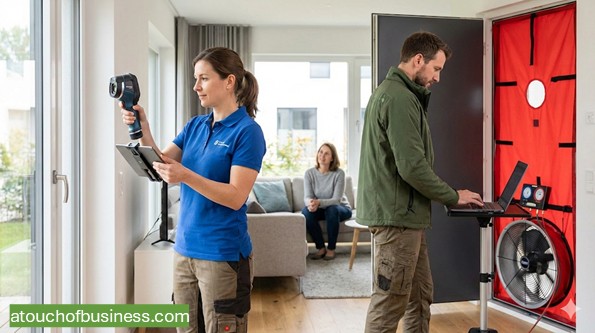
Home Energy Audit Business Startup Checklist and Setup
Home Energy Audit Business Overview
A home energy audit is an on-site assessment of how a house uses energy and where energy is being lost. A typical audit includes a review of energy use history, an interior and exterior evaluation, diagnostic testing (such as a blower door test), and a written report that prioritizes recommended improvements.
Depending on your credential path and the program you work under, an audit can also include health and safety checks and a review of comfort and durability concerns tied to the building as a system.
Common Business Models for This Type of Business
You can structure this as a small, owner-run service in most markets. Many people start as a solo operator, then add help after they prove demand, refine their process, and stabilize cash flow.
These are common models to consider before you commit to training and equipment.
- Independent, homeowner-paid audits: You perform audits by appointment and deliver a report with findings and recommended improvements. You earn revenue per assessment.
- Program-based work: Some audits are delivered through established home performance programs that use defined approaches and requirements.Home Performance with ENERGY STAR, for example, was administered through program sponsors who worked through networks that include participating contractors rather than providing front-line services directly (the national HPwES brand sunset on December 31, 2024).
- Rating and verification pathway: If you become a RESNET-certified Home Energy Rater, your work is tied to an accredited Rating Provider and quality assurance requirements, and you can produce home energy ratings and recommendations for improvements.
- Credential-driven specialty: If you pursue Building Performance Institute (BPI) credentials, you can align your service with recognized residential audit job scopes that emphasize diagnostics, analysis, and a prioritized report.
- Audit add-on to another service you already provide: If you already serve homeowners in a related field, you may be able to add audits as a separate line of work—only after you confirm local rules and you have the training to follow recognized standards.
Step 1: Decide If Ownership and This Business Fit You
Start with two decisions. Do you truly want to own and operate a business, and is this specific business the right fit for you?
Before you get pulled into gear, branding, or a website, slow down and review these business start-up considerations. They help you make decisions in the right order.
Passion matters more than people expect. When equipment breaks, schedules shift, or a job takes longer than planned, passion helps you stay in problem-solving mode. Without it, many people start looking for an exit instead of solutions. If you want a direct gut-check, read why passion matters before you start.
Ask yourself this exact question: “Are you moving toward something or running away from something?” If you’re starting mainly to escape a job or a financial bind, that pressure may not sustain your motivation when the work gets demanding.
Now look at readiness. This can mean uncertain income early on, long hours, difficult tasks, fewer vacations, and full responsibility when something goes wrong. Is your family or support system on board?
Also ask yourself if you have (or can learn) the skills and can secure funds to start and operate. If you have gaps, you can learn, partner, or hire for what you do not do well—just do not pretend the gap is not there.
Finally, learn from owners who will not be direct competitors. Only talk to owners you will not be competing against—different city, region, or service area. Use this business inside look approach to guide your outreach.
Here are smart questions to ask those non-competing owners:
- What did you underestimate before your first 10 audits—time on-site, travel, reporting time, or something else?
- Which credential path or program requirements shaped your process the most, and what would you do differently?
- What did customers misunderstand about an audit, and how did you set expectations up front?
Step 2: Get Clear on What You Will Deliver
This work is more than “walking through a house.” A real audit is a structured assessment with documentation, diagnostics, and a clear report.
Reputable audit approaches commonly include reviewing a home’s energy use history, performing an on-site evaluation, using diagnostic equipment such as a blower door and thermal imaging tools, and producing a report that prioritizes improvements. This is the core product you are preparing to deliver.
Decide early what your deliverable will look like. Are you delivering a written report only? Are you also providing a scoring or rating product through a specific program or credential path?
Step 3: Choose a Credential Path and Standards You Will Follow
In this field, your credibility is tied to training, testing, and documented methods. A credential is not the same thing as a business license, but it can be central to your business model.
BPI’s Building Analyst Professional and Energy Auditor credentials are recognized by the United States Department of Energy as Energy Skilled in the single-family home energy audit category. BPI also notes that certification is not a license, and licensing requirements—if any—depend on where you work.
Another common pathway is RESNET’s Home Energy Rater track.
RESNET describes a rater as someone trained and certified by an accredited Home Energy Rating Provider to inspect and evaluate a home’s energy features, prepare a home energy rating, and make recommendations for improvements.
RESNET includes training, passing required exams, signing an agreement with a Rating Provider, and completing probationary ratings, with ongoing quality assurance requirements through the Rating Provider.
As you choose a path, also decide what standards and work specifications you will use as your baseline.
The United States Department of Energy publishes Standard Work Specifications for home energy professionals, and BPI publishes technical standards and practices used in residential building analysis.
Step 4: Verify Local Demand and Confirm the Work Can Pay You
Before you spend on training and diagnostic tools, validate demand in the exact area you plan to serve. You are looking for real signals, not optimism.
Start with basic market research: how many providers operate near you, what services they offer, and how they describe their deliverable. Then pressure-test demand by speaking with potential customers and referral sources in your area.
Next, validate profit potential. You need a price structure that can cover your time on-site, reporting time, travel, insurance, tools, software, and ongoing credential requirements—while still paying you as the owner.
If you need a simple framework for this type of demand check, review how supply and demand affects a new business.
Step 5: Pick a Business Model, Scale, and Staffing Plan
This business is often realistic as a solo startup. You can begin as an owner-operator if you have the training and the diagnostic tools, then add help after you prove demand.
Decide if this will be full time or part time. Part time can work, but only if you can schedule audits reliably, complete reports on time, and maintain your credential requirements.
Then decide your ownership structure: solo, partners, or investors. Investors are not typical for a small, local audit service, but partnerships can make sense if you are combining skills and sharing startup costs.
If you do bring in partners, get roles and decision rights in writing.
Also decide what you will do yourself versus what you will hire out early. Many new owners hire help for bookkeeping, legal setup, or branding while keeping the technical work in-house.
Step 6: List Essential Equipment and Build Your Startup Cost Range
Diagnostic equipment is not optional if you want to deliver a credible audit. The specific kit depends on your credential path and the type of assessments you plan to provide.
For example, the United States Department of Energy describes blower door tests as using a fan, a door frame panel, and a pressure gauge (manometer).
The same resource notes that auditors often use tools like smoke pencils and infrared cameras to find leaks and insulation gaps during or around blower door testing.
Build an itemized list of essentials (not “nice to have”), then get pricing estimates from multiple sources.
Use a structured approach like estimating startup costs so you do not miss items. Your total will depend heavily on your scale, your training path, and what deliverables you promise.
Step 7: Set Pricing, Payment, and Your Financial Setup
You need a pricing approach before you launch, even if you plan to refine it after you have real jobs. Pricing must cover the full work cycle: pre-visit communication, on-site time, travel, analysis, reporting, and follow-up.
Build your pricing structure using a practical method like pricing your products and services. Then set up a clear process to invoice, accept payment, and track business transactions from day one.
Open business accounts at a financial institution and keep transactions separate. If you need funding, get your documentation in order and review how business loans typically work so you know what lenders ask for.
Step 8: Write a Business Plan Before You Spend Big
A business plan is still useful even if you are not seeking a loan. It forces you to define your customer, your deliverable, your pricing logic, and your startup budget.
Use this business plan guide to outline your service model, credential path, startup costs, and launch steps. If you want help, it is normal to work with an accountant or advisor for parts you do not know yet.
You can also build a small circle of professionals early—bookkeeping, insurance, legal—using a framework like building a team of professional advisors.
Step 9: Choose a Name and Lock Down Your Online Presence
Pick a business name that is easy to say, easy to spell, and clear about what you do. Then check availability in your state’s business registry and secure a matching domain name.
Use a step-by-step approach like selecting a business name, then claim social handles that match.
Next, set up a simple website that explains your service area, what an audit includes, what the customer receives, and how to schedule. If you need a clean process for this, review how to build a business website.
Step 10: Legalize the Business the Right Way
Do not skip your legal setup. Your business structure affects liability and taxes, and your location affects registration and licensing.
Many small businesses begin as sole proprietorships and later form a limited liability company as they grow, especially when liability risk and administrative needs increase. That path is common, but it is still a decision you should confirm with a qualified professional for your situation.
Use this registration overview to understand the typical steps. Then verify requirements through official sources for your state and your city or county.
At a minimum, you will need to address entity formation, federal tax identification, state tax registration, and any local business licensing that applies to your setup (home-based, office-based, or mobile).
Step 11: Handle Insurance and Risk Before Your First Job
Insurance is part of launch readiness, not something to “figure out later.” Even when a policy is not legally required, it may be required by contracts, programs, property managers, or other partners you work with.
Plan on general liability coverage. Then look at business-relevant coverage based on your setup, such as tools and equipment coverage and commercial auto if you use a vehicle for work.
If you hire employees, you may also trigger legal insurance requirements depending on your state.
If you want a practical overview of coverage types and what to discuss with an agent, review this business insurance guide.
Step 12: Build Your Pre-Launch Toolkit and Go Live
Before you advertise, make sure you can deliver consistently. That means you have your diagnostic tools, reporting templates, scheduling process, invoicing, and customer communication ready.
Prepare your basic brand assets. At minimum, you will likely need a simple logo, a website, and a way to share your credentials.
Depending on your model, you may also need business cards, printed materials, and vehicle or yard signage (only if local rules allow it). Useful references include corporate identity basics, what to know about business cards, and business sign considerations.
Plan how you will get your first customers. A service business launch can be as simple as a focused local rollout and a clear scheduling path. If you want ideas for a formal launch moment, review grand opening ideas and adapt them to a service-based business.
If you expect to hire soon, outline which roles come first and when. This can be as simple as deciding when you will add admin help, a second auditor, or a contractor. A practical reference is how and when to hire.
Products and Services Offered
Your exact service list depends on your credential path, but reputable residential audit approaches commonly include a defined set of evaluation steps and a written deliverable.
Examples of services and deliverables that appear in recognized home performance approaches include:
- Energy use history review: Reviewing energy consumption history (such as utility usage patterns) is commonly included as part of an audit process.
- On-site evaluation: An interior and exterior evaluation of the home as a system, including data collection and inspection of key areas tied to energy performance.
- Diagnostic testing: Blower door testing is a standard tool used to measure air leakage and locate leaks.
- Thermal diagnostics: Thermal imaging tools (such as infrared cameras) are used to help identify insulation gaps and hidden leakage pathways when used with proper methods.
- Health and safety checks: Some audit approaches include combustion safety evaluation steps and checks for conditions that could pose safety risks when air sealing or other changes are made.
- Written report: A report that documents findings and prioritizes recommended improvements. In some programs, the report also addresses health, safety, and durability concerns observed during the assessment.
Who Your Customers Tend to Be
This is residential work. Your customers are typically people who want clearer information about energy use, comfort, and improvement priorities for an existing home.
Common customer types include:
- Homeowners: People who want to identify drafts, comfort problems, or high energy use and get a prioritized improvement plan.
- People shopping for a home: Some customers want a standardized way to understand a home’s energy performance before they finalize a purchase decision.
- Renters and household decision-makers: In some contexts, customers want comparable information about energy use and improvements, even if they are not the property owner.
Pros and Cons of Owning and Operating This Business
Every business comes with tradeoffs. These points are about what tends to come with this specific type of work, especially at launch.
Potential upsides:
- Owner-operator friendly: This can be launched as a small, mobile service if you have training, a defined method, and diagnostic tools.
- Clear deliverable: A structured audit and written report give you a defined product to price and improve over time.
- Skill-based differentiation: Credentials and standards can help you clearly explain your process and build trust with customers.
Potential downsides:
- Up-front training and testing: Credential pathways can require classes, exams, and ongoing requirements.
- Specialized tools: Diagnostic tools are central to the work, and your equipment choices affect your capability and startup budget.
- Time beyond the site visit: Reporting and analysis time can be significant, and it affects your pricing and schedule capacity.
Essential Equipment You Will Need
Your equipment list should match the audit methods you plan to use and the credential standards you intend to follow. The list below focuses on core diagnostic categories that appear in recognized residential audit approaches and standards.
Air leakage testing and pressure measurement
- Blower door system (fan and adjustable door frame panel)
- Pressure gauge (manometer) for measuring pressure differences during testing
Leak detection and thermal diagnostics
- Smoke pencil or similar smoke tool used to help locate air leaks
- Infrared camera used for identifying insulation gaps and leakage pathways when used with proper testing methods
Combustion safety and related measurement tools
- Carbon monoxide measurement capability for ambient and appliance-related testing (as required by the method you follow)
- Pressure measurement capability for draft and related combustion safety checks in pascals, when your standard calls for it
Data systems, documentation, and reporting
- Data system and software to record findings, manage project documentation, and produce the audit report
- Standardized forms and report templates aligned to your chosen program or standard
Jobsite and personal safety basics
- Personal protective equipment appropriate for entering attics, crawl spaces, and similar areas, based on the conditions you expect to encounter
Skills You Need to Operate This Business
At launch, your skills need to cover both technical evaluation and business fundamentals. If you do not have every skill today, you can build a learning plan or hire help for parts that do not require your technical credential.
Core skill areas include:
- Building science basics: Understanding how the home’s systems interact and how energy loss happens.
- Diagnostic testing competency: Using a blower door and related tools correctly, recording results, and following recognized procedures.
- Health and safety awareness: Following combustion safety-related requirements when your method calls for them.
- Documentation and reporting: Turning field findings into a clear, prioritized report a customer can understand.
- Communication: Setting expectations, explaining results, and answering questions without overpromising.
- Basic business readiness: Scheduling, invoicing, recordkeeping, and compliance follow-through.
Day-to-Day Activities You Should Expect
Even as a technical business, your day will include both field work and desk work. That mix matters when you set pricing and decide whether this is full time or part time.
Common activities include:
- Responding to inquiries and scheduling appointments
- Pre-visit preparation (confirming scope, gathering address and home details, confirming any program requirements)
- On-site evaluation, data collection, and diagnostic testing
- Post-visit analysis and report creation
- Delivering the report and answering customer questions
- Maintaining credential requirements and documentation standards tied to your program or credential
A Day in the Life of an Owner
You might start the day confirming your schedule, checking your diagnostic equipment, and reviewing notes from the last job. If you are working solo, you are also your scheduler, your field tech, and your report writer.
On-site, the work is structured. You collect data, run diagnostic tests, and document what you find. Back at your desk, the second half of the job starts—analysis and reporting.
Before the day ends, you may send a report, answer a few customer questions, and handle basic admin tasks like invoicing and bookkeeping. If you do not plan for that time, your calendar will feel full while your revenue stays tight.
Red Flags to Look For Before You Start
These red flags are about launch risk. They are signals that you may be underestimating time, cost, or compliance steps.
Common red flags include:
- No defined standard or method: If you cannot clearly explain what your audit includes, you will struggle to price it and deliver it consistently.
- Skipping training or credential planning: If your plan depends on “learning later,” you may end up with equipment and no recognized way to use it responsibly.
- Underestimating reporting time: If you only plan for the site visit, your pricing and schedule will break quickly.
- Unclear compliance assumptions: Assuming “no license is needed anywhere” is risky. Business licensing and home-based rules vary widely by jurisdiction.
- Not budgeting for software and documentation: Audit programs and recognized approaches commonly rely on data systems, standardized documentation, and consistent reporting.
Legal and Compliance Basics
Legal setup is location-driven. The safest approach is to complete the universal steps first, then verify state and local requirements through official portals.
The Small Business Administration notes that registration requirements depend on your business structure and location, and licensing and permit requirements vary by state.
Federal
- Choose a business structure: What to consider: structure affects taxes, personal liability, and registration steps. When it applies: before you register the business with a state. How to verify locally: U.S. Small Business Administration -> Business Guide -> Launch your business -> search “Choose a business structure.”
- Employer Identification Number (EIN): What to consider: you may need an EIN for tax administration, hiring, or opening certain accounts. When it applies: when required for your tax and employment situation. How to verify locally: Internal Revenue Service -> search “Get an employer identification number.”
State
- Entity formation and registration: Entity formation and registration: What to consider: whether you must register as an entity and where filings are made. When it applies: if you form a limited liability company, corporation, or partnership, or if you register a trade name depending on state rules. How to verify locally: State Secretary of State (or equivalent) -> search “(your state) Secretary of State business registration.”
- State tax registration: What to consider: sales and use tax rules for services vary by state; employer withholding rules apply if you hire. When it applies: before you collect any tax that applies or run payroll. How to verify locally: State Department of Revenue (or equivalent) -> search “(your state) register for sales tax” and “(your state) employer withholding account.”
- State unemployment and workforce accounts: What to consider: unemployment insurance and related employer accounts are commonly required when you have employees. When it applies: if you hire employees. How to verify locally: State workforce agency -> search “(your state) unemployment insurance employer registration.”
City and County
- General business license: What to consider: many cities and counties require a local business license or tax registration. When it applies: often before you operate within that city or county. How to verify locally: City or county licensing portal -> search “business license” plus your city or county name. Varies by jurisdiction.
- Home-based rules and zoning: What to consider: if you run the business from home, home occupation rules and zoning can apply. When it applies: if your base of operations is your residence. How to verify locally: City or county planning and zoning department -> search “home occupation permit” plus your city or county name. Varies by jurisdiction.
- Certificate of Occupancy: What to consider: some jurisdictions require this when you use a commercial space or change how a space is used. When it applies: if you lease or build out an office or shop space. How to verify locally: City building department -> search “Certificate of Occupancy requirements” plus your city name. Varies by jurisdiction.
- Sign permits: What to consider: exterior signage may require a permit. When it applies: if you install permanent exterior signs. How to verify locally: City planning/building department -> search “sign permit” plus your city name. Varies by jurisdiction.
Owner questions to decide what applies:
- Will you run this as a home-based business, lease an office, or operate fully mobile with no customer visits to your base location?
- Will you have employees or contractors in the first 90 days?
- Will you use a marked vehicle or any exterior signage that could trigger local sign rules?
Varies by Jurisdiction
Varies by jurisdiction. You can be fully compliant in one city and out of compliance in the next county. Do not guess.
Use this quick checklist to verify locally:
- State formation and registration: Confirm filing rules through your state’s Secretary of State (or equivalent) business portal.
- State tax setup: Confirm tax registration through your state Department of Revenue (or equivalent) portal, including whether services are taxed in your state.
- Local business licensing: Check your city or county licensing portal for “business license” requirements.
- Zoning and home occupation: Contact your city or county planning and zoning office and search “home occupation permit.”
- Building approvals when leasing space: Ask the city building department what triggers a Certificate of Occupancy for your intended space and use.
101 Practical Tips for Your Home Energy Audit Business
These tips are meant to help you make smarter moves, whether you are getting started or tightening up how you work.
Pick the tips that match your current challenge and ignore what does not apply to your situation.
You may want to save this page so you can come back to it when a new problem shows up.
The simplest way to use this list is to choose one tip, act on it, then move to the next.
What to Do Before Starting
1. Decide what you will deliver to the customer before you buy tools—an assessment report, a diagnostic test add-on, or a program-based score.
2. Write down what is included in your audit every time, so you do not “wing it” on-site when the day gets busy.
3. Pick a credential path early and price your timeline around it, because training, exams, and supervised work can shape when you can launch.
4. Confirm what “qualified” means in your market by checking local utility programs, state energy office programs, and contractor requirements in your area.
5. Make a simple demand check by calling 20 local households or property contacts and asking what problem they want solved: high bills, comfort, or safety concerns.
6. Track how many competitors exist within a practical driving radius and note what they promise customers in their deliverables.
7. Build a rough price model that covers travel time, on-site time, reporting time, insurance, and tool maintenance—then see if the numbers still work for you.
8. Decide your service territory in miles, not in vague terms, so you can predict travel time and set boundaries early.
9. Start with a solo plan unless you have a clear reason to hire immediately, because early demand may be uneven.
10. If you will work part time, block reporting time on your calendar first; the report is where new owners often fall behind.
11. Draft a standard pre-visit questionnaire so you know the home type, approximate age, heating fuel, and attic access before you arrive.
12. Create a basic “what to expect” script for customers so they understand access needs and how long the visit may take.
13. Choose your base setup (home office, rented office, or shared space) and verify home occupation rules if you will run it from home.
14. If you plan to store equipment in a rented space, confirm whether the building requires a Certificate of Occupancy for your intended use.
15. Build a starter paperwork kit: service agreement, permission to access all areas, and customer acknowledgment of safety limits if areas are inaccessible.
16. Plan a simple record system from day one for customer notes, test data, photos, and report versions.
17. Set a rule for how you will handle homes where you cannot safely access key areas; decide whether you reschedule or document limitations and proceed.
18. Schedule two full practice audits on homes you can access easily, and time every step from arrival to report delivery.
What Successful Home Energy Audit Business Owners Do
19. They follow a repeatable checklist on every job so results are consistent even when the home layout is unfamiliar.
20. They document test conditions clearly, including weather notes when it can affect readings or customer expectations.
21. They keep diagnostic tools in working order and follow manufacturer guidance and required standards for calibration and care.
22. They take clear photos that support the report, especially where access is limited or conditions are hard to describe with words.
23. They separate “observations” from “recommendations” in the report so the customer can see what was found versus what could be improved.
24. They prioritize recommendations, starting with the biggest comfort, safety, and energy impacts rather than listing everything equally.
25. They use plain language in reports and avoid technical jargon unless they define it on the spot.
26. They give customers a realistic timeline for report delivery and stick to it, because trust is built after the site visit.
27. They confirm attic, crawl space, and mechanical room access before arrival to avoid delays and incomplete findings.
28. They treat combustion safety as a serious topic and follow the methods required by their credential or program pathway when combustion appliances are present.
29. They keep a short “customer education” explanation ready, so clients understand what a blower door test does and what it does not do.
30. They track how long report writing takes and use that data to adjust pricing and scheduling instead of guessing.
31. They standardize how they label files and photos so any future review is fast and accurate.
32. They know when to pause and recommend a specialist if they encounter conditions outside their scope or training.
33. They build relationships with trusted referral partners such as real estate professionals and property managers—without promising outcomes they cannot guarantee.
34. They keep a short list of local contractors customers can contact, while staying clear that you are not choosing for the customer.
35. They run periodic self-audits on their own process to catch gaps in documentation before a customer complaint forces a change.
36. They keep expectations tight: an audit diagnoses and prioritizes, but it does not replace specialized repair work when a system is failing.
Running the Business (Operations, Staffing, SOPs)
37. Create a written standard operating procedure for each step: scheduling, pre-visit prep, on-site flow, data storage, report writing, and follow-up.
38. Use a single “job packet” template so every audit starts with the same forms, checklists, and file naming rules.
39. Set a weekly admin block for invoicing, document cleanup, and tool checks so small tasks do not pile up.
40. Establish a clear cancellation and rescheduling policy that accounts for travel time and last-minute access issues.
41. Keep customer permissions in writing, including approval to enter attics and crawl spaces when those areas are accessible and safe.
42. Use a consistent data backup method so you do not risk losing measurements, photos, or report drafts.
43. Standardize your report format so customers can compare recommendations from one home to the next if they move or own multiple properties.
44. Track your time in three buckets: travel, on-site, and report writing; use it to improve your pricing accuracy.
45. Decide how you will accept payment and when—deposit, completion, or split—then keep it consistent to avoid awkward surprises.
46. Keep business transactions separate from personal spending so tax time is simpler and records are cleaner.
47. If you hire help, start with administrative support before you add another field person; it often gives you time back faster.
48. When you use contractors, define deliverables and deadlines in writing so the customer experience stays consistent.
49. Create a simple quality control step where you review every report against a checklist before it goes out.
50. Store customer data securely and restrict access if you have staff, because reports can contain sensitive home details.
51. Maintain a basic tool replacement plan so you are not forced to cancel jobs when something breaks.
52. Keep a “known issues” log for your tools and software so you remember patterns and avoid repeat troubleshooting.
53. If you work under a rating provider or program sponsor, understand their file review and field review expectations before you accept work.
54. Create a clear definition of your scope in your agreement so you do not drift into repair work you did not price or plan for.
55. Build a simple referral tracking method so you can see which channels produce customers and which waste time.
What to Know About the Industry (Rules, Seasons, Supply, Risks)
56. Treat licensing as location-specific—check federal, state, and city or county requirements because rules vary by jurisdiction.
57. Learn the difference between “credential requirements” and “business requirements” so you do not confuse a certification with a business license.
58. If you plan to present a standardized rating, confirm you have the right pathway and oversight in place before you advertise it.
59. Build a safety plan for attic and crawl space work, including when you will stop for heat stress, low clearance, or unsafe surfaces.
60. If you use ladders for access, follow Occupational Safety and Health Administration requirements when applicable, such as proper setup and safe access rules.
61. Know that test conditions matter; document anything that could influence results so you can explain it clearly in the report.
62. Plan for seasonal scheduling swings by setting a minimum weekly job target and building a waitlist process for peak times.
63. Do not rely on a single referral source; build at least three channels so one slowdown does not stop your schedule.
64. Keep an eye on program changes in your area, because incentives and program rules can change what customers request.
65. Understand that diagnostic tools can identify problems, but they do not fix them; your business must be clear on where your work ends.
66. Learn the common points of confusion customers have, such as “why a home can feel drafty even after new windows,” so your explanations are useful.
67. Keep a standard note in your report about access limitations so it is documented when areas were not evaluated.
68. If you store chemicals or fuels for equipment, confirm local storage rules and keep safety data sheets where required.
69. Treat customer privacy seriously; you may be documenting layouts, equipment, and photos that customers do not want shared.
70. Keep your insurance discussions fact-based—some projects or partners may require proof of coverage even when a policy is not legally required.
Marketing (Local, Digital, Offers, Community)
71. Write a clear service description that explains what an audit includes and what the customer receives at the end.
72. Set a defined service area on your website so you do not attract leads you cannot serve efficiently.
73. Use a scheduling form that screens for access issues (attic hatch location, pets, parking) so the visit goes smoothly.
74. Build a “report sample” that uses a fictional home so you can show structure without sharing a real customer’s details.
75. Ask for reviews right after report delivery, when the customer feels the value and remembers the experience.
76. Create a short checklist customers can follow before you arrive, such as clearing attic access and ensuring all mechanical rooms are reachable.
77. Build relationships with non-competing contractors who do improvement work; they can refer audits when customers want an independent assessment first.
78. Offer a clear explanation of diagnostic tests in plain language so customers are not intimidated by the process.
79. Use local education channels—community workshops, homeowner groups, and neighborhood associations—to explain comfort and energy basics without selling.
80. Keep marketing claims precise; say what you do, what you measure, and what you deliver, without promising savings results.
81. Publish a “common questions” section that explains timing, access needs, and what happens after the report is delivered.
82. If you work with property managers, create a version of your process that fits multi-unit scheduling while keeping each unit’s documentation separate.
83. Track which message works best—comfort, energy cost clarity, or safety concerns—then focus on the one your market responds to most.
Dealing with Customers (Trust, Education, Retention)
84. Start every job by confirming the customer’s goal in one sentence so the report speaks to what they actually care about.
85. Explain what you will do in the home before you begin testing so customers are not surprised by noise, equipment, or access needs.
86. Use a consistent approach when a customer wants a quick answer on the spot—tell them you will confirm findings during analysis before you finalize recommendations.
87. When you find a safety concern, document it clearly and recommend next steps that match your scope, such as contacting a qualified specialist.
88. Avoid technical lectures; use short explanations and tie each point to what it means for comfort, safety, or energy use.
89. Keep your tone calm and professional in older homes; customers may worry about what you will “find,” so focus on facts and options.
90. If a customer challenges results, walk them through test setup and documented conditions instead of arguing opinions.
91. Clarify that your report prioritizes improvements; it is normal if the customer does not do everything at once.
92. Offer one optional follow-up call window for questions so you control your time and still support the customer.
93. If customers want contractor recommendations, give categories and selection criteria instead of steering them to a single provider.
94. Use a simple retention touchpoint: a short “seasonal check-in” reminder to review the report and see what improvements they completed.
Customer Service (Policies, Guarantees, Feedback)
95. Define what “complete” means for your deliverable, such as report sections, included tests, and documentation, so customers know what they are paying for.
96. Write a clear policy for refunds and re-visits that covers cases like unsafe access, customer no-shows, and weather limits.
97. Build a feedback loop by asking two questions after delivery: what was most helpful, and what was confusing.
98. Keep a complaint log with root cause notes, then update your checklist or script so the same issue does not repeat.
What Not to Do
99. Do not advertise a standardized rating or score unless you have the required pathway, oversight, and quality requirements in place.
100. Do not price only for the on-site visit; if you ignore reporting time, you will undercharge and fall behind.
101. Do not guess on local licensing, zoning, or home occupation requirements—verify through official city, county, and state sources because rules vary by jurisdiction.
FAQs
Question: What am I actually “selling” as a business owner in this field?
Answer: You are delivering a documented assessment plus a report that explains findings and prioritizes improvements. Your scope should spell out what you inspect, what you test, and what the report includes.
Question: Do I need a state license to start doing home energy audits?
Answer: A credential is not the same thing as a license, and licensing rules can vary by state and local area. Use your city, county, and state licensing portals to confirm what applies to your exact activities.
Question: Which credentials should I look at before I launch?
Answer: Common pathways include Building Performance Institute credentials, RESNET Home Energy Rater certification, and the Department of Energy Home Energy Score Assessor route. Your choice can affect training steps, oversight, and what program work you can accept.
Question: If I want to offer Home Energy Score, what do I need to do first?
Answer: You generally need to work with a Home Energy Score Partner and complete program training and testing. The program also uses mentoring and quality checks, so plan time for that before you advertise it.
Question: If I want to become a RESNET Home Energy Rater, what should I expect?
Answer: RESNET’s process includes training, required exams, working with a Rating Provider, and completing probationary ratings. There are timelines involved, so treat it like a launch gate, not a side task.
Question: What equipment do I need if I plan to do blower door testing?
Answer: A blower door setup commonly includes a frame and panel, a variable-speed fan, and a digital pressure gauge connected to airflow measurement equipment. Use calibrated equipment if you want results you can defend and compare.
Question: Do I need special tools or steps for combustion safety work?
Answer: If you evaluate homes with combustion appliances, you need the right tools and training for safety checks, including carbon monoxide risk. Keep this tied to your credential or program method and stay inside your scope.
Question: How do I estimate startup costs without guessing?
Answer: Build your startup list by category: training and exams, diagnostic tools, software, insurance, and basic office needs. Then get quotes for each category and set a range based on whether you are launching solo or with staff.
Question: What business structure should I choose at the start?
Answer: Many owners start simple and later move into a limited liability company as risk and complexity grow. Confirm your best option with official guidance and a qualified professional, since taxes and liability can change by structure.
Question: Do I need an Employer Identification Number if I am a one-person business?
Answer: Sometimes you can operate without one, but many owners get one early for banking and paperwork. The Internal Revenue Service offers a free online Employer Identification Number application.
Question: What licenses and permits should I check before I operate?
Answer: Start with your city or county business license rules, then check zoning or home occupation rules if you work from home. Also check your state registration and tax portals, because requirements vary by location and activity.
Question: What insurance should I line up before my first job?
Answer: General liability is a common baseline for service businesses, and you may need extra coverage for tools, vehicles, or leased space. Insurance requirements can also change once you have employees, so verify your state rules.
Question: What should my workflow look like from lead to report?
Answer: Use a repeatable flow: screen the home, confirm access needs, run the on-site assessment and tests, then write and deliver the report on a set timeline. A written checklist keeps you consistent and protects your time.
Question: How do I keep reports consistent when I get busy?
Answer: Use a standard report template and a quality checklist before you send anything out. Save time by standardizing file names, photo labels, and how you summarize findings.
Question: What numbers should I track each week to stay in control?
Answer: Track leads, booked jobs, completed reports, average time per job, and cash collected. Add a simple measure of profit per job by subtracting travel, software, and tool costs you can tie to that work.
Question: How do I price work when reports take longer than I planned?
Answer: Split your time into travel, on-site work, and reporting, then price for the full cycle. If your reporting time is drifting, tighten your scope, improve templates, or raise your price based on real time data.
Question: When should I hire help, and what role comes first?
Answer: Hire when your schedule is full and you are delaying reports or missing calls. Many owners add admin help first so they can protect field time and keep report delivery on track.
Question: How do I market without making risky promises about savings?
Answer: Describe what you measure, what tests you run, and what the report includes. Avoid guaranteed savings language and focus on clear deliverables and documented findings.
Question: What are common mistakes new owners make in this business?
Answer: They skip local compliance checks, underprice reporting time, and overpromise results. They also start selling program-based scores before they complete the required training, mentoring, or oversight steps.
Question: What safety rules should I take seriously in the field?
Answer: Plan for ladder safety and safe access rules, since many jobs involve attic hatches and mechanical areas. Use a “stop work” rule for unsafe conditions, and follow applicable ladder standards when they apply to your work setup.
Related Articles
- How to Start an Energy Consulting Business
- Start a Home Inspection Business
- Starting an Environmental Consulting Firm
- Start a HVAC Business
- Starting a Duct Cleaning Business
- Electrician Business Startup Overview
- How to Launch an Environmental Testing Laboratory Guide
- How to Start an Environmental Cleanup Business Plan
- EV Charging Station Startup Overview
- Starting a Asbestos Removal Business
- Starting a Home Renovation Business
- Biodiesel Business
Sources
- U.S. Department of Energy (DOE):
Blower door tests (how blower doors work and why they’re used) - ENERGY STAR:
Home Performance with ENERGY STAR program requirements (program structure and sponsor/contractor roles) - Building Performance Institute (BPI):
Energy Auditor certification (overview, exams, prerequisites, and recertification) - Internal Revenue Service (IRS):
Business structures (entity types and how structure affects filing) - U.S. Small Business Administration (SBA):
Apply for licenses and permits (how licensing varies by activity and location)