
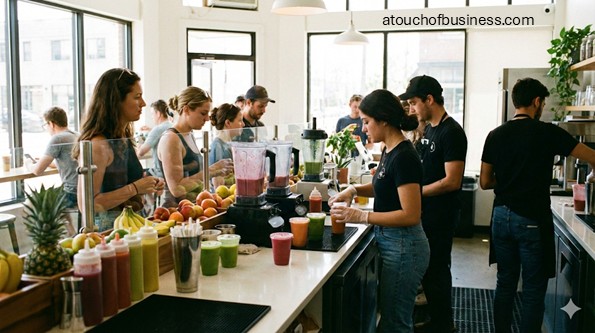
Key Steps to Open a Juice Bar and Stay Compliant Early
We’ve all been there. You leave a gym, finish a long shift, or run errands all day, and you want something fast that still feels like a smart choice.
A juice bar is a retail business that prepares fresh juice and similar drinks for customers. You may also hear the term “juicery,” which is commonly used to describe this type of place. See Merriam-Webster’s juicery definition.
This guide stays focused on startup and pre-launch. The goal is to help you make clean decisions, verify what applies in your area, and open with confidence.
Before You Commit, Decide If This Fits
Start here. Decide if owning and operating a business is for you, and decide if a juice bar is the right fit.
If you want a structured way to think it through, review critical startup considerations and use it as your filter.
Passion matters because problems will show up. When they do, passion helps you persist and solve them. Without it, many people look for an exit instead of solutions. Read why passion matters before you start.
Ask yourself this exact question: “Are you moving toward something or running away from something?”
If you are starting only to escape a job or a financial bind, that may not sustain motivation when the work gets real.
Now get honest about responsibility. A new business can mean uncertain income, long hours, difficult tasks, fewer vacations, and full responsibility.
Is your family or support system on board? Do you have the skills, or can you learn them? Can you secure enough funds to start and to operate while you build steady sales?
Also, learn from owners, but only the right ones. Speak with owners in the same line of work only when they are not direct competitors. In plain terms, only talk to owners you will not be competing against.
If you need help framing the conversation, use the prompts in this business inside look guide.
Good questions to ask non-competing owners include the following.
- What surprised you most during the first 90 days after opening?
- Which part of setup took longer than expected, and why?
- If you could redo your launch, what would you change before opening day?
Common Juice Bar Business Models
A juice bar can be small and owner-led, or it can grow into a multi-location brand. Most first locations are not “investor-scale” from day one.
In many cases, you can start with a compact setup and a tight product list. Then you expand after you prove demand and margins.
Here are common formats you can build from.
- Single storefront: A fixed location with walk-in traffic. Often starts with an owner and a small team.
- Kiosk or counter: A smaller footprint in a mall, food hall, or gym. Lower buildout scope in some settings, but rules still apply.
- Mobile unit: A truck or cart model where local rules allow it. Often requires special permissions and a commissary arrangement.
- Commissary-based prep with pickup or delivery: A model that depends heavily on local health department rules for preparation space.
- Packaged bottles for off-site resale: This can shift you closer to processing and distribution compliance, which can raise complexity.
If you want the simplest launch, start with made-to-order drinks sold directly to customers at your location. Keep packaging limited until you understand the rules that apply to packaged juice.
How A Juice Bar Generates Revenue
Revenue usually comes from direct retail sales of drinks prepared at the time of purchase. Some shops also sell packaged bottles made on-site, plus add-on items that fit their concept.
Your format drives your revenue pattern. A storefront leans on walk-in traffic. A kiosk may rely on peak-time bursts. A mobile unit may rely on events and scheduled stops.
Step 1: Choose Your Launch Format And Time Commitment
Start by choosing a format you can actually run. Then decide whether you will treat this as full-time or part-time work during setup.
A small juice bar can begin with one owner doing most tasks and adding help later. Larger concepts, packaged product lines, or multiple locations usually require partners, outside funding, and more staff.
Make these decisions early, because they affect everything that follows.
- Solo owner, partners, or investors
- Full-time build versus part-time build
- Hire now versus do most tasks yourself and hire later
If you expect employees early, review a practical approach to timing in how and when to hire.
Step 2: Verify Demand And The Ability To Earn A Profit
Do not skip demand checks. Your idea can be solid and still fail if the local area does not support it.
Start with a simple scan of who lives and works nearby, what they already buy, and how often they can realistically stop in.
You also need to verify profit potential. That means you must be able to cover expenses and still have enough left to pay yourself.
Use the same logic as any retail concept. You want steady customer flow, repeat purchases, and pricing that supports your costs.
If you need a clean framework, see a supply and demand guide.
During this step, build a simple competitor list. Note what they offer, how they price, and how busy they appear at peak times.
Avoid guessing. If you cannot validate demand in a way you trust, adjust your format, location, or product list before you spend serious money.
Step 3: Define Your Offerings And Service Flow
Your product list drives your equipment, your space needs, and your approvals path. Keep it clear and realistic for day one.
Common offerings include fresh juice, smoothies, and small add-ons that do not require cooking equipment. If you plan to add prepared food, your facility needs may change.
Also define your service flow. Think in simple terms: customer order, prep, build, handoff, and cleanup.
This step is not about being creative. It is about choosing what you can produce safely and consistently in your space.
Step 4: Build Your Startup List And Get Price Estimates
Startup costs can feel vague until you list everything. So write it all down first, then collect price estimates.
Your total will depend on scale and size. A small kiosk is different from a full storefront. Packaged bottles add another layer.
If you want a method that keeps you organized, use this startup cost estimating guide.
Start with these essential categories. Then price each item using quotes, vendor pricing, or local contractor estimates.
- Site costs: deposits, basic buildout, inspections, signage installation
- Approvals: permits, plan review (when required), licensing fees
- Core equipment: juicers, blenders, refrigeration, sinks, warewashing setup
- Small tools: cutting boards, knives, containers, labels, scales
- Packaging: cups, lids, bottles (if used), labels, seals (if used)
- Technology: point-of-sale, card reader, receipt printer (if used), internet setup
- Initial supplies: cleaning and sanitation supplies, paper goods, basic backroom needs
- Professional help: legal setup, accounting setup, design help, brand design
As you gather price estimates, keep notes on what drives the number. This makes it easier to shrink or expand the plan without getting lost.
Step 5: Choose A Location That Matches Your Customers
If you plan to sell in person, your location matters. You want a spot that is convenient for the customers you expect to serve.
Look for predictable foot traffic, easy access, and a nearby customer base that can support repeat visits.
If you need help thinking through site selection, review a location planning guide.
Before you sign a lease, confirm the site can legally be used for your business type. Also confirm buildout feasibility for sinks, refrigeration, and electrical needs.
In many areas, a change of use or renovation can trigger a Certificate of Occupancy. Ask the local building department what applies before you commit.
Step 6: Build A Detailed Equipment And Facility Plan
Your equipment list should match what you plan to produce on day one. Keep it grounded in your product list and your space.
Local health rules often follow the model found in the Food and Drug Administration Food Code, but your local authority is the final word.
Use this equipment list as a launch baseline. Then adjust based on your layout and local requirements.
- Produce Receiving And Prep: food-grade bins, prep table, cutting boards, knives, peelers, salad spinner (if needed), food scale, measuring tools, storage containers, labels and date-marking supplies
- Washing And Sink Needs: handwashing sink, approved washing sink or prep sink (as required locally), sanitizer and test strips, cleaning tools
- Juicing Equipment: commercial juicer (centrifugal or masticating), strainers (if used), pulp containers, spare parts based on the unit you select
- Blending Equipment: commercial blender, spare blender jars, mixing pitchers, portioning tools based on what you serve
- Cold Holding And Ice: reach-in refrigerator, undercounter refrigerator (if needed), freezer (if using frozen ingredients), ice machine (or approved ice source), refrigerated display case (if selling packaged items)
- Packaging And Service: cups, lids, straws (if used), napkins, bottle supplies (if used), label system for packaged items
- Warewashing And Waste: warewashing setup approved by the local authority, waste bins, recycling bins, mop bucket and mop
- Point-Of-Sale And Front Counter: point-of-sale terminal, card reader, cash drawer (if used), receipt printer (if used), counter organizers
If you are unsure about layout and flow, this is a smart time to hire professional help. A designer can help you plan a safe and efficient space without costly rework.
Step 7: Write A Business Plan And A Funding Plan
You should write a business plan even if you do not plan to borrow. It forces clear decisions and exposes weak assumptions before they cost you money.
If you need a straightforward structure, use this business plan guide.
Your plan should include your concept, target customers, location choice logic, startup list, approvals path, and a realistic timeline.
Then decide how you will fund setup. This can be personal savings, a partner contribution, or financing.
If you will borrow, start early. Lenders often want clean numbers, a clear plan, and proof you can repay. See how business loans work.
Also set up accounts at a financial institution. Separate business finances from personal finances from day one.
Step 8: Form The Business, Register It, And Secure Your Name
Many U.S. small businesses begin as sole proprietorships and later form a limited liability company as they grow. People often make that change for liability and structure benefits.
Your best structure depends on risk, staffing, and how you plan to grow. If you are unsure, professional help can save you time and prevent filing errors.
To register your business, start with your state’s guidance and the state office that handles business filings. The U.S. Small Business Administration provides an overview in register your business.
You will also need a business name plan. That includes checking availability, choosing a name you can use, and securing your online presence.
Use this business name selection guide to keep your steps clean.
Once the name is set, secure a matching domain and social handles. Even a simple site and consistent name usage can prevent confusion later.
Step 9: Get Your Employer Identification Number And Tax Accounts In Place
If you need an Employer Identification Number, apply directly with the Internal Revenue Service. See Employer Identification Number steps.
Next, set up the tax accounts you need for your state. Sales and use tax rules vary by state and by product type, so verify with your state department of revenue.
If you will hire employees, you also need employer tax setup. The Internal Revenue Service explains federal employer responsibilities in understanding employment taxes.
For a high-level checklist on tax identification steps, the U.S. Small Business Administration outlines the path in get federal and state tax identification numbers.
Step 10: Secure Licenses, Permits, And Health Approvals
This step is where many first-time owners get stuck. The fix is simple. Identify the right offices, ask clear questions, and verify requirements in writing when possible.
Start with the U.S. Small Business Administration overview at apply for licenses and permits. Then confirm with your state and local portals.
For most juice bars, local and state health authorities handle retail food permitting and inspections. Many agencies use the Food and Drug Administration Food Code as a model, but your local rules control. The Food and Drug Administration also publishes adoption references, including Food Code adoption information.
If you plan to sell packaged, unpasteurized juice, federal warning label rules may apply.
The Food and Drug Administration addresses warning label requirements and exemptions in warning label requirement guidance.
If you plan to move beyond retail direct-to-customer sales, you may also need to understand how the federal juice Hazard Analysis and Critical Control Point framework applies.
The Food and Drug Administration provides a detailed overview in juice Hazard Analysis and Critical Control Point guidance.
Varies by Jurisdiction
Licensing and permitting steps vary by jurisdiction. The safest approach is to verify locally using official portals and direct office contacts.
Use this checklist to keep your verification clean and repeatable.
- State Secretary of State: search “business registration” and “business entity search” for your state.
- State Department of Revenue: search “register for sales tax” and “sales and use tax account” for your state.
- City or county business licensing: search “business license application” for your city or county name.
- Planning and zoning office: search “zoning map” plus your address and ask if your use is allowed.
- Building department: search “Certificate of Occupancy requirements” plus your city name.
- Health department: search “retail food permit application” plus your county name and ask about plan review and pre-opening inspection.
Smart questions to ask local offices include the following.
- Do you require plan review before buildout, and what triggers it?
- What sinks and warewashing setup are required for my concept?
- What approvals must be completed before I can open to the public?
Step 11: Set Insurance And Risk Basics Before You Open
Insurance is part of opening safely. At a minimum, plan for general liability coverage, since customer-facing businesses carry public risk.
You may also need coverage for business property and equipment, especially if you have expensive refrigeration and production equipment.
Some coverage requirements depend on your state and your contracts. For example, venues, landlords, and event organizers may require certain coverage types before you operate.
If you want a practical overview, review business insurance basics.
Step 12: Set Pricing And Lock In Suppliers
Pricing is not a guess. You need numbers that support your costs and still leave room for profit.
Start by listing each drink type you plan to offer, estimating ingredient use, and comparing competitor pricing in your area.
If you want a structured approach, use pricing products and services.
Supplier selection also matters. Fresh produce quality and delivery reliability can shape your customer experience from day one.
Talk to suppliers early. Confirm delivery days, minimum order requirements, and what happens when items arrive below standard.
Step 13: Build Your Name, Online Presence, And Brand Basics
Start simple. Your goal is clarity and trust, not perfection.
Secure your name, domain, and social handles. Then publish a basic website page that shows who you are, where you are, your hours, and what you offer.
If you need a clear starting point, see an overview of building a business website.
Basic brand assets can include a logo, business cards, and signs. Build only what you need for launch, then expand as you grow.
These resources can help you stay organized as you create materials.
Step 14: Finish Setup, Prepare To Open, And Use A Pre-Opening Checklist
This is where you turn plans into a real opening. Focus on readiness and approvals.
Complete buildout, install equipment, set up your work areas, and confirm your utility needs are stable.
Set up your point-of-sale system and confirm you can accept payment the way your customers expect.
Now plan how customers will find you on day one. For a storefront, a simple local approach works best at launch.
If you want ideas tailored to walk-in traffic, review getting customers through the door.
If you plan a launch event, keep it manageable. Use grand opening ideas as a checklist source, not a script.
During the final week, your days will be full. You will be checking approvals, training your process, and fixing small issues before customers arrive.
Use this pre-opening checklist to avoid last-minute surprises.
- Final compliance checks: confirm required permits are issued, inspection approvals are complete, and required postings are in place.
- Equipment check: confirm refrigeration holds temperature, juicers and blenders run properly, and sinks and warewashing setup work as required.
- Supply check: confirm initial produce delivery schedule, packaging stock, cleaning supplies, and labels.
- Technology check: confirm point-of-sale, internet, receipt setup (if used), and payment processing.
- Brand check: confirm exterior and interior signage where allowed, basic website page, and accurate business listings.
- Customer-getting kickoff: announce your opening date, confirm any local partnerships, and prepare a simple opening-day plan.
As you finish, watch for common early mistakes and learn from them before they cost you. A practical reminder list is in avoid these mistakes when starting.
If you want to build a support bench around you, consider working with a small group of professionals. See building a team of professional advisors.
101 Tips for Operating a Profitable Juice Bar
You’ll find a mix of tips here that touch many parts of your juice bar.
Use what fits your situation and skip what does not.
Consider bookmarking this page so you can come back to it when you need a quick reset.
The best approach is to pick one tip, apply it, and only then move on to the next.
What to Do Before Starting
1. Choose a clear concept you can execute every day, not just on your best day. A tight focus makes it easier to train staff, control quality, and avoid waste.
2. Build your offerings around what your local customers already buy and what you can prepare safely and consistently. If you cannot keep the process consistent, it will show in the product.
3. Set a simple service flow before you open: order, prep, build, handoff, reset. A clear flow reduces delays and keeps the station clean.
4. Confirm your local health department requirements early, especially for sinks, warewashing setup, and inspection steps. Requirements vary by state and local jurisdiction, and the local authority is the final word.
5. If you plan to sell bottled, unpasteurized juice, learn the federal warning label rules before you design packaging. Packaging choices can trigger labeling duties that are easy to miss.
6. Decide what “fresh” means for your brand and define it in writing. If staff interpret it differently, customers will notice the inconsistency.
7. Design your workspace around food safety and cleanup first, then aesthetics. If the station is hard to clean, it will not stay clean.
8. Build a produce handling routine that starts at receiving and ends at storage. Do not rely on “we’ll figure it out” once the doors open.
9. Choose equipment built for commercial use and create a daily cleaning plan before you buy it. If a machine is difficult to clean, it will become a quality and safety risk.
10. Write down your core recipes and portion sizes before launch. Consistency is a profit tool because it reduces over-pouring and remake requests.
11. Create a simple pricing method tied to ingredient amounts, packaging, and labor time. If you price on instinct, you will miss true costs.
12. Set basic policies before opening day: refunds, remakes, allergy requests, and handling customer complaints. Clear policies keep staff calm and protect your reputation.
What Successful Juice Bar Owners Do
13. They standardize recipes and keep them easy to follow. Simple, repeatable builds protect quality during rushes.
14. They treat produce quality as a daily decision, not a weekly decision. They check condition at receiving and adjust prep plans immediately.
15. They keep the workstation “reset-ready” at all times. A clean station prevents cross-contact and speeds up service.
16. They track the top items that drive sales and make sure those ingredients never run out. Losing a top seller during peak time is a preventable loss.
17. They build relationships with more than one produce supplier to reduce disruption risk. When one supplier misses an item, a backup keeps sales moving.
18. They limit “custom” requests to what the station can support. Too much customization slows service and creates errors.
19. They train staff on allergen awareness and cross-contact, especially for add-ins like nut butters, dairy, and soy. Clear training reduces risk and builds trust.
20. They keep a simple daily checklist for opening and closing tasks. Checklists prevent skipped steps when the day gets busy.
21. They schedule prep based on demand patterns instead of guessing. Smart prep reduces waste and avoids shortages.
22. They run quick weekly reviews of waste, refunds, and remakes to find recurring causes. Small fixes often produce big gains.
23. They protect the brand by being careful with health-related marketing claims. They avoid claims they cannot support with solid evidence.
24. They keep packaging and labels consistent, readable, and accurate. Confusing labeling creates customer questions and can trigger compliance concerns.
25. They stay ready for inspections with routine cleaning, clear storage, and organized records. “Inspection-ready” should be the normal state, not a scramble.
Running the Business (Operations, Staffing, SOPs)
26. Assign one person each shift to own station cleanliness and restocking. When everyone owns it, no one owns it.
27. Keep soap and paper towels stocked at every handwashing sink at all times. If staff cannot wash and dry hands quickly, hygiene will slip.
28. Train staff to wash hands at the right times, including after handling trash, cleaning tasks, or money. Handwashing is one of the most effective food safety habits.
29. Separate handwashing from food prep and warewashing. Use dedicated sinks the way your local rules require.
30. Build a produce washing routine based on plain running water and physical friction, not chemicals. Do not wash produce with soap or bleach.
31. Rinse produce before peeling so the knife does not carry contamination from the surface into the inside. This is a simple step that prevents avoidable issues.
32. Scrub firm produce with a clean brush under running water. Items with rinds can carry contamination into the cut surface.
33. Dry washed produce with clean paper towels or clean cloth towels changed often. Wet produce stored improperly can spoil faster.
34. Store produce away from raw meat, poultry, and seafood in shared facilities. If you share a kitchen space, prevent drips and cross-contact.
35. Use separate cutting boards and tools for produce and any animal products if you handle them. Separation reduces cross-contact risk.
36. Label and date prepared ingredients so staff know what to use first. If you cannot identify it, you should not serve it.
37. Set par levels for each ingredient and packaging item. Par levels reduce “out of stock” moments that damage customer confidence.
38. Use a simple first-in, first-out storage routine to reduce spoilage. Train every staff member to follow it the same way.
39. Prep in small batches that match demand instead of prepping everything early. Smaller batches protect freshness and reduce end-of-day waste.
40. Keep a “rush kit” at the station: spare blender jar, extra lids, backup straws, extra towels, and gloves if you use them. Rush-time failures are often small parts, not big equipment.
41. Create a cleaning schedule that lists what gets cleaned, how, and when. A schedule is easier to follow than a vague expectation.
42. Clean and sanitize food-contact surfaces and tools on a predictable cadence during the shift. Waiting until closing invites mistakes and buildup.
43. Do not use warewashing sinks for handwashing. Keep tasks separated to reduce contamination risk and align with common retail food code frameworks.
44. If a sink is used for washing produce, clean and sanitize it before and after that use. This prevents produce contact surfaces from being contaminated by other tasks.
45. Use sanitizer test strips matched to the sanitizer you use. Without testing, you do not know if your sanitizer strength is effective.
46. Standardize portion sizes with scoops, cups, or scales. Portion control protects taste consistency and protects your profit.
47. Set a rule for substitutions and stick to it. Unlimited swaps make ordering slow and staff training harder.
48. Limit the number of add-ins available at peak times. Fewer options during rushes means fewer errors and faster service.
49. Keep your top-selling builds fast by staging common ingredients in the same place every time. Station layout should support muscle memory.
50. Track remake reasons and coach the root cause, not the person. Fixing the process prevents repeat problems.
51. Train staff to confirm allergy-related requests using a standard script. Customers want confidence, not improvisation.
52. Use dedicated tools or dedicated prep space for high-risk allergens like peanuts and tree nuts when possible. A small separation step can prevent a big incident.
53. Post clear internal notes for staff on the major food allergens you handle in the shop. This reduces “I thought it was fine” mistakes.
54. Keep a clear process for cleaning blender jars and lids between orders. Blenders can hide residue that affects taste and allergen risk.
55. Use preventive maintenance: replace blender gaskets, check seals, and inspect cords and plugs on a schedule. Small failures during service create lost sales and safety risk.
What to Know About the Industry (Rules, Seasons, Supply, Risks)
56. Expect produce quality and pricing to change across seasons. Build your menu so you can rotate items without confusing customers.
57. Know that local retail food rules vary widely. Your health department or local licensing office is the best source for what applies to your address.
58. If you package bottled juice, be careful with labeling, storage, and any required warnings. Packaged products can trigger different compliance expectations than made-to-order drinks.
59. Avoid making disease-related claims in advertising unless you have strong support and understand the legal risk. Health-related claims can trigger scrutiny under advertising standards.
60. Create a simple “ingredient incident” plan for supplier problems, spoilage, or contamination concerns. Know who decides what gets discarded and how you document it.
61. Set rules for handling bruised or damaged produce. Cut away damaged areas when appropriate, and discard items that are unsafe to use.
62. Do not wash produce with soaps, bleach, or household cleaners. Rinsing under running water is the standard safety approach in public guidance.
63. Be careful with “prewashed” produce. If it is labeled prewashed, follow label directions and avoid adding steps that introduce contamination.
64. If you operate near water sources at the station, treat electrical safety seriously. Keep cords intact, keep plugs dry, and remove damaged equipment from service.
65. Know that customer expectations change with trends, but food safety and consistency never go out of style. Do not chase novelty at the expense of repeatable quality.
66. Expect demand spikes after holidays and at the start of fitness seasons. Use those spikes to test staffing and prep routines.
67. Keep a close eye on packaging supply availability. Lids, cups, and bottles can become your bottleneck even when ingredients are stocked.
68. Track vendor lead times and set reorder points based on reality, not hope. Many shortages are planning issues, not supplier issues.
69. If you serve high-risk groups, be extra careful with unpasteurized products. When in doubt, follow public health guidance and consult your local authority.
70. Keep your documentation simple but complete: supplier invoices, cleaning schedules, training records, and inspection reports. Good records reduce stress when questions come up.
Marketing (Local, Digital, Offers, Community)
71. Pick one clear message for your brand and repeat it consistently. Confusing messaging makes customers hesitate.
72. Make it easy to find you online with accurate hours, address, and phone number on major listings. Wrong information costs real sales.
73. Use photos that match what customers actually receive. If photos oversell the product, refund requests will rise.
74. Promote your most profitable items, not just your most creative items. Marketing should support profit, not ego.
75. Build simple bundles that speed ordering and increase average ticket size. Bundles also reduce decision fatigue for first-time visitors.
76. Use limited-time seasonal items to test demand without long-term commitment. If an item sells, you can bring it back.
77. Partner with nearby gyms, studios, and wellness groups for cross-promotion. Local partners can outperform broad online ads for a neighborhood shop.
78. Use sampling strategically during slow periods, not during rushes. Sampling works best when staff can explain the product and answer questions.
79. Run a loyalty program that is easy to understand and easy to track. If customers need help using it, it will not work.
80. Offer a simple “first visit” special that encourages a second visit quickly. Repeat visits are where steady profit lives.
81. Collect customer emails or phone numbers only with clear permission and a clear benefit. Trust is worth more than a big list of unwilling contacts.
82. Keep promotions consistent with your capacity. A great offer that overwhelms your staff can damage your reputation.
83. Avoid health claims you cannot support with solid evidence. Stick to accurate descriptions of ingredients and taste.
84. Use community events to build local familiarity, but price them with your true costs in mind. Exposure does not pay bills unless the numbers work.
85. Track which marketing actions produce real sales, not just attention. If it does not drive repeat customers, it is not a priority.
Dealing With Customers (Trust, Education, Retention)
86. Treat first-time visitors like they are deciding whether to trust you for the next year. A clear, helpful explanation earns repeat visits.
87. Ask one simple question when customers look unsure, such as “Do you want something more fruit-forward or more green?” Guidance speeds orders and reduces remakes.
88. Keep ingredient information easy to access for customers with allergies. Even if your state does not require menu allergen disclosures, customers will ask.
89. If a customer mentions an allergy, slow down and confirm the request. A few seconds of care can prevent a serious problem.
90. Set expectations for prep time during rushes and keep customers updated. Uncertainty feels longer than a real wait.
91. Train staff to handle complaints with a calm script: listen, confirm what went wrong, offer a fix within policy, and document the issue. A consistent script prevents escalation.
92. Use feedback to adjust the product, not to argue. Customers who feel heard are more likely to return.
93. Encourage repeat business by remembering simple preferences for regulars, like a common add-in or sweetness level. Small recognition builds loyalty without spending more on advertising.
94. If you have a busy location, create a clear pickup area and call out names consistently. Confusion at pickup creates frustration and slows the line.
Customer Service (Policies, Guarantees, Feedback)
95. Use a clear remake policy that balances fairness and abuse prevention. If staff must guess, policies will be applied unevenly.
96. Document refund and remake reasons in a simple log. Patterns will show you what to fix first.
97. Set a rule for “taste adjustment” requests and communicate it at the counter. This prevents conflict and protects your station flow.
98. Create a standard way to handle online reviews: thank, address the issue briefly, and invite the person to contact you. Do not argue in public.
99. Train staff to avoid promising medical outcomes. Keep language focused on taste, ingredients, and customer preferences.
100. Run short weekly coaching sessions on the two most common service problems you saw that week. Small, frequent training is better than rare, long sessions.
101. Keep a simple “customer recovery” toolkit available: a free add-on option, a small discount code, or a remake voucher within policy. Fast recovery turns a bad moment into a second chance.
If you want real improvement, treat this list like a playbook, not a reading assignment. Pick the few tips that address your biggest weak spots, tighten them up, and build from there.
FAQs
Question: What permits do I need to open a juice bar?
Answer: Most areas require a local business license and a retail food permit, plus a health inspection before opening.
Requirements vary by state, city, and county, so confirm with your local licensing office and health department.
Question: Do I need a health department plan review before I build out my space?
Answer: Many jurisdictions require a plan review when you build a new food facility or remodel an existing one.
Ask your local health department what triggers plan review and what must be approved before equipment is installed.
Question: How do I check zoning and whether I need a Certificate of Occupancy?
Answer: Zoning rules and building approvals are set locally, and the building department can tell you if a Certificate of Occupancy is required for your use.
Verify zoning first, then confirm building permit and inspection steps before you sign a lease.
Question: Should I start as a sole proprietor or form a limited liability company?
Answer: Many small businesses begin as sole proprietorships and form a limited liability company later as risk and complexity grow.
Check your state’s business filing office for rules, and consider professional help if you are unsure.
Question: Do I need an Employer Identification Number?
Answer: You may need an Employer Identification Number for tax filing, banking, and hiring.
The Internal Revenue Service provides the official application steps and guidance.
Question: What tax registrations should I expect before opening?
Answer: Most owners need to register for state sales and use tax if they sell taxable items, and employer accounts if they hire staff.
Your state department of revenue and workforce agency can confirm what applies.
Question: What insurance should I line up before I open?
Answer: General liability insurance is a common baseline for customer-facing food businesses.
You may also need property and equipment coverage, and your lease or contracts may require specific coverage.
Question: Can I sell bottled juice, and are there extra rules?
Answer: Bottled, unpasteurized juice can trigger federal warning label requirements in certain cases.
If you plan to package juice for take-home or distribution, confirm labeling and processing expectations before you print labels.
Question: Do I have to follow Juice Hazard Analysis and Critical Control Point rules?
Answer: Retail establishments that sell juice only directly to consumers are generally exempt from Juice Hazard Analysis and Critical Control Point requirements.
Packaged juice made at retail can still trigger labeling rules, so confirm how your sales model fits the definitions.
Question: What equipment is essential for a basic juice bar startup?
Answer: At a minimum you need commercial juice and blending equipment, cold storage, handwashing access, and an approved warewashing setup.
Your local health authority can confirm sink and warewashing requirements for your specific setup.
Question: How do I set up safe produce handling from day one?
Answer: Use clean running water to rinse produce, scrub firm items with a clean brush, and dry with clean paper towels.
Avoid washing produce with soap, bleach, sanitizer, alcohol, or other chemicals.
Related Articles
- Starting a Bubble Tea Shop: Practical Startup Guide
- Start a Kombucha Tea Shop: Step-by-Step Guide for Beginners
- Start a Frozen Yogurt Shop: Complete Step-by-Step Guide
- How to Start a Gelato Shop and Build a Tasty Business
- Start an Ice Cream Shop: Permits, Costs, Setup Steps
- Start a Health Food Store: Complete Guide and Key Tips
- How to Start a Meal Prep Business: Practical Overview
- How to Launch a Nutrition Business: Startup Overview
- How to Start an Energy Drink Business: Startup Checklist
- Start a Delicatessen: Checklist for Planning and Setup
Sources:
- Environmental Protection Agency: Prevent wasted food
- eCFR: Warnings (21 CFR)
- Federal Trade Commission: Health Claims
- Food and Drug Administration: FDA Food Code, Food Code adoption, Warning label exemptions, Juice hazards controls, Cleaning fruits vegetables, Food Allergies
- FoodSafety.gov: Handle clean produce
- Internal Revenue Service: Employer identification, Employment taxes
- Merriam-Webster: Juicery definition
- Occupational Safety and Health Administration: Restaurant safety
- U.S. Small Business Administration: Register business, Federal state tax IDs, Licenses permits