
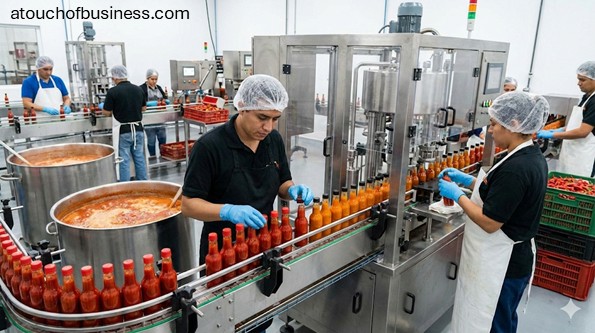
What to Expect From This Guide to Starting a Hot Sauce Production Business
This guide walks you through the key decisions and practical steps involved in starting a hot sauce production business, from judging fit to opening preparation. The bullets below highlight selected areas of value, not everything included.
Inside the guide, you will find:
- Startup steps: Follow an ordered path from product and production choices through regulation, setup, costs, funding, pricing, and pre-opening checks.
- Industry interviews: Hear owners discuss experiences with co-packers, cash flow, and moving from local sales to stores.
- Common questions: Review answers about label approval, shared kitchens versus co-packers, packaging compatibility, and recipes with meat.
- Daily reality: See what running production, records, and selling can involve, including the parts owners often enjoy and the parts they find hard.
- Regulation and licensing: Understand how acidified food rules, scheduled processes, and facility registration may apply, and where to verify state and local requirements.
- Costs and break-even: Learn what to list and price out, how to think through break-even by sales channel, and how operating capital fits in.
- Opening preparation: Use a startup items checklist, a business plan section, a pre-opening checklist, and two sets of red flags.
The article opens with the question that matters most: whether turning a home recipe into a regulated, bottled product suits your life.
From Recipe to Retail Shelf
Moving from recipe to retail means meeting food safety, labeling, and licensing rules before your first sale.
You make a sauce at home. Friends ask for another bottle.
Someone says, “You should sell this.”
Then you look up what it takes to bottle food and sell it in the United States. That is the real moment.
The recipe is only one part of the plan.
Is This Business a Good Fit for You?
This business fits when you are moving toward something and have support from your household. You also need to handle uncertain income and long hours.
Start with a fit check. Read Points to Consider Before Starting Your Business and decide two things.
Decide whether owning a business suits you and whether this specific business suits you.
Passion matters because it helps you push through problems. Without it, people often look for an exit instead of solutions.
Read How Passion Affects Your Business and be honest with yourself.
Ask the question that saves people time and stress: “Are you moving toward something or running away from something?”
If you are starting only to escape a job or fix a short-term financial bind, that pressure may not sustain you.
Ownership is also a risk and responsibility check. Income can be uncertain, hours can be long, and some tasks are not fun.
Vacations can be fewer, and the responsibility is on you.
Think about your household too. Is your family or support system aligned with the plan?
Do you have, or can you learn, the skills you need? Can you secure funds to start and operate?
Before you spend much, talk to experienced owners in other regions. Only talk to owners you will not be competing against.
Use Business Inside Look as your guide for what to listen for.
Ask smart questions that reveal real constraints.
Here are a few that work effectively:
- What surprised you most about licensing and inspections in your area?
- Which packaging choice caused the biggest delay before opening?
- What would you do differently in your first 90 days if you started again?
How Small Can You Start a Hot Sauce Production Business?
You can often start as a solo owner by renting time in a licensed kitchen or using a co-packer.
Building and staffing your own facility is a bigger move that may require investors, partners, or a larger loan.
The fastest path is the one that keeps you compliant and keeps your product consistent.
You can start small, but food rules can make “small” more structured than people expect.
Red Flags Before You Start
Delay or rework your plan if you cannot answer these questions about your product and process.
Red flags are signals that your opening will stall or create legal risk. Catch them before you commit time or money.
Warning signs to resolve before you start:
- No clear decision on shelf-stable versus refrigerated product, and no plan for the rules that follow
- No scheduled process plan when your product and process require one
- No training plan for supervision and process control when acidified foods rules apply
A Day in the Life of Running a Hot Sauce Production Business
Your day depends on your production pathway. You either cook and bottle in a licensed kitchen yourself or order production runs from a co-packer.
Production days in a licensed kitchen involve cooking, filling, capping, labeling, and cleanup, with results recorded in your batch log.
Between production runs, you keep batch and process records. You also keep your financial books current.
Selling often means meeting buyers in person at farmers’ markets, booths, store demos, or trade shows.
Owners who ship orders themselves also spend time packing boxes and preparing shipments.
As sales move toward stores and distributors, your day shifts from cooking toward selling and managing buyer accounts.
What owners often enjoy:
- Creating flavors and developing new sauces
- Cooking alongside family members, partners, or friends
- Support from other food business owners, mentors, and kitchen mates
What owners often find hard:
- Production, markets, and paperwork that compete with a job or family time
- Moving from cooking to selling and managing buyer accounts
- Narrower margins as distributors, brokers, and other partners take a share
- Learning process documents and approvals that have nothing to do with cooking
Does a schedule split among cooking, paperwork, and selling sound like a day you would want?
Step 1: Decide What You Will Produce and How It Will Be Sold
Be specific about your product from day one. Decide whether it will be shelf-stable at room temperature or kept refrigerated.
Decide if you are using fermentation, vinegar-based acidification, or another method.
Your answers matter because the rules and process controls can change based on how the product is classified.
Product type also affects packaging choices and how far you can distribute.
Next, decide your first selling lanes. Common lanes include direct-to-consumer online sales, local retailers, food service accounts, and wholesale through a distributor.
Step 2: Choose a Realistic Business Model and Time Commitment
Pick the model that matches your life and your budget. Will you run it solo, bring in a partner, or involve investors?
Will you operate full time or part time?
Most owners do most tasks themselves at the start and hire later.
If you plan to hire immediately, plan for payroll setup, training time, and space needs from the start.
If you want guidance on building support around you, review building a team of professional advisors.
You do not have to do every task alone.
Step 3: Validate Demand and Validate Profit
Do not assume demand because friends like your sauce. Confirm there is demand for the specific flavor and heat level you want to sell.
Study what already sells in your target channels and price ranges.
Use the basics of supply and demand to guide your research.
Look for proof that customers are already buying similar products and that shelf space exists for new brands.
Then validate profit. You need enough margin to pay yourself and cover bills and expenses.
Make sure your margin still holds after packaging, labels, kitchen time, shipping materials, and compliance costs.
Use rough estimates at this stage, then refine them when you price your startup list and calculate break-even.
Step 4: Draft Your First Formulas and Lock Ingredient Control
Create a small set of formulas you can repeat. Write down each recipe with exact weights, not just “pinches” and “splashes.”
Exact weights become the foundation for consistent batches and accurate labeling.
As you draft formulas, watch for allergens and cross-contact risk in shared spaces.
If allergen control is not your strength, you can learn it or hire help from a food labeling consultant.
Start your ingredient sourcing plan while you draft formulas.
If you cannot get the same peppers, vinegar, salt, and bottles reliably, scaling becomes hard even before you open.
Step 5: Pick Your Production Pathway and Facility Plan
Choose one production pathway: your own licensed facility, a shared-use commercial kitchen, or a co-packer.
The best choice depends on your budget, your timeline, and how your product must be processed.
Treat your pathway choice as provisional until you finish Steps 6 and 7, which cover regulation and compliance.
Many owners start by renting time in a licensed kitchen to keep upfront spending lower.
A co-packer can be a good fit if you want to focus on brand and sales while manufacturing happens in an established facility.
If you rent kitchen time, get these terms in writing:
- Storage access and rules
- Scheduling
- Cleaning responsibilities
- Which changes require the kitchen’s approval
If you use a co-packer, confirm:
- Minimum run sizes and lead times
- Who sources the ingredients
- Who owns the formula and label files
- Who handles label sign-off, lot coding, and complaint handling
Plan your legal structure before you sign either agreement, as Step 9 explains.
If you plan to lease a space, study location fundamentals with business location considerations.
In a food business, location is not just about convenience. Location can also affect zoning approval, inspections, and build-out requirements.
Step 6: Confirm How Your Product Is Regulated Before You Build Anything
Many shelf-stable sauces fall under federal rules for acidified foods.
Federal regulation defines acidified foods as low-acid foods with acid or acid foods added.
An acidified food has a finished equilibrium pH of 4.6 or below, with water activity greater than 0.85.
If your sauce stays refrigerated rather than shelf-stable, ask your state food regulator which rules apply to your product and process.
If your process requires a scheduled process, get it established by a qualified person.
Plan for the controls you will need to monitor, and build your batch record around those controls.
Acidified food rules may call for trained supervision of your process and controls, so ask your regulator which training qualifies.
Confirm whether your facility must register with the Food and Drug Administration (FDA).
Some facilities must register if they manufacture, process, pack, or hold food for consumption in the United States. Registration must be renewed every other year.
If you will produce acidified foods or low-acid canned foods in a commercial setting, learn whether you must complete establishment registration and process filing.
Do not guess. Confirm your obligations based on your product and facility setup.
If you use a co-packer, ask which registrations and process filings the co-packer holds and which ones you must hold as the brand owner.
When you speak with regulators or a process authority, keep your questions practical:
- Which agency licenses my type of food processing at this location?
- Does my product fall under acidified foods or low-acid canned foods rules based on my planned process?
- What records do you expect to see at inspection before I sell my first bottle?
Step 7: Build Your Compliance Plan for Your State and City
Your goal is simple: find the correct agencies, confirm the steps, and collect proof that you followed them.
Food business rules are layered. Federal rules are only one layer.
States and local governments often license and inspect food processors, and the requirements vary by jurisdiction.
If you feel stuck, professional help is available. A local attorney, accountant, or permitting consultant can reduce confusion and keep you on track.
Confirm whether a home-based setup is allowed for your product in your state.
Some states allow only certain foods to be made at home, and many products require a permitted facility.
If you sell across state lines, confirm each state’s food licensing and registration expectations, because state rules can add steps beyond federal rules.
Step 8: Choose Your Name, Domain, and Basic Brand Assets
Pick a name you can use legally and consistently. Confirm availability at your state level.
Then secure a matching domain and social handles, as available. Use selecting a business name to guide the process.
Build the basics of your corporate identity. You may want a logo, label style, business cards, and simple brand rules for colors and fonts.
If you want a checklist, review corporate identity package considerations.
If you will have signage at a facility or retail-facing location, learn the basics of business sign considerations.
Local sign permits can apply, so confirm rules before you order anything.
Plan your website from the start, even if it begins simple.
Step 9: Form the Business and Set Up Tax Accounts
Plan your legal structure before you sign agreements with kitchens, co-packers, or retailers, because packaged food carries product liability risk.
A sole proprietorship is the default and does not require state formation, though licenses and a Doing Business As name may still be required.
Many owners form a limited liability company (LLC) for liability and structure, and it can also help with banks and partners.
Ask an attorney and a tax professional which structure fits your product, your kitchen pathway, and your plans for partners or investors.
Register your business with your state as needed and get your Employer Identification Number (EIN) when it applies.
If you want a simple overview of how registration usually works, see how to register a business.
Set up sales tax registration when your state requires it for the way you sell.
If you will have employees, set up the needed employer accounts before your first payroll.
Step 10: Choose Suppliers for Ingredients, Bottles, Caps, and Labels
This business depends on reliable supply. Choose suppliers for peppers and other ingredients, then choose packaging suppliers for bottles, caps, tamper-evident features, and shipping cartons.
Keep it professional. Ask for specs, lead times, and minimum order rules.
You are not just shopping. You are building relationships you will depend on when you scale.
Plan for backups. If your first bottle supplier runs out, you need a second option that does not force a last-minute label redesign.
Pepper quality changes by season, so define acceptable ranges for heat, sweetness, and moisture.
If you rely on one farm, line up a second source before harvest season.
Step 11: Build a Detailed Startup Item List and Research Pricing
Build your detailed list of startup items.
Include equipment, tools, packaging supplies, office basics, software, storage needs, and any facility items your inspection requires.
Remember costs that are easy to miss, such as testing equipment, required training, and license or inspection applications.
The Essential Startup Items to Price Out section below gives you a detailed starting checklist.
Once your list exists, research estimated pricing per item. Do not skip this step.
Startup costs depend on size and scale, and pricing research keeps your plan grounded.
If you want a structured method, use estimating startup costs as your guide.
Step 12: Set Pricing and Confirm It Works in Each Sales Channel
Pricing is not only about what you want to charge. It must work across the channel you choose.
Direct-to-consumer pricing, retailer margins, and distributor expectations can be different.
Set pricing based on real costs and target margin, then test it against competing products in your category.
For a solid approach, see pricing your products and services.
Make sure pricing leaves room for promotions and sampling if you plan to use them as part of your opening plan.
Step 13: Calculate Your Break-Even Point for Each Sales Channel
Your break-even point is the number of bottles you must sell to cover all your costs.
Calculate your break-even point separately for each channel, because direct sales, retailers, and distributors leave different margins.
Variable costs rise with every batch, such as ingredients, bottles, caps, labels, and shipping materials.
Fixed costs continue whether bottles sell or not, such as kitchen rental commitments, insurance, software, and loan payments.
Divide your fixed costs by the profit each bottle leaves after variable costs.
Add your own pay to your fixed costs so the result reflects the income you need.
Margins narrow as sales move from direct customers to stores, because distributors, brokers, and other partners each take a share.
Ask whether you can cover your costs during slow periods or delays before wholesale payments arrive.
Step 14: Plan Your Operating Capital
Operating capital is the cash that covers your bills between paying for production and getting paid by customers.
Large packaging minimums, long lead times, and slow-paying wholesale accounts can drain cash quickly.
Avoid committing to production runs you cannot store or sell fast enough.
To plan your operating capital:
- List what you will pay for before your first sale, including ingredients, packaging, kitchen or co-packer fees, insurance, and licenses
- Add the payment delays you expect from retailers and distributors
- Decide how long you can cover costs and your own living expenses if sales start slowly
- Build a cash buffer before you commit to large packaging or ingredient orders
Step 15: Set Up Your Financial Structure and Funding
Decide how you will fund your opening. Small starts are often funded with personal savings and a tight plan.
Larger facility builds, automated bottling, and staff from day one often require a loan, partners, or investors.
Build your funding plan around your real startup list and your operating capital needs, not guesswork.
Ask each lender or investor what documents they require before you apply.
The Business Plan section below pulls your costs, pricing, funding, and break-even inputs together.
If you are exploring financing, review how to get a business loan so you know what lenders typically expect.
Then choose a financial institution and set up accounts.
Set up payment acceptance for your sales channels and test it before you open.
Keep transactions separate from day one so your records stay clean and your taxes are easier to manage.
Step 16: Plan Insurance and Practical Risk Coverage
Plan for general liability coverage and review what else applies to your setup, such as property and equipment coverage for your tools and inventory.
Food products create real liability risk.
Ask your agent about product liability coverage, and check whether a rented kitchen requires proof of coverage before your first batch.
Some venues and retailers may require proof of coverage before they work with you. Learn the basics with business insurance.
If you are unsure what you need, ask an insurance agent who works with food businesses what coverage is common for your sales channels.
Step 17: Finalize Label Compliance and Product Presentation
Your label has to match your final formula. That includes the ingredient list and allergen disclosure when applicable.
Packaged foods must list ingredients in descending order by weight.
If you change ingredients, update the label and any process documents tied to the formula before you sell.
Decide how you will handle lot coding so you can trace production batches.
Confirm your net quantity statement and any required label elements for packaged foods.
If label rules feel complex, this is a smart place to use professional help.
Professional help is often less expensive than correcting labels after product is already in the market.
Step 18: Set Up Production, Records, and a Pilot Run
Before you open, run a pilot batch in your actual production setting.
Use your real equipment, real packaging, and your real recordkeeping process. Treat it like the first batch you will sell.
Confirm your process controls, including pH measurement where it applies, and record results in your batch log.
If your product requires a scheduled process, follow it exactly and record what you did.
Use the pilot run to find practical issues like fill level consistency, cap fit, label adhesion, and cleanup time.
Fix any problems the pilot run exposes before you scale.
Test shipping with a full case. Glass breakage, cap loosening, and label scuffing often show up only after real handling.
Test product in hot and cold conditions, because temperature swings can affect seals, labels, and separation in the bottle.
Step 19: Plan How You Will Get Customers and Prepare Your Opening Push
Decide how customers will find you. For many brands, initial sales come from direct-to-consumer online efforts, local retailers, and food service relationships.
Prepare the assets you need before you pitch.
Your pitch materials include product photos, a simple story, pricing sheets, case pack details, and clear ordering steps.
If you are planning an opening event, choose ideas that fit your channel.
If you will need help with outreach, branding, or sales systems, you can hire for it or partner with someone who has that skill.
You do not need to be great at everything to start.
Essential Startup Items to Price Out
Use this detailed starting list to build your cost plan.
Your final list will depend on your batch size, facility pathway, and packaging choices.
Treat the list as a checklist, and add anything your local inspectors require for your location.
- Facility and workspace: licensed kitchen access or permitted facility, stainless steel work tables, food-grade shelving, handwashing setup supplies, waste containers with lids
- Ingredient prep: food-grade cutting boards, knives and prep tools, colanders, food-grade mixing tubs with lids, strainers and sieves, food processor or blender, immersion blender
- Cooking and processing: commercial burners or range access, stainless steel stock pots or kettle, heat-safe ladles and paddles, timers, cooling racks or approved cooling setup as required by your process
- Measurement and control: calibrated pH meter, pH calibration buffers, calibrated thermometers, calibrated scales, measuring pitchers, batch record forms and lot tracking log
- Filling and closing: bottle filler suited to viscosity, funnels or fill nozzles, capper matched to closures, tamper-evident supplies, case boxes and dividers
- Labeling and coding: labels or label printing plan, label applicator if needed, lot coding method and supplies
- Sanitation: cleaning brushes, approved cleaning chemicals as required by your facility, sanitizer test strips for your sanitizer type, disposable towels, food-safe containers for clean tools
- Storage and handling: dry storage bins, refrigeration if ingredients or finished goods require it, finished goods racking, secondary containment bins for liquids
- Office and admin: computer, printer, basic accounting software, document storage for licenses and process records, email and website tools
- Brand and sales tools: product photography setup or service, sell sheets, sample kits for retailers or food service, basic packaging inserts for direct-to-consumer shipments
Total the prices by category so you can see what drives your startup spend.
How Does a Hot Sauce Production Business Generate Revenue?
Revenue usually comes from packaged product sales. The main channels are direct-to-consumer online sales, retailer sales, and food service accounts.
Some owners add revenue through wholesale distribution, private label production, or contract production for other brands.
Your revenue model should match your compliance capacity and your production pathway.
Pros and Cons to Weigh
This business can be started small, but it still requires process discipline.
The biggest wins come from consistency, compliance preparation, and reliable suppliers.
Here are practical pros and cons to weigh before you commit.
- Pros: potential to start as a solo owner using a shared kitchen or co-packer, product can be shelf-stable depending on formulation and process, repeatable batches support predictable production planning
- Cons: regulatory steps can be strict for certain shelf-stable products, labeling accuracy must match the final formula, packaging and supplier lead times can delay opening
Business Plan
Start drafting your business plan as you complete the earlier steps.
Finish your plan once your costs, funding, pricing, and break-even inputs are in place.
Write a business plan even if you are not asking for funding.
A plan keeps you on track and forces you to think in steps instead of hopes.
Your plan should cover:
- Your product line
- Target customers
- Pricing and sales channels
- Compliance steps
- Your startup item list
- Break-even points, operating capital, and funding
- A simple timeline
Include how you will cover slow periods and delayed wholesale payments.
If you want a framework, use how to write a business plan.
If parts of planning feel outside your skill set, get help.
A professional can support financial projections, legal setup, and branding so you can focus on what you do best.
Varies by Jurisdiction
Licensing and facility rules differ by state and local area.
Your job is to confirm requirements with the correct offices before you produce for sale.
Use this checklist to verify locally and keep copies of what you find.
- Entity formation: check your Secretary of State business portal for formation and name rules
- Doing Business As name: search your state or county filing office for “assumed name” or “Doing Business As” rules
- Sales tax: check your state Department of Revenue for sales and use tax registration and filing rules
- Employer accounts: if hiring, check your state workforce agency and revenue agency for withholding and unemployment insurance setup
- Food processing license: search your state Department of Agriculture or health department for “food processing license” or “manufactured foods” licensing
- Local business license: check your city or county business licensing portal for general business license rules
- Zoning and home occupation: check your city or county planning and zoning office for home occupation and commercial use rules
- Certificate of Occupancy: if leasing a space, check your city or county building department for occupancy approval rules
- Fire inspection: if installing cooking equipment or making tenant improvements, check your local fire marshal requirements
- Wastewater rules: if your process creates unusual discharge, check your local sewer authority for industrial discharge requirements
If you are unsure which office applies, call your city hall or county administration and ask where food manufacturing is handled.
Keep your questions simple:
- Which office licenses packaged food processing?
- Do you require plan review before inspection?
- What must be approved before I sell my first product?
Pre-Opening Checklist
Use this final checklist to confirm everything is in place before you sell your first bottles.
Compliance, production, and customer-ready assets should line up at the same time.
When you can check every box, your opening is far less likely to stall.
- Business formation completed as needed, and tax accounts set up for your selling model
- Facility pathway confirmed, and all required local and state approvals completed
- Food and Drug Administration registration completed if required for your facility
- Establishment registration and process filing completed if required for your product category and process
- Scheduled process in place when required, and batch records ready to use
- Labels finalized and match the final formula, including allergens when applicable
- Suppliers confirmed for ingredients, bottles, caps, labels, and shipping cartons
- Startup items purchased or secured, including measurement tools and sanitation supplies
- Pricing finalized for each channel you will sell through
- Insurance coverage active, including general liability and any channel-required coverage
- Website and ordering method ready, and payment acceptance setup tested
- Product photos, sell sheets, and outreach plan ready for your opening push
Opening-Day Red Flags
Opening-day red flags are setup gaps that can stall or block your first sale.
Check each one before you sell your first bottle.
Resolve these before you open:
- Labels drafted before the formula is finalized, leading to ingredient and allergen errors
- Using an unpermitted space when your state or city requires a licensed facility
- No lot coding plan or recordkeeping system to trace batches and ingredients
- No supplier backups for bottles, caps, or key ingredients
Frequently Asked Questions
Does the FDA approve my label before I sell?
No. The FDA does not review and approve labels before sale.
Label accuracy is your responsibility as the owner, so verify every label element against federal labeling rules.
Can I start with refrigerated sauce at farmers’ markets before selling to stores?
Some owners have, but the rules depend on your state.
Cottage food rules vary widely, and many states limit which foods you can make at home.
Matt Kuerbis, interviewed below, sold cooler-kept sauce at farmers’ markets from a certified kitchen, then moved to a co-packer to reach grocery stores.
Ask your state food regulator whether your sauce qualifies before you plan around this route.
How do I choose between a shared kitchen and a co-packer?
The choice depends on how much control you want and how much work you want to hand off.
Using a co-packer moves production into an established facility, but it often costs more per bottle.
A co-packer also gives you less control, and small brands can struggle to find a good one.
A shared kitchen keeps you hands-on with every batch, but you manage the process documents and records yourself.
How do I choose bottles and caps that work with an acidic product?
Confirm that closures and liners are compatible with acidic foods and your fill temperature.
Test your exact bottle, cap, and tamper-evident method with sample runs before ordering large quantities.
Can I add meat to my hot sauce?
Meat changes the regulatory picture, so confirm your rules before you build a recipe around it.
Meat and poultry products can fall under U.S. Department of Agriculture (USDA) oversight in addition to FDA rules.
Matt Kuerbis, interviewed below, chose not to bottle a sauce containing meat because it is a different process from a vegetarian product.
Ask your state food regulator which agency oversees your recipe before you commit.
Hot Sauce Business Owner Interviews
Hear from owners who built hot sauce brands, then compare their experiences with your own plan.
Matt Kuerbis of HYCH Hot Sauces
Matt Kuerbis is a chef instructor and co-founder of HYCH, a hot sauce company. He discusses trademark trouble, co-packers, and process authority letters.
Prospective owners can see how a co-packer, outside fulfillment, and brokers change workload and margins as sales move beyond farmers’ markets.
Joey Repice of Joey’s Hot Sauce
Joey Repice founded Joey’s Hot Sauce and produces it in Southern Oregon. He covers fire-roasted flavor, local growers, and gradual growth through local distributors.
This 15-minute interview shows how one owner builds a small brand around a clear product difference and close customer contact.
Susan Sullivan of Hot Squeeze
Susan Sullivan, a former caterer, makes Hot Squeeze hot sauce. She covers learning from scratch, bottler minimum orders, and the gap between costs and income.
Prospective owners see how packaging minimums and payment timing can strain cash even when store buyers show interest.
Related Articles
- Starting an Olive Oil Business
- Starting a Chocolate Business
- How to Start a Coffee Roasting Business
- How to Start an Ice Cream Manufacturing Business
- Start a Cookie Business
- How to Start an Energy Drink Business
- Start a Bottled Water Business
- Start a Distillery
- Start a Barbecue Business
- Starting a Food Truck Business
- Dried Fruits Business FAQs
- Cake Decorating Startup Guide
Sources:
- eCFR: 21 CFR Part 114, 114.3 Definitions, 114.10 Personnel, 114.83 Scheduled processes, 21 CFR Part 101, 21 CFR Part 117, Part 1 Subpart H
- FDA: Registration food facilities, Acidified foods filing, Biennial renewal guide, Acidified low-acid guidance, Food allergies labeling, Food labeling guide, Meat poultry jurisdiction
- IRS: Employer ID number
- U.S. Small Business Administration: Register your business
- National Agricultural Law Center: Cottage food laws
- Owner interviews and accounts: Matt Kuerbis interview, Joey Repice interview, Susan Sullivan interview, Craic Sauce owner account