
Startup Checklist for a Hobby Store: Gear, Tax, Risk
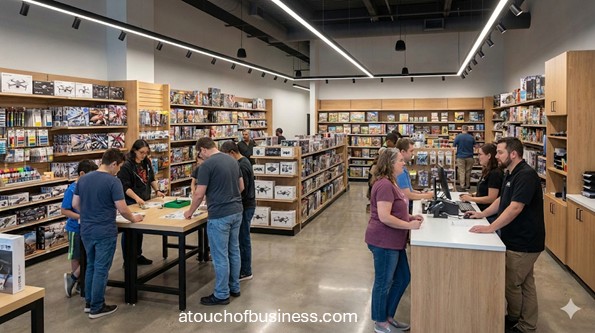
Overview of a Specialty Hobby Shop
We’ve all done it. You walk into a hobby shop “just to look,” and you walk out with a new project and a full head of ideas.
That’s the business. You sell project-based products people want right now, plus the extras they need to finish. You can start small with a tight niche and a single location, or start online first and add a storefront when demand is clear.
Most first-time owners start as a small retail setup they can run with limited help. A large format store with deep inventory across many categories usually needs more cash tied up in stock and more staff coverage.
Products and Services You Can Offer
Pick categories that make sense together. The goal is to carry the core items plus the supporting items customers forget until they need them.
Your mix depends on your niche, supplier access, and local demand.
- Model kits and supplies (plastic models, paints, adhesives, tools)
- Remote control and drones (vehicles, parts, batteries, chargers, radios)
- Board games and tabletop games (boxed games, role-playing games, miniatures, terrain)
- Trading card games (sealed product, singles if you choose, sleeves, deck boxes)
- Arts and crafts (yarn, beads, paper crafts, basic tools)
- Collectibles (figures, licensed items, display cases)
- Educational kits (science kits, robotics kits, building sets)
- Consumables and add-ons (glue, paint, blades, sandpaper, brushes, spray sealant)
- Gift cards (if you plan to offer them)
Services That Often Pair Well With the Products
Services can help you stand out before you ever open. Keep them simple and tied to your product mix.
If you offer events or classes, confirm local rules for occupancy, permits, and insurance.
- Beginner workshops (painting basics, model building basics)
- Game nights and tournaments (if space and local rules allow)
- Special orders (customer requests for items you do not stock)
- Pre-orders and holds (especially for limited releases)
- Consignment or trade-in (only if you have a clear process and product safety checks)
Who Your Customers Usually Are
Most customers fall into a few patterns. Knowing which ones you want helps you choose products, location, and store layout.
Many hobby categories have repeat purchases, but only if you stock the right follow-up items.
- Parents and relatives shopping for gifts and beginner kits
- Adults with long-running hobbies who want quality supplies
- Collectors who care about condition, authenticity, and availability
- Game groups that need a reliable local place for product and play space
- Students and educators looking for hands-on learning kits
Common Business Models Before You Launch
You have choices. Your model changes your startup cost, your staffing needs, and your location requirements.
Decide your first model, then plan a path to expand later if demand supports it.
- Small storefront retail (core inventory + add-on items)
- Online-first store (ship orders; optional local pickup later)
- Hybrid store (retail + online + in-store pickup)
- Niche specialist (one category done deeply, like tabletop games or remote control)
- Community-focused shop (retail + dedicated play or class space, if rules allow)
- Consignment or resale add-on (only with a safety and intake process)
Pros and Cons to Weigh
This business can be fun, but it is still retail. Your biggest early challenge is buying the right inventory and not tying up cash in slow sellers.
Use this list to pressure-test your expectations before you sign anything.
- Pros: repeat customers in many categories; strong community potential; clear upsell paths through consumables and add-ons; seasonal gift spikes
- Cons: cash tied up in inventory; risk of dead stock; supplier restrictions in some product lines; theft risk; product safety and recall exposure if you do resale
Essential Equipment and Setup Items
You do not need fancy gear to start. You do need a clean, secure retail setup, reliable checkout, and a way to track inventory from day one.
Pricing varies by size and quality. Plan for “basic,” “better,” and “best” options, then get quotes based on your square footage and your inventory volume.
Store Fixtures and Merchandising
- Retail shelving (adjustable shelves for boxed products)
- Gondola shelving (optional, for flexible aisles)
- Wall slatwall or gridwall panels with hooks (for accessories)
- Glass display cases (for collectibles or higher-value items)
- Counter and checkout stand
- End-cap displays or feature tables
- Price label holders and shelf tags
- Sign holders and product info stands
- Shopping baskets
Point-of-Sale and Payments
- Point-of-sale system (hardware and software)
- Barcode scanner
- Receipt printer (or digital receipt setup)
- Cash drawer (if you accept cash)
- Card reader and payment terminal
- Customer-facing display (optional)
- Label printer (useful for shelf tags and online shipping labels)
Inventory Handling and Storage
- Backroom shelving or racks
- Stock bins and totes
- Step stool or ladder (rated for your use)
- Hand truck or dolly
- Box cutter and safety blades
- Measuring tape
- Basic tools for fixture assembly (screwdrivers, drill, level)
Shipping and Online Order Prep (If You Sell Online)
- Shipping scale
- Shipping boxes and mailers (various sizes)
- Packing tape and tape dispenser
- Void fill (paper, air pillows, or similar)
- Thermal label printer (optional but helpful)
- Work table for packing
Security and Loss Prevention
- Locking display cases (if needed for your product mix)
- Security cameras with recording
- Store alarm system (if required by your lease or insurer)
- Lockable backroom storage
- Anti-theft tags or locks (optional based on risk)
Safety, Cleaning, and Customer Comfort
- Fire extinguisher(s) as required by local code
- First aid kit
- Cleaning supplies (broom, mop, wipes)
- Trash cans and liners
- Basic restroom supplies (if you provide a restroom)
Office Basics
- Computer or laptop
- Internet service and router
- Printer/scanner (optional if you go paper-light)
- Lockable file storage (for business records)
Skills You Need or Need Covered
You do not have to be an expert in every hobby category. You do need solid retail basics and the discipline to track inventory and cash flow.
If you are weak in an area, learn it or pay for professional help.
- Product knowledge in your chosen niche (enough to guide a beginner)
- Basic retail math (gross margin, reorder points, shrink awareness)
- Vendor sourcing and ordering
- Inventory tracking and product organization
- Customer service and conflict handling
- Basic merchandising (clear signs, logical layout, clean displays)
- Online listing and shipping basics (if you sell online)
- Bookkeeping coordination (even if an accountant does the final work)
What Your Day-to-Day Work Looks Like
This section is here for one reason: so you know what you are signing up for. Retail is routine, and the routine matters.
If you add events or classes, your schedule gets tighter fast.
- Receive and check shipments, then stock shelves
- Update inventory counts and reorder lists
- Answer product questions and help customers choose items
- Run checkout, handle returns, and resolve issues
- Pack and ship online orders (if applicable)
- Keep displays clean, safe, and organized
- Post new arrivals online and in-store
- Track sales by category to guide the next purchase order
A Day in the Life of the Owner
You unlock the door, check messages, and scan your reorder list. Before lunch you are already juggling shipments, questions, and a customer who needs a last-minute gift.
Later you review what sold, what did not, and what you need to reorder. If you run game nights or classes, your “close” might be later than you expect.
Red Flags to Watch Before You Commit
These issues can sink you before you open. Catch them early while you still have leverage.
If any of these show up, slow down and verify the details in writing.
- Lease terms you do not fully understand or cannot afford if sales start slow
- No clear supplier path for your core categories
- Inventory plan that is “a little of everything” with no niche focus
- Owner assumes events or tournaments are automatic, without checking occupancy rules
- Relying on resale or trade-ins without a product safety and recall check process
- Cash plan that ignores how much inventory you must buy before opening
- No plan for theft risk and high-value item control
Is This the Right Fit for You?
Start with fit. Is business ownership right for you, and is a hobby store the right match? A quick reality check is this business start-up considerations guide.
Next, check passion. When a shipment is late, a product line gets discontinued, or you have to redo a whole order, passion keeps you working the problem. If you want a straight explanation of why it matters, read why passion is a key to success.
Now do the motivation check. Ask yourself this exact question: “Are you moving toward something or running away from something?” If you are mainly escaping a job or a financial bind, the first rough month can shake you hard.
Be honest about responsibility. You are responsible for lease payments, tax filings, safety basics, and customer trust. If you share a household budget with someone, you also need their support and patience.
Before you decide, talk to owners in the same line of business only outside your competitive area. Use the business inside look approach to gather real-world detail without stepping on local toes.
Here are a few questions to ask non-competing owners:
- What product categories surprised you the most in the first six months?
- What inventory mistakes did you make early, and what would you do differently?
- What licenses, inspections, or landlord requirements slowed down your opening?
Step 1: Choose a Clear Niche and Customer Type
Pick the lane you want to own. “Everything for everyone” usually means you spread inventory too thin and disappoint everyone.
Decide who you want to serve first: beginners, collectors, serious hobbyists, families, or game groups. Your inventory and location depend on that choice.
Step 2: Decide the Operating Model and Staffing Timing
Choose your setup: solo, partners, or investors. Most new owners start small and keep control simple, then add complexity only when sales support it.
Also decide staffing timing. Can you run it alone at first, or do you need coverage from day one for open hours, shipments, and customer help?
Step 3: Validate Demand and Profit Potential
Do not assume demand because you love the hobby. Check your area for direct competitors, big-box alternatives, and online options that ship fast.
Look for proof of steady interest. A good starting point is to understand how supply and demand affect sales, then match that to what your local customers already search for and buy.
Step 4: Build a Realistic Inventory Plan
Inventory is your biggest pre-launch decision. Decide your “core” items, your add-ons, and your impulse items at the register.
Keep your first buy tight. It is easier to expand a winning category than to dig out of a pile of slow sellers.
Step 5: Estimate Startup Costs Based on Your Size
Costs swing based on square footage, fixtures, and how deep your initial stock is. A small online-first launch can be much lighter than a full storefront with broad selection.
Use a structured approach for your numbers, like this guide on estimating startup costs. Get quotes for fixtures, point-of-sale, security, and insurance before you commit.
Step 6: Write a Business Plan You Can Use
You do not need a fancy document. You do need clear answers on your niche, pricing, suppliers, startup cost, funding, and your opening plan.
If you want a simple structure, use this guide on how to write a business plan and focus on the sections that drive real decisions.
Step 7: Plan Funding and Basic Banking
Decide how you will fund inventory and setup. That could be savings, a partner contribution, or financing. If you plan financing, learn how lenders look at risk using this guide on how to get a business loan.
Set up banking so you keep personal and business transactions separate. The federal small business guide on opening a business bank account can help you prepare what a bank will ask for.
Step 8: Choose a Name, Domain, and Social Handles
Pick a name you can say out loud, put on a sign, and register without conflict. Use this guide for selecting a business name to avoid common traps.
Before you commit, run a trademark search using the USPTO trademark search tools. Then secure the domain and matching social handles.
Step 9: Pick Your Location and Get Landlord Clarity
If you are opening a storefront, location is not just foot traffic. It is parking, visibility, nearby complementary stores, and rules that allow retail use.
Use this guide on choosing a business location, then confirm zoning, building occupancy rules, and signage restrictions with your local offices before you sign a lease.
Step 10: Lock Down Your Legal Setup and Tax Accounts
Handle the basics in a clean order: pick your business structure, form the entity if needed, then apply for the tax accounts that match your setup.
Start with the federal small business step on registering your business, then get your Employer Identification Number (EIN) from the Internal Revenue Service EIN page if you need one.
Step 11: Handle Licenses, Permits, and Accessibility Basics
Licenses and permits depend on your location and what you sell. The federal guide on applying for licenses and permits shows how requirements vary by activity and location.
If you are open to the public, learn the basics of Title III requirements using ADA.gov guidance for businesses open to the public. Then confirm how your local building department handles occupancy approvals and accessibility checks.
Step 12: Set Pricing and Build the Checkout Experience
Your pricing has to cover your product cost, shipping-in, shrink risk, and overhead. Use a clear framework like this guide on pricing products and services so you can explain your prices without guessing.
Set up your point-of-sale system before you open. Test scanning, tax settings, receipts, refunds, and gift cards if you offer them.
Step 13: Secure Suppliers and Put Safety Checks in Place
Line up suppliers early. Some brands require approval, minimum orders, or specific selling terms. Get your terms in writing, especially for returns and damaged shipments.
If you sell children’s products, stay alert on recalls and safety warnings. The Consumer Product Safety Commission’s recalls and product safety warnings page is a practical place to check. If you plan resale or trade-ins, start with the CPSC resale and thrift store guidance and the Resellers Guide to Selling Safer Products.
Step 14: Build Your Basic Brand Assets
You do not need a big branding project to start. You do need the basics done clean: logo, colors, signage, and consistent contact info.
Use a simple corporate identity package checklist, then decide what you need for launch like business cards and business sign considerations.
Step 15: Build Your Website and Proof Pages
Even a small shop needs a clean online presence. Customers want hours, location, phone, and what you specialize in.
If you sell online, your website is your checkout lane. Use this overview on how to build a business website and make sure you can list products, show shipping and returns, and accept payment.
Step 16: Plan Pre-Launch Marketing and Opening Week
Do not wait until the last minute to tell people you exist. Build awareness while you are still setting up shelves.
If you are brick-and-mortar, use ideas on getting customers through the door and plan a simple grand opening that matches your niche.
Step 17: Final Pre-Opening Review
Do a full walk-through before you open. Check that your permits, tax accounts, point-of-sale settings, and safety basics are complete.
Then do one last “owner check.” Do you know what you will sell on day one, how you will reorder, and how you will handle returns without making it up on the spot?
Legal and Compliance Starting Points
This section is about where to verify rules, not guessing what your local government will require. Requirements change by state, county, and city.
Use the steps below to confirm what applies to your location and your setup.
Federal
- Employer Identification Number (EIN): Needed for many businesses, especially if you form an entity or have employees. When it applies: Before opening accounts, filing certain tax forms, or hiring. How to verify: Internal Revenue Service -> search “Employer identification number” on the EIN page.
- Trademark checks (optional but common): Helps reduce the risk of naming conflicts. When it applies: Before signs, domains, and packaging. How to verify: United States Patent and Trademark Office -> use Search our trademark database.
- Product safety and recalls: Consumer products may be recalled and pulled from sale. When it applies: Before selling children’s products, collectibles, and any resale items. How to verify: Consumer Product Safety Commission -> check Recalls & Product Safety Warnings and review Resellers Guide to Selling Safer Products if you resell or take trade-ins.
- Shipping lithium batteries (if applicable): Some hobby categories include lithium batteries and chargers with shipping requirements. When it applies: If you ship batteries or battery-powered devices. How to verify: Pipeline and Hazardous Materials Safety Administration -> see Lithium Battery Guide for Shippers.
- Workplace chemical communication (if applicable): If you stock paints, solvents, adhesives, or aerosols, you may handle Safety Data Sheets for workplace safety. When it applies: If you have employees who work with these products. How to verify: Occupational Safety and Health Administration -> search “Hazard Communication” at OSHA Hazard Communication.
State
- Entity formation: If you form a limited liability company or corporation, you file with your state. When it applies: Before opening under the entity name. How to verify: Secretary of State (or similar) -> search “business entity search” + your state name.
- Sales and use tax permit: Retailers often need to register to collect and remit sales tax where applicable. When it applies: Before your first sale in a state that has sales tax. How to verify: State Department of Revenue (name varies) -> search “sales tax permit” + your state name.
- State employer accounts: If you hire employees, states require certain employer registrations. When it applies: Before the first payday. How to verify: State labor or workforce agency (name varies) -> search “employer registration” + your state name.
City-County
- General business license: Many cities or counties require a general license to operate. When it applies: Before opening to the public. How to verify: City or county business licensing office -> search “business license” + your city or county name.
- Assumed name or DBA filing: Needed when you operate under a name that is not your personal legal name or your legal entity name. When it applies: Before opening under that name. How to verify: County clerk or state office (varies) -> follow the SBA overview on choosing and registering a business name and confirm your local filing office.
- Zoning and occupancy approval: Retail use must be allowed at your address, and some spaces need an occupancy sign-off. When it applies: Before opening a storefront or holding events. How to verify: City or county planning/zoning department -> search “zoning verification” + address; Building department -> search “certificate of occupancy” + your city.
- Sign permits: Exterior signs often need approval. When it applies: Before installing a sign. How to verify: City sign permit office (name varies) -> search “sign permit” + your city name.
Optional Owner Questions to Decide What Applies
- Are you opening a storefront, starting from home, or starting online only?
- Will you have employees in the first 90 days?
- Will you host events, classes, or tournaments in the space?
Varies by Jurisdiction
If you remember only one thing, remember this: rules change by location. Two towns in the same state can treat the same store differently.
Use this checklist to stay organized while you verify what applies to your exact address.
- Confirm your exact business address zoning allows retail sales
- Ask the building department what triggers an occupancy approval for your space
- Ask licensing whether you need a general business license or specialty retail license
- Confirm sign rules before you order signs
- Confirm state tax registration steps before you collect sales tax
One Last Self-Check
If you are thinking about opening a Hobby Store, keep it simple at first. Pick a niche, validate demand, control inventory, and clear the legal steps before you spend big.
Can you explain your niche, your first inventory buy, and your opening plan in plain words? If not, that is your next task.
101 Practical Tips for Your Hobby Store
You’ll find tips here that cover big setup choices and small habits that save time later.
Use what fits your stage today, and let the rest wait until you need it.
Bookmark this page so you can return when a new question pops up.
Pick one tip, put it into practice, and then come back for the next.
What to Do Before Starting
1. Pick one primary niche to launch with, then add adjacent categories only after you see steady demand.
2. Decide if you will sell only new products, or if you will also carry used items; used products add inspection and recall screening work.
3. Write a simple customer profile for your first three customer groups, then choose inventory that directly serves them.
4. List your must-carry items and your nice-to-carry items; build your first purchase order from the must-carry list only.
5. Call two or three non-competing hobby shop owners in another city and ask what surprised them about inventory, staffing, and store hours.
6. Check whether your niche needs demonstration space, play space, or a repair bench; space requirements change your rent and your permits.
7. Plan how you will handle lithium battery products before you sell them online; shipping rules can apply depending on the battery and packaging.
8. Decide if your first year is part-time or full-time; retail hours and deliveries can collide with a day job quickly.
9. Choose a start size you can stock well; a small store with a focused selection usually looks stronger than a larger store with gaps.
10. Build a launch timeline with hard dates for ordering, fixtures, inspections, and payment setup; add buffer time for delays.
11. Set a target opening assortment count by category so you do not overbuy in a single category.
12. Price-check your key items against local competitors and major online retailers, then decide what you will compete on: selection, speed, or service.
13. Create a short policy list before you open: returns, special orders, holds, and damaged items. Put it in writing so you do not decide on the spot.
What Successful Hobby Store Owners Do
14. Track your top 50 items by sales and margin, and protect their in-stock status before you chase new product lines.
15. Keep your first suppliers simple; fewer vendors makes ordering, terms, and returns easier to manage early.
16. Use barcodes and a point-of-sale system from day one; manual counts break down fast once you carry hundreds of stock keeping units.
17. Set a weekly routine for checking recall notices for any category you sell to kids; remove affected items immediately when needed.
18. Use clear signage that answers the first questions: price, age range, difficulty level, and what else is needed to complete the project.
19. Merchandise add-ons next to the core product, such as paints next to model kits or sleeves next to trading cards, so customers do not forget essentials.
20. Create a standard receiving process: count, inspect for damage, verify the invoice, and shelve the same day when possible.
21. Store higher-theft items in locked cases or behind the counter; prevention is easier than chasing losses later.
22. Choose one community activity you can support consistently, like a weekly game night, and do it well before adding more.
23. Keep product information sheets for common questions, like paint compatibility or battery types, so staff gives consistent answers.
24. Document your basic store tasks as short checklists; it reduces mistakes when you add part-time help.
Location and Setup
25. Verify retail is allowed at your address before signing a lease; zoning rules vary by city and county.
26. Ask the landlord what build-out work is required and who pays for it, including electrical, lighting, and security wiring.
27. Confirm whether you need a Certificate of Occupancy before opening to the public; the building department can tell you what triggers it.
28. Plan aisles and fixtures around your highest-volume categories; do not hide them in the back.
29. Design a secure checkout zone with clear sight lines to key aisles; it helps with both service and loss prevention.
30. Create a small receiving and storage area even in a tiny space; boxes in the sales floor make the store look unfinished.
31. Choose lighting that makes colors accurate, especially if you sell paint, miniatures, or art supplies.
32. Set up a dedicated area for fragile or high-value items with locked displays and clear pricing.
33. If you will host events, confirm maximum occupancy and any fire safety requirements before advertising them.
34. Install a visible returns and exchanges sign near checkout; it reduces conflict later.
35. Test your internet connection and payment terminal in the space before opening day; weak signal causes failed transactions and long lines.
Inventory and Suppliers
36. Build your first inventory around repeat needs, not only big-ticket items; consumables can stabilize sales.
37. Create a minimum and maximum stock level for your fast sellers so reordering stays consistent.
38. Ask suppliers about minimum order quantities, backorder policies, and return windows before you place your first order.
39. Request written terms for damaged shipments and missing items; you need a clear process when boxes arrive crushed.
40. Keep proof of purchase and supplier invoices organized by vendor; it matters for returns, warranty issues, and audits.
41. Decide how you will handle special orders: deposit amount, cancellation rules, and how long you will hold the item after arrival.
42. If you sell trading cards, set clear rules for sealed product, singles, and grading claims; avoid making promises you cannot verify.
43. If you sell model kits, stock the required tools and adhesives that go with your core lines, or customers will buy the kit elsewhere.
44. If you sell remote-control items, label battery chemistry and connector types clearly to reduce returns and safety issues.
45. If you sell products for children, confirm which items are considered children’s products and keep the compliance paperwork you receive from suppliers.
46. Do not accept used items unless you have a written inspection routine and a recall screening step for the category.
47. Separate fragile items during receiving and storage; crushed boxes turn into instant markdowns.
48. Use consistent product naming and categories in your point-of-sale system; sloppy naming makes reordering and reporting unreliable.
49. Schedule a weekly spot-check count for a small set of high-value items; it catches shrink early.
Pricing and Profit Checks
50. Set a target gross margin by category, because margins vary between games, models, collectibles, and accessories.
51. Calculate the full landed cost on shipped inventory, including freight and supplier fees, before you set shelf prices.
52. Decide how you will price online versus in-store; mismatched pricing causes arguments and returns.
53. Use a clear markdown rule for slow inventory, like a timed discount schedule, so dead stock does not pile up.
54. Price your add-ons intentionally; small accessories can carry higher margin but must still feel fair to customers.
55. Build a simple break-even estimate that includes rent, payroll, and insurance, then compare it to realistic sales volume for your area.
56. Set a minimum order value for free shipping if you offer it, and base it on your actual shipping and packing costs.
57. Publish prices for your common services, like special orders or event entry fees, so customers know what to expect.
58. Review competitor pricing on your top 20 items monthly; adjust selection and value, not just price.
Legal and Compliance
59. Choose a business structure that matches your risk and growth plans; many owners start simple and switch to a limited liability company as the business grows.
60. Register your business with your state if required for your structure; the Secretary of State site is the usual starting point.
61. Get an Employer Identification Number directly from the Internal Revenue Service when you need one; the official application is free.
62. Register for sales tax in any state where you must collect it; rules and exemptions vary by state and sometimes by product type.
63. Check for a general business license requirement with your city or county; many local governments require it for retail.
64. File an assumed name or trade name registration if you operate under a name different from your legal name; filing offices vary by location.
65. Confirm sign permit rules before you order exterior signs; cities often regulate size, lighting, and placement.
66. If you are open to the public, learn the basics of accessibility duties under federal law, especially for entrances, restrooms, and service counters.
67. Keep Safety Data Sheets for hazardous products you store or use, like certain paints and adhesives; workplace safety rules can apply if you have employees.
68. If you ship lithium batteries, follow the Department of Transportation hazardous materials guidance that applies to your specific shipment type.
69. Use written vendor agreements for large orders or exclusive lines when possible; it helps clarify returns, pricing rules, and sales channels.
Payments and Financial Controls
70. Choose a payment processor that supports your point-of-sale system and your online store, so your reporting stays consistent.
71. Limit who can issue refunds and overrides in the point-of-sale system; it reduces fraud and accidental losses.
72. Reconcile cash and card totals daily during the first month; early errors are easier to fix while volume is low.
73. Keep receipts and invoices organized by month, even if an accountant does your taxes; clean records save time and fees.
74. Use a dedicated business bank account so personal and business transactions stay separate.
75. Follow payment card security requirements for merchants; avoid storing full card numbers or writing them down.
76. Turn on two-factor authentication for your email, point-of-sale, bank, and website accounts; it blocks many common attacks.
77. Set a clear policy for chargebacks and disputes, including what proof you will keep for in-store and online orders.
78. Test your refund, exchange, and gift card process before opening day; a broken process creates angry customers fast.
Marketing and Community
79. Claim and verify your business listing on major local search platforms before opening; accurate hours and phone number prevent missed sales.
80. Post your niche clearly everywhere: storefront sign, website homepage, and social profiles, so people know why you exist.
81. Share a simple weekly content rhythm, like new arrivals on one day and a beginner tip on another; consistency beats volume.
82. Use email only after you get permission; keep sign-up language clear and let people opt out easily.
83. Partner with non-competing groups like schools, clubs, or community centers to host beginner sessions and drive local awareness.
84. Plan a soft opening week with limited events so you can test checkout, inventory, and staffing without a crowd.
85. Offer a beginner bundle for your main category, like a starter paint set with a simple kit, to reduce decision stress for new customers.
86. Create a calendar for seasonal demand, like holidays and back-to-school, and order early for long-lead items.
87. If you run tournaments, publish rules, entry fees, and prize structure clearly before the first event to avoid disputes.
88. Ask for reviews ethically; do not offer rewards that could create misleading reviews, and disclose any material connections in promotions.
89. Measure marketing by one simple outcome, like store visits or online orders, so you can cut what does not work.
Customer Service and Trust
90. Write a clear return policy that covers opened items, sealed trading cards, and special orders; different categories need different rules.
91. Train yourself and staff to explain skill level and age suitability, so customers leave with a product they can actually use.
92. Use product condition standards for collectibles, and apply them consistently; it reduces arguments at the counter.
93. Keep a log of common complaints and returns, then adjust your inventory and signage to prevent repeats.
94. Handle damaged items with a simple script: apologize, explain the options, and document the outcome.
95. Offer setup help only if you can deliver it safely and consistently; avoid giving technical advice you cannot stand behind.
96. Respect privacy when handling customer contact details; collect only what you need for receipts, holds, or email permission.
Staying Informed and Adapting
97. Review manufacturer announcements and distributor updates weekly so you spot discontinued lines before customers do.
98. Watch shipping delays and backorders by category, then adjust your assortment so you are not dependent on a single supplier.
99. Test one new category at a time with a small order, then scale only if it sells at a healthy margin.
100. Revisit your lease and event schedule before renewing; your space needs can change as you learn what customers actually use.
101. Do a quarterly self-check: is your niche still clear, is your inventory turning, and do your systems still match your current size?
FAQs
Question: What business structure should I choose when I’m starting?
Answer: Start by comparing a sole proprietorship, limited liability company, partnership, or corporation based on risk, taxes, and how you will fund growth.
Check your state’s business filing site for rules and fees, and confirm tax impacts with a qualified tax professional.
Question: Do I need an Employer Identification Number?
Answer: Many owners need an Employer Identification Number (EIN) for tax filings, hiring, or opening certain financial accounts.
You can apply directly with the Internal Revenue Service, and the official application is free.
Question: What licenses and permits do I need to open?
Answer: License and permit needs depend on your location and your activities, so there is no single national list.
Use your city or county licensing portal, your state business site, and the Small Business Administration licensing overview to build your checklist.
Question: Do I need to register for sales tax before I sell anything?
Answer: If your state taxes retail sales, you may need to register to collect and send in sales tax before your first sale.
Confirm requirements with your state tax agency because product tax rules and filing steps can vary by state.
Question: How do I confirm my address is allowed for retail?
Answer: Contact your city or county planning and zoning office and ask for a zoning verification for your exact address.
If you plan events, ask about assembly use limits, occupancy rules, and parking requirements for your space.
Question: Do I need a Certificate of Occupancy to open a storefront?
Answer: Some locations require a Certificate of Occupancy or a similar approval before a retail space can open to the public.
Ask the local building department what triggers it for your space, especially after renovations or a change in use.
Question: What insurance should I have in place before opening?
Answer: At minimum, plan for coverage that matches your lease terms and your risk, such as general liability and property coverage.
If you have employees, check your state rules for workers’ compensation requirements.
Question: What equipment do I need before opening day?
Answer: You need a point-of-sale setup, barcode scanning, secure cash handling if you accept cash, and a basic inventory tracking method.
You also need fixtures, clear pricing displays, a receiving area, and secure storage for high-theft items.
Question: How do I set up suppliers and wholesale accounts?
Answer: Start with a short list of brands and distributors that serve your niche and ask for their dealer requirements, minimum orders, and return terms.
Get key terms in writing before you place your first large order, especially for damaged shipments and backorders.
Question: What product safety steps should I take before I stock inventory?
Answer: If you sell products for children, plan how you will confirm safety compliance information from suppliers and how you will respond to recalls.
If you sell used items, follow reseller safety guidance and set a routine to screen for recalled products before anything goes on the shelf.
Question: Can I ship lithium batteries or battery-powered products?
Answer: Lithium batteries are regulated for transportation in commerce, and rules can apply based on how the battery is packaged and shipped.
Use the Pipeline and Hazardous Materials Safety Administration shipping guides to match your shipment scenario before you offer these items online.
Question: What do I need to do to accept card payments safely?
Answer: Merchants that store, process, or transmit card data have security duties under payment card standards.
Use the Payment Card Industry Security Standards Council merchant guidance and avoid storing card numbers yourself.
Question: What numbers should I watch every week once I’m open?
Answer: Track sales by category, gross margin by category, inventory on hand for top sellers, and shrink indicators.
Pick a small set of key items and measure in-stock rate and reorder timing so you do not lose easy sales.
Question: How do I control theft and shrink in a small retail store?
Answer: Use locked displays for high-value items, keep clear sight lines, and limit refund and override permissions in the point-of-sale system.
Do frequent spot counts on high-risk items so problems show up early, not months later.
Question: What is a simple receiving workflow that prevents inventory errors?
Answer: Count items against the invoice, inspect for damage, label or scan into inventory, and shelve in a consistent location plan.
Store vendor invoices and delivery notes in one place so you can resolve disputes fast.
Question: When should I hire help, and what should they do first?
Answer: Hire when open hours, receiving, and customer service tasks exceed what you can reliably handle without delays or errors.
Start by delegating repeat tasks like stocking, cleaning, packing online orders, and basic checkout with tight permissions.
Question: What marketing should I do that actually fits a local hobby shop?
Answer: Start with accurate business listings, a clear niche message, and a simple weekly routine for new arrivals and beginner help.
If you run events, publish rules and capacity limits clearly so your promotion matches what your space can support.
Question: How do I set prices without guessing?
Answer: Base pricing on landed cost, category margin targets, and local competition on your key items.
Set a written markdown plan for slow stock so you recover cash instead of letting dead items sit.
Question: What are common compliance traps new retail owners miss?
Answer: The big ones are opening without confirming local licenses, collecting sales tax without proper registration, and skipping building approvals.
Another common trap is selling recalled items, especially when selling used products without a screening routine.
Question: If I stock paints, adhesives, or aerosols, what safety steps matter for staff?
Answer: If you have employees, the Hazard Communication Standard can apply to hazardous chemicals in the workplace.
Use Safety Data Sheets, proper labeling, and basic training so staff knows hazards and safe handling.
Related Articles
- Start a Comic Book Store
- Start a Board Game Cafe
- How to Start and Run a Craft Store
- Start a Toy Store
- Educational Toy Store Startup Guide
- Start an Anime Store
- How to Start a Dollhouse Business
- Doll Making Business Startup
- How to Start an Art Supply Store
Sources:
- ADA.gov: Businesses Open Public
- Consumer Product Safety Commission: Recalls Product Safety Warnings, Resale Thrift Stores, Resellers Guide Selling Safer
- Federal Trade Commission: Endorsements testimonials guides
- Internal Revenue Service: Employer identification number, Get employer identification
- Occupational Safety and Health Administration: Hazard Communication, Hazard Communication standard
- PCI Security Standards Council: Merchant resources
- Pipeline and Hazardous Materials Safety Administration: Lithium Battery Guide Shippers
- U.S. Census Bureau: NAICS 4511 details
- U.S. Customs and Border Protection: Importing United States
- U.S. Small Business Administration: Register business, Get federal state tax ID, Apply licenses permits, Open business bank account, Get business insurance, Choose business name, Choose business structure
- United States Patent and Trademark Office: Search trademark database