
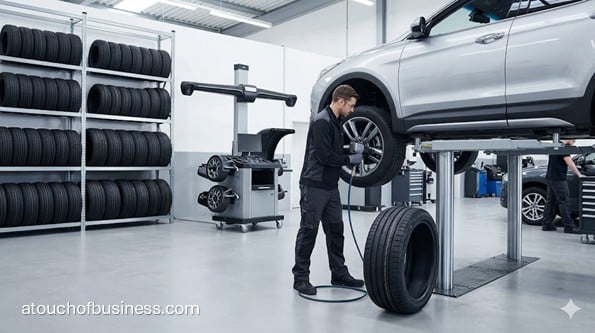
What Beginners Should Know Before Opening a Tire Shop
A tire shop sells and services tires from a fixed workshop location. You may sell new tires, install them, balance wheels, repair flats, rotate tires, replace valve stems, handle tire pressure monitoring system parts, and possibly offer alignments.
The choice is simple at first: do you want a shop-based automotive business, or do you only like the idea of owning one? The tradeoff is that this business puts you close to customers, vehicles, tools, inventory, safety risks, and tight turnaround expectations.
A tire shop can look simple from the outside. A customer pulls in, gets tires, pays, and leaves.
Inside the shop, there is more going on. You need trained people, the right machines, safe lifting procedures, supplier access, tire storage, waste tire handling, clear prices, and a service process that customers can trust.
You also need to decide whether owning a business fits your life. A tire shop can bring early mornings, urgent flat repairs, delivery timing, busy seasonal periods, customer complaints, and pressure to finish jobs quickly.
Ask yourself a direct question: are you building toward something meaningful, or are you mainly trying to get away from a job, boss, status concern, or financial problem?
Prestige is a weak reason to open a shop. The image of ownership will not help much when a lift is down, a tire delivery is late, or a customer says a wheel was damaged.
Better reasons are practical ones. You should have a real interest in the business, the products, and the value the shop provides. If you are passionate about the business, you are more likely to stay focused when the startup stage gets difficult.
Is Business Right for Your Personality?
A tire shop depends on local demand. The tradeoff is that a strong location can help, but a crowded market can make price, speed, and trust harder from day one.
Before you move forward, study your area. Look at nearby tire stores, dealerships, big-box tire centers, general repair shops, mobile tire services, and online tire sellers with local installers.
You are not only asking, “Are there cars nearby?” You are asking whether enough people need tire sales, tire installation, flat repair, balancing, rotations, seasonal tire changeovers, or tire pressure monitoring system service in your area.
- Are there commuters, contractors, delivery drivers, rideshare drivers, families, fleets, or light truck owners nearby?
- Do customers in your area buy winter tires or seasonal tire changeovers?
- Are there already too many tire shops competing on the same services?
- Can your location support customer parking, delivery trucks, and vehicle staging?
- Can you offer faster service, clearer prices, better access, or a stronger local fit?
Weak demand is a serious warning sign. It may mean the business idea is not right for that area, even if the tire shop idea itself is good.
Use local supply and demand as a practical filter before you lease space, buy equipment, or stock tires.
Compare Starting, Buying, and Franchise Options
The next decision is how to enter the business. Starting from scratch gives you control, but buying an existing shop may give you equipment, location history, customer records, and supplier relationships.
Some tire and automotive service businesses also operate through franchise systems. That route may offer brand support, systems, and supplier access, but it can limit control and add fees.
- Start from scratch if you want full control over the brand, location, service mix, and equipment choices.
- Buy an existing shop if the location, equipment, records, lease, staff, and reputation are worth the price.
- Explore a franchise if you want a more structured model and are comfortable with franchise rules and costs.
The best path depends on your budget, timeline, risk tolerance, support needs, and how much control you want. If a good shop is already operating in your area, buying a business already in operation may be worth comparing against a full startup.
Talk to Owners Before You Commit
You need firsthand insight before you commit capital. The tradeoff is that you should not ask direct competitors to train you for free.
Speak only with tire shop owners you will not compete against. Look in another city, region, or market area.
Prepare real questions before you contact them. Their journey will not match yours exactly, but they have lived through the problems you are still guessing about.
- What equipment did they wish they bought sooner?
- Which services created the most early problems?
- How did they choose tire suppliers?
- What surprised them about waste tires, storage, or local permits?
- Which jobs caused comebacks or customer disputes?
- What would they verify before signing a lease?
Firsthand owner insight can help you spot issues that do not show up in a basic startup checklist.
Choose Your Tire Shop Service Scope
The first major operating decision is job scope. The tradeoff is that more services can attract more customers, but they also add tools, training, inventory, insurance needs, and safety risk.
A basic shop-based tire store may focus on passenger and light truck tires. That can include new tire sales, used tire sales, mounting, balancing, flat repair, rotations, valve stems, tire pressure monitoring system service, and seasonal changeovers.
Alignment is a separate decision. It can support tire sales and solve customer problems, but it requires more equipment, space, calibration, and trained technicians.
Commercial truck, bus, agricultural, construction, and off-road tire service changes the business even more. Larger rim-wheel work can trigger specific OSHA safety requirements, different equipment, and higher risk.
- Will you sell new tires, used tires, or both?
- Will you focus on passenger cars, light trucks, sport utility vehicles, and vans?
- Will you offer wheel alignment at launch?
- Will you service fleet vehicles?
- Will you avoid commercial truck and large-vehicle wheels until you are ready?
Do not take jobs your shop is not built to handle. Early mistakes in job scope can lead to delays, unsafe work, equipment strain, and unhappy customers.
Write a Plan Before You Buy Equipment
Your business plan should connect the shop idea to real startup decisions. The tradeoff is that planning takes time, but it can prevent expensive guesses.
A tire shop plan should not be a vague document. It should help you decide what you will sell, who you will serve, what equipment you need, how much inventory to carry, and how the shop will generate revenue.
- Target customers, such as commuters, families, light truck owners, contractors, fleets, or delivery drivers.
- Opening services, such as new tires, used tires, mounting, balancing, flat repair, rotations, and tire pressure monitoring system service.
- Equipment list, including tire changer, wheel balancer, compressor, lifts, torque tools, tire racks, and point-of-sale system.
- Startup cost categories, including lease, build-out, equipment, inventory, permits, insurance, payroll, and working capital.
- Supplier plan for tires, wheels, repair supplies, tire pressure monitoring system parts, and waste tire pickup.
- Pricing decisions for tire packages, labor, balancing, disposal, valve stems, and special jobs.
Use your plan to test the numbers before opening. A clear plan also helps when presenting it to lenders, partners, or landlords—or when pressure-testing the numbers yourself.
Choose a Location That Can Handle the Work
A tire shop location is more than a storefront. The tradeoff is that a cheaper space may cost more later if it cannot handle bays, storage, deliveries, equipment, zoning, or customer traffic.
Look for a site with service bays, safe vehicle access, customer parking, tire delivery access, indoor storage, electrical capacity, compressed-air capacity, restrooms, and enough room for the front counter.
The shop also needs a practical workflow. Tires should move from delivery to storage, then to the bay, then to installation, then to waste tire staging or customer handoff without chaos.
- Zoning: Verify that tire sales, tire installation, automotive service, vehicle staging, signs, and tire storage are allowed.
- Building use: Ask whether the location needs a certificate of occupancy or change-of-use review.
- Fire and building rules: Confirm rules for tire storage, lifts, compressors, electrical upgrades, ventilation, and signs.
- Waste handling: Ask how scrap tires, used oil, shop chemicals, and floor drains are regulated locally.
A tire shop can fail before it opens if the space is wrong. Confirm the property fits the work before you sign a lease.
Design the Shop Workflow Before Opening
The next decision is layout. The tradeoff is that a poor layout can slow every job, even if you have good tools and good people.
A real tire shop workflow starts before the vehicle enters the bay. The customer needs an estimate, approval, tire availability, and a clear service plan.
Then the vehicle moves through the shop. The technician lifts the vehicle, removes wheels, inspects tires, mounts or repairs as approved, balances wheels, torques lug nuts, checks tire pressure, and completes a quality check.
- Receiving area for tire deliveries.
- Storage racks for new tire inventory.
- Staging space for special orders and customer tires.
- Service bays with safe tool access.
- Balancing and tire-changing area.
- Scrap tire holding area.
- Customer pickup and payment area.
Think about bottlenecks early. A tire changer in the wrong spot, poor access to wheel weights, or unclear waste tire staging can slow every job.
Decide Which Equipment You Need at Launch
Equipment choices shape what your tire shop can safely sell and service. The tradeoff is that buying too little limits your work, while buying too much drains cash before the shop has customers.
Core tire service equipment usually includes a tire changer, wheel balancer, air compressor, lifts or jacks, torque tools, inflation tools, tire racks, repair supplies, and a point-of-sale system.
- Tire changer sized for your target vehicles.
- Wheel balancer and wheel weight supplies.
- Air compressor, air lines, hoses, and inflation tools.
- Two-post or four-post lifts, floor jacks, and jack stands.
- Torque wrenches, lug sockets, and wheel lock tools.
- Tire pressure gauges and tire pressure monitoring system tools.
- Tire spreader, patch-plug repair materials, and inspection tools.
- Tire racks, wheel racks, bins, labels, and stock tags.
- Shop management software, point-of-sale system, and card reader.
If you plan to service larger commercial wheels, you may need extra safety equipment and training. That can include restraining devices or barriers for covered rim-wheel work.
Set Up Parts, Supplies, and Tire Flow
A tire shop depends on parts flow. The tradeoff is that too little inventory causes delays, while too much inventory ties up cash and storage space.
Start with the tires and supplies your opening service list requires. Common items include passenger tires, light truck tires, valve stems, valve cores, tire pressure monitoring system service kits, wheel weights, patch-plug units, cement, bead sealer, tire lubricant, and cleaning supplies.
Supplier relationships matter as much as shelf stock. You need wholesale tire distributors, wheel suppliers, tire pressure monitoring system parts, repair supplies, equipment service vendors, and waste tire pickup.
- Confirm brand access and common tire sizes.
- Ask about delivery times and cutoff times.
- Review minimum orders and payment terms.
- Check warranty handling and return rules.
- Test supplier portals before opening.
- Identify a backup supplier for urgent needs.
A missing tire size can delay a job. A missing valve kit can delay the same job. Build your supply plan around the work you will actually accept.
Price Tires and Services Before the First Customer
Pricing is a major launch decision. The tradeoff is that clear pricing builds trust, but underpriced labor and missing fees can weaken the business fast.
Your price list should separate tires, installation labor, balancing, valve stems, tire pressure monitoring system kits, disposal charges, taxes, and any state or local tire fees that apply.
Common pricing structures include installed tire packages, labor by tire size, separate balancing charges, flat repair pricing, used tire pricing by condition, and alignment pricing if offered.
- Wholesale tire cost.
- Mounting and balancing time.
- Wheel weights and consumables.
- Tire disposal cost.
- Valve stems and sensor service kits.
- Credit card processing costs.
- Competitor installed pricing.
- Special handling for low-profile, run-flat, oversized, or specialty wheels.
Do not hide important charges. Customers want price clarity before they approve the work. You can use guidance on setting your prices to think through labor, parts, and profit before launch.
Plan Startup Costs and Funding Options
A tire shop can require significant startup capital before the doors open. The tradeoff is that a lean launch can save cash, but cutting the wrong items can hurt safety, speed, and quality.
Your startup costs may include lease deposits, build-out, lifts, tire changer, balancer, compressor, alignment equipment, tire inventory, tools, supplies, signs, permits, software, insurance, payroll reserve, and an opening cash reserve.
There is no single reliable startup cost that applies to every tire shop. Costs change by location, number of bays, equipment level, inventory depth, lease condition, staffing, and service scope.
- Get equipment quotes from vendors.
- Get contractor estimates for build-out and electrical work.
- Ask suppliers for opening inventory requirements.
- Get insurance quotes before signing a lease.
- Confirm permit and inspection fees locally.
- Build a payroll and working capital reserve.
Funding may come from owner cash, a bank loan, an SBA-backed loan, equipment financing, supplier credit, a line of credit, or partner capital. If borrowing is part of the plan, learn what lenders may expect before applying for a business loan.
Set Up Banking, Bookkeeping, and Records
Financial records need to be ready before opening. The tradeoff is that simple systems are easier to run, but they still must track taxes, fees, inventory, payroll, and supplier bills.
Open a business checking account and keep business transactions separate from personal ones from the start. Set up accounting software, sales tax tracking, payroll if hiring, and daily payment procedures.
- Business checking account.
- Business savings or tax reserve account.
- Point-of-sale system.
- Card payment processor.
- Invoice and receipt templates.
- Sales tax and tire fee tracking where required.
- Supplier bill records.
- Payroll records if employees are hired.
- Waste tire pickup records if required locally.
You should also plan for tire registration records when selling new tires. That process needs to be part of the sale, not an afterthought.
Choose Your Legal Structure and Register the Business
Your legal structure affects taxes, paperwork, liability, and banking. The tradeoff is that simple structures may be easier to set up, while formal structures may fit the risk and asset needs better.
Common choices include sole proprietorship, limited liability company, corporation, or partnership. The right choice depends on ownership, liability concerns, tax planning, and state rules.
You may also need to register a business name or file a Doing Business As name if the shop name is different from the legal owner or entity name.
- State registration: Check your Secretary of State or corporations division.
- Business tax ID: Apply for an Employer Identification Number if needed for hiring, banking, or tax filings.
- Business name: Verify state, local, domain, and trademark conflicts before using the name publicly.
- DBA filing: Ask the state, county, or city where trade names are registered.
Use care when deciding on a business structure. A tire shop has customer vehicles, equipment, employees, inventory, and safety exposure, so this choice deserves attention.
Verify Tire Shop Licenses and Local Rules
Compliance depends on location and service scope. The tradeoff is that many rules are local, so a checklist from another city may not protect your shop.
At the federal level, a tire shop may need an Employer Identification Number, tax setup, OSHA safety compliance when employees are present, and a tire registration process for new tire sales.
At the state level, you may need sales tax registration, employer accounts, workers’ compensation coverage, waste tire compliance, and possibly motor vehicle repair or tire dealer registration.
At the city or county level, you may need a business license, zoning approval, a certificate of occupancy, sign permits, building permits, fire review, or wastewater and stormwater checks.
- Federal: IRS for Employer Identification Number and federal tax items; OSHA for employee safety rules; NHTSA rules for new tire registration.
- State: Secretary of State, Department of Revenue, labor agency, workers’ compensation office, and environmental agency.
- City or county: Business licensing, zoning, building department, fire marshal, public works, and sewer or environmental services.
Ask practical questions. Is tire service allowed at this address? Do you need a certificate of occupancy? What waste tire rules apply? Are tire sales, installation, disposal charges, and related parts taxable?
Plan Insurance and Risk Controls
Insurance is not just a paperwork item for a tire shop. The tradeoff is that weak coverage can leave the owner exposed when customer vehicles, employees, equipment, and safety claims are involved.
Coverage needs vary by state, lease, lender, service scope, and staffing. Speak with a licensed commercial insurance agent before opening.
- General liability.
- Garage liability or garagekeepers coverage for customer vehicles.
- Commercial property coverage for equipment, tools, inventory, and tenant improvements.
- Workers’ compensation if employees are hired and state law requires it.
- Commercial auto if the business owns or uses vehicles.
- Employment practices coverage if staff will be hired.
- Equipment breakdown coverage if available and appropriate.
Risk planning also includes procedures. Use written steps for lifting vehicles, torqueing lug nuts, tire repair limits, inflation, waste tire handling, and customer approvals.
Strong insurance coverage for the business should match the work you plan to perform, not just the cheapest policy you can find.
Set Safety Rules Before Work Begins
Safety rules need to exist before the first paid job. The tradeoff is that speed matters in a tire shop, but unsafe speed can cause injuries, vehicle damage, and comebacks.
Train staff on vehicle lifting, jack points, wheel removal, mounting, balancing, inflation, tire pressure monitoring system service, torque checks, chemical handling, and cleanup.
Use safety data sheets and a hazard communication process when employees handle hazardous chemicals. If the shop services covered large-vehicle rim wheels, check OSHA rim-wheel requirements before offering that work.
- Safety glasses, gloves, hearing protection, and proper footwear.
- Spill kits and labeled containers.
- Fire extinguishers and first-aid supplies.
- Lift inspection records.
- Written tire repair policy.
- Torque verification procedure.
- Inflation safety procedure.
- Training records for employees.
Do not treat tire repair casually. A proper repair requires inspection and the right repair method. A quick plug may not meet accepted permanent repair practices.
Choose Customers and Reach Them Before Opening
You need to know who your first customers are. The tradeoff is that serving everyone sounds attractive, but a clear customer target makes the opening plan stronger.
A new tire shop may serve individual vehicle owners, families, light truck owners, contractors, rideshare drivers, delivery drivers, fleet customers, and seasonal tire customers.
Each group expects something different. A fleet may care about account terms and turnaround. A parent may care about trust and clear prices. A contractor may care about fast service for a truck needed the next morning.
- Build a simple local website with services, location, phone number, and appointment process.
- Create local business listings with accurate hours and contact details.
- Prepare signs that are easy to read from the road.
- Make your opening service list clear.
- Set up a phone script for tire sizes, quotes, appointments, and approvals.
- Contact nearby small fleets only if you can serve them reliably.
Customer acquisition should match your real capacity. Do not advertise commercial tire service, alignments, or same-day installs unless your shop can deliver those services at launch.
Build Trust Through Clear Estimates and Handoffs
Customers judge a tire shop by trust, speed, quality, convenience, and price clarity. The tradeoff is that fast service helps, but rushed communication can create disputes.
Your workflow should make the customer path simple. The customer asks for help, you confirm the tire size or problem, you prepare an estimate, the customer approves the work, the shop performs the service, the technician checks quality, the customer pays, and the vehicle is handed back.
- Use written estimates before work begins.
- Get approval for extra parts or added services.
- Explain tire disposal charges and required fees clearly.
- Record tire size, vehicle details, mileage, and customer contact information.
- Document used tire condition if selling used tires.
- Give receipts with tire details and warranty information where applicable.
A clear handoff can prevent many problems. The customer should know what was installed, what was repaired, what was declined, and what to monitor next.
Create Forms and Internal Documents
Forms protect the shop’s process. The tradeoff is that paperwork can feel slow, but missing details can create pricing disputes, warranty confusion, and liability problems.
At launch, keep documents simple and useful. They should help the shop quote work, get approval, perform service, track tires, and finish the job clearly.
- Customer estimate form.
- Work order.
- Final invoice and receipt.
- New tire registration process.
- Used tire inspection checklist if used tires are sold.
- Flat repair policy.
- Road hazard or warranty explanation if offered.
- Supplier purchase order record.
- Waste tire pickup log if required locally.
- Employee safety training record.
Use plain language. Customers should understand what they are approving before the wheels come off the vehicle.
Plan Inventory and Capacity Together
Inventory and capacity must match. The tradeoff is that a shop full of tires can still struggle if there are not enough bays, tools, or trained people to install them.
Start with common local sizes and services. Your opening inventory should reflect your market, season, storage space, supplier delivery speed, and cash available.
- Stock common passenger and light truck tire sizes for your area.
- Use supplier access for slower-moving sizes.
- Keep repair supplies ready for flat repair work.
- Carry valve stems, valve cores, sensor kits, and wheel weights.
- Track tires by size, brand, speed rating, load rating, and location.
- Separate special orders from general inventory.
- Stage scrap tires away from sellable stock.
Capacity also includes time. A small shop can lose control fast if it books too many tire installs, flat repairs, and seasonal changeovers at once.
Hire and Train for the Work You Accept
Hiring depends on your service scope. The tradeoff is that employees add payroll cost, but a tire shop can become unsafe or slow if one person tries to handle too much.
At launch, roles may include owner-operator, tire technician, counter person, service writer, installer, or part-time bookkeeping support. Some owners start small, but even a small shop needs enough trained help to move vehicles safely.
- Tire mounting and balancing.
- Safe lifting and jacking.
- Torque procedures.
- Tire repair limits.
- Tire pressure monitoring system service.
- Customer estimates and approvals.
- Supplier ordering.
- Waste tire handling.
- Shop cleanup and safety checks.
Do not let job titles hide skill gaps. If the shop offers a service, someone must know how to perform it safely and explain it clearly.
Prepare the Tire Shop Brand and Digital Footprint
Your brand should help customers understand the shop quickly. The tradeoff is that a clever name matters less than trust, visibility, and clear service information.
Choose a name that fits tire sales and service, then check state records, local name rules, domain availability, and possible trademark conflicts before using it publicly.
- Business name.
- Domain name.
- Basic website.
- Local business listings.
- Phone number.
- Exterior signs.
- Front counter materials.
- Business cards if useful for fleet or local relationships.
- Service list and price explanation.
Signs matter for a shop-based tire business. Good storefront signage helps drivers understand what you offer before they pull in.
Know the Daily Work Before You Open
Daily responsibilities show whether this business fits you. The tradeoff is that tire shops can feel routine, but the owner must manage many moving parts at once.
A typical day may include opening the shop, checking appointments, confirming tire deliveries, preparing estimates, helping customers, assigning bay work, checking supplier availability, reviewing repairs, handling payment, and solving delays.
Here is a simple snapshot of an open day.
- Morning: review booked jobs, check tire deliveries, inspect bays, and confirm staff assignments.
- Midday: handle walk-in flat repairs, order special tires, approve estimates, and keep bays moving.
- Afternoon: complete quality checks, process payments, stage waste tires, and prepare next-day orders.
- Close: reconcile payments, review inventory, clean work areas, and note unfinished work.
The owner may work the counter, the bay, or both. That is why the startup plan must reflect the real daily workload, not just the idea of selling tires.
Watch for Red Flags Before Launch
Some warning signs should slow you down. The tradeoff is that fixing problems before launch is usually cheaper than discovering them after customers arrive.
- Wrong location: The site lacks zoning approval, parking, bay access, tire storage, or delivery access.
- Weak demand: The area has too little need or too many tire shops chasing the same customers.
- Underfunding: The budget does not cover equipment, inventory, permits, insurance, payroll, and working capital.
- Poor equipment fit: The tire changer, balancer, compressor, or lifts do not match the work you plan to accept.
- Unclear supplier access: You cannot get common tire sizes quickly or at workable prices.
- Unsafe service scope: You plan to handle large commercial wheels without proper equipment and training.
- Used tire risk: You sell used tires without a strict inspection and rejection process.
- Waste tire gaps: You have no approved way to store, track, or remove scrap tires.
- Weak estimating: Estimates do not include labor, supplies, taxes, fees, and disposal costs.
- Overbooking: Appointment promises exceed bay capacity, staff skill, or supplier timing.
If several of these apply, pause. Fix these gaps before you commit more capital.
Use a Pre-Opening Readiness Checklist
The final decision is whether the shop is truly ready to open. The tradeoff is that opening sooner may feel exciting, but opening before the shop is ready can damage trust fast.
Before launch, confirm the tire shop can legally open, safely complete jobs, take payments, explain prices, source tires, handle waste, and serve customers without confusion.
- Business structure chosen and registered if required.
- Employer Identification Number and state tax accounts ready if needed.
- Sales tax setup complete where required.
- Business license, zoning, certificate of occupancy, signs, and permits verified locally.
- Waste tire process in place.
- New tire registration process ready.
- Insurance active before customer vehicles enter the shop.
- Tire changer, balancer, compressor, lifts, and point-of-sale system tested.
- Opening inventory and repair supplies stocked.
- Supplier portals tested.
- Price list finalized.
- Work orders, estimates, receipts, and policies ready.
- Safety training completed for staff.
- Soft-opening test jobs completed.
- Phone, website, listings, and signs ready.
A tire shop should not open just because the sign is up. It should open when the work can move from estimate to approval, service, quality check, payment, and handoff without falling apart.
Answer Common Startup Questions
These questions help clarify early decisions. The tradeoff is that answers vary by location and service scope, so verify the rules that apply to your exact shop.
- Do I need a special federal license to open a tire shop? There is no single general federal tire shop license for a standard local shop, but federal tax, OSHA, and new tire registration rules may apply.
- Do I need a sales tax permit? Usually yes if you sell taxable tires, wheels, parts, or services. Ask your state Department of Revenue how tire sales, installation, disposal charges, and fees are taxed.
- Do I need a certificate of occupancy? It varies by city or county. Ask the building department before you lease or renovate the space.
- Can I sell used tires? It may be allowed, but rules and risk vary. Use a strict inspection process and reject unsafe tires.
- Should I offer alignment at launch? Offer it only if you have the equipment, space, calibration process, and trained staff.
- What equipment is essential? A tire changer, balancer, compressor, lifts or jacks, torque tools, tire racks, repair supplies, payment system, and safety equipment are core items.
- How do I handle waste tires? Contact your state environmental agency or solid waste office for storage, pickup, hauler, fee, and record rules.
- Can I run the shop from home? Not typically for this model. A workshop-based tire shop needs zoning approval, vehicle access, equipment space, customer parking, and waste handling.
- What is the biggest startup risk? The biggest risk is committing to a location, equipment package, and service scope before verifying demand, legal use, supplier access, and startup costs.
FAQs
Question: What do I need to start a tire shop?
Answer: You need an approved shop location, tire service equipment, supplier accounts, business registration, tax setup, insurance, and a safe way to handle scrap tires.
You also need clear service limits, trained help if needed, and a pricing plan before you open.
Question: Do I need a license to open a tire shop?
Answer: There is no single U.S. license that covers every tire shop. Most requirements come from your state, city, county, and the services you offer.
Check business licensing, zoning, sales tax, waste tire rules, and any auto repair registration rules in your area.
Question: Does a tire shop need a certificate of occupancy?
Answer: Many shop locations need a certificate of occupancy before opening, especially if the building use changes. This varies by city or county.
Ask the local building department before signing a lease or starting renovations.
Question: What equipment should I buy first for a tire shop?
Answer: Start with the tools that match your opening services. A basic tire shop usually needs a tire changer, balancer, air compressor, lifts or jacks, torque tools, tire racks, repair supplies, and payment software.
If you add alignment or commercial tire work, your equipment list changes fast.
Question: Should I sell new tires, used tires, or both?
Answer: New tires usually require supplier accounts, inventory planning, and tire registration procedures. Used tires may need stricter inspection rules because damage may not be easy to see.
Choose the model that fits your risk level, local demand, and shop skills.
Question: Can I open a tire shop without offering alignments?
Answer: Yes, a tire shop can start with tire sales, mounting, balancing, rotations, and flat repair. Alignment is useful, but it needs extra space, equipment, and training.
If you skip alignment at launch, decide where customers can be referred when they need that service.
Question: How much does it cost to start a tire shop?
Answer: Startup cost depends on the building, number of bays, equipment, tire stock, permits, insurance, and staffing. There is no safe universal number.
Use real quotes for equipment, lease work, opening inventory, insurance, and local permits.
Question: What should I check before leasing a tire shop location?
Answer: Confirm zoning, vehicle access, customer parking, delivery space, tire storage, electrical capacity, air compressor needs, and waste tire rules. Do this before you commit.
A cheap space can become expensive if it cannot support tire service work.
Question: Do tire shops need sales tax registration?
Answer: In most cases, yes, because tire shops sell taxable goods and may provide taxable services. The exact rules vary by state.
Ask your state tax agency how tires, installation, disposal charges, and related parts are taxed.
Question: What insurance does a tire shop need?
Answer: Common coverage may include general liability, garage liability, garagekeepers coverage, property insurance, workers’ compensation, and commercial auto if vehicles are used.
Ask a licensed commercial insurance agent to match coverage to your exact services.
Question: Do I need a special process for selling new tires?
Answer: Yes, new tire sales can involve tire identification number records and tire registration steps. Build that process into each sale.
This helps customers receive safety recall notices when needed.
Question: What are the biggest legal checks for a new tire shop?
Answer: Focus on business registration, tax accounts, zoning, certificate of occupancy, local licensing, waste tire rules, employee safety, and tire registration. These are common launch issues.
If you handle fluids, larger vehicle wheels, or mobile service, more rules may apply.
Question: How do I set prices before opening a tire shop?
Answer: Build prices from tire cost, labor time, balancing, valve parts, tire pressure monitoring parts, disposal costs, taxes, card fees, and local competition. Do not guess from a competitor’s sign alone.
Make sure your invoices show required fees and approved work clearly.
Question: What common startup mistakes should tire shop owners avoid?
Answer: Avoid leasing the wrong space, buying mismatched equipment, stocking too many slow tire sizes, underpricing labor, and taking jobs your setup cannot handle.
Also avoid opening without waste tire pickup and supplier backup options.
Question: How much tire inventory should I start with?
Answer: Start with sizes that match nearby vehicles and your cash limits. Use supplier delivery for less common sizes when possible.
Too much inventory can tie up capital, while too little can slow your first sales.
Question: What should daily workflow look like when the shop first opens?
Answer: The early workflow should move from quote to approval, tire sourcing, bay work, quality check, payment, and vehicle release. Keep each step written and easy to follow.
This helps reduce missed parts, wrong prices, and unfinished jobs.
Question: Should I hire employees before opening?
Answer: Hire before opening if the work requires more technical skill or labor than you can safely provide alone. Tire work can involve lifting, mounting, balancing, customer approvals, and supplier orders at the same time.
Train staff on safety, torque checks, repair limits, and customer communication before the first paid job.
Question: What software does a new tire shop need?
Answer: At minimum, you need a way to write estimates, track invoices, process card payments, record customer vehicles, and manage inventory. Many shops use point-of-sale or shop management software.
The system should also support taxes, fees, supplier records, and daily sales reports.
Question: How should I market a tire shop during the first month?
Answer: Focus on local visibility and clear service information. Set up your website, local listings, signs, phone process, and opening service list before launch.
Do not promote services that your staff, equipment, or suppliers cannot support yet.
Question: How can I protect cash flow in the first month?
Answer: Watch tire inventory, payroll, supplier bills, card deposits, rent, and equipment payments closely. Tire shops can spend cash quickly before sales become steady.
Keep some reserve cash for delayed deliveries, slow opening weeks, repairs, and unexpected setup costs.
Question: What shop policies should be ready on opening day?
Answer: Prepare policies for estimates, approvals, used tire sales, flat repair limits, warranties, road hazard coverage if offered, refunds, abandoned vehicles, and customer-supplied parts.
Simple written policies help staff answer questions the same way each time.
Question: What should I test before taking real customers?
Answer: Test the tire changer, balancer, compressor, lifts, payment system, printer, supplier ordering, phone process, and tire registration steps. Run a few sample jobs from quote to final receipt.
Fix weak spots before customers are waiting in the lobby.
Advice From People in the Tire Business
One of the best ways to prepare for a tire shop is to hear how people in the industry talk about real work, real customers, and real mistakes.
The interviews, podcasts, videos, and articles can help you understand supplier relationships, customer trust, shop culture, staffing, pricing pressure, and the daily realities behind the counter.
Use these resources as a way to hear from people who have worked in or around tire shops. Their exact path may not match yours, but their experience can help you ask better questions before you lease space, buy equipment, choose services, or open your doors.
- How a Farmer Turned a Small Tire Shop into a $26M Business
- A Voice for Independent Tire Dealers
- The Real Issues Independent Tire Dealers Are Facing
- Forming Relationships To Better Your Business With John Boyle
- How Nate Zolman is Innovating in the Tire Industry
- Pugh’s Tire and Four Generations of Service
- Tire Talk Podcast
- Commercial Tire Interview With Mark Morris
- Advice From a Family-Owned Independent Tire Dealer
- I Started a Tire Business at 62 Years Old
Related Articles
- Starting an Auto Repair Shop
- How To Start Your Oil Change Business
- Starting an Automotive Fleet Maintenance Business
- How To Start an Auto Body Repair Shop
- Start an Auto Parts Store
- Start a Tow Truck Service
- How To Start Your Automotive AC Repair Business
- How To Start an Automotive Electrical Repair Shop
- Start an Automotive Radiator Repair Business
- Starting a Windshield Repair Business
- How To Start Your Car Wash Business
Sources:
- IRS: Get an EIN, Starting a Business, Excise Tax Publication
- SBA: Choose Business Structure, Choose Business Name, Licenses and Permits, Calculate Startup Costs, Business Loans
- eCFR: Tire Dealer Registration, Rim Wheel Service, Hazard Communication
- OSHA: Automotive Service Lifts
- EPA: Managing Used Oil, Scrap Tire Laws, Used Tires
- USTMA: Tire Repair Basics, Puncture Repair Procedures, Tire Shipment Forecast
- BLS: Automotive Technicians
- DOL: Workers’ Compensation
- NAIC: Auto Insurance