
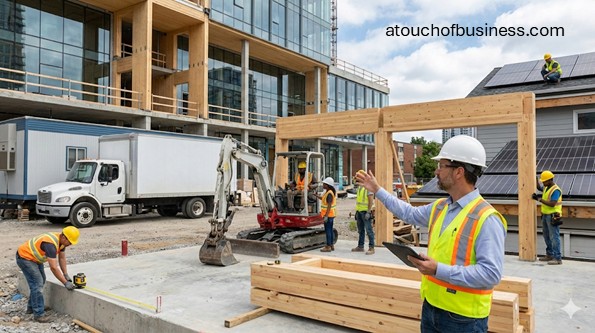
General Contracting Business Overview
You’ve seen it happen. A friend buys a fixer-upper, hires “a guy,” and suddenly the kitchen is torn apart—then weeks go by with no clear plan.
That mess is exactly why general contractors exist. If you start a general contracting business, you’re the person who turns a pile of moving parts into a finished project.
A general contracting business is a construction service business that contracts directly with the customer to deliver a build or remodel. You may do some work yourself, but your core job is coordinating the trades, permits, schedules, materials, and inspections so the project reaches completion.
Most startups in this space can begin owner-run and mobile. You can start with a home office and secure storage, then grow into a yard, shop, or office as project size increases.
Products And Services You Can Offer
Your “product” is the finished project. What you actually provide is coordination, accountability, and skilled oversight—backed by contracts and documentation.
To stay startup-focused, decide what you’ll offer in your first phase. You can expand later once your licensing, team, and systems can support it.
- Residential remodeling: kitchens, bathrooms, basements, room reconfigurations, accessibility updates.
- Additions and structural changes: additions, decks, porches, framing changes, beam work (as allowed by local rules and your scope).
- Repairs and restoration: water damage rebuilds, fire rebuild coordination, storm repairs.
- Light commercial work: tenant improvements, office build-outs, small retail refreshes (where your licensing allows).
- Pre-construction planning: site walk-throughs, preliminary budgets, estimating, scope development.
- Permit coordination: preparing permit-ready documentation and coordinating inspections where you are allowed to do so.
- Trade coordination: scheduling and managing subcontractors across multiple trades.
How Does A General Contracting Business Generate Revenue
General contracting revenue usually comes from project agreements. You accept payment in stages tied to milestones, with documentation that shows what changed and why.
Your pricing structure matters at startup because it affects cash flow, customer expectations, and how you manage change requests.
- Fixed-price contracts: one price for a defined scope, with written change orders for scope changes.
- Cost-plus contracts: customer pays actual costs plus an agreed fee, with clear rules for documentation.
- Time-and-materials agreements: labor billed by time plus materials, often used when scope is uncertain.
- Pre-construction fees: paid planning work before a full build contract.
Typical Customers You’ll Serve
Think about who you can serve best in your first year. New owners often start with smaller residential projects, then move up as their subcontractor network and documentation improves.
- Homeowners planning remodels, additions, or repairs
- Landlords and small property investors
- Small developers working on limited projects
- Small business owners needing build-outs
- Property managers coordinating repairs across units
Pros And Cons To Know Up Front
This business can be a strong fit if you like planning, problem-solving, and staying organized under pressure. But it also brings real responsibility and risk.
Before you commit, look at both sides without sugarcoating it.
- Pros: broad service demand in many markets, flexible service area, ability to scale using subcontractors, repeat work through property relationships.
- Cons: licensing and permitting rules vary by state and city, liability exposure if work is defective or undocumented, schedule pressure tied to inspections and trade availability, safety requirements on job sites, customer disputes when scope is unclear.
Skills You’ll Need Or Must Learn
You don’t need to be the best at every trade. But you do need enough skill to plan the work, spot risk, and keep the project on track.
If you’re weak in an area, you can learn it or pay a professional to support you. The key is not pretending you have a skill you don’t have.
- Estimating and scope writing: turning a customer goal into a clear written scope.
- Scheduling: sequencing trades in a realistic order.
- Trade knowledge: basics of framing, electrical, plumbing, heating and cooling, drywall, finishes, roofing, and concrete.
- Plan reading: understanding drawings and specifications when used.
- Code awareness: knowing that building codes apply and knowing when to ask the building department for direction.
- Documentation: photos, notes, change orders, and inspection records.
- Customer communication: setting expectations early and documenting changes.
- Basic financial discipline: keeping transactions separate, tracking payments, and planning for slow months.
Day-To-Day Activities You Must Be Ready For
You’re starting a business, not just doing jobs. So it helps to know what your days will actually include once you open—because you’ll need to plan for these tasks before launch.
- Site visits and measuring
- Writing and revising proposals
- Coordinating subcontractor availability
- Ordering materials and confirming lead times
- Submitting permits or coordinating permit filings (where applicable)
- Scheduling inspections and responding to inspection notes
- Jobsite safety planning that matches construction safety rules
- Documenting progress with photos and written notes
- Managing change requests with written change orders
- Sending invoices and tracking payments
A Day In The Life Of An Owner
Picture a normal day once you’re live. You might start early, because you’re coordinating multiple trades and a customer who wants updates.
Your mornings can be site-focused. Your afternoons can be paperwork-focused. If that sounds annoying, this may not be your lane.
- Early morning: confirm trade arrivals, check material delivery windows, review inspections scheduled that day.
- Morning: jobsite walkthrough, confirm scope with trades, handle surprises like hidden damage.
- Midday: meet an inspector or handle inspection corrections, document what changed.
- Afternoon: update the customer, issue change order paperwork if needed, confirm tomorrow’s schedule.
- End of day: upload photos, update the job file, send invoices, and line up the next estimate appointment.
Red Flags To Watch For Before You Say Yes
A lot of trouble is avoidable if you screen projects early. If something feels off now, it usually gets worse once walls open up and timelines tighten.
- Customer pushes you to start work without permits where permits are required
- Customer refuses a written scope or refuses written change orders
- Customer demands a price before you can verify the scope and site conditions
- Subcontractor can’t show licensing or insurance proof when the trade is regulated locally
- Customer wants “cash only” arrangements that skip documentation
- Project involves older housing with painted surfaces, but the customer refuses compliance steps when lead rules apply
- Large grading or clearing is planned, but nobody is addressing stormwater permitting where applicable
Startup Step 1: Decide If Business Ownership And This Business Fit You
Start here because everything else builds on it. First, decide if you want to own and operate a business at all—and then decide if general contracting is the right fit for you.
If you’re not sure, read these before you do anything else: business start-up considerations, why passion matters in business, and a business inside look.
Now ask the question most people avoid: “Are you moving toward something or running away from something?” If you’re starting this only to escape a job or a financial bind, that spark may fade fast when challenges hit.
You also need to be honest about the trade-offs. Income can be uncertain at first. Hours can run long. Vacations can be fewer. You carry full responsibility when a customer is upset or a schedule slips.
Is your family or support system on board? And do you have—or can you learn—the skills and secure enough funds to start and operate?
Startup Step 2: Talk To Owners You Won’t Compete Against
You can avoid a lot of frustration by learning from people who already do this. The key is who you ask.
Only talk to owners you will not be competing against—different city, different region, different service area. That way you get real answers without putting someone on guard.
Here are smart questions to ask:
- What surprised you most in your first year?
- Which project types were profitable for a small startup, and which ones were a headache?
- What paperwork or compliance issue slowed you down that you didn’t expect?
Startup Step 3: Choose A Model, A Schedule, And A Staffing Plan
General contracting can be solo, partner-based, or built with a larger team. Most first-time owners start owner-run and grow from there.
Decide if you’re going full time or part time. In this business, part time can be tough if you’re coordinating permits, inspections, and trades during weekday hours.
Also decide how you’ll handle labor at the start.
- Do most tasks yourself at launch: estimating, customer updates, scheduling, documentation.
- Hire later as demand grows: office support, project coordinator, assistant, or site lead.
- Use subcontractors early: common for regulated trades like electrical and plumbing (rules vary by state and city).
- Partners or investors: more common when chasing larger commercial work that needs more capital and staffing from day one.
If you need help deciding roles, the guide on how and when to hire can help you think through timing.
Startup Step 4: Verify Demand And Verify Profit Potential
Don’t guess. Verify demand in your service area before you buy gear or sign leases.
You can validate demand by talking to people who see projects daily—like building material suppliers, property managers, and tradespeople who work in your area. You can also review public-facing local permit activity if your city or county posts it.
Then verify profit potential. Your pricing must cover expenses and still pay you. If the numbers can’t support that, you’re building a stressful job, not a business.
If you want a simple way to think about demand, review supply and demand basics.
Startup Step 5: Pick Your Service Area And Location Approach
This is usually not a storefront business. Many general contractors start with a home office and a secure storage plan for tools and materials.
Still, location matters. Your service area should be close enough that site visits, supplier runs, and inspections are realistic without losing half your day to driving.
If you plan to lease a small office, shop, or yard, choose a location that customers and crews can reach easily. For more guidance, see picking a business location.
Startup Step 6: Build Your Essentials List And Price It Out
Now you build your startup cost plan. Start by listing the essential items you must have to begin safely and legally.
Then collect pricing estimates. Your total startup cost depends on your scale—project size, whether you self-perform, and how much you rent versus buy.
If you want a structured approach, use estimating startup costs.
Essential Equipment And Startup Essentials
This list excludes costs on purpose. Your goal here is completeness—so you can price it out based on your chosen niche and scale.
Start with safety and documentation. Then build outward into tools, storage, and basic office needs.
- Personal Protective Equipment And Safety: hard hat, safety glasses, hearing protection, work gloves, high-visibility clothing, jobsite first aid kit, fire extinguisher, basic fall protection gear when working at height, safety cones and caution tape, respirators and filters when required by the task.
- Measuring, Layout, And Documentation: tape measures, laser measure, levels, chalk line, framing square, speed square, plumb bob, moisture meter, camera or phone for job documentation, weatherproof notebook, permanent markers.
- Core Hand Tools: hammers, pry bars, screwdrivers, nut drivers, adjustable wrench and wrench set, pliers set, utility knives and blades, hand saw, clamps, caulking gun.
- Core Power Tools: drill and driver set, impact driver, circular saw, reciprocating saw, oscillating multi-tool, angle grinder, shop vacuum, extension cords, portable work lights, battery chargers and spare batteries.
- Access And Work Platforms: step ladder, extension ladder, ladder stabilizer, basic scaffold components if your niche needs it or a plan to rent them as required.
- Dust Control And Site Containment: plastic sheeting, painter’s tape, dust barrier systems, zipper doors for remodeling zones, floor protection rolls, drop cloths.
- Site Protection And Weather Protection: tarps, temporary protection boards, basic temporary fencing if required on certain sites, weather-resistant storage bins.
- Material Handling And Storage: toolboxes or lockable job boxes, shelving for storage space, straps and moving blankets, dollies and hand trucks, wheelbarrow (when relevant), tie-downs.
- Vehicle And Transport: work vehicle sized for tools and site visits, trailer if hauling tools or materials, cargo straps and load securement gear, trailer locks.
- Office And Communication Basics: computer, printer/scanner, dedicated business phone line, reliable internet access, email domain, basic filing system.
- Documentation And Admin Tools: estimating and proposal templates or software, calendar and scheduling tool, document storage with backups, accounting and invoicing tool, digital signature tool if you plan to use it.
Startup Step 7: Research Licensing, Permits, And Jobsite Compliance Early
This is where many new owners get stuck—because the rules depend on where you work and what you do.
Start by identifying whether your state requires a contractor license or registration for general contracting. Then identify whether cities or counties require contractor registration to pull permits.
Also identify federal rules that can apply to your work. Construction safety standards exist at the federal level. Lead-safe rules can apply when renovating certain older housing. Stormwater permitting can apply on larger land disturbance sites.
Startup Step 8: Choose A Legal Structure And Register Your Business
Once you understand licensing rules, choose a structure and register correctly. Many small businesses start as sole proprietorships and later form a limited liability company as they grow, because structure and liability protection needs change over time.
If you want a clear walkthrough, review how to register a business.
At a minimum, you’ll need to align your business name, your registrations, and your banking so your paperwork matches how you operate.
Startup Step 9: Set Up Your Tax Registrations And Contractor Paperwork
At startup, get your tax identifiers and your contractor paperwork handled before you start accepting projects.
If you will pay subcontractors, set up a process to collect a completed Form W-9 before the first payment and track what will need year-end reporting. If you plan to hire employees, plan state employer registrations before your first payroll.
This is also the moment to decide how you’ll keep records. If you don’t want to build that skill alone, hire professional help. You’re allowed to be new—you’re not allowed to be careless.
Startup Step 10: Write A Business Plan And Build Your Financial Setup
You don’t need a massive plan. But you do need a written plan that clarifies your scope, pricing approach, startup costs, target customers, and launch timeline.
Use how to write a business plan as your guide, even if you’re not seeking funding yet.
Next, set up your financial setup at a financial institution. Open the right accounts, choose a bookkeeping approach, and keep your business transactions separate from personal spending.
If you expect to borrow, review how to get a business loan so you know what lenders typically ask for.
Startup Step 11: Choose Your Name, Domain, And Online Presence
General contracting is trust-based. Your name and online presence should be simple, clear, and consistent across your registrations and marketing.
Start with selecting a business name, then secure a matching domain and social handles before you print cards or wrap a vehicle.
You don’t need every platform. You need consistency.
Startup Step 12: Get Insurance And Plan For Risk
Insurance is part of being credible in construction. General liability is commonly expected by customers and often required by contracts, property managers, or jobsite policies.
Your exact coverage needs depend on your work type, use of subcontractors, and whether you store tools and materials off-site.
- General liability: common baseline for contractors.
- Commercial auto: if you use a vehicle for business travel and hauling.
- Tools and equipment coverage: for theft, damage, or loss of tools.
- Property coverage: if you lease a shop or storage space.
- Workers’ compensation: commonly required by state law if you have employees; verify with your state.
- Project-specific requirements: some customers or venues may require specific limits, additional insured endorsements, or bonds.
For more guidance, see business insurance basics.
Startup Step 13: Build Your Supplier And Subcontractor Network
Even if you plan to self-perform some work, most general contractors rely on subcontractors—especially for regulated trades.
Before launch, build a shortlist by trade, verify availability, and document what you need from them before they step on a job.
- Subcontractor file items: licensing proof (when required), insurance certificates, written scope for their portion of work, tax forms for payment records.
- Supplier setup: accounts with building supply stores, rental providers, and specialty vendors you’ll need for your niche.
Startup Step 14: Set Pricing And Decide How You’ll Document Changes
Pricing is not just “a number.” It’s a system that needs to cover your time, your risk, your overhead, and your profit target.
Start by choosing a pricing structure you can explain and document. Then decide how you’ll handle changes—because changes are normal in construction.
If you want a guide for the pricing side, review pricing your products and services.
Startup Step 15: Create Brand Basics And Proof Assets
Brand identity doesn’t need to be fancy. It needs to be consistent and professional enough that a customer can trust you.
At startup, focus on the basics: logo, business cards, a simple website, and signage if you use a vehicle, trailer, or office space.
- Corporate identity package basics
- Business cards guidance
- Website basics for startups
- Business sign considerations
Proof assets matter in general contracting. Plan to build a portfolio of your work using photos and descriptions you have the right to use.
Startup Step 16: Set Up Your Physical Storage And Office Basics
You need a secure place for tools, documents, and materials. That can be a home garage, rented storage, or a small shop—depending on your project size.
Before you commit, verify zoning rules for storage and parking. If you lease a space, verify whether a Certificate of Occupancy is needed for your intended use.
You don’t want to sign a lease and then find out the use isn’t allowed.
Startup Step 17: Build A Pre-Launch Job Package And Payment Flow
Before you take your first project, build a basic “job package” you can reuse. This keeps your work consistent and reduces disputes.
Keep it simple and written. Clear scope and clear change rules prevent most confusion.
- Proposal template with scope, allowances, exclusions, and payment milestones
- Change order form and signature process
- Customer communication expectations (how often updates happen and how changes are approved)
- Invoicing format and accepted payment methods
- Photo documentation plan for before, during, and after
Startup Step 18: Plan Your Marketing Start And Your Launch Moment
You don’t need hype. You need a steady way to get in front of the right people and make it easy to request an estimate.
At launch, your goal is clarity: what you do, where you work, what project types you accept, and how a customer reaches you.
If you want ideas for announcing your start, review grand opening ideas and adapt them to a service business launch.
Startup Step 19: Run A Pre-Opening Checklist Before You Accept Work
This is your final “ready” check. Don’t skip it. It’s easier to fix issues now than mid-project.
Walk through this list and confirm everything is in place.
- Licensing and registration verified for your state and local permit jurisdictions
- Insurance active and documents ready for customers who request proof
- Essential equipment ready and safety gear stocked
- Supplier accounts set up
- Subcontractor list built with documentation requirements
- Contracts, change orders, and invoicing ready
- Website live, business cards ready, and contact process tested
If you want a reminder of common early traps, review mistakes to avoid when starting a small business.
Varies By Jurisdiction
General contracting has a lot of rules, and they can change depending on where you work. Don’t rely on guesses or what “someone told you.” Verify locally every time.
Use this checklist to confirm what applies in your city and state.
- Contractor license or registration: check your state contractor licensing board website and search “general contractor license requirements” plus your state name.
- Entity registration: check your Secretary of State site and search “business registration” or “limited liability company filing.”
- Sales and use tax and employer accounts: check your state Department of Revenue site and search “contractor sales tax” and “withholding registration.”
- Local business license: check your city or county business licensing portal and search “business license contractor.”
- Permits and inspections: check your local building department website and search “building permit” and “contractor registration.”
- Zoning and home occupation rules: check your planning and zoning office site and search “home occupation” and “contractor storage.”
- Certificate of Occupancy: if leasing space, check the building department site and search “Certificate of Occupancy requirements.”
- Right-of-way use: if you place dumpsters or stage materials in the street, check public works or transportation and search “encroachment permit” or “right-of-way permit.”
- Workers’ compensation: state rules vary; use the federal directory of state officials to find your state’s workers’ compensation agency and confirm coverage rules.
Recap And Is This The Right Fit For You?
A general contracting business can start small. Many owners begin mobile, coordinate subcontractors, and build from residential projects into larger work over time.
But it’s not casual work. You’re accountable for timelines, documentation, safety, and the customer experience when things go sideways.
This can fit you if you like planning, communication, and problem-solving—and you’re willing to document everything clearly. It can be a bad fit if you hate paperwork, avoid hard conversations, or want a business with low responsibility.
Quick self-check: Can you stay calm when a surprise shows up behind a wall? Can you write clear scopes and change orders? Are you ready for uncertain income early on, long hours, and fewer vacations—while still owning the outcome?
If your answer is yes, your next move is simple: verify your local licensing path, build your essentials list, and set up the paperwork and insurance so you can launch clean.
And if you need support, get it. A bookkeeper, an attorney, an insurance agent, and experienced contractors you won’t compete against can keep you from learning everything the hard way. If you want help thinking through that team, see building a team of professional advisors.
101 Everyday Tips for Running Your General Contracting Business
These tips are here to support you from planning through day-to-day project work.
Treat them like options, not rules, and pick what fits your market and project type.
Save this page so you can come back when a new job, a new customer, or a new problem shows up.
Use one tip at a time so you can tell what actually helps before you stack more changes on top.
What to Do Before Starting
1. Pick your core project type (repairs, remodels, additions, light commercial) and write a clear “yes list” and “no list” so you don’t bid work you are not set up to manage.
2. Verify your state and local licensing rules before you advertise or sign contracts, because contractor licensing and business licensing are often separate.
3. Decide your service area based on drive time, inspection scheduling, and supplier access, not just where you hope customers will be.
4. Build a starter network of subcontractors and vendors before your first job, so you are not scrambling when a customer wants a fast start date.
5. Create a basic contract package you can reuse (scope, schedule assumptions, payment terms, change process) and have an attorney review it once.
6. Set your standard payment structure (deposit rules where allowed, progress payments, final payment on completion) and use it consistently to avoid confusion.
7. Build a simple estimating template that forces you to include labor, materials, subcontractors, equipment rentals, permits, cleanup, and overhead every time.
8. Plan your business records early: job folder structure, photo storage, and a place for signed approvals so you can find proof fast when questions come up.
9. Set up business banking and a bookkeeping system before you start collecting deposits so you can keep transactions separate from day one.
10. Choose how you will schedule work (calendar, project software, or a shared planner) and set a rule for updating it daily.
11. Build a basic safety plan and a jobsite checklist before you bring anyone on site, even if you are working alone.
12. Price the insurance you expect to need before you commit to a project type, because some jobs and contracts trigger higher limits or special coverage.
What Successful General Contracting Business Owners Do
13. They run every job from a written scope and written selections, so “I thought that was included” does not become a fight later.
14. They document every customer decision the same day it happens, then confirm it in writing so there is a clean record.
15. They treat scheduling like a daily task, not a weekly task, because one trade delay can ripple into every other trade.
16. They confirm material lead times before setting start dates, especially for cabinets, windows, specialty tile, and custom items.
17. They require written approvals for changes before work starts, so changes do not turn into unpaid extras.
18. They keep a daily job log with photos, weather notes when relevant, who was on site, and what was completed.
19. They prequalify subcontractors with proof of insurance, references, and past similar work, not just the lowest number.
20. They schedule inspections as soon as the project calendar is built, because inspection slots can control your real timeline.
21. They keep customers updated on a set cadence (for example, twice a week) so customers do not fill the silence with worry.
22. They use a standard closeout checklist, so final punch items, manuals, and warranty info do not get missed.
23. They track job costs while the job is running, not after it is finished, so they can correct issues early.
24. They set clear site rules (work hours, access, parking, pets, restroom plan) in writing before the first day on site.
25. They keep a short list of backup subcontractors for key trades, because no-show risk is real in construction.
Running the Business (Operations, Staffing, SOPs)
26. Use a consistent first-call script that captures the address, scope, desired timing, budget expectations, and decision makers so you qualify leads faster.
27. Do a site walk with a written checklist so you do not forget measurements, access limits, existing damage notes, or protection needs.
28. Write your estimate so the customer can see what is included and excluded, including assumptions about hidden conditions.
29. Keep allowances clearly defined (what is included, what is not, what happens if selections cost more) so allowances do not become surprises.
30. Put start date conditions in writing (permit approval, material delivery, deposit received, access confirmed) so you do not commit too early.
31. Use a job kickoff checklist that covers utility shutoffs, protection of floors, dust control plan, and where materials can be staged.
32. Confirm who is responsible for permits on each job and keep a permit tracking sheet so nothing falls through the cracks.
33. Use written subcontractor scopes so each trade knows exactly what they own and what they do not own.
34. Require current proof of insurance from subcontractors before they start, and recheck on longer projects.
35. Use purchase orders or written confirmations for major material orders so quantities, colors, and delivery dates are not guesswork.
36. Set a rule that every job gets updated photos at key milestones (demo complete, rough-in complete, close-in, finishes, final) for documentation.
37. Keep a change request log with dates, requested change, price impact, and schedule impact so you can manage the ripple effects.
38. Tie change approvals to a signature or written acceptance, not a casual text, so you can prove agreement if needed.
39. Build your schedule around trade sequencing and inspection timing, not around optimistic calendar dates.
40. Use a weekly look-ahead plan for the next 7–14 days and share it with subcontractors so they can plan crews and materials.
41. Track customer selections with due dates (fixtures, paint, tile, hardware) because late selections often cause delays.
42. Set up a standard invoicing schedule (for example, milestone billing) so cash flow does not depend on random timing.
43. Keep lien waiver steps consistent when applicable: know when you need them and store them with the job records.
44. Build a punch list process with clear owners and dates, then confirm completion in writing before final payment is due.
45. Create a standard “job closeout package” that includes warranty terms, care instructions, manuals, and key contacts for the customer.
46. If you hire, write the role and responsibilities before you post the job so you do not hire based on vague needs.
47. Use a written onboarding checklist for any worker or subcontractor you regularly use (site rules, safety expectations, communication process).
48. Train your team on your documentation rules (photos, daily notes, customer messages) because good records protect everyone.
49. Keep a simple tool and equipment check-in process so key items do not disappear between jobsites.
50. Schedule maintenance for vehicles, trailers, and power tools so breakdowns do not derail job schedules.
51. Standardize your jobsite protection kit (floor protection, plastic, tape, zip walls when needed) and restock it after every job.
52. Use a consistent cleanup standard and communicate it to every trade so the jobsite stays safer and looks professional.
53. Track time by job, even if you are the only worker, so you can learn what your estimates missed.
54. Keep a written list of what you will and will not do without a signed change, and enforce it calmly every time.
55. Store all signed documents in two places (cloud and local backup) so you are not stuck when a device fails.
What to Know About the Industry (Rules, Seasons, Supply, Risks)
56. Contractor licensing rules vary by state and sometimes by city, so verify requirements where the work happens, not only where your office is.
57. Building permits and inspections are usually tied to local building departments, and timelines can change with staffing and season.
58. If you work on homes built before 1978, federal lead-safe renovation rules can apply when painted surfaces are disturbed, so verify your obligations before you bid.
59. Stormwater permitting can apply to construction sites that disturb enough land, so confirm who is the “operator” responsible for permit coverage on each job.
60. Construction safety rules apply on jobsites, including training and protective equipment expectations, so treat safety as a system, not a slogan.
61. Insurance requirements can be contract-driven; some customers, lenders, or commercial clients require specific limits or proof formats.
62. Material prices and availability can shift quickly, so set estimate expiration dates and note escalation assumptions where appropriate.
63. Weather can change production rates and sequencing, so plan buffers for exterior work and schedule-sensitive trades.
64. Hidden conditions are common in remodels, so write clear language about what happens when concealed damage is discovered.
65. Disputes often come from unclear scope, unclear selections, and undocumented changes, so your paperwork is a risk tool.
66. Misclassifying workers can create tax and legal problems, so learn the difference between employees and independent contractors before you scale.
67. Subcontractor default is a real risk, so prequalification and clear scopes matter as much as price.
Marketing (Local, Digital, Offers, Community)
68. Define your ideal customer and project size so your marketing speaks to the right people instead of everyone.
69. Build a simple portfolio with clear before-and-after photos and short project summaries so prospects can picture outcomes.
70. Collect reviews consistently after successful projects because local proof often beats paid advertising in home services.
71. Keep your business name, phone, address, and hours consistent everywhere online so you do not confuse search engines or customers.
72. Create service pages that match what people search for (for example, “kitchen remodel” or “bathroom renovation”) instead of a single generic page.
73. Use project signs where allowed and appropriate, because they turn an active job into a local referral source.
74. Build relationships with complementary pros (designers, real estate agents, property managers) and set clear referral expectations.
75. Respond to leads quickly with a clear next step (site visit, phone consult, estimate timeline) so you do not lose the job to slower communication.
76. Track where each lead came from so you can double down on what works and cut what does not.
77. Use a consistent estimate delivery process (walkthrough notes, scope summary, timeline assumptions) so your proposals feel organized and reliable.
78. Share small educational content (permit basics, selection timelines, what to expect during demo) to build trust before the first meeting.
79. Avoid advertising services you cannot staff or schedule reliably, because overpromising creates reputation damage fast.
Dealing With Customers (Trust, Education, Retention)
80. Confirm who the decision makers are before the job starts so approvals do not get stuck mid-project.
81. Set expectations early about noise, dust, access, and daily work hours so customers are not surprised on day one.
82. Explain how selections affect timing and require customers to meet selection deadlines to protect the schedule.
83. Put a clear process in writing for customer-requested changes, including cost and time impacts.
84. Use regular progress updates with photos so customers feel informed without needing to chase you.
85. Keep communication in one place when possible (email thread or project app) so details do not get lost across texts and calls.
86. Walk the job with the customer at key milestones (after demo, after rough-in, before close-in, before final) so issues are caught early.
87. Protect the customer’s property with documented pre-existing condition photos so you avoid disputes about unrelated damage.
88. Set clear rules for site access and safety, including keeping children and pets out of work areas.
89. At the end, confirm final expectations in writing: what “complete” means, punch list handling, and final payment timing.
90. After closeout, follow up once to confirm satisfaction and request feedback while the experience is still fresh.
Customer Service (Policies, Guarantees, Feedback)
91. Put warranty terms in writing and explain what is covered, what is not covered, and how service requests are handled.
92. Set response-time expectations for calls and messages so customers know what “prompt” means in your business.
93. Create a clear punch list process with target dates so “small fixes” do not drag on and hurt your reviews.
94. Use a standard process for handling complaints: acknowledge, document, propose options, and confirm the plan in writing.
95. Keep receipts, manuals, and product information organized so you can answer warranty questions without delays.
96. Ask for feedback with specific questions (communication, cleanliness, schedule clarity, outcome) so you get usable input.
97. Build a referral follow-up system (thank-you message, small check-in) so good customers remember you when friends ask.
98. If you offer maintenance or small follow-up work, define the scope and response expectations so it does not disrupt scheduled projects.
99. Close every job with a final walkthrough checklist so nothing important is missed when you are tired and ready to move on.
Staying Informed (Trends, Sources, Cadence)
100. Set a monthly reminder to check safety and environmental rule updates that affect renovation and construction work.
101. Keep a short list of official local contacts (building department, licensing office, tax agency) so you can verify requirements fast when a new project type comes up.
What Not to Do
102. Do not start work without a signed scope and payment terms, because unclear agreements are where disputes begin.
103. Do not treat verbal changes as approved work; require written acceptance before you commit labor or materials.
104. Do not promise a start date until permits, material lead times, and subcontractor availability are confirmed.
105. Do not skip permits to “save time,” because enforcement, fines, and resale problems can cost far more than the permit.
106. Do not pay subcontractors without collecting the paperwork your process requires, including proof of insurance where applicable.
107. Do not mix personal and business transactions, because it makes tax time harder and hides what your jobs really earn.
Use these tips as a working checklist you revisit as your projects get larger and more complex.
If you stay consistent with scope, documentation, scheduling, and customer communication, you’ll prevent a lot of avoidable problems before they start.
FAQs
Question: Do I need a license to start a general contracting business?
Answer: In many states, general contracting requires a contractor license or registration, and the rules vary by state. Check your state licensing agency first, then confirm any city or county rules where you will pull permits.
Question: What permits do I need before I start taking jobs?
Answer: Many permits are tied to each project and are issued by the local building department. Before you bid, confirm whether you must be registered locally to pull permits in that jurisdiction.
Question: Where do I verify local rules without guessing?
Answer: Start with your state contractor licensing site, then your city or county building department and business licensing portal. Use official government sites and search for “contractor license,” “building permit,” and “business license” with your city or county name.
Question: Should I start as a sole proprietor or form a limited liability company?
Answer: Many small businesses start as sole proprietors and later form a limited liability company as risk and complexity grow. If you are unsure, ask a qualified attorney or tax professional to match the structure to your risk and tax needs.
Question: Do I need an employer identification number for a general contracting business?
Answer: You may need an employer identification number (EIN) for banking, hiring, or certain filings, and you can apply directly with the Internal Revenue Service. If you operate as a sole proprietor without employees, you still may choose to get an EIN for business use.
Question: What insurance do I need to start?
Answer: General liability insurance is commonly expected in construction and may be required by contracts, lenders, or commercial clients. Workers’ compensation rules vary by state and may be required if you have employees.
Question: What safety rules apply on my job sites?
Answer: Federal construction safety standards apply to construction work and set requirements for training, protective gear, and safe work practices. If you have employees, you must follow the rules that apply to the tasks and job conditions.
Question: Do I need lead-safe certification to remodel older homes?
Answer: If you disturb painted surfaces in housing built before 1978 or certain child-occupied facilities, federal lead renovation rules may apply. Verify whether your firm and key workers need certification before you take that work.
Question: When do stormwater permits matter for my projects?
Answer: Stormwater permits can be required for construction activities that disturb 1 acre or more of land, or smaller sites that are part of a larger common plan. Confirm who is responsible for permit coverage on each site before work begins.
Question: What equipment should I buy first versus rent?
Answer: Buy safety gear, core hand tools, basic power tools, and documentation tools first because you will use them on almost every job. Rent specialized equipment like larger saws, heavy demolition tools, or access platforms when the job requires it.
Question: How do I set up subcontractors correctly from day one?
Answer: Collect a completed Form W-9 before you pay a subcontractor and keep it in the job file. Confirm whether you must issue Form 1099-NEC based on federal rules and your payments.
Question: Do subcontractors need to show insurance and licenses?
Answer: If a trade is regulated where the job is located, verify the subcontractor’s license status with the official licensing agency. Request current proof of insurance before they start work and keep it on file.
Question: How should I set up pricing as a new general contractor?
Answer: Choose a pricing structure you can explain and document, such as fixed price, cost-plus, or time and materials. Set clear rules for what is included, what is excluded, and how changes affect price and schedule.
Question: What should I include in a simple startup cost plan?
Answer: Include licenses and registrations, insurance, tools and safety gear, vehicle needs, software, and initial marketing basics. Build estimates based on your project type and scale, since larger jobs can require more cash before you get paid.
Question: How do I keep projects on schedule once I am running?
Answer: Build a schedule around trade sequencing and inspection timing, then update it daily as conditions change. Share a short look-ahead plan with subcontractors so they can staff and stage materials on time.
Question: What is the best way to handle change orders?
Answer: Use a written change process that documents the scope change, cost change, and schedule impact before the work starts. Treat change orders as formal contract changes, not casual add-ons.
Question: What numbers should I track every week?
Answer: Track cash on hand, unpaid invoices, committed costs for active jobs, and upcoming payroll or subcontractor payments. Track job-level costs against your estimate so you spot problems before the job ends.
Question: How do I manage cash flow when payments come in stages?
Answer: Match your billing schedule to real job milestones and avoid getting ahead of your cash needs for labor and materials. Watch invoice aging and follow up early so you do not fund projects with your own cash for too long.
Question: When should I hire employees instead of using subcontractors?
Answer: Hire when you have steady demand and you need consistent control over labor, timing, and quality. Use subcontractors when work is specialized, variable, or regulated by trade licensing rules in your area.
Question: What marketing works best for a small general contracting business?
Answer: Focus on local proof such as project photos, reviews, and clear service pages that match what people search for in your area. Track lead sources so you keep what works and stop what does not.
Question: What are common mistakes new general contractors make?
Answer: Starting work without a clear written scope and written change rules is a fast way to create disputes. Promising timelines without confirming permits, inspections, and material lead times is another common trap.
Related Articles
- Electrician Business Startup Overview: Key Steps Plan
- Elevator Contractor Startup Overview: Steps and Setup
- Demolition Business Startup Overview: What to Plan For
- Deck Building Service Startup Overview: Steps and Permits
- How to Start an Environmental Cleanup Business Plan
- Dumpster Rental Business Plan: Costs, Permits, Tips
- Dump Truck Business: Your Blueprint for Profitability
- Start a Pressure Washing Business: Plan, Gear, Pricing
Sources:
- American Institute of Architects: Change orders fundamentals
- California Contractors State License Board: Licensing classifications detail
- Environmental Protection Agency: RRP firm certification, What target housing means, Stormwater construction activities
- Federal Motor Carrier Safety Administration: Commercial driver license drivers
- Internal Revenue Service: Get employer identification number, Forms taxes independent contractors
- Occupational Safety and Health Administration: 1926 construction standards
- SCORE: Manage cash flow
- U.S. Department of Labor: State workers compensation officials
- U.S. Small Business Administration: Apply licenses permits, Choose business name, Register your business, Manage your finances