
Key Steps to Open a Laser Hair Removal Service Legally
Laser Hair Removal Business Overview
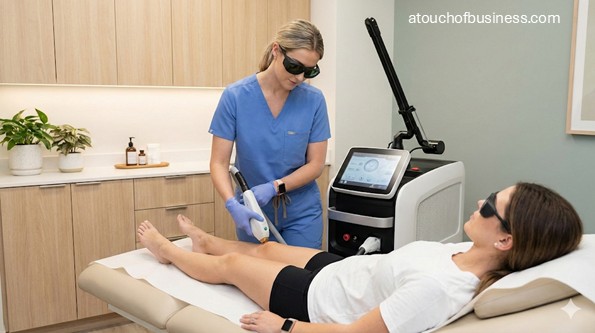
A Laser Hair Removal business provides sessions that use concentrated light to reduce unwanted hair over time. It is commonly sold by body area and usually requires multiple visits to reach the result the customer wants.
This is a service business, not a product business. Your job is to deliver a consistent treatment, follow safety rules, document what you did, and keep everything compliant with your state’s scope-of-practice rules.
If you want a plain explanation of how the procedure works and what risks exist, start with the Mayo Clinic overview of how the procedure works and risks.
Is This The Right Fit For You?
Start here, not with equipment. If you’re not ready for ownership, the rest does not matter.
Ask yourself this exact question: “Are you moving toward something or running away from something?” If you’re starting mainly to escape a job or a financial bind, that may not hold you up when the hard days show up.
You also need to decide two things: is owning a business right for you, and isa laser hair removal service the right fit for you? Passion matters because it keeps you working the problem. Without it, most people start looking for a way out instead of a way through. If you want a direct reminder of why this matters, read why passion matters before you start.
Now do a reality check. Be honest. Nobody is grading you. But you will live with your answers.
- Are you ready for uncertain income, long hours, difficult tasks, fewer vacations, and full responsibility?
- Is your family or support system on board with what this will demand?
- Do you have the skill set now, or can you learn it fast enough to be safe and compliant?
- Can you secure funds to start and operate, not just “open the doors”?
Before you go further, spend ten minutes with Points to Consider Before Starting Your Business. It helps you spot gaps early, while it’s still cheap to change your mind.
Next, talk to owners in the same line of work, but only when they are not direct competitors. Say it out loud: only talk to owners you will not be competing against. Different city. Different region. Different area.
If you need a framework for what to learn, use Business Inside Look to guide your questions. Then ask owners things like:
- What surprised you most about compliance and supervision rules in your state?
- What did you underestimate before you opened?
- If you had to start again, what would you do before buying equipment?
How Big Is This Business?
This is not a factory or a big-staff startup. Most people begin small: one treatment room, one device, and a tight service list. The catch is compliance. In many states, who can perform laser treatments and what supervision is required can shape the entire business model.
So yes, you can start this on your own in some setups. In other setups, you may need a medical director relationship or licensed staff, depending on your state. That is why you decide the model first, then you plan the rest.
Here are common launch models to compare:
- Solo owner-operator in a compliant setting (when state rules allow it).
- Owner with contracted medical oversight (when state rules require it).
- Partners (one handles clinical oversight, one handles business).
- Investor-backed clinic (larger buildout, more staff, more fixed costs).
Also decide your time commitment.
Are you treating full-time, or building this as a part-time business at first? Your answer changes everything: location, staffing, hours, and how fast you need customers to show up.
What You Offer And How You Get Paid
Most customers do not buy “a device.” They buy a result and a plan. Your service list is usually organized by body area and session count.
You will likely offer a mix of consultation and treatment services. Keep it simple at launch so you can deliver consistently.
- Consultation and eligibility screening.
- Treatment sessions by body area (for example: underarms, legs, back, face).
- Test spot when appropriate, based on your protocols and device guidance.
- Aftercare instructions and follow-up scheduling.
Revenue is usually tied to the number of sessions performed. Some businesses sell single sessions. Others sell a series. However you structure it, you still need clear pricing, written policies, and a clean process to accept payment.
Customers You Can Expect
Most customers want hair reduction for common areas and want a provider they trust. They also want clarity on how many sessions are typical and what results are realistic.
Effectiveness and suitability can vary based on hair color, skin type, medical history, and medication use. That is why screening and documentation matter from day one.
- Adults seeking reduction of unwanted hair for convenience or comfort.
- People who prefer longer-lasting results than shaving or waxing.
- Customers who want a plan and consistent scheduling.
Pros And Cons To Weigh
Do not romanticize this business. It can be a solid service business, but only if you treat safety and compliance as non-negotiable.
Use this quick list to pressure-test your expectations.
- Pros: Repeat visits are common; services can be standardized by body area and time; you can start with a small footprint.
- Cons: State rules can be complex; equipment is a major commitment; safety risk is real if your controls are weak.
Skills You Need Or Must Cover
You do not need to be good at everything. But you do need every critical skill covered, either by you or by someone you bring in.
At launch, focus on safety, documentation, compliance, and customer communication.
- Client screening and clear documentation habits.
- Device operation training that matches your equipment and allowed scope.
- Laser safety discipline (eye protection and room controls every time).
- Basic sales math: demand, pricing, and the ability to see if you can pay yourself.
- Basic business setup: scheduling, records, and simple financial tracking.
If you’re weak in business fundamentals, bring in support early. A short call with a bookkeeper, attorney, or industry consultant can save you from expensive rework later. If you want guidance on building your support bench, see building a team of advisors.
Essential Equipment And Setup Items
Start with what is essential for safe, compliant service. Scale drives total startup cost. One room is different from three rooms. A single device is different from multiple devices.
Build your list before you price anything. If you want a structure for this, use Estimating Startup Costs to avoid missing key categories.
Core Treatment Device
- Professional hair-reduction device that you can verify as legally marketed in the Food and Drug Administration (FDA) databases.
- Required handpieces or applicators for that system.
- Manufacturer-specified cooling components (integrated or external) if required.
- Manufacturer-required consumables, if applicable.
Safety And Room Controls
- Wavelength-specific protective eyewear for provider and client.
- Laser warning signage for treatment room entry.
- Controlled-access process for the treatment room (so no one walks in during treatment).
- Window coverings or barriers if needed to control exposure.
- Fire extinguisher as required by your building or local code.
Treatment Room Furniture
- Adjustable treatment bed or exam table.
- Provider stool.
- Client chair for face and neck areas, if needed.
- Task lighting for skin assessment.
Client Prep And Aftercare Supplies
- Disposable gloves and single-use applicators (gauze, cotton).
- Skin cleansing supplies compatible with your protocols.
- Cooling supplies for post-treatment comfort when appropriate.
- Simple measuring or marking tools for consistent charting, if used.
Cleaning And Disinfection
- Environmental Protection Agency (EPA)-registered disinfectants appropriate for clinical surfaces.
- Surface barriers or covers for high-touch areas.
- Linens plan: single-use linens or a compliant laundry routine.
Admin And Records
- Scheduling and booking system.
- Client records system with access controls.
- Printer and scanner for consent and treatment documentation.
- Payment processing setup.
Red Flags Before You Commit
These are “stop and verify” signals. Ignore them and you increase risk fast.
Most of these issues show up before you ever open, so you have time to choose better.
- A device seller cannot show proof you can verify in the FDA device databases.
- Training is vague, undocumented, or treated like an afterthought.
- Safety controls are treated as optional (no eyewear discipline, no room controls).
- Your plan assumes your state allows you to perform treatments without verifying scope and supervision rules.
- Your financial plan depends on “perfect demand” in month one.
What A Typical Day Looks Like
This is here to help you decide if you actually want the work. Not the idea of the work. The work.
Early on, your day is mostly screening, treatment, documentation, cleanup, and follow-up scheduling. If that sounds boring, good. Boring is repeatable. Repeatable is safer.
- Review the day’s appointments and confirm each client’s eligibility updates.
- Set up the room, confirm safety controls, and verify protective eyewear.
- Perform treatments and document settings and responses.
- Give aftercare instructions and schedule next visits.
- Clean and disinfect, then reset for the next client.
Step 1: Confirm Your Legal Model Before Anything Else
Start with the rules that control who can perform treatments in your state. This decides whether you can operate solo, need licensed staff, or need medical oversight.
Use a reputable overview to understand how state rules often differ, then verify locally. The American Med Spa Association explains why medical spa laws vary and why you must check state requirements before launching.
Review how medical spa laws vary, then confirm your state’s specific requirements through your state medical board, cosmetology board, or health department.
Step 2: Decide Ownership And Work Structure
Choose your ownership path: solo, partners, or investors. Keep it practical. If state rules require medical oversight, do you have access to it? If you need more capital than you can fund, do you want partners or outside funding?
Also decide whether you will treat full-time or part-time. If you can only offer limited hours, will customers still book consistently? Be real about your schedule before you pick a location or sign a lease.
Step 3: Prove Demand In Your Area
Do not assume demand because the business looks popular online. You need local proof. That means checking how many providers exist nearby, how they position themselves, and whether you can realistically fill enough sessions each week.
Use Supply and demand basics to guide your check. Your goal is simple: confirm enough demand to cover expenses and still pay yourself.
Step 4: Build A Startup Budget Based On Scale
Write down every category of spending you will need before opening: equipment, buildout, training, licensing, branding, and initial marketing.
Then price it. One room costs less than multiple rooms. Leasing a device is different from buying. Hiring staff changes your cash needs right away. Scale drives total startup cost, so decide scale first.
Step 5: Choose A Location That Matches How Customers Buy
If you are opening a physical location, convenience matters. Customers often book repeated sessions, so they prefer a place that is easy to get to and easy to park near.
If you want help thinking through location choices, review how to choose a business location. Then verify zoning and any building approvals with your city or county before you sign anything.
Step 6: Pick A Device You Can Verify
Before you buy or lease any device, verify that it is legally marketed and that you can find it in official FDA resources. Do not rely on a sales deck or a verbal claim from a seller.
Use the FDA resource to search the 510(k) database and confirm the device name, clearance status, and the intended use language.
Step 7: Lock In Training And Safety Controls
Training is not optional. Your plan must include device training and documented safety procedures from day one. That includes eye protection rules and treatment room controls.
For workplace laser hazard references and guidance, the Occupational Safety and Health Administration provides a page on laser hazard standards and related references. Use it to guide your safety plan, then align your procedures with your device training and your local requirements.
Step 8: Write A Business Plan To Stay On Track
You do not need funding to justify writing a plan. You need a plan so you do not drift. A simple plan forces you to define your customer, your pricing logic, your startup costs, and your path to profitability.
If you want a practical guide, use How to write a business plan and keep it focused on launch decisions.
Step 9: Decide Funding And Set Up Banking
Now decide how you will fund startup costs and early operating costs. Options may include personal savings, a partner contribution, or financing. If you plan to borrow, do not guess. Learn what lenders look for.
Start with how to get a business loan, then talk to a financial institution about opening business accounts. Keep business and personal transactions separate from day one.
Step 10: Register The Business And Handle Tax Basics
Many small businesses in the United States begin as sole proprietorships because it is simple. As the business grows, owners often form a limited liability company (LLC) for liability and structure. The right choice depends on your risk, your goals, and your state rules.
For the mechanics of registration, see this step-by-step business registration guide, then verify your state filing process through your Secretary of State.
When you need an employer identification number (EIN), apply directly with the Internal Revenue Service using the EIN application guidance. If you will have employees, review employment tax basics before your first payroll.
Step 11: Get Licenses, Permits, And Building Approvals
Most locations require some combination of business licensing, zoning approval, and building sign-off before you open. If you are taking over a space or changing how it is used, you may need a Certificate of Occupancy (CO).
The Small Business Administration provides a general overview on how to apply for licenses and permits. Use it as a starting point, then confirm exact local requirements through your city and county portals.
Step 12: Choose Insurance Based On Real Risk
Insurance is not just a checkbox. It is part of how you protect the business from one bad event. At minimum, most owners look at general liability coverage. Your lease, your vendors, or your oversight agreements may require specific coverages.
Use business insurance basics to understand common coverage types, then ask an insurance professional what is appropriate for your exact setup.
If you will hire employees, workers’ compensation rules are handled at the state level. The United States Department of Labor points you to state programs on workers’ compensation.
Step 13: Set Pricing You Can Defend
Pricing is not just what competitors charge. You need pricing that covers your costs, your time, and your risk. You also need pricing that makes sense for repeated sessions.
To build a clear pricing approach, use pricing products and services, then test it against your budget and realistic booking volume.
Step 14: Line Up Suppliers And Service Support
You are not only buying a device. You are buying training, maintenance, replacement parts, and service responsiveness. Choose suppliers you can reach when something breaks.
Before you commit, request documentation, training details, and service terms in writing. You are building a business that depends on reliability.
Step 15: Build Your Brand Assets Before You Promote
People judge what they cannot verify. So give them proof: a clean brand, clear policies, and a professional online presence. This is not about being fancy. It is about being credible.
Start with your name and online basics using how to choose a business name. Then build a simple site using a website planning guide.
For offline brand items, use corporate identity basics, then decide what you truly need at launch: business cards, signage, and basic print items.
If you plan to use business cards, review business card considerations. If you will install signage, review business sign considerations before you order anything.
Step 16: Prepare Client Paperwork And Payment Tools
Before you see a single client, you need written consent, screening questions, and aftercare instructions. You also need a clean way to document treatments and store records securely.
Set up scheduling and a process to accept payment. Make sure your policies are clear before you advertise, not after a dispute.
Step 17: Plan How You Will Get Customers
Marketing is not a logo. Marketing is your plan for how customers find you, trust you, and book. Keep it simple at launch: one or two channels you can run consistently.
If you are a storefront business, learn the basics of getting customers through the door. If you want a launch event, use grand opening planning to keep it organized and realistic.
Step 18: Run A Pre-Opening Checklist And Soft Launch
Do not rush the first week. Run a final check for compliance, safety, and readiness. Confirm the space approvals are complete, your safety controls are in place, your paperwork is ready, and your booking and records systems work.
Then do a soft launch with limited appointments. Watch what breaks. Fix it fast. That is how you protect clients and protect your business.
Varies By Jurisdiction
Rules differ by state, county, and city. So your job is not to memorize rules. Your job is to verify the right rules in the right places before you open.
Use this checklist to keep your verification simple and organized.
- State scope and supervision rules: Check your state medical board and cosmetology board. Ask: who can perform treatments, and what supervision is required?
- Business registration: Verify your filing steps with your Secretary of State. Ask: what names are available, and what filings are required for your chosen structure?
- Tax registration: Confirm state tax accounts through your state revenue agency. Ask: do services like yours have any special tax treatment?
- Local licensing: Check your city or county business licensing portal. Ask: do you need a general business license for your address?
- Zoning: Confirm the address is approved for your use through planning and zoning. Ask: is this use permitted in this zone?
- Building approvals: Ask the building department whether you need a Certificate of Occupancy (CO), especially after buildout or a change of use.
- Sign rules: Ask the local permit office whether a sign permit is required before installation.
Keep your questions short and specific. Write down names, dates, and answers. If an office cannot answer, ask who can.
Final Self-Check
Now ask yourself one last time: are you willing to treat safety and compliance as the job, not as a side task? If you cut corners here, you are betting the business on luck.
Pick your next action. Either verify your state rules this week, or pause and rethink the model. A Laser Hair Removal business can work when the foundation is solid.
101 Tips for Building a Solid Laser Hair Removal Business
You’re about to review tips that cover different stages of building this business.
Use what fits your situation and skip what doesn’t apply right now.
Keep this page saved so you can come back as your plan gets sharper.
Pick one tip, act on it, then return when you’re ready for the next move.
What to Do Before Starting
1. Decide why you want this business and write it down in one sentence. If you cannot explain it simply, you will struggle to stay focused.
2. Choose your business model first: solo, partners, or investor-backed. Your model affects licensing needs, oversight needs, and how much cash you must carry.
3. Confirm whether you will run it full time or part-time. If you can only offer limited hours, check whether your target customers can book consistently.
4. Pick a clear target customer profile and stick to it at launch. “Everyone” is not a real target.
5. List the top 10 providers in your area and compare how they position themselves. Look for gaps you can fill without promising unrealistic results.
6. Check demand in your area using real signals: appointment availability, reviews, and how long competitors have been open. If most places are discounting heavily, ask why.
7. Estimate how many sessions you must perform per week to cover rent, payroll, supplies, and owner pay. If the math does not work, adjust the plan before you spend.
8. Decide whether you will offer laser only, intense pulsed light only, or both. Device type can change training needs and customer expectations.
9. Write a simple service scope statement that explains what you do and what you do not do. This protects you from taking on work you cannot safely support.
10. Plan your screening approach before you plan promotions. Safety starts with who you say “no” to.
11. Identify the top three risks in this business: burns, pigment changes, and eye injury. Build controls for them before your first appointment.
12. Decide how you will document every session from day one. Good records protect customers and protect you.
13. Make a short list of professional help you may need: attorney, accountant, insurance agent, and a compliance adviser. You do not need to do everything alone.
14. Decide whether you want a storefront, a suite in a professional building, or a space inside another clinic. Your location choice affects zoning, buildout rules, and customer convenience.
15. Do not sign a lease until you confirm the space is approved for your type of service. Verify zoning and building approval steps with the local office, not a neighbor.
16. Choose a name you can legally use and that customers can say and spell. A hard-to-spell name becomes a marketing problem.
17. Secure your domain name and social handles early, even if you are not ready to post. Brand consistency is easier when you claim names upfront.
18. Build a startup timeline with dates for legal setup, equipment ordering, training, inspections, and soft opening. A timeline helps you avoid rushed decisions.
19. Plan for cash needs beyond opening day. You must be able to operate, not just launch.
20. Build a “go or no-go” rule for yourself. For example, do not buy a device until you verify your state’s supervision rules in writing.
Legal, Safety, And Compliance Basics
21. Verify who can perform treatments in your state before you pick staffing. In some states, rules depend on medical oversight or professional licensing.
22. Confirm whether a medical director relationship is required in your state and what that relationship must include. Get the expectations in writing before you market services.
23. Choose a legal structure that fits risk and growth plans. Many small businesses begin as sole proprietorships and later form a limited liability company for structure and liability separation.
24. Register your business with your state if required for your chosen structure. Use the Secretary of State or equivalent office website for the official steps.
25. Apply for an employer identification number from the Internal Revenue Service when you need it for banking, tax filings, or payroll. Avoid third parties that charge for something you can do directly.
26. Set up state tax accounts that apply to your situation. Requirements differ by state, so verify with your state revenue agency.
27. If you will hire, set up employer accounts before the first payroll. Include state withholding and unemployment accounts when required.
28. Confirm whether your city or county requires a general business license. Many do, and it can take time to process.
29. Confirm whether you need an assumed name filing if your brand name differs from your legal entity name. The filing office varies by jurisdiction.
30. Treat safety rules as a launch requirement, not an operational add-on. You are using a device that can cause serious injury when used incorrectly.
31. Create a written laser safety plan and train anyone who enters the treatment room. A plan is only useful if people follow it.
32. Require wavelength-appropriate protective eyewear for every treatment, every time. Make it a hard rule with no exceptions.
33. Control room access during treatments so nobody walks in unexpectedly. “Closed door” is not enough without a real procedure.
34. Build a clear process for handling adverse events, including who you contact and how you document it. You do not want to invent this process during a stressful moment.
35. Use only devices you can verify as legally marketed through Food and Drug Administration resources. If you cannot verify it, do not buy it.
36. Keep device manuals, service records, and training certificates organized from day one. If you cannot prove what you did, you did not do it.
37. Plan for building approval steps if you change how a space is used. Many areas require a Certificate of Occupancy before opening to the public.
38. If you hire employees, confirm workers’ compensation requirements in your state. Many states require it, and penalties can be serious.
Equipment And Facility Setup
39. Start with one reliable device and one room if you are new to the industry. Expansion is easier than trying to shrink fixed costs.
40. Ask vendors for documentation you can verify, not just marketing claims. Get device identifiers and clearance details before signing anything.
41. Confirm what training the vendor provides and what it covers. Training should match the specific device, not just general concepts.
42. Confirm the device’s maintenance schedule and service response times. Downtime can erase your early momentum.
43. Choose a room layout that supports controlled access and safe movement. Clutter creates mistakes.
44. Use furniture that allows proper positioning for different treatment areas. Poor positioning leads to rushed work and inconsistent coverage.
45. Stock adequate protective eyewear for staff and customers in multiple sizes when needed. Replace damaged eyewear immediately.
46. Install clear warning signage at the treatment room entry. It helps enforce controlled access and signals professionalism.
47. Create a clean station for documentation and supplies that stays separate from treatment surfaces. This reduces contamination risk and improves consistency.
48. Use cleaning and disinfection products appropriate for clinical surfaces and follow label directions. Consistency matters more than brand names.
49. Decide whether you will use disposable linens or a controlled laundry process. Either can work, but you must do it the same way every time.
50. Build a “room reset” checklist for between clients. It prevents forgotten steps when you are running behind.
51. Set up a secure record system with access control. Customer data is sensitive, and loose handling creates legal exposure.
52. Choose scheduling software that supports reminders and repeat visits. This business relies on returning appointments.
53. Set up a simple method to accept payment and issue receipts. Make the process fast and consistent so it does not disrupt the appointment flow.
54. Keep a dedicated space for supplies so you can see what you have at a glance. Running out mid-day is a preventable problem.
55. Run a full mock appointment before your first paying customer. Treat it like a safety drill, not a casual test.
Pricing And Financial Setup
56. Price based on your real costs, not just competitor prices. Your price must cover time, overhead, supplies, and risk.
57. Define what is included in each service description so customers can compare fairly. Vague pricing leads to arguments later.
58. Decide whether you will sell single sessions, packages, or both. Packages can improve planning, but you must write clear terms.
59. Put all policies in writing before launch: cancellation, rescheduling, refunds, and package rules. Customers respect what you enforce consistently.
60. Separate business and personal transactions from day one. Mixing them makes taxes and cash tracking harder than it needs to be.
61. Open business accounts at a financial institution that can support your needs. Ask about merchant services, deposits, and account rules.
62. Set a cash reserve target that covers several months of basic expenses. New businesses rarely ramp as fast as owners hope.
63. If you borrow, borrow with a plan, not with optimism. Know exactly how the funds will be used and when repayment begins.
64. Track your key numbers weekly: sessions completed, cancellations, rebooks, and revenue per hour. If you ignore these, you will guess instead of lead.
65. Build a simple budget for marketing and keep it stable for a few months. Random spending creates random results.
66. Schedule a monthly review of your financials, even if it is short. Small issues become big when ignored.
Marketing (Local, Digital, Offers, Community)
67. Lead with clarity, not hype. Customers want to know what to expect and whether you are safe and qualified.
68. Create a simple website that explains services, safety basics, policies, and how to book. If customers cannot find answers, they will keep shopping.
69. Keep your business name, hours, and contact info consistent across every listing. Inconsistent details confuse search tools and customers.
70. Use real photos of your space and a clean booking flow. People trust what they can see.
71. Start with one local marketing channel you can manage weekly. Consistency beats a big launch followed by silence.
72. Encourage reviews from satisfied customers and respond professionally to feedback. Reviews are a trust shortcut for first-time customers.
73. Build relationships with nearby non-competing businesses that share your audience. Think fitness studios, salons, and wellness providers in different niches.
74. Do a soft opening before a big push. Fix early problems before you bring in higher volume.
75. If you run a grand opening, keep it simple and controlled. Your goal is trust, not chaos.
76. Avoid discounts that train customers to wait for lower prices. If you use a promotion, tie it to a clear reason and a limited window.
77. Use educational content that explains the process and realistic expectations. Education reduces fear and reduces complaints.
78. Track where each customer found you and double down on what works. You cannot improve what you do not measure.
Dealing With Customers (Trust, Education, Retention)
79. Set expectations in plain language before the first session. Customers handle slow progress better when you explain it upfront.
80. Screen customers carefully and be willing to say “not right now.” Turning down unsafe work protects your reputation.
81. Use written consent and keep it consistent for every customer. Consistency protects both sides.
82. Explain possible side effects clearly and calmly. Surprises are what create complaints.
83. Use a consult approach that invites questions. People trust providers who do not rush them.
84. Document skin type, treatment settings, and any reactions every time. Good records help you make safe adjustments later.
85. Give aftercare instructions in writing and verbally. People forget what they hear when they are in a hurry.
86. Make rebooking easy at the end of each visit. If you leave it to chance, customers drift away.
87. Follow up after the first session to check how they are doing. A simple check-in can prevent a small issue from becoming a public complaint.
88. Train yourself to handle tough conversations without defensiveness. Calm, factual responses lower conflict.
89. Treat privacy as part of customer service. Keep conversations discreet and limit who can access records.
90. Use feedback to improve your process, not to argue. When multiple people mention the same issue, fix it.
Running The Business (Operations, Staffing, Consistency)
91. Write a step-by-step procedure for treatment room setup and reset. It keeps results consistent and reduces errors when you are tired.
92. Create a training file for every role, even if you are the only worker today. When you do hire, you will be glad you wrote it down.
93. If you hire, confirm credentials and scope rules before you assign work. “They said they can” is not a compliance strategy.
94. Audit your safety controls on a schedule. Check eyewear condition, signage, and room access procedures regularly.
95. Keep a maintenance log for the device and follow the manufacturer schedule. Skipped maintenance becomes breakdowns at the worst time.
96. Use a consistent process for handling late arrivals and cancellations. If you improvise, customers will test your limits.
97. Protect your calendar with realistic time blocks. Rushed appointments increase safety risk and reduce customer confidence.
98. Review your incident and complaint records quarterly and look for patterns. Pattern fixes are where quality improves fastest.
What Not To Do
99. Do not buy a device before you confirm state supervision and licensing rules. Equipment does not create compliance.
100. Do not promise outcomes you cannot control. Keep claims aligned with what reputable medical sources and device labeling support.
101. Do not treat safety as optional because you are busy. The fastest way to lose trust is to cut corners when pressure is high.
FAQs
Question: Do I need a medical director to start this business?
Answer: It depends on your state rules and how the service is regulated where you operate.
Check your state medical board and licensing agencies before you choose a business model or buy equipment.
Question: Who is allowed to perform laser treatments in my state?
Answer: State rules vary on who can perform treatments and what level of supervision is required.
Look for your state’s guidance on “who can fire a laser” and confirm the allowed roles and supervision terms.
Question: How do I verify a laser device is legal to buy and use?
Answer: Use the Food and Drug Administration (FDA) medical device databases to confirm the device is legally marketed.
Search by device name, product code, or 510(k) number and keep the results with your purchase records.
Question: What does “510(k)” mean for a laser device?
Answer: A 510(k) is a premarket submission that shows the device is substantially equivalent to a legally marketed device.
It helps you confirm the device has gone through the FDA clearance pathway used for many medical devices.
Question: Can I start small, or does this require a large staff and big funding?
Answer: Many owners start small with one room and one device, but the legal model may require added oversight or licensed staff.
Your state’s supervision rules and your lease terms will often decide how “small” you can start.
Question: What business registrations should I expect to complete before opening?
Answer: Most owners handle entity registration, tax identification, and local business licensing before they open.
Verify exact steps with your state Secretary of State, state revenue agency, and city or county licensing portal.
Question: Do I need an employer identification number (EIN)?
Answer: Many businesses need an employer identification number (EIN) for banking, tax filings, or payroll.
You can apply directly with the Internal Revenue Service and should avoid third parties that charge a fee.
Question: Can I start as a sole proprietor and switch to a limited liability company (LLC) later?
Answer: Many small businesses start as sole proprietorships and later form a limited liability company (LLC) as risk and complexity grow.
Confirm the best structure for your situation with a qualified professional and your state filing office.
Question: What licenses and permits should I plan for?
Answer: License and permit needs depend on your location and activities, so there is no single universal list.
Start with the Small Business Administration guide, then confirm requirements with your city, county, and state portals.
Question: Do I need a Certificate of Occupancy for my location?
Answer: Many locations require a Certificate of Occupancy to confirm the space is approved for its intended use.
Ask the local building department early, especially if you are renovating or changing how the space is used.
Question: What insurance should I get before I open?
Answer: Many owners start with general liability coverage and add other coverages based on risk, lease terms, and staffing.
If you hire employees, workers’ compensation may be required by your state.
Question: What safety rules should I have in place for laser work?
Answer: You should have a written laser safety program, staff training, and strict eye protection and room access controls.
American National Standards Institute (ANSI) standards are voluntary consensus guidance unless adopted into regulations, but they can help you build a safety program.
Question: Do I need to worry about bloodborne pathogens rules?
Answer: The OSHA bloodborne pathogens standard applies when there is occupational exposure to blood or other potentially infectious materials.
Decide if your tasks create that exposure and document your decision with your safety procedures.
Question: What is the minimum equipment I need to open safely?
Answer: At minimum you need a verified professional device, wavelength-appropriate protective eyewear, controlled room access procedures, and a clean treatment setup.
You also need secure recordkeeping, a scheduling system, cleaning supplies, and a way to document each session.
Question: How should I set up pricing from the owner side?
Answer: Build pricing from your costs, session time, fixed expenses, and realistic booking volume, not just competitor rates.
Keep service definitions consistent so you can track performance by treatment area and time block.
Question: How do I estimate startup costs without guessing?
Answer: Price your largest drivers first: device acquisition, buildout, training, licensing, and insurance.
Then add ongoing cash needs for early months so you are not forced to rush marketing or cut safety steps.
Question: What claims can I safely use in marketing without getting in trouble?
Answer: Keep claims aligned with reputable medical sources and the device’s intended-use language.
Avoid guarantees and avoid language that goes beyond what your device labeling supports.
Question: What should I track weekly once I’m running?
Answer: Track sessions completed, rebook rate, cancellation rate, revenue per hour, and device downtime.
These numbers tell you if you have a demand issue, a scheduling issue, or a capacity issue.
Question: When should I hire my first person, and what role comes first?
Answer: Hire when demand is stable enough that admin work or room turnover is limiting your ability to deliver sessions safely.
Many owners start by adding front desk or support help before adding another treatment provider, but scope rules may limit who can do what.
Question: What are the most common mistakes new owners make in this industry?
Answer: Common mistakes include buying equipment before verifying state rules, weak safety controls, and poor documentation.
Another common issue is underestimating cash needs and pushing volume too fast before systems are stable.
Related Articles
- How to Open an Eyebrow Threading Business
- How to Start an Eyelash Extension Business Checklist
- How to Start a Facial Spa Business
- How to Open a Dermatology Practice
- Starting a Beauty Salon
- Start a Tanning Business
- Start a Bridal Makeup Business
- Start a Body Piercing Studio
- How to Start a Wig Business
- Acupuncture Clinic Startup Guide for New Owners
- Launch Your Aromatherapy Business
Sources:
- American Med Spa Association: Laws Opening Med Spa
- Cleveland Clinic: Laser Hair Removal Basics
- FDA: Search Releasable 510(k), 510(k) Premarket Notification
- Internal Revenue Service: Get employer identification, Employment taxes
- Mayo Clinic: Laser hair removal
- NIH PubMed Central: Ocular Injury Cosmetic Lasers
- Occupational Safety and Health Administration: Laser Hazards Standards, Bloodborne pathogens standard
- U.S. Depart