
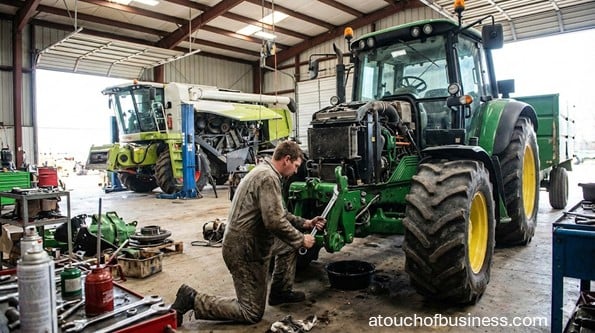
Farm Equipment Repair Service Overview
A farm equipment repair service fixes and maintains the machines farms rely on to work the land. That can include tractors, harvesters, dairy equipment, and irrigation systems. A lot of this work is hands-on, mechanical, and time-sensitive—because broken equipment can stop a whole day of work.
You can run this business out of a dedicated shop, offer mobile service, or do a mix of both. Many owners start with mobile work first because it reduces the need for a large building right away.
Before you go any further, picture what you want your “workday” to look like. Do you want a shop where customers bring equipment to you? Or do you want to travel to farms and handle repairs where the machine sits?
How Does a Farm Equipment Repair Service Generate Revenue
This type of business usually earns income by charging for labor and repair work. Many jobs also involve parts replacement, so your pricing often includes both parts and service time.
If you offer mobile work, you may also build travel charges into your pricing. The key is being clear about what’s included before you start a job, so expectations don’t get messy later.
Products And Services You Can Offer
This business can cover a wide range of repair work, depending on your experience and tools. Some owners stay focused on a narrow set of machines, while others offer broader service across many types of equipment.
Here are common services customers look for when they call a farm equipment repair service.
- Mechanical diagnosis and troubleshooting
- Repair and replacement of worn parts
- Electrical testing and wiring repair
- Hydraulic hose and fitting repairs
- Welding and basic metal repair
- Seasonal readiness checks (pre-harvest, pre-planting)
- Emergency breakdown repair (shop-based or mobile)
- Replacement of belts, filters, bearings, seals, and hoses
Who Your Customers Will Be
Your main customers are the people who rely on farm equipment to keep things moving. When their machines stop, they need someone who can diagnose the issue and get the equipment working again.
Depending on your area, your customers may include:
- Farm owners and operators (row crops, dairy, livestock, orchards, vineyards)
- Ranch operators using tractors and hauling equipment
- Small rural property owners with utility tractors and attachments
- Equipment resellers who need repairs completed before resale
- Other service businesses that need overflow repair support
Pros And Cons To Think Through
This business can be a solid fit for someone who enjoys mechanical work and likes solving problems under pressure. But it also comes with long days and physical demands, especially during planting and harvest seasons.
Think about the flip side before you commit. It’s better to walk into this with open eyes than to feel surprised later.
Pros you may experience:
- Strong need for qualified mechanics in agriculture-heavy regions
- Ability to start small with mobile service and grow over time
- Work variety—different equipment and problems each week
- Clear value to customers when you help reduce downtime
Cons you should be ready for:
- Seasonal pressure and long workweeks during peak periods
- Physically demanding work and higher risk of injury if safety is ignored
- Inconsistent scheduling when emergencies happen
- Tooling and service vehicle requirements can add up fast
Is This The Right Fit For You?
Before you plan anything else, you need to decide if business ownership is right for you. Then you need to decide if this business is right for you.
That might sound obvious. But people skip this step all the time, then wonder why they feel stuck later.
Passion matters more than most people admit. When problems show up—and they will—passion helps you push through. Without it, people often look for an exit instead of finding solutions.
If you haven’t already, start with these three resources. They help you slow down and think clearly before you spend money or commit to a direction.
Points to Consider Before Starting Your Business
How Passion Affects Your Business
Business Inside Look
Now ask yourself this question and don’t rush your answer: “Are you moving toward something or running away from something?”
If you’re starting this just to escape a job you hate, or because money feels tight right now, that pressure can fade fast. This business needs steady effort, even when you’re tired, even when jobs take longer than expected.
You also need to face the responsibility side. Income can be uncertain. Hours can be long. Time off can be harder to protect. And when something goes wrong, it’s on you to solve it.
Can your household handle that season of life? Are the people close to you on board? That support matters more than most first-time owners expect.
And one more reality check—do you have the skills to do the work, or the willingness to learn them? If not, can you hire help for the parts you can’t handle yet?
Before you launch, talk to people who already do this work. And be very specific here: Only talk to owners you will not be competing against. That could mean a different town, county, or service region.
Use the Business Inside Look approach to guide those conversations. Keep it respectful, focused, and practical.
Here are smart questions to ask:
- What types of repairs keep showing up month after month in your area?
- If you started over today, what tools and equipment would you buy first?
- What job types look profitable at first but often turn into time sinks?
Step 1: Decide What You’ll Fix (And What You Won’t)
A farm equipment repair service can get broad fast. Tractors alone can keep you busy. Add combines, balers, irrigation systems, and skid steers, and you’ve got a lot to cover.
So start by defining your repair focus. What equipment will you accept? What jobs will you decline?
This decision affects everything—your tools, your parts sources, your training needs, and even your insurance coverage.
Step 2: Confirm Demand In Your Area
You don’t need perfect data. But you do need a clear signal that people around you will pay for the service you’re offering.
A strong starting point is your local farm density. The USDA Census of Agriculture provides farm and county-level data that helps you understand how many farms operate in your region.
You can also validate demand the practical way—drive the area and notice the equipment brands and farm types you see most often. That tells you what machines are likely to need service.
If you want a deeper look at demand fundamentals, review supply and demand basics so you don’t rely on guesswork.
Step 3: Check Competition And “Service Substitutes”
Competition isn’t just another independent mechanic. It can also be equipment dealerships with service departments, or repair shops that already serve farms.
You also want to look at substitutes. Some customers may choose to replace equipment, rent temporarily, or delay repairs until the season slows down.
Your goal here is simple—understand what customers do when equipment fails, and where your service fits in.
Step 4: Pick A Business Model That Matches Your Reality
This business can start small and still be legitimate. Many owners begin as a one-person mobile service with a strong tool setup and a reliable work vehicle.
Other owners start with a shop right away, especially if they already have a suitable building, or if local customers prefer drop-off repairs.
Be honest about your situation. Will you run this full time or part time? Are you doing the work yourself, or bringing in a partner?
If you expect fast growth, you might need staff sooner. If you’re starting solo, plan to hire later once the workload justifies it. For hiring timing, see how and when to hire.
Step 5: Lay Out Your Core Services And Pricing Targets
Before you register anything, you should know what you’re selling and how you’ll price it. Customers will want clarity before they approve work.
Your services should align with your skills and your tools. That’s not a limitation—it’s a smart way to protect your reputation early.
Pricing is more than “what others charge.” You need enough margin to cover tools, travel, insurance, supplies, and your time. This guide on pricing your products and services helps you think through it step by step.
Step 6: Build A Skill Plan (Even If You’re Not Perfect Yet)
This line of work demands strong mechanical troubleshooting. You’ll also run into electrical problems, hydraulic issues, and fabrication needs.
If you already have the experience, great. If you don’t, don’t pretend you do. Customers can tell when a mechanic is guessing.
Your best move is to list the skills you have now and the skills you need to develop before launch. You can train into the gaps or hire support where it matters most.
Step 7: Identify Your Startup Tools And Equipment Requirements
Tools aren’t optional in this business. They’re your foundation.
Your equipment list depends on whether you’re working from a shop, working mobile, or doing both. Mobile service needs a secure tool setup and reliable power and lighting in the field.
You’ll find a detailed startup equipment list later in this guide. As you read it, highlight what you already own and what you still need to secure before opening.
Step 8: Set Up Your Parts And Supplier Connections
Repairs often depend on parts availability. That means supplier relationships matter early—before you take your first job.
You’ll want reliable sources for common items like belts, filters, hoses, seals, fittings, and electrical connectors.
Suppliers also help you move faster when you need parts diagrams, serial number lookups, and replacement alternatives.
Step 9: Estimate Startup Costs Based On Your Size And Setup
This business can be started lean, but you still need a clear cost picture. Tools, equipment, safety gear, and a service vehicle can add up quickly.
Start by creating a detailed list of what you need. Then price each item so you understand the total.
That cost list is also useful for funding conversations. If you want a structured process, review estimating startup costs.
And remember—size drives costs. A one-person mobile setup looks very different than a multi-bay repair shop with staff.
Step 10: Write A Business Plan That Keeps You Grounded
You don’t need a business plan only for loans. You need one to keep yourself focused when decisions stack up.
A business plan helps you define your service area, your equipment focus, your pricing approach, and your startup budget.
If you want a guide that makes it simpler, use how to write a business plan as your structure.
Step 11: Plan Funding And Set Up Business Banking
You need funds not just to start, but to operate until cash flow stabilizes. That matters even more if you’re buying tools, building inventory, or taking on a facility lease.
Some owners start using personal savings. Others use financing or business credit. If you’re exploring borrowing, review how to get a business loan.
Also plan your banking setup early. A separate business account makes recordkeeping cleaner, and it helps you track what the business is actually doing.
Step 12: Choose A Name And Lock Down Your Online Presence
Your business name should be clear and easy to remember. It should also work well on a truck, a sign, a business card, and a website.
Once you choose a name, secure the matching domain and social handles if they’re available. You don’t want to build momentum and then find out someone else owns the closest match.
This guide on selecting a business name will help you think it through before you commit.
Step 13: Handle Registration, Taxes, And Required Permissions
This is where many first-time owners freeze up. It feels like too much paperwork, too many forms, and too many unknown rules.
Start with the basics. Many small businesses begin as sole proprietorships because it’s the default setup when you start working under your own name. There’s no state formation step for that type of structure, though you may still need licenses and a registered business name depending on where you live.
Many owners later form a limited liability company for liability separation and cleaner structure. It can also help with banking, partners, and future growth.
If you want a simple overview of the steps, use how to register a business as a guide, then confirm your specific rules with your state and local offices.
Step 14: Set Up Insurance That Matches Your Risk
Farm equipment repair has real risk—heavy parts, sharp edges, moving components, and sometimes urgent jobs under pressure.
At minimum, most owners look at general liability coverage. If you have a shop, you may need property-related coverage as well.
If you run mobile service, business auto coverage becomes a serious topic, especially if you carry tools and parts in the vehicle.
For a deeper breakdown, review business insurance guidance so you choose coverage based on your real setup.
Step 15: Set Up Your Brand Assets And Launch Basics
You don’t need a complex brand package to open. But you do need the basics that help people trust you and contact you easily.
That usually includes a logo, a simple website or service page, business cards, and clear contact details.
Start with the essentials, then build outward. If you want help thinking through brand elements, explore corporate identity basics.
Essential Equipment And Startup Items
Tools and equipment are where this business becomes real. You can’t delay these decisions for long, because your service quality depends on what you can diagnose and repair safely.
Use the lists below to build your startup shopping list. Then price each item so you have a realistic budget.
If you want help turning this into a full startup cost plan, use a startup cost estimating process and adjust based on whether you’re mobile, shop-based, or hybrid.
Core Hand Tools
- Full wrench and socket set (metric and SAE)
- Ratchets, extensions, breaker bars
- Screwdrivers (flat, Phillips, specialty)
- Pliers set (locking, needle-nose, snap-ring)
- Pry bars, punches, chisels
- Torque wrenches
- Hammers and mallets
Measuring And Inspection Tools
- Calipers
- Micrometers and gauges
- Feeler gauges
- Inspection mirrors
- Work lights and headlamps
Electrical Testing And Repair Tools
- Digital multimeter
- Battery tester and charger
- Wiring repair kit (connectors, terminals)
- Crimpers, strippers, and electrical pliers
- Soldering tools (if needed for your work)
Lifting And Support Equipment
- Heavy-duty floor jacks
- Jack stands rated for equipment weight
- Shop crane or engine hoist
- Lifting slings and rigging straps
- Blocking and cribbing supplies for safe support
Air And Pneumatic Tools
- Air compressor
- Air hoses and fittings
- Impact wrench
- Air ratchet (optional)
Cutting, Welding, And Fabrication
- Welder (based on your service scope)
- Angle grinder with accessories
- Drill and drill bits
- Bench vise
- Metal cutting tools (saw, cutoff tools)
- Clamps and squares for fabrication work
Fluid Handling And Spill Control
- Oil drain containers
- Fluid transfer pumps
- Funnels and fill tools
- Spill kit and absorbent materials
- Clearly labeled used oil containers
Shop Setup (If You’re Using A Facility)
- Work benches
- Tool storage cabinets
- Parts shelves and bins
- Shop lighting and extension cords
- Waste storage area for regulated materials (as required)
- Fire extinguishers and first aid kit
Mobile Service Setup (If You’re Traveling To Farms)
- Service truck or capable work vehicle
- Secure tool storage system
- Portable lighting
- Portable lifting tools appropriate for field work
- Basic parts stock (filters, hoses, fittings, connectors)
- Charging and power support for tools (as needed)
Office And Admin Basics
- Phone line dedicated for the business
- Computer or tablet for documentation
- Invoice and estimate system
- Printer and basic office supplies
- Secure storage for customer records
Skills You’ll Need To Start Strong
This business leans heavily on real mechanical ability. It’s not the kind of business where you can “learn while charging full price” without consequences.
That doesn’t mean you must know everything on day one. It means you must be honest about what you can handle and build your service scope around that.
Key skills many successful owners rely on include:
- Mechanical troubleshooting and repair
- Electrical testing and wiring repair
- Hydraulic system basics
- Safe lifting and support practices
- Welding and fabrication (if included in your services)
- Reading service manuals and parts diagrams
- Clear documentation of work completed
If you need help building support around you, it’s worth reviewing building a team of professional advisors. That may include an accountant, a legal professional, or an experienced mentor who understands repair-based businesses.
Choosing Your Location And Setup Style
This business can be shop-based, mobile, or mixed. Your choice affects your budget, your daily work style, and what customers expect from you.
If you’re going shop-based, customer convenience matters. A location near agricultural routes or rural hubs can reduce travel frustration for your customers.
If you want to think through location strategy, use business location planning as a guide.
Common setup paths include:
- A leased repair bay in an industrial zone
- A rural shop property with enough space for equipment drop-off
- A mobile-only service model with a strong service truck setup
Be realistic about equipment size. Some machines are too large to move easily, which is why mobile service is often valued.
Legal And Compliance Basics
Legal setup can feel like the part that slows everything down. But it’s really just a checklist you work through step by step.
Your goal is to operate under a proper business structure, register for the right tax accounts, and confirm you’re allowed to run this kind of work at your chosen location.
At the federal level, many owners apply for an Employer Identification Number through the Internal Revenue Service, even if they don’t have employees right away. It’s commonly used for banking and tax setup.
For licensing and permitting guidance across government levels, the U.S. Small Business Administration offers a starting point that helps you identify where to look next.
For environmental handling, pay attention to used oil storage rules if you generate used oil from servicing equipment. This is one of those details that’s easy to ignore early and regret later.
If you plan to hire employees, safety standards such as OSHA lockout/tagout rules may apply when servicing equipment where unexpected startup or stored energy could injure workers.
Varies By Jurisdiction
Rules change depending on your state, county, and city. Don’t guess and don’t rely on random online posts. Verify using official sources for your location.
Use this checklist to confirm what applies to your business:
- Check your state’s Secretary of State site for entity formation rules and name availability
- Check your state Department of Revenue for sales and use tax registration requirements
- Check your city or county licensing portal for general business license rules
- Contact planning and building offices to confirm zoning and Certificate of Occupancy requirements for repair work
- If operating a mobile service vehicle across state lines, confirm USDOT registration rules with FMCSA
- For waste handling rules, confirm state environmental agency requirements for used oil and regulated waste
If you contact local offices, keep your questions practical. Here are a few that often get you the clearest answers:
- Is this type of repair work allowed at this address under current zoning rules?
- Do I need a general business license to operate within this city or county?
- Are there any permit requirements for signs, repair bays, or commercial vehicle parking?
Insurance And Risk Planning
Even if you’re starting solo, this business carries risk. You’re working with heavy machinery, expensive customer equipment, and sometimes urgent repair situations.
Most owners look at general liability coverage early. If you operate from a shop, you may also explore property-related protection for tools and equipment stored on-site.
If you run mobile service, business auto coverage matters. You’re not just driving—you’re carrying tools and possibly parts inventory, and your vehicle is part of the operation.
If you want to compare typical coverage options, review business insurance guidance.
Suppliers And Parts Planning
Parts can make or break your schedule. A job that should take two hours can become a week-long delay if you can’t source what you need.
Before launch, identify where you’ll get common replacement parts. Even if you don’t stock everything, you want fast sourcing options.
Common supplier needs include:
- Filters, belts, and seals
- Bearings and wear components
- Hydraulic hoses and fittings
- Electrical connectors and wiring supplies
- Fluids and lubricants (if you supply them)
Brand Identity And Customer Trust Basics
Customers don’t just choose a mechanic based on skill. They also choose based on clarity and confidence. Can they reach you? Do you show up when you say you will? Do you communicate well?
Your brand basics should support those trust signals. Start with the essentials and build from there.
Helpful startup brand items include:
- A simple website explaining your services and service area
- Professional business cards
- Vehicle signage or a shop sign (if applicable)
- A logo and consistent business name presentation
If you need guidance on the basics, these can help:
- developing a business website
- what to know about business cards
- business sign considerations
- corporate identity basics
Pre-Launch Admin And Job Control
Before you open, you want simple systems that prevent confusion. That doesn’t mean complex software. It means consistent habits and clear paperwork.
You’ll want a process for documenting job details, estimates, repair approvals, and what you actually completed.
Pre-launch setup items to confirm include:
- A way to create estimates and invoices
- A clear approval process before starting repairs
- A basic customer record system
- A process to accept payment (card, invoice, check, or other methods you choose)
- A plan for scheduling mobile calls and shop jobs without overlap
If you feel overwhelmed, remember this: you don’t have to set up everything alone. Many owners hire professionals to handle accounting setup, legal documents, and business identity materials.
Marketing And Your Opening Push
You don’t need to be loud to get customers. You need to be visible and easy to reach.
Start by making it clear who you serve, what you repair, and where you work. A clean website and clear contact info go further than most people think.
If you’re operating from a shop, you can also focus on local traffic and visibility. In that case, this guide on how to get customers through the door may help you plan the basics.
Marketing options many owners use early include:
- A simple website and local listings
- Connections with farm supply stores and rural networks
- Referral relationships with equipment sellers who don’t offer repair
- A clear phone process so customers can reach you quickly
If you plan to do a launch event or opening promotion, keep it practical. You can also explore grand opening ideas if you’re opening a physical location.
Pre-Opening Checklist
This is your final walk-through before you say “yes” to the first customer. The goal is to reduce surprises and confirm you’re ready to operate legally and safely.
Use this checklist to confirm your launch readiness:
- Business name confirmed and registered where required
- Business bank account set up
- Pricing structure defined for labor and parts
- Tools and equipment secured and organized
- Supplier relationships in place for parts sourcing
- Insurance coverage active (general liability and any business-specific coverage you chose)
- Customer paperwork ready (estimates, invoices, approvals)
- Website and contact information live
- Local licenses and permissions verified
- Waste handling plan in place for used oil and regulated materials
It also helps to review common startup mistakes so you don’t repeat the avoidable ones.
What Your Day-To-Day Work Will Look Like
Even before you open, it helps to understand what the daily work rhythm looks like. Not the romantic idea of it—the real version.
Most days revolve around diagnosis, repair, parts sourcing, and testing. Mobile service adds travel time and field conditions that can make even simple jobs harder.
Typical work blocks include:
- Reviewing customer requests and job details
- Inspecting equipment and diagnosing the issue
- Disassembling components and completing repairs
- Testing systems to confirm the repair worked
- Documenting the work completed and parts used
- Ordering parts for upcoming jobs
- Preparing tools and supplies for the next service call
A Day In The Life Of A Farm Equipment Repair Owner
Here’s what a realistic day can look like, especially if you offer mobile service. This isn’t meant to intimidate you. It’s meant to help you picture your actual life once you open.
You might start early by checking messages and confirming the day’s schedule. Farmers often want repairs completed before the workday ramps up.
You arrive on-site, inspect the machine, and work through the diagnosis. Sometimes the fix is quick. Sometimes it turns into a deeper repair that needs parts you don’t have on hand.
By afternoon, you may be finishing one job while scheduling another. The day often ends with documentation, ordering parts, and resetting your tools so you’re ready tomorrow.
This is why “fit” matters. Do you like problem-solving under pressure? Do you stay calm when a repair isn’t going smoothly? Those traits matter as much as skill.
Red Flags To Watch For Before You Commit
Some warning signs show up during planning, not after you open. If you catch them early, you can avoid expensive problems.
Here are red flags worth paying attention to:
- You’re planning to offer services outside your skill level with no training plan
- You haven’t verified zoning or location permissions for repair activity
- You have no plan for handling and storing used oil safely
- You’re counting on “steady work” without confirming local demand
- You’re underestimating the tool and equipment requirements
- You plan to hire quickly but haven’t budgeted for payroll and employer requirements
- You’re starting mostly to escape a job, not to build something you want long-term
101 Must-Know Tips for Your Farm Equipment Repair Service
These tips pull from different parts of starting and running a repair business.
Some will fit your situation right away, and others won’t matter until later.
Save this page so you can come back when your business hits a new stage.
Pick one tip, use it this week, and return when you’re ready for the next step.
What to Do Before Starting
1. Decide if you’ll be mobile-only, shop-only, or a mix—your tools, insurance, and daily schedule will look completely different.
2. Pick your “core equipment lane” early, like tractors and skid steers, so you don’t buy tools for machines you rarely touch.
3. Write down what you will not repair, including anything you aren’t trained to handle yet, so you don’t learn under pressure.
4. Make a simple service area boundary (for example, a radius in miles) so travel time doesn’t quietly eat your day.
5. Validate demand by talking to farmers in nearby towns and asking what breaks most often during planting and harvest.
6. Look up how many farms operate in your region using official agriculture data so you aren’t guessing the size of your market.
7. Build a competitor list that includes dealerships with service bays, not just independent mechanics.
8. Call a few non-competing repair shops in another county and ask what service requests they turn down the most.
9. Decide how you’ll price labor before you open, because “we’ll figure it out later” usually means you undercharge early.
10. Create a written parts sourcing plan for filters, belts, hoses, seals, and common electrical connectors.
11. Make a job checklist template now, so every repair starts with the same basic inspection steps.
12. Plan where customer equipment will sit safely while you work, especially if your shop has limited space.
13. Set a hard rule for how you’ll approve work before you begin, so you don’t repair first and argue later.
14. Write down your minimum cash reserve goal so you don’t start stressed and stay stressed.
What Successful Farm Equipment Repair Service Owners Do
15. They keep service boundaries tight in the beginning, then expand only after their process is working.
16. They document every job with the equipment model and serial number so repeat visits get faster over time.
17. They track the most common failures by season so they can prepare parts and tools ahead of the rush.
18. They build trust by explaining what failed in plain language, not by sounding “technical.”
19. They avoid guessing by testing first, especially with electrical problems that can look like mechanical failures.
20. They carry a small set of high-frequency parts for mobile calls so simple repairs don’t turn into return visits.
21. They set clear arrival windows for mobile jobs so customers aren’t waiting all day with no update.
22. They protect their schedule with “no surprise add-ons” unless the customer approves it in writing.
23. They keep a clean work area because a tidy workspace reduces tool loss and safety problems.
24. They build a small supplier bench, not a single supplier dependency, so shortages don’t stop work.
25. They use a consistent invoice format every time so billing stays clear and professional.
26. They treat safety gear like essential tools, not optional extras.
Running the Business (Operations, Staffing, SOPs)
27. Create a standard job flow: call details, inspection notes, estimate, approval, repair, test, documentation.
28. Use a dedicated business phone number so customer messages don’t get lost in personal calls.
29. Set a “same-day response” rule for messages, even if you can’t schedule work that day.
30. Build a simple intake sheet that captures equipment type, symptoms, and location before you drive out.
31. For shop jobs, require drop-off appointments so your yard doesn’t fill up with unplanned equipment.
32. Use a written estimate format that separates labor and parts so customers understand what they’re paying for.
33. Decide how you’ll handle rush repairs before the first emergency call comes in.
34. Create a “stop work” rule for unsafe conditions, like unstable ground or uncontrolled moving parts.
35. Keep job photos when it helps document damage, missing parts, or unusual wear patterns.
36. If you work mobile, secure your tool storage so tools don’t become projectiles in a hard stop.
37. Set up a basic work order numbering system so you can find past jobs quickly.
38. Use a parts label method (bag, tag, and note) so disassembly doesn’t turn into confusion later.
39. Block time weekly for tool maintenance and calibration so your measurements stay reliable.
40. If you plan to hire later, write the job description now so you know what skills you’ll pay for.
41. Start with subcontract help for specialized work when needed instead of hiring full-time too early.
42. Create a training checklist for any helper so they learn your process, not random habits.
43. Protect quality by requiring a final test step on every repair before the equipment leaves.
What to Know About the Industry (Rules, Seasons, Supply, Risks)
44. Expect long workweeks in peak seasons, especially when equipment failures pile up during planting and harvest.
45. Treat safety as part of the job, because repair work has real injury risk when rushed or careless.
46. If you employ workers, learn how hazardous energy control rules apply to servicing equipment, because lockout and tagout situations come up fast.
47. Know that modern farm equipment often includes advanced electrical systems, so mechanical skill alone may not be enough.
48. Plan for parts delays during busy seasons, because suppliers can run low when everyone needs the same items.
49. Decide if you will work on older machines, since they may require fabrication instead of direct parts replacement.
50. Mobile service can be a competitive advantage, but travel time must be priced intentionally or it becomes unpaid labor.
51. Some jobs look simple until you test—always confirm the root cause before swapping parts.
52. A small tool gap can stop a job completely, so build your “critical tool” list before launch.
53. Plan where you’ll store used oil and filters safely, because improper storage creates legal and environmental problems.
54. Keep a plan for handling leaks and spills so you don’t improvise when something hits the ground.
55. If you operate across state lines with a heavy service truck, confirm whether federal motor carrier registration rules apply.
56. Understand local zoning early, because some areas restrict repair work at home or limit commercial vehicle parking.
Marketing (Local, Digital, Offers, Community)
57. Write a clear service description that lists what you repair and where you travel, so the right customers contact you.
58. Use simple signage on your truck or shop so people remember your name after they see you working.
59. Get listed where local farmers actually search, like local directories and community boards, not just social platforms.
60. Ask every satisfied customer for one short review, because proof matters more than clever marketing.
61. Build a basic website page with your services, service area, and contact method so customers don’t have to hunt for you.
62. Post a short “what to check first” guide for common breakdowns, because helpful content builds trust.
63. Create a simple referral rule, like a small discount on labor for repeat customers, if it fits your margins.
64. Build relationships with farm supply stores, equipment resellers, and welding shops for steady referrals.
65. Track which marketing channel brings real calls, not just clicks, so you know what’s worth repeating.
66. Keep your business name consistent everywhere so people don’t wonder if they found the right shop.
Dealing With Customers (Trust, Education, Retention)
67. Set expectations at the start by explaining what you can confirm today and what requires deeper testing.
68. Ask customers how the equipment failed, what it was doing right before it stopped, and whether the problem is repeatable.
69. If you’re doing mobile work, confirm access details before you drive out so you’re not stuck behind locked gates.
70. Explain repairs in plain terms, then show the customer the failed part when it helps them understand.
71. Don’t promise a finish time until you know if parts are available, because delays damage trust fast.
72. Provide a written estimate and get approval before work begins, even for small repairs.
73. If a repair turns into a bigger issue, stop and update the customer before continuing.
74. Keep customers loyal by being consistent, not by being the cheapest.
75. For repeat customers, keep notes on equipment history so you can spot patterns that reduce future downtime.
76. After a major repair, follow up once to confirm performance, because that small step builds long-term loyalty.
Customer Service (Policies, Guarantees, Feedback)
77. Create a written policy for travel charges so mobile customers know what triggers extra time.
78. Decide how you’ll handle diagnostic fees, because free diagnosis often leads to unpaid work.
79. Set a policy for abandoned equipment in your yard so storage doesn’t become your problem.
80. Write a clear warranty rule for your labor, separate from parts warranties that come from suppliers.
81. Use a standard payment schedule for large repairs so you aren’t carrying the full cost while waiting for payment.
82. Offer customers a copy of their invoice and service notes so they have records for future troubleshooting.
83. Create a basic complaint process that starts with facts, not emotion, so issues get resolved faster.
84. Ask customers what mattered most to them: speed, communication, or cost, and use that feedback to improve.
Sustainability (Waste, Sourcing, Long-Term)
85. Label used oil storage containers clearly and keep them in good condition to reduce spill and compliance risk.
86. Keep spill cleanup materials on hand so leaks don’t turn into a larger problem.
87. Separate waste types instead of mixing everything together, because different materials can have different disposal rules.
88. Work with reputable recyclers or disposal services for regulated waste so you’re not guessing what’s allowed.
89. Don’t overstock slow-moving parts early; start with common parts and expand once you know demand.
90. Buy quality tools for the work you do most, because tool failure during a repair costs time and credibility.
Staying Informed (Trends, Sources, Cadence)
91. Review manufacturer service updates and recall notices so you don’t repair a known defect the wrong way.
92. Stay familiar with safety guidance for servicing equipment, especially if you add employees later.
93. Check labor market data for your trade so you understand hiring challenges before you need a technician urgently.
94. Watch agricultural reports and seasonal shifts so you can prepare for busy periods instead of reacting late.
Adapting to Change (Seasonality, Shocks, Competition, Tech)
95. Build a “busy season” schedule plan now, because your availability will tighten when breakdowns spike.
96. Set aside time for training on newer electrical systems so you aren’t locked out of modern equipment work.
97. Keep backup suppliers ready, because parts shortages happen and waiting hurts your reputation.
98. Re-check your pricing at least once a year so tool costs, travel time, and supply costs don’t quietly outrun you.
What Not to Do
99. Don’t accept a job you can’t safely complete, because one bad repair can damage trust and create liability risk.
100. Don’t start repairs without approval, because surprise invoices create disputes.
101. Don’t ignore zoning and local permissions, because getting shut down after you start is harder than doing it right up front.
If you take anything from these tips, let it be this: clarity beats speed.
Set your boundaries, price your time with intention, and build habits that protect safety and trust.
Do that, and you’ll give yourself a real shot at a business that lasts.
FAQs
Question: Should I start mobile, open a shop, or do a hybrid setup?
Answer: Mobile service is often easier to launch because you can start without a full repair facility. A shop can work well if customers can drop off equipment and you have space for large machines.
Question: What types of farm equipment should I specialize in at the beginning?
Answer: Start with machines you can diagnose and repair confidently, such as tractors, skid steers, or balers. A narrow focus helps you buy the right tools and parts instead of trying to cover everything.
Question: Do I need to form a company right away, or can I start as a sole proprietor?
Answer: Many owners start as sole proprietors because it is the default setup when you do business under your own legal name. Some owners later form a limited liability company (LLC) for liability separation and a cleaner structure.
Question: Do I need an Employer Identification Number before I open?
Answer: You need an Employer Identification Number if you will have employees. Many owners also get one early because it can help with banking and tax setup.
Question: What licenses and permits should I expect for a farm equipment repair service?
Answer: It varies by location, but you may need a general business license and tax registration. Use official state and local portals to confirm requirements before you operate.
Question: Can I run this business from home legally?
Answer: It depends on local zoning and home-occupation rules. Some areas also require building approval or a Certificate of Occupancy for repair activity.
Question: What environmental rules apply to used oil and shop waste?
Answer: Used oil containers and tanks must be clearly labeled with the words “Used Oil.” You also need a plan for safe storage and proper recycling or disposal based on local rules.
Question: Will I need a U.S. Department of Transportation (USDOT) number for my service truck?
Answer: You may need a U.S. Department of Transportation number if you operate in interstate commerce with a qualifying commercial vehicle. Some states also have intrastate requirements, so verify before you cross county or state lines for work.
Question: What insurance should I have before taking my first job?
Answer: Many owners start with general liability coverage to protect against third-party claims. Mobile operators often add business auto coverage because the vehicle is part of the work.
Question: What tools and equipment are essential before I open?
Answer: You need core mechanic hand tools, lifting and support gear, and electrical testing tools for diagnosis. Your exact list depends on the machines you service and whether you work in a shop or in the field.
Question: Do I need welding and fabrication tools to start?
Answer: Not always, but welding is common in repair work when parts are damaged or unavailable. If you do not weld, you can limit your service scope or build a relationship with a local welding shop.
Question: How do I set up suppliers and parts sourcing before launch?
Answer: Open accounts with parts suppliers for common wear items like filters, belts, bearings, hoses, and electrical connectors. Build a process to capture model and serial numbers so you order the correct parts faster.
Question: How should I set pricing for labor, travel, and parts?
Answer: Start with a clear labor rate and a written travel policy if you offer mobile service. Set a rule that work begins only after the customer approves the estimate.
Question: What should I include in my startup cost estimate?
Answer: Include tools, service vehicle readiness, safety gear, insurance, licensing, and early parts purchases. Your costs will change based on whether you are mobile-only or operating a full shop.
Question: What paperwork should I have ready before the first repair job?
Answer: Start with a work order form, a written estimate and approval process, and a clean invoice format. Always capture equipment details like model and serial number for your records.
Question: What should my workflow look like on day one?
Answer: Use a simple flow: intake details, diagnose, estimate, approval, repair, test, and document. A consistent workflow reduces errors when you are busy or tired.
Question: How do I handle emergency calls without losing control of my schedule?
Answer: Set a priority rule for true downtime emergencies and keep a buffer block in your schedule. Give customers an arrival window instead of a promise you cannot keep.
Question: When should I hire my first helper or technician?
Answer: Hire when you have steady demand that you cannot handle safely by yourself. Start with support tasks that free up your time, like tool prep, cleanup, and parts runs.
Question: What safety rules matter most when employees are involved?
Answer: Lockout and tagout rules can apply when employees service equipment where unexpected startup or stored energy could injure them. Treat safety procedures as required work, not optional steps.
Question: What numbers should I track to know if the business is healthy?
Answer: Track labor hours billed versus labor hours worked, time to complete jobs, and how often you fix an issue on the first visit. Also track unpaid invoices by age so cash does not get trapped in accounts receivable.
Question: What are the most common mistakes new farm equipment repair owners make?
Answer: The big ones are starting work without approval, undercharging for travel time, and taking jobs outside their skill level. Poor documentation and weak waste handling plans can also create serious problems later.
Related Articles
- Starting a Welding Business: A Step-by-Step Guide
- How to Start an Auto Repair Shop: Step-by-Step Guide
- How to Start an Automotive Electrical Repair Shop
- How to Start an Automotive Fleet Maintenance Business
- How to Start an Automotive Radiator Repair Business
- How to Start an Automotive AC Repair Business
- Starting an ATV Repair Business
- How to Start a Motorcycle Repair Shop That Lasts
- How to Start an RV Repair Business: Step-by-Step Guide
- How to Launch a Golf Cart Repair Shop: Complete Guide
- Starting a Windshield Repair Business Step by Step
- How to Start a Heavy Equipment Rental Business: Step-by-Step Guide
Sources:
- Bureau of Labor Statistics: Heavy vehicle mobile equipment
- Electronic Code of Federal Regulations: Used oil storage rule, Oil pollution prevention
- Environmental Protection Agency: Managing used oil FAQs, Hazardous waste guide
- Federal Motor Carrier Safety Administration: Do I need USDOT number
- Internal Revenue Service: Get employer identification number
- Occupational Information Network: Farm equipment mechanics
- Occupational Safety and Health Administration: Lockout/tagout overview, 1910.147 standard
- Small Business Administration: Apply licenses permits
- USDA National Agricultural Statistics Service: 2022 census data release, Farms and farmland highlights