
What to Plan for: Space Approval, Taxes, Labels, Risk
Handbag Manufacturing Overview
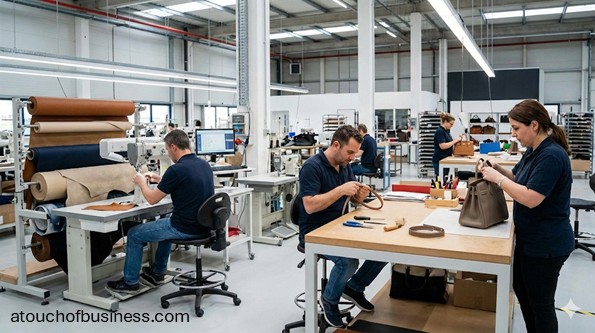
A handbag manufacturing company produces bags and related accessories using leather, textiles, synthetic materials, and hardware. The work usually includes pattern development, cutting, stitching, assembly, hardware setting, and finishing.
You can start small with limited equipment and a focused product line. You can also scale into a staffed production space with higher volume, more inventory, and stricter facility needs.
For classification on forms and applications, handbags are commonly associated with the North American Industry Classification System code for women’s handbag and purse manufacturing. You can confirm the best code for your situation using the NAICS lookup tool.
Is This the Right Fit for You?
Start with fit. Is owning a business right for you, and is handbag manufacturing right for you?
It’s tough when you want freedom, but the day-to-day work is slower and more detailed than you expected. Handbag production rewards patience, consistency, and careful quality checks.
If you have not done a basic reality check yet, use this business start-up considerations guide as a starting point.
Next, be honest about passion. Passion is not fluff. It supports problem-solving and persistence when challenges show up, especially when prototypes fail, materials arrive late, or you need to redo a pattern.
If you are unsure what that looks like, read why passion matters before you start.
Now check your motivation. Ask yourself: “Are you moving toward something or running away from something?” If you are starting mainly to escape a job or financial stress, pause and rethink. A new business can add pressure before it adds stability.
Do a reality check. Expect uncertain income, long hours, hard tasks, fewer vacations, and total responsibility. Also consider family support, your current skills, and whether you have funding to start and operate until sales are steady.
Finally, get an outside view. Use an inside look approach to understand what the work really looks like.
Talk with owners, but be careful. Only talk to owners you will not be competing against. Look for people in a different region or a different customer segment.
Here are a few questions to ask:
- What surprised you most about getting set up before your first sale?
- What was harder than you expected: patterns, sourcing, or getting consistent quality?
- If you could restart, what would you do first to shorten the setup period?
Startup Step 1: Choose Your Build Approach and Your Starting Scale
Decide how you will produce your products before you spend on equipment or sign a lease.
You can manufacture in-house, use a contract factory, or do a hybrid approach where you build prototypes and small batches yourself and outsource larger runs later.
Also decide your starting scale. Many owners begin solo or with one helper, especially if the first launch is a small line. A larger plan usually involves inventory, multiple machines, and staff from day one, which can change your funding needs and your legal structure.
Startup Step 2: Confirm Demand and Confirm Profit Potential
Market demand is not the same as interest. You need proof that customers will pay a price that covers materials, labor, packaging, fees, and overhead, and still leaves enough for you to pay yourself.
Use a structured demand check. This market demand checkup can help you separate “nice idea” from “real demand.”
Then do a simple profit test on a small set of products. Pick one core bag and one smaller accessory and estimate a realistic build time for each.
Startup Step 3: Pick a Business Model That Fits Your Skills and Time
Choose how you plan to sell before you finalize your product line. This keeps you from building a product that is hard to sell in your chosen channel.
Common startup paths include direct online sales, wholesale to retailers, private label manufacturing for other brands, and custom small-batch work. Each path affects minimum order quantities, lead times, packaging, and documentation.
Also decide how you will staff the work now versus later. If you are starting part time, keep the product line smaller and the materials simpler so you can hit consistent quality.
Startup Step 4: Define Your Products and Your Compliance Triggers
List the products you will offer at launch and what each product includes. Be specific about materials, hardware, and features such as zippers, magnets, and strap attachments.
Some material choices create extra compliance needs. If any product contains real fur, review the Federal Trade Commission guidance on fur labeling requirements and the related Fur Rules.
If you plan to label products with an unqualified “Made in USA” claim, review the Federal Trade Commission guidance on Made in USA standards before you print packaging.
If you intend products primarily for children 12 and under, review Consumer Product Safety Commission information on the Children’s Product Certificate and the tracking label guidance to understand when testing and documentation can apply.
Startup Step 5: Plan Your Skills and Your Support
Handbag production blends design, technical work, and repeatable assembly. If you do not have all the skills, that is normal. You can learn the basics, hire for specific tasks, or use professional services.
At a minimum, you need enough understanding to judge quality, control costs, and avoid preventable setup errors. If you want help building your support network, this guide on professional advisors can help you identify who to contact and when.
If you expect to hire early, review how and when to hire so you know what changes when you add payroll.
Startup Step 6: Create Technical Specifications and Patterns
Before you buy materials in volume, create technical specs for each product. This includes measurements, pattern pieces, seam allowances, reinforcement areas, and a bill of materials.
Clear specs protect quality. They also make it easier to outsource later because you can hand a factory complete instructions instead of a rough sample.
Keep a version history for patterns and specs. Small revisions are normal, especially after your first prototype cycle.
Startup Step 7: Prototype, Test Fit, and Finalize the Build
Build prototypes to confirm shape, function, and durability at key stress points like straps, handles, and closures.
Plan on more than one prototype. Materials behave differently than they look on paper, and small changes in reinforcement or stitch placement can change the result.
Once you have a final “approved sample,” use it as your reference for materials, hardware, and finish quality.
Startup Step 8: Select Suppliers and Confirm Lead Times
Supplier selection is a startup decision, not an afterthought. Materials and hardware affect cost, quality, and your ability to deliver.
Confirm minimum order quantities, lead times, and reorder rules for leather or textiles, lining, reinforcement, zippers, magnets, buckles, rings, thread, labels, and packaging.
For early-stage launches, it can help to standardize components across products so you stock fewer items and reduce ordering complexity.
Startup Step 9: Set Pricing Before You Commit to a Launch Line
Your pricing needs to cover materials, packaging, labor time, overhead, platform fees if you sell online, and returns or defects that happen in real production.
Start by building a cost sheet per product and estimating your build time honestly. Then test whether the market will accept the price.
If you want a structured method, use this guide on pricing products and services. Make sure you also decide how you will accept payment, including invoicing and card processing, based on your sales channel.
Startup Step 10: Choose Your Location and Confirm It Can Be Approved
Handbag production does not usually depend on foot traffic. What matters more is whether the location is allowed to manufacture, store materials, and run equipment safely.
If you want a retail studio or showroom, then foot traffic and signage matter more. In that case, use this guide on choosing a location to weigh access, visibility, and customer parking.
Before you sign a lease, confirm zoning and building approvals with your local planning or building department. In many areas, a Certificate of Occupancy is tied to the building use and must match your activity.
Startup Step 11: Estimate Startup Costs and Build Your Launch Budget
Costs vary widely based on materials, equipment type, and whether you start with inventory. A small, focused launch can be lean. A staffed production space with inventory and multiple machines is a larger buildout.
Use a complete checklist so you do not miss core startup items. This resource on estimating startup costs can help you price the full setup.
Price items using real quotes whenever possible. Get written quotes for equipment, materials, packaging, and any buildout work before you decide how much funding you need.
Startup Step 12: Write a Business Plan Even If You Are Not Seeking Funding
A business plan keeps you focused on the choices that matter: your products, your sales path, your costs, and how you will reach customers.
It also helps you spot gaps early, like a missing permit, a weak margin, or a supplier risk.
If you want a simple structure, use this guide on writing a practical business plan.
Startup Step 13: Decide How You Will Fund the Setup
Funding should match your scale. A small launch may be self-funded with limited equipment and made-to-order production. A larger setup may involve outside funding, inventory, and staff.
Common funding sources include savings, a partner contribution, or financing. If you plan to borrow, this guide on getting a business loan can help you understand what lenders typically want to see.
Choose a plan that lets you finish setup correctly. Running out of cash mid-setup is a common reason launches stall.
Startup Step 14: Choose Your Legal Structure and Register the Business
Many first-time owners start as a sole proprietorship because it is simple. As the business grows, it is common to form a limited liability company or another structure.
Your best choice depends on risk, taxes, ownership, and whether you are bringing in partners or investors. Your state Secretary of State website is the usual starting point for formation and entity searches.
For a federal step, you can apply for an Employer Identification Number through the Internal Revenue Service when it applies to your situation.
If you want a structured overview of the registration process, see this business registration guide and the Small Business Administration page on registering your business.
Startup Step 15: Register for Taxes and Employer Accounts When Needed
Tax registration depends on what you sell, where you sell, and whether you hire employees. In many states, selling taxable goods requires sales tax registration.
If you will have employees, you may need state employer accounts for withholding and unemployment insurance.
The Small Business Administration page on federal and state tax ID numbers is a good starting point, and your state Department of Revenue portal will give the exact steps for your state.
Startup Step 16: Apply for Licenses, Permits, and Local Approvals
Licensing and permits vary by jurisdiction. You may need a general business license, zoning approval for manufacturing, and building approvals tied to your use of the space.
If you are home-based, confirm home occupation rules before you set up equipment or store materials. If you lease space, confirm that the permitted use matches light manufacturing.
The Small Business Administration page on licenses and permits explains how to find the correct offices for your area.
Startup Step 17: Set Up Banking and Your Financial Setup
Open a business account at a financial institution so you can keep transactions separate and track your startup spending clearly.
Decide how you will handle invoices, deposits, refunds, and taxes before you accept payment. Your accountant or bookkeeper can help you choose a system that fits your sales channel.
If you are unsure what help you need, start by asking an accountant what records they expect from day one.
Startup Step 18: Plan Insurance and Risk Requirements
Insurance needs depend on your location, your products, your sales channel, and whether you have employees. Some landlords and wholesale accounts require proof of coverage before you can move in or sell.
Common policies for product businesses include general liability, product liability, and commercial property coverage. Workers’ compensation requirements are set by state law and usually tie to having employees.
Use this guide on business insurance to understand what to ask about, then confirm legal requirements with your state agency.
Startup Step 19: Build Your Name, Your Digital Footprint, and Your Brand Basics
Choose a business name that fits your product style and leaves room to grow. Confirm name availability and consistency across your domain and social accounts.
If you want a structured way to do this, use these business naming tips.
Next, set up your digital foundation. A basic website and clear product pages help you look legitimate before launch. This guide on building a website can help you plan the basics.
Brand basics may include a logo, business cards, and consistent packaging. If you need help, a designer can build a small system that fits your budget and keeps everything consistent.
Startup Step 20: Prepare Sales Materials and Proof Before You Launch
Decide what your customer needs to see before they purchase. That usually includes clear product photos, size details, materials, care notes, and return terms.
If you sell wholesale, you may need a line sheet, a product spec sheet, and samples that match your final quality.
If you need printed basics, review guidance on business cards, a company sign if you have a public-facing location, and a corporate identity package if you want a consistent brand set.
Startup Step 21: Finalize the Physical Setup and Run a Pilot Batch
Set up your space so work flows in a straight line from storage to cutting to assembly to finishing to packing. This reduces handling and helps you keep quality consistent.
Before you announce a launch date, produce a small pilot batch using final materials and your final process. This is where you confirm repeatability, packaging durability, and whether build times match your plan.
If you use workplace chemicals such as certain adhesives, review the Occupational Safety and Health Administration Hazard Communication standard so you understand labeling, safety data sheets, and training needs when employees are involved.
Startup Step 22: Plan How Customers Will Find You
Your marketing plan should match your sales model. Direct online sales rely on search, social content, email, and partnerships. Wholesale relies on outreach, samples, and retailer relationships.
If you have a studio with walk-in traffic, local visibility matters more. In that case, you may want a basic plan for a launch event and local promotion.
If a physical launch applies to you, use ideas from grand opening planning and guidance on getting customers through the door.
Startup Step 23: Do a Final Pre-Opening Check
Before you open ordering, do a final pass on compliance, equipment readiness, packaging, pricing, and your ability to deliver on time.
Keep it simple. Confirm that your business is registered, your location is approved, your product documentation is ready, and your payment process works end to end.
Then launch small, learn fast, and improve. Small wins matter early, especially when you are building consistency and trust.
Startup Essentials and Cost Drivers
This section lists common startup items to price out. Use it to build your budget and decide how much funding you need.
Pricing changes by location, material choice, and whether equipment is new or used. The most reliable method is to get written quotes and save screenshots or invoices as you build your budget.
- Business setup: state formation fees if forming an entity, local licensing fees, name registration if applicable, and professional help if needed
- Workspace: deposits, rent, basic buildout, work tables, lighting, storage, and any required building approvals
- Core equipment: industrial-grade sewing machine(s), cutting tools, finishing tools, hardware presses, and safety equipment
- Prototype and sampling: pattern supplies, sample materials, hardware sets, and test runs
- Materials and components: leather or textiles, lining, reinforcement, thread, adhesives if used, zippers, magnets, buckles, rings, rivets, and labels
- Packaging: boxes, mailers, tissue, dust bags if used, care cards, and label printing supplies
- Technology: computer needs, label printer, basic photo setup, and software subscriptions if required
- Compliance needs when triggered: children’s product testing and documentation if applicable, fur labeling compliance if applicable
- Insurance and deposits: coverage required by leases or accounts, plus any surety or deposits required by your local rules
Essential Equipment List
Your equipment depends on materials and product construction. A simple line in canvas and nylon can be lighter on equipment than thick leather with structured edges and multiple hardware points.
Start by choosing tools that match your first product line. Add specialty equipment only when your products require it.
Patterning and product development
- Pattern paper or cardstock
- Reusable pattern board
- Rulers, curves, squares, measuring tape
- Cutting mat
- Marking tools suitable for leather and fabric
- Computer and printer for specs and templates
Cutting and preparation
- Cutting table
- Rotary cutter and replacement blades
- Shears suitable for fabric and thicker materials
- Utility knife and replacement blades
- Metal straightedge rulers
- Hole punch set
- Strap cutter if you make straps in-house
Stitching and assembly
- Industrial sewing machine suitable for layered materials
- Needle assortment matched to materials
- Thread cones and thread stand
- Bobbins and bobbin winder
- Specialty presser feet as needed (zipper foot, piping foot)
- Clips for holding leather layers
- Basting tape if used for zippers and edges
Skiving and edge preparation
- Manual skiving knife or skiving machine depending on materials
- Sharpening stones or strop system
- Edge beveler set
Edge finishing and surface finishing
- Burnishing tools (manual or motorized)
- Edge paint tools if you use edge paint (rollers, daubers)
- Sanding blocks and sanding supplies
- Creasing tools if used for finishing lines
Hardware setting and reinforcement
- Rivet setter tools and/or rivet press
- Snap setter tools and/or snap press
- Grommet and eyelet setting tools if used
- Setting base or anvil
- Mallet suited for setting tools
- Clamps for bonding and reinforcement work
Adhesive application and ventilation support
- Applicators (brushes, spreaders)
- Rollers for bonding
- Ventilation support appropriate to products used
Quality checks and measurement
- Measuring tools for consistent sizing
- Inspection lighting
- Basic templates for alignment checks
Packing and labeling
- Label printer
- Shipping scale
- Cartons and mailers
- Packing tape dispenser
- Tissue and protective wrap
- Care cards and hang tags if used
How a Handbag Manufacturing Business Generates Revenue
You can earn revenue through product sales, production services, or a mix. Your choice affects how you price, how you package, and how you plan lead times.
Pick one primary path at launch. You can add additional revenue streams after you have consistent production and reliable suppliers.
- Direct sales: sell your own branded bags to customers through a website or local events
- Wholesale: sell to retailers at wholesale pricing with minimum order quantities
- Private label: manufacture for another brand under their label and specs
- Custom small-batch work: produce made-to-spec bags within defined limits
- Prototype and sample development: paid sampling work for brands that need product development
Typical Customers
Your customer type depends on your sales model. Know who you are serving before you lock in materials and packaging.
If you sell wholesale or private label, your customer is a business with requirements and timelines. If you sell direct, your customer is an individual who cares about style, quality, and trust.
- Direct consumers purchasing for personal use
- Retailers and boutiques buying wholesale
- Brands seeking private label or contract production
- Organizations purchasing branded items when you can meet specs
Pros and Cons
This business can be started small, but it still demands precision and consistency. The upside and downside both come from the same place: details matter.
Review these points early so you choose a scale and model you can support.
- Pros: multiple sales models, flexible product line development, clear ways to differentiate through materials and design
- Cons: material variability, time-intensive prototyping, higher setup needs when you scale into inventory and staff
Skills You Will Use Before You Open
You do not need to be an expert in every skill on day one. You do need a plan for how you will cover the work.
Some owners learn the basics and outsource specialty steps. Others hire help early. Either approach can work if you stay organized.
- Pattern drafting and spec writing
- Material knowledge for leather, textiles, and reinforcement
- Sewing and assembly skills aligned to your product materials
- Hardware installation and alignment
- Finishing skills for edges and appearance consistency
- Basic cost estimating and pricing math
- Supplier communication and ordering discipline
Day-to-Day Activities to Plan For
You are focusing on startup, but it helps to understand the daily work so you can choose the right space and equipment.
These activities also guide your early staffing decisions and your production schedule.
- Receiving and inspecting materials and hardware
- Cutting and preparing components
- Stitching and assembly
- Hardware setting and reinforcement work
- Finishing, cleaning, and final inspection
- Labeling, packing, and shipping prep
- Ordering supplies and maintaining equipment
A Day in the Life of the Owner
Expect a mix of production work and planning work. Early on, you may do both because you are building the system as you go.
As you grow, you may spend more time on scheduling, sourcing, quality control, and sales coordination.
- Check material levels and confirm what can be built today
- Cut and prep components for the next build cycle
- Build or supervise assembly and finishing
- Inspect samples or finished goods and approve packaging
- Reply to supplier questions and place reorders
- Prepare shipments and confirm orders
Red Flags to Watch Before You Commit
Most startup problems are preventable when you slow down and verify the basics. This is where many first-time owners get stuck because they rush to “launch” without a stable setup.
Use this list to catch issues early.
- Using real fur without confirming labeling requirements through the Federal Trade Commission guidance
- Marketing products for children 12 and under without understanding when a Children’s Product Certificate and related tracking information can apply
- Printing packaging with unqualified “Made in USA” claims before reviewing FTC guidance
- Signing a lease before confirming zoning and building approvals for your activity
- Relying on one supplier for key hardware without a backup option
- Setting prices without confirming labor time and packaging costs
Legal and Compliance: Varies by Jurisdiction Checklist
Rules change by state, county, and city. Use this section to know what to ask, when to ask it, and where to verify it.
If you are unsure, call the office listed and ask for the correct link or portal path. Save the name of the person you spoke with and the date.
Federal
- Employer Identification Number: What to consider: whether you need an employer identification number for taxes, banking, hiring, or licensing. When it applies: when required for your structure or tax needs. How to verify locally: Internal Revenue Service → search “Get an employer identification number.”
- Fur labeling: What to consider: required disclosures when products contain real fur. When it applies: if you manufacture, import, or sell fur products. How to verify locally: Federal Trade Commission → search “How to Comply with the Fur Products Labeling Act.”
- Made in USA claims: What to consider: standards for unqualified “Made in USA” labeling and advertising. When it applies: if you use unqualified United States-origin claims on labels or listings. How to verify locally: Federal Trade Commission → search “Complying with the Made in USA Standard.”
- Children’s products: What to consider: when third-party testing and a Children’s Product Certificate can apply, plus tracking label guidance. When it applies: if products are intended primarily for children 12 and under and an applicable rule applies. How to verify locally: Consumer Product Safety Commission → search “Children’s Product Certificate” and “Tracking Label Business Guidance.”
- Workplace chemical hazard communication: What to consider: labeling, safety data sheets, and training requirements when hazardous chemicals are present and employees are involved. When it applies: when employees may be exposed. How to verify locally: Occupational Safety and Health Administration → search “1910.1200 Hazard Communication.”
- Industrial stormwater: What to consider: whether your site activities require stormwater permit coverage. When it applies: site- and activity-dependent. How to verify locally: Environmental Protection Agency → search “Stormwater Discharges from Industrial Activities.”
- Hazardous waste: What to consider: generator rules based on how much hazardous waste is produced and what materials are used. When it applies: if your process generates hazardous waste. How to verify locally: Environmental Protection Agency → search “Hazardous Waste Generator Regulatory Summary,” then locate your state environmental agency program.
- Wildlife product import and export: What to consider: permits and restrictions for wildlife products when materials are regulated. When it applies: if you import or export regulated wildlife products. How to verify locally: Fish and Wildlife Service → search “Importing and Exporting.”
- Trademarks: What to consider: optional federal trademark registration. When it applies: when you choose to register your brand name or logo. How to verify locally: United States Patent and Trademark Office → search “Apply online trademarks.”
State
- Entity formation: What to consider: whether to form a limited liability company or corporation, and how ownership will be structured. When it applies: before you need formal ownership records, bank accounts, or investor terms. How to verify locally: State Secretary of State → search “business entity formation” plus your state name.
- Sales and use tax registration: What to consider: whether the products you sell are taxable and what registration is required. When it applies: before your first taxable sale. How to verify locally: State Department of Revenue → search “sales tax permit” or “seller’s permit” (label varies by jurisdiction).
- Employer accounts: What to consider: withholding and unemployment insurance registration when hiring. When it applies: before you run your first payroll. How to verify locally: State workforce agency → search “employer registration unemployment insurance” and “withholding account.”
- Workers’ compensation: What to consider: coverage requirements and thresholds set by state law. When it applies: when you have employees (thresholds vary). How to verify locally: State workers’ compensation agency → search “workers’ compensation employer requirements.”
City and County
- General business license: What to consider: local business licensing or business tax registration. When it applies: before operating in that city or county. How to verify locally: City or county licensing portal → search “business license” or “business tax certificate” (label varies by jurisdiction).
- Zoning and home occupation rules: What to consider: whether your activity is allowed at the address, especially if manufacturing at home. When it applies: before setting up equipment or storing materials. How to verify locally: Planning or zoning department → search “home occupation” and “manufacturing zoning.”
- Building approvals: What to consider: whether a Certificate of Occupancy is required for your use of the space. When it applies: before opening in a leased or renovated space. How to verify locally: Building department portal → search “Certificate of Occupancy” and “change of use.”
- Sign permits: What to consider: permits for exterior signs. When it applies: before installing a permanent sign. How to verify locally: Planning or building portal → search “sign permit.”
Owner questions to decide what applies
- Will you manufacture at home, lease a production space, or use a contract factory?
- Will any product be intended primarily for children 12 and under?
- Will you use real fur or regulated wildlife materials?
101 Tips to Start and Grow a Handbag Manufacturing Business
These tips cover many sides of building and running your business.
Use the ones that match your goals and set the rest aside.
You may want to bookmark this page so you can come back whenever you like.
To keep it simple, pick one tip, apply it, and return for another when you’re ready.
What to Do Before Starting
1. Choose a narrow launch line first, like one core bag style and one small accessory, so you can prove consistency before expanding.
2. Decide whether you will manufacture in-house, use a contract factory, or mix both, because this choice drives permits, equipment, and startup costs.
3. Write a plain-English description of your ideal customer and where they shop, so your product decisions stay grounded in real demand.
4. Study competitor products in your price tier and note materials, hardware types, and construction details so you know what “normal” looks like in your market.
5. Build a simple cost sheet for each product that includes materials, packaging, labor time, and overhead so you can test profit potential early.
6. Prototype quickly, but keep records of every change you make, so your final pattern is repeatable.
7. Stress-test high-risk points on samples, like strap attachments and closures, before you approve a design for sale.
8. Decide if you will hold inventory or make-to-order, because your cash needs and delivery promises change dramatically.
9. Create a basic bill of materials for each bag that lists every component down to thread and reinforcement, so ordering is consistent.
10. Identify compliance triggers upfront, such as real fur, certain “Made in USA” claims, or products intended primarily for children 12 and under, so you do not print labels too early.
11. Shortlist at least two suppliers for each critical item, like zippers and hardware, so one delay does not stop production.
12. Request samples of materials and hardware before you commit to large orders, because quality and color can vary in real life.
13. Decide where production will happen and confirm the space can be approved for your activity under local zoning and building rules.
14. If you plan to run equipment at home, confirm home occupation rules first, including limits on storage, deliveries, and on-site employees.
15. Build your essential equipment list based on your materials and construction method, then avoid specialty purchases until your first line is proven.
16. Write a business plan even if you are not seeking funding, because it forces you to choose a model, set prices, and validate costs.
17. Pick a realistic funding plan that covers setup and early production, not just the launch announcement.
18. Set up a business bank account early so you can keep transactions separate and track startup spending cleanly from day one.
What Successful Handbag Manufacturing Business Owners Do
19. They standardize components across products, like using the same zipper sizes or hardware finishes, to simplify purchasing and reduce stock confusion.
20. They document “approved” materials and hardware for each product so the next batch matches the last one.
21. They keep a master sample and compare every run to it, which makes quality control easier when production speeds up.
22. They measure and record build time honestly, then use that data to confirm pricing and deadlines.
23. They set clear quality checkpoints before finishing and packing, so errors do not get shipped.
24. They maintain a small backup stock of the most failure-prone items, like needles, thread colors, and common hardware.
25. They treat supplier relationships like long-term partnerships by communicating forecasts early and paying on time.
26. They protect brand claims by verifying labeling rules before printing tags, hang cards, or packaging.
27. They build a simple feedback loop from customer comments to product improvements, so each run gets better.
28. They choose a sales model that fits their capacity, so they do not overpromise while still building consistency.
Running the Business (Operations, Staffing, Processes)
29. Set a standard workflow from receiving to cutting to assembly to finishing to packing, so work moves in one direction instead of bouncing around.
30. Create a work order for each item built, even if you are solo, so you can trace materials and track recurring defects.
31. Batch similar steps, like cutting multiple units at once, so you reduce setup time and improve consistency.
32. Use checklists for repeatable steps, such as hardware placement and final measurements, so your quality does not depend on memory.
33. Build a simple inventory system for materials and hardware that shows what you have, what is on order, and what is running low.
34. Set reorder triggers for key materials so you can order before you are stuck waiting on a shipment.
35. Separate prototyping time from production time on your schedule so urgent orders do not constantly delay product development.
36. If you plan to hire, define roles by task, such as cutting, stitching, finishing, or packing, so training is focused and measurable.
37. Train new helpers using one product first, not the whole line, so they build confidence and accuracy.
38. Keep safety data sheets for adhesives, dyes, and cleaners you use, and store chemicals safely, especially if you have employees.
39. Maintain your machines on a schedule, because a small maintenance issue can create quality problems long before it causes a breakdown.
40. Use clear labeling for bins and parts, so you do not lose time searching or mixing hardware finishes.
41. Track defective parts and the reason they failed, so you can fix the root cause instead of blaming “bad luck.”
42. Keep packaging consistent and protective, because a damaged delivery can undo the value of great craftsmanship.
43. If you sell wholesale, create a standard sample and spec package so retailers see consistent sizing, materials, and finishes.
44. Set clear internal rules for custom requests, such as what you will not change, so custom work does not derail production.
45. If you bring in contractors, use written terms that cover ownership of patterns, confidentiality, timelines, and quality expectations.
46. Schedule time weekly for bookkeeping and recordkeeping, so tax filings and financial reviews do not become a crisis.
What to Know About the Industry (Rules, Seasons, Supply, Risks)
47. Material lots can vary in texture and color, especially with leather and dyed textiles, so test new lots before full production.
48. Hardware and zipper delays are common pressure points, so avoid designs that rely on one hard-to-replace component.
49. Minimum order quantities can force you to tie up cash in materials, so choose suppliers and product designs that match your starting scale.
50. If you plan to label products with an unqualified “Made in USA” claim, confirm the Federal Trade Commission rules first to avoid enforcement risk.
51. If any product contains real fur, confirm fur labeling requirements before you sell, because disclosures can be required on labels and in advertising.
52. If products are intended primarily for children 12 and under, check whether testing and certification rules apply before you market them as children’s products.
53. If you use adhesives or solvents in a workplace with employees, verify hazard communication responsibilities such as labeling and training requirements.
54. If your process generates hazardous waste, confirm generator category duties and disposal rules with your state environmental agency, because state rules can be stricter than federal baselines.
55. If your facility has regulated industrial stormwater exposure, confirm whether permit coverage is required before you sign a lease.
56. Seasonality may affect demand, especially around gift-giving periods, so plan your production calendar around realistic lead times.
57. Shipping disruptions can hit both inbound materials and outbound deliveries, so build buffer time into your promised dates.
58. Product liability exposure is real with physical goods, so verify what coverage is required by leases, wholesale accounts, and your risk profile.
Marketing (Local, Digital, Offers, Community)
59. Write a clear positioning statement that answers who the bag is for and why it is different, so your marketing stays focused.
60. Use product names that describe the style and key feature, so customers understand the product without extra explanation.
61. Build product pages that include dimensions, materials, closure type, strap length, and weight range when relevant, so customers can self-qualify.
62. Photograph products in consistent lighting and include close-ups of hardware, stitching, and interior pockets, because details drive trust.
63. Show scale in photos, such as a laptop or common object, so customers understand capacity without guessing.
64. Keep your launch offer simple, like limited quantities or a small accessory add-on, so it does not create fulfillment chaos.
65. If you sell wholesale, create a clean line sheet with style names, materials, retail price, wholesale price, and lead times, so retailers can decide quickly.
66. Build a small email list before launch by offering updates on release dates, because it gives you a way to reach interested customers without relying only on social platforms.
67. Use short videos to show how the bag opens, how it sits on the body, and what fits inside, because movement answers questions photos cannot.
68. Partner with local boutiques or stylists for small showcases, because third-party credibility can shorten the trust-building cycle.
69. If you have a public-facing studio, confirm sign rules and business license rules early, then plan a simple opening event that you can actually deliver.
70. Track which messages convert, such as “fits a 13-inch laptop” or “hands-free crossbody,” so future marketing is based on evidence.
Dealing with Customers (Trust, Education, Retention)
71. Set clear expectations on materials, including natural variation, so customers understand what is normal and what is a defect.
72. Provide care guidance specific to your materials, such as how to avoid water damage or how to store the bag to prevent distortion.
73. Be precise about delivery timing, especially for made-to-order items, so you do not create avoidable frustration.
74. For custom work, require written approvals on materials, color, and design limits, so there is no confusion at delivery.
75. Teach customers how to measure strap length for their body, because fit problems often become return problems.
76. Make it easy to compare products by using consistent photos and consistent measurement formatting across your line.
77. If you sell at events, have a short script that explains what makes your construction durable, because a confident explanation can replace guesswork.
78. Create a simple post-purchase message that thanks the customer, shares care guidance, and invites feedback, because retention starts after the sale.
Customer Service (Policies, Guarantees, Feedback)
79. Publish a clear return and exchange policy that matches your production model, because unclear policies create disputes.
80. Define what you will repair and what you will not repair, and put it in writing, so customers know what support exists.
81. Track customer issues by type, such as zipper failures or strap wear, so you can improve design instead of repeating the same problem.
82. Respond to service requests with a timeline and next step, even if the answer is “I’m reviewing,” because silence increases anxiety.
83. If a shipment is damaged, document it immediately with photos and packaging notes so you can resolve it with the carrier and improve packing methods.
84. Ask for structured feedback after delivery, such as fit, comfort, capacity, and closure ease, so the answers are usable for design changes.
Sustainability (Waste, Sourcing, Long-Term)
85. Choose materials with durability in mind, because a bag that lasts longer reduces replacement demand and customer frustration.
86. Cut patterns in a way that reduces scrap, and save offcuts that can be used for small goods, test swatches, or reinforcement pieces.
87. Keep a scrap log by material type so you can see what waste is most common and adjust patterns or purchasing accordingly.
88. Verify supplier claims about material content and finishes before you repeat them in marketing, because inaccurate claims can become legal risk.
89. Store chemicals and adhesives according to the safety data sheet and local rules, because improper storage can trigger safety and disposal issues.
90. If you generate regulated waste, confirm proper disposal requirements with your state environmental agency before you scale, because “normal trash” rules may not apply.
Staying Informed (Trends, Sources, Cadence)
91. Set a monthly reminder to review updates from federal agencies relevant to your products, such as labeling and children’s product rules, because requirements can change.
92. Keep a supplier update folder and save notices about discontinued hardware or material changes so you do not get surprised mid-run.
93. Attend at least one industry event or materials show per year, even virtually, so you can compare materials and spot new components.
94. Review your financial reports on a regular schedule, because small margin problems can hide until they become serious.
Adapting to Change (Seasonality, Shocks, Competition, Tech)
95. Keep designs modular so you can swap a zipper, buckle, or lining when supply changes without redesigning the entire bag.
96. Maintain a second-choice material plan for your top sellers so you can keep selling if a primary material becomes unavailable.
97. Build small pilot runs before committing to large inventory, because early feedback can prevent expensive overproduction.
98. Watch competitor shifts in materials and pricing, not to copy them, but to understand how the market is moving.
What Not to Do
99. Do not print labels or packaging with an unqualified “Made in USA” claim until you confirm you meet the Federal Trade Commission standard.
100. Do not accept a large wholesale order until you have completed a pilot batch and confirmed lead times for every component.
101. Do not sign a lease or buy major equipment until you confirm zoning, building approvals, and local licensing requirements for your intended activity.
FAQs
Question: Do I need to register the business before I start making samples?
Answer: You can develop samples and test designs before you register. Register and handle tax setup before you sell, invoice, or sign leases in the business name.
Question: Should I start as a sole proprietor or form a limited liability company?
Answer: Many owners start as a sole proprietor for simplicity and form a limited liability company later as risk and revenue grow. The right choice depends on your risk, taxes, and whether you have partners or investors.
Question: Do I need an Employer Identification Number for a handbag company?
Answer: You may need one for hiring, taxes, banking, and some licenses. The Internal Revenue Service issues Employer Identification Numbers, and you should use the official Internal Revenue Service site to apply.
Question: Do I need a sales tax permit to sell handbags?
Answer: If you sell taxable goods, many states require registration to collect and remit sales tax. Check your state Department of Revenue or Taxation site for the exact rules and registration steps.
Question: What licenses and permits are common for small manufacturing?
Answer: Requirements vary by location, but common needs include a local business license and zoning approval for your activity. Start with your city or county licensing portal and your local planning or zoning office.
Question: Can I run a small handbag shop from home?
Answer: Sometimes, but it depends on home occupation rules, zoning, and limits on deliveries, noise, and on-site help. Verify with your local planning or zoning office before you buy equipment or store large material quantities.
Question: What is a Certificate of Occupancy and when does it matter?
Answer: A Certificate of Occupancy is a local approval that a building’s use meets code for that space. It matters when you lease or change the use of a space, and local building departments set the rules.
Question: What insurance should I have before my first sale?
Answer: Many product businesses start with general liability and product liability coverage, and add commercial property coverage if they have equipment and inventory. If you have employees, workers’ compensation is typically required by state law.
Question: What equipment do I need to start if I am making small batches?
Answer: Plan for cutting tools, an industrial sewing machine suited to your materials, basic finishing tools, and tools to set hardware like rivets and snaps. Buy equipment based on your first product line, not on every future design idea.
Question: How do I choose a North American Industry Classification System code for forms and applications?
Answer: Use the official North American Industry Classification System lookup and match the code to what you actually do. If you make multiple products, choose the code that best fits your primary activity.
Question: How do I vet suppliers for leather, fabric, zippers, and hardware?
Answer: Order samples first and confirm lead times, minimum order quantities, and reorder terms in writing. Keep at least one backup supplier for critical items so one delay does not stop production.
Question: How should I set pricing before I launch?
Answer: Build a cost sheet that includes materials, packaging, realistic labor time, and overhead. Then confirm the market will pay enough to cover those costs and still leave room for profit.
Question: How do I estimate startup costs without guessing?
Answer: List every startup item and collect real quotes for equipment, materials, space needs, packaging, and professional services. Costs can vary widely based on whether you hold inventory, your material choices, and whether you lease a workspace.
Question: Can I label my products “Made in USA”?
Answer: Only use an unqualified “Made in USA” label if you meet the Federal Trade Commission standard and rule. Review the Federal Trade Commission guidance before you print labels or packaging.
Question: What if my handbags use real fur?
Answer: Real fur can trigger federal labeling requirements for fur products. Confirm the labeling and advertising disclosure rules before you sell or market those items.
Question: What if I make bags intended primarily for children 12 and under?
Answer: Children’s products that are subject to a consumer product safety rule may require third-party testing and a written Children’s Product Certificate. Confirm whether your product is covered and what rules apply before you market it as a children’s product.
Question: What does a basic production workflow look like in a small shop?
Answer: A common flow is receiving and inspection, cutting, preparation, stitching and assembly, hardware setting, finishing, inspection, then packing. A clear flow helps you keep quality consistent and reduces wasted motion.
Question: How do I keep quality consistent as I ramp up?
Answer: Use an approved master sample, clear specs, and checklists for critical steps like strap attachment and hardware placement. Track defects by type so you can fix root causes instead of repeating them.
Question: When should I hire help, and what role should be first?
Answer: Hire when demand is stable enough that missed deadlines or quality drift would cost you sales. Many owners start with help in the most time-consuming repeatable step, like cutting and preparation or finishing.
Question: What numbers should I watch each week to manage cash?
Answer: Track cash on hand, open invoices, material orders you must pay for soon, and unit cost for your top sellers. Keep a simple view of what you owe and what you expect to collect in the next 30 days.
Question: What do I need to know about adhesives, chemicals, and safety requirements?
Answer: If you have employees and hazardous chemicals are present, employers must follow hazard communication rules that cover labels, safety data sheets, and training. Keep product safety data sheets accessible and store chemicals according to the manufacturer’s instructions.
Question: Could I have environmental compliance duties at my facility?
Answer: Possibly, depending on your processes and site conditions. Hazardous waste rules and industrial stormwater permit coverage can apply in some cases, and states often run the programs.
Question: What are common early mistakes new owners make in handbag manufacturing?
Answer: Starting with too many designs, underpricing labor time, and buying too much material before the product is proven are common problems. Another common issue is signing a lease before confirming zoning and building approvals for your activity.
Related Articles
- Fashion Accessories Store Startup Guide
- Start a Backpack Manufacturing Business
- How to Start a Fashion Consulting Business
- Starting a Jewelry Business
- How to Start a Shoe Store
- How to Start a Sneaker Shop
- Starting an Athletic Clothing Line
- Starting a T-Shirt Business
- Dress Rental Startup Guide
- Start a Baby Clothing Store
- How to Launch a Fashion Magazine
- Fashion Photography Business Startup
Sources:
- Internal Revenue Service: Get employer ID number
- U.S. Small Business Administration: Register your business, Federal state tax IDs, Apply licenses permits
- Federal Trade Commission: Made in USA standard, Comply fur labeling act, Fur labeling act rules
- Consumer Product Safety Commission: Children’s product certificate, Tracking label guidance
- Occupational Safety and Health Administration: Hazard communication standard
- Environmental Protection Agency: Hazardous waste summary, Industrial stormwater rules
- U.S. Census Bureau: NAICS 316992 lookup
- U.S. Fish & Wildlife Service: Import export wildlife
- USPTO: Apply online trademarks