
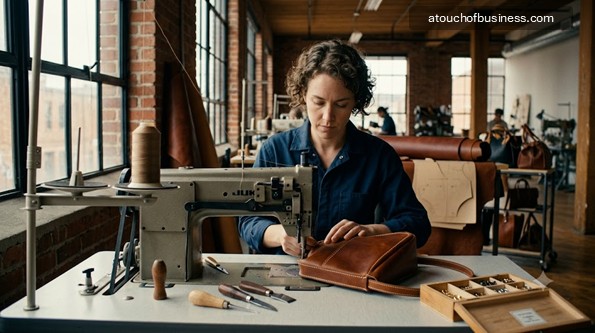
What to Expect From This Guide to Starting a Handbag Manufacturing Business
This guide walks readers through the key decisions and practical steps involved in starting a handbag manufacturing business, from evaluating personal fit and demand to developing products, setting up production, planning finances, and preparing to open. The highlights below show only part of the material covered.
Inside the guide, you will find:
- Startup steps: Follow 16 ordered steps from assessing fit and demand through product development, production setup, financial planning, and opening preparation.
- Industry interviews: Hear professionals discuss design, sampling, factories, materials, pricing, production quantities, sustainability, and customer-focused product decisions.
- Startup FAQs: Review practical answers about licenses, labeling, manufacturing models, prototypes, home production, tech packs, insurance, and origin claims.
- Business fit: Consider the skills, patience, household finances, production model, niche, and customer demand involved before committing.
- Production setup: Examine tech packs, prototypes, suppliers, workspace, equipment, material testing, quality control, and backup sources.
- Financial planning: Work through startup costs, funding, unit costs, wholesale and retail pricing, sales volume, and break-even estimates.
- Requirements and risks: Check location-dependent zoning, permits, tax registration, labeling, intellectual property, insurance, and warning signs before opening.
The guide begins by asking whether handbag manufacturing fits your skills, finances, and expectations before moving into the ordered startup process.
How to Start a Handbag Manufacturing Business
As a handbag manufacturer, you design, source materials for, and produce bags that consumers carry every day — totes, shoulder bags, crossbody bags, clutches, structured handbags, and more.
You cut the leather or fabric, stitch the seams, set the hardware, inspect every finished unit, and get orders out the door.
The production side of this business is hands-on, detail-intensive, and unforgiving of shortcuts.
Before you spend anything, ask some honest questions about fit. Do you have construction skills — pattern-making, sewing, leatherworking — or are you prepared to hire someone who does?
Are you comfortable working through months of design development and prototype revisions before a single bag reaches a buyer?
Can your household manage the income gap that comes with a capital-heavy startup that takes time to generate revenue?
This isn’t a business you can launch on instinct. It rewards people with patience, production discipline, and a real understanding of materials and construction.
That said, there is genuine opportunity for independent manufacturers who find the right niche, price their products accurately, and build strong buyer relationships from the start.
Before you commit to equipment or production space, spend time talking to people who already run small-batch accessory or leather goods operations — people who aren’t competing in your planned niche.
Ask them what surprised them most, how long their first production cycle took, and what they wish they had known before opening.
Prepare your questions in advance and take their answers seriously, even when those answers differ from your plan.
The general startup process applies here, but handbag manufacturing has its own sequence of decisions that shape everything else.
Red Flags Before You Start
Several warning signs should slow you down — or stop you — before you spend money on equipment, materials, or production.
Watch for these red flags:
- Not enough startup capital for the development cycle. Handbag manufacturing requires significant pre-revenue spending: design, tech packs, prototype iterations, materials, and a production run — all before your first sale. If your capital can’t cover development plus several months of operating costs, you may run out of money before you generate any revenue.
- No defensible reason a buyer would choose your product. The handbag market has established brands at every price point. Without a clear differentiator — a material story, a signature design element, local production, or an underserved niche — you’re competing on price against players with far greater cost efficiency.
- Your cost structure doesn’t produce a viable price point. Small-batch production generates a high cost per unit. If your all-in cost per unit forces a wholesale or retail price that doesn’t match what the market will pay, the model doesn’t work at your planned volume. Run the numbers before committing to production.
- Minimum order quantities exceed your capital. Overseas contract manufacturers often require hundreds to thousands of units per style. That’s a significant inventory risk for a brand with unproven demand. Verify minimum order quantities (MOQs) before choosing a manufacturing partner.
- You haven’t budgeted for multiple prototype rounds. First prototypes almost always require revision. Plan for at least two to three iterations per style, each with its own time and cost. Founders who budget for only one prototype consistently overshoot their development budget.
- No pattern-making skill or access to a pattern maker. A bag’s durability and commercial viability depend on accurate patterns. Without this skill in-house or a skilled pattern maker engaged, designs often don’t translate well to production.
Two structural realities of this industry also deserve honest acknowledgment before you start.
First, the handbag market is dominated by established global brands at every price level. Those brands carry consumer recognition, distribution infrastructure, and marketing resources that no new manufacturer can match from day one.
Second, handbag manufacturing is capital-intensive at every stage — equipment, materials, prototypes, and production runs all require meaningful upfront investment before revenue arrives.
Neither of these facts means you can’t build a real business. They mean you need a realistic plan and enough capital reserve to survive the development period.
Step 1: Assess Your Fit and Motivations
Be honest about whether this business matches your skills, temperament, and financial situation before any other step.
Handbag manufacturing requires either hands-on construction ability — pattern-making, sewing, leatherworking — or the budget and management skill to hire people who have it.
It also requires tolerance for long development cycles, persistent iteration, and months between your first investment and your first sale.
Think about what your day looks like if this business is running. You’ll spend your time cutting and sewing materials, reviewing samples, managing supplier relationships, inspecting finished units, packing orders, and tracking inventory.
Is that a day you’d look forward to, or one you’d dread?
Consider the financial pressure honestly. Can your household cover living expenses while you invest in development and wait for buyers to place orders?
Do the people in your household understand what the startup period will involve — the hours, the income uncertainty, and the possibility that it takes longer than planned?
Those conversations matter before you spend anything. Getting advice from people who’ve built businesses in production or manufacturing can help you calibrate your expectations before committing.
Step 2: Choose Your Business Model and Niche
Your business model is the most consequential decision you’ll make. It determines your equipment needs, facility requirements, capital requirements, pricing structure, and every step that follows.
The main production models are:
- Handmade / artisan production: You or a small team build bags by hand in your own workspace. High craft, small batch, lower minimum order pressure — but limited output and high per-unit labor cost.
- Domestic contract manufacturing: You design; a U.S. manufacturer produces. Lower equipment investment, faster communication, and more production control than overseas — but typically higher per-unit cost and sometimes lower capacity.
- Overseas contract manufacturing: You design; an overseas factory produces. Lower per-unit cost at volume, but higher MOQs, longer lead times, more complex quality oversight, and tariff exposure.
- Hybrid model: You build prototypes and early samples in-house, then outsource larger production runs once designs are proven. A popular path for new manufacturers who want design control early and scalability later.
- Private-label production: You select or lightly modify an existing factory’s bag styles and sell them under your own brand. Lower development cost, but less design distinctiveness.
Your niche decision runs parallel to your model decision. Decide what type of bag you’ll produce and which material story you’ll build around — full-grain leather, vegan leather, waxed canvas, nylon, or a blended approach.
Also decide your price segment: mass market, mid-range, premium, or luxury artisan. Your segment determines your materials, your buyers, and the price you’ll need to justify.
These two decisions — model and niche — lock in nearly everything else. Don’t rush them.
Step 3: Validate Demand and Define Your First Customers
Before you design a collection or spend on materials, confirm that real buyers exist at your planned price point.
Research where bags priced similarly to your planned range are sold — which boutiques carry them, which trade shows feature them, and which retail categories stock them.
Talk to boutique owners and retail buyers in your target market. Ask whether they carry independent accessory brands, what price points move for them, and what gaps they notice in their current supplier mix.
Your likely first customers fall into a few categories. Independent boutiques that want differentiated product not found in major wholesale catalogs are the most common early wholesale account for new handbag manufacturers.
Direct consumers who value handmade, locally produced, or design-distinctive bags represent another strong early channel.
Corporate gifting accounts and event organizers who need custom branded bags in small to medium quantities are also worth targeting at launch.
Ask yourself: why would a buyer choose your bag over an established alternative at the same price?
The clearer your answer, the stronger your launch position. If you can’t answer that question confidently before you produce, refine your niche before committing to production investment.
Check local supply and demand carefully before moving forward.
Step 4: Decide Whether to Start From Scratch or Buy an Existing Operation
Starting from scratch gives you full creative control over your designs, brand, and production approach — but you build supplier relationships, buyer accounts, and brand recognition entirely from zero.
Buying an existing handbag manufacturing operation may give you access to equipment already in place, established supplier relationships, and existing wholesale accounts.
That shortcut comes with its own risks: you’ll need to verify order history, production quality, client relationships, and any liabilities before buying.
The right path depends on your budget, your timeline, and how much operational infrastructure you need versus how much creative control you want.
Weighing starting from scratch against buying a business is worth careful thought before you commit.
Step 5: Design Your Collection and Build Tech Packs
Your product line starts with design decisions: which styles you’ll produce, how many colorways, and which materials and hardware will define each bag.
Once designs are sketched, you need a tech pack — a technical production document — for each style.
A complete tech pack includes:
- Technical sketches showing the bag from multiple angles
- A bill of materials (BOM) listing every component — shell material, lining, interfacing, hardware, thread, labels, and packaging
- Construction notes specifying stitch types, seam methods, and assembly sequence
- Precise measurements and tolerances for every component
- Pantone color references and placement maps
- Hardware specifications including size, finish, and supplier codes
The tech pack is how you communicate your design to a contract manufacturer — or to yourself, as a production reference across batches.
An incomplete or vague tech pack is one of the most common causes of costly prototype errors and production delays. Invest in getting it right before you send it anywhere.
Use non-disclosure agreements (NDAs) before sharing tech packs or design files with factories or suppliers. Keep editable source files in-house and share only locked documents until a production contract is signed.
Step 6: Develop and Test Prototypes
A prototype is a physical sample of each style, built from your actual production materials to test construction, hardware function, structural integrity, and overall appearance before committing to a production run.
Expect to go through at least two to three revision rounds per style. First prototypes almost always reveal issues — a zipper that doesn’t seat correctly, a strap attachment that fails under load, a pocket dimension that’s off.
If you’re working with a contract manufacturer, submit your tech pack and any reference samples when requesting prototype production.
Require photo approval — front, back, sides, interior, and hardware close-ups — before prototypes ship.
Document every revision. Name your files with version numbers and dates to prevent factories from cutting production based on outdated specs.
For owners producing in-house: build sample bags using your actual production materials and tools before finalizing patterns. What works on garment-weight fabric may not work on leather or heavy canvas.
Don’t move to production until you have a fully approved sample for every launch style.
Step 7: Source Materials, Hardware, and Suppliers
Your production quality depends on your material and supplier choices. Identify and vet sources for every component before you commit to a production run.
Components to source before opening include:
- Shell materials: leather hides, fabric yardage, vinyl, canvas, or synthetic alternatives
- Lining materials, interfacing, and interlining
- Hardware: zippers, buckles, D-rings, O-rings, rivets, bag feet, magnetic closures, turnlock closures, and chain handles
- Thread rated for your material type and production method
- Labels, care cards, hangtags, dust bags, and packaging components
Request material samples before committing to a supplier. Evaluate quality, color consistency, and lead times under real production conditions.
For leather: confirm whether hides are vegetable-tanned or chrome-tanned, as this affects workability and finishing requirements.
Negotiate MOQs, unit costs, payment terms, and quality standards with each supplier before placing your first order.
Do not rely on a single supplier for any critical material. Identify backup sources before you open.
As a manufacturer purchasing raw materials that become part of finished products you sell, you may qualify to buy production inputs tax-exempt using a resale certificate.
Verify this process with your state’s revenue department before placing material orders.
Step 8: Choose and Set Up Your Production Space
Where you produce your bags significantly affects your startup cost, your zoning compliance, and your production capacity.
Three common workspace options:
- Home studio: Many small-batch manufacturers launch from a home workshop. Before setting up production equipment, verify your local home-occupation ordinance. Some jurisdictions restrict industrial sewing equipment, commercial deliveries, or client visits at residential addresses.
- Leased light industrial space: Handbag manufacturing is typically classified as light manufacturing. Most localities allow it in light industrial or some commercial zones. Verify zoning before signing any lease.
- Shared industrial space: Shared co-manufacturing facilities are often pre-zoned for light production and can reduce fixed costs during the startup period.
Before committing to any address, check the zoning classification with your local planning or zoning department.
Ask whether a certificate of occupancy is required for your intended use, especially if the space was previously used for something else.
Evaluate any prospective space for adequate electrical capacity — industrial sewing machines have specific power requirements — as well as ventilation, lighting, and floor-load capacity for your heaviest equipment.
Your production layout matters. Set up your workspace so materials flow logically from receiving through cutting, sewing, hardware installation, quality inspection, and packaging without unnecessary backtracking.
A poor production layout creates bottlenecks that slow output, increase errors, and make quality control harder to maintain.
Step 9: Choose, Set Up, and Test Your Equipment
Your equipment list depends on your production model, but every handbag manufacturing operation needs certain core tools before the first bag can be made.
Sewing and stitching equipment:
- Industrial sewing machine — heavy-duty machines built for leather and multiple material layers. A cylinder arm machine is most commonly recommended for handbag production; it allows access to three-dimensional bag shapes. A flatbed machine handles flat panels; a post bed machine is useful for tight corners and handle attachment.
- Walking foot attachment for preventing layer shift when sewing multiple heavy materials simultaneously
- Industrial thread — heavy polyester or nylon rated for leather and bag construction
Cutting tools and equipment:
- Utility knife, trim knife, and rotary cutter with a self-healing cutting mat
- Safety beveler for thinning edges of heavy leather before seaming
- Clicker press (die press) and custom metal dies — used for consistent, accurate cutting in small production runs
- Large dressmaking scissors for heavy fabric; small sharp scissors for clipping and trimming
Hardware and hole-making tools:
- Leather hole punch (hand punch and rotary punch)
- Long-reach punch for holes beyond the immediate edge
- Rivet setter, grommet setter, snap setter, and magnetic closure installation tool
- Mallet, pliers, and screwdrivers for hardware assembly
Adhesives, edge finishing, and pressing:
- Contact cement or leather adhesive for pre-bonding seams before sewing
- Edge beveler, edge paint, and burnishing tools for finishing raw leather edges
- Steam iron and a small craft iron for pressing linings and interior seams
- Heat press for applying heat-transfer labels or branding elements to fabric bags
Measuring, marking, and pattern tools:
- Metal rulers, flexible tape measures, and calipers
- Awl for marking leather and piercing pilot holes
- Cardstock pattern templates; optional CAD software for pattern drafting and scaling
Test every piece of equipment on your actual production materials before committing to a production run.
A machine that performs well on fabric may behave differently on leather or waxed canvas.
Set up an equipment maintenance schedule from day one. Downtime on a critical machine — especially your primary sewing machine — halts your entire production flow.
Step 10: Register Your Business and Handle Legal Setup
Legal setup needs to happen before you open a business bank account, hire employees, or sell any product.
Core registration steps include:
- Choose a legal entity — a limited liability company (LLC) is commonly used by small manufacturers for liability protection. Register with your state’s secretary of state office.
- Register a doing-business-as (DBA) name if you’ll operate under a name different from your legal entity.
- Obtain an Employer Identification Number (EIN) from the IRS — free, done online at IRS.gov. Required for taxes, banking, and hiring.
- Register for a state sales tax permit (seller’s permit) through your state’s revenue or tax department — required before you collect sales tax on handbag sales.
- Obtain a general business license from your city or county.
- Set up required state employer accounts if you plan to hire workers.
Consult a business attorney or accountant familiar with manufacturing before finalizing your structure, especially if you’re planning to hire employees or enter production contracts early on.
You can learn more about registering a business and choosing your business structure to help guide those decisions.
Step 11: Meet Federal Labeling Requirements
As a handbag manufacturer, you have specific federal labeling obligations before you sell a single unit.
FTC Guides for Leather and Imitation Leather Products (16 CFR Part 24) cover ladies’ handbags, shoulder bags, purses, and similar articles. Under these guides, you cannot call a bag “leather” unless it is composed entirely of leather.
If your bag uses materials that appear to be leather but aren’t — simulated leather, bonded leather, synthetic alternatives — you must disclose that on a stamping, tag, label, or card that stays attached to the product until the buyer receives it.
The FTC Care Labeling Rule requires manufacturers of most accessories sold in the U.S. to provide care instructions. Verify how this rule applies to your specific bag types with the FTC’s published guidance or an attorney.
If you plan to market your bags as “Made in USA,” the FTC requires that the product be all or virtually all made in the United States.
Using foreign-sourced hardware, materials, or components without qualifying that claim can result in FTC enforcement action.
Required labels must be in place on every unit before any sale or shipment. This applies from your very first production run.
Step 12: Protect Your Intellectual Property
The handbag industry offers limited design protection under U.S. law. Bag shapes and silhouettes generally don’t qualify for copyright protection, so building a defensible brand requires a layered approach.
Key IP steps before launch:
- Register your brand name and logo as a trademark with the U.S. Patent and Trademark Office (USPTO). This prevents others from using confusingly similar marks and is your most durable form of brand protection.
- Consider a design patent for unique ornamental elements — distinctive hardware shapes, signature closures, or decorative design features may qualify.
- Copyright registration through the U.S. Copyright Office provides stronger enforcement options for original artistic elements in your designs.
- Use NDAs before sharing tech packs, design files, or production specifications with any factory or supplier.
Understanding these limits before you invest in signature designs is a realistic act of planning, not pessimism.
Step 13: Plan Your Finances and Secure Funding
Handbag manufacturing requires capital before it generates revenue. The gap between your first spending and your first sale is real, and running out of operating money during that gap is one of the most common reasons new manufacturing operations close.
Build a complete startup cost list before committing to any major purchase. Your list should cover equipment, initial material purchases, prototype development, facility costs, legal and registration setup, branding and label production, insurance, and at least three to six months of operating expenses before expected first sales.
Common funding paths include:
- Personal savings — the most common source for early-stage manufacturing startups
- SBA loan programs — check SBA.gov for current loan types and eligibility requirements
- Business line of credit for working capital between production runs
- Equipment financing for major machinery purchases
- Supplier payment terms — net-30 or net-60 arrangements can reduce upfront capital pressure
Open a dedicated business bank account as soon as your legal entity is registered.
Separate business transactions from personal ones from the start — mixing the two creates accounting problems and personal liability risk.
Set up payment processing before you approach buyers. Wholesale accounts typically pay by business check or direct transfer, but direct consumer sales require a payment processor if you’re selling online.
Step 14: Set Pricing and Validate Your Break-Even
Pricing in handbag manufacturing is built from the bottom up. You need to know your all-in cost per unit before you can set a price that leaves you a profit.
Your all-in cost per unit includes materials — shell, lining, hardware, thread, labels, care cards, and packaging — plus direct labor, production overhead, and development costs amortized across your production run.
From there, set your wholesale price and retail price. Boutique retailers typically expect to buy at roughly half the retail price or less — leaving them enough margin to sell profitably while you still cover your costs and generate a profit.
Small-batch production generates a higher cost per unit than larger runs.
Before committing to your first production run, calculate whether your planned batch size produces a wholesale price that is both competitive in your market and profitable for you.
Identify how many units you need to sell each month to cover your fixed costs — facility, insurance, loan payments, minimum supplier orders, and your own minimum draw.
If that unit count isn’t realistic in your first operating months, you’ll need either larger capital reserves to bridge the gap or a revised model. Know this before you produce, not after.
For guidance on pricing your products, the core logic applies directly to this business.
Step 15: Get Your Insurance in Place
Insurance setup needs to happen before you produce or sell anything.
Key coverage areas for handbag manufacturers:
- General liability insurance — not legally required at the federal level, but most retail buyers, boutiques, and landlords require it. Covers third-party injury and property damage claims related to your operations.
- Product liability insurance — not legally required by any state, but expected by most retailers, distributors, and online marketplaces. Covers claims that a bag you produced caused injury or property damage. Most general liability policies need to be confirmed or extended for product liability coverage — verify with your broker.
- Commercial property insurance — covers your equipment and inventory against loss or damage.
- Workers’ compensation insurance — legally required in nearly all states once you hire any employees. Thresholds and exemptions vary by state; verify with your state’s workers’ compensation board before your first hire.
- Inland marine insurance — covers finished goods in transit to buyers or trade shows.
Work with a commercial insurance broker who has experience with manufacturing operations.
A broker can confirm what retailers and marketplace platforms will require before you approach them.
Learn more about business insurance options to start that conversation well.
Step 16: Complete Pre-Opening Setup and Launch
Before you produce your launch inventory or approach any buyers, confirm every foundational element is in place.
Verify your zoning classification and obtain any required permits. Confirm your certificate of occupancy if you’re in a commercial or light industrial space that changed use.
Make sure your supplier relationships are active, your initial material orders are placed or in hand, and your resale certificate is filed with your state’s revenue department so you’re purchasing production materials tax-exempt.
Have required labels ready for every unit — the FTC leather/imitation leather disclosure and the care labeling requirement both apply before your first sale.
Run a small production batch before committing to a full launch run.
Inspect every unit for stitching consistency, hardware attachment, zipper function, lining alignment, and overall finish.
Track your rejection rate from that first batch. A high rejection rate signals a process problem — a pattern issue, a material inconsistency, or an equipment calibration problem — that will compound across larger runs if you don’t address it first.
Approach wholesale buyers only after you have confirmed-quality inventory ready to fulfill actual orders.
Boutique buyers who place an order and receive late or substandard product rarely give second chances.
Business Plan
A business plan for a handbag manufacturing operation is, at its core, a production and financial reality check before you commit serious money to equipment, materials, and development.
Use the 16 steps above as your planning framework. Work through each one on paper before spending anything.
The most important questions your plan must answer:
- Which production model fits your skills and capital — in-house, domestic contract, or overseas contract?
- What is your all-in cost per unit for your planned launch styles at your planned batch size?
- Does that cost structure produce a wholesale price that boutique buyers will pay?
- How many units do you need to sell each month to cover your fixed costs?
- How many months can your startup capital sustain operations if sales are slower than planned?
Small-batch production carries a higher cost per unit than larger runs. The gap between your cost per unit at launch volume and your cost per unit at sustainable volume is a real financial pressure that your plan needs to acknowledge and account for.
Prototype costs, revision rounds, and development time consistently run over initial estimates. Build a conservative buffer into your development budget.
Tariff risk is a real planning consideration for any model that relies on overseas production or imported materials. Build that exposure into your cost modeling, and identify alternative suppliers or sourcing regions as a contingency.
Your plan should also outline which sales channels you’ll pursue at launch — wholesale to boutiques, direct-to-consumer, or a combination — and which buyers or trade shows you’ll target in the first months of operation.
A well-built plan doesn’t need to be long. It needs to be honest. If the numbers don’t work on paper, they won’t work in production either.
Opening-Day Red Flags
Even after careful preparation, problems can surface just before or at launch. Catch them before your first shipment goes out.
- Required labels are missing from finished units. FTC leather/imitation leather disclosures and care labeling must be on every bag before any sale or shipment. Don’t skip this step under schedule pressure.
- Equipment hasn’t been tested on actual production materials. A sewing machine that runs well on test scraps may skip stitches on full-thickness leather or layered canvas. Test every machine on your real production materials before the run begins.
- A critical material or hardware component hasn’t arrived. Starting production without all components in hand means stopping mid-run. Confirm all materials are received and inspected before you cut a single panel.
- Your first production batch shows a high rejection rate. If more than a small fraction of units fail quality inspection, stop and diagnose the cause — pattern error, material inconsistency, or machine calibration — before producing more.
- No backup supplier for a critical input. If your primary leather supplier or hardware source can’t fulfill a reorder, you have no contingency. Identify backup sources before launch, not after your first stockout.
- Payment and invoicing systems aren’t ready. If you’ve approached wholesale buyers but can’t issue a proper invoice, accept payment, or confirm shipping terms, you’ll lose credibility fast. Test your payment setup before your first outreach.
- Workers’ compensation insurance isn’t in place before your first hire. In nearly all states, this coverage is legally required from day one of employment. Don’t hire before confirming coverage.
Frequently Asked Questions
Do I need a federal license to manufacture and sell handbags in the U.S.?
No specific federal manufacturing license is required for handbags. You do need an EIN from the IRS, compliance with FTC labeling requirements, and compliance with federal labor laws if you hire workers. State and local licenses will also apply.
Do I have to disclose what my handbag is made of on the label?
For leather and imitation leather bags, the FTC’s Guides for Select Leather and Imitation Leather Products (16 CFR Part 24) govern material representation. You cannot call a bag “leather” unless it is composed entirely of leather.
If your bag uses materials that look like leather but aren’t, you must disclose that on a label or tag that stays attached until the buyer receives the product. Verify the specific requirements for your bag type with the FTC’s published guidance or an attorney.
Should I manufacture bags in-house or hire a contract manufacturer?
That depends on your skills, capital, and production goals. In-house production gives full quality control but requires meaningful equipment investment and skilled labor. Contract manufacturing — domestic or overseas — lets you focus on design and buyer relationships, but comes with MOQ requirements, longer communication loops, and less direct control over every stitch.
Many new manufacturers start with in-house prototyping and move to contract production as order volume grows.
How many prototypes should I budget for before confirming a production run?
Plan for at least two to three prototype rounds per style. First prototypes almost always reveal issues that require revision — fit problems, hardware failures, or construction errors. Budgeting for only one prototype consistently leads to underestimated development costs and delayed launches.
Can I manufacture handbags from a home studio?
Possibly, depending on your local jurisdiction. Many home-occupation ordinances allow small-scale production with no client visits and standard equipment. Others restrict commercial production at residential addresses entirely.
Check your local zoning ordinance and home-occupation rules before setting up any production equipment at home.
What is a tech pack, and do I need one even if I’m making bags myself?
A tech pack is a detailed production document covering sketches, measurements, material specs, hardware details, and construction notes.
For in-house production, it functions as a consistency reference across batches. For contract manufacturing, it’s essential — factories produce to what’s in the tech pack, and gaps in the document are the most common cause of costly prototype errors.
What insurance does a handbag manufacturer typically need?
General liability and product liability coverage are expected by most retail buyers, boutiques, and online marketplaces, though neither is federally required. Commercial property insurance covers equipment and inventory. Workers’ compensation is legally required in nearly all states once you hire any employees.
Work with a commercial insurance broker who understands manufacturing risks to confirm what coverage your specific operation needs.
Can I legally label my handbags “Made in USA”?
Only if the product is all or virtually all made in the United States — meaning all significant parts, processing, and labor must be of U.S. origin. Using foreign-sourced components without qualifying that claim violates FTC rules and can result in enforcement action.
If any foreign inputs are used, a qualified claim such as “Made in USA with imported hardware” may be permissible if accurate. Review the FTC’s Made in USA Labeling Rule before making any origin claim.
Interview Advice From Handbag Industry Professionals
These interviews share practical guidance on handbag design, sampling, materials, factory selection, production quantities, pricing, sustainability, and building a product customers will buy.
Readers can use the advice to evaluate manufacturing options, prepare realistic product plans, avoid expensive development mistakes, and test a focused collection before committing to larger production runs.
What It Really Takes to Launch a Handbag Brand | Emily Blumenthal & Nancy Forman
Nancy Forman discusses product development, factory decisions, brand positioning, manufacturing costs, material choices, retail strategy, and common mistakes made by emerging designers.
This interview helps prospective owners understand what must be planned before making samples, approaching manufacturers, attending trade shows, or investing heavily in inventory.
Made in China vs. Made in Italy: What Luxury Brands Don’t Tell You | Emily Blumenthal & Karrica
Karrica explains how materials, construction, finishing, global supply chains, and factory relationships affect handbag quality beyond a product’s country-of-origin label.
The discussion helps readers compare manufacturing locations, assess potential production partners, understand their target customer, and connect pricing decisions with product quality.
Lauren Reed describes moving from an initial handbag concept to a physical sample while working with experienced leather artisans in Guatemala.
Her experience shows how clear standards for materials, function, craftsmanship, and ethical production can guide sampling decisions and keep development focused.
Turning Leather Waste into Luxury Handbags | Emily Blumenthal & Cassandra Kane
Cassandra Kane discusses Italian handbag production, leather waste, prototyping, circular supply chains, upcycled materials, product pricing, and boutique distribution.
This interview is useful for readers considering sustainable manufacturing because it explains the operational systems needed to turn surplus materials into consistent products.
Holly Lauren Beedle explains why retail pricing, customer research, function, merchandising, and material selection should influence handbag design from the beginning.
The interview helps readers avoid designing in isolation and shows how commercial requirements can guide development before money is committed to samples and production.
Scaling Smarter with Nicole Levy From Baikal Handbag Manufacturing | Emily Blumenthal & Nicole Levy
Nicole Levy discusses production timelines, tariffs, minimum quantities, materials, pricing files, test batches, overseas manufacturing, and building a focused first collection.
Her guidance gives prospective owners a practical way to test demand with smaller quantities, control financial exposure, and prepare for larger manufacturing commitments.
Related Articles
- How To Start a Backpack Manufacturing Business
- How To Start a Jute Bag Manufacturing Business
- How To Start a Handcrafted Leather Goods Business
- How To Start a Fashion Accessories Store
- How To Start a Leather Store
- How To Start a Sewing Pattern Business
Sources:
- FTC: Apparel and Labeling Overview, 16 CFR Part 24 Leather Guides, Leather Guides Rule Page
- COMPLIANCEGATE: U.S. Bag Regulations Overview, Leather Product Regulations USA
- NIST: Made in USA Compliance FAQs
- U.S. DEPARTMENT OF LABOR: Garment Workers’ Rights, Apparel Industry Workers
- OSHA: Small Business Safety Handbook
- LAWYERS.COM: Manufacturing Licenses and Permits
- FINDLAW: Business Licenses and Permits
- MONEYGEEK: Manufacturing Insurance Requirements, Product Liability Insurance Guide
- INSURANCE CANOPY: Manufacturers Liability Insurance
- BUSINESS INSURANCE USA: Workers Comp for Manufacturers
- ITALIAN ARTISAN: Complete Guide to Bags Manufacturing
- FASHION WEEK ONLINE: Custom Handbag Design to Production
- ONBRAND PLM: Building a Handbag Tech Pack
- TECHPACKER: How to Create a Handbag Tech Pack
- THREADS MAGAZINE: Equipment for Sewing Leather Bags
- ANNIE ZORZO STUDIOS: Sewing Machines for Handbags
- WEAVER LEATHER SUPPLY: Leatherworking Machinery Guide
- ELITE FASHION GROUPS: Domestic vs. Overseas Manufacturing
- CORD APPAREL: U.S. vs. Overseas Manufacturing
- TOTE BAG FACTORY: How to Start a Bag Business
- MANTONISCRE: Zoning Laws and Light Manufacturing
- USPTO: Fashion, Beauty, and IP: Handbags
- LEXOLOGY: IP for Fashion Goods in USA
- HANDSOFFSALESTAX: Resale Certificate Guide
- CALIFORNIA DIR: Garment Worker Protection Act FAQs
- SHOPIFY: Wholesale and Retail Pricing Guide