
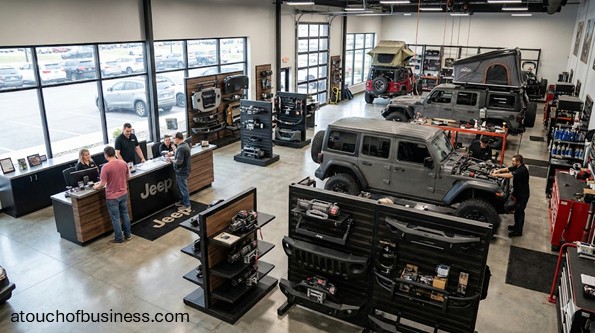
Planning a Jeep Accessories Business: First Setup Steps
Overview of A Jeep Accessories Business
A Jeep Accessories Business sells parts and add-ons for Jeep vehicles and may also install them. Some businesses focus on retail only, some focus on installation only, and many do both.
This type of business can start small, but the startup shape changes fast based on your model. An online-only store can be started by one person, while a shop with install bays, inventory, and staff needs more planning, more cash, and more compliance work.
The U.S. automotive aftermarket is large, and the Specialty Equipment Market Association reported U.S. consumers spent about $52.65 billion accessorizing and modifying vehicles in 2024 in its 2025 market report. That gives you a real market to study, but you still need to verify demand in your area and your niche before you open. See the SEMA 2025 market report.
Common products and services for this business include:
- Exterior accessories: side steps, rain guards, bug deflectors, fender flares, license plate frames, body accessories, and trim items. These categories appear on the Mopar accessories catalog.
- Interior accessories: floor mats, seat covers, cargo liners, sunshades, and interior protection items.
- Off-road and performance parts: rock rails, lift kits, and other Jeep Performance Parts shown on the Jeep Performance Parts page.
- Install services: bolt-on accessory installation, light wiring, rack setup, and fitment checks.
- Special-order sourcing: ordering parts by vehicle year, trim, and use case when you do not stock them.
- Vehicle-specific packages: grouped offers such as protection package, trail prep package, or appearance package.
Typical customers include:
- Jeep owners upgrading a daily driver: comfort, storage, and appearance items.
- Off-road users: trail-focused parts and protection accessories.
- New Jeep owners: first upgrades after purchase.
- Fleet or commercial Jeep users: utility accessories and storage solutions.
- Gift shoppers: branded or practical accessories for Jeep owners.
Common Business Models
Pick the model first because it affects your costs, your legal setup, your location, and how fast you can launch. The same Jeep Accessories Business can be a one-person side business or a full retail and install shop with staff.
These are the most common startup models:
- Online-only retailer: You sell through a website and ship orders. Lower facility costs, but you need good product data, shipping rules, and a clear returns process.
- Retail plus installation shop: Customers visit your location. You need space, layout planning, local approvals, and more equipment.
- Install-first shop with limited inventory: You keep fast-moving items and special-order most parts. This lowers startup inventory risk.
- Mobile install model: You travel to customers for simple installs. This can reduce rent, but local rules can limit where work is allowed, especially on public streets.
- Niche specialist: You focus on one lane, such as protection gear, overlanding setup, lighting, or appearance upgrades. This can make demand testing easier.
- Retail showroom with e-commerce support: Local sales plus online orders. This can work well if you want local trust and wider reach.
Ownership and staffing can also vary. You can start solo, with a partner, or with investors. You can launch part-time in a simple model, but a location with install bays usually needs full-time attention during setup and opening.
Step 1: Decide If Ownership And This Business Fit You
Start with the hard question first. Decide if owning and operating a business is for you, and then decide if this business is the right fit for you.
Passion matters here because problems will show up. If you care about the work, you are more likely to stay calm, solve the problem, and keep moving. If you do not care, many people start looking for an exit instead of a solution.
Ask yourself this exact question: “Are you moving toward something or running away from something?” If you are starting only to escape a job or a financial bind, that may not give you enough motivation when startup pressure hits.
Be direct with yourself about the tradeoff. You need to be ready for uncertain income, long hours, difficult tasks, fewer vacations, and full responsibility for the result. Ask if your family or support system is on board, and ask if you have the skills, can learn the skills, or can bring in help.
If you want a good reality check, review the startup self-check points in this startup considerations guide and the pressure-and-purpose lessons in this passion and business article.
Also talk to owners in the same business, but only talk to owners you will not be competing against. Use a different city, region, or service area. A simple way to prepare is to use the question ideas from this business owner interview guide.
Good questions to ask non-competing owners:
- What did you underestimate before opening, and what did you wish you set up first?
- Which products sold fast early, and which tied up cash?
- Which local approvals or inspections slowed your opening date?
Pros and cons before launch:
- Pros: clear niche audience, many product categories, can start small, can combine retail and install revenue, and repeat upgrades are common.
- Cons: fitment errors can be costly, inventory can tie up cash, compliance can expand if you install parts, and some modifications create safety or emissions risks you should avoid.
Pre-launch and early-launch day-to-day responsibilities usually include:
- Checking supplier catalogs and fitment details
- Calling local offices about zoning, permits, and inspections
- Comparing equipment and inventory quotes
- Writing service descriptions and pricing sheets
- Meeting advisors such as an accountant, attorney, and insurance broker
- Setting up your website, payment tools, and sales tax settings
- Creating install checklists and customer forms
- Testing sample orders, receiving, and packaging steps
Short day-in-the-life snapshot during pre-launch: You start the day with supplier calls and part fitment checks, then spend mid-day working on your business plan and permit questions. In the afternoon, you compare tool and shelving quotes, test your payment setup, and finish by updating your launch checklist.
Step 2: Define Your Offer, Customer, And Focus
Do not try to sell everything on day one. Pick a clear starting focus so you can launch faster and control inventory risk.
Your first decision is what you will sell, what you will install, and what you will not touch. For example, you may start with protection and appearance items, then add more complex installs later after you build skills, tools, and procedures.
Define your customer groups in plain language. A good startup version is usually one primary customer and one secondary customer, such as local daily drivers plus weekend trail users.
Write your opening product and service list before you order anything. Include product categories, install services, and any exclusions. This helps with pricing, insurance conversations, and legal review.
Set a policy on prohibited work early. If you install parts, avoid services that can disable required safety equipment or affect emissions controls. The National Highway Traffic Safety Administration discusses the federal “make inoperative” rule for repair businesses in an official interpretation, and the Environmental Protection Agency states defeat devices and tampering are illegal in its enforcement alert. Review the NHTSA interpretation and the EPA tampering enforcement alert before you finalize your service list.
Step 3: Choose Your Model, Ownership, And Staffing Plan
Now choose the startup structure that matches your cash, skills, and time. This is where you decide solo versus partners versus investors, and full-time versus part-time.
A solo startup is common when you begin with online sales, special orders, and simple installs. A partner model can work when one person handles sales and setup while the other handles technical install work. An investor-backed model is more common if you want a full showroom, multiple bays, and larger inventory from the start.
Make a staffing decision for the first 90 days. Decide if you will do most tasks yourself and hire later, or if you need help on day one for installs, front desk, or shipping.
Write this down in your plan as a simple staffing path. Example: start solo, use contract help for web design and accounting, then add one installer after demand is proven. If you do not have a skill yet, you can learn it or bring in a qualified person.
Step 4: Verify Demand And Profit Before You Commit
This step protects you from opening on hope. You need to verify demand and verify that the business can pay the owner and cover expenses.
Start with local demand checks. Look at how many Jeep owners are in your area, which vehicle types are common, what accessory categories local shops push, and where customers are underserved. Then compare that to your model and opening offer.
Use a simple demand test before full launch. You can collect interest through product pages, quotes, a waitlist, or pre-booked install slots. The goal is to confirm real interest, not just social media likes.
Then test profitability. Build rough pricing for your opening products and services, list all fixed and variable expenses, and check if the margin supports the business and expenses. If the numbers do not work, adjust the offer, the model, or the scale before you spend more.
If you want a simple framework for this step, use this supply and demand guide and apply it to your local Jeep niche.
Step 5: Build The Skills Plan And Your Support Team
You do not need every skill before you start, but you do need a plan to cover the gaps. Be honest here. Skill gaps are normal. Ignoring them is what causes delays.
Skills needed to launch and open this business usually include:
- Vehicle accessory fitment knowledge: match parts to year, trim, and use case
- Basic install skills: hand tools, torque discipline, and safe work habits
- Electrical basics: simple wiring and accessory power work if you offer it
- Product research skills: comparing suppliers, part numbers, and lead times
- Sales and customer communication: explaining options and limits clearly
- Basic math and pricing: markup, margins, and job pricing
- Recordkeeping: purchase records, permits, tax setup, and customer documents
- Digital basics: website updates, order processing, and payment tools
If you are weak in one area, decide now whether you will learn it or bring in help. This is also a good time to build your professional team: accountant, business attorney, insurance broker, and a designer or web developer if needed. They can help with registration, planning, tax setup, layout questions, and brand identity work.
Step 6: Build Your Startup Cost List And Essential Equipment List
This is where many first-time owners go too fast. Build the full list first, then get pricing estimates. Do not guess. Ask vendors and suppliers for quotes.
Your startup cost total will be driven by your size and model. An online-only startup and a retail-install shop are very different. A larger location, more inventory, and more equipment can raise the opening budget quickly.
Use a written startup cost worksheet and collect pricing estimates line by line. A practical guide for this step is this startup cost estimating resource.
Essential equipment and launch items (organized by category, no costs):
- Core shop tools and install tools
- Socket and wrench sets (metric and standard, based on your service mix)
- Torque wrenches
- Screwdrivers and trim removal tools
- Pliers, cutters, crimpers, and electrical hand tools
- Drill and drill bit sets
- Impact driver and impact sockets
- Floor jack and jack stands (if installs require vehicle access)
- Work lights
- Creepers and kneeling pads
- Electrical and testing tools
- Multimeter
- Wire strippers and heat-shrink tools
- Circuit tester
- Battery charger or maintainer (if needed for install work)
- Fuse assortment and connectors for approved services
- Shop safety and compliance basics
- Fire extinguishers (rated for your work area)
- First-aid kit
- Eye protection, gloves, and hearing protection
- Spill cleanup supplies and absorbent materials
- Chemical storage and labeling supplies if you use chemicals
- Safety signs and shop rules signage
- Lifting, movement, and handling
- Parts carts or rolling carts
- Shelving-safe step stools
- Hand truck or dolly
- Pallet jack (if receiving pallet shipments)
- Loading area supplies for receiving parts
- Storage and organization
- Parts shelving and bins
- Label printer and labels
- Tool storage cabinets
- Secure storage for high-value items
- Returns and hold shelves
- Retail and customer area items (if location-based)
- Sales counter
- Display shelving or wall displays
- Customer seating
- Product samples or demo display pieces
- Printed product sheets and install disclaimers
- Office and technology
- Computer and monitor
- Reliable internet service
- Printer and scanner
- Phone line or business phone system
- Point-of-sale system or checkout software
- Invoice and bookkeeping software
- Barcode scanner (if you stock inventory)
- Backup storage and password manager
- Shipping and e-commerce supplies (if selling online)
- Shipping scale
- Packing table
- Boxes, mailers, and padding
- Tape, label printer, and shipping labels
- Return labels and return instructions
- Order staging shelves
- Vehicle and mobile setup (if mobile model)
- Service van or truck
- Vehicle shelving and tool storage
- Mobile power setup if needed
- Jobsite safety cones and markers
- Commercial vehicle branding materials
- Brand and customer-facing launch materials
- Business logo files
- Website
- Business cards
- Estimate and invoice templates
- Customer authorization and install acknowledgment forms
- Storefront or exterior signage (if applicable)
Step 7: Write The Plan, Prepare Funding, And Set Up Your Financial Base
Write a business plan even if you are not applying for a loan. It forces you to make decisions before you spend cash, and it helps advisors spot weak areas early.
Your plan should cover your startup model, customer focus, opening products and services, pricing approach, demand proof, startup list, legal steps, and launch timeline. Keep it simple and clear. You can build it yourself or use an accountant or advisor to help.
If you need funding, prepare before you apply. Lenders and investors will want clear numbers, not ideas only. You can use this business plan guide as a starting point.
Set up your financial base before you open. Choose a financial institution, open business accounts after your entity and tax setup are in place, and choose how you will accept payment in person and online. Keep transactions separate from personal spending from day one.
Step 8: Choose The Business Name, Brand Basics, And Online Presence
Pick a business name early because it affects your entity filing, your domain, and your social handles. Check availability in the right order so you do not build a brand you cannot use.
The Small Business Administration explains the difference between entity name, trade name, trademark, and domain name, and notes that a doing business as name may be required depending on your structure and location. Review the SBA name guidance and search the U.S. Patent and Trademark Office trademark database before you finalize your name.
Be careful with “Jeep” in your branding. The Mopar site lists Jeep as a registered trademark of FCA US LLC, so avoid names or branding that imply you are the manufacturer or an authorized dealer unless you are. See the trademark notice on the Mopar accessories site, and use a business attorney if you are unsure.
For brand identity basics, prepare the minimum set you need to open: logo, color choices, business cards, website, signage, and simple document templates. Your website should clearly show what you sell, what you install, the vehicle types you serve, and how customers request a quote or book work.
Step 9: Lock In Suppliers, Pricing, And Product Policies
Your suppliers and your pricing shape your cash flow before opening day. Choose suppliers based on fitment accuracy, order speed, returns process, and support, not just headline pricing.
Build a small approved supplier list and document who supplies what. Include order cutoffs, shipping times, return rules, warranty handling, and who confirms fitment when there is a question.
Set pricing before launch for both products and install work. Use a simple pricing structure that covers labor time, shop supplies, payment processing, shipping if included, and your profit target. Then test the numbers against your startup plan.
If you will sell online, set your shipping policy now. The Federal Trade Commission’s Mail, Internet, or Telephone Order Merchandise Rule covers shipping promises, delays, and refunds when you cannot ship on time. Review the Federal Trade Commission rule page and build your order terms to match.
Step 10: Choose The Location, Set Up The Space, And Get Insurance Ready
If your model is location-based, pick a site that is convenient for customers and realistic for your startup size. Easy access, parking, delivery access, and local zoning approval matter more than a fancy space.
Do not sign a long lease until you confirm the use is allowed. Ask zoning and building officials if your planned use, signs, and install work are allowed at that address. If you plan to start from home, confirm home occupation rules first.
A simple layout plan before build-out saves time. Mark your receiving area, storage, retail display area, install area, office, and customer waiting area. Plan for parts flow, not just appearance. The location planning points in this business location guide can help you think through access and setup.
Get insurance quotes during this step so you know what the business needs before launch. At minimum, most startups review general liability, property and equipment coverage, and coverage tied to your model, such as commercial auto for a mobile setup.
If you work at events or on rented property, contracts may require additional insured status or specific limits, so ask early.
Step 11: Legal And Compliance
Keep this step simple and location-aware. Use official sources first, then verify the exact local rules for your address and your business activity.
Many U.S. small businesses start as sole proprietorships because it is simple, then form a limited liability company as they grow and want stronger liability separation and a clearer structure. The Internal Revenue Service explains that a limited liability company is created by state statute and tax treatment depends on elections and the number of members. See the Internal Revenue Service limited liability company page.
Federal
- Employer Identification Number (EIN): What to consider: federal tax identification number for many business functions, including hiring employees and certain tax filings. When it applies: Required for many entities and common for startups opening business accounts or hiring. How to verify locally: [Internal Revenue Service] -> [Get an employer identification number]. See the Internal Revenue Service EIN page.
- Federal activity limits for modifications: What to consider: if you install parts, do not offer work that can disable required vehicle safety equipment or violate federal safety rules for repair businesses. When it applies: Applies to install shops and mobile installers performing vehicle modifications. How to verify locally: [National Highway Traffic Safety Administration] -> [Search: make inoperative repair business 49 U.S.C. 30122]. Review the National Highway Traffic Safety Administration interpretation.
- Federal emissions tampering limits: What to consider: aftermarket defeat devices and tampering with emissions controls are illegal. When it applies: Applies if you sell or install parts that affect emissions systems or engine controls. How to verify locally: [Environmental Protection Agency] -> [Search: aftermarket defeat devices tampering illegal]. See the Environmental Protection Agency enforcement alert.
- Shipping compliance for online orders: What to consider: shipping-time promises, delay notices, and refunds when orders do not ship as promised. When it applies: Applies if you sell online, by phone, or by mail. How to verify locally: [Federal Trade Commission] -> [Mail, Internet, or Telephone Order Merchandise Rule]. Use the Federal Trade Commission rule page.
- Workplace chemical safety: What to consider: hazard communication duties for employers, including labels, safety data sheets, and employee training. When it applies: Applies if you have employees and hazardous chemicals in the workplace. How to verify locally: [Occupational Safety and Health Administration] -> [1910.1200 Hazard Communication]. Review Occupational Safety and Health Administration standard 1910.1200.
- Hazardous materials shipping: What to consider: shipping rules for lithium batteries and other regulated items. When it applies: Applies if you ship battery-powered accessories or products with regulated hazardous materials. How to verify locally: [Pipeline and Hazardous Materials Safety Administration] -> [Lithium Battery Guide for Shippers]. See the Pipeline and Hazardous Materials Safety Administration guide.
State
- Entity formation: What to consider: legal structure filing, registered agent, and state filing requirements. When it applies: Applies when you form a limited liability company, corporation, or partnership. How to verify locally: [State Secretary of State or business filing agency] -> [Business entity filings or start a business]. The Small Business Administration registration page notes registration depends on structure and location.
- Assumed name or Doing Business As (DBA): What to consider: trade name filing if your operating name differs from your legal name. When it applies: Varies by jurisdiction and structure. How to verify locally: [State Secretary of State, county clerk, or city business office] -> [DBA registration, fictitious name, or assumed name]. The Small Business Administration name page explains that DBA filing may be required and may be filed at the state, county, or city level.
- Sales and use tax registration: What to consider: permit or account to collect and remit sales tax on taxable sales, plus use tax rules for inventory or equipment purchases when applicable. When it applies: Applies in states with sales tax when you sell taxable products or taxable services. How to verify locally: [State Department of Revenue or Taxation] -> [Sales tax permit or seller permit]. The Small Business Administration tax ID page explains state tax obligations vary and should be checked on state sites.
- Employer tax and labor accounts: What to consider: state employer registration for payroll taxes, unemployment insurance, and related employer filings. When it applies: Applies if you hire employees. How to verify locally: [State Department of Revenue and state labor or workforce agency] -> [Employer registration unemployment tax]. Use the U.S. Department of Labor state labor offices directory and your state agency portal.
- Workers’ compensation insurance: What to consider: state workers’ compensation coverage rules, thresholds, and exemptions. When it applies: Varies by jurisdiction; usually applies when you hire employees. How to verify locally: [State workers’ compensation board or industrial commission] -> [Workers compensation employer requirements]. Use the U.S. Department of Labor state workers’ compensation officials directory.
- Motor vehicle registration and commercial vehicle requirements: What to consider: registration, plates, and local requirements for a service vehicle if you run a mobile model. When it applies: Applies if you use a branded service van or truck for business work. How to verify locally: [State motor vehicle agency or Department of Motor Vehicles] -> [Commercial vehicle registration]. Use USAGov state motor vehicle services to locate the right state office.
City-County
- General business license: What to consider: local business tax certificate or business license required by city or county. When it applies: Varies by jurisdiction; common for storefronts and many home-based or mobile businesses. How to verify locally: [City or county business licensing office] -> [Business license portal or business tax certificate]. The Small Business Administration licenses and permits page notes local licenses may be required.
- Zoning approval and home occupation rules: What to consider: whether retail sales, installation work, storage, signage, and deliveries are allowed at your address. When it applies: Applies to every physical location, including home-based and mobile storage locations. How to verify locally: [City or county planning and zoning department] -> [Zoning map, permitted uses, home occupation permit]. Find your local office through USAGov local governments.
- Certificate of Occupancy (CO) and building approvals: What to consider: occupancy approval for a retail or install space, plus building or trade permits for tenant improvements. When it applies: Applies when opening or changing a physical location or modifying the space. How to verify locally: [City or county building department] -> [Certificate of Occupancy and tenant improvement permits].
- Sign permits: What to consider: exterior signs, window signs, monument signs, and temporary opening signs. When it applies: Applies if you install exterior or large visible signs. How to verify locally: [City or county building or sign permit office] -> [Sign permit requirements].
- Right-of-way or curbside work permits: What to consider: permits or restrictions for doing work on public streets, sidewalks, or curb areas. When it applies: Varies by jurisdiction; applies to mobile models using public space instead of private property. How to verify locally: [City public works or right-of-way office] -> [Right-of-way permit mobile service].
- Wastewater and stormwater controls: What to consider: runoff and wastewater handling rules for install work, floor drains, and outdoor washing or cleaning. When it applies: Applies if your activity generates wastewater, uses floor drains, or exposes materials to weather. How to verify locally: [City sewer utility, pretreatment program, or state environmental agency] -> [Industrial pretreatment local limits, stormwater industrial permit]. Review the Environmental Protection Agency industrial stormwater page and the Environmental Protection Agency pretreatment local limits page.
- Used oil and waste handling: What to consider: used oil storage, spill control, and waste classification if your installs create used oil or chemical waste. When it applies: Applies if you change fluids, handle used oil, or generate hazardous waste. How to verify locally: [State environmental agency or city hazardous waste program] -> [Used oil generator requirements, hazardous waste generator]. See the Environmental Protection Agency used oil business guidance and hazardous waste generators page.
- Motor vehicle waste disposal wells: What to consider: floor drains or sinks tied to septic or dry wells can be regulated or banned in some cases. When it applies: Applies if your site has service-bay floor drains, sinks, septic systems, or dry wells. How to verify locally: [State underground injection control program or environmental agency] -> [Motor vehicle waste disposal wells]. Review the Environmental Protection Agency motor vehicle waste disposal wells page.
Varies By Jurisdiction
Local rules can change by state, county, and city. Do not rely on a generic checklist alone. Verify your exact address, your exact business activity, and whether you are retail-only, install-only, home-based, or mobile.
Use this quick local verification checklist:
- Confirm your legal structure filing office and business name rules with your state filing agency. A starting point is USAGov state governments.
- Confirm sales tax registration and employer account setup with your state tax and labor agencies.
- Confirm zoning, home occupation, business license, sign rules, and Certificate of Occupancy (CO) with city or county offices.
- Confirm any environmental or wastewater rules before signing a lease if you will install parts or clean parts on site.
- Confirm whether mobile service is allowed on public right-of-way or only on private property with permission.
Questions that help you decide what applies:
- Will you open a storefront, run from home, or operate as a mobile installer?
- Will you hire employees in the first 90 days?
- Will you use floor drains, handle chemicals, or generate used oil or other vehicle service waste?
Step 12: Set Up Launch Readiness, Customer Process, And Opening Checklist
This step turns your plan into an opening-ready business. Keep it simple and finish the basics in order.
First, set your customer process. You need a clear quote process, install authorization, invoicing, payment setup, and a way to track special orders. If you sell online, test checkout, shipping labels, taxes, and returns before launch.
Next, prepare proof assets and customer-facing materials. That includes your product photos, service descriptions, warranty terms, and install policy language. Customers should know what you do, what you do not do, and what happens if a part arrives late or does not fit.
Set a simple startup marketing plan. Your goal is to get your first customers, not build a large campaign. Focus on local visibility, clear service pages, vehicle-specific examples, and direct contact options. If you have a storefront, plan a small opening promotion or soft opening after all approvals are complete.
Pre-opening checklist:
- Final compliance checks: entity filed, tax registrations complete, local approvals confirmed, and required permits posted if applicable
- Insurance in force: general liability and other coverages active before work begins
- Essentials and gear check: tools, shelving, checkout system, internet, labels, and safety supplies ready
- Supplier check: opening suppliers approved, order terms documented, and returns contacts saved
- Customer documents ready: quotes, invoices, install authorization, and return policy
- Payment setup tested: card processing, online checkout, and receipts working
- Brand basics ready: website live, phone working, business email active, and signage installed if applicable
- Marketing kickoff: launch date posted, local outreach started, and basic grand opening plan scheduled if you have a customer-facing location
- Opening-day test run: process one sample sale and one sample install job from start to finish
Red flags to watch before launch:
- You have not verified zoning or local approvals for the address
- You are buying broad inventory before testing demand
- You do not have a clear fitment process by vehicle year and trim
- You plan to offer complex installs without the tools, skills, or insurance review
- You are unclear on sales tax setup or who handles bookkeeping
- You are using a business name without checking state availability, domain availability, and trademark risk
- You are accepting customer orders before your shipping and delay policy is ready
- You are relying on one supplier without a backup
- You are opening without written customer forms and payment workflows
If any red flag is still active, pause and fix it before you open. A slower launch is better than opening with legal or setup gaps.
27 Practical Tips for a Jeep Accessories Business
This section gathers practical startup tips you can use at different stages of launching a Jeep Accessories Business.
Use the tips that fit your current stage, and skip the rest until you need them.
It helps to save this page and come back to it as your plan gets more detailed.
Work through one tip at a time so you build steady progress instead of trying to do everything at once.
Before You Commit (Fit, Skills, Reality Check)
1. Decide first if business ownership fits you before you decide if this niche fits you. A Jeep-focused startup can be exciting, but you still need to be ready for uncertain income, long hours, and full responsibility during setup.
2. Ask yourself, “Are you moving toward something or running away from something?” If you are starting only to escape a job or financial stress, that may not be enough to carry you through startup problems and delays.
3. Talk to owners in the same business only if they are in a different city or region and not direct competitors. Ask what slowed their opening, which products tied up cash early, and what they would set up first if they started again.
Demand And Profit Validation
4. Pick a narrow launch focus and test demand before you stock a wide range of parts. Starting with common Jeep categories such as protection, interior accessories, or basic bolt-on upgrades makes it easier to validate local interest.
5. Verify demand with real actions, not guesses. Collect quote requests, pre-book install slots, or build a waitlist for a few specific Jeep models so you can see what people actually want.
6. Check profitability before opening by pricing your first products and services and listing every startup and opening expense. Your pricing has to cover costs and still leave room to pay yourself, or the model needs to change.
Business Model And Scale Decisions
7. Choose your startup model early because it changes your budget and legal steps. Online-only, retail with install bays, and mobile installation each need different equipment, insurance, and local approvals.
8. Decide if you will launch solo, with partners, or with investors before you sign leases or order inventory. A solo startup can work for a lean model, while a larger shop with more inventory and install capacity may need more capital and help.
9. Be clear about full-time or part-time from day one. A part-time launch can work for a simple online or special-order model, but a customer-facing shop with installs usually needs full-time attention to open properly.
Legal And Compliance Setup
10. Choose your legal structure before you start opening accounts or filing local paperwork. Many first-time owners compare sole proprietorship and limited liability company options first, then file based on risk, structure, and growth plans.
11. Apply for an Employer Identification Number (EIN) directly with the Internal Revenue Service after your entity decision is made. You will likely need it for banking, taxes, and hiring, and the Internal Revenue Service provides the official application.
12. Register for state sales tax before you sell taxable accessories, and set up employer accounts if you plan to hire. State tax and labor rules vary, so verify your exact requirements with your state Department of Revenue and labor agency.
Permits, Location Rules, And Vehicle Modification Limits
13. Confirm local zoning before you commit to a shop, warehouse, or home-based setup. Ask planning and building offices if your address allows retail sales, parts storage, installation work, and the signs you want to install.
14. Ask whether your space needs a Certificate of Occupancy (CO) before opening. This matters when you move into a commercial space or change how a space is used.
15. If you plan to install parts, define what work you will not do before launch. Avoid services that can affect required safety equipment or emissions controls unless you have confirmed the rules and know the work stays compliant.
Budget, Funding, And Financial Setup
16. Build your startup budget from a written item list, not rough guesses. Your total will change based on model and size, especially if you add inventory, install tools, or a customer-facing location.
17. Get actual price quotes for tools, shelving, displays, software, and opening inventory before you look for funding. Quote-based budgeting helps you avoid underfunding and gives lenders or investors a clearer picture.
18. Set up your financial base before opening by choosing a financial institution, opening business accounts, and deciding how you will accept payment. Keep business transactions separate from personal spending from the start.
Location, Build-Out, And Equipment
19. Pick a location that is easy for your target customers to reach if your model includes local sales or installs. Good access, parking, and delivery space usually matter more than a higher-end address at launch.
20. Lay out the space for flow before you move in equipment. Plan receiving, storage, customer area, and install work areas so parts and people move safely and you do not waste space.
21. Build your essential equipment list by category and buy only what matches your launch services. A retail-only startup needs shelving, checkout tools, and shipping supplies, while install work also needs torque tools, jacks or lifts, safety gear, and organized workstations.
Suppliers, Pricing, And Pre-Opening Paperwork
22. Open supplier accounts only after you document your launch product list and target Jeep models. This helps you avoid random inventory and keeps your first orders focused on parts you can support.
23. Create a fitment checklist for every product you plan to sell or install, including model, year, trim, and any special notes. Fitment errors are one of the fastest ways to lose time and cash before a new shop is stable.
24. Set pricing and paperwork before you open. Prepare quote templates, install authorization forms, invoices, return terms, and special-order rules so customers know the process from the first day.
Branding And Pre-Launch Marketing
25. Choose your business name only after checking state name availability, domain options, and trademark risk. Be careful with names that can imply you are officially tied to Jeep or Mopar when you are not.
26. Build a simple launch-ready online presence with clear service descriptions, product categories, and contact options. First-time customers should quickly see what vehicles you support and how to request a quote or book an install.
27. Plan a basic pre-launch promotion and opening checklist instead of waiting for the perfect campaign. Set an opening date, confirm approvals and insurance are active, test checkout and payment tools, and run a full practice sale before you announce the launch.
FAQs
Question: Can one person start a Jeep Accessories Business, or do I need a team?
Answer: You can start alone if you keep the launch model simple, such as online sales, special orders, or basic bolt-on installs. A larger shop with a showroom and install bays usually needs more cash, more equipment, and help sooner.
Question: What is the best startup model for a new Jeep accessories business owner?
Answer: Start by choosing one model first: online-only, retail plus installation, or mobile installation. Your model drives your budget, local approvals, insurance needs, and equipment list.
Question: What should I sell first when I open?
Answer: Start with a narrow product mix that is easy to source and fit, such as interior protection, exterior accessories, and simple bolt-on upgrades. A smaller opening line helps you test demand without tying up too much cash in inventory.
Question: How do I know if there is enough demand in my area before I open?
Answer: Test demand with real actions, such as quote requests, pre-booked install slots, or a waitlist for specific Jeep models and accessory packages. This shows actual interest and helps you choose which products to stock first.
Question: How do I check if the business can make enough money before launch?
Answer: Build a simple pricing sheet for your first products and install services, then list all startup and opening costs. If the margin does not cover expenses and owner pay, change the model, scale, or product mix before you spend more.
Question: What skills do I need before opening a Jeep Accessories Business?
Answer: You need basic fitment knowledge, part lookup skills, pricing basics, and clear communication with customers and suppliers. If you plan to install accessories, you also need safe tool use and a process for checking vehicle year, trim, and part compatibility.
Question: What equipment do I need before I can open?
Answer: Your list depends on your model, but most startups need shelving, a computer, internet service, checkout or invoicing tools, and storage bins. Install-focused shops also need hand tools, torque wrenches, safety gear, work lighting, and organized work areas.
Question: Should I start as a sole proprietorship or form a limited liability company?
Answer: Many new owners compare a sole proprietorship with a limited liability company because the setup and liability structure are different. Choose the structure before banking and tax setup, and use an accountant or attorney if you are unsure.
Question: Do I need an Employer Identification Number (EIN) before opening?
Answer: Many startups get an Employer Identification Number (EIN) early because it is commonly needed for taxes, hiring, banking, and licensing steps. Apply through the Internal Revenue Service directly so you do not pay a third party for something the government provides for free.
Question: What tax registrations do I need before I sell Jeep accessories?
Answer: You usually need state tax registration before you sell taxable accessories, and you may need employer accounts if you hire staff. State rules vary, so confirm sales tax and employer setup with your state tax agency and labor agency.
Question: How do I choose a business name without creating legal problems?
Answer: Check state name availability, domain availability, and trademark conflicts before you commit to a name. Do not use branding that suggests you are Jeep or Mopar, or that you are an authorized dealer, unless that is officially true.
Question: What permits and local approvals should I verify before I sign a lease?
Answer: Ask your city or county about zoning, local business licensing, sign permits, and whether your space needs a Certificate of Occupancy (CO). Verify this before you sign because a good location can still be a bad fit if your use is not allowed there.
Question: What insurance should I have in place before opening?
Answer: Most owners start by reviewing general liability insurance and property or equipment coverage before opening. If you run a mobile model or use a service vehicle, ask about commercial auto coverage too.
Question: Are there any accessory installs I should avoid before launch?
Answer: Yes, avoid installs that can interfere with required safety equipment or emissions controls until you fully understand the rules. Set a written “we do not perform” list before launch so you do not take risky jobs under pressure.
Question: How should I set up suppliers and pricing before I open?
Answer: Create a short approved supplier list and document lead times, returns, and fitment support before you place opening orders. Set pricing for products and installs in writing so every quote follows the same rules.
Question: What systems should I have ready before my first sale?
Answer: Set up your checkout or invoicing system, payment processing, sales tax settings, and basic bookkeeping before launch. Also prepare quote forms, install authorization forms, and special-order policies so your process is consistent from day one.
Question: What should my daily workflow look like in the first month after opening?
Answer: Plan each day around parts checks, supplier follow-up, customer quotes, install scheduling, and paperwork cleanup. A simple daily routine helps you catch fitment issues early and keeps orders from piling up.
Question: When should I hire my first employee, and what should I hand off first?
Answer: Hire when sales volume is steady enough that you are falling behind on quotes, installs, or order handling. Most new owners hand off repeatable tasks first, such as receiving, order prep, or basic installs, while they keep pricing and supplier decisions.
Question: What is a smart early marketing plan for opening week?
Answer: Keep it simple and local with a clear website, basic social profiles, and a launch message that shows what Jeep models and services you support. If you have a storefront, plan a soft opening after your approvals and insurance are active.
Question: How do I protect cash flow in the first month?
Answer: Start with a tight inventory plan and avoid over-ordering slow items. Track cash daily, collect payment quickly, and watch how much money is tied up in special orders and display stock.
Question: What are the most common startup mistakes before opening a Jeep accessories business?
Answer: Common problems include skipping zoning checks, buying too much inventory too early, and selling parts without a fitment process. Another common issue is opening before your forms, tax setup, and payment system are tested.
Question: What should be on my final pre-opening checklist?
Answer: Confirm your legal filings, tax setup, local approvals, insurance, supplier accounts, tools, and payment systems are all ready before launch day. Run a full practice sale and, if you install parts, a practice job from quote to payment so you can fix gaps before the public sees them.
Related Articles
- How to Start an Auto Parts Business
- Starting a Custom Car Shop
- Starting a Successful Car Audio Business
- Car Wrapping Business Startup Guide
- Starting an ATV Dealership
- Starting an ATV Repair Shop
- How to Open an Auto Body Repair Shop
- How to Start an Auto Detailing Business
- Auto Repair Shop Startup
- Open a Used Car Dealership
- Start a Car Wash
- Start a Oil Change Business