
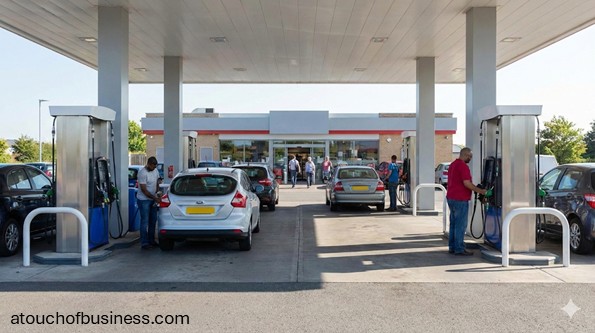
Permits, Fuel Systems, and Pre-Opening Planning Basics
A gas station is a retail site that sells fuel and often includes a convenience store. Some locations add services like a car wash, air and vacuum, propane exchange, or quick food options.
This is a location-based business with environmental, safety, and consumer-protection rules. It’s also capital intensive, which affects how you plan funding, ownership structure, and buildout timing.
How Does a Gas Station Generate Revenue
Most gas stations earn revenue from a mix of fuel sales and inside-store sales. Your exact mix depends on whether you run a fuel-only site or add a convenience store and other add-ons.
- Fuel sales: gasoline and diesel sold through dispensers (and sometimes ethanol blends where allowed and supplied).
- In-store retail: packaged snacks, beverages, and basic travel essentials.
- Ancillary services: car wash, air and vacuum, propane exchange, lottery (where permitted), and other add-ons tied to your location and permits.
Products and Services You May Offer
What you offer is partly a business choice and partly a permit choice. Fuel retail has a different compliance footprint than food service or a car wash.
- Core products: gasoline, diesel, motor oil, windshield washer fluid, automotive fluids.
- Convenience items: packaged foods, drinks, tobacco products (age-restricted rules vary), basic auto supplies.
- Common services: air and vacuum, restrooms, ATM, car wash, propane exchange, EV charging (site and utility dependent).
Who Your Customers Usually Are
Your customers are mostly drivers who value quick access and convenience. That includes commuters, local residents, delivery drivers, rideshare drivers, and travelers.
If your site is near a highway, your customer mix can tilt toward travelers and long-haul traffic. If it’s in a neighborhood corridor, it often tilts toward repeat local visits.
Common Gas Station Business Models
Before you do anything else, decide what you’re actually building. A “gas station” can mean several business setups, and each has different approvals and contracts.
- Independent fuel-and-store: you operate under your own brand and source fuel through a supplier agreement.
- Branded dealer: you operate the site but use a major fuel brand under a supply and branding agreement.
- Fuel-only site: minimal retail inside, focused on dispensing fuel and basic services.
- Travel center format: larger site with multiple pumps and expanded retail and services.
- Add-on model: fuel plus car wash or other add-ons that drive higher ticket totals.
Pros and Cons to Expect
You’re not just opening a store. You’re opening a regulated fuel site that lives at the intersection of retail, construction, safety, and environmental compliance.
So what’s good—and what’s hard?
- Pros: steady baseline demand in many locations, repeat traffic, multiple revenue streams, strong visibility when placed well.
- Cons: high startup complexity, higher liability exposure than many retail businesses, strict equipment requirements, and location decisions that are difficult to reverse.
Reality Check Before You Start
Start here, not at the pumps. Business ownership is full responsibility, even when the concept looks simple on the surface. If you need a grounding point, review business startup considerations before you price a property or talk to lenders.
Now ask yourself the question that matters more than your logo: “Are you moving toward something or running away from something?”
Passion still matters in a highly regulated business. It won’t replace skill, but it helps you stay steady when permitting slows down or inspections take longer than planned. If you want that perspective, read why passion can support persistence.
And don’t do this in a vacuum. Talk to owners in the same business, but only in a non-competing area. You want honest answers, not guarded ones. You can use a structured interview approach like the one in a business inside look.
Here are a few questions to ask non-competing owners:
- What slowed you down the most before opening—permits, contractors, fuel supply, or something else?
- What did you underestimate about the site itself (access, layout, traffic flow, neighbors)?
- If you could redo one early decision, what would it be?
Step 1: Choose the Target Format and Scale
Pick the business model first, because it drives everything else: site size, funding, permits, equipment, and staffing. Are you building fuel-only, fuel plus convenience store, or fuel plus multiple add-ons?
This is usually not a solo, low-cost startup. Most new owners plan for a formal entity structure and outside funding because the site and equipment requirements are significant.
Step 2: Define Your Trade Area and Demand Signals
Start by defining where your customers come from. A gas station is a location-dependent business, so your trade area matters more than your social media presence.
Use basic demand checks like nearby traffic patterns, competing stations, and whether the area supports repeat stops. If you want a simple framework for evaluating demand, review supply and demand basics and apply it to your location shortlist.
Step 3: Size Up Competition and Positioning
Identify direct competitors: nearby gas stations, travel centers, and high-volume convenience stores. Note what they offer, how they’re accessed from the road, and how modern their site looks.
Your goal is not to copy them. Your goal is to understand what customers already expect in that corridor so you can plan a realistic launch scope.
Step 4: Decide on Ownership and Control of the Site
Fuel retail is tied to the property. Decide whether you’ll buy land, buy an existing station, or lease a site.
If you’re evaluating an existing station, you’ll need a deeper due diligence process than a typical retail lease. Environmental history, tank records, and inspection history can change the entire deal.
Step 5: Build a Realistic Startup Cost Structure
Instead of guessing, build your startup cost structure by category: site control, construction, fueling system, store buildout, signage, initial inventory, technology, and professional services.
Use a structured approach like estimating startup costs so your numbers are organized and you know what to request in contractor bids and lender packages.
Step 6: Pick the Legal Structure Early
A gas station has higher liability exposure than many startups, so the business structure decision is not an afterthought. Many owners choose a limited liability company or corporation structure instead of operating as an individual owner, but the right fit depends on your plan and risk profile.
When you’re ready to file, use a step-by-step guide like how to register a business and match it to your state’s filing system.
Step 7: Draft the Business Plan You Can Defend
Even if you don’t plan to borrow, write a business plan. It forces clear decisions on your model, your site strategy, and your launch timeline.
If you want a clean structure, follow how to write a business plan and focus on the parts lenders and inspectors care about: location, buildout plan, compliance plan, and financial assumptions.
Step 8: Line Up Funding and Banking
Most gas station startups involve a mix of equity and financing. Your plan might include investor capital, a commercial loan, equipment financing, or a combination.
If you pursue lending, use a resource like how to get a business loan to prepare your documents and understand what lenders typically request.
Step 9: Choose the Name and Claim Your Digital Real Estate
Your name needs to work for signs, listings, and permits. If you’re branded under a supplier agreement, your naming options may be limited by contract.
Lock in your name, domain, and social handles while your filing is in progress. A practical guide like selecting a business name can help you avoid conflicts and confusing names.
Step 10: Plan the Compliance Path for Fuel Systems
Fuel storage and dispensing requires specialized compliance planning. In many locations, you’ll be working with fuel storage tanks (often underground), spill and overfill protection, leak detection requirements, and site documentation.
Expect your state environmental program to be involved in approvals and inspections. Your plan should include how you’ll document the installation, testing, and records you must have ready before opening.
Step 11: Confirm Zoning, Building Approval, and Site Permits
Before you close on a site or sign a long lease, confirm the use is allowed and the site can be approved for your intended buildout. This includes zoning approval, building permits, and fire review.
If you’re building or remodeling a structure, you’ll likely need a Certificate of Occupancy (CO) before opening. The exact triggers vary by jurisdiction, so your local building department is the right place to confirm the sequence.
Step 12: Select the Core Vendors and Professional Support
Gas station startups require specialists. That typically includes a petroleum equipment contractor, a general contractor, and vendors for point of sale, payment processing, and security.
You can also reduce mistakes by building a small advisory circle early. If you want a structured approach, see building a team of professional advisors and choose experts who have worked with regulated retail sites.
Step 13: Choose the Point-of-Sale and Payment Setup
You’ll need a point of sale (POS) system for inside sales and a compliant payment setup for pay-at-the-pump transactions. This also affects receipts, recordkeeping, and how you reconcile sales data.
Plan this early because your POS choice can influence wiring, networking, and counter layout.
Step 14: Build the Supplier Plan for Fuel and In-Store Inventory
Fuel supply is usually governed by contract, pricing terms, and delivery logistics. Your arrangement may also affect branding, signage, and dispenser labeling.
For the store, decide what product categories you’ll stock at launch. Keep it focused. You can expand later, but opening with a scattered product mix makes ordering and pricing harder than it needs to be.
Step 15: Set Pricing Rules You Can Maintain
You need a pricing plan for both fuel and in-store items. The goal is consistency and clarity, not constant tinkering.
If you want a structured way to think about it, use pricing your products and services and translate it into simple pricing rules you can apply at opening.
Step 16: Plan Insurance and Risk Requirements
Some insurance is optional, and some becomes required depending on what you do, your lease, and whether you have employees. Fuel sites also add environmental risk that can require specialized coverage depending on your tanks and state requirements.
Use business insurance planning to build a coverage list, then verify which items are required by your lender, landlord, and state programs.
Step 17: Build Your Brand Assets and Visibility Basics
You don’t need a big branding project to open, but you do need consistent basics: a clean logo, readable signage, and correct business listings. If you’re new to this, corporate identity considerations helps you define the minimum set of assets to look legitimate from day one.
Plan your on-site signs carefully because they may require permits and design review. A helpful starting point is business sign considerations.
Step 18: Create the Simple Marketing Plan for Opening Week
A gas station launch is local. Most of your early customers will find you because they drive past the site, not because they searched for you on a national platform.
That said, your website and listings still matter. Use an overview of developing a business website to build a basic presence, then plan a practical opening push using ideas for your grand opening and how to get customers through the door.
Step 19: Decide Your Staffing and Hiring Timeline
Most gas stations need coverage beyond what one person can handle, especially if you plan extended hours. Even if you start lean, you should plan staffing before opening so training and scheduling don’t happen at the last minute.
If you need a clean process, use how and when to hire and match your hiring pace to your opening timeline.
Step 20: Run the Pre-Opening Checks and Open with Proof
Before you open, you need proof that the site is approved, systems are tested, and records are ready for inspection. That includes final building approvals, fire sign-off, fuel system compliance documentation, and verified dispenser labeling.
This is also the time to revisit common startup mistakes so you don’t create avoidable delays. A quick review like avoid these common startup mistakes can help you spot gaps before an inspector or lender does.
Essential Equipment and Setup List
This list focuses on what’s commonly essential to open a fuel retail site. Your exact setup depends on whether you add a convenience store, food options, a car wash, or EV charging.
Use this as an item checklist when you request bids and plan inspections.
Fuel Storage and Dispensing System
- Underground storage tanks (Underground Storage Tank (UST) system) designed for petroleum fuels
- Tank fill ports and spill containment equipment
- Overfill prevention equipment
- Fuel piping (including containment features where required)
- Leak detection system components (tank and piping monitoring)
- Fuel dispensers (pumps) with required labeling capability
- Dispenser shear valves and emergency shutoff equipment
- Breakaway couplings for dispenser hoses
Safety, Environmental, and Site Controls
- Emergency shutoff switches and clear shutoff signage
- Fire extinguishers and required safety signage (based on local fire code)
- Spill response supplies for the forecourt and storage areas
- Containment and drainage controls required by local building and environmental approvals
- Exterior lighting for the forecourt and entrances
Convenience Store Core (If You Have an Inside Store)
- Point of sale system (register hardware and software)
- Card payment terminals and payment processing setup
- Receipt printer and cash management tools
- Refrigeration for packaged beverages and chilled items (if offered)
- Shelving and display fixtures
- Storage shelving for back-room inventory
Security and Technology
- Security camera system with recording storage
- Alarm system (if required by lease, insurer, or local rules)
- Networking equipment for POS, cameras, and back-office connectivity
- Office computer and secure data storage practices
Signage and Customer-Facing Setup
- Price sign system (type depends on site and local sign approval)
- Dispenser labeling consistent with fuel rating posting rules
- Required safety signs (no smoking, emergency shutoff directions, and local requirements)
- Exterior building signage and hours signs (permit dependent)
Cost Drivers and How to Estimate Without Guessing
If you’re new to large buildouts, it’s easy to underestimate the number of cost categories. Don’t rely on a single guess. Build an itemized estimate and request written bids.
- Site control: purchase terms, lease terms, tenant improvement responsibilities, and environmental history.
- Construction and utilities: site grading, concrete, electrical, lighting, and utility upgrades.
- Fuel system: tanks, piping, dispensers, leak detection components, and specialized installation labor.
- Permits and approvals: plan review fees, inspections, and any required site studies.
- Technology: POS, payment processing, network setup, cameras, and monitoring tools.
Scale changes everything. A small fuel-only site has different needs than a fuel-and-store site with multiple add-ons. That’s why organizing your estimate matters before you talk to lenders or investors.
Skills You’ll Need to Get Open
You don’t need to be an expert in every category, but you do need enough understanding to manage the buildout and compliance path. If you don’t have a skill, you can learn it or hire for it.
- Site selection judgment and lease or purchase negotiation awareness
- Basic financial planning and document organization for funding
- Contract review and vendor management
- Compliance coordination (environmental, safety, and consumer labeling)
- Hiring and training planning (if you open with staff)
- Customer service basics and conflict handling
Day-to-Day Activities You’re Signing Up For
This is not a full operations manual. This is a reality check so you know what you’re building your life around.
- Monitoring fuel deliveries and inventory levels
- Checking dispenser function and forecourt safety conditions
- Reconciling daily sales and payment activity
- Coordinating with vendors and contractors for repairs and compliance checks
- Managing staffing coverage and basic training
- Keeping required records available for inspections
A Day in the Life of a Gas Station Owner
Your day often starts before customers notice you exist. You may check overnight reports, confirm staffing coverage, and scan for any equipment issues that could delay opening the doors.
During the day, you shift between the forecourt, the inside store, and vendor calls. You’ll also handle compliance-related tasks that don’t look urgent until they are—like record organization, inspection readiness, and fuel system documentation.
Near the end of the day, you’re reconciling sales, reviewing exceptions, and setting up the next day’s coverage. If you run multiple locations, your time leans more into supervision and vendor management than working a counter.
Red Flags to Watch for Before You Commit
Gas stations can look profitable on the surface while hiding problems that show up after closing. These red flags are worth slowing down for.
- Unclear environmental history: missing tank records, missing prior site assessments, or vague answers about past leaks.
- Old or undocumented fuel system components: unclear installation dates, missing testing records, or missing documentation required by the state program.
- Poor site access: difficult turns, limited entrances, or layouts that create traffic conflicts.
- Compliance gaps: unresolved inspection findings, expired approvals, or unclear responsibility between landlord and tenant.
- Supply contract constraints: terms that restrict pricing, branding, signage, or equipment choices without clear upside.
- Buildout surprises: major utility upgrades needed, drainage issues, or site constraints that limit your planned layout.
Varies by Jurisdiction
Some steps are universal, but many approvals depend on state and local rules. Your goal is to confirm requirements before you commit to a site and before you order major equipment.
If you’re ever stuck, ask yourself: is this a business formation issue, a tax account issue, a building approval issue, or a fuel system issue? That question helps you find the right office faster.
Federal (Universal Starting Points)
- Employer Identification Number: needed for most business banking and tax accounts; applies when you form a business entity or hire employees; verify at IRS -> search “Get an employer identification number.”
- Fuel rating posting and labeling: applies when you sell liquid automotive fuel; verify at Federal Trade Commission -> search “Fuel Rating Rule.”
- Hazard communication: applies when you have employees exposed to hazardous chemicals; verify at Occupational Safety and Health Administration -> search “1910.1200 hazard communication.”
- Stormwater during construction: applies when construction activity disturbs 1 acre or more of land (or less than 1 acre if part of a common plan that will disturb 1 acre or more) and triggers stormwater permitting; verify at Environmental Protection Agency -> search “stormwater discharges from construction activities.”
- Accessibility standards: applies when you build or alter public accommodations; verify at ADA.gov -> search “2010 ADA Standards for Accessible Design.”
State (Varies by State)
- Business registration: needed to form a limited liability company or corporation; verify at your state Secretary of State -> business entity search and business filing portal.
- State tax accounts: may include sales and use tax accounts and employer withholding accounts; verify at your state Department of Revenue -> search “register for sales tax” and “withholding account.”
- Fuel-related tax and licensing: requirements vary and may depend on whether you are a retailer, distributor, or both; verify at your state Department of Revenue or motor fuel tax division -> search “motor fuel tax license” and “fuel retailer requirements.”
- Underground storage tank program: applies when you own or operate regulated tanks; verify at your state underground storage tank implementing agency -> search “state underground storage tank program.”
- Weights and measures oversight: applies to fuel dispensers used in commerce; verify at your state weights and measures office -> search “fuel dispenser inspection weights and measures.”
City and County (Varies by Jurisdiction)
- Business license: may be required to operate at a physical location; verify at city or county business licensing portal -> search “business license application” plus your city or county name.
- Zoning approval: applies to the property use and site layout; verify at planning or zoning department -> search “zoning lookup” and “gas station use” plus your jurisdiction name.
- Building permits and inspections: applies to new construction and remodels; verify at building department -> search “building permit application” and “Certificate of Occupancy.”
- Fire review and inspection: applies to fuel dispensing and site safety features; verify at fire marshal or fire department prevention bureau -> search “plan review fuel dispensing” plus your jurisdiction name.
- Sign permits: applies to monument signs and building signs; verify at planning or building department -> search “sign permit” plus your jurisdiction name.
- Driveway and access approvals: may apply when you modify entrances or connect to public roads; verify at public works or state department of transportation (for state roads) -> search “driveway permit” plus your road type and jurisdiction.
Quick Owner Questions to Decide What Applies
- Are you building new, remodeling, or buying an existing operating station with existing approvals?
- Will you have employees in the first 90 days, or start with limited hours and add staff later?
- Will you add food preparation, a car wash, propane, or other add-ons that trigger extra permits?
Pre-Opening Checklist
This is the practical finish line. You’re confirming approvals, documentation, and the basics that make opening day smooth.
- Final building approvals completed, including Certificate of Occupancy (CO) when required
- Fire inspection completed and required safety signage installed
- Fuel system documentation organized and ready for inspection
- Fuel dispenser labeling and fuel rating posting confirmed
- Payment systems tested for inside sales and pay-at-the-pump transactions
- Inventory stocked to match your opening scope
- Staffing schedule ready and basic training completed (if applicable)
- Business listings and basic website live so customers can find you
Quick Recap and Fit Check
Starting a gas station is a serious buildout. You’re choosing a location-dependent business with strict equipment requirements and a compliance path that needs planning from day one.
If you’re looking for a low-cost solo startup, this usually isn’t it. If you’re ready to coordinate contractors, approvals, funding, and a larger risk profile, it can be a structured path with clear steps.
Ask yourself one more time: “Are you moving toward something or running away from something?” Then add a practical self-check.
- Do you have the patience for permitting timelines and inspections?
- Can you handle responsibility for a regulated fuel site, even when problems show up at the worst time?
- Will you actually talk to non-competing owners and learn from their reality before you commit?
101 Proven Tips For Your Gas Station
Here you’ll find a set of practical tips to help you think, plan, and act with more clarity as a gas station owner.
Pull out the ideas that fit your situation, and ignore the rest for now.
Save this page so you can come back when you hit a decision point or a problem you didn’t expect.
Try one tip, give it time to work, then return and add the next.
What to Do Before Starting
1. Decide whether you’re buying an existing site, converting a property, or building new because each path changes permits, timeline, and risk.
2. Write a clear launch scope before you shop for locations—fuel-only, fuel plus convenience store, or fuel plus add-ons like a car wash.
3. Set “deal-breakers” in advance, such as missing tank records, a site that can’t be approved for fuel dispensing, or an entrance that forces unsafe turns.
4. Build a timeline backward from your target opening date and include plan review, inspections, and equipment lead times.
5. Separate startup costs into buckets like site control, construction, fuel system, store buildout, technology, and professional fees so nothing gets forgotten.
6. Assume you’ll need outside funding unless you already have significant capital—fuel retail is rarely a small, solo cash startup.
7. Talk to at least three owners in non-competing areas and ask what delayed their opening and what they would do differently.
8. Decide early whether you want a branded fuel relationship or an independent approach, because branding can affect signage, contracts, and supplier terms.
9. Budget for professional help you can’t fake, such as a petroleum equipment contractor and an experienced commercial real estate attorney.
10. Create a digital and paper “compliance folder” on day one so you can store permits, inspections, and vendor documents in one place.
Location and Site Due Diligence
11. Study access, not just traffic—an area can be busy and still be a bad site if turning is dangerous or awkward.
12. Confirm tanker delivery access and the delivery path so drivers can unload without blocking pumps or backing into customer lanes.
13. Verify utility capacity for your plan, especially electric service for canopy lighting, refrigeration, cameras, and payment systems.
14. Check drainage and stormwater flow across the lot because standing water can create safety issues and complicate approvals.
15. Ask for the property’s environmental history and prior assessments, and treat missing history as a warning sign.
16. If underground fuel tanks are on site, request inspection, testing, repair, and closure records and confirm they match state program files.
17. Confirm property lines, easements, shared driveways, and access rights because legal access problems can be difficult to fix later.
18. Walk the site during rush hours and after dark to evaluate visibility, lighting needs, and customer comfort.
19. Measure sightlines for your price sign and entrance signs so drivers can see you in time to turn safely.
20. Check nearby land uses that may trigger extra scrutiny, like schools, dense residential zones, or sensitive community sites.
21. Compare competitors by convenience, not only price—customers often choose the easiest, safest stop.
22. Test vehicle flow on paper for cars, delivery vehicles, and emergency access before you finalize a layout.
Legal and Compliance
23. Choose a legal structure that fits the risk level of fuel retail, and do it before you sign major contracts or apply for permits.
24. Get an Employer Identification Number early so you can open business bank accounts and apply for required registrations.
25. Confirm what tax registrations apply to your sales inside the store, since rules vary by state and by product category.
26. Ask your state revenue agency whether you need a motor fuel tax license or specific reporting accounts based on your role.
27. Verify zoning approval for “gasoline service station” or the local equivalent before you sign a long-term lease or close on a purchase.
28. If you’re building or remodeling, ask the building department when a Certificate of Occupancy is required to open to the public.
29. Contact the fire marshal’s office early because fuel dispensing sites often require plan review and inspection scheduling.
30. Treat sign rules as permits, not decoration—price signs, monument signs, and canopy signs often need approval before installation.
31. If underground fuel tanks exist, confirm who is legally responsible as the owner or operator under your state program.
32. File any required underground fuel tank notifications or registrations before you begin operation, and keep proof on site.
33. Set up any required financial responsibility coverage for underground fuel tanks and be ready to show proof during inspections.
34. Post fuel rating labels on every dispenser face that sells automotive fuel, and confirm the labels match the product you dispense.
35. Contact your state weights and measures office to confirm dispenser inspection timing and any required approvals before opening.
36. If you will have employees, implement hazard communication training and ensure safety data sheets are accessible.
37. Create a written plan for assisting drivers with disabilities at the pump, including how a customer requests help and how staff responds.
38. If construction disturbs soil above local thresholds, confirm whether a construction stormwater permit and site controls are required.
What Successful Gas Station Owners Do
39. They standardize opening and closing routines so any trained person can follow them without guessing.
40. They keep permits, inspections, tank records, and vendor documents organized and easy to retrieve.
41. They treat cleanliness as a trust builder, especially the forecourt, pump areas, and restrooms.
42. They put supplier and service agreements in writing, including fuel supply, equipment service, and payment processing.
43. They respond quickly to inspection findings and correction notices instead of letting small issues become bigger problems.
44. They plan staffing coverage around peak times and deliveries so customers aren’t stuck waiting when pumps are busy.
45. They keep the inside store focused on high-demand items, then expand only after they understand local buying patterns.
46. They test payment systems often and maintain a defined outage process so the team doesn’t improvise under stress.
47. They train staff on safety scenarios like spills, drive-offs, slips, and aggressive customer situations.
48. They do daily property walks to catch small problems—burned-out lights, damaged hoses, and broken squeegees—before they become expensive.
Running the Business (Operations, Staffing, SOPs)
49. Write a simple role description for every job you plan to staff, even if you start lean, so hiring and training stay focused.
50. Use a step-by-step checklist for receiving fuel deliveries, including verifying product type, documenting delivery, and watching for spills.
51. Establish a cash-handling routine with clear drawer counts, handoffs, and deposit timing to reduce shrink.
52. Create a consistent policy for age-restricted sales and train every cashier on the steps, since penalties can be severe.
53. If you sell prepared food, confirm health permitting early and build the prep area to code before buying major equipment.
54. Keep a temperature check routine for refrigeration and freezers when you store perishable foods so you catch failures quickly.
55. Maintain a written maintenance schedule for dispensers, card readers, lighting, and refrigeration to reduce downtime surprises.
56. Store spill response supplies where staff can reach them fast and train on safe cleanup and disposal steps.
57. Use an incident report form for spills, slips, property damage, and customer conflicts, and document facts the same day.
58. Define who can shut down a pump for safety, and train staff to act quickly when something looks unsafe.
59. Build a forecourt walk into each shift change to catch leaks, trash, trip hazards, and damaged equipment.
60. Establish a customer assistance process at the pumps so staff knows what to do when the store is busy.
61. Place cameras to cover dispensers, the register, entrances, and key lot areas, and confirm your retention settings meet your needs and local rules.
62. Plan delivery staging areas so trucks don’t block emergency access or create unsafe pedestrian paths.
63. Set a standard process for chargebacks and disputed card transactions, including how you store receipts and pull video clips.
64. If you accept fleet cards or commercial accounts, set credit terms in writing and define who can approve exceptions.
65. Train staff on hazard communication basics, including where to find safety data sheets and how to report exposures.
66. Keep a “proof assets” binder or folder on site with permits, inspection reports, insurance certificates, and key vendor contracts.
What to Know About the Industry (Rules, Seasons, Supply, Risks)
67. Expect fuel margins to be thin and volatile, so your inside-store strategy can make or break your results.
68. Fuel supply agreements can affect branding, signage, product requirements, and delivery terms, so read every restriction before committing.
69. Seasonal weather affects demand and site safety, especially snow and ice, so plan lot safety resources before winter.
70. Equipment lead times can be long for dispensers, payment terminals, and canopy components, so confirm delivery dates before setting an opening schedule.
71. Underground fuel tanks can create long-term environmental liability, so never assume a site is “fine” without records and professional review.
72. Inspections can involve multiple agencies like building, fire, environmental, and weights and measures, so plan a coordinated timeline.
73. Fuel labeling rules are not optional, so verify what must be posted on dispensers and re-check after product changes.
74. Payment fraud trends shift at fuel sites, so stay current on pump security, card reader upgrades, and common scam patterns.
75. Drive-offs and theft are known risks, so use layout, lighting, camera coverage, and staff routines to reduce opportunities.
76. Changes in vehicle technology can influence demand over time, so watch local adoption of electric vehicles and alternative fuels.
77. Road construction near your site can reduce stops, so monitor local project plans and adjust signage and marketing.
78. Local ordinances can restrict signage brightness, canopy design, and hours, so confirm rules before you design and order signs.
Marketing (Local, Digital, Offers, Community)
79. Claim and complete your online listings before opening day so customers see accurate hours, photos, and directions.
80. Use consistent naming across signs, receipts, and listings so customers don’t get confused or misdirected by navigation apps.
81. Design your price sign for real driving speed and sightlines, and confirm permits before installation.
82. Plan a soft opening to test systems, staffing, and traffic flow before you push a grand opening message.
83. Highlight convenience and trust signals—clean restrooms, bright lighting, fast checkout, and safe access—in your local messaging.
84. Build partnerships with nearby businesses that send repeat drivers, such as service shops, delivery companies, or commuter-focused employers.
85. Use time-based offers to lift slow periods, like morning coffee deals or mid-afternoon snack bundles.
86. If you have diesel or fleet-friendly access, market directly to local trades and small fleets with clear terms and predictable service.
87. Keep your exterior clean and well-lit because curb appeal is your most reliable local marketing channel.
88. Track which promotions increase total transaction value, not just foot traffic, so you keep the offers that truly help.
Dealing With Customers (Trust, Education, Retention)
89. Make it easy for customers to report pump or receipt issues by posting a clear contact method inside the store.
90. Train staff to handle disputes calmly and document facts first, since quick escalation can turn small issues into bigger ones.
91. Post clear refund and exchange rules for store items at the register so staff can enforce them consistently.
92. If a pump is out of service, label it clearly and block it safely so customers don’t waste time or create safety risks.
93. Use simple signs to explain how customers with disabilities can request refueling help, and train staff on the process.
94. Collect feedback in a structured way, like a short comment card or a dedicated email address, and review it weekly.
95. Retain customers with consistency—fast service, clean restrooms, and reliable stock often matter more than constant discounts.
Sustainability (Waste, Sourcing, Long-Term)
96. Use spill prevention and cleanup routines that protect storm drains, since repeated small spills can create bigger problems.
97. Dispose of used absorbents, contaminated materials, and hazardous wastes using approved vendors, and keep disposal records.
98. Reduce energy waste with efficient lighting and well-maintained refrigeration because it improves reliability and lowers costs.
What Not to Do
99. Do not sign a lease or purchase agreement without conditions for permits and environmental due diligence, since you need an exit if approvals fail.
100. Do not assume the prior owner’s compliance protects you—verify inspection history and required records with the state program.
101. Do not open until dispenser labels, required inspections, and approvals are complete, because “almost ready” can still trigger fines or forced closure.
Use these tips like a checklist you can revisit, not a to-do list you must finish in a weekend.
Your best move is to stay disciplined on the site decision, confirm requirements with the right offices, and open only when your approvals and documentation are solid.
FAQs
Question: What permits do I need to open a gas station in my area?
Answer: Requirements vary by state and city, but you will usually deal with business registration, local licensing, zoning approval, building permits, fire review, and underground fuel tank rules.
Start with your city or county licensing portal, then confirm the permit order with your building department and fire marshal.
Question: How do I confirm a property can legally be a gas station?
Answer: Ask the planning or zoning office if the parcel allows a gasoline service station use and whether a special approval process applies.
Confirm site plan review needs, driveway access rules, and sign rules before you sign a lease or close on a purchase.
Question: If the site has underground fuel tanks, what should I verify before I buy?
Answer: Request tank installation details, leak detection records, repair history, and any release or cleanup history tied to the property.
Also confirm how the state program lists the current owner and operator, since compliance responsibility can follow the operator.
Question: Do I need financial responsibility coverage for underground fuel tanks?
Answer: If you own or operate regulated petroleum underground storage tanks, you must be able to pay for cleanup and third-party claims using approved financial responsibility methods.
Confirm acceptable proof and required coverage with your state underground storage tank program.
Question: What fuel dispenser labels are required by federal rules?
Answer: Retailers must post the automotive fuel rating for each fuel sold on each face of the dispenser using labels that meet federal requirements.
Verify labels during setup and again after any product change, since the label must match what you dispense.
Question: Do my pumps need inspection or approval before opening?
Answer: Many states inspect fuel dispensers through weights and measures programs to confirm accurate measurement and proper markings.
Contact your state or local weights and measures office early so inspections do not delay your opening.
Question: What equipment is typically required to dispense fuel safely and legally?
Answer: A compliant system commonly includes underground tanks, piping, dispensers, spill and overfill protection, leak detection, and emergency shutoff controls.
Your petroleum equipment contractor and local officials can confirm what your layout must include for approval.
Question: What fire safety approvals should I expect?
Answer: Fuel dispensing sites often need fire code plan review and inspection, and the fire marshal may require specific safety features and signage.
Ask which code set your jurisdiction adopted and what documents they require for plan review.
Question: What workplace safety steps matter when I hire my first employee?
Answer: If employees may be exposed to hazardous chemicals, you need hazard communication basics like safety data sheets and training.
Write clear spill response steps and make sure staff knows where supplies and emergency contacts are kept.
Question: How do I set up business registration and tax accounts without missing steps?
Answer: Form the business with your state, get an Employer Identification Number, then register state and local tax and license accounts that apply to your activities.
The Small Business Administration’s licensing guide is a good checklist, but you still need to verify requirements locally.
Question: How do I choose between branded and unbranded fuel?
Answer: Branded supply agreements can come with contract terms that affect signage, equipment, and certain programs, while independent setups may offer more branding control.
Read restrictions on pricing, equipment approvals, and required programs before you commit.
Question: What should I plan for in startup costs?
Answer: Expect major cost buckets for site control, construction, the fuel system, store buildout, payment technology, signage, and professional services.
Get written bids early, because equipment lead times and inspection schedules can change your timeline.
Question: What should my daily workflow look like to avoid shutdowns and safety issues?
Answer: Use a daily routine that includes a forecourt walk, quick dispenser checks, lighting checks, and a review of any incidents from the prior shift.
Small issues caught early reduce downtime and reduce safety risk.
Question: How many employees do I need to run a gas station?
Answer: It depends on hours, store size, and services, but many sites need overlapping coverage during peak times and deliveries.
Plan staffing so one person is not stuck handling the register, pump issues, and safety problems at the same time.
Question: What numbers should I track weekly as an owner?
Answer: Track fuel volume, inside-store gross margin, shrink, labor cost, and payment exceptions like chargebacks.
Review the same few numbers on the same day each week so trends do not slip by.
Question: How do I reduce card skimming and payment fraud at the pump?
Answer: Use strong physical security and daily tamper checks on dispensers, and train staff to spot altered panels or seals.
Follow best practices from the Payment Card Industry Security Standards Council and your payment processor’s guidance.
Question: What are the most common owner mistakes in the first year?
Answer: Many owners sign a site deal before confirming approvals and tank responsibilities, or open before inspections and labeling are complete.
Another common problem is weak routines for maintenance, documentation, and staff training.
Related Articles
- Start a Convenience Store: Essential Startup Guide
- Start a Car Wash the Smart Way with Proven Systems
- Start a Mobile Car Wash: Step-by-Step Beginner’s Guide
- EV Charging Station Startup Overview: Steps, Permits
- Start a Oil Change Business: Legal, Funding, Setup
- Auto Repair Shop Startup: Costs, Permits, Equipment
- How to Start an Auto Parts Business: 16-Step Plan
- How to Start an Auto Detailing Business: Step-by-Step
- How to Open an Auto Body Repair Shop: Checklist & Costs
Sources:
- ADA.gov: 2010 ADA Standards, Assistance Gas Stations
- Cornell Law School: Fuel rating posting rule
- eCFR: 40 CFR Part 280 USTs, Automotive Fuel Rating
- Environmental Protection Agency: Release prevention USTs, UST notification forms, State UST programs, UST insurance providers, Construction stormwater, Financial responsibility USTs
- Federal Trade Commission: Comply fuel rating rule, Fuel ratings posting rule
- Internal Revenue Service: Get employer ID number, Starting a business
- National Institute of Standards and Technology: Handbook 44 current, Handbook 44 measuring
- Occupational Safety and Health Administration: Hazard communication
- PCI Security Standards Council: Skimming prevention
- United States Department of Justice: Rescinding 11 guidances
- U.S. Small Business Administration: Register your business, Apply licenses permits